
Entertainment
Her Private Hell Review: Thatcher Is Transcendent in Refn’s Sci-Fi Horror


“This movie’s gonna be hell.”
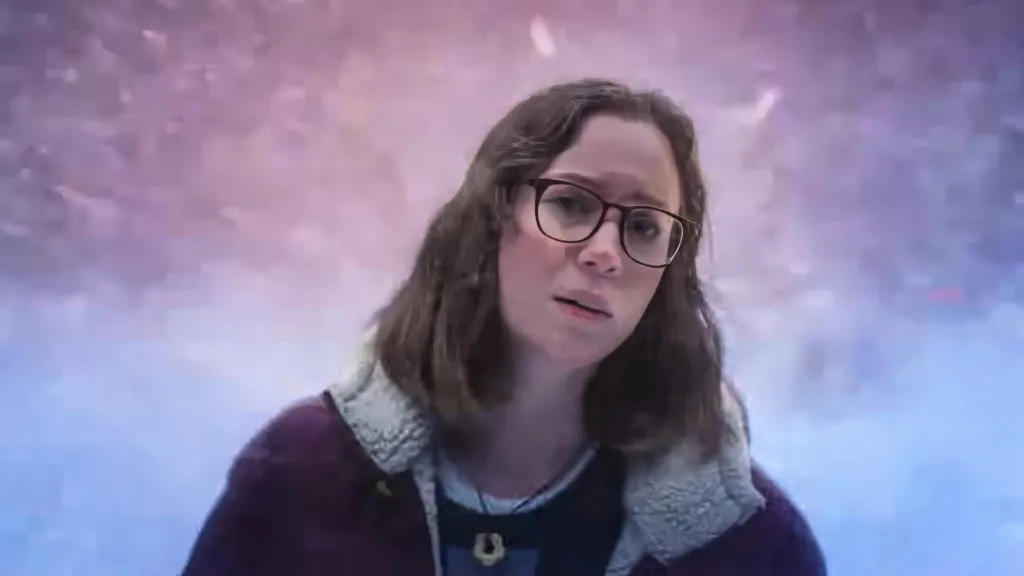
So says Sophie Thatcher’s Elle fairly early on in Nicolas Winding Refn’s visually striking “Her Private Hell,” cheekily and accurately predicting the nightmare that’s to come. To even call the film a nightmare feels like a reductive way of describing the feverish purgatory that Refn thrusts us into. More closely resembling his underrated and underseen recent series, “Copenhagen Cowboy,” the director’s return to feature filmmaking is still a captivating cinematic experience all its own, launching us into a loosely connected series of vignettes that are erotic, gruesome and more than a little all over the place.
And yet, in the end, despite all the ways it very nearly gets lost in itself, it proves to be an ultimately captivating and uncompromising vision. That it could easily be seen as both Refn’s best or worst is what makes it such an interesting Rorschach test. It won’t win him any new fans, but that’s more than fine as those who’ve been awaiting his return to cinema after his foray into television wouldn’t want it any other way.
Premiering Monday at the Cannes Film Festival, the plot, for what little it matters, involves a luxurious apartment high up above a seemingly futuristic city that’s being consumed by mist. It’s there where we first meet Elle as she returns home from somewhere, seemingly both at ease and yet also anxious about what the future holds. She’s hurt by the recent departure of her father, a bizarre, brutal man who lights a match on his ear when we first meet him, and seems like she’s just trying to hold onto her sanity.

She’ll spend time with strangers, including a troubled man played by a scene-stealing Charles Melton, and friends alike, though a shadowy figure capable of inflicting great harm on all she has left looms largest. How much of this is real? That matters less than how deeply alive it all feels and how much the film grabs you by the throat.
As we get taken deeper and deeper into Elle’s mind, Refn, increasingly more interested in being a visual stylist unbound by narrative convention than he is the filmmaker who made the tense, tightly-constructed thriller “Drive,” pushes himself further than he ever has before. At many points, including an extended riff on “Star Trek,” he very nearly loses himself in what seems to be a film within the film that pointedly acknowledges the production within the production (the film won’t fix them, a character acknowledges at one key painful moment). But every time Refn comes close to losing us as an audience, there’s always a stunning visual pulling us back in.
His film, while definitely still an emotional, often darkly comic journey, is also primarily a series of visceral, vibrant and increasingly violent visions that you have to let wash over you. Fight the current and you might find yourself drowning. But for those willing to let go, there’s so much joy to be found in the film’s trip downstream into hell.
There are flashbacks and flash forwards, half-remembered dreams and stories of mythic figures, all of which are bathed in the neon light that Refn just can’t get enough of. However, none of this is just style for the sake of it. The way he uses it to catch characters in various stages of fear, excitement, grief and eventual joy, the flashes of each bringing into focus all the extreme angles of their faces, is quite breathtaking. More than the bursts of visceral violence, it’s Refn’s vibrant command of visuals that proves most exhilarating. Even if there was less plot, the consistently dark beauty of the film would be enough to carry it forward.
At the same time, Refn has found a perfect creative collaborator in Thatcher. A continually surprising performer, who broke out in “Yellowjackets,” but who was doing plenty of great work around that, including in the underrated sci-fi stunner “Prospect,” she gives what may be her most daring performance yet here. She goes from being more wounded and alone to vindictive and cruel in the blink of an eye, capturing all the various rough edges to the character even when just surveying a scene with her piercing stare. As one scene blurs into another, she remains a grounding, graceful force, capable of cracking a sly joke just as she is a dramatic monologue about how everything is falling apart.

When it does eventually fall apart, or at least fall more apart, both Refn and Thatcher let everything loose. The colors get more extreme, bringing the faces of the cast into harsher and harsher focus, and the performances more unhinged. Thatcher, almost channeling Jack Nicholson from “The Shining,” cackles and careens her way through the once tranquil apartment, seemingly right on the cusp of madness before pulling us back in close for a more unexpectedly moving, yet still plenty macabre, finale. Her cracked expression pulling together in a slight smile in the final frames is both emotionally profound as it is petrifying. It’s a tough balancing act to pull off, but both she and Refn make it look easy.
The film is still very much not for everyone or, potentially, even anyone other than Refn himself. If you haven’t connected with his prior work, which looks downright restrained compared to this, you will likely be incredibly put off and alienated by everything playing out here. But for those who’ve appreciated the way the filmmaker has increasingly stripped away plot to get right to making the equivalent of nightmarish neon paintings, it’s really something special.
As with all his films, your mileage still may vary with how far along you’re willing to go with Refn. But for those who have been looking for him to take things even further, it’s wonderful to see him cooking with gas once more and setting the screen alight.
“Her Private Hell” will release in theaters July 24 via Neon.

>

As Larry David‘s comedic trip through U.S. history comes to an end, he took credit for one of the nation’s more recent presidential scandals.
On Friday’s season finale of the HBO sketch comedy miniseries Life, Larry and the Pursuit of Unhappiness, President Barack Obama made a surprise appearance as himself in a sketch set in 2014, as David advised him to wear the now-infamous, outrage-inducing tan suit during his live press conference on military response to ISIS.
Following some banter on how the POTUS avoids stains, David accidentally spills juice on Obama’s suit jacket when he leaves the room. When the 44th president returns, the comedian recommends he wear the tan suit that Obama planned on taking it to Turin for NATO Summit, for “a daytime event, it’s outdoors, a little more casual.”
“First of all, it’s a gorgeous suit,” David declared. “And this is casual Friday!”
“It is a great suit,” admitted Obama, as David told him, “Oh boy, oh boy. I think this is the move. … Old lips won’t let you down. You’ll thank me!”
As Obama models the look, David gives him his signature, “Pretty good! Pretty, pretty, pretty, pretty, pretty good.”
“You sure about this?” asks Obama, as David assures him, “Never been more sure about anything in my life. People are going to be talking about this for a long, long time.”
Obama’s cameo in the finale comes as David marks the United States Semiquencentennial with the seven-part sketch comedy limited series, which recounts major events in U.S. history through the comedian’s signature observational humor.
David’s longtime Curb Your Enthusiasm partner Jeff Schaffer, who serves as an executive producer on Life, Larry and the Pursuit of Unhappiness, previously told Deadline that Obama, who produced under his Higher Ground banner, reached out to his buddy David to ask if he’d be interested in making the show to celebrate the country’s 250th birthday.
“When you’re doing a show about American history, you want to do it warts and right now we have this orange saggy wart that we wish would go away,” said Schaffer. “But the nice thing about having President Obama produce this and be a part of it is that this country’s had a lot of fuck ups, we’ve seemed to have learned very little, but we’re still moving forward sometimes, and then we move back a little bit, but we always move forward again. While Larry’s pointing out a lot of the steps back, the President is telling us we can still step forward.”
>

Matthew McConaughey shows off his vocal skills (and some hidden banjo talents) with his latest role in The Rivals of Amziah King.
On Friday, Lakeshore Records released the single and music video for “Quill” from the original motion picture soundtrack, performed by the Oscar-winning and co-star Ben Hardesty, also featuring Miranda Zickler, Angelina LookingGlass and Andrea Pister.
Set in the backwoods of Oklahoma, The Rivals of Amziah King follows the musically gifted Amaziah King (McConaughey) and his bluegrass-playing band of misfits while overseeing the premier honey-making operation in town. When Amaziah’s estranged foster daughter unexpectedly returns, he leaps at the chance to reconnect and create a family business. But the honey game is ruthless, and Amaziah’s rivals threaten to destroy everything he has built.

Premiering Aug. 14 in theaters, the Andrew Patterson-written-and-directed drama also stars Angelina LookingGlass, Cole Sprouse, Jake Horowitz, Tony Revolori and Kurt Russell.
Producers are David Heyman, Teddy Schwarzman, Jeffrey Clifford, Michael Heimler, James Montague and Will Greenfield.
>
With their latest directorial outing, Jane Schoenbrun used subtle pieces of nostalgia to deconstruct the slasher genre.
The Teenage Sex and Death at Camp Miasma writer/director explained to Deadline that they wanted to create “a mindset where you can really enjoy something scary,” noting the frequent symbolism of candy and junk food as providing an atmosphere “that’s actually safe” while diving into a horror movie or exploring sexuality after trauma.
“There is this idea that if it gets too real, you can turn it off, that you’re exploring something dangerous, doing it in a way that’s actually safe,” said Schoenbrun, who is non-binary. “Which in my experience of coming into my sexual identity post-transition, kind of required some gummy candy on hand. What I mean by that is, even if we’re going to be exploring scary and vulnerable and potentially embarrassing, triggering parts of ourselves, we trust each other well enough to know that at any moment, we can be like, ‘Let’s stop, we gotta just eat some fucking gummies.’”
In Schoenbrun’s latest film, Hannah Einbinder stars as queer director Kris, who is tapped to helm a new installment of the long-running Camp Miasma horror franchise. While courting Billy Presley (Gillian Anderson), the actress who played the “final girl” in the original film, to reprise her role, the pair spirals into a psychosexual frenzy as the slasher’s killer, Little Death (Jack Haven), comes to life.
Acknowledging the problematic trans representation of horror films like Psycho (1960), Sleepaway Camp (1983), The Silence of the Lambs (1991) and Texas Chainsaw Massacre: The Next Generation (1995), Schoenbrun admitted the genre has been “catnip to me since I was 10 years old,” and they jumped at the chance to direct their own.

“So many slashers do have this sense of humor, and even if they’re not overtly meta like the Scream movies are, they’re so aware of their own tropes and the sort of rituals … And I just loved that from a young age and loved all of the little rituals within it, and so, getting to make my own is just like play and joy,” they explained.
“But it also felt like the perfect way to talk about sex and to talk about my experience as a trans person post-transition, learning how to come into a sexual identity that I could feel comfortable within, because so many of these movies are obviously deeply engaged in gender and sexual roles, and these movies have so much to say for better or for worse about deviants,” said Schoenbrun. “It is there in the DNA of the slasher genre that these movies are talking about fear and desire, gender and sexuality, normativity and deviance. And that’s all swimming in the toxic soup of the genre, so I wanted to remake it in my own language.”
Read on about Jane Schoenbrun’s love letter to the slasher genre with Teenage Sex and Death at Camp Miasma, now playing in theaters.
DEADLINE: It was really fun to see the slasher genre through your eyes. Tell me about finding inspiration in that genre and “final girls.”
JANE SCHOENBRUN: I mean, it was the easiest thing in the world because it’s just one of those genres that has been catnip to me since I was 10 years old. I just raided the horror section of the video store as a kid from an age when I really shouldn’t have been doing that, like in 5th grade, I watched in the span of about one week, every Nightmare on Elm Street movie. I think that I was always drawn to movies and really anything entertainment where it felt forbidden in some way, like the thing on the tape, how is that even allowed? And that’s the thing that I love about a lot of my favorite slashers. Don’t get me wrong, I love like brutal ones, like I love Texas Chainsaw, that’s a nasty movie at its core, and that’s what’s so special about it. But so many slashers do have this sense of humor, and even if they’re not overtly meta like the Scream movies are, they’re so aware of their own tropes and the sort of rituals of, OK, what’s the most outrageous way that like these like dumb kids can get killed? But watching it, it’s not about fear a lot of the time, it’s about joy and celebration. And I just loved that from a young age and loved all of the little rituals within it, and so, getting to make my own is just like play and joy. But it also felt like the perfect way to talk about sex and to talk about my experience as a trans person post-transition, learning how to come into a sexual identity that I could feel comfortable within, because so many of these movies are obviously deeply engaged in gender and sexual roles, and these movies have so much to say for better or for worse about deviants, whether that be Norman Bates or Buffalo Bill or Sleepway Camp or Jason, Michael Myers, Leatherface in drag. It is there in the DNA of the slasher genre that these movies are talking about fear and desire, gender and sexuality, normativity and deviance. And that’s all swimming in the toxic soup of the genre, so I wanted to remake it in my own language.

DEADLINE: I’m curious about the symbolism of all the processed junk food and the chandelier of wrappers.
SCHOENBRUN: The junk food in the movie, I forget when it found its way in there. It’s like so much of the movie is about, like I said, ritual, about being in a mindset where you can really enjoy something scary, whether that be Kris [Hannah Einbinder] in bed, with, you know, with Raisinets and the popcorn, watching a schlocky horror movie, or the two characters learning how to be present and enjoy sex after a lot of trauma. There is this idea that if it gets too real, you can turn it off, that you’re exploring something dangerous, doing it in a way that’s actually safe. Which in my experience of coming into my sexual identity post-transition, kind of required some gummy candy on hand. What I mean by that is, even if we’re going to be exploring scary and vulnerable and potentially embarrassing, triggering parts of ourselves, we trust each other well enough to know that at any moment, we can be like, “Let’s stop, we gotta just eat some fucking gummies.”
DEADLINE: And one thing I really love—I just feel like it’s a theme in your work—is how it depicts the way media and entertainment influence us. Why does that inspire you?
SCHOENBRUN: I think it comes from a fascination and sensitivity to the complex relationship between what we think of as fiction and what we think of as reality, which we tend to, as a society, think of as pointing in one direction. Like, reality dictates fiction, not vice-versa, but when you actually look at the way the world works, it’s like one echoes off the other. And I think a complicated, sometimes terrifying and sometimes beautiful way, where the fiction, the cultural norms, the things we grow up looking at on our screens, the roles that we’re told people play, they kind of inspire us to create reality. There’s something liberating when you start thinking in that way. I think it’s a way of thinking that we as a culture, could do a lot more of. To think about the idea of fiction inspiring reality just as much as reality is inspiring fiction, is a potential path to liberating us from this hellscape that they’re telling us is the only way the world can be.

DEADLINE: And I know you have the Secretary reading. Tell me what it’s been like prepping for that and why you all chose that movie.
SCHOENBRUN: I mean, that was such a huge influence on on Miasma. There just aren’t that many fun and funny movies about deviant sex. And just the way that movie is like feather light while talking about really raw and taboo things, it is just really inspiring to me. And the dynamic between those two main characters is definitely one that had a lot of influence on on Kris and Billy’s [Gillian Anderson] relationship in Miasma. And it’s already to me a very queer movie in its way, but having Gillian reading the James Spader part and Hannah reading the Maggie Gyllenhaal part, I think it’s just gonna be like a very unique joy. Honestly, we’ve been prepping a little bit, but I think it’s just gonna be about getting up there and feeling the chemistry of it all, and just letting these folks who we have all gotten to know each other really, really well, but we haven’t actually done anything wacky and creative like that in a while, like as a reunion, it’s gonna be a real blast, I think.
>

Obama Relives Tan Suit Debacle In ‘Life, Larry & Pursuit of Unhappiness’

Joe Ward rescues career with valiant Artjom Kasparian win as Stevie McKenna and Sam Hickey take stunning one-punch finishes | Boxing News

Live Commentary – Valencia vs Newcastle
-

 movies3 months ago
Search For Canadian TV Actor Stewart McLean Now Homicide Investigation
-

 Fashion9 years ago
These ’90s fashion trends are making a comeback in 2017
-
Fashion9 years ago
According to Dior Couture, this taboo fashion accessory is back
-
Fashion9 years ago
Model Jocelyn Chew’s Instagram is the best vacation you’ve ever had
-
Fashion9 years ago
Your comprehensive guide to this fall’s biggest trends
-
Fashion9 years ago
9 Celebrities who have spoken out about being photoshopped
-
Fashion9 years ago
Emily Ratajkowski channels back-to-school style
-
Fashion9 years ago
A photo diary of the nightlife scene from LA To Ibiza