Connect with us

Sports

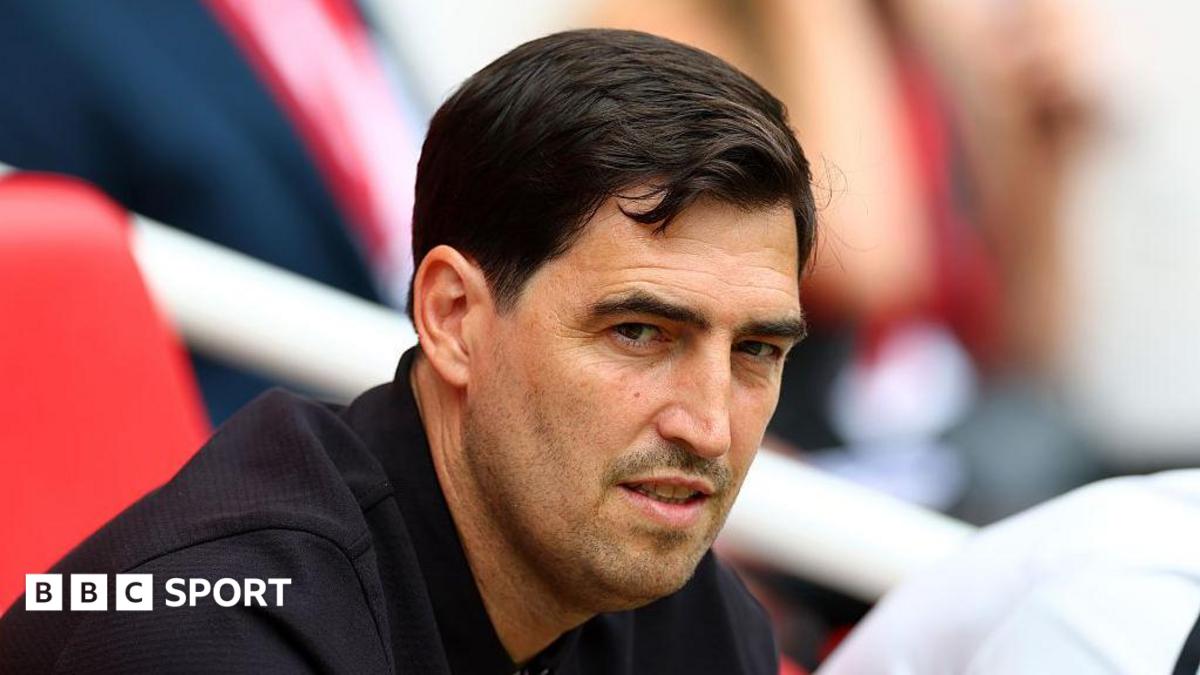
Canucks firing Adam Foote offers only glimmer of insight into vision for new era

Published

on

There will be a lot of words written, spoken and posted on social media about what Ryan Johnson had to say in the wake of his first major decision as Vancouver Canucks general manager.

Words can be wind, however, and on Tuesday, it was Johnson’s actions that spoke louder.

On Tuesday morning, the Canucks fired Adam Foote and assistant coaches Scott Young, Brett McLean and Kevin Dean.

The dismissals arrived without hesitation. Johnson and Vancouver’s co-presidents Henrik and Daniel Sedin didn’t even give Foote an opportunity to make his pitch for how his second year behind the bench might be different than his first.

“We had some brief conversations at season’s end as I was going through my own process,” Johnson said, “but I did not have in-depth conversations about vision (with Foote).

“Unfortunately, this is something I would’ve loved to do in person, but with none of our group being here in person, and being out, and traveling … Out of respect for the staff, the longer you drag this out, the more difficult you make it (for them to find their next job), and I wanted to be respectful.”

The decisiveness of how Johnson and the Sedins moved to fire Foote and his coaching staff cuts a pretty remarkable contrast with how Johnson handled questions about Foote’s future with the team when he was introduced as Vancouver’s GM last week.

“If you look at last year as a whole, it’s really tough to evaluate a coach or anyone with all of the adversity with the injuries, the goaltending,” Johnson said Thursday of Foote’s work. “There were so many variables that changed the course of the season, and obviously, there was some drama around the group.

“To evaluate Adam just on that is unfair. This is day one on the job, we’re going to talk about things as we will top to bottom in the organization, but that’s going to take us some time. To evaluate off of last season is, I think, pretty unfair.”

It wasn’t exactly an unqualified endorsement, but it was at least an inscrutable kindness. A tepid defence. You’d be hard pressed to have heard or read those words and assumed that Foote’s removal might arrive at the earliest opportunity, less than a week later.

When Johnson was asked later on about clarifying whether Foote would be back, he certainly left himself the wiggle room to make a change behind the bench.

“This is day one walking onto the job,” Johnson said, repeating a talking point. “Just like everything, we’re going to evaluate, look at areas where we can improve.

“We’ve got many departments that we want to get better, (areas) where we don’t want to be good at, but we want to be elite at. So those are all things that we’re discussing, and again, we won’t make any decision unless we’re aligned and agree that’s the best way to move forward.”

We’re currently navigating a limited information environment in analyzing what exactly this new era of Canucks hockey operations will look and feel like.

Questions asked and answered in news conferences are, for now, the bulk of what we have to go on. Firings and, eventually, hirings, and the team assembled to complement the trio of ex-Canucks who have replaced outgoing president Jim Rutherford and general manager Patrik Allvin. Words and actions, and the contrast between the two.

Eventually, there will be draft picks and transactions to pore over. Trades and signings. The performance of the team on the ice across multiple seasons.

Before the growing sample of work product pools, however, we just have words, and now the decision to move quickly to dismiss Foote and his staff.

And across a pair of initial meetings with the media in his first few days on the job, the most powerful signal we’ve got about Johnson’s tenure as general manager so far is that we should be careful about reading too much into what’s said. We should be focused instead on his actions.

On Tuesday, for example, Johnson was asked about the future of Vancouver’s assistant general managers Émilie Castonguay and Cammi Granato.

“As for Cammi and Émilie, nothing has changed,” Johnson said. “They are a big part of this group and a big part of my maturation as a person and professional.”

When asked to clarify if that meant that Granato and Castonguay would be remaining with the organization, Johnson appeared to confirm exactly that, but also avoided putting a specific and forceful confirmation on tape.

“Yes, nothing has changed with our current staff,” Johnson said. “Obviously, I am working through making sure I have the right help and support I need to be challenged; I need ideas, I need people around me.”

If that was somewhat clearer or firmer than what Johnson had said last week about evaluating Foote’s performance as head coach, it seems to be only by a matter of degrees.

There is perhaps a glimmer of hope in that. Because a lot of the specific content of Johnson’s words on Tuesday was downright concerning in its lack of ambition, and the lack of organizational change that he appears prepared to preside over.

Aside from mentioning on multiple occasions that he intends to bring in a new player development head to run the AHL team and presumably serve as an assistant general manager within the new-look front office, Johnson mostly outlined a vision of organizational stasis.

The current assistant general managers remain. Amateur scouting director Todd Harvey received a significant endorsement, with Johnson name checking Ty Mueller, Kirill Kudryavtsev and Elias Pettersson, the defender, as significant amateur talent evaluation wins for the organization in the middle and late rounds for the organization — while omitting Danila Klimovich (who, ironically, is the same age as Mueller and has scored at nearly the same rate over the past two seasons). The analytics staff will receive additional resources.

And all roads as to who Vancouver will hire as Foote’s replacement appear to go through Abbotsford Canucks head coach Manny Malhotra first.

“Manny has shown his ability to develop young players, to build a connection, and obviously to win a championship with a very young group,” Johnson said. “I am going to speak with him. We’re going to sit down with him and talk about the future.”

When later asked to identify the primary criteria for what Johnson wants in the next Vancouver head coach, he seemed very much to be directly describing Malhotra.

“Consistency, patience, the ability to connect with a young group, and realize that we can’t blanket players; they each have their own path, their own journey that you have to be attentive to,” Johnson said.

In fairness to Johnson, at no point did he hide the reality that Malhotra is the leading candidate to be Vancouver’s next bench boss.

In fact, in outlining the club’s plans in the wake of Foote’s dismissal, the Canucks themselves pointedly used the word “process” instead of “search” in their official release, a stance which largely matched what Johnson explicitly said Tuesday afternoon.

“I don’t think I have an expectation of how big the net needs to be cast,” Johnson said in describing his search. “I don’t want to be ignorant and say that I’m not going to have a serious conversation with Manny, that’s just the truth of it. Those discussions may determine how big that net is cast. I’m not ruling out anything. I have to go through the initial steps here.”

Overall, on Tuesday, the Canucks took a necessary step.

Foote’s first season as head coach delivered the worst regular season in franchise history in about 50 years. There are absolutely reasons beyond the quality of the coaching to explain the club’s dramatic downturn in results, but the way that Vancouver’s five-on-five game and structural integrity collapsed entirely was inexplicable, even factoring in the drama, the Quinn Hughes trade, injuries and other context.

That the Canucks were willing to eat the cost of Foote’s dismissal — Foote had $1.5 million USD and two years remaining on his contract, and is unlikely to offset that with another NHL head coaching opportunity — is a positive indicator that the club won’t allow penny pinching to overrule common sense. That’s a hopeful data point.

Beyond that, in the first major decision of the Sedin and Johnson era, Vancouver’s new GM provided some additional context about the shape of his plans for the organization. And what was outlined seemed both unambitious and conventional, concerningly so.

Of course, we’ve also learned already to be careful about reading too much into Johnson’s commentary. The incoming Canucks general manager is clearly guarded and deliberate in how he’s choosing to communicate. He recycles talking points and seems to intentionally be leaving himself wiggle room, and avoiding the sort of soundbites that may haunt him in an intense market like Vancouver.

This is clearly an executive who has already effectively told us to judge him based more on his actions than on the contents of what he says.

>

Continue Reading

Sports

Liverpool: Should fans be worried about Andoni Iraola’s fitness comments?

Published

on

For the second friendly in a row, Andoni Iraola’s Liverpool threw away a two-goal lead and went on to lose the game.

In Chicago on 2 August, new Liverpool manager Iraola said the 4-2 friendly defeat against Leeds was useful as he “learned a lot of things” about his side.

However, at Anfield on Sunday against Monaco, the Spaniard was a little more candid after a 3-2 loss.

Two weeks out from the start of the Premier League campaign, Iraola’s verdict was that his side had “work to do” because they could not sustain the level that he wanted for the duration of a game.

Iraola said that his side played a good first 30 minutes but “they don’t have much more, in terms of the levels required to play like this”.

For what it’s worth, the first half against Leeds and the first 30 minutes against Monaco was the best that Liverpool have looked throughout pre-season. They moved the ball with pace, were direct, pressed with intensity and both Florian Wirtz and Alexander Isak have looked sharp.

But as the game progressed and changes were made – Iraola made nine against Leeds and 11 against Monaco – Liverpool have looked like a different team and certainly not for the better. Leeds scored four goals in 25 minutes without reply while Monaco scored three unanswered goals in 44 minutes too.

Some of the squad are still working their way back to full fitness after some time off following the World Cup while others such as Conor Bradley, Hugo Ekitike and Giovanni Leoni are sidelined for lengthy periods of time.

Uruguay defender Ronald Araujo, who can play at centre-back and right-back, is close to completing a season-long loan move from Barcelona.

On Sunday, skipper Virgil van Dijk said: “Let’s see what the next couple of weeks are going to bring. Any quality we can add to the team will definitely be welcome so let’s see.”

But with the squad at his disposal, Iraola is adamant that the general fitness must improve if they are to play the style that he wants. Pablo de la Torre, one of Iraola’s assistants, has also made the move to Liverpool and was previously the fitness coach at Bournemouth.

Across the small sample size of four games, there have been enough signs of Liverpool playing in a busy manner in the early phases of games and that intensity was evident to see during an open training session in Chicago, where Iraola used phrases like “quicker, quicker” repeatedly.

One player told BBC Sport how he felt sick after the first few sessions while the punishment for losing sides in training has been to sprint to the other end of the pitch and back.

In Chicago, Milos Kerkez said that Iraola is asking the players to “play one-on-one all over the pitch, to press high and to always be on the front foot”.

Iraola’s Bournemouth side ranked first in the Premier League season for direct attacks and third when it came to high turnovers.

It is worth noting that it took him 10 games to secure his first win at Bournemouth in the 2023-24 season. Any such run at Liverpool would be unacceptable but you only have to look at the way Bournemouth performed throughout his tenure to see why Iraola persisted with his ways.

His comments on Sunday were certainly concerning but he has had less than a month to work with his players and only a week or so with some. The signs are there that this team will entertain but as Iraola pointed out in Chicago, it will take time.

“I would like to say, no, on the first day, we are going to be perfect, everyone will be in place, but probably it is not going to be like this,” he said, when asked if it would take a while before fully seeing his style of play. “We will have to do this as quickly as possible.”

>

Continue Reading

Sports

Lions center Cade Mays to miss ‘significant’ time with wrist injury

Published

on

Detroit Lions tackle Blake Miller (76), left, and center Cade Mays (64), right, practice a drill during training camp at Meijer Performance Center in Allen Park on Friday, July 31, 2026.

The Lions will be without center Cade Mays for an extended period of time, coach Dan Campbell said Monday. Junfu Han / Imagn Images

ALLEN PARK, Mich. — The Detroit Lions needed to address their offensive line this offseason and did so by signing free-agent center Cade Mays to a three-year contract.

However, Mays suffered a wrist injury in practice and will now miss a “significant period of time,” coach Dan Campbell said Monday. Campbell wouldn’t put a timeline on his return, but said he’ll be back before the playoffs.

This is a major blow to an offensive line that needed all the help it could get. The Lions will likely turn to Juice Scruggs to fill the void, but given Mays’ consistency in pass protection, he’ll be missed.

Connections: Sports Edition Logo

Connections: Sports Edition Logo

Connections: Sports Edition

Spot the pattern. Connect the terms

Find the hidden link between sports terms

>

Continue Reading

Sports

How the Nationals plan to replace departed trade-deadline players in the aggregate

Published

on

WASHINGTON — There is a scene in the film “Moneyball” where general manager Billy Beane declares that his Oakland Athletics will try to recreate Jason Giambi in the aggregate.

Washington Nationals president of baseball operations Paul Toboni did not make that exact claim for his club, nor did he trade an MVP candidate away, but there is a similar thread to pull on here. The Nats, at least as currently constructed, felt comfortable replacing recently traded players Foster Griffin, Luis García Jr. and Curtis Mead internally while adding to the farm system.

“It’s really tough to replace those guys — like, Curtis and Luis both, they’ve been two of the best hitters in the major leagues this year,” Toboni said on trade deadline day. “That being said … ideally, we can look up a month or two from now and say, ‘Hey, the offense hasn’t slowed down much.’ If anything, it’d be cool if we reached new heights.”

The claim was bold. It came with caveats. And yet, after dropping seven of eight on the road, the Nationals came home and completed a three-game sweep of the Cincinnati Reds on Sunday. The players they acquired have already produced, and the fill-ins have … filled in admirably. Has that made the deadline sell-off easier to sell to the clubhouse? Can we say that the Nats have nailed the whole “compete now and later” strategy? Both are TBD.

But there’s a compelling vision. Here’s what it looks like and what the team expects from the 2026 fill-ins and the possible 2027 debutants, leaning on what we’re hearing around the organization and seeing in small, encouraging samples.

Do trade deadline deals lead to World Series rings?

Joe Crisalli

Recreating 1B Luis García Jr.

What they have to replace: The highest slugging percentage in the National League.

Who’s being asked to fill in: Andrés Chaparro and Abimelec Ortiz.

Why this could work: These guys rake.

Replacing García’s clubhouse presence? Hard. Replacing his NL-best .560 slugging percentage? Hard, but more feasible.

Ortiz has three extra-base hits and even more hard outs in 22 MLB at-bats. He had an .845 OPS this season in Triple-A Rochester, with underlying metrics that indicate he was a bit unlucky. And while it might be unfair to expect Ortiz to replicate Garcia’s power, he rarely chases, which could help him maintain a higher OBP.

Oh, and almost everything that was just said about Ortiz applies in some way to Chaparro, be it through hard contact, bad luck or a high OBP.

The Nationals like Ortiz’s mature approach and believe it’s sustainable. They believe Chaparro could have a Mead-like trajectory, beginning as a platoon bat against lefties before eventually earning regular at-bats against righties (possibly at DH or third base).

Recreating Foster Griffin

What they have to replace: Almost a guaranteed win.

Who’s being asked to fill in: Andrew Alvarez and … a TBD Triple-A starter.

Why this could work: Tutelage and peripherals.

Players brought in on one-year deals are not always the best mentors. Griffin was different. The lefty helped his peers tweak their game-planning routines, especially Alvarez. Over the last few weeks, Alvarez has prepared by watching the opposing hitters’ most recent at-bats against lefties, because that’s what Griffin taught him to do.

“Sometimes, reports and things that you look at on paper might not tell the whole story,” Alvarez said. “I’m not gonna watch someone throwing 99 (mph) and play that and do it, but … it’s watching their sequences in the last 30 days, and just getting visuals, seeing how they’re reacting to certain sequences, but then also knowing myself and what I do.”

Couple that with improved fastball command, and the Nats may have a guy down the stretch. Alvarez has allowed 3 earned runs in 11 2/3 innings over his last two outings. And while xERA is not everything, the gap between Alvarez (4.33) and Griffin (4.06) isn’t that wide.

Couple that with an upcoming debut from Jackson Kent or Luis Perales (one of whom could replace Zack Littell, after the Nats designated him for assignment last week), and there’s a world in which Washington’s starting rotation has some juice down the stretch.

Recreating Curtis Mead

What they have to replace: One of the best offensive third basemen in MLB.

Who’s being asked to fill in: Brady House and Jorbit Vivas.

Why this could work: It might not, but House is hitting well.

The trade with the most sound logic is also the one that could harm the team the most over the next two months. The Nationals would take that Mead-for-Connelly Early deal 10 times out of 10, but finding everyday production from the hot corner is not as easy as it sounds.

That is largely due to Washington’s inability to find an answer against right-handed pitching. The Nationals acquired Vivas this spring because his swing decisions gave the coaching staff a base to work from, but it hasn’t led to much production. Vivas, a lefty, entered Sunday with a .666 OPS against righties in 215 plate appearances.

The case for everyday at-bats for House: The former top-100 prospect has hit well since his return from Triple-A Rochester. His xSLG against righties since returning is .527, which is still better than the .376 he had before his demotion, albeit in a limited sample. The club wants to ease him in, but at this point, unless the Nats believe regular at-bats against righties will disrupt House’s development, he appears ready to play every day. (Vivas entered Sunday with a .324 xSLG against righties).

The downside: If you really want to protect House against the best righties in MLB, there isn’t an obvious left-handed infielder to call up from Rochester. But maybe that’s OK. The platoon-heavy lineup has worked everywhere except third base. They could cycle various right-handed hitters through and, if they recalled Yohandy Morales from Triple-A Rochester, they could have him fill in at third or DH.

The plan for six other key deadline additions

(Non-Connelly Early edition, as he’s been covered.)

RHP Jack Cebert (from New York in the García trade)

What he’s done in 2026: 3.84 ERA in 86 2/3 innings, 10.59 K/9, 2.80 BB/9 across two levels.

What he’s done with the Nats: Four scoreless innings in his debut with Double-A Harrisburg.

What the club thinks he will do: He’s a five-pitch guy with the potential to add one or two more pitches to help him get left-handed hitters out. The Nats also value that he has three fastballs. The primary weapon is the sweeper, which is getting a whiff rate greater than 40 percent in the minor leagues. The metrics on the pitch itself aren’t nutty, but they’re good, and he throws it from a wide angle with lengthy extension and good command.

RHP Ben Grable (from New York in the García trade)

What he’s done in 2026: 2.33 ERA in 38 2/3 innings, 13.97 K/9, 2.33 BB/9 across two levels.

What he’s done with the Nats: Struck out four in one inning (one batter reached based on a wild pitch after striking out) in his second appearance with Double-A Harrisburg.

What the club thinks he will do: The Nats have taught many of their pitching prospects to develop better sliders, because that is something smart organizations do. It is much harder to teach an elite fastball outside of a velocity bump, which makes it valuable to acquire pitchers with elite fastballs. Grable’s fastball misses the zone 35 percent of the time in Double-A (hat tip to George Lewis’ stellar prospect guide) because of how he throws it (with extreme carry and good velocity). That would be one of the highest rates in MLB. The Nats, accordingly, tout Grable as one of the best relief prospects in the minors. He uses the fastball about 70 percent of the time, a rate the organization isn’t yet sure should go up or down. If the Nats want it to go up, it helps that one of their pitching coaches, Sean Doolittle, used to throw a fastball 90 percent of the time.

RHP Yovanny Cruz (from New York in the García trade)

What he’s done in 2026: 2.35 ERA in 7 2/3 innings, 10.57 K/9, 4.70 BB/9 in MLB; 3.53 ERA in 35 2/3 innings, 13.12 K/9, 3.53 BB/9 in Triple A.

What he’s done with the Nats: Throw the Nationals’ fastest fastball of the Statcast era, with a computer metrics-breaking slider.

What the club thinks he will do: Ideally, pitch in the back end of their bullpen for years to come. It’s too early to make that claim, but he has the stuff to do it. They think he could become a true three-pitch guy. He already has an elite slider and a fastball that sits at 100 mph, but a dominant splitter on top of those two pitches could be a difference-maker. We saw as much against Elly De La Cruz on Saturday, when Cruz fed the Cincinnati Reds star two splitters to strike out the shortstop before strutting off the mound.

LHP Will Dion (from Cleveland in the Griffin trade)

What he’s done in 2026: 3.86 ERA in 23 1/3 innings, 10.03 K/9, 1.54 BB/9 in MLB; 3.62 ERA in 37 1/3 innings, 12.54 K/9, 1.69 BB/9 in Triple A.

What he’s done with the Nats: Pitched 3 2/3 scoreless innings.

What the club thinks he will do: Handle both-handed hitters well, and pitch in every role imaginable. Generally speaking, pitchers who throw from as high of an arm slot as Dion does fare better against same-sided hitters than the low-slot lefties the Nats have cycled through. His three scoreless innings Sunday against the Reds’ right-handed-heavy lineup were pretty good evidence for this theory, as were his reverse splits this season in Triple A.

LHP Josh Hartle (from Cleveland in the Griffin trade)

What he’s done in 2026: 3.74 ERA in 98 2/3 innings, 8.67 K/9, 3.38 BB/9 across two levels.

What he’s done with the Nats: 5 1/3 IP, 3 H, 1 R, 0 BB, 7 K in his debut with Double-A Harrisburg.

What the club thinks he will do: Hartle is a post-hype candidate who can spin the ball in a manner that’s hard to teach. There’s a lot left to refine and tighten up, but the raw characteristics are there, and there’s a chance for him to add strength in the offseason.

RHP Joe Glassey (from Baltimore in the Christian Franklin trade)

What he’s done in 2026: 2.48 ERA in 32 2/3 innings, 15.70 K/9, 2.48 BB/9 across two levels.

What he’s done with the Nats: Thrown two scoreless innings with Double-A Harrisburg.

What the club thinks he will do: If you want a deal to go under the radar, trade a Triple-A outfielder for a Double-A reliever one hour before the deadline. But Glassey has the second-best strikeout-to-walk ratio in the minor leagues, and that’s a strong predictor of future success. His is a low-slot, high-extension profile that’s hard to find.

>

Continue Reading

Trending

Copyright © 2017 Zox News Theme. Theme by MVP Themes, powered by WordPress.