
Emile Hirsch as Speed Racer in The Wachowskis’ Speed Racer.
Courtesy of Warner Bros. Pictures


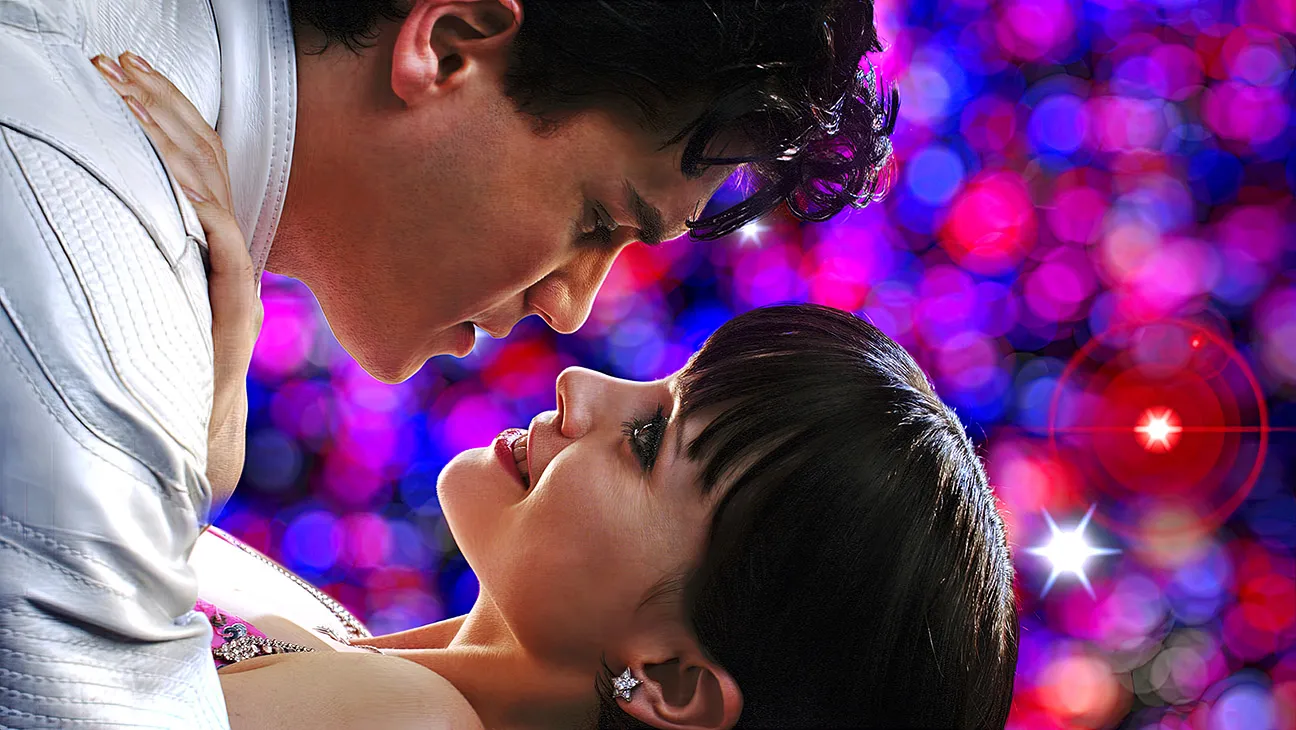
18 years ago, Emile Hirsch was crushed.
Speed Racer, the most expensive film of his young career, had bombed spectacularly, totaling just $94 million against a $120 million budget. What made the critical and commercial dud even more impactful was that it was the Wachowskis’ first directorial outing since finishing The Matrix trilogy, so there was a great deal of hype, attention and expectation surrounding their follow-up. Hirsch’s starring role in Speed Racer may have been flanked by awards contenders Into the Wild (2007) and Milk (2008), but he knew that being the title character in a major studio turkey would effectively end his six-year run on the shortlist for any film that necessitated a young lead.
But in the following years, the ultra-rare afterlife began to play out, one that films like Blade Runner, The Thing and Fight Club also experienced. Through time and word of mouth, Speed Racer found its audience en route to becoming a genuine cult classic. Hirsch started to see the signs of reappraisal on the film’s tenth anniversary, specifically when he watched his then four-and-a-half-year old son enjoy his first viewing of the candy-colored live-action anime. Shortly thereafter, Hirsch really felt it when the New Beverly — the Los Angeles cinema owned by his Once Upon a Time in Hollywood director Quentin Tarantino — screened the film at midnight.
“During the Grand Prix at the end of the film, I could audibly hear the entire audience crying,” Hirsch tells The Hollywood Reporter in support of the film’s new 4K release. “There’s a catharsis and a sincerity and a purity of intention to Speed Racer, and those were some of the things it was knocked for at the time of its release. But I think they’re the reasons why it connects now aside from the technical elements and the fun adventure of it.”
Hirsch’s point about the film’s earnestness being attractive to today’s audience certainly makes sense when you consider how dark and divided the world has become in the last decade. And if its 2008 stablemate The Dark Knight was any indication, Speed Racer’s hyper-stylized look and vibrant color palette may not have been what moviegoers were looking for at the time. But nowadays — after 15 years of blockbusters offering very little color on screen, to the point where many look perpetually overcast — it’s no surprise why DP David Tattersall’s pop-art aesthetic strikes a chord now.
Written by Lana and Lilly Wachowski, the action-comedy chronicles Speed Racer (Hirsch) and his family’s racing company, Racer Motors, as they strive to honor their fallen son and brother, Rex Racer, by becoming champions of the racing world. Along the way, Royalton Industries wines and dines the Racers in order to acquire Speed’s racing skills and their mom-and-pop enterprise. But their refusal to be consolidated leads CEO Arnold Royalton (Roger Allam) to sabotage Speed, Racer Motors and the purity of the sport at every turn.
Speed and the Racer family’s defiance in the face of unchecked corporate power is likely another theme that viewers respond to today since corporate consolidation has only accelerated through mergers and megadeals. For Hirsch, the parallels between the movie’s real-life trajectory and the story itself are apt.
“I told Lana [Wachowski] by text a couple weeks ago that I love the movie so much. I was like, ‘I want to live in a world where people get Speed Racer and get what’s good about it,’” Hirsch shares. “The idea of the public rejecting the movie, I was almost disappointed in humanity. Speed has these pure intentions and this family love. He was fighting for his art like we were, and then corporate capitalism just crushed us both. So this resurgence is weirdly befitting for the movie in a way. It’s almost perfect.”
Below, during a conversation with THR, Hirsch also discusses how the Matrix trilogy may have provided him an advantage in the global casting search for the role of Speed.
***
Despite mixed-to-negative reviews and disastrous box office numbers, Speed Racer has become a genuine cult classic. You’re probably approached on the street about your movies that were loved right out of the gate, but given Speed Racer’s initial reception, is it more meaningful when someone stops you to gush about it?
Yes, because the people who love the film now found it organically. They were either told about it, or they stumbled across it on their own. It’s not a film you check out because the poster [or the streaming tile or Blu-ray cover] says “The Most Acclaimed Film of 2008” or “The Number-One Box Office Hit of 2008.” It was the complete opposite. It was one of the biggest bombs of ‘08. It was panned pretty much unanimously by critics. Even the couple positive reviews it got were not really that positive. They were semi-throwing it a bone. But we loved the film, and we poured our hearts into it. The Wachowskis made an amazing piece of art as far as we were concerned.
Emile Hirsch as Speed Racer in The Wachowskis’ Speed Racer.
Courtesy of Warner Bros. Pictures
Were you broken-hearted at the time? Or had you been around long enough to know that you can’t control the result?
We were really devastated. We were disheartened that we weren’t going to make any sequels and continue the world in the film that we loved so much. So, to see it continue to gain this ethereal momentum over the years, I’m honestly quite taken aback by it. It just seemed so unlikely. It doesn’t happen to movies that flop very often. This level of reevaluation for a film is very rare.
When did you first sense that the tide was turning?
About six years ago, I went and saw a screening of Speed Racer at the New Beverly, Tarantino’s place. It was a midnight screening for cinephiles. And during the Grand Prix at the end of the film, I could audibly hear the entire audience crying. There’s a catharsis and a sincerity and a purity of intention to Speed Racer, and those were some of the things it was knocked for at the time of its release. But I think they’re the reasons why it connects now aside from the technical elements and the fun adventure of it. The emotional core just has a profound impact on people, and they don’t forget it.
If I go on YouTube and type in Speed Racer, there are hundreds of videos of film nerd people saying, “This is the movie.” It’s pretty sweet. So, in a certain sense, it’s better late than never. We’re happy about it. I told Lana [Wachowski] by text a couple weeks ago that I love the movie so much. I was like, “I want to live in a world where people get Speed Racer and get what’s good about it.” The idea of the public rejecting the movie, I was almost disappointed in humanity. I was like, “It can’t be.” Speed has these pure intentions and this family love. He was fighting for his art like we were, and then corporate capitalism just crushed us both. So this resurgence is weirdly befitting for the movie in a way. It’s almost perfect.
In 2007, there must have been a great deal of frenzy around the Wachowskis first movie after wrapping the Matrix Trilogy. Did you have to scratch and claw for the role of Speed?
Oh yeah. I auditioned for “The Kid” in Matrix Reloaded and Revolutions when I was 15. I didn’t get the part, but I remember meeting the Wachowskis and just thinking they were so amazing. I was such a huge fan of The Matrix.
Fast forward to when I’m 21 and auditioning for Speed Racer, I had just finished Into the Wild a month before. No one had seen that movie yet, so I was still auditioning. I worked very hard on the audition. Lora Kennedy was the casting director. It was one of those audition casting calls where if you were an able-bodied male from around the world, you were putting yourself on tape for it. They were like, “Anybody can come on in for Speed.” It wasn’t like, “Can I get an audition?” It was more like, “Who hasn’t auditioned for this movie?”
So it took probably four auditions. I’m guessing they had an idea that they liked me early on, but then it becomes about consistency. More and more high-pressure auditions probably gave them an idea of what it might be like to work with me.
Did you experience any whiplash going from Into the Wild’s grounded, location-based shoot to Speed Racer’s green-screen maze in Germany?
(Laughs.) It couldn’t have been a wilder contrast. Into the Wild was the most earthy, tactile, sensory-overloaded experience. I went from being in the river and on the mountain to an imaginative world inside Berlin’s Studio Babelsberg. Speed Racer was actually super refreshing in a sense because I was ready for a change after Into the Wild. I was ready to not be soaking wet in the cold and on a mountain. So it was definitely a change.
The level of technology that they were working with, even back then, was very impressive. The effects team really did their due diligence, and they were so thorough. They photographed locations around the world and digitally uploaded them. So one of the reasons why the effects look so cool is because they’re actually photo-real, and they were collaged and superimposed. They’re not just CGI buildings; they’re actual photos that have been cut out. So it has this hyper-realistic quality underneath it all.
Emile Hirsch as Speed Racer in The Wachowskis’ Speed Racer.
Courtesy of Warner Bros. Pictures
Apparently, the Wachowskis’ early footage didn’t get the greatest reception from the studio. Were you aware of any controversy at the time? Or were you shielded from all that?
I think we were shielded from it to a certain degree. There was a whiplash between the aesthetic of The Matrix and Speed Racer. People knew it was the Wachowskis, and they were expecting The Matrix. They were almost punished for The Matrix being the way that it was. People get used to a certain visual aesthetic, and when you change it, they go, “What!?” So there was a certain amount of that involved. Speed Racer was just such a different-looking film for 2008, and a lot of people were not able to accept the visual changes.
Whereas now, in 2026, people are used to very, very different aesthetics. Look at James Gunn’s Superman and the imagination he has with his visuals. It’s so, so intense, but we accept it now. I don’t want to say it’s standard because that does a disservice to it, but it’s accepted in a way now that I don’t think it really was back then.
You also worked with stunt coordinators Chad Stahelski and Dave Leitch before they became John Wick’s Chad and Dave. Were you the least bit surprised that they popped as directors a handful of years later?
Not the least bit surprised. Chad and Dave were amazing. Chad was Keanu’s stunt guy on The Matrix, and Dave doubled for Brad Pitt and Matt Damon. Those guys are such badasses, and they trained us to do all the fight scenes and everything. They would shoot little demo videos of certain fight scenes, and then they would edit them together to show the Wachowskis later. The quality of even those little pieces was incredible. I remember seeing their stunt pre-vis and saying, “These guys know how to shoot really, really well.” So when they became these super-duper successful directors, it was no surprise at all.
According to the internet, you rewatched all 52 episodes of the Speed Racer anime series during prep. You even talked with NASCAR driver Jimmie Johnson. I’ve asked actors over the years whether they deliver their best work after months of prep or when they have to trust their first instinct because they’re coming right off another movie. What have you found?
In all honesty, you never quite know which one it’s going to be. It can be both. When you show up with no prep, it can be fresh in a way you never imagined, and it can be better than you could ever prep it. Likewise, you can prep something that you know you would never be able to think of and do [on the spot]. So a lot of it just depends on the role, the scenes and the character. Sometimes, it’s fun to go in cold in a way. There’s something exciting about that. You discover the scene as you’re saying the lines because it’s so fresh. There’s also something I love about having rehearsed something a million times. There’s a relaxed nature to that that I really like.
What day on the Speed Racer set do you still think about from time to time?
Honestly, the days I spent with the family. The family scenes were really what grounded Speed and helped him discover why he really wants to be a racer. I was also able to work with such great actors. There’s the scene before the Grand Prix where John Goodman, as Pops, and Speed talk about what happened to Rex. There’s the scene with Susan Sarandon where Mom gives Speed confidence amidst his sea of doubt after discussing corporate sponsorship with Royalton. Roger Allam, as Royalton, is so fantastic in the movie. He gives such a delicious performance, and I love watching him every time I see it.
Emile Hirsch as Speed Racer in The Wachowskis’ Speed Racer.
Courtesy of Warner Bros. Pictures
I believe the Wachowskis actually wrote a Speed Racer sequel script. Had it gotten made, do you think Racer X would’ve finally revealed himself to Speed?
Gosh, I don’t know. I can’t imagine what the Wachowskis would think of. I’m sure it would be surprising and great, but I’m just not sure.
***
Speed Racer is now available on 4K.
>

As Larry David‘s comedic trip through U.S. history comes to an end, he took credit for one of the nation’s more recent presidential scandals.
On Friday’s season finale of the HBO sketch comedy miniseries Life, Larry and the Pursuit of Unhappiness, President Barack Obama made a surprise appearance as himself in a sketch set in 2014, as David advised him to wear the now-infamous, outrage-inducing tan suit during his live press conference on military response to ISIS.
Following some banter on how the POTUS avoids stains, David accidentally spills juice on Obama’s suit jacket when he leaves the room. When the 44th president returns, the comedian recommends he wear the tan suit that Obama planned on taking it to Turin for NATO Summit, for “a daytime event, it’s outdoors, a little more casual.”
“First of all, it’s a gorgeous suit,” David declared. “And this is casual Friday!”
“It is a great suit,” admitted Obama, as David told him, “Oh boy, oh boy. I think this is the move. … Old lips won’t let you down. You’ll thank me!”
As Obama models the look, David gives him his signature, “Pretty good! Pretty, pretty, pretty, pretty, pretty good.”
“You sure about this?” asks Obama, as David assures him, “Never been more sure about anything in my life. People are going to be talking about this for a long, long time.”
Obama’s cameo in the finale comes as David marks the United States Semiquencentennial with the seven-part sketch comedy limited series, which recounts major events in U.S. history through the comedian’s signature observational humor.
David’s longtime Curb Your Enthusiasm partner Jeff Schaffer, who serves as an executive producer on Life, Larry and the Pursuit of Unhappiness, previously told Deadline that Obama, who produced under his Higher Ground banner, reached out to his buddy David to ask if he’d be interested in making the show to celebrate the country’s 250th birthday.
“When you’re doing a show about American history, you want to do it warts and right now we have this orange saggy wart that we wish would go away,” said Schaffer. “But the nice thing about having President Obama produce this and be a part of it is that this country’s had a lot of fuck ups, we’ve seemed to have learned very little, but we’re still moving forward sometimes, and then we move back a little bit, but we always move forward again. While Larry’s pointing out a lot of the steps back, the President is telling us we can still step forward.”
>

Matthew McConaughey shows off his vocal skills (and some hidden banjo talents) with his latest role in The Rivals of Amziah King.
On Friday, Lakeshore Records released the single and music video for “Quill” from the original motion picture soundtrack, performed by the Oscar-winning and co-star Ben Hardesty, also featuring Miranda Zickler, Angelina LookingGlass and Andrea Pister.
Set in the backwoods of Oklahoma, The Rivals of Amziah King follows the musically gifted Amaziah King (McConaughey) and his bluegrass-playing band of misfits while overseeing the premier honey-making operation in town. When Amaziah’s estranged foster daughter unexpectedly returns, he leaps at the chance to reconnect and create a family business. But the honey game is ruthless, and Amaziah’s rivals threaten to destroy everything he has built.
Premiering Aug. 14 in theaters, the Andrew Patterson-written-and-directed drama also stars Angelina LookingGlass, Cole Sprouse, Jake Horowitz, Tony Revolori and Kurt Russell.
Producers are David Heyman, Teddy Schwarzman, Jeffrey Clifford, Michael Heimler, James Montague and Will Greenfield.
>
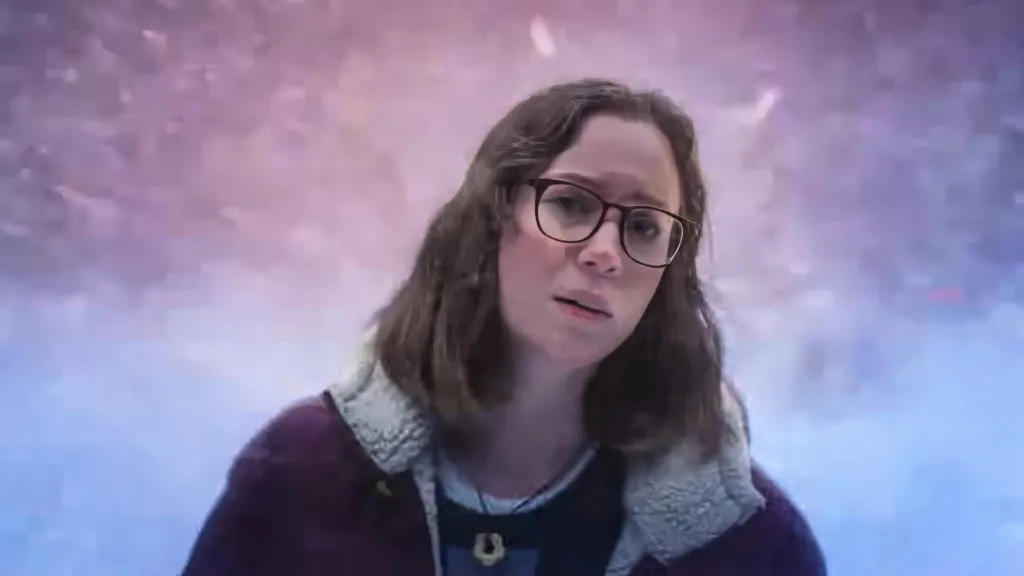
With their latest directorial outing, Jane Schoenbrun used subtle pieces of nostalgia to deconstruct the slasher genre.
The Teenage Sex and Death at Camp Miasma writer/director explained to Deadline that they wanted to create “a mindset where you can really enjoy something scary,” noting the frequent symbolism of candy and junk food as providing an atmosphere “that’s actually safe” while diving into a horror movie or exploring sexuality after trauma.
“There is this idea that if it gets too real, you can turn it off, that you’re exploring something dangerous, doing it in a way that’s actually safe,” said Schoenbrun, who is non-binary. “Which in my experience of coming into my sexual identity post-transition, kind of required some gummy candy on hand. What I mean by that is, even if we’re going to be exploring scary and vulnerable and potentially embarrassing, triggering parts of ourselves, we trust each other well enough to know that at any moment, we can be like, ‘Let’s stop, we gotta just eat some fucking gummies.’”
In Schoenbrun’s latest film, Hannah Einbinder stars as queer director Kris, who is tapped to helm a new installment of the long-running Camp Miasma horror franchise. While courting Billy Presley (Gillian Anderson), the actress who played the “final girl” in the original film, to reprise her role, the pair spirals into a psychosexual frenzy as the slasher’s killer, Little Death (Jack Haven), comes to life.
Acknowledging the problematic trans representation of horror films like Psycho (1960), Sleepaway Camp (1983), The Silence of the Lambs (1991) and Texas Chainsaw Massacre: The Next Generation (1995), Schoenbrun admitted the genre has been “catnip to me since I was 10 years old,” and they jumped at the chance to direct their own.

“So many slashers do have this sense of humor, and even if they’re not overtly meta like the Scream movies are, they’re so aware of their own tropes and the sort of rituals … And I just loved that from a young age and loved all of the little rituals within it, and so, getting to make my own is just like play and joy,” they explained.
“But it also felt like the perfect way to talk about sex and to talk about my experience as a trans person post-transition, learning how to come into a sexual identity that I could feel comfortable within, because so many of these movies are obviously deeply engaged in gender and sexual roles, and these movies have so much to say for better or for worse about deviants,” said Schoenbrun. “It is there in the DNA of the slasher genre that these movies are talking about fear and desire, gender and sexuality, normativity and deviance. And that’s all swimming in the toxic soup of the genre, so I wanted to remake it in my own language.”
Read on about Jane Schoenbrun’s love letter to the slasher genre with Teenage Sex and Death at Camp Miasma, now playing in theaters.
DEADLINE: It was really fun to see the slasher genre through your eyes. Tell me about finding inspiration in that genre and “final girls.”
JANE SCHOENBRUN: I mean, it was the easiest thing in the world because it’s just one of those genres that has been catnip to me since I was 10 years old. I just raided the horror section of the video store as a kid from an age when I really shouldn’t have been doing that, like in 5th grade, I watched in the span of about one week, every Nightmare on Elm Street movie. I think that I was always drawn to movies and really anything entertainment where it felt forbidden in some way, like the thing on the tape, how is that even allowed? And that’s the thing that I love about a lot of my favorite slashers. Don’t get me wrong, I love like brutal ones, like I love Texas Chainsaw, that’s a nasty movie at its core, and that’s what’s so special about it. But so many slashers do have this sense of humor, and even if they’re not overtly meta like the Scream movies are, they’re so aware of their own tropes and the sort of rituals of, OK, what’s the most outrageous way that like these like dumb kids can get killed? But watching it, it’s not about fear a lot of the time, it’s about joy and celebration. And I just loved that from a young age and loved all of the little rituals within it, and so, getting to make my own is just like play and joy. But it also felt like the perfect way to talk about sex and to talk about my experience as a trans person post-transition, learning how to come into a sexual identity that I could feel comfortable within, because so many of these movies are obviously deeply engaged in gender and sexual roles, and these movies have so much to say for better or for worse about deviants, whether that be Norman Bates or Buffalo Bill or Sleepway Camp or Jason, Michael Myers, Leatherface in drag. It is there in the DNA of the slasher genre that these movies are talking about fear and desire, gender and sexuality, normativity and deviance. And that’s all swimming in the toxic soup of the genre, so I wanted to remake it in my own language.

DEADLINE: I’m curious about the symbolism of all the processed junk food and the chandelier of wrappers.
SCHOENBRUN: The junk food in the movie, I forget when it found its way in there. It’s like so much of the movie is about, like I said, ritual, about being in a mindset where you can really enjoy something scary, whether that be Kris [Hannah Einbinder] in bed, with, you know, with Raisinets and the popcorn, watching a schlocky horror movie, or the two characters learning how to be present and enjoy sex after a lot of trauma. There is this idea that if it gets too real, you can turn it off, that you’re exploring something dangerous, doing it in a way that’s actually safe. Which in my experience of coming into my sexual identity post-transition, kind of required some gummy candy on hand. What I mean by that is, even if we’re going to be exploring scary and vulnerable and potentially embarrassing, triggering parts of ourselves, we trust each other well enough to know that at any moment, we can be like, “Let’s stop, we gotta just eat some fucking gummies.”
DEADLINE: And one thing I really love—I just feel like it’s a theme in your work—is how it depicts the way media and entertainment influence us. Why does that inspire you?
SCHOENBRUN: I think it comes from a fascination and sensitivity to the complex relationship between what we think of as fiction and what we think of as reality, which we tend to, as a society, think of as pointing in one direction. Like, reality dictates fiction, not vice-versa, but when you actually look at the way the world works, it’s like one echoes off the other. And I think a complicated, sometimes terrifying and sometimes beautiful way, where the fiction, the cultural norms, the things we grow up looking at on our screens, the roles that we’re told people play, they kind of inspire us to create reality. There’s something liberating when you start thinking in that way. I think it’s a way of thinking that we as a culture, could do a lot more of. To think about the idea of fiction inspiring reality just as much as reality is inspiring fiction, is a potential path to liberating us from this hellscape that they’re telling us is the only way the world can be.

DEADLINE: And I know you have the Secretary reading. Tell me what it’s been like prepping for that and why you all chose that movie.
SCHOENBRUN: I mean, that was such a huge influence on on Miasma. There just aren’t that many fun and funny movies about deviant sex. And just the way that movie is like feather light while talking about really raw and taboo things, it is just really inspiring to me. And the dynamic between those two main characters is definitely one that had a lot of influence on on Kris and Billy’s [Gillian Anderson] relationship in Miasma. And it’s already to me a very queer movie in its way, but having Gillian reading the James Spader part and Hannah reading the Maggie Gyllenhaal part, I think it’s just gonna be like a very unique joy. Honestly, we’ve been prepping a little bit, but I think it’s just gonna be about getting up there and feeling the chemistry of it all, and just letting these folks who we have all gotten to know each other really, really well, but we haven’t actually done anything wacky and creative like that in a while, like as a reunion, it’s gonna be a real blast, I think.
>


Search For Canadian TV Actor Stewart McLean Now Homicide Investigation


These ’90s fashion trends are making a comeback in 2017
According to Dior Couture, this taboo fashion accessory is back
Model Jocelyn Chew’s Instagram is the best vacation you’ve ever had
Your comprehensive guide to this fall’s biggest trends
9 Celebrities who have spoken out about being photoshopped
Emily Ratajkowski channels back-to-school style
A photo diary of the nightlife scene from LA To Ibiza
