
movies
‘Married At First Sight’: Channel 4 CEO Says Sorry To Women


New Channel 4 CEO Priya Dogra has apologized to the women who made “very troubling” rape allegations on Married at First Sight UK (MAFS), but has stressed the network “cannot investigate the specific allegations against the men.”
Dogra, who is just two months into the job, delivered her second statement to press this morning at the Channel 4 Annual Report briefing, where the focus was very much on MAFS and she faced numerous questions on the scandal.
Dogra declined to apologize yesterday after the airing of a BBC Panorama documentary and in-depth news article on the MAFS allegations, but today she said she was sorry. As she was speaking, MPs on the Culture, Media & Sport Committee contacted Channel 4 with numerous questions about the saga.
“I have heard the women’s accounts, which are very troubling,” said Dogra, who has commissioned an external review into Channel 4’s handling of MAFS allegations that will report later this summer. “Their distress is clear and for that I am of course deeply sorry.”
Dogra said the Panorama was “hard to watch” and it was “hard to hear the women talk about their experiences.” Yesterday, her predecessor Alex Mahon called the allegations “very serious and concerning,” and said they were “worth another look.”
The allegations include two of rape and one of a non-consensual sex act. The three men accused of wrongdoing deny the accusations, while Channel 4, which said it was made aware of the allegations several weeks before Monday night’s Panorama, and producer CPL Productions, say welfare protocols were followed. Nevertheless, Channel 4 has commissioned two external reviews, one from a law firm “examining the welfare protocols in place on this programme at the time claims were raised” and the other from former BBC One Controller Lorraine Heggessey, who is probing whether “any changes should be made to current protocols for MAFS UK.”
Dogra stressed today that Channel 4 “cannot investigate the specific allegations against the men, which they have denied.”
“We are a broadcaster, not an adjudicator, and allegations of this type are investigated by other bodies, including when complaints are raised, by the police,” said Dogra. “What I can do, and have done, is to commission an external review, which I did just days after being first contacted by the BBC back in April.” Her comments came a day after the Metropolitan Police urged victims on the show to come forward.
Dogra described reports that MAFS UK has been canceled as “wholly inaccurate” and said the network will make “no decision” over the sixth season until the review concludes. That season is “substantially filmed and currently in the edit,” according to chief content officer Ian Katz. “Obviously we will see what if any recommendations emerge from the review when we get it,” he added.
“Jigsaw identification”
Channel 4 took its entire MAFS UK back catalog down prior to the Panorama and Dogra said this was done in part through an “abundance of caution” to avoid “stoking speculation that might lead to the jigsaw identification of the women in the Panorama programme or indeed any other contributors.” “That is why the programme was taken down and I believe that it is the responsible thing to do in the circumstances,” she said.
Katz, who is shortly to step down after almost a decade as Channel 4’s longest-serving content chief, said he is “very confident that, based on the knowledge that we had at the time, we made the right decisions and ensured the women involved were kept safe when any issues were raised to us and were given the appropriate support.”
According to BBC News, one of the women who accused her on-screen husband of rape showed the MAFS welfare team her bruises and told them everything, aside from the alleged attack itself.
With examples like this in mind, Katz acknowledged there is a “gap” between Channel 4 feeling it has “made the right decisions” and “a situation where you have contributors who have been through a show and feel very let down.”
“I think if you talk to anyone who’s worked with me, you will know that I personally care deeply about the welfare of people who take part in our shows, and through all of my watch here, I’ve put contributor welfare at the absolute center of our commissioning approach,” he added. “So, when people participate in one of our shows and come out feeling that they haven’t been taken care of, I think that’s a failure.”
Three external welfare reviews have been commissioned during Katz’s tenure, one into MAFS, one into the suicide of true crime producer John Balson and one into the behavior of Escape to the Chateau hosts Dick and Angel Strawbridge.
Responding to a question from Deadline, Katz denied Channel 4 has a wider welfare problem and said the reviews are “evidence of how seriously we take those kind of issues and allegations, and how rigorously we looked at them.”
He noted that the Balson and Strawbridge reviews found “we had done the right things and taken the right actions at the right time.” The Balson review found that Channel 4 had acted “reasonably and appropriately” with its duty of care before the producer took his own life. Channel 4 cut ties with the Strawbridges after that review.
“Financial pressures” didn’t lead us to MAFS, Dogra says
Dogra and Katz were ostensibly speaking to press about today’s Channel 4 Annual Report.
Dogra refused to comment on whether axing MAFS will hit Channel 4’s bottom line and “challenged the notion” that financial pressures force the network into greenlighting popular reality shows like MAFS.
“We make over £1B ($1.34B) of revenue and invest £600M of that into our programming,” she added. “We have a diverse range of programming, and our job is to continue to invest in the UK creative sector and manage every other cost that we incur in the company. I don’t think that’s any different than any other business, particularly not any other media business.”
Channel 4’s revenue was broadly flat for full year 2025, while it continued to post a pre-tax deficit of around £10M and spent £640M on content.
The network today revealed it has renewed its revolving credit facility of £150M for the next five years on “competitive terms… to keep investing in content while we navigate the ongoing market challenge and continue to progress our transformation,” according to finance chief Lucy Thomas.
Channel 4 spotlighted highlights from 2025 including Virgin Island, Patience and Mitchell and Webb Are Not Helping.
Unsurprisingly, the press release touting Channel 4’s successes didn’t mention MAFS. However, the Annual Report, which clearly went to press prior to the allegations being received, called the latest season of MAFS “Channel 4’s most-streamed show of the year – and most-streamed MAFS UK series ever (up 10% on 2024).”
>

Matthew McConaughey shows off his vocal skills (and some hidden banjo talents) with his latest role in The Rivals of Amziah King.
On Friday, Lakeshore Records released the single and music video for “Quill” from the original motion picture soundtrack, performed by the Oscar-winning and co-star Ben Hardesty, also featuring Miranda Zickler, Angelina LookingGlass and Andrea Pister.
Set in the backwoods of Oklahoma, The Rivals of Amziah King follows the musically gifted Amaziah King (McConaughey) and his bluegrass-playing band of misfits while overseeing the premier honey-making operation in town. When Amaziah’s estranged foster daughter unexpectedly returns, he leaps at the chance to reconnect and create a family business. But the honey game is ruthless, and Amaziah’s rivals threaten to destroy everything he has built.

Premiering Aug. 14 in theaters, the Andrew Patterson-written-and-directed drama also stars Angelina LookingGlass, Cole Sprouse, Jake Horowitz, Tony Revolori and Kurt Russell.
Producers are David Heyman, Teddy Schwarzman, Jeffrey Clifford, Michael Heimler, James Montague and Will Greenfield.
>
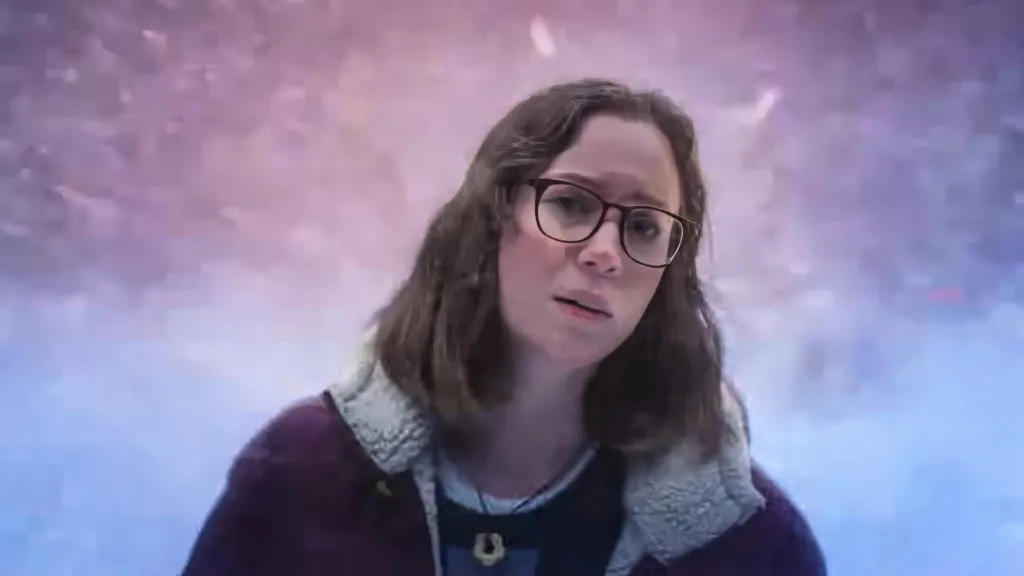
With their latest directorial outing, Jane Schoenbrun used subtle pieces of nostalgia to deconstruct the slasher genre.
The Teenage Sex and Death at Camp Miasma writer/director explained to Deadline that they wanted to create “a mindset where you can really enjoy something scary,” noting the frequent symbolism of candy and junk food as providing an atmosphere “that’s actually safe” while diving into a horror movie or exploring sexuality after trauma.
“There is this idea that if it gets too real, you can turn it off, that you’re exploring something dangerous, doing it in a way that’s actually safe,” said Schoenbrun, who is non-binary. “Which in my experience of coming into my sexual identity post-transition, kind of required some gummy candy on hand. What I mean by that is, even if we’re going to be exploring scary and vulnerable and potentially embarrassing, triggering parts of ourselves, we trust each other well enough to know that at any moment, we can be like, ‘Let’s stop, we gotta just eat some fucking gummies.’”
In Schoenbrun’s latest film, Hannah Einbinder stars as queer director Kris, who is tapped to helm a new installment of the long-running Camp Miasma horror franchise. While courting Billy Presley (Gillian Anderson), the actress who played the “final girl” in the original film, to reprise her role, the pair spirals into a psychosexual frenzy as the slasher’s killer, Little Death (Jack Haven), comes to life.
Acknowledging the problematic trans representation of horror films like Psycho (1960), Sleepaway Camp (1983), The Silence of the Lambs (1991) and Texas Chainsaw Massacre: The Next Generation (1995), Schoenbrun admitted the genre has been “catnip to me since I was 10 years old,” and they jumped at the chance to direct their own.

“So many slashers do have this sense of humor, and even if they’re not overtly meta like the Scream movies are, they’re so aware of their own tropes and the sort of rituals … And I just loved that from a young age and loved all of the little rituals within it, and so, getting to make my own is just like play and joy,” they explained.
“But it also felt like the perfect way to talk about sex and to talk about my experience as a trans person post-transition, learning how to come into a sexual identity that I could feel comfortable within, because so many of these movies are obviously deeply engaged in gender and sexual roles, and these movies have so much to say for better or for worse about deviants,” said Schoenbrun. “It is there in the DNA of the slasher genre that these movies are talking about fear and desire, gender and sexuality, normativity and deviance. And that’s all swimming in the toxic soup of the genre, so I wanted to remake it in my own language.”
Read on about Jane Schoenbrun’s love letter to the slasher genre with Teenage Sex and Death at Camp Miasma, now playing in theaters.
DEADLINE: It was really fun to see the slasher genre through your eyes. Tell me about finding inspiration in that genre and “final girls.”
JANE SCHOENBRUN: I mean, it was the easiest thing in the world because it’s just one of those genres that has been catnip to me since I was 10 years old. I just raided the horror section of the video store as a kid from an age when I really shouldn’t have been doing that, like in 5th grade, I watched in the span of about one week, every Nightmare on Elm Street movie. I think that I was always drawn to movies and really anything entertainment where it felt forbidden in some way, like the thing on the tape, how is that even allowed? And that’s the thing that I love about a lot of my favorite slashers. Don’t get me wrong, I love like brutal ones, like I love Texas Chainsaw, that’s a nasty movie at its core, and that’s what’s so special about it. But so many slashers do have this sense of humor, and even if they’re not overtly meta like the Scream movies are, they’re so aware of their own tropes and the sort of rituals of, OK, what’s the most outrageous way that like these like dumb kids can get killed? But watching it, it’s not about fear a lot of the time, it’s about joy and celebration. And I just loved that from a young age and loved all of the little rituals within it, and so, getting to make my own is just like play and joy. But it also felt like the perfect way to talk about sex and to talk about my experience as a trans person post-transition, learning how to come into a sexual identity that I could feel comfortable within, because so many of these movies are obviously deeply engaged in gender and sexual roles, and these movies have so much to say for better or for worse about deviants, whether that be Norman Bates or Buffalo Bill or Sleepway Camp or Jason, Michael Myers, Leatherface in drag. It is there in the DNA of the slasher genre that these movies are talking about fear and desire, gender and sexuality, normativity and deviance. And that’s all swimming in the toxic soup of the genre, so I wanted to remake it in my own language.

DEADLINE: I’m curious about the symbolism of all the processed junk food and the chandelier of wrappers.
SCHOENBRUN: The junk food in the movie, I forget when it found its way in there. It’s like so much of the movie is about, like I said, ritual, about being in a mindset where you can really enjoy something scary, whether that be Kris [Hannah Einbinder] in bed, with, you know, with Raisinets and the popcorn, watching a schlocky horror movie, or the two characters learning how to be present and enjoy sex after a lot of trauma. There is this idea that if it gets too real, you can turn it off, that you’re exploring something dangerous, doing it in a way that’s actually safe. Which in my experience of coming into my sexual identity post-transition, kind of required some gummy candy on hand. What I mean by that is, even if we’re going to be exploring scary and vulnerable and potentially embarrassing, triggering parts of ourselves, we trust each other well enough to know that at any moment, we can be like, “Let’s stop, we gotta just eat some fucking gummies.”
DEADLINE: And one thing I really love—I just feel like it’s a theme in your work—is how it depicts the way media and entertainment influence us. Why does that inspire you?
SCHOENBRUN: I think it comes from a fascination and sensitivity to the complex relationship between what we think of as fiction and what we think of as reality, which we tend to, as a society, think of as pointing in one direction. Like, reality dictates fiction, not vice-versa, but when you actually look at the way the world works, it’s like one echoes off the other. And I think a complicated, sometimes terrifying and sometimes beautiful way, where the fiction, the cultural norms, the things we grow up looking at on our screens, the roles that we’re told people play, they kind of inspire us to create reality. There’s something liberating when you start thinking in that way. I think it’s a way of thinking that we as a culture, could do a lot more of. To think about the idea of fiction inspiring reality just as much as reality is inspiring fiction, is a potential path to liberating us from this hellscape that they’re telling us is the only way the world can be.

DEADLINE: And I know you have the Secretary reading. Tell me what it’s been like prepping for that and why you all chose that movie.
SCHOENBRUN: I mean, that was such a huge influence on on Miasma. There just aren’t that many fun and funny movies about deviant sex. And just the way that movie is like feather light while talking about really raw and taboo things, it is just really inspiring to me. And the dynamic between those two main characters is definitely one that had a lot of influence on on Kris and Billy’s [Gillian Anderson] relationship in Miasma. And it’s already to me a very queer movie in its way, but having Gillian reading the James Spader part and Hannah reading the Maggie Gyllenhaal part, I think it’s just gonna be like a very unique joy. Honestly, we’ve been prepping a little bit, but I think it’s just gonna be about getting up there and feeling the chemistry of it all, and just letting these folks who we have all gotten to know each other really, really well, but we haven’t actually done anything wacky and creative like that in a while, like as a reunion, it’s gonna be a real blast, I think.
>
With their latest directorial outing, Jane Schoenbrun used subtle pieces of nostalgia to deconstruct the slasher genre.
The Teenage Sex and Death at Camp Miasma writer/director explained to Deadline that they wanted to create “a mindset where you can really enjoy something scary,” noting the frequent symbolism of candy and junk food as providing an atmosphere “that’s actually safe” while diving into a horror movie or exploring sexuality after trauma.
“There is this idea that if it gets too real, you can turn it off, that you’re exploring something dangerous, doing it in a way that’s actually safe,” said Schoenbrun, who is non-binary. “Which in my experience of coming into my sexual identity post-transition, kind of required some gummy candy on hand. What I mean by that is, even if we’re going to be exploring scary and vulnerable and potentially embarrassing, triggering parts of ourselves, we trust each other well enough to know that at any moment, we can be like, ‘Let’s stop, we gotta just eat some fucking gummies.’”
In Schoenbrun’s latest film, Hannah Einbinder stars as queer director Kris, who is tapped to helm a new installment of the long-running Camp Miasma horror franchise. While courting Billy Presley (Gillian Anderson), the actress who played the “final girl” in the original film, to reprise her role, the pair spirals into a psychosexual frenzy as the slasher’s killer, Little Death (Jack Haven), comes to life.
Acknowledging the problematic trans representation of horror films like Psycho (1960), Sleepaway Camp (1983), The Silence of the Lambs (1991) and Texas Chainsaw Massacre: The Next Generation (1995), Schoenbrun admitted the genre has been “catnip to me since I was 10 years old,” and they jumped at the chance to direct their own.
“So many slashers do have this sense of humor, and even if they’re not overtly meta like the Scream movies are, they’re so aware of their own tropes and the sort of rituals … And I just loved that from a young age and loved all of the little rituals within it, and so, getting to make my own is just like play and joy,” they explained.
“But it also felt like the perfect way to talk about sex and to talk about my experience as a trans person post-transition, learning how to come into a sexual identity that I could feel comfortable within, because so many of these movies are obviously deeply engaged in gender and sexual roles, and these movies have so much to say for better or for worse about deviants,” said Schoenbrun. “It is there in the DNA of the slasher genre that these movies are talking about fear and desire, gender and sexuality, normativity and deviance. And that’s all swimming in the toxic soup of the genre, so I wanted to remake it in my own language.”
Read on about Jane Schoenbrun’s love letter to the slasher genre with Teenage Sex and Death at Camp Miasma, now playing in theaters.
DEADLINE: It was really fun to see the slasher genre through your eyes. Tell me about finding inspiration in that genre and “final girls.”
JANE SCHOENBRUN: I mean, it was the easiest thing in the world because it’s just one of those genres that has been catnip to me since I was 10 years old. I just raided the horror section of the video store as a kid from an age when I really shouldn’t have been doing that, like in 5th grade, I watched in the span of about one week, every Nightmare on Elm Street movie. I think that I was always drawn to movies and really anything entertainment where it felt forbidden in some way, like the thing on the tape, how is that even allowed? And that’s the thing that I love about a lot of my favorite slashers. Don’t get me wrong, I love like brutal ones, like I love Texas Chainsaw, that’s a nasty movie at its core, and that’s what’s so special about it. But so many slashers do have this sense of humor, and even if they’re not overtly meta like the Scream movies are, they’re so aware of their own tropes and the sort of rituals of, OK, what’s the most outrageous way that like these like dumb kids can get killed? But watching it, it’s not about fear a lot of the time, it’s about joy and celebration. And I just loved that from a young age and loved all of the little rituals within it, and so, getting to make my own is just like play and joy. But it also felt like the perfect way to talk about sex and to talk about my experience as a trans person post-transition, learning how to come into a sexual identity that I could feel comfortable within, because so many of these movies are obviously deeply engaged in gender and sexual roles, and these movies have so much to say for better or for worse about deviants, whether that be Norman Bates or Buffalo Bill or Sleepway Camp or Jason, Michael Myers, Leatherface in drag. It is there in the DNA of the slasher genre that these movies are talking about fear and desire, gender and sexuality, normativity and deviance. And that’s all swimming in the toxic soup of the genre, so I wanted to remake it in my own language.
DEADLINE: I’m curious about the symbolism of all the processed junk food and the chandelier of wrappers.
SCHOENBRUN: The junk food in the movie, I forget when it found its way in there. It’s like so much of the movie is about, like I said, ritual, about being in a mindset where you can really enjoy something scary, whether that be Kris [Hannah Einbinder] in bed, with, you know, with Raisinets and the popcorn, watching a schlocky horror movie, or the two characters learning how to be present and enjoy sex after a lot of trauma. There is this idea that if it gets too real, you can turn it off, that you’re exploring something dangerous, doing it in a way that’s actually safe. Which in my experience of coming into my sexual identity post-transition, kind of required some gummy candy on hand. What I mean by that is, even if we’re going to be exploring scary and vulnerable and potentially embarrassing, triggering parts of ourselves, we trust each other well enough to know that at any moment, we can be like, “Let’s stop, we gotta just eat some fucking gummies.”
DEADLINE: And one thing I really love—I just feel like it’s a theme in your work—is how it depicts the way media and entertainment influence us. Why does that inspire you?
SCHOENBRUN: I think it comes from a fascination and sensitivity to the complex relationship between what we think of as fiction and what we think of as reality, which we tend to, as a society, think of as pointing in one direction. Like, reality dictates fiction, not vice-versa, but when you actually look at the way the world works, it’s like one echoes off the other. And I think a complicated, sometimes terrifying and sometimes beautiful way, where the fiction, the cultural norms, the things we grow up looking at on our screens, the roles that we’re told people play, they kind of inspire us to create reality. There’s something liberating when you start thinking in that way. I think it’s a way of thinking that we as a culture, could do a lot more of. To think about the idea of fiction inspiring reality just as much as reality is inspiring fiction, is a potential path to liberating us from this hellscape that they’re telling us is the only way the world can be.
DEADLINE: And I know you have the Secretary reading. Tell me what it’s been like prepping for that and why you all chose that movie.
SCHOENBRUN: I mean, that was such a huge influence on on Miasma. There just aren’t that many fun and funny movies about deviant sex. And just the way that movie is like feather light while talking about really raw and taboo things, it is just really inspiring to me. And the dynamic between those two main characters is definitely one that had a lot of influence on on Kris and Billy’s [Gillian Anderson] relationship in Miasma. And it’s already to me a very queer movie in its way, but having Gillian reading the James Spader part and Hannah reading the Maggie Gyllenhaal part, I think it’s just gonna be like a very unique joy. Honestly, we’ve been prepping a little bit, but I think it’s just gonna be about getting up there and feeling the chemistry of it all, and just letting these folks who we have all gotten to know each other really, really well, but we haven’t actually done anything wacky and creative like that in a while, like as a reunion, it’s gonna be a real blast, I think.
>

WNBA commissioner stresses integrity, respect on topic of transgender athletes in league-wide memo

Argentina 10-17 South Africa: Springboks win Buenos Aires thriller but Siya Kolisi suffers injury ahead of New Zealand series | Rugby Union News

Valencia 1-2 Newcastle: Yoane Wissa’s double gives Matthias Jaissle winning start as Anthony Elanga stretchered off | Football News
-

 movies3 months ago
Search For Canadian TV Actor Stewart McLean Now Homicide Investigation
-

 Fashion9 years ago
These ’90s fashion trends are making a comeback in 2017
-
Fashion9 years ago
According to Dior Couture, this taboo fashion accessory is back
-
Fashion9 years ago
Model Jocelyn Chew’s Instagram is the best vacation you’ve ever had
-
Fashion9 years ago
Your comprehensive guide to this fall’s biggest trends
-
Fashion9 years ago
9 Celebrities who have spoken out about being photoshopped
-
Fashion9 years ago
Emily Ratajkowski channels back-to-school style
-
Fashion9 years ago
A photo diary of the nightlife scene from LA To Ibiza