Connect with us

Sports

Picking the England World Cup squad: Who makes our writers’ final 26-man cut?

Published

on

Has Harry Maguire worked his way back into the picture? Will Phil Foden pay the price for an underwhelming season? Could Morgan Rogers be left at home? Should Max Dowman go as a wildcard option?

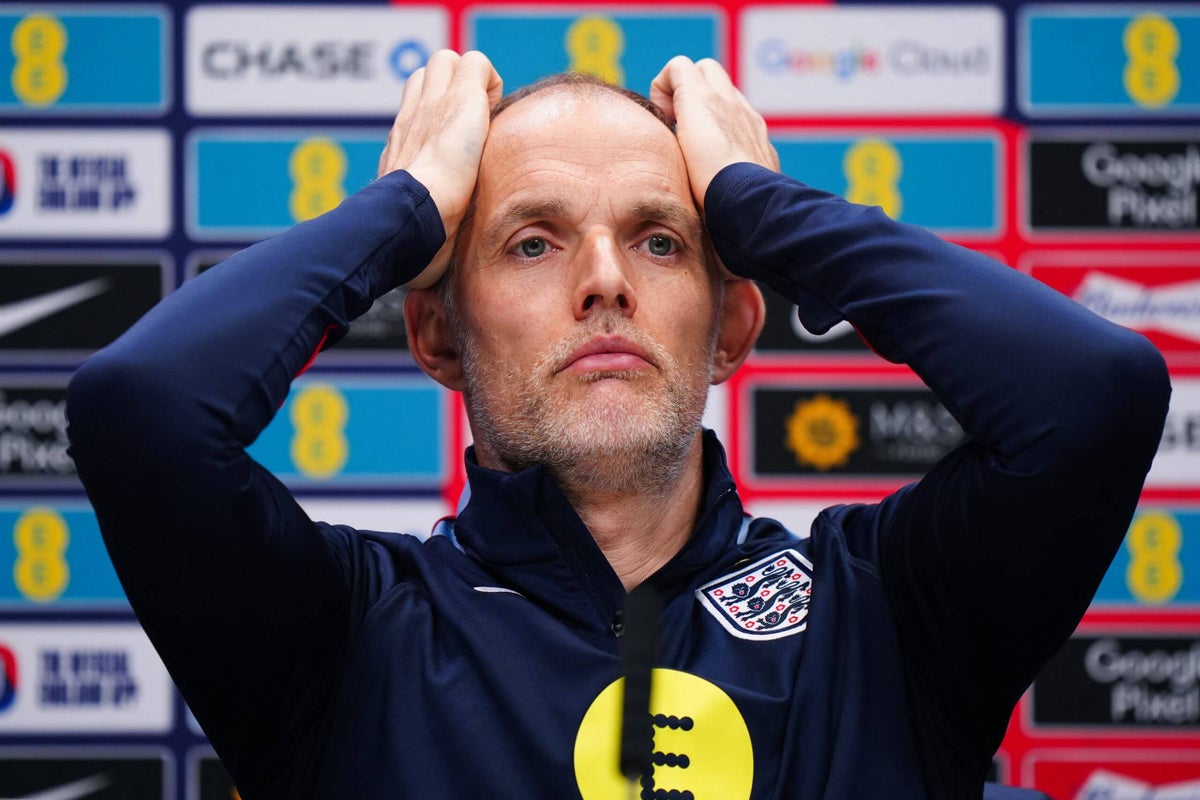
England head coach Thomas Tuchel names his squad for the upcoming World Cup in North America on Friday, and these may be among the questions he is currently pondering.

We asked eight of our writers to work out which 26 players they would take to the tournament if they were England boss and, while there are plenty of certainties, it is clear there are still places up for grabs…


Foden pays the price for below-par England displays

Jack Pitt-Brooke: Most of these picks are obvious. There is no point wasting words justifying Declan Rice’s inclusion. In terms of the marginal calls, I was very tempted to bring back Trent Alexander-Arnold but just went for Reece James and Tino Livramento as my right-backs. If either cannot prove his fitness, then the Real Madrid man comes in.

Harry Maguire gets the nod as the experienced centre-back option over Dan Burn, but that is a tight one, too. Morgan Gibbs-White’s club form is too good to ignore, so he is in rather than Kobbie Mainoo as my extra midfielder.

The forwards are more debatable. I dropped Phil Foden, who has not looked right for England for some time. Cole Palmer does make it onto my plane. Danny Welbeck is my back-up No 9 over Dominic Calvert-Lewin and Dominic Solanke, although that was not an easy call either. Jarrod Bowen also makes it.


Colwill and Gibbs-White force their way in

Elias Burke: In my initial draft, I opted for Harry Maguire as England’s fourth centre-back over Levi Colwill based on his experience with the national team in tournaments and his improved performances under Michael Carrick at club level, but I was so impressed with Colwill against Manchester City in the FA Cup final that he has stepped ahead of the Manchester United man.

He’s a good fit from a profile perspective, adding a left-footer to the unit, and, given that many think he will be a fixture in England’s back line in the future, it will provide him with some tournament experience. That being said, I’ve gone for Luke Shaw over Lewis Hall.

Club World Cup winner Levi Colwill is fit again after a long injury absence (Michael Reaves/Getty Images)

I also initially left out Morgan Gibbs-White, primarily because I was not sure how he would recover from the serious facial injury suffered in Nottingham Forest’s 3-1 win against Chelsea, but he answered my doubts on Sunday, scoring in a 3-2 defeat against Manchester United, assisted by Elliot Anderson. Gibbs-White’s 14 league goals from midfield are just the tip of the iceberg of what he brings to Forest, and he is one of the few England attacking players in red-hot form going into the World Cup. I hope he gets to play meaningful minutes in it.

Jordan Henderson gets the nod for non-footballing reasons — too many team-mates and coaches wax lyrical about his leadership and standard-setting qualities to overlook his value.

My most left-field brief consideration was Callum Wilson, because he’s so dangerous as a goal threat from the bench, but Ollie Watkins has ended the season in strong form, and he’s a far more sensible pick as backup No 9.


Welbeck over Watkins

Dan Sheldon: This squad largely picks itself. Trent Alexander-Arnold should be going to the World Cup and is a better option — and player — than Tino Livramento. The rest of my defensive picks are straightforward and don’t need any justification.

In the heart of midfield, Declan Rice and Elliot Anderson should play every match, but Kobbie Mainoo is a great option off the bench and has been in great form of late, so would enter the tournament with momentum.

The attacking players are all self-explanatory, although Danny Welbeck is my wildcard. I just think he has been more consistent than Ollie Watkins and, even though he has never been selected by Thomas Tuchel, has done more than enough to warrant a place in the squad. He would also be a great option to bring off the bench if England are searching for a goal.


No place for Rogers, but Toney makes it

Mark Critchley: As close to a Gareth Southgate redux as possible. I don’t even know if I like this squad now I’ve actually written it down, but it mixes tournament experience with new blood.

Trent Alexander-Arnold is too good a player to leave in Madrid. Luke Shaw is in off the back of his most consistent and consistently available season in a long time and can play left of a back three if needed. I’ve come round to the idea of Jordan Henderson being a grandfatherly figure.

Apologies in particular to Morgan Rogers. It was a close call with Morgan Gibbs-White. Sorry to Adam Wharton, Phil Foden, Jarrod Bowen, Ollie Watkins and Tino Livramento too.

Morgan Rogers has been a favourite of Thomas Tuchel’s (Mike Hewitt/Getty Images)

Ivan Toney? Look, I want five proper, consistent penalty takers. Harry Kane, Anthony Gordon, Cole Palmer, him and Bukayo Saka in that order. Maybe we’re in trouble if Kane gets injured with this squad, but we always would be anyway.


Scott and Wharton, a dynamics-changing duo

Seb Stafford-Bloor: Nothing there feels especially contentious. The only real dilemma was leaving Noni Madueke out, choosing instead to make space for an extra centre-back; I want the option of using a back three and do not want to be gambling on the fitness of either Reece James or John Stones.

Adam Wharton and Alex Scott make the squad on account of their fluency and having abilities which change the dynamics of the midfield. Scott can carry, Wharton can pass; accommodating both means Ollie Watkins misses out.


Dowman misses out — but only just

Stuart James: What’s clear is that quite a few things have changed since I was asked to do this a couple of months ago. I now feel that Morgan Gibbs-White’s form is too good to ignore and that total of 14 league goals is an outstanding return in a team who are fifth from bottom. Ollie Watkins has also come good at the right time, so he’s back in my squad too. I feel bad for Dominic Calvert-Lewin — sorry.

Levi Colwill’s timely return from injury gets him a place in the squad too, with his cause helped by the fact he’s a left-footer. I toyed with picking Myles Lewis-Skelly as well, but just feel he probably needed another seven or eight games in central midfield for Arsenal. There are five central defenders, which is a bit excessive but is partly influenced by concerns around what John Stones will and won’t be able to do.

Oh, and Max Dowman is no longer on the plane – that’s not a decision I’ve made with any conviction. I still think he’s a great wildcard.


Mitchell and Garner on the plane

Max Mathews: A talented, hungry, well-balanced squad… hopefully.

Three goalkeepers: an extra outfielder’s benefits outweigh the security of a fourth stopper.

Trent Alexander-Arnold is in with Ben White injured, while Ezri Konsa and the returning Levi Colwill can cover at full-back.

Tyrick Mitchell deserves a spot as an out-and-out left-back. Harry Maguire waits in the wings if Colwill or John Stones are unfit/injured.

Tyrick Mitchell has been a consistent performer for Crystal Palace (Ben Stansall/AFP via Getty Images)

In midfield, the technical ability and positivity of Adam Wharton and Kobbie Mainoo must be prioritised over a past-his-best Jordan Henderson. James Garner adds set-piece prowess and aggression — great to bring on if protecting a lead. Morgan Gibbs-White and Phil Foden are unlucky, while Myles Lewis-Skelly’s late surge came too late. Nico O’Reilly has the full-back-inverting-midfielder slot.

Up front, I love Danny Welbeck as a smart and canny backup. Ollie Watkins and Noni Madueke have blown too hot and cold. Eberechi Eze has the slot on the left with Anthony Gordon and Marcus Rashford as versatile bench options.


Another vote for Alexander-Arnold

Rob Tanner: This World Cup could be the most physically demanding ever, so I am taking a few risks with my selections.

Reece James and Tino Livramento have had their fair share of injury problems this season. Initially I thought, ‘Can I include both?’. But James is the best right-back, by far, and Livramento’s adaptability would be welcome.

Just in case James’ body lets him down again, I would recall Trent Alexander-Arnold because I would prefer a natural right-back rather than a makeshift one in a 26-man squad.

I also had concerns over Dominic Calvert-Lewin after his injury woes in the past but he has come through this season relatively unscathed and has scored 13 Premier League goals. He seems to be the best natural replacement for Harry Kane in how he plays. The option of Jarrod Bowen as a false nine should Kane be missing intrigues me too.

The Manchester United duo of Harry Maguire and Kobbie Mainoo have finished the season strongly, so I have included them, with Maguire and John Stones providing much-needed experience. Mainoo could be England’s surprise package if he gets a chance.

In contrast, Cole Palmer has been out of form but he is just too talented to leave at home and he could spark to life when the games begin in North America.


A tough call to lose Bowen

Cerys Jones: I don’t think the fringe players from March’s super-sized squad really did enough to justify a spot on the plane. Phil Foden has not shown enough to earn a place over Morgan Rogers or Cole Palmer (despite Palmer’s disappointing Premier League season). My real attacking dilemma was Jarrod Bowen: it’s with a heavy heart that I say he makes way, as I don’t want to leave either of the Morgans, Gibbs-White and Rogers, at home.

The defence is straightforward: Thomas Tuchel has a wealth of steady centre-backs and bright full-backs to pick from.

>

Continue Reading

Sports

How the Nationals plan to replace departed trade-deadline players in the aggregate

Published

on

WASHINGTON — There is a scene in the film “Moneyball” where general manager Billy Beane declares that his Oakland Athletics will try to recreate Jason Giambi in the aggregate.

Washington Nationals president of baseball operations Paul Toboni did not make that exact claim for his club, nor did he trade an MVP candidate away, but there is a similar thread to pull on here. The Nats, at least as currently constructed, felt comfortable replacing recently traded players Foster Griffin, Luis García Jr. and Curtis Mead internally while adding to the farm system.

“It’s really tough to replace those guys — like, Curtis and Luis both, they’ve been two of the best hitters in the major leagues this year,” Toboni said on trade deadline day. “That being said … ideally, we can look up a month or two from now and say, ‘Hey, the offense hasn’t slowed down much.’ If anything, it’d be cool if we reached new heights.”

The claim was bold. It came with caveats. And yet, after dropping seven of eight on the road, the Nationals came home and completed a three-game sweep of the Cincinnati Reds on Sunday. The players they acquired have already produced, and the fill-ins have … filled in admirably. Has that made the deadline sell-off easier to sell to the clubhouse? Can we say that the Nats have nailed the whole “compete now and later” strategy? Both are TBD.

But there’s a compelling vision. Here’s what it looks like and what the team expects from the 2026 fill-ins and the possible 2027 debutants, leaning on what we’re hearing around the organization and seeing in small, encouraging samples.

Do trade deadline deals lead to World Series rings?

Joe Crisalli

Recreating 1B Luis García Jr.

What they have to replace: The highest slugging percentage in the National League.

Who’s being asked to fill in: Andrés Chaparro and Abimelec Ortiz.

Why this could work: These guys rake.

Replacing García’s clubhouse presence? Hard. Replacing his NL-best .560 slugging percentage? Hard, but more feasible.

Ortiz has three extra-base hits and even more hard outs in 22 MLB at-bats. He had an .845 OPS this season in Triple-A Rochester, with underlying metrics that indicate he was a bit unlucky. And while it might be unfair to expect Ortiz to replicate Garcia’s power, he rarely chases, which could help him maintain a higher OBP.

Oh, and almost everything that was just said about Ortiz applies in some way to Chaparro, be it through hard contact, bad luck or a high OBP.

The Nationals like Ortiz’s mature approach and believe it’s sustainable. They believe Chaparro could have a Mead-like trajectory, beginning as a platoon bat against lefties before eventually earning regular at-bats against righties (possibly at DH or third base).

Recreating Foster Griffin

What they have to replace: Almost a guaranteed win.

Who’s being asked to fill in: Andrew Alvarez and … a TBD Triple-A starter.

Why this could work: Tutelage and peripherals.

Players brought in on one-year deals are not always the best mentors. Griffin was different. The lefty helped his peers tweak their game-planning routines, especially Alvarez. Over the last few weeks, Alvarez has prepared by watching the opposing hitters’ most recent at-bats against lefties, because that’s what Griffin taught him to do.

“Sometimes, reports and things that you look at on paper might not tell the whole story,” Alvarez said. “I’m not gonna watch someone throwing 99 (mph) and play that and do it, but … it’s watching their sequences in the last 30 days, and just getting visuals, seeing how they’re reacting to certain sequences, but then also knowing myself and what I do.”

Couple that with improved fastball command, and the Nats may have a guy down the stretch. Alvarez has allowed 3 earned runs in 11 2/3 innings over his last two outings. And while xERA is not everything, the gap between Alvarez (4.33) and Griffin (4.06) isn’t that wide.

Couple that with an upcoming debut from Jackson Kent or Luis Perales (one of whom could replace Zack Littell, after the Nats designated him for assignment last week), and there’s a world in which Washington’s starting rotation has some juice down the stretch.

Recreating Curtis Mead

What they have to replace: One of the best offensive third basemen in MLB.

Who’s being asked to fill in: Brady House and Jorbit Vivas.

Why this could work: It might not, but House is hitting well.

The trade with the most sound logic is also the one that could harm the team the most over the next two months. The Nationals would take that Mead-for-Connelly Early deal 10 times out of 10, but finding everyday production from the hot corner is not as easy as it sounds.

That is largely due to Washington’s inability to find an answer against right-handed pitching. The Nationals acquired Vivas this spring because his swing decisions gave the coaching staff a base to work from, but it hasn’t led to much production. Vivas, a lefty, entered Sunday with a .666 OPS against righties in 215 plate appearances.

The case for everyday at-bats for House: The former top-100 prospect has hit well since his return from Triple-A Rochester. His xSLG against righties since returning is .527, which is still better than the .376 he had before his demotion, albeit in a limited sample. The club wants to ease him in, but at this point, unless the Nats believe regular at-bats against righties will disrupt House’s development, he appears ready to play every day. (Vivas entered Sunday with a .324 xSLG against righties).

The downside: If you really want to protect House against the best righties in MLB, there isn’t an obvious left-handed infielder to call up from Rochester. But maybe that’s OK. The platoon-heavy lineup has worked everywhere except third base. They could cycle various right-handed hitters through and, if they recalled Yohandy Morales from Triple-A Rochester, they could have him fill in at third or DH.

The plan for six other key deadline additions

(Non-Connelly Early edition, as he’s been covered.)

RHP Jack Cebert (from New York in the García trade)

What he’s done in 2026: 3.84 ERA in 86 2/3 innings, 10.59 K/9, 2.80 BB/9 across two levels.

What he’s done with the Nats: Four scoreless innings in his debut with Double-A Harrisburg.

What the club thinks he will do: He’s a five-pitch guy with the potential to add one or two more pitches to help him get left-handed hitters out. The Nats also value that he has three fastballs. The primary weapon is the sweeper, which is getting a whiff rate greater than 40 percent in the minor leagues. The metrics on the pitch itself aren’t nutty, but they’re good, and he throws it from a wide angle with lengthy extension and good command.

RHP Ben Grable (from New York in the García trade)

What he’s done in 2026: 2.33 ERA in 38 2/3 innings, 13.97 K/9, 2.33 BB/9 across two levels.

What he’s done with the Nats: Struck out four in one inning (one batter reached based on a wild pitch after striking out) in his second appearance with Double-A Harrisburg.

What the club thinks he will do: The Nats have taught many of their pitching prospects to develop better sliders, because that is something smart organizations do. It is much harder to teach an elite fastball outside of a velocity bump, which makes it valuable to acquire pitchers with elite fastballs. Grable’s fastball misses the zone 35 percent of the time in Double-A (hat tip to George Lewis’ stellar prospect guide) because of how he throws it (with extreme carry and good velocity). That would be one of the highest rates in MLB. The Nats, accordingly, tout Grable as one of the best relief prospects in the minors. He uses the fastball about 70 percent of the time, a rate the organization isn’t yet sure should go up or down. If the Nats want it to go up, it helps that one of their pitching coaches, Sean Doolittle, used to throw a fastball 90 percent of the time.

RHP Yovanny Cruz (from New York in the García trade)

What he’s done in 2026: 2.35 ERA in 7 2/3 innings, 10.57 K/9, 4.70 BB/9 in MLB; 3.53 ERA in 35 2/3 innings, 13.12 K/9, 3.53 BB/9 in Triple A.

What he’s done with the Nats: Throw the Nationals’ fastest fastball of the Statcast era, with a computer metrics-breaking slider.

What the club thinks he will do: Ideally, pitch in the back end of their bullpen for years to come. It’s too early to make that claim, but he has the stuff to do it. They think he could become a true three-pitch guy. He already has an elite slider and a fastball that sits at 100 mph, but a dominant splitter on top of those two pitches could be a difference-maker. We saw as much against Elly De La Cruz on Saturday, when Cruz fed the Cincinnati Reds star two splitters to strike out the shortstop before strutting off the mound.

LHP Will Dion (from Cleveland in the Griffin trade)

What he’s done in 2026: 3.86 ERA in 23 1/3 innings, 10.03 K/9, 1.54 BB/9 in MLB; 3.62 ERA in 37 1/3 innings, 12.54 K/9, 1.69 BB/9 in Triple A.

What he’s done with the Nats: Pitched 3 2/3 scoreless innings.

What the club thinks he will do: Handle both-handed hitters well, and pitch in every role imaginable. Generally speaking, pitchers who throw from as high of an arm slot as Dion does fare better against same-sided hitters than the low-slot lefties the Nats have cycled through. His three scoreless innings Sunday against the Reds’ right-handed-heavy lineup were pretty good evidence for this theory, as were his reverse splits this season in Triple A.

LHP Josh Hartle (from Cleveland in the Griffin trade)

What he’s done in 2026: 3.74 ERA in 98 2/3 innings, 8.67 K/9, 3.38 BB/9 across two levels.

What he’s done with the Nats: 5 1/3 IP, 3 H, 1 R, 0 BB, 7 K in his debut with Double-A Harrisburg.

What the club thinks he will do: Hartle is a post-hype candidate who can spin the ball in a manner that’s hard to teach. There’s a lot left to refine and tighten up, but the raw characteristics are there, and there’s a chance for him to add strength in the offseason.

RHP Joe Glassey (from Baltimore in the Christian Franklin trade)

What he’s done in 2026: 2.48 ERA in 32 2/3 innings, 15.70 K/9, 2.48 BB/9 across two levels.

What he’s done with the Nats: Thrown two scoreless innings with Double-A Harrisburg.

What the club thinks he will do: If you want a deal to go under the radar, trade a Triple-A outfielder for a Double-A reliever one hour before the deadline. But Glassey has the second-best strikeout-to-walk ratio in the minor leagues, and that’s a strong predictor of future success. His is a low-slot, high-extension profile that’s hard to find.

>

Continue Reading

Sports

Chiefs offensive coordinator Eric Bieniemy returns to training camp

Published

on

Chiefs offensive coordinator Eric Bieniemy walks toward the practice field at training camp.

Chiefs offensive coordinator Eric Bieniemy told fans and well-wishers, “It’s great to be back” as he walked to the practice field on Monday. Jamie Squire / Getty Images

ST. JOSEPH, Mo. — Kansas City Chiefs offensive coordinator Eric Bieniemy returned to the team’s training camp on Monday after a two-week hiatus after his wife, Mia, was shot in the couple’s home in Virginia.

Bieniemy walked down the hill to practice on Monday, telling fans and well-wishers, “It’s great to be back,” as he made his way to the field. Bieniemy first left the team on July 27, the day after Mia was shot in Ashburn, Va.

Subsequently, Elijah Bieniemy — Eric and Mia’s son — was arrested and charged after a shooting in which “one adult female (suffered) from multiple gunshot wounds,” the Loudoun County Sheriff’s Office said in a release. Elijah Bieniemy, 27, was charged with malicious wounding, use of a firearm in commission of a felony and discharge of a firearm inside of a dwelling.

Chiefs coach Andy Reid said last week that Mia Bieniemy was “doing better” and “keeps improving by the day.” He reiterated then that there was no timeline for Eric returning to practice.

Bieniemy, though, also remained engaged from afar. He watched live streams of Chiefs practices and even called general manager Brett Veach once during drills, telling him to hand the phone to Reid in hopes he would relay instructions to rookie running back Emmett Johnson.

Bieniemy returned to the Chiefs as offensive coordinator this season after a previous stint as OC with the team from 2018-22. He was the offensive coordinator for the Washington Commanders in 2023.

The couple’s home is roughly three miles from the Commanders’ practice facility.

This story will be updated.

Connections: Sports Edition Logo

Connections: Sports Edition Logo

Connections: Sports Edition

Spot the pattern. Connect the terms

Find the hidden link between sports terms

>

Continue Reading

Sports

How to watch the men’s National Bank Open Presented by Rogers: Streaming options for the Quarterfinal

Published

on

The men’s schedule at the National Bank Open Presented by Rogers today includes two matches, among them Rafael Jodar (ranked No. 15) versus Arthur Fils (No. 24).

National Bank Open Presented by Rogers key details

  • Tournament: The National Bank Open Presented by Rogers
  • Round: Quarterfinals
  • Date: August 10
  • Streaming: Fubo (Stream now)
  • Venue: Stade Iga
  • Location: Montréal, Quebec
  • Court Surface: Hard
  • Watching in person? Get tickets on StubHub.

National Bank Open Presented by Rogers schedule today

  • Rafael Jodar vs. Arthur Fils, 6 p.m. ET (Quarterfinal)
  • Luciano Darderi vs. Brandon Nakashima, 7:10 p.m. ET (Quarterfinal)

National Bank Open Presented by Rogers odds

  • Gael Monfils: +100
  • Kyrian Jacquet: +100
  • Lorenzo Musetti: +100
  • Jack Draper: +100
  • Valentin Royer: +100
  • Jiri Lehecka: +100
  • Titouan Droguet: +100
  • Rinky Hijikata: +100
  • Liam Draxl: +100
  • Mariano Navone: +100
  • Juan Manuel Cerundolo: +100
  • Thiago Agustin Tirante: +100
  • Francisco Cerundolo: +100
  • Fabian Marozsan: +100
  • Sho Shimabukuro: +100
  • Adam Walton: +100
  • Alex de Minaur: +100
  • Vit Kopriva: +100
  • Felix Auger-Aliassime: +100
  • Sebastian Baez: +100
  • Terence Atmane: +100
  • Flavio Cobolli: +100
  • Jacob Fearnley: +100
  • Duncan Chan: +100
  • Martin Landaluce: +100

This watch guide was created using technology provided by Data Skrive.

Betting/odds, ticketing and streaming links in this article are provided by partners of The Athletic. Restrictions may apply. The Athletic maintains full editorial independence. Partners have no control over or input into the reporting or editing process and do not review stories before publication.

Photo: Clive Brunskill, Carl De Souza, Filipe Amorim, Valery Hache / Getty Images

Connections: Sports Edition Logo

Connections: Sports Edition Logo

Connections: Sports Edition

Spot the pattern. Connect the terms

Find the hidden link between sports terms

>

Continue Reading

Trending

Copyright © 2017 Zox News Theme. Theme by MVP Themes, powered by WordPress.