
Callum Turner and Monica Barbaro at the One Night Only premiere on Monday.
Roy Rochlin/Getty Images for Universal Pictures


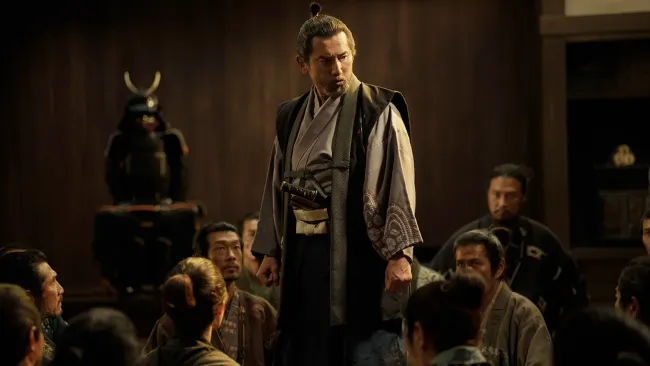
Invoked several times across his anomalous new feature, a curious but plodding 16th century mystery-drama set within the walls of a Japanese castle as Nobunaga Oda’s army closes in on it, the Buddhist phrase “advance to paradise, retreat into hell” contains a backwards logic that has been adopted by the characters in any number of Kiyoshi Kurosawa’s films. From “Cure” to “Creepy” and all sorts of dark places in between, the Japanese auteur has crystallized the abstract horrors of the modern world by rendering their shared tendency towards accelerationism — by unflinchingly observing how the greatest threats to our survival are driven by the impulse to push forward (and faster) in the face of a crisis, rather than rethink the source of our collective unrest.


Indeed, the final scene of Kurosawa’s recent “Cloud” found its web-scammer protagonist arriving at his ultimate moral crossroads, and, in lieu of a more convenient option, joining the devil on a night drive straight into the abyss. It’s rare that someone retreats into hell — they usually bound toward it with both eyes open.
That “The Samurai and the Prisoner” so explicitly confronts that idea, and takes great pains to set it straight, is enough to make this hyper-contained period epic a vintage Kurosawa film at heart. In this case, however, that could mean either Kiyoshi or Akira, as this old-fashioned jidaigeki is otherwise centuries removed from the “Tokyo Sonata” director’s signature milieu, its period setting and stodgy genre tropes making it even more of a curveball than recent departures like “To the Ends of the Earth” and “Wife of a Spy.” Tedious in its plotting but rich in its temporal frictions, this ultra-faithful adaptation of Honobu Yonezawa’s 2021 novel embraces the time-honored traditions of its form with an eye toward subverting them by the end, an approach that proves apt — if not always satisfying — in the context of a story about a samurai who’s struggling to determine if he should do the same.
That samurai is none other than Araki Murashige (Masahiro Motoki), a legend of the Sengoku era who’s still remembered for his seemingly suicidal decision to rebel against Oda’s army as it swept across Japan in 1578. Our story begins in the winter of that year, as Murashige — along with his wife Chiyoho (Yuriko Yoshitaka) and the small handful of clans loyal to their family — barricade themselves behind the peripets of Arioka Castle and wait for death to arrive at their doorstep. It does, but not how anyone expects.
The first person to breach the castle walls isn’t a scout but a master strategist by the name of Kuroda Kanbei (“Cloud” star Masaki Suda), who has come to plead for Murashige to surrender in the hopes that Oda will spare his own family in return. Custom dictates that Murashige should execute his new hostage, but Kurosawa’s protagonist — the rare hero in a filmography full of dark passengers — insists that “killing gains nothing.”
He chooses instead to lock Kanbei in the castle dungeon (the direst location in a dour-looking movie awash in thick shadows and 1,000 shades of brown), where the strategist will join the child of a rival samurai among Murashige’s prisoners. But when that child is struck dead in the full light of day, Murashige has no choice but to consult Kanbei for help in solving the crime — the first of the four mini whodunnits that constitute this 147-minute film.
“Cornered warrior realizes that he has Sherlock Holmes (or Kogoro Akechi) shackled to a post in his basement” is a great premise for a murder-mystery story, and “The Samurai and the Prisoner” is sparked to life by its shrewd cross-pollination between a jidaigeki and a detective thriller. Each of the cases that Kanbei is asked to solve follows a similar pattern: Someone is struck dead amid the mounting anxiety of Oda’s approach, only for Kanbei to shine light on the situation from the darkness of the castle dungeon.
One of the murders invites Murashige to consider the true value of his stockpiled treasures, another gives the film a brief and rare opportunity to show the violence that fringes its story on all sides, while the last and most compelling of the lot dares to invoke the possibility of divine intervention. All four of the film’s episodes are separated by the seasons and largely self-contained, what little momentum “The Samurai and the Prisoner” is able to generate between them being owed to the thawing codependency between its title characters, whose relationship inevitably assumes a new dynamic by the time summer gives way to fall.
The schematic nature of the story’s plot combines with the rigid stiffness of its design to suggest that Kurosawa, who was hired to all but transpose the novel to the screen, could be seen as a modern Kanbei: a brilliant thinker who submitted himself to a situation in which his particular genius would be as much of a liability as it is an asset. I’m sure that Kurosawa was sincerely intrigued by the film’s mysteries, but the sense remains that he was powerless to improve upon them — that his hands were tied by the dry logic of the original text, and would remain so no matter how vigorously he chafed against it.
The first three cases amount to a mild shrug, and though the fourth benefits from how it ties them all together, its climactic revelations are easy to see coming from a mile away. While shiv-like sharpness of Suda’s performance lends the film a contemporary edge, much of “The Samurai and the Prisoner” is as wooden as the floorboards on which it takes place. There’s a welcome nostalgia to how earnestly Kurosawa embraces the creakiness of classic jidaigeki at a time when so much of the genre has been relegated to TV, but the decision to shoot in muddy color rather than traditional black and white — thematically on point as it might be — makes the movie feel entombed in the husk of an ancient form without any compelling style of its own.
And yet, “The Samurai and the Prisoner” gains a curious strength as Oda’s army closes in on the castle and the film’s underlying spine begins to jut up a bit more in between the vertebrae of its different chapters. Rather than submit to the inertia of his time and walk backwards into hell like he was banned from the zoo, Matsuhige — deeply affected by his conversations with Kanbei in a different way than we might have thought — begins to appreciate that loyalty can be forged through surrender as much as victory, and that paradise also awaits the meek so long as they mind the right path.
It’s no surprise that a Kurosawa movie should shrink into itself as it accelerates to the point of no return, but this one allows its lead character the courage to consider that opting out of the future might be the only viable way of changing it. It’s the perfect gracenote for a film that turns to the far-off past for wisdom, and for a filmmaker whose best work reminds us that society will continue to advance for the next 500 years without any sign of heaven to come.
“The Samurai and the Prisoner” premiered at the 2026 Cannes Film Festival. Janus will release it in theaters in the United States.
Want to stay up to date on IndieWire’s film reviews and critical thoughts? Subscribe here to our newsletter In Review by David Ehrlich, in which our Chief Film Critic and Head Reviews Editor rounds up the best new reviews and streaming picks along with some exclusive musings — all only available to subscribers.
>
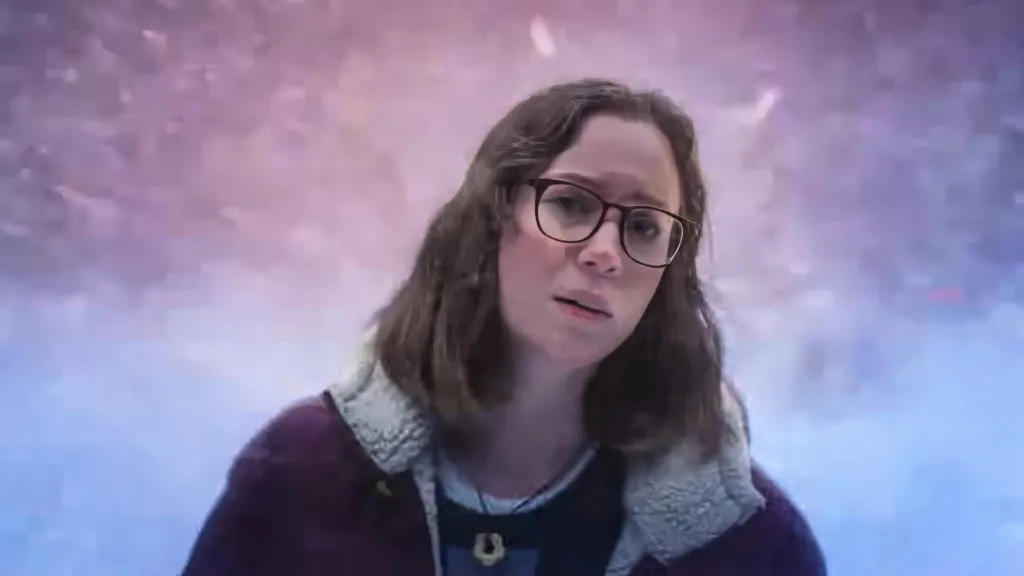
With their latest directorial outing, Jane Schoenbrun used subtle pieces of nostalgia to deconstruct the slasher genre.
The Teenage Sex and Death at Camp Miasma writer/director explained to Deadline that they wanted to create “a mindset where you can really enjoy something scary,” noting the frequent symbolism of candy and junk food as providing an atmosphere “that’s actually safe” while diving into a horror movie or exploring sexuality after trauma.
“There is this idea that if it gets too real, you can turn it off, that you’re exploring something dangerous, doing it in a way that’s actually safe,” said Schoenbrun, who is non-binary. “Which in my experience of coming into my sexual identity post-transition, kind of required some gummy candy on hand. What I mean by that is, even if we’re going to be exploring scary and vulnerable and potentially embarrassing, triggering parts of ourselves, we trust each other well enough to know that at any moment, we can be like, ‘Let’s stop, we gotta just eat some fucking gummies.’”
In Schoenbrun’s latest film, Hannah Einbinder stars as queer director Kris, who is tapped to helm a new installment of the long-running Camp Miasma horror franchise. While courting Billy Presley (Gillian Anderson), the actress who played the “final girl” in the original film, to reprise her role, the pair spirals into a psychosexual frenzy as the slasher’s killer, Little Death (Jack Haven), comes to life.
Acknowledging the problematic trans representation of horror films like Psycho (1960), Sleepaway Camp (1983), The Silence of the Lambs (1991) and Texas Chainsaw Massacre: The Next Generation (1995), Schoenbrun admitted the genre has been “catnip to me since I was 10 years old,” and they jumped at the chance to direct their own.

“So many slashers do have this sense of humor, and even if they’re not overtly meta like the Scream movies are, they’re so aware of their own tropes and the sort of rituals … And I just loved that from a young age and loved all of the little rituals within it, and so, getting to make my own is just like play and joy,” they explained.
“But it also felt like the perfect way to talk about sex and to talk about my experience as a trans person post-transition, learning how to come into a sexual identity that I could feel comfortable within, because so many of these movies are obviously deeply engaged in gender and sexual roles, and these movies have so much to say for better or for worse about deviants,” said Schoenbrun. “It is there in the DNA of the slasher genre that these movies are talking about fear and desire, gender and sexuality, normativity and deviance. And that’s all swimming in the toxic soup of the genre, so I wanted to remake it in my own language.”
Read on about Jane Schoenbrun’s love letter to the slasher genre with Teenage Sex and Death at Camp Miasma, now playing in theaters.
DEADLINE: It was really fun to see the slasher genre through your eyes. Tell me about finding inspiration in that genre and “final girls.”
JANE SCHOENBRUN: I mean, it was the easiest thing in the world because it’s just one of those genres that has been catnip to me since I was 10 years old. I just raided the horror section of the video store as a kid from an age when I really shouldn’t have been doing that, like in 5th grade, I watched in the span of about one week, every Nightmare on Elm Street movie. I think that I was always drawn to movies and really anything entertainment where it felt forbidden in some way, like the thing on the tape, how is that even allowed? And that’s the thing that I love about a lot of my favorite slashers. Don’t get me wrong, I love like brutal ones, like I love Texas Chainsaw, that’s a nasty movie at its core, and that’s what’s so special about it. But so many slashers do have this sense of humor, and even if they’re not overtly meta like the Scream movies are, they’re so aware of their own tropes and the sort of rituals of, OK, what’s the most outrageous way that like these like dumb kids can get killed? But watching it, it’s not about fear a lot of the time, it’s about joy and celebration. And I just loved that from a young age and loved all of the little rituals within it, and so, getting to make my own is just like play and joy. But it also felt like the perfect way to talk about sex and to talk about my experience as a trans person post-transition, learning how to come into a sexual identity that I could feel comfortable within, because so many of these movies are obviously deeply engaged in gender and sexual roles, and these movies have so much to say for better or for worse about deviants, whether that be Norman Bates or Buffalo Bill or Sleepway Camp or Jason, Michael Myers, Leatherface in drag. It is there in the DNA of the slasher genre that these movies are talking about fear and desire, gender and sexuality, normativity and deviance. And that’s all swimming in the toxic soup of the genre, so I wanted to remake it in my own language.

DEADLINE: I’m curious about the symbolism of all the processed junk food and the chandelier of wrappers.
SCHOENBRUN: The junk food in the movie, I forget when it found its way in there. It’s like so much of the movie is about, like I said, ritual, about being in a mindset where you can really enjoy something scary, whether that be Kris [Hannah Einbinder] in bed, with, you know, with Raisinets and the popcorn, watching a schlocky horror movie, or the two characters learning how to be present and enjoy sex after a lot of trauma. There is this idea that if it gets too real, you can turn it off, that you’re exploring something dangerous, doing it in a way that’s actually safe. Which in my experience of coming into my sexual identity post-transition, kind of required some gummy candy on hand. What I mean by that is, even if we’re going to be exploring scary and vulnerable and potentially embarrassing, triggering parts of ourselves, we trust each other well enough to know that at any moment, we can be like, “Let’s stop, we gotta just eat some fucking gummies.”
DEADLINE: And one thing I really love—I just feel like it’s a theme in your work—is how it depicts the way media and entertainment influence us. Why does that inspire you?
SCHOENBRUN: I think it comes from a fascination and sensitivity to the complex relationship between what we think of as fiction and what we think of as reality, which we tend to, as a society, think of as pointing in one direction. Like, reality dictates fiction, not vice-versa, but when you actually look at the way the world works, it’s like one echoes off the other. And I think a complicated, sometimes terrifying and sometimes beautiful way, where the fiction, the cultural norms, the things we grow up looking at on our screens, the roles that we’re told people play, they kind of inspire us to create reality. There’s something liberating when you start thinking in that way. I think it’s a way of thinking that we as a culture, could do a lot more of. To think about the idea of fiction inspiring reality just as much as reality is inspiring fiction, is a potential path to liberating us from this hellscape that they’re telling us is the only way the world can be.

DEADLINE: And I know you have the Secretary reading. Tell me what it’s been like prepping for that and why you all chose that movie.
SCHOENBRUN: I mean, that was such a huge influence on on Miasma. There just aren’t that many fun and funny movies about deviant sex. And just the way that movie is like feather light while talking about really raw and taboo things, it is just really inspiring to me. And the dynamic between those two main characters is definitely one that had a lot of influence on on Kris and Billy’s [Gillian Anderson] relationship in Miasma. And it’s already to me a very queer movie in its way, but having Gillian reading the James Spader part and Hannah reading the Maggie Gyllenhaal part, I think it’s just gonna be like a very unique joy. Honestly, we’ve been prepping a little bit, but I think it’s just gonna be about getting up there and feeling the chemistry of it all, and just letting these folks who we have all gotten to know each other really, really well, but we haven’t actually done anything wacky and creative like that in a while, like as a reunion, it’s gonna be a real blast, I think.
>
With their latest directorial outing, Jane Schoenbrun used subtle pieces of nostalgia to deconstruct the slasher genre.
The Teenage Sex and Death at Camp Miasma writer/director explained to Deadline that they wanted to create “a mindset where you can really enjoy something scary,” noting the frequent symbolism of candy and junk food as providing an atmosphere “that’s actually safe” while diving into a horror movie or exploring sexuality after trauma.
“There is this idea that if it gets too real, you can turn it off, that you’re exploring something dangerous, doing it in a way that’s actually safe,” said Schoenbrun, who is non-binary. “Which in my experience of coming into my sexual identity post-transition, kind of required some gummy candy on hand. What I mean by that is, even if we’re going to be exploring scary and vulnerable and potentially embarrassing, triggering parts of ourselves, we trust each other well enough to know that at any moment, we can be like, ‘Let’s stop, we gotta just eat some fucking gummies.’”
In Schoenbrun’s latest film, Hannah Einbinder stars as queer director Kris, who is tapped to helm a new installment of the long-running Camp Miasma horror franchise. While courting Billy Presley (Gillian Anderson), the actress who played the “final girl” in the original film, to reprise her role, the pair spirals into a psychosexual frenzy as the slasher’s killer, Little Death (Jack Haven), comes to life.
Acknowledging the problematic trans representation of horror films like Psycho (1960), Sleepaway Camp (1983), The Silence of the Lambs (1991) and Texas Chainsaw Massacre: The Next Generation (1995), Schoenbrun admitted the genre has been “catnip to me since I was 10 years old,” and they jumped at the chance to direct their own.
“So many slashers do have this sense of humor, and even if they’re not overtly meta like the Scream movies are, they’re so aware of their own tropes and the sort of rituals … And I just loved that from a young age and loved all of the little rituals within it, and so, getting to make my own is just like play and joy,” they explained.
“But it also felt like the perfect way to talk about sex and to talk about my experience as a trans person post-transition, learning how to come into a sexual identity that I could feel comfortable within, because so many of these movies are obviously deeply engaged in gender and sexual roles, and these movies have so much to say for better or for worse about deviants,” said Schoenbrun. “It is there in the DNA of the slasher genre that these movies are talking about fear and desire, gender and sexuality, normativity and deviance. And that’s all swimming in the toxic soup of the genre, so I wanted to remake it in my own language.”
Read on about Jane Schoenbrun’s love letter to the slasher genre with Teenage Sex and Death at Camp Miasma, now playing in theaters.
DEADLINE: It was really fun to see the slasher genre through your eyes. Tell me about finding inspiration in that genre and “final girls.”
JANE SCHOENBRUN: I mean, it was the easiest thing in the world because it’s just one of those genres that has been catnip to me since I was 10 years old. I just raided the horror section of the video store as a kid from an age when I really shouldn’t have been doing that, like in 5th grade, I watched in the span of about one week, every Nightmare on Elm Street movie. I think that I was always drawn to movies and really anything entertainment where it felt forbidden in some way, like the thing on the tape, how is that even allowed? And that’s the thing that I love about a lot of my favorite slashers. Don’t get me wrong, I love like brutal ones, like I love Texas Chainsaw, that’s a nasty movie at its core, and that’s what’s so special about it. But so many slashers do have this sense of humor, and even if they’re not overtly meta like the Scream movies are, they’re so aware of their own tropes and the sort of rituals of, OK, what’s the most outrageous way that like these like dumb kids can get killed? But watching it, it’s not about fear a lot of the time, it’s about joy and celebration. And I just loved that from a young age and loved all of the little rituals within it, and so, getting to make my own is just like play and joy. But it also felt like the perfect way to talk about sex and to talk about my experience as a trans person post-transition, learning how to come into a sexual identity that I could feel comfortable within, because so many of these movies are obviously deeply engaged in gender and sexual roles, and these movies have so much to say for better or for worse about deviants, whether that be Norman Bates or Buffalo Bill or Sleepway Camp or Jason, Michael Myers, Leatherface in drag. It is there in the DNA of the slasher genre that these movies are talking about fear and desire, gender and sexuality, normativity and deviance. And that’s all swimming in the toxic soup of the genre, so I wanted to remake it in my own language.
DEADLINE: I’m curious about the symbolism of all the processed junk food and the chandelier of wrappers.
SCHOENBRUN: The junk food in the movie, I forget when it found its way in there. It’s like so much of the movie is about, like I said, ritual, about being in a mindset where you can really enjoy something scary, whether that be Kris [Hannah Einbinder] in bed, with, you know, with Raisinets and the popcorn, watching a schlocky horror movie, or the two characters learning how to be present and enjoy sex after a lot of trauma. There is this idea that if it gets too real, you can turn it off, that you’re exploring something dangerous, doing it in a way that’s actually safe. Which in my experience of coming into my sexual identity post-transition, kind of required some gummy candy on hand. What I mean by that is, even if we’re going to be exploring scary and vulnerable and potentially embarrassing, triggering parts of ourselves, we trust each other well enough to know that at any moment, we can be like, “Let’s stop, we gotta just eat some fucking gummies.”
DEADLINE: And one thing I really love—I just feel like it’s a theme in your work—is how it depicts the way media and entertainment influence us. Why does that inspire you?
SCHOENBRUN: I think it comes from a fascination and sensitivity to the complex relationship between what we think of as fiction and what we think of as reality, which we tend to, as a society, think of as pointing in one direction. Like, reality dictates fiction, not vice-versa, but when you actually look at the way the world works, it’s like one echoes off the other. And I think a complicated, sometimes terrifying and sometimes beautiful way, where the fiction, the cultural norms, the things we grow up looking at on our screens, the roles that we’re told people play, they kind of inspire us to create reality. There’s something liberating when you start thinking in that way. I think it’s a way of thinking that we as a culture, could do a lot more of. To think about the idea of fiction inspiring reality just as much as reality is inspiring fiction, is a potential path to liberating us from this hellscape that they’re telling us is the only way the world can be.
DEADLINE: And I know you have the Secretary reading. Tell me what it’s been like prepping for that and why you all chose that movie.
SCHOENBRUN: I mean, that was such a huge influence on on Miasma. There just aren’t that many fun and funny movies about deviant sex. And just the way that movie is like feather light while talking about really raw and taboo things, it is just really inspiring to me. And the dynamic between those two main characters is definitely one that had a lot of influence on on Kris and Billy’s [Gillian Anderson] relationship in Miasma. And it’s already to me a very queer movie in its way, but having Gillian reading the James Spader part and Hannah reading the Maggie Gyllenhaal part, I think it’s just gonna be like a very unique joy. Honestly, we’ve been prepping a little bit, but I think it’s just gonna be about getting up there and feeling the chemistry of it all, and just letting these folks who we have all gotten to know each other really, really well, but we haven’t actually done anything wacky and creative like that in a while, like as a reunion, it’s gonna be a real blast, I think.
>

Ever since the official trailer dropped for the Callum Turner–Monica Barbaro rom-com One Night Only, quickly racking up millions of views on its way to its nearly 40 million total, internet commentators have had a lot of questions about the film’s central premise in which premarital sex is illegal apart from one 12-hour period a year.
How is this law enforced? Are people breaking the law? How did this legislation pass? What counts as “sex” under this new mandate? Are marriage (and divorce) rates skyrocketing? What about affairs?
Rest assured: Some of those questions are answered in the movie, and explanations are starting to trickle out online for those unconcerned about spoilers. Beyond that, One Night Only writer, Travis Braun, who saw his screenplay top the 2024 Black List, has answers, but they’re not all in the Will Gluck-directed Universal movie now in theaters.
“I set out to write a movie about the circus that is modern dating, and I thought how fun if we could set that all in one night, and I have answers to those questions, and some of them are in the movie,” Braun told The Hollywood Reporter at the One Night Only premiere earlier this week in New York.
Braun said he definitely thought about the specific rules of the film’s alternate reality, framed as three years on from the no-sex act being passed, but didn’t want to get too deep into the politics of the world of the movie.
“There’s a big mythology that I’ve built out and then as you develop a movie you start to pare down and you go: What does an audience really care about, and what are they showing up to see? For me the answer is always a love story, romance,” he told THR. “I hope they can come in and we’ll show them how this world functions, and then they can just enjoy the movie and have fun. The whole focus of this was love story and romance first, and the world-building obviously has to make sense and has to be there, but ultimately we weren’t interested in getting into the politics of it. We wanted to tell a story about these two incredible people trying to find love on this crazy night.”
Producer Jacqueline Monetta, who brought Braun’s script to Gluck, said they didn’t want moviegoers to have all of the answers.
“I had a million questions. I was like, ‘What does this mean? What does this world look like? How do people communicate? What’s different?’ And that’s I think what’s so smart about it,” she said of One Night Only‘s “big idea, high-concept” premise. “We don’t answer every question in the movie, purposefully, because we want those questions to be had on the car ride home. We want people to keep talking about it and really think about what would this mean for our world, what does it mean for our world now. But I think Will and I were really specific on what questions we wanted to answer.”
In a recent Reddit AMA, Gluck also detailed how he and his team approached the world building of the movie while not wanting it to be all about the mandate and offered prospective moviegoers hints for where to find the answers to their questions.
“We spent a lot of time talking about the rules of the world, and if you’ve seen the movie, or when you see the movie, you’ll see that the rules of the world and the world building are all in the background,” he said. “It’s on TVs, signage, in thrown-away lines, because we didn’t want to give the world short shrift, but we didn’t want the movie to be about that. It’s another way I want people to see this. If they see it more than once, they’ll pick up so many more rules of the world in the background. A lot of the questions that I’ve been getting after people have seen the movie are actually answered in the movie, which is by design because I want people maybe not to know them. So, yes, it was a tricky tightrope to have them there, but not for the movie to be about it.”
Turner meanwhile echoes Braun’s advice for curious prospective moviegoers: “Go see the film!”
“You’ll realize pretty quickly what the realm is that you’re working within and it’s a comedy,” Turner says of what inquisitive filmgoers will find. “There are no great political undertones, I don’t think. This is just a place where you can escape for an hour and a half, two hours and enjoy and laugh your head off.”
One Night Only is now in theaters.
Callum Turner and Monica Barbaro at the One Night Only premiere on Monday.
Roy Rochlin/Getty Images for Universal Pictures
>


Search For Canadian TV Actor Stewart McLean Now Homicide Investigation


These ’90s fashion trends are making a comeback in 2017
According to Dior Couture, this taboo fashion accessory is back
Model Jocelyn Chew’s Instagram is the best vacation you’ve ever had
Your comprehensive guide to this fall’s biggest trends
9 Celebrities who have spoken out about being photoshopped
Emily Ratajkowski channels back-to-school style
A photo diary of the nightlife scene from LA To Ibiza