
movies
Xavier Becerra Wants To Save Hollywood Aas Governor But Offers Few Specifics


Leading in the polls to be the next governor or California, former U.S. Secretary of Health and Human Services Xavier Becerra is holding to the physician oath of “do no harm,” at least when it comes to his plans to preserve and grow production in the home of Hollywood.
“I will defend what has been built,” he said Friday, when he unveiled his Film Industry Policy proposals. “I will expand what is working.“
Offering few specifics and no dollar signs but lots of good intentions, Becerra today pledged to “expand” the Golden State’s $750 million a year film and TV tax incentives.
See the full proposal below.
“I intend to increase the program’s scale, capacity and access,” the veteran Democrat proclaimed. “Because a state serious about keeping this industry does not let qualified productions walk out the door, and every check it writes must come back to California workers.”
Alas, sounds great, but the onetime state Attorney General does not say by how much. Heading towards a June 2 primary that will reduce the sprawling race for governor to the two candidates with the most votes — and most likely finding Becerra facing a sure-to-lose Republican– playing it safe has pros and cons for the Democrat.
“It’s great that production has become a hot topic in the election, but where’s the beef?” a streamer exec told Deadline as Becerra’s plan went public. “People want solid numbers.”
The Becerra campaign did not respond to requests from Deadline for specifics.
Also, unlike various other gubernatorial contenders like ex-Fox News anchor Steve Hilton (Becerra’s closest rival right now in the polls for the November run-off vote) and IATSE-backed progressive billionaire (an only-in-California oxymoron) Tom Steyer, budget conscious Becerra won’t uncap the tax credit.
In that context, and as the DGA continues talks for a new contract with the studios and streamers, Steyer’s campaign horned in on their fellow Democrat’s policy proposals Friday.
“The truth is Xavier Becerra’s entertainment plan isn’t ready for prime time,” a spokesperson for Steyer said to Deadline. “While Tom Steyer will stand up to Big Tech and mega-mergers to protect the film industry, Becerra would be nothing more than a rubber stamp for corporate interests gutting Hollywood. We need a governor who will stand up for working people, not a politician who repeats industry talking points.”
Without naming Steyer or any other candidate by name, state and national vet Becerra put his experience to the fore, as he has throughout this roller coaster campaign for Gavin Newsom‘s job.
“I will invest in our workers, because California has a responsibility to prepare our workforce for the fight ahead,” Becerra added in language no politician, no matter how much of a budget hawk they may be would strongly disagree with. “And I will take this fight back to Washington, because American productions should not have to compete against foreign government treasuries with no support from their own,” he went on to say, stepping into the increasingly bipartisan waters of a national program, incentive or otherwise.
It should be noted that that bipartisan support appears to include Donald Trump, though the former Apprentice host has yet to officially put his thumb on any such scale.
Of course, without saying the words “Paramount” “merger” or Warner Bros. Discovery,” Becerra made sure to check the anti-oligarch box today too.
“Across this industry, as across much of the American economy, the rewards have migrated upward while the risk has stayed with the worker. A shrinking number of players capture more of the market, more of the profit, and more of the data that now determines whose work gets made and how it gets valued. That is not the natural order. It is the result of choices, regulatory, legislative, and corporate, that California has both the standing and the obligation to scrutinize and, where necessary, to challenge.”
In terms of challenges, Becerra says what he will do is get industry stakeholders from the C-suites, the unions, the crafts, the creatives and more together for a sit-down to come up with a common strategy to stop the decline in production, big job losses and the looming threats of consolidation and AI.
When that big shindig could be, Becerra’s team has left TBD — cause there is an election to win still.
Read Xavier Becerra’s plan to save Hollywood here:
GUIDING PRINCIPLES
California Is the Home of Film and TV and We Intend to Keep It That Way. The industry grew here because California offered what no other place could match. This platform is oriented around making sure the work, the craft, and the jobs that define this industry remain rooted in this state.
This Industry Succeeds When Its Workers Succeed. From the stars on the red carpet to the crew who make the magic happen, these policies are measured against one standard: is it good for the people who do the work. That means protecting their livelihoods, ensuring they can negotiate fairly, and guaranteeing they share in the success their work creates.
Prepare California’s Workforce for What’s Coming, Not Just What Was. AI and new technologies are already reshaping every craft in this industry. California’s workers deserve the tools, the training, and the governing authority to help set the terms of that transition, not just absorb it.
Competing Means Committing, Here and in Washington. Other states and countries made sustained commitments and stuck with them. California can too. And our workers should not fight alone against foreign government treasuries. California will lead the push for federal support, because the government must show up for its workers at every level.
POLICY AGENDA
1. Convene the Industry’s Future: A California Entertainment Summit
California will not manage this industry’s transition from the sidelines. How content is financed, made, distributed, and how workers get paid, all of it is restructuring at once. The compensation models that sustained a generation of middle-class entertainment workers were built for an industry that no longer exists. The market alone cannot plan its way through disruption this broad and this fast. I will convene a California Entertainment Summit: guilds, crew organizations, producers, studios, streamers, and technology companies, with a binding mandate: produce a public action plan, not a report. Each workstream will have a named lead and defined milestone with a goal of making California the most modern, worker-centered production ecosystem in the world, before someone else does it without us.
2. A Tax Credit Program Built to Compete
California’s tax credit program must be defended first – what exists today is the floor. From that foundation I will expand it, guided by ongoing assessment of where we are losing work: post-production and VFX, independent productions, episodic television at scale, and whatever gaps the data reveals. That means also updating eligible costs to reflect how productions are actually greenlighted and crewed today, not how they were structured a decade ago. Where demand is real, where jobs follow, and where the return to California justifies it, I intend to increase the program’s scale, capacity and access. Because a state serious about keeping this industry does not let qualified productions walk out the door, and every check it writes must come back to California workers.
3. Make Performance Data Work for the People Who Earned It
The entertainment industry has always run on the currency of success, and the ability to measure it, share in it, and build on it. The shift to streaming changed that equation in ways the industry’s compensation structures have not yet caught up with. What counts as success, what data is shared, and what triggers additional compensation are questions without consistent or verifiable answers for the writers, directors, cast, and crew whose work drives platform value. Workers cannot bargain fairly for what they cannot see, and they cannot plan careers around success they cannot verify. Voluntary transparency is not enough. I will support a California Content Performance Disclosure requirement: platforms must share meaningful performance data with the cast, writers, directors, and crew whose work drives their value, in a standardized form that gives workers what they need to bargain fairly.
4. Set the Terms on AI Before Someone Else Does
Artificial intelligence is already altering what work gets done, by whom, and at what cost. I will support state requirements that productions disclose how AI is being used, that gives performers enforceable rights over their own likenesses, and that ensures the people whose work trained these systems are compensated for it.
5. Build out Entertainment Workforce Development and Transition Programs
The people who built this industry deserve to shape what it becomes. My administration will strengthen and expand California’s existing workforce development infrastructure, provide stronger governing authority for workers and their guilds, deepen these programs’ ties to the tax credit program, and ensure that, as new technologies transform crafts, it is California’s workers who are helping set the terms of the transition.
6. Fast Track State & Local Permitting
No state in the country has California’s landscapes, but for many, the local and state permitting takes far too long. I will work to clear the bureaucratic friction that turns a permit request into a multi-agency ordeal, giving California’s irreplaceable locations back to the productions that want to shoot in them, and push for a more formalized state-local incentive structure to further encourage local governments to compete for the privilege of being places where films can easily get made.
7. Take the Fight to Washington: A Federal Production Subsidy to Counter Trump’s Broken Promises
California productions compete against the full weight of foreign governments like Canada, the UK, and France, and Washington has left us to fight alone. A federal solution is not a silver bullet – the work of keeping California competitive happens here, at home, through the policies in this platform. But, a Governor who knows this fight, who built the bipartisan coalitions on the House Ways and Means Committee, and who has the relationships to move legislation in Washington is better positioned than most to push for what California’s workers deserve: a federal government that is in this fight with them, not absent from it. My administration will partner with our congressional delegation and push for a bipartisan solution, conditioned on a domestic wage guarantee so any credit creates American jobs, not foreign ones.
>

Matthew McConaughey shows off his vocal skills (and some hidden banjo talents) with his latest role in The Rivals of Amziah King.
On Friday, Lakeshore Records released the single and music video for “Quill” from the original motion picture soundtrack, performed by the Oscar-winning and co-star Ben Hardesty, also featuring Miranda Zickler, Angelina LookingGlass and Andrea Pister.
Set in the backwoods of Oklahoma, The Rivals of Amziah King follows the musically gifted Amaziah King (McConaughey) and his bluegrass-playing band of misfits while overseeing the premier honey-making operation in town. When Amaziah’s estranged foster daughter unexpectedly returns, he leaps at the chance to reconnect and create a family business. But the honey game is ruthless, and Amaziah’s rivals threaten to destroy everything he has built.

Premiering Aug. 14 in theaters, the Andrew Patterson-written-and-directed drama also stars Angelina LookingGlass, Cole Sprouse, Jake Horowitz, Tony Revolori and Kurt Russell.
Producers are David Heyman, Teddy Schwarzman, Jeffrey Clifford, Michael Heimler, James Montague and Will Greenfield.
>
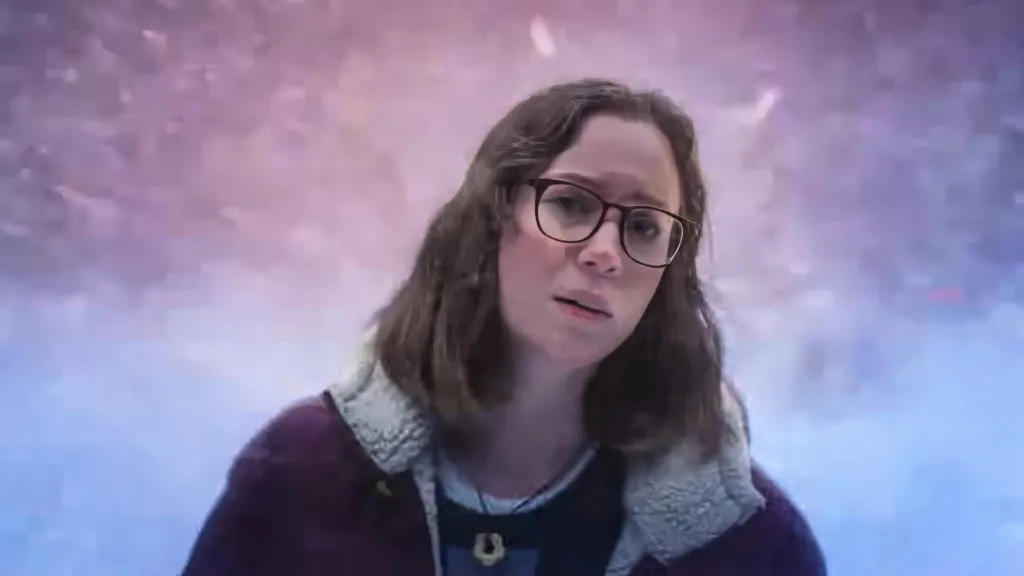
With their latest directorial outing, Jane Schoenbrun used subtle pieces of nostalgia to deconstruct the slasher genre.
The Teenage Sex and Death at Camp Miasma writer/director explained to Deadline that they wanted to create “a mindset where you can really enjoy something scary,” noting the frequent symbolism of candy and junk food as providing an atmosphere “that’s actually safe” while diving into a horror movie or exploring sexuality after trauma.
“There is this idea that if it gets too real, you can turn it off, that you’re exploring something dangerous, doing it in a way that’s actually safe,” said Schoenbrun, who is non-binary. “Which in my experience of coming into my sexual identity post-transition, kind of required some gummy candy on hand. What I mean by that is, even if we’re going to be exploring scary and vulnerable and potentially embarrassing, triggering parts of ourselves, we trust each other well enough to know that at any moment, we can be like, ‘Let’s stop, we gotta just eat some fucking gummies.’”
In Schoenbrun’s latest film, Hannah Einbinder stars as queer director Kris, who is tapped to helm a new installment of the long-running Camp Miasma horror franchise. While courting Billy Presley (Gillian Anderson), the actress who played the “final girl” in the original film, to reprise her role, the pair spirals into a psychosexual frenzy as the slasher’s killer, Little Death (Jack Haven), comes to life.
Acknowledging the problematic trans representation of horror films like Psycho (1960), Sleepaway Camp (1983), The Silence of the Lambs (1991) and Texas Chainsaw Massacre: The Next Generation (1995), Schoenbrun admitted the genre has been “catnip to me since I was 10 years old,” and they jumped at the chance to direct their own.

“So many slashers do have this sense of humor, and even if they’re not overtly meta like the Scream movies are, they’re so aware of their own tropes and the sort of rituals … And I just loved that from a young age and loved all of the little rituals within it, and so, getting to make my own is just like play and joy,” they explained.
“But it also felt like the perfect way to talk about sex and to talk about my experience as a trans person post-transition, learning how to come into a sexual identity that I could feel comfortable within, because so many of these movies are obviously deeply engaged in gender and sexual roles, and these movies have so much to say for better or for worse about deviants,” said Schoenbrun. “It is there in the DNA of the slasher genre that these movies are talking about fear and desire, gender and sexuality, normativity and deviance. And that’s all swimming in the toxic soup of the genre, so I wanted to remake it in my own language.”
Read on about Jane Schoenbrun’s love letter to the slasher genre with Teenage Sex and Death at Camp Miasma, now playing in theaters.
DEADLINE: It was really fun to see the slasher genre through your eyes. Tell me about finding inspiration in that genre and “final girls.”
JANE SCHOENBRUN: I mean, it was the easiest thing in the world because it’s just one of those genres that has been catnip to me since I was 10 years old. I just raided the horror section of the video store as a kid from an age when I really shouldn’t have been doing that, like in 5th grade, I watched in the span of about one week, every Nightmare on Elm Street movie. I think that I was always drawn to movies and really anything entertainment where it felt forbidden in some way, like the thing on the tape, how is that even allowed? And that’s the thing that I love about a lot of my favorite slashers. Don’t get me wrong, I love like brutal ones, like I love Texas Chainsaw, that’s a nasty movie at its core, and that’s what’s so special about it. But so many slashers do have this sense of humor, and even if they’re not overtly meta like the Scream movies are, they’re so aware of their own tropes and the sort of rituals of, OK, what’s the most outrageous way that like these like dumb kids can get killed? But watching it, it’s not about fear a lot of the time, it’s about joy and celebration. And I just loved that from a young age and loved all of the little rituals within it, and so, getting to make my own is just like play and joy. But it also felt like the perfect way to talk about sex and to talk about my experience as a trans person post-transition, learning how to come into a sexual identity that I could feel comfortable within, because so many of these movies are obviously deeply engaged in gender and sexual roles, and these movies have so much to say for better or for worse about deviants, whether that be Norman Bates or Buffalo Bill or Sleepway Camp or Jason, Michael Myers, Leatherface in drag. It is there in the DNA of the slasher genre that these movies are talking about fear and desire, gender and sexuality, normativity and deviance. And that’s all swimming in the toxic soup of the genre, so I wanted to remake it in my own language.

DEADLINE: I’m curious about the symbolism of all the processed junk food and the chandelier of wrappers.
SCHOENBRUN: The junk food in the movie, I forget when it found its way in there. It’s like so much of the movie is about, like I said, ritual, about being in a mindset where you can really enjoy something scary, whether that be Kris [Hannah Einbinder] in bed, with, you know, with Raisinets and the popcorn, watching a schlocky horror movie, or the two characters learning how to be present and enjoy sex after a lot of trauma. There is this idea that if it gets too real, you can turn it off, that you’re exploring something dangerous, doing it in a way that’s actually safe. Which in my experience of coming into my sexual identity post-transition, kind of required some gummy candy on hand. What I mean by that is, even if we’re going to be exploring scary and vulnerable and potentially embarrassing, triggering parts of ourselves, we trust each other well enough to know that at any moment, we can be like, “Let’s stop, we gotta just eat some fucking gummies.”
DEADLINE: And one thing I really love—I just feel like it’s a theme in your work—is how it depicts the way media and entertainment influence us. Why does that inspire you?
SCHOENBRUN: I think it comes from a fascination and sensitivity to the complex relationship between what we think of as fiction and what we think of as reality, which we tend to, as a society, think of as pointing in one direction. Like, reality dictates fiction, not vice-versa, but when you actually look at the way the world works, it’s like one echoes off the other. And I think a complicated, sometimes terrifying and sometimes beautiful way, where the fiction, the cultural norms, the things we grow up looking at on our screens, the roles that we’re told people play, they kind of inspire us to create reality. There’s something liberating when you start thinking in that way. I think it’s a way of thinking that we as a culture, could do a lot more of. To think about the idea of fiction inspiring reality just as much as reality is inspiring fiction, is a potential path to liberating us from this hellscape that they’re telling us is the only way the world can be.

DEADLINE: And I know you have the Secretary reading. Tell me what it’s been like prepping for that and why you all chose that movie.
SCHOENBRUN: I mean, that was such a huge influence on on Miasma. There just aren’t that many fun and funny movies about deviant sex. And just the way that movie is like feather light while talking about really raw and taboo things, it is just really inspiring to me. And the dynamic between those two main characters is definitely one that had a lot of influence on on Kris and Billy’s [Gillian Anderson] relationship in Miasma. And it’s already to me a very queer movie in its way, but having Gillian reading the James Spader part and Hannah reading the Maggie Gyllenhaal part, I think it’s just gonna be like a very unique joy. Honestly, we’ve been prepping a little bit, but I think it’s just gonna be about getting up there and feeling the chemistry of it all, and just letting these folks who we have all gotten to know each other really, really well, but we haven’t actually done anything wacky and creative like that in a while, like as a reunion, it’s gonna be a real blast, I think.
>
With their latest directorial outing, Jane Schoenbrun used subtle pieces of nostalgia to deconstruct the slasher genre.
The Teenage Sex and Death at Camp Miasma writer/director explained to Deadline that they wanted to create “a mindset where you can really enjoy something scary,” noting the frequent symbolism of candy and junk food as providing an atmosphere “that’s actually safe” while diving into a horror movie or exploring sexuality after trauma.
“There is this idea that if it gets too real, you can turn it off, that you’re exploring something dangerous, doing it in a way that’s actually safe,” said Schoenbrun, who is non-binary. “Which in my experience of coming into my sexual identity post-transition, kind of required some gummy candy on hand. What I mean by that is, even if we’re going to be exploring scary and vulnerable and potentially embarrassing, triggering parts of ourselves, we trust each other well enough to know that at any moment, we can be like, ‘Let’s stop, we gotta just eat some fucking gummies.’”
In Schoenbrun’s latest film, Hannah Einbinder stars as queer director Kris, who is tapped to helm a new installment of the long-running Camp Miasma horror franchise. While courting Billy Presley (Gillian Anderson), the actress who played the “final girl” in the original film, to reprise her role, the pair spirals into a psychosexual frenzy as the slasher’s killer, Little Death (Jack Haven), comes to life.
Acknowledging the problematic trans representation of horror films like Psycho (1960), Sleepaway Camp (1983), The Silence of the Lambs (1991) and Texas Chainsaw Massacre: The Next Generation (1995), Schoenbrun admitted the genre has been “catnip to me since I was 10 years old,” and they jumped at the chance to direct their own.
“So many slashers do have this sense of humor, and even if they’re not overtly meta like the Scream movies are, they’re so aware of their own tropes and the sort of rituals … And I just loved that from a young age and loved all of the little rituals within it, and so, getting to make my own is just like play and joy,” they explained.
“But it also felt like the perfect way to talk about sex and to talk about my experience as a trans person post-transition, learning how to come into a sexual identity that I could feel comfortable within, because so many of these movies are obviously deeply engaged in gender and sexual roles, and these movies have so much to say for better or for worse about deviants,” said Schoenbrun. “It is there in the DNA of the slasher genre that these movies are talking about fear and desire, gender and sexuality, normativity and deviance. And that’s all swimming in the toxic soup of the genre, so I wanted to remake it in my own language.”
Read on about Jane Schoenbrun’s love letter to the slasher genre with Teenage Sex and Death at Camp Miasma, now playing in theaters.
DEADLINE: It was really fun to see the slasher genre through your eyes. Tell me about finding inspiration in that genre and “final girls.”
JANE SCHOENBRUN: I mean, it was the easiest thing in the world because it’s just one of those genres that has been catnip to me since I was 10 years old. I just raided the horror section of the video store as a kid from an age when I really shouldn’t have been doing that, like in 5th grade, I watched in the span of about one week, every Nightmare on Elm Street movie. I think that I was always drawn to movies and really anything entertainment where it felt forbidden in some way, like the thing on the tape, how is that even allowed? And that’s the thing that I love about a lot of my favorite slashers. Don’t get me wrong, I love like brutal ones, like I love Texas Chainsaw, that’s a nasty movie at its core, and that’s what’s so special about it. But so many slashers do have this sense of humor, and even if they’re not overtly meta like the Scream movies are, they’re so aware of their own tropes and the sort of rituals of, OK, what’s the most outrageous way that like these like dumb kids can get killed? But watching it, it’s not about fear a lot of the time, it’s about joy and celebration. And I just loved that from a young age and loved all of the little rituals within it, and so, getting to make my own is just like play and joy. But it also felt like the perfect way to talk about sex and to talk about my experience as a trans person post-transition, learning how to come into a sexual identity that I could feel comfortable within, because so many of these movies are obviously deeply engaged in gender and sexual roles, and these movies have so much to say for better or for worse about deviants, whether that be Norman Bates or Buffalo Bill or Sleepway Camp or Jason, Michael Myers, Leatherface in drag. It is there in the DNA of the slasher genre that these movies are talking about fear and desire, gender and sexuality, normativity and deviance. And that’s all swimming in the toxic soup of the genre, so I wanted to remake it in my own language.
DEADLINE: I’m curious about the symbolism of all the processed junk food and the chandelier of wrappers.
SCHOENBRUN: The junk food in the movie, I forget when it found its way in there. It’s like so much of the movie is about, like I said, ritual, about being in a mindset where you can really enjoy something scary, whether that be Kris [Hannah Einbinder] in bed, with, you know, with Raisinets and the popcorn, watching a schlocky horror movie, or the two characters learning how to be present and enjoy sex after a lot of trauma. There is this idea that if it gets too real, you can turn it off, that you’re exploring something dangerous, doing it in a way that’s actually safe. Which in my experience of coming into my sexual identity post-transition, kind of required some gummy candy on hand. What I mean by that is, even if we’re going to be exploring scary and vulnerable and potentially embarrassing, triggering parts of ourselves, we trust each other well enough to know that at any moment, we can be like, “Let’s stop, we gotta just eat some fucking gummies.”
DEADLINE: And one thing I really love—I just feel like it’s a theme in your work—is how it depicts the way media and entertainment influence us. Why does that inspire you?
SCHOENBRUN: I think it comes from a fascination and sensitivity to the complex relationship between what we think of as fiction and what we think of as reality, which we tend to, as a society, think of as pointing in one direction. Like, reality dictates fiction, not vice-versa, but when you actually look at the way the world works, it’s like one echoes off the other. And I think a complicated, sometimes terrifying and sometimes beautiful way, where the fiction, the cultural norms, the things we grow up looking at on our screens, the roles that we’re told people play, they kind of inspire us to create reality. There’s something liberating when you start thinking in that way. I think it’s a way of thinking that we as a culture, could do a lot more of. To think about the idea of fiction inspiring reality just as much as reality is inspiring fiction, is a potential path to liberating us from this hellscape that they’re telling us is the only way the world can be.
DEADLINE: And I know you have the Secretary reading. Tell me what it’s been like prepping for that and why you all chose that movie.
SCHOENBRUN: I mean, that was such a huge influence on on Miasma. There just aren’t that many fun and funny movies about deviant sex. And just the way that movie is like feather light while talking about really raw and taboo things, it is just really inspiring to me. And the dynamic between those two main characters is definitely one that had a lot of influence on on Kris and Billy’s [Gillian Anderson] relationship in Miasma. And it’s already to me a very queer movie in its way, but having Gillian reading the James Spader part and Hannah reading the Maggie Gyllenhaal part, I think it’s just gonna be like a very unique joy. Honestly, we’ve been prepping a little bit, but I think it’s just gonna be about getting up there and feeling the chemistry of it all, and just letting these folks who we have all gotten to know each other really, really well, but we haven’t actually done anything wacky and creative like that in a while, like as a reunion, it’s gonna be a real blast, I think.
>

St Mirren 1-0 St Johnstone

'That is another crunching finish!' | Hickey lands DEVASTATING knockout

WNBA commissioner stresses integrity, respect on topic of transgender athletes in league-wide memo
-

 movies3 months ago
Search For Canadian TV Actor Stewart McLean Now Homicide Investigation
-

 Fashion9 years ago
These ’90s fashion trends are making a comeback in 2017
-
Fashion9 years ago
According to Dior Couture, this taboo fashion accessory is back
-
Fashion9 years ago
Model Jocelyn Chew’s Instagram is the best vacation you’ve ever had
-
Fashion9 years ago
Your comprehensive guide to this fall’s biggest trends
-
Fashion9 years ago
9 Celebrities who have spoken out about being photoshopped
-
Fashion9 years ago
Emily Ratajkowski channels back-to-school style
-
Fashion9 years ago
A photo diary of the nightlife scene from LA To Ibiza