

movies
Cannes Film Festival Hands Out Prizes But What Does It Mean For Oscar?

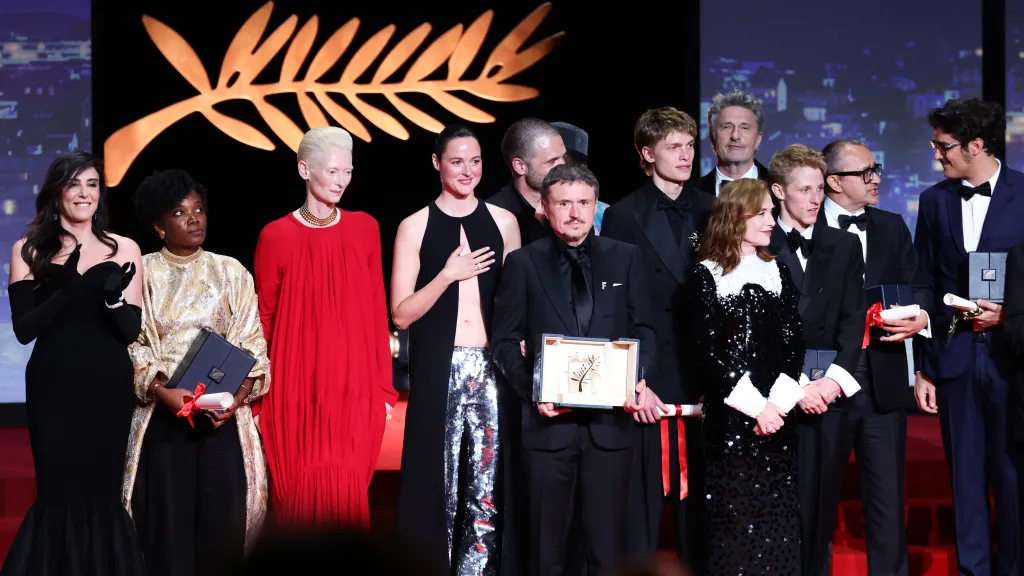
With the exception of a shared Best Director win (with La Bola Negra) for Fatherland, as well as a Best Actress win for the two stars of All Of A Sudden, the jury of the 79th Cannes Film Festival decided that there was not much to reward in the fest’s first six days. Instead, the second career Palme d’Or for Romanian director Cristian Mungiu and his superb Fjord; the Grand Prix for Russian dissident Andrei Zviaguintsev’s Minotaur; the Jury Prize for Bulgaria’s The Dreamed Adventure (the only female director with a win in the main competition this year); plus the shared Best Actor win for Coward, that shared Best Director win for La Bola Negra; and Screenplay victory for A Man Of His Time, the results either say the Park Chan-Wook-led jury has a short memory over the course of this 11-day festival of festivals, or that Thierry Fremaux simply saved the best for last. Six of the winners in the seven major categories premiered in the last five days of this Cannes.
CANNES, FRANCE – MAY 23: Javier Ambrossi and Javier Calvó accept the Best Director Award for “The Black Ball” on stage during the closing ceremony of the 79th annual Cannes Film Festival at Palais des Festivals on May 23, 2026 in Cannes, France. (Photo by Andreas Rentz/Getty Images)
Critcs who were complaining early on this was a “bad Cannes” or disappointing lineup simply had to be patient, at least according to this jury. Going in there was much talk about this finally being American director James Gray’s year for a triumph with his terrific noirish thriller, Paper Tiger, one of only two American-directed films to make the 22 film competition. He has now been here in competition six times, and for the sixth time goes home empty, nothing. What a shame, but I don’t think the lack of a prize will hurt his film’s awards chances come Fall when it is released by Neon, which incredibly extended its Palme d’Or winning streak to seven with Fjord, impressive even if the distributor had a record six films contending in this contest. From what I heard Paper Tiger was not even included in initial announcement in April because its producers were waiting to hear if Netflix was acquiring it, and in that case the plan I am told was to take it to Venice possibly, and the Fall Festivals. No doubt you will be seeing Gray and his film at Telluride, and certainly New York among others. This setback will have no consequence for its awards prospects going forward. It is too good to ignore. So for that matter is the other American director ignored by the jury, Ira Sachs, and his moving A Man In Love which has awards potential as well, particularly for Rami Malek in the Best Actor race.
CANNES, FRANCE – MAY 23: Emmanuel Macchia and Valentin Campagne accept the Best Performance by an Actor Award for “Coward” on stage during the closing ceremony of the 79th annual Cannes Film Festival at Palais des Festivals on May 23, 2026 in Cannes, France. (Photo by Stephane Cardinale – Corbis/Corbis via Getty Images)
So let’s look at the films that actually took a prize tonight. There is much to admire and I think Cannes may see some success on the awards season circuit leading to Oscar night, just not as much as the last two years brought with films like Anora, Emilia Perez, and The Substance coming out of the 77th Cannes, and movies like Sirat, Secret Agent, It Was Just An Accident, and Sentimental Value making such a splash after they scored big prizes at the 78th Cannes. We got a little spoiled with expectations, even in a year the studios basically ignored, and the American presence was light.
‘Fjord’
Neon
This time around films with the best shot at some Oscar love are indeed the Palme d’Or winner, Fjord which is the first English language film for Mungiu, although there is some Romanian, Norwegian, and Swedish dialogue as we;;. Its international cast toplined by Sebastian Stan and Renate Reinsve will help its profile. When I saw it Monday I immediately thought this masterful film, which calls for empathy in a very divided world, might be the one the beat for the Palme d’Or, and it only slipped down to Grand Prix in my lousy predictions when I saw Spain’s La Bola Negra at the final screening of this year’s lineup that I caught Thursday afternoon. That film seemed instantly the kind that might ignite this festival, and it did, while also being one that can travel internationally. It is no surprise that Netflix wanted it and won a bidding war to get it. It has enormous Academy potential, and in a very good year for Spain looks to have the best bet to get submitted for International Film, and an excellent chance in other categories as well.
La Bola Negra
Suma Content Films
Of the other winners, considering Oscar recognized his movie, Cold War with nominations, I have no doubt Pawel Pawlikowski could be in the mix for his latest black and white drama set in post-war Germany. I don’t see any real path forward in any significant way for Hamaguchi Ryusake’s near 3 and 1/2 hour All Of A Sudden which won its two actresses the top female acting award. They were excellent and should be thrilled with this prize as the film, far too preachy and long doesn’t have much of a prayer Oscar-wise, no matter what Neon tries to do with it. Despite some aspects to recommend, it is a largely academic exercise that requires more patience than most Oscar voters have I think. Critics, especially admirers of “slow cinema” liked it, but it stops there. As for the similarly shared Best Actor award to young Coward stars, Emmanuel Maccia and Valentin Campagne, the latter could be a Supporting Actor contender on the circuit for what I noted in my review was a “sensational” performance, that is if Mubi which just bought the beautiful Lukas Dhont film can get it widely seen by those who matter.
‘Coward’
Aline Boyen
Grand Prize winner Minotaur, a remake of Claude Chabrol’s Le Femme Infidele and Adrian Lyne’s remake of that, Unfaithful , but with a flavoring of life in Putin’s Russia is ripe for recognition in the International Film race, depending on which country submits it. The new rule that would have resulted in instant entry for a Palme d’Or winner won’t apply this year since Fjord‘s main language is English.
‘Minotaur’
Cannes Film Festival
As usual Cannes has no equal in setting the table for the Oscar International Film race and there were many fine films seen for the first time that will be front runners for submission by their individual countries You can count Nagi Notes, Sheep In The Box, Moulin, Hope, Coward , Gentle Monster, The Dreamed Adventure, and more, in addition to the aforementioned La Bola Negra, Minotaur, and Fatherland among films that are likely to be heard from in this regard, and this may be a partial list.
The Beloved’s Javier Bardem as a demanding film director, and Gentle Monster’s Lea Seydoux will be in the running for acting recognition once the awards season kicks into gear. I thought they would win in Cannes. They didn’t. Netflix’s purchase of Gentle Monster means Seydoux will get a significant push, as might Penelope Cruz in supporting for her wickedly fine, if brief musical appearance in La Bola Negra. The same might be said for Glenn Close’s cameo in the latter, done in part Spanish, but probably too small to make the cut. I also expect Scarlett Johansson, Adam Driver, and Miles Teller to also move forward for their excellent turns in Paper Tiger.
From the secondary competition Un Certain Regard, look for a lot of awards talk, and a big campaign by A24, for Jordan Firstman’s breakthough and wonderfully engaging Club Kid, perhaps the biggest story of this year’s Cannes, and a crowd pleaser that will go far on the Fall circuit, putting Firstman in a position where we will be seeing a lot of him come September and beyond. It was completely ignored by Certain Regard and Camera d’Or juries, but what do you expect? Whether the movie is too light to become a truly serious contender remains to be seen, but it delivers.
‘Club Kid’
UTA/Charades
As for animated feature contenders, many have come from Cannes exposure in recent years, and this year is no exception. We may well hear a lot more Oscar talk for the likes of Critics Week opener In Waves which Netflix bought, the out of competition Tangles, and Directors Fortnight’s well-reviewed Viva Carmen among others that I will have more to say about come Annecy in June.
Finally I just wish the Documentary branch would recognize some outstanding docs that fall under the show business label but are so deserving. Every year these films get overlooked for nominations, and even shortlists. This year two I caught are very fine: Dernsie about the life of Bruce Dern, a really terrific film about a long distance runner in both acting and in life; and Maverick: The Epic Adventures Of David Lean which is an insightful and fascinating look at the life of the filmmaking legend.
Cannes as always is a bit of a fever dream, and while there is argument about the quality of this year vs others, I can say there was enough on display in this merry month of May to give me hope that cinema is alive and still well. Vive le Cinema. Vive le Cannes. There is nothing like it.
>
Continue Reading
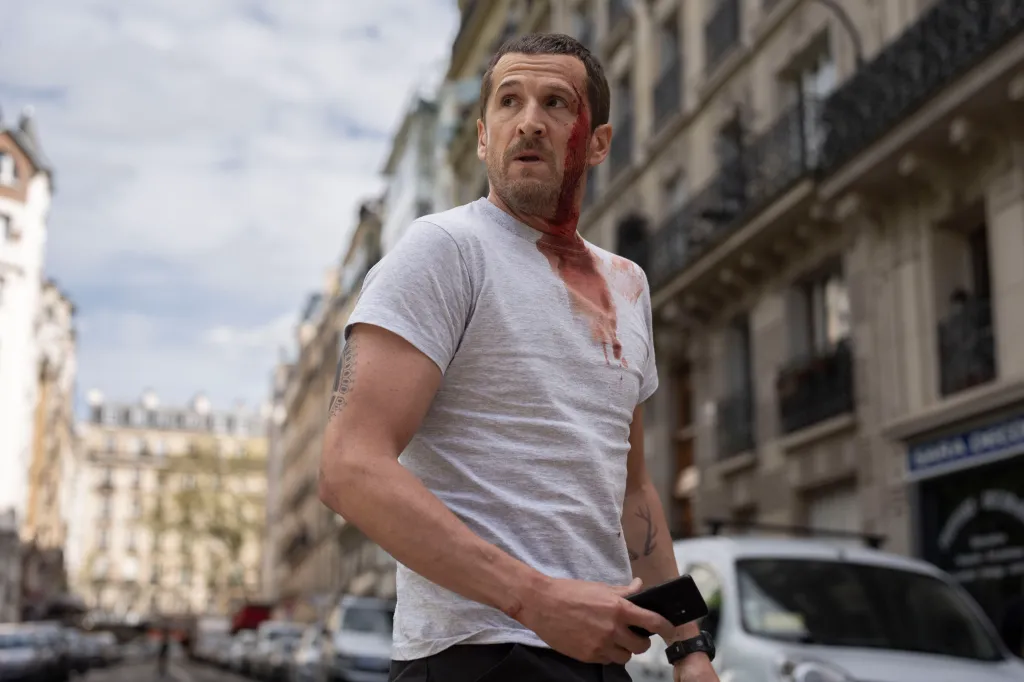
Netflix has announced the start of principal photography on a sequel to 2025 action thriller Ad Vitam, starring Guillaume Canet.
Working titled Ad Vitam Eternam, the new film sees Canet return in the role of ex-elite agent Franck Lazareff who spent the first instalment investigating a deadly conspiracy plot after his pregnant wife was kidnapped by masked men.
Ad Vitam Eternam will pick up from the ending of Ad Vitam in which Canet’s character was released from jail in the final scene after his wife presents evidence clearing his name of trumped up charges related to his personal mission to free her and uncover the instigators of the plot.
The synopsis reads: “After surviving an assassination attempt upon his release from prison, Franck sets out to find out who wants him dead. He goes to hide away with his family in the mountains. But French intelligence services track him down and offer him a deal: a covert mission in exchange for the truth Franck is seeking.”
Ludovic Colbeau-Justin, who enjoyed success with box office language breakout How To Make A Killing starring Franck Dubosc, takes over the director’s seat from Rodolphe Lauga who shot the first film.
Canet co-wrote the screenplay with Maxime Chattam with the collaboration of David Corona.
Further cast returnees include Stéphane Caillard, Nassim Lyes, Zita Hanrot alongside fresh additions Nicolas Duvauchelle, Sophie Marceau and Mathieu Amalric.
The film is produced by Cabanes Productions, Canet’s joint company with Jean Cottin. It will shoot in the Ile-de-France, Normandy, Savoie and Provence-Alpes-Côte d’Azur.
Released on January 10, 2025, Ad Vitam broke into Netflix’s top ten for non-English language films, generating some 54 million views, within the first month of its availability on the platform.
>

Elene, 16, and her war-scarred family are drawn into a mass protest in Tbilisi that transforms the streets of the capital of Georgia into a battleground for freedom. But it also forces them to confront the conflicts that are already threatening to tear them apart.
Does this read like a synopsis for a fiction or a documentary film to you? Well, whatever answer you give, you are kind of right. Because this is not just any film. It is Tear Gas from Georgian writer-director Uta Beria (Negative Numbers). And it is a fiction film shot inside real demonstrations.
The movie will world premiere on Aug. 12 in the Filmmakers of the Present competition program of the 79th edition of the Locarno Film Festival.
At the International Film Festival Rotterdam’s IFFR Pro industry section, the project last year won two awards: the inaugural HBF Empowerment Award, worth €10,000 ($11,000), with the jury highlighting its urgent themes of freedom of expression and political tension, and the Outward Gaze Award, another €10,000 honor, from the PJLF Arts Fund.
Produced by Nino Chichua, Anna Khazaradze and Beria, and co-produced by Guillaume Dreyfus, Delphine Schmit, Daniel Tenné and Junus Baker, Tear Gas features a cast including Taisia Eradze, Mzia Arabuli, Gaga Shishinashvili, Kato Kalatozishvili and Boris Andronikashvili. The cinematographer is Goga Devdariani, while the editor is Nodar Nozadze.
The title has a deeper meaning. “Tear gas is a weapon created to disperse us, tear us apart, make us cry, and restrict our breathing,” highlights Beria. “But in reality, when you inhale it and panic takes over, you instinctively begin fighting for what is most precious to you.”

‘Tear Gas’ film still, courtesy of Locarno Film Festival
Courtesy of Locarno Film Festival
Tear gas is regularly used by police in Tbilisi to break up anti-government demonstrations that have taken place without interruption for more than 600 days. The reason is that protesters fear that the Republic of Georgia will continue following an authoritarian path similar to Russia’s, crushing their hopes and dreams of being another Western-style democracy that is a member of NATO and the EU.
One of the symbols of their fear and anger is the so-called Foreign Agents Law, often simply called “the Russia law” as it is seen as similar to one that Russian President Vladimir Putin had rubber-stamped to allow crackdowns on civil society.
Ahead of the film’s world premiere at Locarno, the filmmaker talked to THR about the genesis of Tear Gas, shooting inside actual anti-government demonstrations, which have now gone on for more than 600 days without interruption, and why the creative team feels the need to stand up for freedom of expression, no matter what the consequences may be.
Tear Gas took five years to make. “I wanted to make it faster, but it was not possible,” Beria tells THR. “The situation in Georgia is so difficult and tough, both when it comes to getting funding and because of stricter rules by the Georgian Film Center not to give money to people who don’t think the same way they do – that even starts feeling like censorship. My colleagues think that maybe my film is one of the last independent projects because the situation is very tough now.”
In fact, Beria shares that there is institutional pressure back home. The film got a contract with the Georgian National Film Center (GNFC) in December 2022, he says. “We delivered the first-stage accounting and audit on time, but the second stage of financing was never paid by the GNFC – we asked three times over 18 months and were never given a reason. Despite their efforts to hinder the production, we managed to complete the film. We cut the budget, raised the remaining funds ourselves and finished the film.”
‘Tear Gas’ behind the scenes of the shoot, courtesy of Giorgi Kolbaia
Courtesy of Giorgi Kolbaia
After the GNFC became aware that the film was set to premiere at Locarno, “we received a threatening letter from them,” Beria tells THR. “They are not consenting to a public screening, and they refer to a financial sanction of 10 percent of the contract value.”
But the Locarno world premiere is on. “Our agreement with all filmmakers submitting work to the festival requires them to confirm that they hold the relevant rights to their film; this agreement was signed by the producer(s) of Tear Gas,” says Olly Osborne, the Locarno Film Festival’s chief communications officer, in a statement shared with THR. “Any dispute regarding financing or contractual obligations between the production and the Georgian National Film Center is a matter between those two parties. The world premiere of Tear Gas will take place as planned on 12, 13, and 14 August in Locarno.”
So, the Tear Gas team did get their film finished, but says it is now facing financial pressures. And shooting amid real-life demonstrations in the capital also proved a huge challenge.
“It was unpredictable,” Beria explains. “You go to shoot with a script for the actors. Usually, you have a plan. But in the demonstrations, we had a plan A, plan B, plan C, plan D. And there were days where we needed to think as the demonstration was going on to follow the flow.”
Asking the filmmaker if he felt a sense of danger is a rhetorical question. “Of course, it was very dangerous, and especially when the police were dispersing people with the use of tear gas, which happened almost every day,” Beria tells THR. “Sometimes they did not announce that they would start using tear gas. We were making sure that when this brutality was starting, the actors were in a safe place. But I, the camera crew, and my DOP would stay and continue shooting.”
‘Tear Gas’ behind the scenes of the shoot, courtesy of Nino Chichua
Courtesy of Nino Chichua
How do you communicate amid the chaos of street protests? “Communication is very difficult in big demonstrations,” Beria shares. “We didn’t want to use walkie-talkies, because the authorities argue that the demonstrations are not spontaneous but are organized, and they have arrested people as organizers. So, we thought if the police see us with walkie-talkies, they will not ask us if we are making a film but assume we are organizers of the protests.”
Mobile phones then? Not really. “Phones were sometimes not working. I don’t know if it was because a lot of people using them overloaded the network or if the police were shutting it down,” the filmmaker says. “So my assistant director came up with a smart idea. We had short and long flags, and we were using these flags to see each other in the sea of people. People who watch the film will notice that we are shooting with a long lens at a great distance, and between the actors and us, there are thousands of people.”
That also affected his guidance for the cast walking around the demonstrations. “I told the actors that they should stay in their role, and they really did so for hours, in the state of the character,” Beria explains. “I told them that sometimes maybe they wouldn’t know when they were in the frame. So, this incredible magic was happening where we would lose the actors, and then we would find them again, and then lose them again. It was so pure, so authentic, so natural. We really fell in love with that.”
Does Beria not fear repercussions for making Tear Gas? “For me, this film was an act of resistance,” he tells THR. “Some of my friends and colleagues are in prison. I can’t free them. But I could put all of myself into this film.”
Asked if he thinks he will end up in prison as well, Beria says: “I don’t know. Let’s see. They don’t need a reason to put you into prison anymore in Georgia. There are so many good and innocent people in prison. I don’t know what to expect. They do what they want. I don’t know. I’m not going to hide so I don’t go to prison.”
‘Tear Gas’ behind the scenes of the shoot, courtesy of Juda Khatia Psuturi
Courtesy of Juda Khatia Psuturi
The creative also emphasizes: “Every member of the crew showed remarkable bravery, and I couldn’t be more grateful for their commitment under such extraordinary circumstances.”
The filmmaker hopes that the film will make more people around the world aware of the situation in Georgia.
And Tear Gas seems like a powerful title to attract attention. “I love the process when you are thinking about a title,” Beria tells THR. “There were different titles before I had this idea for Tear Gas. Tear gas is a strange weapon. It’s created to disperse us, to tear us apart. But in reality, when you inhale it and the panic takes over, you start to instinctively fight for the things that are precious to us and fight to not lose each other.”
Concludes Beria: “This is the main thing that I want to say with this title. In reality, tear gas forces us to fight for each other and brings us together.”
>
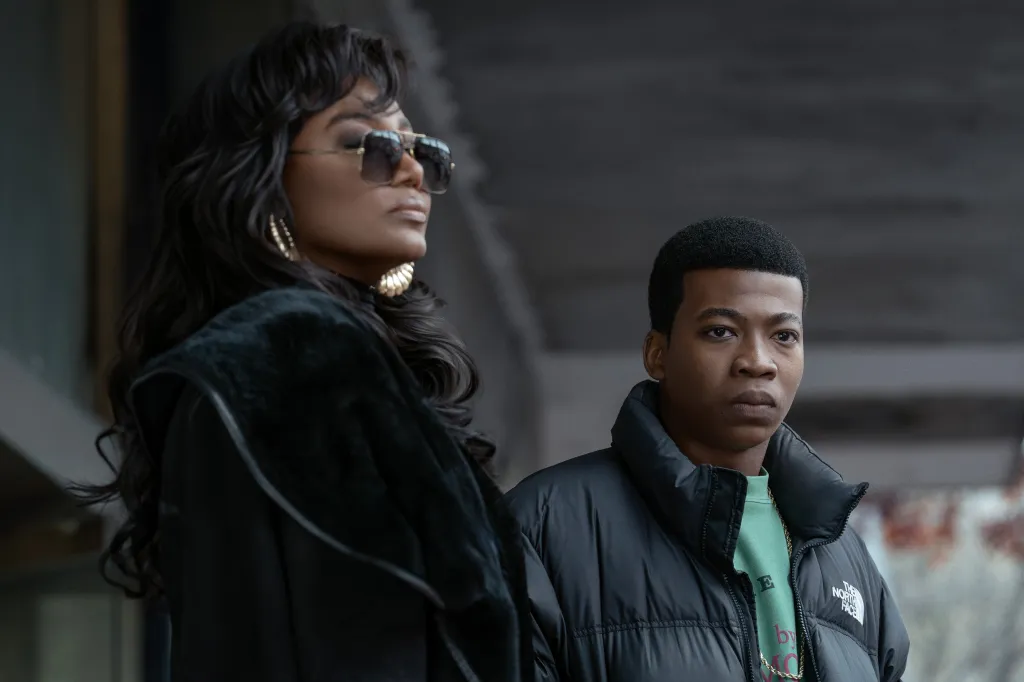
SPOILER ALERT: The following reveals major plot points from the series finale of the Starz crime drama Power Book III: Raising Kanan.
It’s no spoiler to discuss Kanan Stark’s survival in the series finale of Starz’s Power Book III: Raising Kanan, with even the most casual of fans knowing that Kanan Stark is alive and well in the original Power series. While it’s the closing of another chapter in the Power franchise, there’s still some time to spend with Mekai Curtis as the titular Kanan before going into Curtis “50 Cent” Jackson’s era.
But before going into new business, let’s handle old business. Raquel (Patina Miller) was shot and killed in cold blood by Jukebox (Hailey Kilgore) in the show’s final episode. Raq was a surrogate mother to Juke, but when it came down to it, Juke had to avenge her father’s murder at the hands of Kanan. She told her cousin while at the diner that she had killed his mother so as to take everyone that cares about him out of his life. Kanan was rather accepting of the news, something the actor confirms.
“It’s acceptance. That’s the ultimate version of Kanan understanding what Raq taught him at the beginning of the series. Now, more than ever, in Season 5, I think Kanan understands who he is and what he’s done more than ever. When you’ve experienced enough loss and tragedy, there comes a point where you’re going to sit down and just take inventory: you’re going to see where you went wrong, what you did right, where other people went wrong, and how things could have been done differently,” shared Curtis.
Adding, “Kanan has gotten to have those moments. So, when he finally hears that Mom is gone, he understands. It doesn’t mean it hurts any less, but he understands all the bad he’s done. And for it to be his cousin when he just took out her father, it’s poetic, right? He understands, ‘Okay, I did it.’ It doesn’t mean that I’m proud that I did it, but I did it.”

Before that moment at the diner, Kanan and Raq met up on a very public street to discuss the hit Stefano (Tony Danza) put on her, amongst other things. The duo opened up like never before.
“I wasn’t sure that that was a conversation that was going to happen. So I was casting the line in the wind, ‘No, this is still my mother. I still love this person. These characters, this world, and this show could have been flat and stereotypical if we didn’t add these layers that have you ask questions beyond what you’re seeing. It was really fun to finally have that moment to justify the actions of all of the characters leading up to that, especially for me,” Curtis reflected.
He continued, “I feel like Kanan is so misunderstood, especially the younger version of him. You see he’s doing things out of emotion, and he doesn’t know how to articulate himself. But it’s not simply just to be doing it. It’s not simply to ignore the thoughts and the wisdom of the people around him. He’s simply trying to find himself outside of the things that he’s now been shown. He can’t trust in the way that he wants.”
Part of that, Curtis explained, was Kanan saying, “You did these things, and it hurt me, and I didn’t know how to say that it hurt me because I was never taught how. But I still love you.”
“It was a constant back and forth between Raq and Kanan showing or saying that they love each other, but missing the mark,” he said. “I think they both had different love languages, and they didn’t know how to come together and actually healthily do that until imminent death was in the air.”
Playing Kanan across 5 seasons as part of this crazy world of Southside, Jamaica, Queens, the lesson that the actor is taking with him is a pretty special one.
“The lesson is love for me. Not to get all preachy about it, but love is patient. It’s kind. It’s giving space when you need it. It’s letting that person come back when they’re ready. It’s ugly. It’s nasty, and that’s everything that you see happen with these characters on the show, but that’s also everything that’s happened behind the scenes,” said Curtis.
“I think there’s a rare level of vulnerability and safety that was fostered on this set that allowed us to translate with these characters even more. The lesson for me is: keep your heart open. Keep your heart guarded, but always be open and ready for the things that are around you. Be ready to receive, be ready to give,” he added.

Onto new business, Curtis has already completed work on the first season of the brand new prequel series Power: Origins, a continuation of Raising Kanan, both shows from creator Sascha Penn. Power: Origins will reunite young James St. Patrick (Spence Moore II) and young Tommy Egan (Charlie Mann) with young Kanan. As a quick reminder, teen versions of James and Tommy appeared in the finale of Raising Kanan, played by Maxwell Davis and Andrew Bennett, respectively. At about 13 years old, the boys tried to work with Kanan, but even he had his limits.
“That honestly is my favorite part because that is the crossroads that carries through into Origins. You can still see a slight shred of care. Kanan sees himself in these two kids, and while it is exciting, he’s like, “Oh, we can get into all the things.’ It’s still like, ‘Nah, they’re still too young. I’m not gonna be the person that exposes you to whatever is going to bring you back here. We get to see how he still kind of cares and nurtures them in Origins.”
>

Sports37 seconds ago
Gauff breezes past Korneeva to reach Canadian Open quarters

movies4 minutes ago
Netflix Reunites With Guillaume Canet On ‘Ad Vitam’ Sequel

Sports6 minutes ago
Brennan secures FedEx Cup Playoffs spot and place at 2027 Masters with Wyndham win
-

 movies3 months ago
Search For Canadian TV Actor Stewart McLean Now Homicide Investigation
-

 Fashion9 years ago
These ’90s fashion trends are making a comeback in 2017
-
Fashion9 years ago
According to Dior Couture, this taboo fashion accessory is back
-
Fashion9 years ago
Model Jocelyn Chew’s Instagram is the best vacation you’ve ever had
-
Fashion9 years ago
Your comprehensive guide to this fall’s biggest trends
-
Fashion9 years ago
9 Celebrities who have spoken out about being photoshopped
-
Fashion9 years ago
Emily Ratajkowski channels back-to-school style
-
Fashion9 years ago
A photo diary of the nightlife scene from LA To Ibiza