
Anime
Episode 8 – Welcome to Demon School, Iruma-kun Season 4


© Osamu Nishi (Akita Publishing)/NHK・NEP
It’s “adults kind of admit they’re wrong” day on Welcome to Demon School, Iruma-kun! Both Poro and Purson’s dad have to eat a little crow this week, and they, of course, do so in a way that makes it clear that they’ve been impressed despite themselves. But more than the fact that they’re faced with their own pigheadedness, this episode showcases the clear generational divide between younger and older demons. Both Poro and Mr. Purson are living in a past that no longer exists. Poro’s heart (and possibly brain) are stuck in a world where Derkila is still around and the two of them share a relationship that perhaps only was true in Poro’s mind, while Purson’s dad can’t bring himself to understand that what he thinks is the only way his children should behave isn’t the way they’re going to behave. Both are difficult, selfish people who don’t fully understand that they’re being either of those things.
While Poro’s about-face (or at least, his moment of brief understanding) is the more striking this week, I think Mr. Purson’s is probably the more important. Soi has been trying to please both himself and his father for longer than he’s been a speaking character in this series. He only admitted to existing because Kalego forced him out, but the moment he began feeling even remotely comfortable (with Iruma), he began talking a mile a minute, demonstrating that while he’s perhaps not one of nature’s natural extroverts, he’s also not willing to hide his light. Soi defying his father by performing was one thing; him actively telling his dad that he’s not going to be Mr. Perfect Son in exactly the way he’s “supposed” to is his real triumph. Soi’s announcement is both a statement of frustration and a declaration of intent. He’s not going to run away like his older brother; he’s going to make this work on his own terms. He can be a leader and a musician. This is his life to figure out – his parents’ role now is to support him.
Although the series has mostly been setting Asmodeus and Clara up as Iruma’s seconds in command (assuming he does, in fact, become the next demon king), this arc has worked on creating a parallel between Poro/Derkila and Iruma/Soi. The former clearly had a good friendship – or something more, which Poro seems to either think or wish – and their love language was music. Jamming together made Poro feel worthwhile and allowed Derkila to blow off some steam, and it’s those good memories that made Poro be such a hardass about both the Misfit Class and the music festival as a whole. But even if he wasn’t warping those memories to justify being a jerk to kids, making music with Derkila is his best memory. It helped him, and Derkila seemed to know that. It isn’t a perfect similarity, but Iruma and Soi bonding on the Royal One rooftop shows a relationship that’s at least slightly similar. It helped Soi find his place in the class and his courage to tell his father what he wants. If Poro and Derkila’s friendship were even half as important, it would explain a lot more than a one-sided crush does about why Poro is the way he is.
So here’s to the Misfit Class and Soi Purson. Even Poro can’t deny that their performance was a triumph and that Iruma, despite his musical issues, was the reason it all worked out. I’m a little concerned that next week’s episode will be a clip show, but if it is, we can all just agree to go back and rewatch episode seven.
Rating:
Welcome to Demon School, Iruma-kun is currently streaming on
Crunchyroll.
The views and opinions expressed in this article are solely those of the author(s) and do not necessarily represent the views of Anime News Network, its employees, owners, or sponsors.
>
Anime
Loading into Cyberpunk: The Ghost in the Shell Director Mokochan, Character Designer Shūhei Handa – All the News and Reviews from Anime Expo 2026


© 2026 Shirow Masamune/KODANSHA/THE GHOST IN THE SHELL COMMITTEE
Ghost in the Shell may be one of the most revisited worlds in the anime medium. Across decades, fans have followed Major Motoko Kusanagi across multiple continuities, each imbued with a vision of a startling technological future.
Following in the footsteps of esteemed creators is Mokochan. The director is making his full-fledged debut in Science SARU‘s The Ghost in the Shell after previously working with studio founder Masaaki Yuasa on the Golden Globe-nominated film, INU-OH. Joining Mokochan on the project is character designer and animation director Shūhei Handa, a Trigger studio collaborator whose punchy, cartoony style appeared in episodes of Kill la Kill and Scott Pilgrim Takes Off.
At Anime Expo, we talked about Ghost in the Shell‘s legacy, and how despite all of its technological advances, the series’ creation is still powered by humans.
So my first question is for Mokochan; you’re now among well-respected creators such as Mamoru Oshii-san and Kenji Kamiyama-san. Mokochan, how does it feel taking the reins of such an important anime franchise?
MOKOCHAN: I got a lot of pressure while producing this new franchise, but I want to make it into an amazing work of art, including supervising all of the animation. I check those details very seriously.
The different iterations and continuities of Ghost in the Shell all offer alternate views of our future world. What makes The Ghost in the Shell unique compared to the other versions?
MOKOCHAN: Because this new series is completely based on the original manga, we didn’t modernize it. That was not our intention. And the original manga was created in 1989. In that era, we didn’t even have mobile phones. Also, monitors weren’t like the LED style; they were all CRT. So we tried to capture the same feel and make everything match the concept in the original manga. It’s not updated. It’s more focused on the retro future.
What parts of Masamune Shirow‘s original story feel the most relevant to the time we’re living in right now?
HANDA: AI technology. That’s what I think. Because we’ve been hearing a lot of things about AI recently. AI is kind of becoming the mainstream right now. That’s why I think it’s the most relevant component of the series.

© 2026 Shirow Masamune/KODANSHA/THE GHOST IN THE SHELL COMMITTEE
This might be a little bit off topic. I was in Japan in March, and I went and saw the Sailor Moon stage play that they had at a hotel there. And even the topic of that new stage play was about AI. AI really does seem to kind of be everywhere right now.
HANDA: It’s a sensitive topic.
Yes. Do either of you have a feeling whether AI in The Ghost in the Shell is shown in more of a positive sense or a negative sense, or both?
MOKOCHAN: It’s neither.
HANDA: It’s not positive or negative.

© 2026 Shirow Masamune/KODANSHA/THE GHOST IN THE SHELL COMMITTEE
It just depends on how it’s used. Are there other cyberpunk or science fiction stories that had a strong influence on you as a storyteller?
MOKOCHAN: There are a lot. So it’s really hard to just say, “just choose one of them.” Because I reference a lot of work and projects, I don’t want people to think, “They’re just focusing on some of the examples.” So it’s better not to mention any of them. There are almost 100 [influences].
Okay. So viewers should just watch and see what they might notice.
MOKOCHAN: Yes. So fans can definitely look for them. If they realize some of the references mentioned in the series, it’s fine for them to find those details. But there are just so many, so it’s kind of difficult to mention all of them.
And I don’t want to limit the vision to just a few, because that’s not accurate.
Major Motoko Kusanagi remains an all-time favorite anime character. What do you think is her long-lasting appeal?
MOKOCHAN: Major Kusanagi is kind of mysterious and very cool, but actually she is very human. So for the fans, when they watch the series, it’s kind of very easy for them to put themselves into this character. For example, even a normal human has a lot of concerns about humankind and the lives they’re living in this world. So it’s just normal. Just a concept of a normal human being. And Kusanagi also has that concept in her character.
I see. Handa-san, you were brought onto the project for the character designs. Can you discuss working on the new character designs? Was the approach to closely adapt Shirow-sensei’s original character designs?

© 2026 Shirow Masamune/KODANSHA/THE GHOST IN THE SHELL COMMITTEE
HANDA: So when I joined the project, they’d already decided to make this new series based on the original manga. So I tried to follow the original manga while keeping the authentic parts of its art style. For Aramaki and Tokusa, the eye design is just very simple black dots. I didn’t try to emphasize the character or make them the main character. I didn’t adjust it. I just kept the character role as is.
Mokochan-san, prior to The Ghost in the Shell, you worked on other projects for Science SARU including DAN DA DAN, INU-OH, and Scott Pilgrim Takes Off. Can you give examples of techniques that you honed during your previous projects and how they helped you on The Ghost in the Shell?
MOKOCHAN: When I worked on this project with Science SARU, I actually worked under Yuasa as his assistant to learn how to make animation, and the technique he learned from his master was to use animation to do the storytelling. And the director of DAN DA DAN [Fūga Yamashiro] is also my co-worker, so he also specialized in storytelling in an animated style. I think that definitely helped.
I got to meet Yamashiro-san at AX not last year, but I think the year before, and he showed his storyboards to me, and it was so impressive. He also seems to really love Ultraman.
Given its focus on technology, I wanted to ask which tools you used during the production process that had an impact on The Ghost in the Shell? Either the look, the coloring, or anything like that.
MOKOCHAN: For The Ghost in the Shell, it’s the human body. The main concept in the original manga is to showcase what a human being is, so we would like to follow the same concept when making this new series. We need to make the body move, and that’s why I focus so much on the hand-drawn art style. So the human body was really helpful during the process.
So even though it’s anime that features advanced technology, you could say that it’s powered by humans.
BOTH: Exactly.

© 2026 Shirow Masamune/KODANSHA/THE GHOST IN THE SHELL COMMITTEE
If offered the opportunity to get your own cyber brain implant, would you do it?
HANDA: Yes. Immediately.
MOKOCHAN: For me, it depends on the price.
HANDA: Only the cyber brain? I’d buy the eyes and also an arm—a mecha arm.
Yeah. Then your muscles wouldn’t get sore anymore.
HANDA: To draw animation, I want a mecha arm.
>
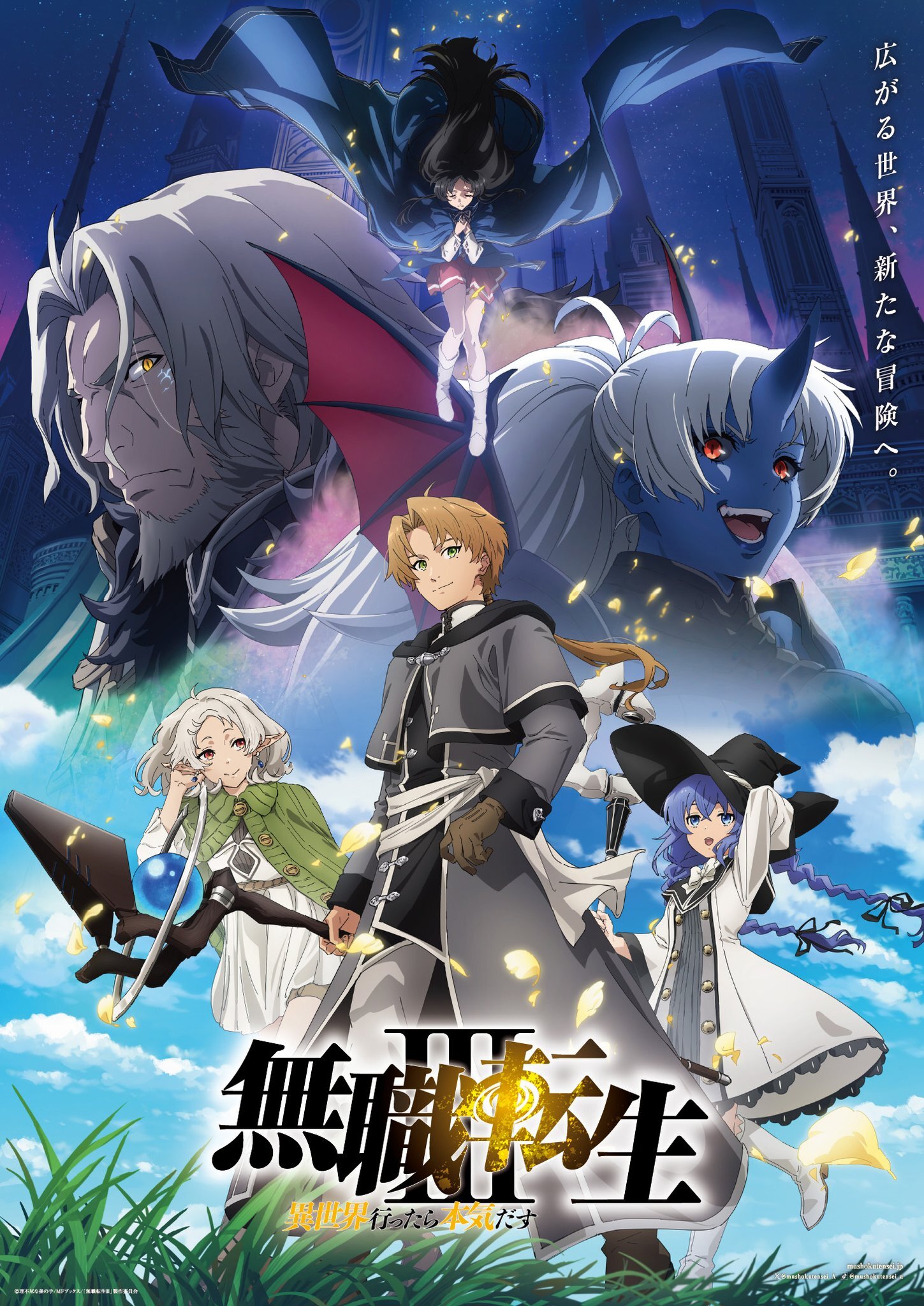
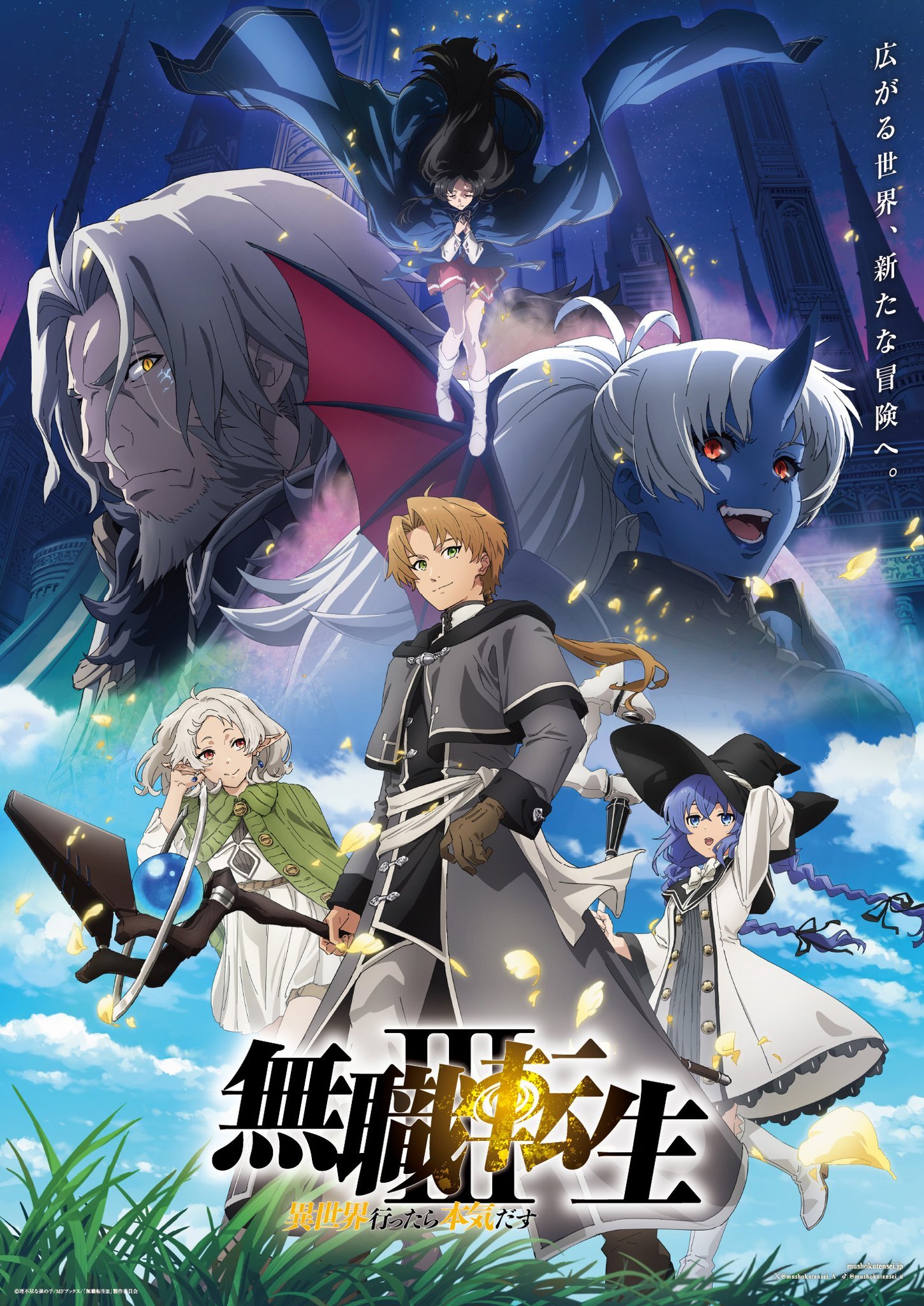 The official website for the television anime adaptation of Rifujin na Magonote‘s Mushoku Tensei: Isekai Ittara Honki Dasu (Mushoku Tensei: Jobless Reincarnation) light novel revealed additional cast and the “Chaos Breaker” promotional video for the third season on Monday. The anime premiered on July 6 at 12.00 a.m. on Tokyo MX and BS11, followed by KBS Kyoto, and Sun TV.
Cast
Perugius Dola: Rikiya Koyama (Fate/Zero)
Sylvaril: Ayumi Tsunematsu (Awajima Hyakkei)
Atoferatofe Rybak: Nanako Mori (Kidou Senshi Gundam SEED Freedom)
Ryousuke Shibuya (Saikyou Onmyouji no Isekai Tenseiki) is directing and handling the series composition for the third season at Studio Bind, with Naoto Taniuchi (Ruri no Houseki script) also handling the series composition. Sanae Shimada (Photokano) and Ryouta Furukawa (Kaijuu 8-gou animation director) are designing the characters. Yoshiaki Fujisawa (No Game No Life: Zero) is composing the music.
Produced by Studio Bind, the 23-episode first season aired in split cours in Winter 2021 and Fall 2021. The 24-episode second season premiered in two parts, with the first part in Summer 2023 and the second part in Spring 2024. Funimation and Crunchyroll simulcast the anime series with English subtitles, respectively.
Rifujin na Magonote penned the adventure fantasy novel on the Shousetsuka ni Narou website between November 2012 and April 2015. Kadokawa began printing the novel with illustrations by Sirotaka under its MF Books label in January 2014 and released the 26th and final volume in November 2022.
Yuka Fujikawa began serializing a manga adaptation in Comic Flapper magazine in May 2014. Kadokawa published the 24th volume on February 24, with the 25th volume scheduled for a September 18 release.
Seven Seas Entertainment licensed both the light novel and manga in English and published the 26th and final light novel volume in March 2024. The 23th manga volume went on sale on July 21, while the 24th volume will be released in March 2027.
PV (Chaos Breaker ver.)
Source: Comic Natalie
News submitted by Safuan12616
>

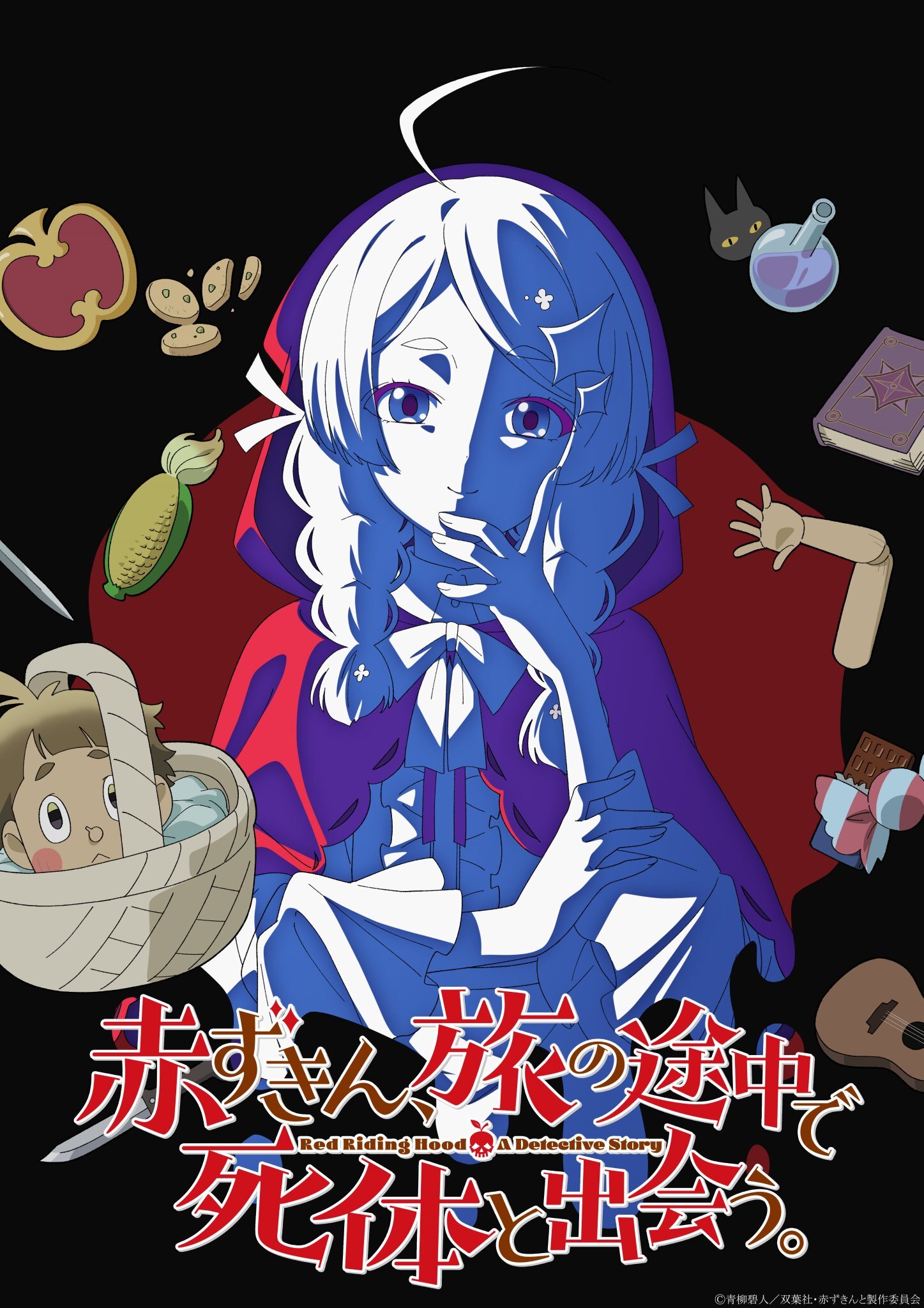 Production company Pony Canyon opened an official website for a television anime adaptation of Aito Aoyagi‘s Akazukin, Tabi no Tochuu de Shitai to Deau. (Little Red Riding Hood…) novel on Monday, revealing the main cast, staff, a teaser visual (pictured), and teaser promotional video. The anime series will premiere in 2027.
Voice actresses Yume Miyamoto (Kanojo ga Koushaku-tei ni Itta Riyuu) and Akira Sekine (Tsue to Tsurugi no Wistoria) are starring as Akazukin (Little Red Riding Hood) and Pinocchio, respectively.
Staff
Director, Screenplay: Itsurou Kawasaki (Oroka na Tenshi wa Akuma to Odoru)
Character Design: Manami Minakata (Babanbabanban Vampire sub-character design), Yuuko Yahiro (Aharen-san wa Hakarenai)
Art Director: Izumi Hoki (Net-juu no Susume), Hiroshi Katou (Shinseiki Evangelion)
Color Design: Chie Yoshimura (Reincarnation no Kaben)
Director of Photography: Rieko Koike (Chanto Suenai Kyuuketsuki-chan)
Editing: Daisuke Hiraki (Sono Bisque Doll wa Koi wo Suru)
Studio: BENTEN Film
Aoyagi published the comedy mystery novel through Futabasha in August 2020. The fourth volume went on sale in July 2025.
Kanoka Tana drew a manga adaptation from January 2023 to May 2025. It was first serialized in Monthly Action magazine before being transferred to Web Action. The fourth and final volume was published by Futabasha in June 2025. The series has a cumulative 600,000 copies of its volumes in circulation.
Synopsis
The fairytale of Little Red Riding Hood is as classic as they come, a familiar delivery of cookies and wine. But on this particular journey, Little Red Riding Hood…encounters a dead body?! As the mystery begins to unfold, familiar faces from other fairytales such as “Cinderella”, “Hansel and Gretel”, and “Sleeping Beauty” bring their own countless twists and tricks. Will she be able to solve the larger puzzle at the center of it all? A new detective is born!
Teaser PV
Official site: https://akazukin-anime.com/
Official X: @akazukin_anime
Source: PR Times
>

Loading into Cyberpunk: The Ghost in the Shell Director Mokochan, Character Designer Shūhei Handa – All the News and Reviews from Anime Expo 2026

Jose Mourinho: How Manchester United missed out on first choice to replace Sir Alex Ferguson

Welcome to IndieWire’s Sequels Week
-

 movies3 months ago
Search For Canadian TV Actor Stewart McLean Now Homicide Investigation
-

 Fashion9 years ago
These ’90s fashion trends are making a comeback in 2017
-
Fashion9 years ago
According to Dior Couture, this taboo fashion accessory is back
-
Fashion9 years ago
Model Jocelyn Chew’s Instagram is the best vacation you’ve ever had
-
Fashion9 years ago
Your comprehensive guide to this fall’s biggest trends
-
Fashion9 years ago
9 Celebrities who have spoken out about being photoshopped
-
Fashion9 years ago
Emily Ratajkowski channels back-to-school style
-
Fashion9 years ago
A photo diary of the nightlife scene from LA To Ibiza