
Tech
What happens when companies become too AI-pilled?


The people deciding that AI can replace your job are also the ones least likely to understand what your job truly involves, according to Box founder Aaron Levie, who pointed to this as an example of “AI psychosis.” Indeed, ClickUp recently cut 22% of its workforce for AI agents, tech layoffs in 2026 are already nearly matching all of 2025, and DuckDuckGo installs are climbing from users who want Google to stop forcing AI into search and just give them links.
Watch as TechCrunch’s Equity podcast hosts Kirsten Korosec, Anthony Ha, and Sean O’Kane dig into what happens when the AI-pilled and the AI-skeptical are both right at the same time, plus three deals worth knowing about and Waymo’s new robotaxi hitting the road.
Subscribe to Equity on YouTube, Apple Podcasts, Overcast, Spotify and all the casts. You also can follow Equity on X and Threads, at @EquityPod.
>
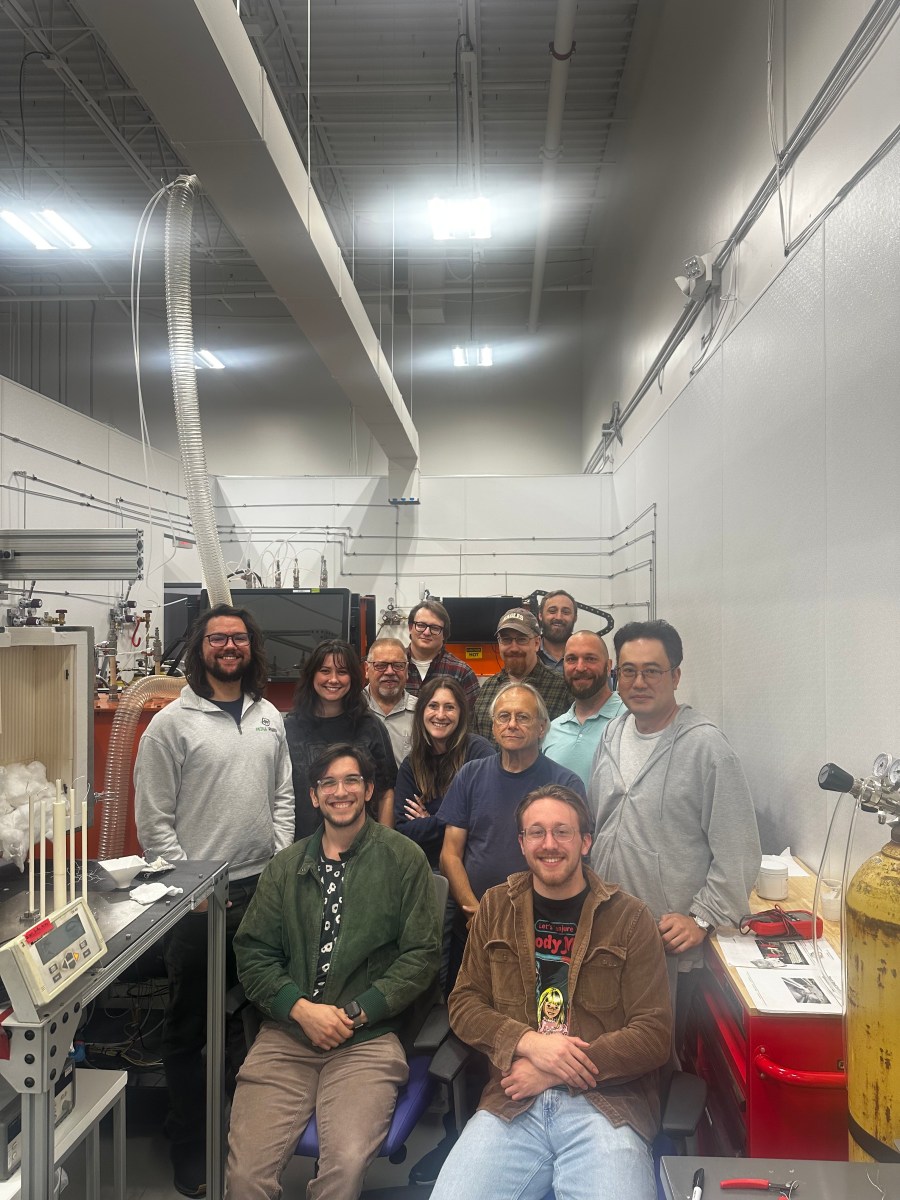
As AI gobbles up an ever larger amount of energy, the hunt is on for efficient and cost-effective power sources. One of the companies leading the charge is Petra Power.
Petra, which was founded in 2017, sells solid oxide fuel cells — ceramic devices that convert fuel, like natural gas, into electric power without burning it. The company markets them as a more efficient and environmentally friendly way to operate data centers and large vehicles.
Petra’s founder, Aaron Goodman, told TechCrunch that his company’s product has significantly lower fuel costs and emissions than traditional power sources, and that they have much less of a physical footprint, too, because they’re more compact and lightweight.
The efficiency, and the cost savings that come with it, is what makes the fuel cells attractive. “Combustion takes fuel and creates explosions,” Goodman said, describing how traditional power generation works. “Those explosions create heat. That heat creates motion. The motion powers an electromotive force, which eventually creates electricity. It’s a lot of steps, and they all have so much loss in them that you end up with a really inefficient system.”
Petra’s fuel cells skip most of these steps. “What fuel cells do is they take the electrons directly off of the fuel, so they strip the fuel of its electrons, which creates electricity,” he explained. “It’s one step, no loss, and subsequently, in theory, at least, they’re much, much more efficient.”
As a result, companies that run off fuel cells stand to save a significant amount on fuel costs, Goodman said.
Although it may offer an innovative product, the customer base is still emerging for Petra. Goodman said that his company is targeting two different types of customers: data centers and the Defense Department.
Goodman doesn’t want to reveal specific agreements just yet, but said Petra is currently working with neoclouds and other infrastructure providers that were a few steps down from the hyperscaler crowd. The target for first deployment with these customers is 2028, with full-scale production for the company hopefully set for 2029, Goodman said.
“Hyperscalers are an ICP [ideal customer profile] for us, and we talk a lot to them, but we don’t have anything firm with them yet,” said Goodman. “We’re still kind of working in that direction. Obviously, they’re the largest consumers of power. They’re the ones that we can make the biggest impact with, so that’s where we’d like to go.”
The other customer — the government — is also still taking shape. The idea is that Petra’s fuel cells will be able to provide auxiliary power for land vehicles, meaning electricity for onboard equipment when the main engine is off. But Petra’s product has not actually deployed on a live vehicle yet, Goodman clarified. Instead, the fuel cells are in the testing phase, during which the government is deciding whether to move forward, he said.
Petra is a small team — some 15 people — but the company is growing, Goodman said. Petra has so far received nearly $9 million in contracts from the Defense Department, and the hope is to scale that work significantly in the coming years, he said.
Petra Power was selected for this year’s TechCrunch Startup Battlefield 200, a group of 200 startups chosen for the program. You can catch all the action this coming week in downtown San Francisco at Moscone West.
When you purchase through links in our articles, we may earn a small commission. This doesn’t affect our editorial independence.
>

Cloudflare announced Friday that it’s acquiring Deno, the startup behind the programming runtime of the same name.
According to Cloudflare’s Kenton Varda, Cloudflare will use this acquisition to improve its Workers programming model and platform, which allows customers to build and run software on Cloudflare’s network. (Varda is principal engineer for Cloudflare Workers.)
Deno — which was co-founded by Bert Belder and Node.js creator Ryan Dahl — recently launched celld, an open source implementation of Workers, which Varda wrote “delighted” the Cloudflare team. Varda argued that contrary to “a popular theory” that the company “made Cloudflare Workers work differently from other cloud platforms in order to create ‘lock-in,’” the company believes “being open source and giving people an escape hatch is good business.”
Dahl, meanwhile, wrote that his team is “joining Cloudflare to make the Workers programming model a mainstream way to build servers.”
The financial terms of the acquisition were not disclosed. Deno had raised a total of $26 million, including a Series A led by Sequoia.
>

TechCrunch Disrupt 2026 starts in just three days. Moscone West is getting ready, hundreds of startups are preparing to show what they’ve built, and thousands of founders, investors, and tech leaders are heading to San Francisco.
The three-day countdown is on, and so are your pass savings of up to $100. Grab your pass before TechCrunch Disrupt 2026 doors open on October 13 at 8 a.m. PT. Bring a co-founder, colleague, or peer and get a second ticket of the same type at 50% off. Coming with a group? Enjoy even more savings when you register four or more attendees.

Discover the next breakout company at Disrupt
For more than a decade, discovering ambitious early-stage companies has been at the heart of Disrupt. Startup Battlefield 200 puts a handpicked group of early-stage startups in front of investors, media, potential customers, and the wider technology ecosystem, with 20 finalists taking to the Disrupt Stage to compete for the $100,000 prize and the coveted Disrupt Cup.

300+ showcasing startups
You don’t need to follow the competition to make startup discovery the focus of your visit. Throughout the Expo Hall, over 300 startups at different stages and from different sectors will be showing what they’re building, giving you the chance to talk directly with founders and find a startup, product, investment opportunity, or idea you weren’t expecting.

200+ sessions and 250+ tech leaders shaping the conversations
Or, if you want to combine discovery with content, explore 200+ sessions led by 250+ tech leaders across six stages, plus roundtables and breakouts. Covering AI, product, GTM, fundraising, finance, infrastructure, and scaling, these sessions give you the chance to ask questions, spark new connections, and hear industry announcements and insights before they hit the mainstream.

3 days to save up to $100 on your Disrupt pass
Just 3 days left to save. Get up to $100 off your pass, plus 50% off a second pass of the same ticket type. Recently affected by a layoff? You can still access the opportunities at Disrupt with an Expo+ Pass for just $75. Attending with colleagues or friends? Bring a group of four or more and unlock additional savings.

When you purchase through links in our articles, we may earn a small commission. This doesn’t affect our editorial independence.
>

‘Bob’s Burgers’ Sets Premiere For Hulu Holiday Short; Releases Clip
Josh Hart says 'everything will work out' despite Knicks ending extension talks
How to watch Red Wings vs. Canadiens: TV channel and streaming options for October 10
-

 movies5 months ago
Search For Canadian TV Actor Stewart McLean Now Homicide Investigation
-

 Fashion9 years ago
These ’90s fashion trends are making a comeback in 2017
-
Fashion9 years ago
According to Dior Couture, this taboo fashion accessory is back
-
Fashion9 years ago
Model Jocelyn Chew’s Instagram is the best vacation you’ve ever had
-
Fashion9 years ago
Emily Ratajkowski channels back-to-school style
-
Fashion9 years ago
9 Celebrities who have spoken out about being photoshopped
-

 Anime4 months ago
Rurouni Kenshin: Hokkaido Arc Manga Takes 1-Issue Break – News
-

 Anime3 months ago
HIDIVE to Stream English Dubs for The World Is Dancing, The Forsaken Saintess and Her Foodie Roadtrip in Another World, The Dangers in My Heart: The Movie Anime – News