
Sports
Oleksandra Oliynykova will not separate her Grand Slam success from advocacy for Ukraine


PARIS — First you notice the body art.
Stars across the cheeks. Piercings in the upper lower lip. Tattoos on her neck and chest and down her left arm.
Then, Oleksandra Oliynykova’s game captures the imagination, a throwback approach that mixes moonballs and slices and drop shots, making her powerful putaways and searing attacks even more striking.
Then the 25-year-old from Ukraine starts speaking about Russia’s invasion of her country, and the impact it has had on her, her family, her people, and her sport, and the full force of her fearlessness comes through.
During this year’s Australian Open, Oliynykova directly criticized leading tennis players, including Belarusian world No. 1 Aryna Sabalenka and 2021 U.S. Open champion Daniil Medvedev. She described them as “dangerous people,” and has continued to level broadsides at figures in her sport who, she says, engaged with or praised state-sponsored activities, or the leaders of the Russian and Belarusian governments.
“I want peace, and if I could change anything, I would definitely do that,” Sabalenka said in a news conference. Medvedev said he respected Oliynykova’s views, which have placed her at the intersection of sports and free speech.
In late April, Oliynykova said in social media posts that the WTA Tour had “threatened” her with “fines of tens of thousands of dollars” and disqualification from tournaments for criticizing specific players.
“I will continue to speak as things are. I will not let them break me, and I will not let them silence me. In the end, I simply cannot accept this level of pressure and censorship — because then I see no point,” she wrote.
In a statement on Oliynykova’s allegations, a WTA spokesperson said via email that “the WTA recognizes that the ongoing war in Ukraine continues to have a profound and deeply personal impact on many of our athletes. We remain unequivocal in condemning Russia’s war on Ukraine and have consistently supported our Ukrainian players since the start of the conflict.
“This is an extraordinarily sensitive situation, and we understand players will have strong personal views. All WTA athletes have the right to express themselves. At the same time, the WTA is committed to maintaining a professional and respectful environment for all athletes, regardless of nationality or country of origin. Our Code of Conduct exists to uphold this standard consistently across the Tour.”
“I don’t care about their opinions,” Oliynykova, one of the only players from Ukraine who still lives and trains there, said of anyone who criticizes her outspokenness, in an interview following her second-round French Open win over Kimberly Birrell of Australia Thursday.
“I just want to stay alive and I want to bring attention to Ukraine and to the things these people are doing so we can finish this war faster, in the fair way.”
During the French Open, Oliynykova has adorned her racket bag with the triton symbol of the Ukraine army, and another with the flag of Ukraine. On the second, she also has a white-red-white flag, a historical flag of the Belarusian Democratic Republic which is now used as a symbol by separatist movements in the country. Oliynykova said that her father, Denis Oliynyk, who serves as her coach and also in a volunteer with Ukraine’s army, has been part of those movements too.
At the end of her post-match news conference on Thursday, Oliynykova pointed to the patch and explained its meaning for the video recording.
“I’m still wearing it, I’m bringing this on my matches here,” she said, saying that officials had told her she could not use it. “I’m playing for my values.”
The WTA rulebook states that logos, slogans and symbols associated with political movements are not permitted for display before, during and after matches. The Grand Slam rulebook does not include a provision.

Oleksandra Oliynykova has been steadfast in speaking about Russia’s invasion of Ukraine. (Marcin Golba / Getty Images)
For Oliynykova, that was a relatively benign moment compared with a few minutes before. Oliynykova’s fourth-round opponent is Diana Shnaider, a young Russian who played in a tennis exhibition sponsored by Gazprom, the Russian energy magnate that has supported the Russian war effort, toward the end of last year.
Oliynykova went after Shnaider once again Thursday.
“The Gazprom tournament is a company which is financing the war crimes” she said.
“I think it’s the same as playing in Nazi Germany for Gestapo officers, on the tournament organized by company which built Auschwitz. There is no difference for me.”
A representative of Shnaider, and officials at the FFT and WTA Tour, did not respond to messages seeking comment on Oliynykova’s statements nor whether she had violated rules with the patches on her bag, but a member of her team met with WTA Tour communications Friday afternoon.
In January at the Australian Open, when Oliynykova initially criticized Shnaider’s participation in the Gazprom event and expressing support on social media for what she described as Russian propaganda, Shnaider defended her decision to participate.
“We’ve been on tour for the whole year, and I rarely see my family, rarely being home, so my only motivation is to be playing in St. Petersburg is just to visit my family, to show some great tennis for my fans who have been following us through the year, rooting for us and supporting us,” Shnaider said in a news conference. “If I have this opportunity, I’m taking it.”
Through her advocacy, Oliynykova has been riding a late-bloom rise into middle of the top 100. She’s currently the world No. 65, though that’s up significantly from well outside the top 200 a year ago. Her two wins at the French Open this week were her first at a Grand Slam.
Her father said it has been a two-year process of growing up and gaining the necessary patience. Not just to harness the power of her main motivation to succeed, but to play with her unique style, which demands intense concentration and discipline.
“She has a stronger motivation than any player,” he said in a courtside interview after her second-round win.
“Also, her style requires growth. She plays tennis. Most other players these days hit tennis, not play. The big serve and then the forehand.”
Oliynykova can do some of that, but more often she is attempting to beguile opponents with her variety. She hit underarm serves — a rarity in tennis and especially the women’s game — on match point two consecutive matches. One worked, the other didn’t.
“For me, it’s nothing special,” she said.
Her outspokenness has also become a kind of soundtrack to success in Ukrainian women’s tennis, which has been going on all spring and has continued at this tournament. Marta Kostyuk and Elina Svitolina have won three tournaments, including the two at the highest level outside the Grand Slams, the WTA 1000s in Madrid and Rome.
Those two, plus Oliynykova and Yuliia Starodubtseva, gave Ukraine four players in the last 32. All of players still have family in Ukraine. Kostyuk and Svitolina won Friday to make the last 16, while Starodubtseva, who beat world No. 2 Elena Rybakina in the previous round, lost a tight duel to Wang Xiyu of China.
A graduate of Old Dominion University, Va., Starodubtseva has not been home since the start of the war. Her mother has moved to Ireland and her sister is playing college tennis at Louisiana Tech University. Her father and grandparents live in what is at the moment Russian-occupied territory.
“It’s hard to balance both lives,” she said in an interview Friday.
She and Kostyuk both said they are behind Oliynykova in her statements about the war.
“I fully agree with everything she says,” Kostyuk said of Oliynykova after beating Viktorija Golubic in straight sets, for her 15th consecutive win.
“It’s something that, you know, she feels like she should be doing, I’m fully supportive of this. I don’t think she says anything bad about anyone. She’s usually just talking about facts and what actually happened, which I don’t think it’s ever a bad thing.”
Kostyuk still talks about her country’s plight, but no longer leads with it, as she did in the first 18 months after the 2022 invasion. She found it too straining, with the emotional weight of competing with the war front and center in her mind knocking her off course. After her first-round win in Paris, she said that a missile had landed ”100 meters” from her parents’ home in Kyiv just hours before.
“I really couldn’t do it back then, I could not separate it,” she said of Oliynykova. “And she’s doing it, and congrats. I mean, it’s very impressive.”
Oliynykova said that so far, it’s no problem for her.
“It’s a lot of motivation for me to be here, to speak, and to do the best I can for my country, for my people,” she said.
“For me, tennis is just a game.”
>
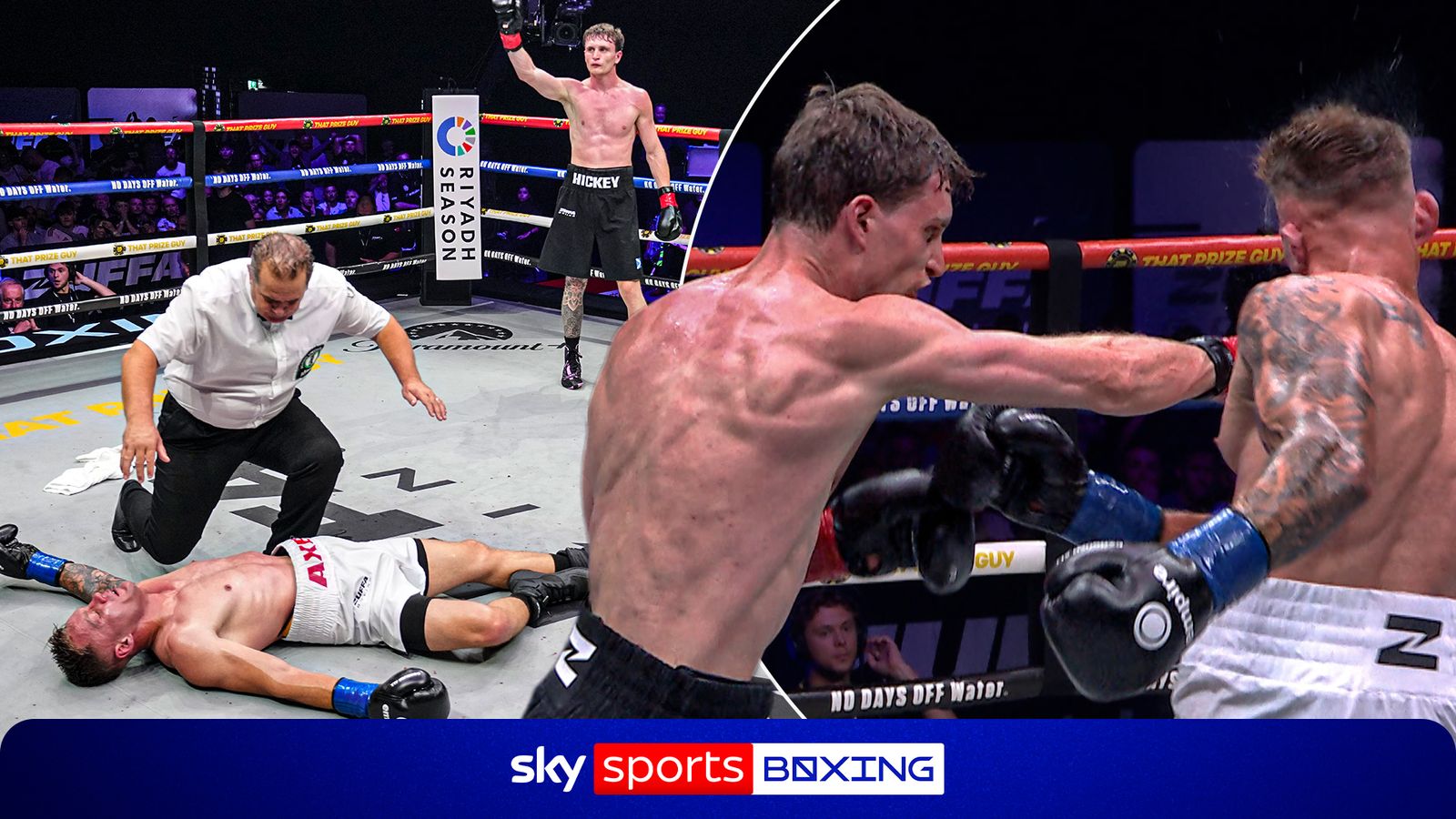
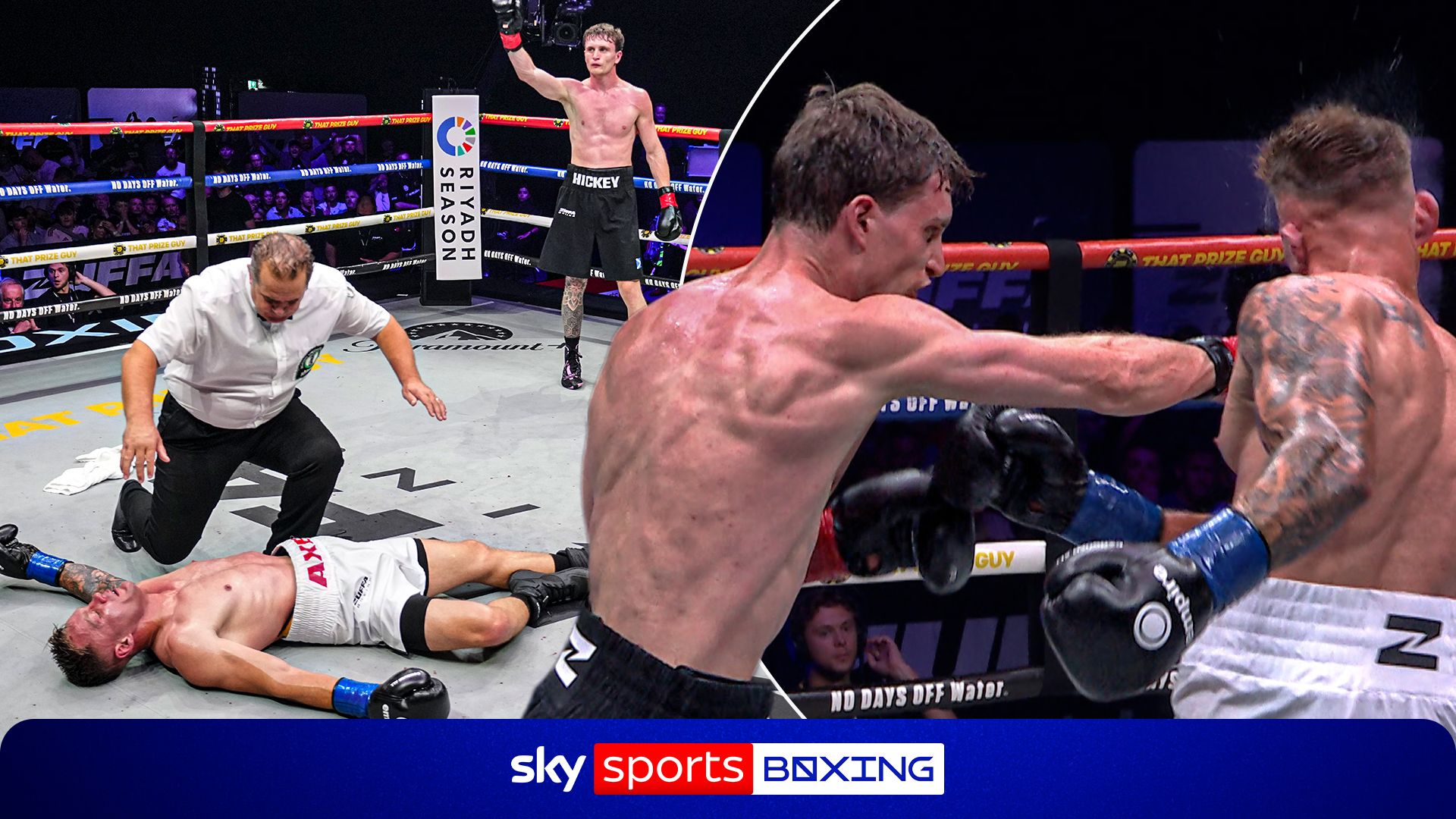
Sam Hickey’s huge right hand knocked out Brad Axe in the seventh round of their contest.
>
Sports
WNBA commissioner stresses integrity, respect on topic of transgender athletes in league-wide memo
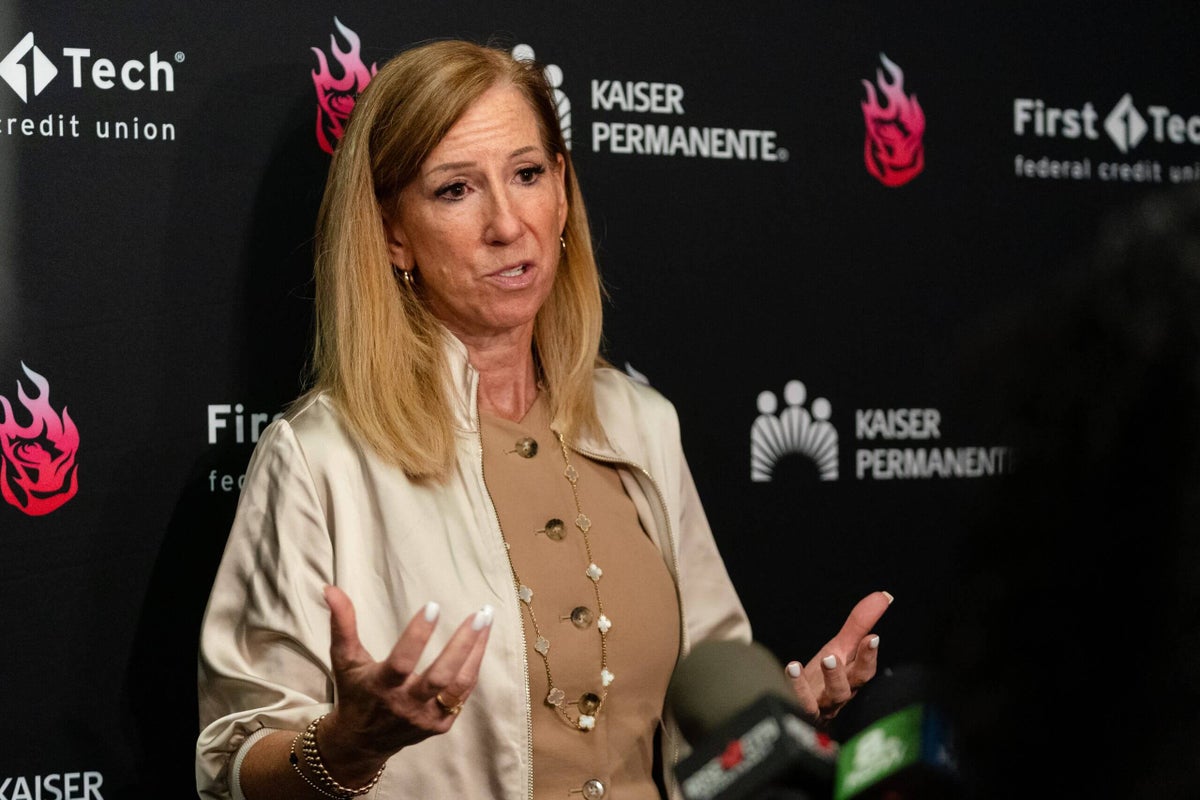
In a memo sent to team presidents, general managers and coaches Friday, WNBA commissioner Cathy Engelbert advised the league’s leaders on their approach to the topic of transgender participation in women’s sports. The commissioner stressed approaching it with integrity and respect, without specifically defining the league’s stance.
The issue has dominated conversation around the WNBA in the wake of Indiana Fever guard Sophie Cunningham’s recent comments in favor of excluding trans athletes from women’s sports.
Engelbert listed three guiding principles for the league in the discussion but did not clarify whether or not trans athletes are allowed to play in the WNBA.
“First, we will always approach this topic thoughtfully, respectfully, and in alignment with the long-standing values of our league,” she wrote in the memo, a copy of which was obtained by The Athletic. “Second, our player eligibility rules, unlike the eligibility rules of some other leagues and governing bodies, are collectively bargained. Lastly, preserving the integrity of our game and ensuring fair competition will always remain among the league’s highest priorities.”
There is no mention of trans athletes in the WNBA’s collective bargaining agreement, although the document does state that “only players who are women are eligible to play in the WNBA.”
Engelbert wrote in the memo that the league has a previously scheduled meeting of a task force of presidents and GMs in the coming week that will address this conversation and other league issues.
In the wake of Cunningham’s comments and the subsequent rallies that have followed the Indiana Fever at road games, the commissioner acknowledged that she expects “this topic will continue to receive significant attention.” She praised team leadership for their response to increasing questions and invited them to continue reaching out to her with questions and perspectives.
Coaches around the league have frequently been asked about the issue since Cunningham first told ESPN she wants to “protect young girls in a locker room” and that “they shouldn’t have to go against biological men.”
Cheryl Reeve has been the loudest voice in favor of inclusion of transgender kids in particular. Golden State Valkyries All-Star Gabby Williams welcomed transgender athletes joining the WNBA, while the Women’s National Basketball Players Association released a statement denouncing “hate, abuse, and demonization” of the transgender community.
>
Sports
Argentina 10-17 South Africa: Springboks win Buenos Aires thriller but Siya Kolisi suffers injury ahead of New Zealand series | Rugby Union News

South Africa scraped past Argentina 17-10 in Test rugby at the possible expense of inspirational captain Siya Kolisi in Buenos Aires on Saturday.
Kolisi, in his first match in seven weeks following a hamstring injury, trudged off in the 25th minute. He may be a doubt to lead the Springboks back home against New Zealand in two weeks in the opening Test of the blockbuster Greatest Rivalry series.
“I hurt my hamstring again unfortunately,” he said. “It’s tough but I can’t be sad about it. There’s nothing I can do but go in for a scan and see how long I’m out for.”
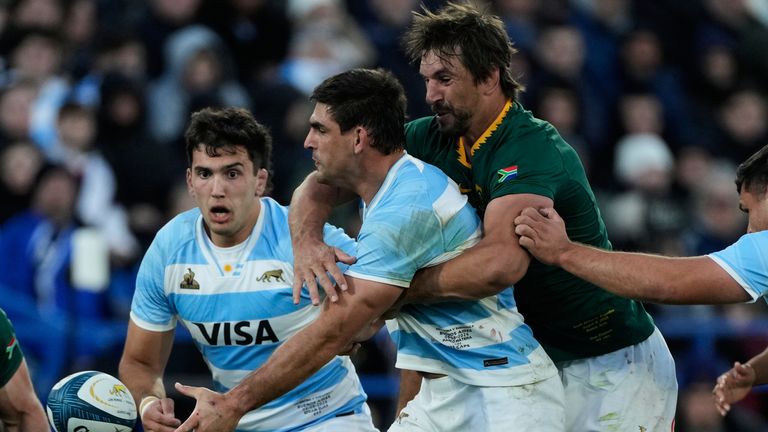
Argentina’s Pablo Matera, left, is tackled by South Africa’s Eben Etzebeth
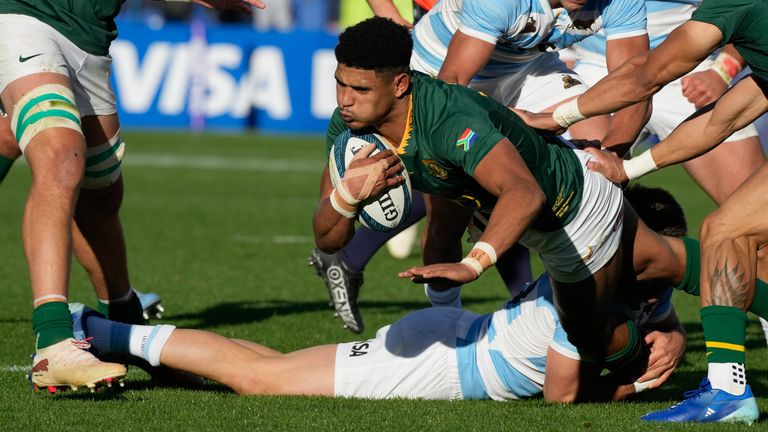
South Africa continue their winning start in the Nations Championship
The skipper was among a core group of Springbok stalwarts given match time in Buenos Aires after missing the Nations Championship in July because of injuries.
Caps record-holder Eben Etzebeth and fly-half Sacha Feinberg-Mngomezulu played every minute and lock Lood de Jager, coming back from a hip injury, lasted until the third quarter.
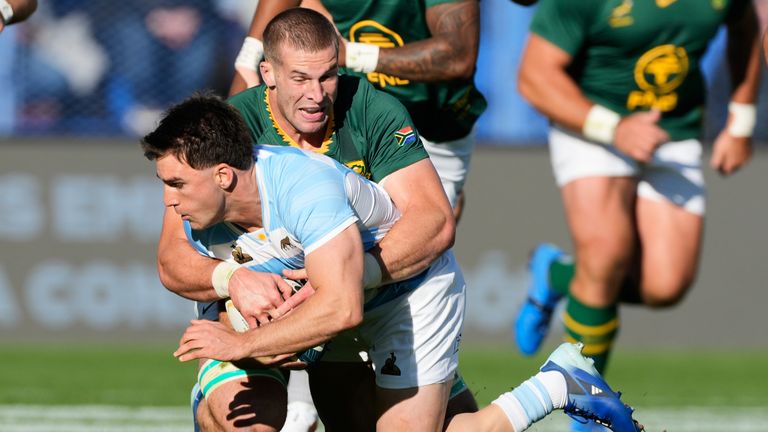
Prisciantelli is tackled by Hanekom
They got to celebrate a 12th straight Test win, but only just.
The depleted Pumas almost snatched a draw after the full-time whistle. From a tap penalty in front of the Springbok posts, they pounded the visitors for 15 phases until the final high pass to an unmarked Matías Moroni was dropped.
Argentina Coach Felipe Contepomi pounded the coaches’ booth and Moroni was in tears.
Watch South Africa’s four-Test series against New Zealand live on Sky Sports. Get Sky Sports or stream rugby with no contract.
>

'That is another crunching finish!' | Hickey lands DEVASTATING knockout

WNBA commissioner stresses integrity, respect on topic of transgender athletes in league-wide memo

Argentina 10-17 South Africa: Springboks win Buenos Aires thriller but Siya Kolisi suffers injury ahead of New Zealand series | Rugby Union News
-

 movies3 months ago
Search For Canadian TV Actor Stewart McLean Now Homicide Investigation
-

 Fashion9 years ago
These ’90s fashion trends are making a comeback in 2017
-
Fashion9 years ago
According to Dior Couture, this taboo fashion accessory is back
-
Fashion9 years ago
Model Jocelyn Chew’s Instagram is the best vacation you’ve ever had
-
Fashion9 years ago
Your comprehensive guide to this fall’s biggest trends
-
Fashion9 years ago
9 Celebrities who have spoken out about being photoshopped
-
Fashion9 years ago
Emily Ratajkowski channels back-to-school style
-
Fashion9 years ago
A photo diary of the nightlife scene from LA To Ibiza