
Politics
The House | Inside Andy Burnham’s Makerfield Campaign: “Nobody Thinks This Is In The Bag”


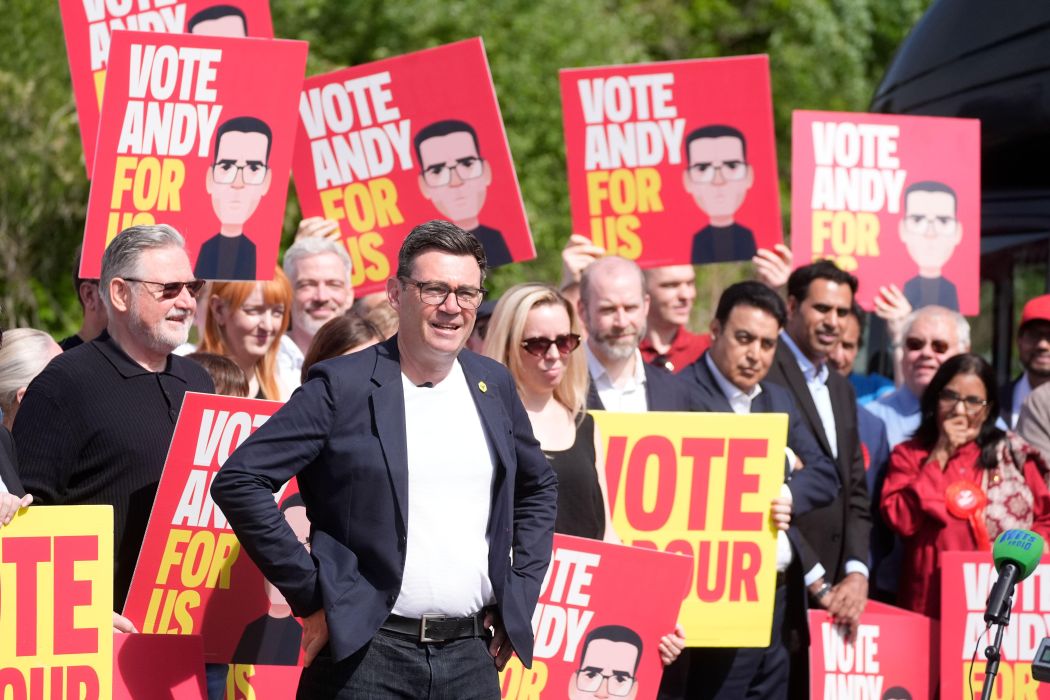
Andy Burnham’s campaign launch (AP Photo/Ian Hodgson/Alamy)

11 min read
Will Andy Burnham’s big by-election bet on Makerfield pay off? Sienna Rodgers talks to Labour MPs, insiders and activists who reveal the campaign strategy and what’s worrying them
Labour activists usually begin their doorstep conversations with the words, “Hello, I’m calling on behalf of your local Labour Party.” Not so in Makerfield, where Greater Manchester mayor Andy Burnham is relying heavily on his personal vote to return him to Westminster.
In the Wigan constituency, which has always been Labour-held but where Reform picked up 24 out of 25 seats in last month’s local elections, the governing party’s by-election message is focused squarely on Burnham. It is a cartoon of his face emblazoned across leaflets and Correx boards, along with the words “ANDY FOR US”. Labour branding is limited, pretty much, to what is legally required. Nobody in the party thinks Labour would have a chance of winning this contest with any other candidate.
Accordingly, Burnham has decided to prioritise his personal interactions with voters. Insiders say the campaign is cutting down on his media time in favour of door-knocking, meeting locals and having sit-downs – including with Reform voters. He won’t convince everyone in the room, they say, but he is determined to have “honest discussions”.
In that vein, Burnham has issued clear instructions that the campaign must aim to speak to every household in the constituency. Canvassing typically involves putting a targeting filter on voter data so that activists miss out the doors of those who have consistently opposed their party, in a bid to save time and concentrate resources where they are most useful. But Burnham wants every door knocked and to wait longer than usual before a more targeted approach is introduced in the run-up to polling day.
This approach means “difficult conversations” are frequent. Those who have been on the Makerfield doorsteps say they have been faced with a real mix of responses. “Not interested, mate” is the standard reply of Reform backers; “Can’t be bothered, I never vote” is that of the wholly disillusioned. But “I like Andy – I know what he’s done for the buses” is also heard.
Because while some voters are firmly Reform, others are desperate to block Nigel Farage’s party, and others still have voted Reform locally but say they will give Burnham their vote.
The Burnham factor is real, canvassers report – a finding backed by polling. The House is told that Josh Simons gave up his seat to make way for the mayor after hearing one too many times from voters that they were grateful for the work he was doing but could not vote for Labour – though they’d consider doing so if Burnham were leader.
Labour campaigners are emphasising that Burnham is a local man. “He grew up here, sent his kids to the local school and lives a stone’s throw away. He cares about the area, this is home, and he wants the change that the country needs to begin here – and look at his track record, he’s been a great mayor for Manchester.” These are the key lines. Burnham has lived with his family in the small town of Golborne, just outside the constituency, since his time as MP for neighbouring Leigh.
Fortunately for the Burnham campaign, given its level of ambition for seat coverage, it is not struggling for bodies: Labour people “from every corner of the country and every corner of the party” are joining the effort, as one source puts it. Party chair Anna Turley has asked all Labour MPs to canvass in the by-election twice during the campaign plus polling day.
High-profile figures close to Keir Starmer are not being discouraged from visiting, nor indeed are leadership rival Wes Streeting and his allies, who have been welcomed. (The former health secretary joined on the first weekend after Burnham had been confirmed as the candidate.) Turning out supporters is key and it’s “all hands on deck”.
North West Labour is a little tired, an insider points out, after being “stuck in a loop of by-elections for years”. Since the start of 2022, the region has been the site of more by-elections than any other (most recently Gorton and Denton, but previously Runcorn and Helsby, Blackpool South, Rochdale, Stretford and Urmston, and the then City of Chester). Many were easier in the sense that Morgan McSweeney had done the strategic work months or years prior – “you just had to execute it”, as the local Labour source puts it.
Still, Burnham has a bigger team around him than is typical for by-elections. There are not one but two ‘political leads’ – Anneliese Midgley, the trade union insider and Knowsley MP said to be highly trusted by Burnham, and Louise Haigh, the former Cabinet member who has championed Team Burnham in Parliament – as well as not one but two ‘campaign aides’ – David Baines and Sally Jameson, both 2024 intake MPs.
As ever, he also has his close political aide and friend, chief of staff Kevin Lee, who helps with messaging. Leigh MP Jo Platt, who acts as a liaison with the parliamentary party, is called upon for her local borough knowledge too. Simons, whose bold decision to vacate the seat triggered the by-election, is also involved and said to be “across everything”. And there is deputy leader Lucy Powell, who is focused on mobilising members, encouraging MPs to visit and fighting Reform in the ‘air war’.
Those dropping into the campaign from elsewhere are full of praise. “It was the first time I felt hopeful in months,” says one Labour MP. They would prefer to see Wes Streeting become the next prime minister, yet describe how refreshing they find “an election campaign with some energy” – one in which “you don’t have the albatross of Keir Starmer around your neck”.
“It felt like they really knew what they were doing in terms of the organisation. All the other by-election campaigns have also been really well-run, but the others have been well-run in spite of the national government,” they add.
“Within the Labour Party, everyone is knocking for the same purpose, and that purpose is getting rid of Keir Starmer. It’s been the cause that dare not speak its name for two years – ‘Keir’s a bit shit, isn’t he?’ – and now people are able to say it.”
Some of those closer to the Makerfield campaign are more critical. The House has heard complaints that there are “too many cooks” and it is unclear who exactly is holding the reins. These criticisms are aimed both at the local campaign and the parallel preparations for government. For the latter, Ed Miliband ally Miatta Fahnbulleh leads on policy, but there are lots of other voices vying for input.
Allies recognise the unfeasibility of running in a highly challenging by-election while preparing for No 10; of being attractive to Makerfield voters, the country and the party’s MPs and members all at the same time.
“There’s no signature policy. He’s appealing to Makerfield, he’s appealing to the country, and he’s appealing to the Labour Party. It’s impossible. He’s just got to pick one and it needs to be Makerfield,” says a pro-Burnham Labour MP.
It’s been the cause that dare not speak its name for two years – ‘Keir’s a bit shit, isn’t he?’ – and now people are able to say it
While the Labour mood is largely characterised by cautious optimism, there is a fear that voters’ minds could change quickly, even in such a short campaign, especially thanks to “the algorithms” shaping narratives. “Nobody thinks that this is in the bag, and you would be stupid to think that it is,” says a Labour MP close to the operation.
In the Greater Manchester constituency of ‘Makerfield’, there is no big town with that name. It is, in reality, a commuter area between Manchester and Liverpool that includes Ashton-in-Makerfield and Hindley, both with populations of around 25,000, and a number of villages. It is 97 per cent white and decidedly pro-Brexit; unemployment is low and home ownership is high. Flags are flown proudly and there is said to be a mix of views throughout the seat – far from the ‘constituency of two halves’ that is Gorton and Denton.
There are local issues: flooding, on which Simons is getting credit from locals after responsive casework when he was the MP; miners’ pensions, which have been boosted by the Labour government; Burnham’s help in getting an illegal waste site closed. But national, ‘big-ticket’ items are dominating, Labour sources say.
Reform’s campaign may be focused on local issues, but it is GB News and social media driving the narrative. And there is a worry that the government-prep side of Burnham’s mission could derail the contest.
This anxiety piles on top of many others, most notably that there is not much of a progressive vote to squeeze (the Lib Dems and Greens are largely non-events here) and that the locals showed there is a significant “shy Reform vote” in the area.
That Rupert Lowe’s Restore Britain is cutting through in the by-election – even bringing out activists on the ground who have been seen knocking on doors – offers Labour some reprieve in the short term, but little comfort beyond this battle.
One MP on the party’s left worries that, even if Burnham pulls off a victory, the story could be the combined Reform and Restore vote share. “If it were not for Restore, Reform would be ahead. That’s troubling,” they say. “The story will be that he came through, but with a split vote. That isn’t a narrative of victory – that’s a narrative of ‘you got lucky’.”
This Labour MP believes that Burnham should be making his distance from the Starmer premiership clearer – even going so far as to tell the Prime Minister not to visit Makerfield during the campaign, as he has promised (or threatened) to do.
“He needs to say, ‘I do not want you on my campaign’,” the MP urges. “Labour is dragging him down. Unless Andy is prepared to say, ‘I’m coming to take Starmer out’, it’s not cutting through,” they add. “Either you’re an insurgent or you’re not. He needs to come in going, ‘I won because I distanced myself from the shitshow that’s been the last two years’.”
But it is thought unlikely Burnham will make such feelings explicit or banish Starmer from the campaign. “It will be very carefully choreographed,” a different MP notes of the visit expected by the PM. “There will be a meeting where Keir is presented with some very trusted local Labour people, but let’s not fool ourselves – Keir is not going to go out knocking in Abram ward,” they add, referring to one of the more economically deprived bits of the seat.
The absurdity of a vote for Labour being a vote against the Labour Prime Minister in this by-election does not always arise, but these conversations sometimes happen organically. There is no official script to follow when they do, but some activists tell The House they reply with a wink-wink, nudge-nudge, ‘well-you-know-who-is-well-placed-to-kick-him-out’ answer.
If it were not for Restore, Reform would be ahead. That’s troubling
Conversations with Labour MPs and others about Makerfield all quickly turn to the impending leadership change. Ironically, those most keen on a coronation for Burnham have included some Starmer supporters: the less chaos, the better.
Streeting backers are fairly relaxed, while emphasising the need for a broad-church approach if Burnham gets in. “Everyone has accepted that anything’s better than the status quo,” one says. “There’s a really healthy respect between the Wes camp and the Andy camp. We looked at how the Tories did their changes and there was never any respect left. You always had a section who were eviscerated and left to go and lick their wounds until enough of their colleagues got pissed off again in six months’ time. I think we’re all aware that that can’t happen.”
Meanwhile, the Labour left MPs are clear that there must not be a coronation. “Not that I would support him, but I would hope that Streeting would say, ‘I am going to be contesting this’. You go to the party with two candidates – one a credible candidate of the centre left, one a credible candidate of the centre right – and they fight it out. That is the way the party should behave,” says one MP. “It didn’t work for Gordon,” says another, referring to Brown’s 2007 accession. “Andy would wipe the floor with any candidate, and he needs that, and the party needs to see that.”
Whatever comes next, everyone involved in Labour’s Makerfield campaign describes its outcome in apocalyptic terms. “It is existential,” says one. “If we can beat Reform in these circumstances, it’s a playbook for the country.” A Burnham-backing MP puts it more starkly: “If Andy does not win this, we’re all fucked.”
>


7 min read
As a council leader, the late Labour MP Iain Coleman made his London borough the only place in England where care at home is free. Then he needed it. Ben Gartside speaks to his widow, Dame Sally Powell, about her campaign to secure reform
Even at the time the move was radical: free home care, including personal care, without means-testing for any eligible resident. “We just did it because we knew it was the right thing to do,” Dame Sally Powell says of the decision she and others, including her late husband Iain Coleman, took in Hammersmith and Fulham in 1991.
Years later, the home care service became free again after Labour retook control of the west London council in 2014 – and it remains radical and indeed unique in England. The free service covers care in the home: washing, dressing, meals, medication, getting in and out of bed, for anyone the council assesses as having eligible needs.
Today, in her husband’s memory, Dame Sally is starting a national campaign that asks for care at home, free at the point of need, to be available everywhere. Although she says the policy choice was made in 1991 because it was “the right thing to do”, there was a bitter irony – some 13 years after its introduction, Coleman became one of the borough’s residents to be eligible.
Throughout the 1990s, they were a formidable power couple – two-thirds of an effective triumvirate. “Iain was in charge of the unions, Andy Slaughter was in charge of the money, I was in charge of the land,” Dame Sally says.
Coleman was elected MP in 1997 but one evening in 2004 he collapsed while shopping in M&S.
“In those days we didn’t have the knowledge about what a stroke looked like,” Dame Sally says. By the time she got him to Charing Cross hospital he had had eight strokes in a day; he came out paralysed down his left side.
He was only 46. Shortly before the 2005 general election, Coleman was advised to stand down, as he would be eligible for his pension on medical grounds.
At that point, Coleman and Dame Sally found themselves in the position of service users rather than political leaders, and discovered the grim reality of the system around care in the UK.
Coleman initially spent some time in the extra care shelter, but it didn’t click.
“Iain hated it. He just wanted to watch the Arsenal… He was very unhappy there. He had mice, and we had to get a cat for him. It was called Dennis Bergkamp, funnily enough. And so then I bought him a shared equity flat underneath me.”
Speaking today, Dame Sally describes the system as like a “jigsaw”. “For three years, we did not get Disability Living Allowance, because I didn’t know,” she says. “No one told me. My doctor, the hospital. No one told me.”
Nor did anyone tell her about the council tax. A severe stroke can leave someone classed as severely mentally impaired for council tax purposes, which means they are disregarded altogether – a status a GP must certify, and one that carries no statutory time limit on backdating.
“I didn’t know until he died,” Dame Sally says. “Iain was entitled, because of his stroke, not to pay council tax. But he’d been paying council tax for 14 years, and I didn’t know that one, but I do now. So, I’m making a claim against the council for a refund.”
The family did not apply for continuing healthcare, which would have moved the cost from the council onto the NHS. Dame Sally acted as a carer while not knowing of the existence of either Attendance Allowance, for those who need supervision from carers, or Carer’s Allowance, for those who spend much of their time caring for someone with a disability.
What did work was a question asked in a committee room. Dame Sally was sitting on the council’s social services scrutiny committee, in a meeting about adult social care, and asked the director about her own household. Why did her husband not get any? “I said, ‘You know him. He’s had a stroke.’ And from that day onwards, he had free adult social care.”
In 2020, she was struggling. Coleman had just been discharged from hospital into the pandemic, and she had no idea what to do. Despairing, she gave an interview to LBC to vent at the nightmarish situation she found herself in.
“But what about the hundreds of people who can’t, who don’t have the access that I fortunately could access? That’s what worries me”
Luckily for her, Sir Sadiq Khan heard it. By her account the London mayor rang the council that afternoon and told them to sort out Coleman’s care.
“Sadiq Khan was brilliant,” she says. “Even though he’s a Liverpool fan.”
Today, Dame Sally reflects on the benefits she had by living in the borough and knowing how the system works – and fears for the millions who have neither advantage.
“Iain was an MP. I was a councillor. I can do that,” she says. “But what about the hundreds of people who can’t, who don’t have the access that I fortunately could access? That’s what worries me. How many people are out there?”
“There must be so many people out there who just need this,” Dame Sally says.
Last September, Coleman died of pneumonia at the age of 67. By his wife’s count, he had 20 strokes over the last two decades.
At Coleman’s memorial service in Hammersmith, veteran Labour MP John McDonnell suggested launching a campaign in Iain’s memory in support of free home care. “It just took off from there,” Dame Sally says, “because I want everyone to have the care that Iain had.”
 Sally Powell and Iain Cole.jpg)
Using Coleman’s pension, Dame Sally is launching the campaign at Labour conference, alongside Stephen Burke, who was Hammersmith and Fulham’s cabinet member for social services in the years the policy was built and went on to lead the council.
While the future of care across the country is up in the air with the Casey Review, Dame Sally is pushing for Prime Minister Andy Burnham to begin pilots immediately.
“Get some local authorities to set up pilots, because you can’t be prescriptive – every area is different,” she says. She accepts the politics of it: “I know that he has to wait until Casey. I understand that politically.”
Dame Sally has faith in both Burnham and Yvette Cooper, his Health and Social Care Secretary, to find a solution.
“I have a lot of faith in Yvette Cooper. I know there’s the big three, but I think she’s got the most important job. It’s the one with the most challenges. She was a health minister a long time ago…She steered through that bill about stem cell research years ago. She was brilliant. And obviously she knew Iain, and I think she’s exactly the right person to make huge progress on this.”
In Burnham, she sees another politician having to confront the reality of the system; the Prime Minister’s father was living in a care home with Alzheimer’s until his very recent death.
Ultimately, Dame Sally wants to make life as comfortable for others as she managed for Coleman.
Towards the end of his life, he had palliative care in his own flat, round the clock. “He was as happy as a sandboy,” Dame Sally says, “because he didn’t have to go to Parliament, and he could watch Only Fools and Horses and the Arsenal. What else do you want in life?
“It can happen to any of us. It happened to me in Marks & Spencer’s one day.”
>
Politics
Politics Home | Andy Burnham Says He Will Scrap Triple Lock To Fund Social Care After General Election
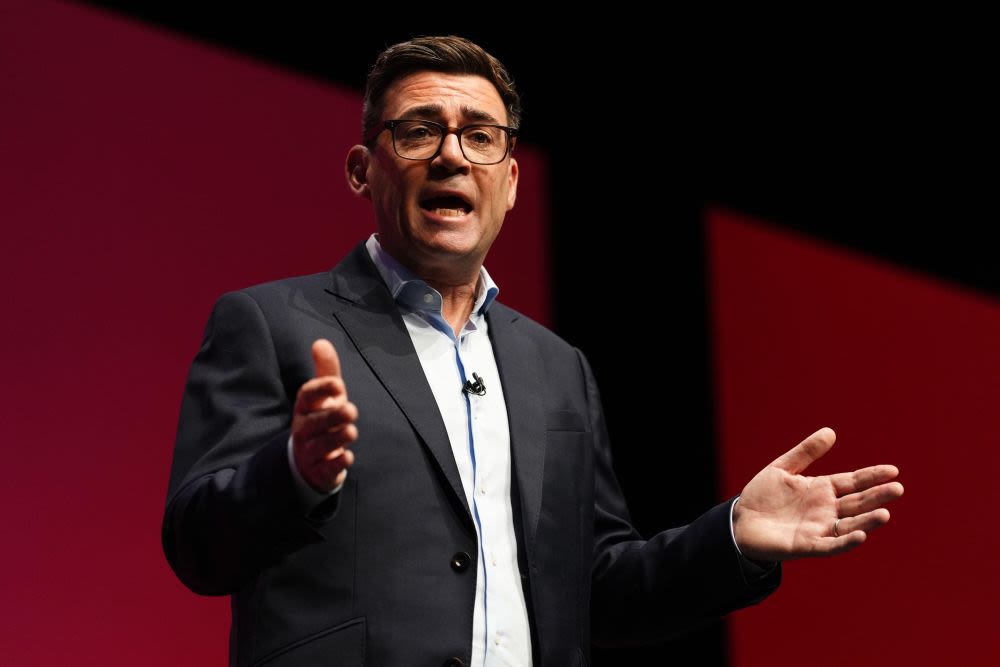

Andy Burnham spoke to conference in Liverpool on Tuesday (Alamy)
6 min read
Andy Burnham has pledged to reform the pension triple lock after the next general election to fund a new social care system.
It is one of several announcements the Prime Minister made in his Labour Party conference speech in Liverpool.
He also said he would launch a national commission on changing the voting system, and look at pursuing closer ties with the European Union.
Burnham said he would use his first conference speech as PM to “break the mould”, saying that “more of the same isn’t good enough” to get the country back on track.
He said he would “make a break with the direction of the past 40 years” and create a Britain “where people feel the country has got their back again. A Britain for everyone, no matter who we are or where we’re born, we would be unstoppable, and we will be.”
Burnham paid tribute to his predecessor Keir Starmer “for the historic victory he achieved for us” at the 2024 general election, before going on to pledge a series of changes that he claimed his generation of politicians had not been brave enough to tackle up to now.
Social care
One of Burnham’s biggest pledges was creating a new National Care Service, to be introduced in the next Parliament, which he claimed was “a landmark policy, as significant as the creation of the NHS itself, and utterly essential to securing its future.”
The PM said his generation of politicians was guilty of “cowardice” for not fixing the issues facing the social care system.
He said he was prepared to take a hit to his popularity to reform the system, saying “someone has to go through the pain barrier and rip the plaster off”.
Addressing social care workers from the stage, Burnham said: “You are not invisible to me. I see you. I thank you, and I am sorry that my profession has let down yours for so long. I promise you, I won’t leave this job without doing everything I can to change.”
Burnham set out a vision for “a person-centred, high-quality care service that starts in the home”. He said it would be “a system in the best traditions of this party, where everyone contributes, and everyone is covered, free at the point of use, and no care charges paid out of your basic state pension”.
Triple lock reform
To help fund his social care plans, Burnham said he would reform the pension triple lock after the next general election.
As things stand, pensions increase in line with whatever is largest out of inflation, wages and 2.5 per cent.
However, Burnham said he would alter the policy to remove wages from 2030.
There have been growing calls for the triple lock to be phased out from critics who argue it not sustainable in the long term.
However, it will be seen as a risky move for Burnham as he seeks re-election, given it will impact large swathes of the public.
Electoral reform
Burnham, a long-term supporter of replacing First Past The Post with a more proportional voting system, announced that he would launch a national commission to look at changing the electoral system in England.
He said that Labour’s next general election manifesto would contain a commitment “to change the electoral system so that everyone’s vote counts, and everyone’s voice is heard.”
“We can’t succeed in the eyes of the world if we continue with the levels of political turbulence we have seen in recent times,” he told conference.
Water reform
The PM said the state of the country’s water industry “is a symbol of what has gone wrong in Britain”.
Referring to the privatisation of infrastructure, Burnham said: “The British right talk about taking back control. Never let them forget. They are the ones that gave it away in the first place.”
He announced that Environment Secretary would present a “strengthened” water legislation to Parliament which would repeal former prime minister Margaret Thatcher’s ban on public ownership of water companies, a move he said “will start a 10-year journey to a very different water system.”
Eagle hinted that government action on Thames Water was coming earlier this week, telling the PoliticsHome podcast The Rundown that “the status quo is not an option”.
Under the changes, mayors will have new powers to hold water companies to account, with tougher consequences for those which repeatedly fail. The PM said that the government will also “close the loopholes used to pay excessive bonuses” to water bosses.
Housing
Burnham announced in his speech that he would pass legislation to make it easier for homes to be reclaimed from negligent landlords.
He said that negligent landlords would face losing those properties if they did not respond to warnings to improve: “If they refuse, we will make it much easier for councils to acquire those homes and we will legislate if necessary.”
“We don’t let people sell food which damages health, so why allow it with homes from now on? We won’t”, Burnham pledged.
Ahead of the conference in Liverpool, Burnham announced a new homes scheme for first-time buyers, saying: “Too many young people are struggling with housing, with many giving up hope on ever having a home to call their own.”
Energy reforms
Burnham also announced the creation of Great British Energy: Great British Grid.
The new grid, he said, will be a “publicly owned company that will challenge the private sector operators”, “increase competition, drive down costs, and speed up connections, so businesses can expand and grow more quickly.”
He also pledged to get down energy prices by “reforming a broken energy market” to better serve the public interest.
“I have asked Miatta Fahnbulleh [the Energy Secretary] to speed up the breaking of the link between what we pay for power at home and the international gas market to get bills down.”
There were also hints made about the potential for controversial North Sea drilling, with Burnham saying he would be “pragmatic” about the situation, “as we build a bridge to a clean energy future and face the climate crisis”.
Education and welfare reform
Burnham also pledged to reform the education and welfare systems to tackle youth unemployment.
On education reform, Burnham said the government would “rebuild a system of comprehensive education in this country. country. With parity between academic and technical, with [Education Secretary] Lucy Powell leading the way.”
Burnham said that the reforms would provide “good quality pathways for all from 14, and the right support for our young people when they need it-a 45-day work placement between 16 and 18, an apprenticeship at 18, and no long waits anymore for mental health support growing up.”
“We will need a fundamental rethink of the welfare system to find the money for these opportunities upfront,” Burnham said.
Future relationship with EU
In the final part of his speech, Burnham hinted at closer alignment with the European Union, a decade after the public voted to leave.
The Labour government has sought closer ties with the bloc since being elected in 2024.
However, speaking on Tuesday, Burnham said he would use a UK-EU summit later this year to produce a series of options for Britain’s long-term relationship with the bloc that he would present to the public.
“I will see if we can find consensus around one, which will give us clarity about our position and the future of the continent that we live in.”
>
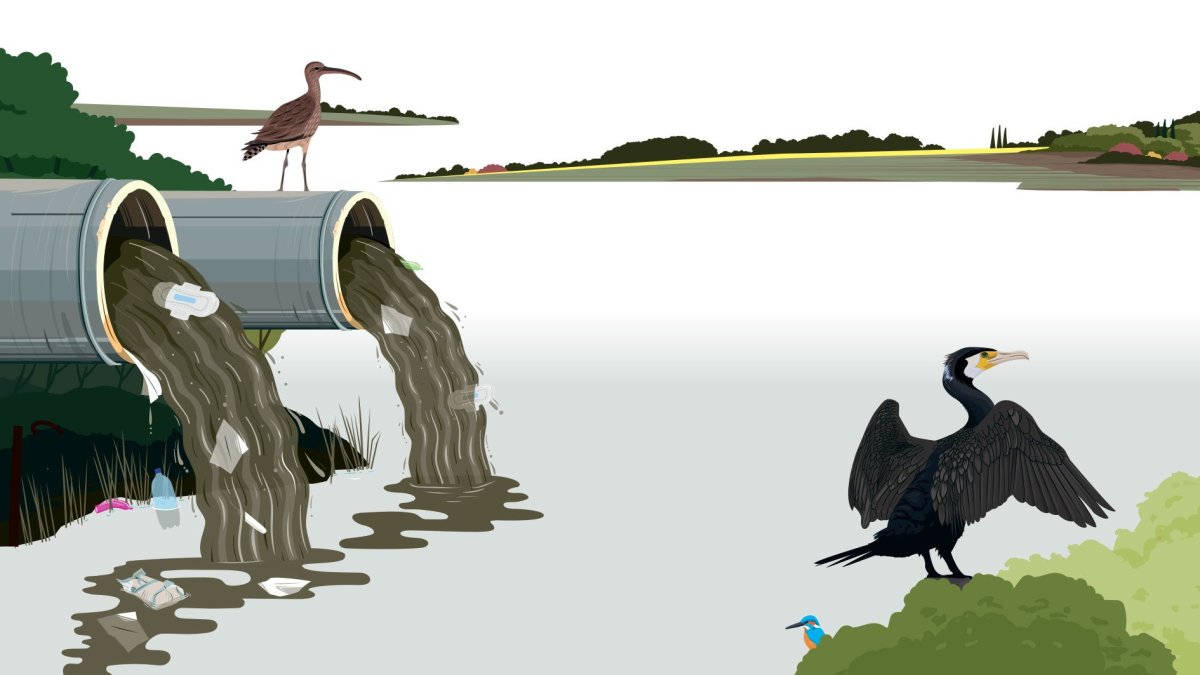

Illustration by Tracy Worrall
8 min read
Campaigning in Makerfield, Andy Burnham threatened Thames Water with public ownership – but has not so far followed through. Ben Gartside reports on a decision that will define his approach to privately owned suppliers of public goods.
What, exactly, does the word ‘control’ mean when applied to those entities that supply vital public goods?
Does it mean full nationalisation, with every decision in the hands of ministers and officials in Whitehall? Or does it rather mean that customers exercise a measure of control over their operation through ownership of a portion of equity? Or some other variant in which locally elected representatives take a golden share in the companies that serve their region?
These are not theoretical questions but are coming sharply into focus as Andy Burnham wrestles with what to do about Thames Water.
As of today, Thames Water supplies 16 million customers, owes more than £20bn and has been in breach of its licence for two years.
A large portion of the Labour Party would like to see the company – which critics say has become emblematic of the failures of utility privatisation – back in public ownership.
Its creditors, however, want to take over the company and keep it afloat by releasing tranches of cash to help the beleaguered firm.
The financiers are quietly optimistic. Industry sources suggest Burnham and the officials supporting him are pragmatic on the issue, and hope that the focus on control could reheat plans for the minister to hold a “golden share” in Thames Water, offering the government a veto while retaining private ownership of the suffering water company.
A concerted effort is being made by some in the City to understand Burnham’s policy brain. Some of Thames Water’s creditors have commissioned research into Burnham’s work on taking buses into public ownership in Greater Manchester, extrapolating out what it would mean for their financial interests.
They take heart from public comments by John Healey, the Chancellor, who insisted that ‘control’ need not mean full nationalisation.
“Some might claim that public control is public ownership,” the Chancellor told his audience, “but it’s broader than that.” What it meant instead was “local leaders and a stronger centre”, accountability for “fair bills, better services, investment that gets delivered”, and “an active state driving better regulation, quicker decisions”.
Within the Labour movement, two rival plans are circling ahead of the party’s conference.
On one side is Mainstream, the group co-founded by Compass and Open Labour. It did more than any other to get Burnham back to Westminster by criticising Keir Starmer’s economic policies from the left and encouraging bolder decision making from the government.
With an ally in No 10, the group is still singing the same tune. Mainstream supports public ownership of water generally, and believes that Thames Water should be put immediately into special administration.
Initially, Burnham struck a similar tone on water. In June, campaigning in Makerfield, Burnham told the Guardian that public ownership was “absolutely an option” and that “for Thames Water, that is what should be done”. By the end of August, the plan to put the company into special administration had gone quiet, with a Whitehall source telling the Times there was “no quick or clean solution without an enormous price tag attached”.
While Mainstream’s motion has been left open-ended for the interpretation of the new government, its motive is clear: a source close to the group says that the system now is itself an attempt at public control without public ownership, and it is not working.
Mainstream is careful to say this is not a confrontation, that it wants the government to succeed, and that the motion is deliberately open. It also does not expect to win. Under Starmer, it tried something similar on the two-child benefit cap last year, had its initial motion blocked but counted the overall shift in tone around the debate as a success.
“Copying the failed model of non-profits like Welsh Water doesn’t get around the questions of compensation, debt or legal risk”
The parliamentary case is led by Clive Lewis, whose own water bill had its first reading a week before the Cunliffe review was commissioned, and who secured an urgent question on the sector in June. He told the Commons then that this “was never a market failure” but “the market working as designed”. Allies of Lewis say that like-minded MPs are prepared to rebel if government proposals do not go far enough.
Lena Swedlow, the deputy director of Compass, tells The House that the left-wing pressure group is now campaigning with Labour MPs to push the government to more wide-ranging action.
“I think we got here because Ofwat and the Starmer-led government believed the creditors and the Thames Water leadership could get themselves out of this mess, which was short-sighted.
“It’s part of the larger theme of Starmer’s No 10 that they didn’t adequately prepare for power, and figures like Morgan McSweeney are now on record saying so. Fast-forward two years later, the hesitance to put Thames Water in special administration is as short-sighted and dangerous.”
Those supportive of implementing the special administration regime are “incensed” by the clear change in government language from public ownership to control.
However, the government is clear that the special administration threshold hasn’t been cleared, as of now. The law only allows it if a company is insolvent or in serious breach of its licence, and while creditors keep lending, Thames is not insolvent. “You either are, or you aren’t,” Environment Secretary Angela Eagle said this month. “And whatever people think of Thames at the moment, it isn’t technically insolvent.”
Another plan is that of the Co-operative Party, which Burnham recently became the first Prime Minister to represent.
A recent report by the Good Growth Foundation think tank, with a foreword by Labour MP Helena Dollimore, proposes a bill that would create a path to mutualisation by encouraging water companies to sell up to customers via a share exchange scheme. If they refused to comply, the bar for an enhanced special administration regime would be lowered.
As with nationalisation, the government is thought to have cooled on the co-operative idea, with industry sources expecting the plans to go nowhere.
Officials recognise that any attempt to mutualise would likely lead to the largest rise in customer bills, as investors would be unwilling to stomach any short-term losses without an equity stake. Investors agree, highlighting the mutualised Welsh Water as having the highest bills in Britain.

The left of the party is sceptical too, for the opposite reason.
Mainstream says mutuals work well in many settings but that water needs something stronger, and that it is not clear mutualisation changes who owns anything.
Swedlow says: “Of course devolved and regional leaders should have a say in the future of water. But copying the failed model of non-profits like Welsh Water doesn’t get around the questions of compensation, debt or legal risk.”
One policy wonk highlights that, currently, the Co-operative Party, the Liberal Democrats and Reform all have policies to mutualise water, all with little clarity about what would actually happen next.
What seems sure either way is a significant downgrade in the powers of Ofwat, with responsibility set to be transferred to ministers. The regulator has not had a permanent chief executive since August 2025, and cannot have a successor until the government’s clean water bill is introduced.
The research of the financiers into Burnham’s bus plan seems to be beneficial – earlier this month, The Telegraph reported that regional bodies would be set up to oversee water companies, with a responsibility to hold company bosses accountable for bills and sewage.
As Burnham battles for control, water waits. For the moment, the sector once in the eye of the storm waits to find out the government’s decision and MPs wait to hear the direction of travel.
Within a month of Labour’s conference in Liverpool, Andy Burnham’s government will have delivered its first Budget and Thames Water’s lenders will have decided whether to extend its emergency funding without a signed rescue deal. Labour’s new 10-year plan promising “stronger public control” of water is set to be delivered by the end of the year too. Here are the three leading plans circulating around Westminster.
Public ownership.
Mainstream, the Andy Burnham-affiliated campaign group co-founded by Compass and Open Labour, has drafted a conference motion calling on the Prime Minister to “urgently return water in England into public ownership”. Its paper, The Productive State, sets out the details: put Thames Water into special administration, restructure its debts and have it function as a national public water corporation, run at arm’s length from ministers and paying for investment by borrowing against customers’ bills.
A private solution.
London & Valley Water, a consortium of 100 investors holding £17bn of Thames’ £21bn debt, wants to take over the beleaguered firm. Its £10bn plan would write off billions of debt, add new capital and pay no dividends until 2035. In return, it wants leniency on penalties worth up to £1bn. In June, the then environment secretary Emma Reynolds said the deal did not go far enough – a month later, the creditors offered the government a “golden share”, offering a veto over important decisions and hostile takeovers.
Mutualisation.
A proposal by the Good Growth Foundation, backed by the Co-operative Party and three Labour metro mayors, suggests a law giving water companies a choice: sell up to customers through a share exchange, or face a lower bar for special administration and leave it as a customer-owned co-operative. While it would keep the debt off the government’s books, investors say that borrowing costs and bills would rise without shareholders to absorb any losses.
>
Enzo Maresca and Man City's players now face a new reality. Vitriol awaits them at every turn
Commanders first 3 games revealed what's working, what still needs work

London Film Festival: Sam Pollard To Lead Official Competition Jury
-

 movies4 months ago
Search For Canadian TV Actor Stewart McLean Now Homicide Investigation
-

 Fashion9 years ago
These ’90s fashion trends are making a comeback in 2017
-
Fashion9 years ago
According to Dior Couture, this taboo fashion accessory is back
-
Fashion9 years ago
Model Jocelyn Chew’s Instagram is the best vacation you’ve ever had
-
Fashion9 years ago
Emily Ratajkowski channels back-to-school style
-
Fashion9 years ago
9 Celebrities who have spoken out about being photoshopped
-

 Anime4 months ago
Rurouni Kenshin: Hokkaido Arc Manga Takes 1-Issue Break – News
-

 Anime3 months ago
HIDIVE to Stream English Dubs for The World Is Dancing, The Forsaken Saintess and Her Foodie Roadtrip in Another World, The Dangers in My Heart: The Movie Anime – News