Connect with us

Sports

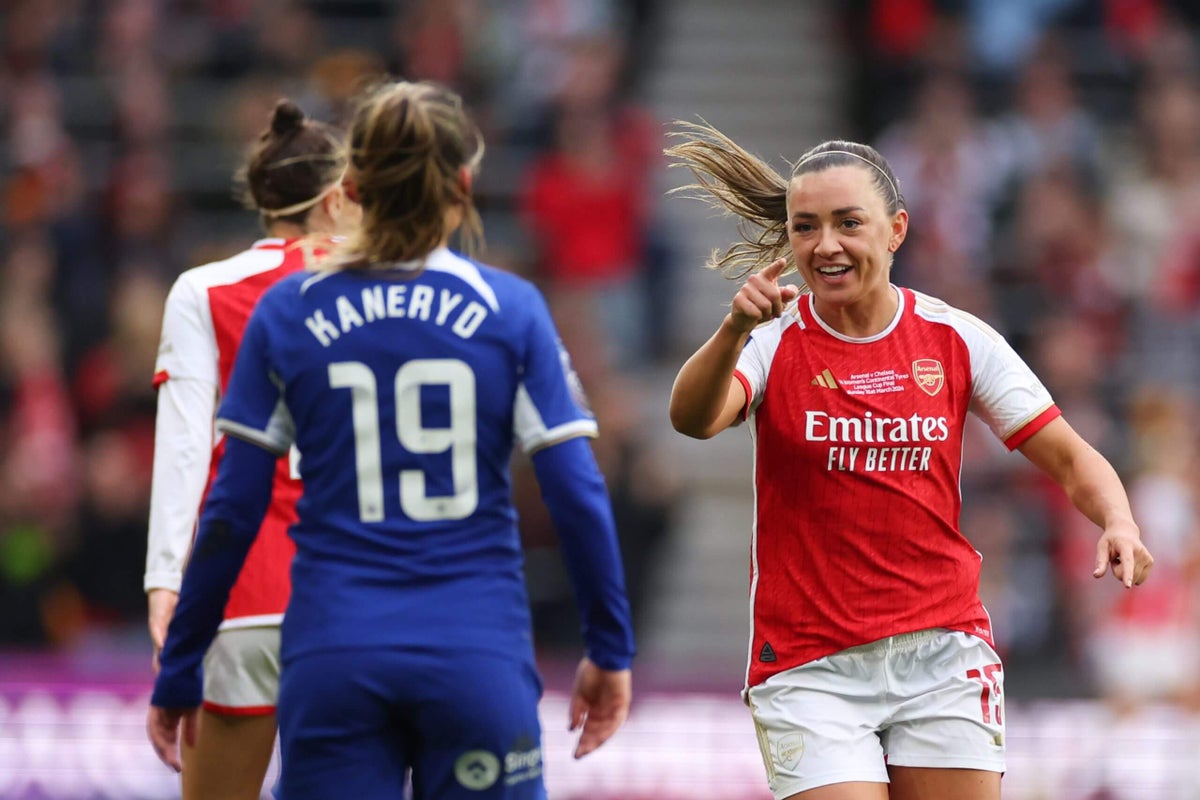
Katie McCabe’s move to Chelsea has been met with vitriol. It is new ground for WSL fan culture

Published

on

For those longer-serving fans of women’s football, Katie McCabe’s move from Arsenal to Chelsea, and the furore it has prompted, might have called to mind a cast of other characters who hopped across similar divides to the chirruping of crickets.

There are enough of them. In 2012, Lucy Bronze moved from Everton to Liverpool. In 2019, Abbie McManus moved from Manchester City to Manchester United. Gilly Flaherty, now 34, moved from Arsenal to Chelsea to West Ham United. Among the 12 different clubs on Gemma Davison’s CV are Arsenal, Chelsea and Tottenham Hotspur. One could go on.

Certainly there was nothing like the chaos that has greeted McCabe’s move. “I want to deface my McCabe shirt,” read one post on X, and to scroll for any length of time is to see variations on that theme. “This is like burn your McCabe Arsenal jersey (territory),” added another. “Officially a snake in my books,” the Arsenal fan page Fan Arsenal Team posted to its 44,000 followers. “This is probably the worst thing Katie McCabe could have done for not only her career but as a person,” one wrote. “You not only are hated by the Chelsea fans, but now you lose the support from the Arsenal fans who saw you as a legend.”

The situation comes with added spice given McCabe’s divisive on-field conduct, but also speaks to the cultural shift in women’s football in the years since one of the last players to switch between London clubs did so in 2020. Emma Mukandi, nee Mitchell, went on loan from Spurs to Arsenal in January 2020. The Women’s Super League (WSL), in its second season as a fully-professional league and flexing its wings after record-breaking World Cup viewing figures, was just beginning to move to a more mainstream audience. There were some grumbles, but mainly confusion from outsiders who saw the obvious parallel with Sol Campbell. Where was the equivalent consternation here?

The response became its own talking point. The then-Manchester United manager Casey Stoney had been a player at Arsenal when Campbell moved across and recalled with disbelief in a press conference how “he had to live in a hotel for six months because he couldn’t buy a house because of the threats he was getting”.

Mukandi needed game time and there was little enmity between Arsenal and Spurs’ women’s teams — largely because they had never been in competition. The 2019-20 season was Spurs’ first in the WSL. The season prior, their players had worked other jobs: Josie Green was a PE and geography teacher in a secondary school. Arsenal had just won their 15th league title.

There was no Spurs or Everton in the top flight at the end of Stoney’s playing career and Manchester United Women did not even exist. Mukandi’s move captured the nuances of the game in that era: scant opportunities to make a living, limited investment in senior women’s teams and smaller fanbases for whom the rules worked a little differently.

By the time Alex Greenwood moved to Manchester City from OL Lyonnes that September, the mood had changed. Greenwood, who had been Manchester United captain in 2018, confessed the following year that the threats she received left her retreating into herself, such was the scale and venom of them. Manchester United’s arrival into the WSL had brought fans from the men’s team. To them, someone signing for City was unthinkable — a change that was itself unthinkable when Greenwood moved to Liverpool from Notts County in 2016, having played for Everton two years earlier.

The landscape had been tending that way, though. United and Spurs’ arrivals into the WSL in 2018 coincided with clubs hosting derby matches in their main stadiums to bolster attendances during the men’s international break. So came considerations of how to do so without sacrificing the WSL’s safer, family-friendly atmospheres, and, in turn, questions about what women’s football wanted to be and who it was for.

It is almost fitting that an Arsenal player is at the centre of it all this time around, given just how intensely the club has interrogated those themes on its way to growing attendances and making the Emirates a permanent home for Arsenal Women. That work has resulted in an engaged, passionate fanbase willing to travel in numbers across Europe and pack the steps outside the Emirates for victory parades. Their passion is fuelled by a growing online and offline community and there are chants for most first-teamers. Arsenal’s players seem to ascend to cult hero status especially quickly.

Katie McCabe had been a favourite among Arsenal fans before leaving for Chelsea (Alex Pantling/Getty Images)

Some of that culture is built on existing men’s football customs (Arsenal Women’s first back-to-back sellouts at the Emirates, in 2024, came against Manchester United and Spurs), spreading across demographics previously disengaged with Arsenal. According to the club’s own data for the 2023-24 season, 61 per cent of spectators for women’s games had never been to the Emirates and only 25 per cent to a men’s Arsenal game. How many of those, one wonders, are now filled with ire over McCabe’s perceived betrayal?

Chelsea-Arsenal feels like the WSL’s foremost rivalry, fuelled in some measure by the hostilities between previous managers Emma Hayes and Jonas Eidevall, Chelsea’s desperation for a Champions League and Arsenal’s for a domestic title. Those factors have coalesced with all that goes into cultivating an ardent, more engaged fanbase: TV coverage, growing supporter numbers, the ‘Stan’ culture and force of personalities that has elevated some players above others, and the way it all plays out online among fans and players.

Perhaps McCabe could have slipped across to Spurs relatively unnoticed. If she intended to do so to Chelsea, by signing a three-year deal she has stumbled on the tripwire and set off all the lights and sirens. For a player who has long stoked controversy and division on the field, what other way?

>

Continue Reading

Sports

Sonny Gray’s little black book is key to his standout season in Boston

Published

on

Sitting on a shelf in Sonny Gray’s locker in the corner of the Boston Red Sox clubhouse is a small black notebook. It holds many of the secrets of the most successful season of Gray’s 14-year career.

When the Red Sox added Gray as their No. 2 in the rotation behind Garrett Crochet, many thought it a tall ask for a starter in the backend of his career.

Still, Gray has anchored the staff, which has been without Crochet for most of the season. Gray has a 2.78 ERA over 21 starts and has thrown at least six innings in all but six outings.

The 36-year-old has implemented a method over the years that has made him successful. Writing things down — his schedule for the day, his workouts, how to attack hitters, notes on his performances — is the key.

The process started in 2019 at the suggestion of Cincinnati Reds pitching coach Derek Johnson, who also coached Gray at Vanderbilt University.

“DJ always carried a little book with him, taking notes,” Gray said. “He would always just be like, ‘Need to get you one of these.’”

Gray initially used index cards and would throw them out at the end of the day. Then he realized organizing in a notebook would be more beneficial. He estimates he has 20 at his house.

“You have a reference that you can go back to when you feel like you may get off-tilt,” Gray said. “What did my days look like when things are good?”

Gray has tweaked his method over the years, and while he doesn’t know how many notebooks he uses a season, he has a library detailing the second half of his career.

It’s likely no coincidence some of his best seasons have come since he began taking notes. In 2019, he posted a 2.87 ERA in 31 starts and finished seventh in National League Cy Young Award voting. He landed second in voting for the American League Cy Young in 2023, after posting a 2.79 ERA in 32 starts for the Minnesota Twins.

Over his career in baseball, Red Sox pitching coach Andrew Bailey, 42, has worked with few pitchers as detail-oriented as Gray.

“He’s definitely cerebral,” Bailey said. “He’s well-prepared. He knows what he wants to do, what he does really well and his identity as a pitcher.”

Another piece of Gray’s success has been working with bullpen catcher Charlie Madden, who works with Gray between starts while Gary’s de facto personal catcher, Connor Wong, manages the rest of the pitching staff.

“It’s been good because our brains are similar,” Gray said of Madden. “He understands my quirkiness or my structure and attention to detail that is important to me. I think his brain is similar, so he knows where I’m coming from when I get a little weird.”

Why the Red Sox resurgence is historic

Ken Rosenthal and Johnny Sweet

Time and again throughout his career, Gray has reinvented himself. This year is no different. He has his lowest strikeout rate since 2018, and while his walks are up compared to the last two years, he has limited the damage. His hard-hit rate is his lowest in six years, and he’s allowed his lowest barreled ball rate since 2022.

Although Gray was left off the AL All-Star roster last month, his performance is viewed favorably across the league.

“Sonny Gray has reinvented himself,” said one National League evaluator who spoke on the condition of anonymity because he wasn’t authorized to speak publicly about other teams’ players. “It’s so impressive to watch at his age. For hitters, it must feel like trying to hit a butterfly with a shovel.”

Wong has caught all of Gray’s starts since May 30 as the two have found a rhythm, adjusting on the fly in-game when Gray doesn’t have a pitch or recognizing when batters are sitting on another one. Their dynamic is a product of their pre-start meetings.

“He almost does it in the third person, like when he’s explaining how he wants to attack someone, he says, ‘you,’” Wong explained. “I actually don’t know if that’s him talking to himself or if he wants us to feel like we are throwing the pitches, but it’s pretty interesting in that aspect.”

Gray shares only so many details of the routine documented in his little black book.

After finding what works for him, the Red Sox hope he can keep it up deep into October.

>

Continue Reading

Sports

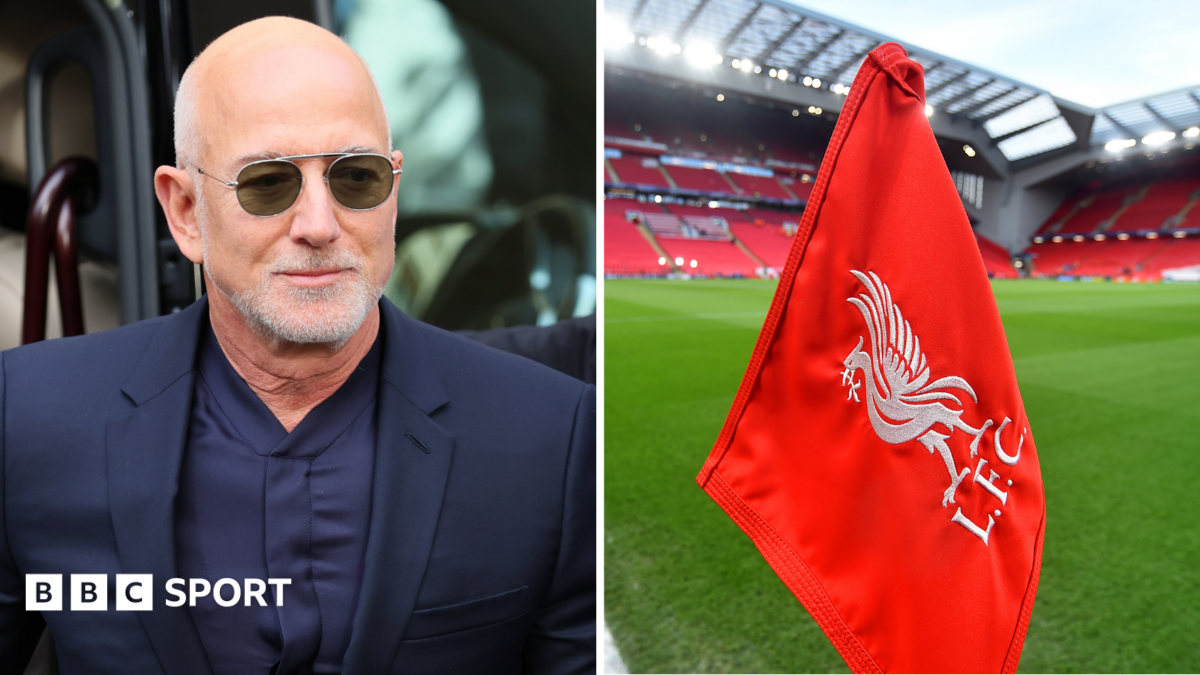
Jeff Bezos & Liverpool: Consortium including American advances talks

Published

on

A consortium including billionaire Amazon founder Jeff Bezos has advanced its talks to buy about a 30% stake in Liverpool, BBC Sport has been told.

The group is led by British-Indian millionaire businessman Amit Bhatia and also includes Facebook co-founder Eduardo Saverin.

Owners Fenway Sports Group (FSG) confirmed last month that the group had “expressed interest in making a strategic minority investment in Liverpool Football Club”.

Bhatia is the son-in-law of Indian billionaire businessman Lakshmi Mittal and had been a director and co-owner of Queens Park Rangers for 18 years before relinquishing his stake in the club last month.

American businessman Bezos, founder of e-commerce giant Amazon, is the fourth-richest person in the world.

According to Forbes, the 62-year-old has an estimated net worth of $256bn (£192bn).

FSG, who bought Liverpool in a £300m deal in 2010, previously sold a minority stake in the Anfield side to global sports investment firm Dynasty Equity.

>

Continue Reading

Sports

Swansea reject Hull City bid for Championship top scorer Zan Vipotnik

Published

on

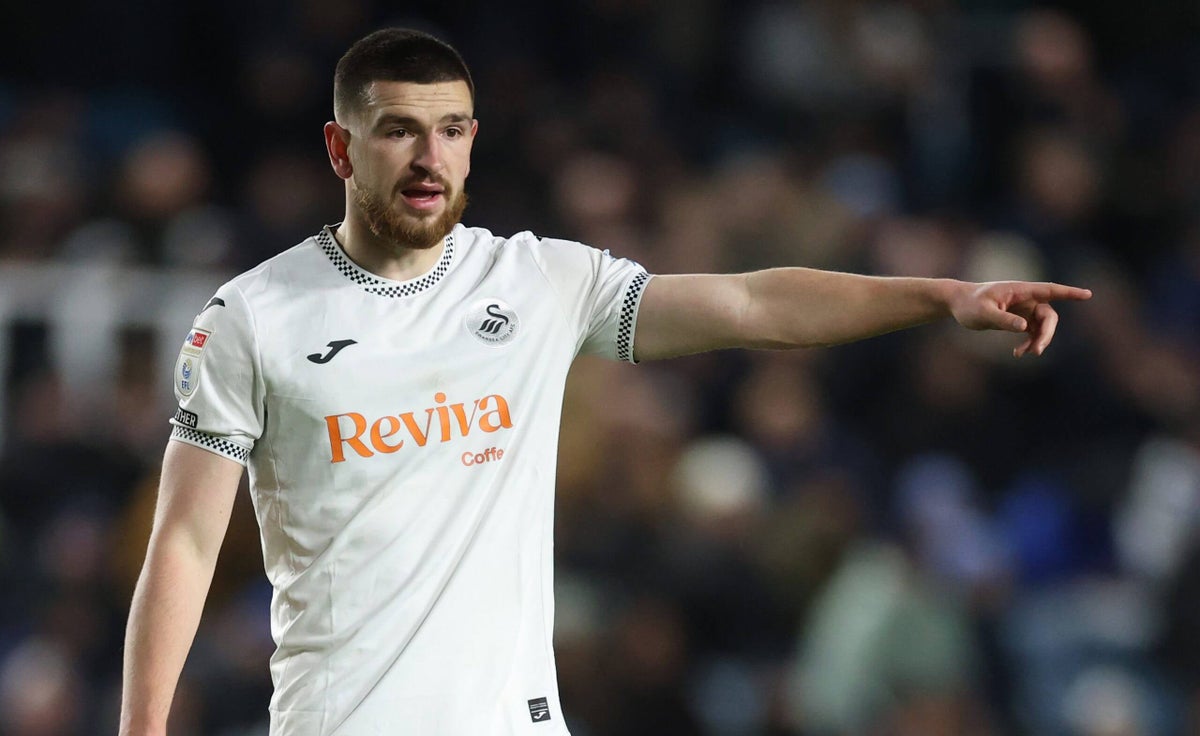
Zan Vipotnik, wearing Swansea's white home shirt, points with his left arm outstretched.

Vipotnik scored 23 league goals, as Swansea finished mid-table in 11th. Richard Pelham / Getty Images

Hull City have had a bid rejected for Swansea City forward Zan Vipotnik.

Newly-promoted Hull’s offer was below Swansea’s valuation of the Slovenian, who finished as top scorer in the Championship last season.

Vipotnik scored 23 league goals as Swansea finished mid-table in 11th – nine points off sixth-placed Hull, who were promoted to the Premier League via the play-offs.

The Slovenia international joined Swansea from Bordeaux in summer 2024 but managed only seven goals in the second tier in his maiden season in British football. He was significantly more profilic last term and agreed a new Swansea contract until 2030 in March.

Swansea last week completed the signing of Scotland international forward Ross Stewart following his departure from Southampton, and also have Republic of Ireland striker Adam Idah on the books. Head coach Vitor Matos has insisted that he can keep all three forwards happy, however, and said the signing of Stewart was not related to Vipotnik’s future.

Hull, who will compete in the top flight for the first time since 2016-17 this season, have already signed goalkeepers Konstantinos Tzolakis in a club-record deal from Olympiacos and Jack Butland from Rangers this summer, as well as midfielders Jens Hjerto-Dahl and Elliot Stroud from from Tromso and Mjallby, respectively.

Connections: Sports Edition Logo

Connections: Sports Edition Logo

Connections: Sports Edition

Spot the pattern. Connect the terms

Find the hidden link between sports terms

>

Continue Reading

Trending

Copyright © 2017 Zox News Theme. Theme by MVP Themes, powered by WordPress.