
Sports
Can the Chicago Sky move up the WNBA standings without a star? They’ve got no other choice


CHICAGO — Near another bad ending on Tuesday night, many people filtered out of Wintrust Arena. A smaller cohort decided to repeat themselves.
Sell The Team! Sell The Team!
It wasn’t the first time frustrated Chicago Sky fans have chanted this, but the timing was a touch confusing. Said team had played well. Said team nearly beat the Atlanta Dream, one of the best clubs in the WNBA. The Sky fell, but tolerably so.
The explanation arrived a few minutes later. A fan hustled to the floor after the final buzzer and stood outside a temporary barrier of yellow ribbon, holding a large blue posterboard, hoping to grab the attention of one of the visiting players. A message in white lettering bordered a collage of images in the middle. DON’T WORRY CHICAGO, her sign read. ANGEL IS STILL WATCHING OVER US.

Chicago fans still long for Angel Reese, who moved in the offseason to the Atlanta Dream. (Michael Reaves / Getty Images)
Angel Reese doesn’t play here anymore, of course. But this was never going to be beside the point Tuesday, even though she and the Dream swung through the arena in the preseason, even though everyone has had time to get out of their feelings and insist the most seismic trade of the offseason was for the common good. Her presence loomed. A reminder of what’s missing, even when what’s missing is not entirely a basketball problem.
It doesn’t matter that Reese, specifically, isn’t on Chicago’s roster anymore. It matters, a lot, that this is a Sky without a single star.
Call it an existential challenge in the modern WNBA, if not an outright dilemma. The visibility of the game, and the willingness of the players to avail themselves to fans and followers across all mediums, creates an increasingly measurable dynamic: Allegiance to the team is hardly the only thing. There’s fealty to individuals, regardless of the uniform they wear, which is plain to the eye and ear when Dallas Wings fans invade Atlanta, or Atlanta rolls through Chicago. And so on. Connection counts. Even by way of TikTok.
So to be noticed, it won’t always be enough to win. You better have someone worth noticing, too.
Put another way: Do you want to be a franchise that simply is, or do you want to capture people’s imaginations?
Which brings us to the Sky, losers of eight of 12 games, and the mistake of nebulous intent.
Satisfying the conditions for WNBA attention in 2026 is hard enough. A market saturated with options for sports-related dollars and loyalty exacerbates the issue for the Sky, and always has since their inception in 2005. One incredibly obvious solution — often admittedly requiring a colossal amount of losing and luck — is onboarding someone everyone will talk about. Go get a star is a terrific plan, and laughably tough to execute.
In April, Chicago let loose the one player on the team capable of captivating large-scale audiences. Under the circumstances, it’s defensible if it’s a win-win deal driven by clear purpose from both sides, which has been the refrain since the trade broke.
We’re in mid-June now, and it’s absolutely true for Atlanta, which has seen Reese make a team with championship aspirations edgier and better. In Chicago, as it stands, the club has followed the trade by testing a theory that it can grab hold of a city and find a place in the women’s hoops zeitgeist by being … what? The team that has the best chance to hover in the middle of the standings for years? A nice, solid group the market and larger WNBA universe can mostly ignore until the Indiana Fever roll in and push a regular-season game to the United Center?
The 2027 WNBA Draft is full of megawatt prospects. One of Chicago’s first-round picks is subject to a potential swap with the Washington Mystics. (The other is one acquired from the Dream, which presumably won’t fall high in the draft order, anyway.) So if USC’s JuJu Watkins fits the mold as the best overall prospect and the player with resonance reaching well beyond the court, the Sky have given themselves no chance of selecting her. The team also traded away its own first-rounder in 2028 for guard Jacy Sheldon and then recouped one with less of a chance to make a substantial difference via the Reese deal.
Even if egregious tanking is definitively off the board — general manager Jeff Pagliocca has effectively said as much — the Sky haven’t protected assets that could produce a star in the event they are accidentally bad.
And, well, being actually bad tends to make things worse. Despite the inspired effort against the Dream in an 82-75 loss, the Sky nevertheless woke up Wednesday with the league’s third-worst net rating (minus-6.4).
But the agitation from the fans Tuesday wasn’t about the on-court product. Not really. It was about the disconnect between what they want — what almost any women’s basketball fan in the modern age wants, in fact — and what the Sky are delivering. Where there needs to be star-driven spectacle, there is none. Worse still: There’s little hope to create it.
In fairness, concluding no one cares is a specious take, at best, based on the evidence Tuesday. Reese jerseys popped up throughout the crowd but didn’t outnumber those for current players and other former Sky stars. Their biggest moments received pops substantially more robust than anything Reese inspired. Core, longer-range building blocks such as Sheldon, Kamilla Cardoso and Gabriella Jaquez heard some love. The Sky faithful seem to like them.
They do not obsess over them. That’s the difference. That’s the space between being something else in this version of the WNBA, and to this era of WNBA fans, and … just being there.
After the buzzer Tuesday, Reese walked across the floor and moved along the fan cordon, signing things and snapping pictures. About halfway down, she found the woman with the “ANGEL IS STILL WATCHING” sign. She autographed it, then held the woman’s phone up and snapped a selfie. After a few more stops, Reese had to assure everyone that she’d be back, once her postgame duties were complete.
Sky players were long since out of sight. Not that anyone noticed.
>

Congress has held more than a dozen hearings about college sports since 2020. The NCAA and the former Power 5 conferences have combined to spend more than $15 million on lobbyists. Big Ten commissioner Tony Petitti said last month he’s been to Washington, D.C., 21 times in his three-plus years on the job.
They came oh-so-close to getting an actual bill out of the Senate this week: the Protect College Sports Act. Senate Majority Leader John Thune tried his darndest to get his colleagues to hurry up and vote on it before beginning their five-week summer recess, but a predictable round of grandstanding and pork-barreling was too much to overcome. The ill-fated SCORE Act stalled out in a similar fashion in the House earlier this year.
More than six years since this never-ending legislative push began, Congress still hasn’t “saved” college sports. It’s time for university administrators, conference commissioners and NCAA president Charlie Baker to finally start formulating a Plan B.
If there is such a thing.
PCSA was the brainchild of Sens. Ted Cruz (R-Texas) and Maria Cantwell (D-Wash.) — a 171-page Frankensteinian whopper that aimed to cure everything from name, image and likeness and the transfer portal to eligibility limits and conference realignment (the latest version sought to limit conferences to 19 members). They even tried to ward off the next Lane Kiffin by declaring coaches couldn’t change jobs during the season. All of which was deemed essential to “save” an extremely popular multibillion-dollar enterprise from itself.
That’s because College Sports Inc. managed to convince politicians of all stripes that their schools will all go bankrupt if something isn’t done to rein in their escalating costs. As if some external party is forcing athletic directors to give football coaches guaranteed $90 million contracts, then give them blank checks to build a $50 million roster.
“Without this Bill, millions of young Athletes will be hurt, programs will be canceled, Women’s and Olympic Sports will go away, the fans will be robbed, and Universities will go broke,” President Donald Trump said this week while urging the Senate to pass it.
It all came to a head a few weeks ago when the Big Ten and SEC initially held out their support. The conferences finally signed off late last week when Cruz and Cantwell agreed to a revised “hard cap” that would allow schools to directly pay their athletes around $48 million, a considerable jump from the current $21.3 million “soft cap” no one follows.
Once that issue was resolved, Cruz confidently predicted the bill would fly through from there, with co-sponsor Eric Schmitt (R-Mo.) telling reporters it could get as many as 80 votes.
But nothing is ever that easy in politics. At the 11th hour, the AFL-CIO and the Congressional Black Caucus came out in opposition. Sen. Ashley Moody (R-Fla.) filed an amendment to make it easier for home-state schools Florida State and Miami to change conferences. And then the final blow: three conservative senators, most notably old friend Tommy Tuberville, claimed the bill would threaten “state laws that ban biological men in women’s sports.” (The sponsors tried to assure them it would not.)
Yes, a bill whose authors purported to be protecting women’s sports got derailed by a different set of people claiming to be protecting women’s sports.
(Note to alarmists: The number of women’s college athletes has increased by 50,000 in the last five years, according to the NCAA’s 2024-25 participation data, and the NCAA is planning to add a women’s flag football championship in 2028.)
The PCSA is not dead yet. Cruz and Schmitt issued a statement Saturday claiming they’ve “locked in a guaranteed vote” for when they return in mid-September. But Cruz has been making these sorts of rosy proclamations for at least three years. Congressional experts say the odds of a vote decrease considerably the closer things get to the midterms. And even if it does pass, the House then gets its hands on it. Representatives will have their own pet causes that will muck up that process.
In the meantime, the NCAA keeps getting sued into oblivion. Last winter, it kept losing injunction requests from geezer pro basketball players seeking waivers to return to college. It responded to that crisis by expediting a completely new eligibility process that eliminates waivers and redshirts entirely, instead giving a uniform five seasons of competition beginning no later than age 19. It passed in June to take effect in August.
So, of course, athletes who just completed their fourth seasons and had moved on with their lives began seeking injunctions to get their own fifth season of eligibility, and so far they’re all winning. Despite the NCAA’s pending appeal in a Colorado federal case, programs like Indiana, Texas and Virginia are already suiting up former players in training camps.
While each court case has its own unique circumstances, the judges’ decisions contain a recurring theme: They frown on any policy that restricts athletes’ ability to earn NIL compensation. And yet, College Sports Inc. presses on in its quest to get Congress to let them restrict the market for NIL compensation.
It’s time for Plan B. College Sports Inc. currently has no idea what that looks like, but it’s got to start with leaders finally acknowledging that we’re never going back to the old days. These are professional sports now that need to be governed accordingly. Schools need to give their athletes legitimate service contracts rather than continue pretending they’re for “NIL.” And if they truly want things like salary caps and portal restrictions, they need to stop negotiating them with legislative aides and start negotiating with — brace yourself — the athletes themselves.
That, or keep acting like Charlie Brown with the football and spend another six years wooing politicians who claim they want to “save” college sports but mostly just want to see their names in a news release.
Lobbyists and lawyers will appreciate six more years of paychecks.
>

NEW YORK — New York Yankees starting pitcher Will Warren’s phone buzzed. It was late at night on Aug. 2, and he was in his seat on the team’s charter flight from Chicago to New York City.
The text message was from his wife. When he opened it, he saw a screenshot of a report — later debunked — that claimed he was part of a trade the San Diego Padres had rejected from the Yankees leading up to the deadline, which was the next night.
The supposed deal? It was Warren heading to San Diego for lefty reliever Adrian Morejon. The report quickly went viral.
Lending it possible legitimacy: The Yankees seemed to need a late-inning arm such as Morejon (2.89 ERA, 54 games), who as an impending free agent might have been someone San Diego would trade.
But Warren was glad the Padres had apparently said no.
“Phew,” Warren texted back to his wife. “Close call.”
Warren did not want to leave the Yankees, who drafted him in 2021 and helped him develop into a league-average (and still improving) starting pitcher. In 22 starts this season, he has a 4.18 ERA and an 8-6 record.
But something tugged at Warren at the time.
“Definitely,” he told The Athletic on Sunday, “when you read it, I was like, no way. They didn’t think I was good enough? That’s how I took it at first.”
Less than 12 hours later, however, The Athletic reported, citing a team source, that the trade proposal had never happened. The source spoke on condition of anonymity to discuss ongoing deliberations.
Then general manager Brian Cashman said the purported Warren-for-Morejon proposal “wasn’t true” during a post-deadline conference call with reporters last Monday night.
“There was a lot of noise on whatever that was,” Cashman said.
Warren remembered the reactions of some of his teammates, who were glad he stayed. He said he walked up to fellow starter Cam Schlittler and jokingly said, “Whoa, I was almost gone there.”
Warren said the whole ordeal didn’t bother him.
“Since my first season,” he said, “I think I’ve been tossed in these trade rumors like every single season. At this point, it’s like, I can’t do anything about it. If it happens, it happens.”
Warren said he did not reach out to any team officials after the dust settled.
“I wasn’t worried about it,” he said.
He added that, prior to this year’s deadline, he had doubted he would be traded.
“It was more like,” he said, “What are we going to do? Who are we getting? Who’s going away?”
The 27-year-old had been through something similar before — and with the Padres.
During the 2023 Winter Meetings, there were rumors the Padres wanted Warren as part of a trade package for star outfielder Juan Soto. It actually got to the point, Warren said, that his agent told him he was “probably” going to be in the deal.
But, instead, Warren was left out of the blockbuster trade. The Yankees ended up landing Soto and center fielder Trent Grisham for pitchers Michael King, Jhony Brito, Randy Vásquez, Drew Thorpe and catcher Kyle Higashioka.
Warren wants to stay with the Yankees as long as he can.
“This is the only thing I know,” he said. “It’s really, really special because, like, (Austin) Wells, Cam. Clarke (Schmidt). George (Lombard Jr.). Ben (Rice). Spencer (Jones). We all came up with the Yankees. Even if we didn’t play multiple years with each other, we were in the farm system together. So we’re close. And the team we have is super tight-knit. We jell together. I think we all have extra belief in one another.”
So, naturally …
“I was super pumped when I wasn’t leaving,” Warren said.
>
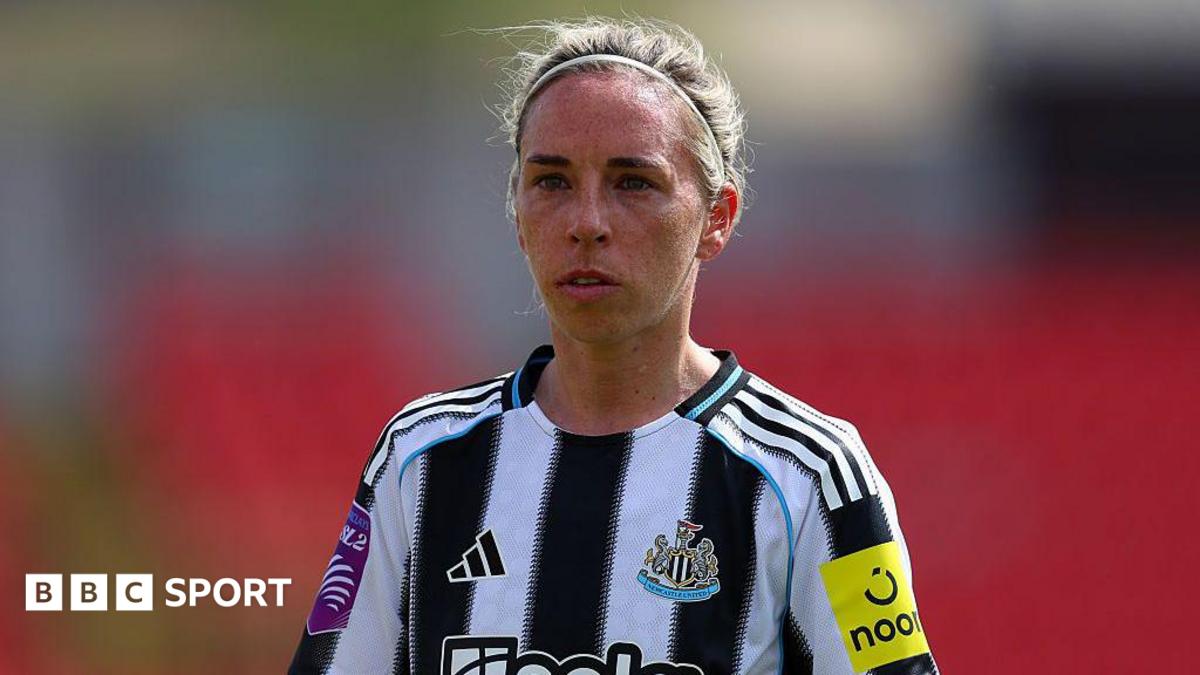
Nobbs says “too many draws” held Newcastle back last season but they are not hiding their ambitions this time around after a busy transfer window.
Under boss Tanya Oxtoby, who previously managed Northern Ireland and worked with Emma Hayes at Chelsea, Nobbs believes they are improving.
“I know we said it last season but I’ve always said things don’t happen overnight. We had a lot of changes,” added Nobbs.
“But [promotion] is our goal and you have to say that out loud. A lot of stuff we did last season, we don’t want to go too far away from.”
Nobbs is also embracing her responsibilities off the pitch and says her team-mates joke that she is considered a “legend” in women’s football.
“I try to still be myself but obviously give as much experience as I can off the pitch. I’ve played a lot of games now so you do want to listen to that,” said Nobbs.
“The girls straight away made jokes about me being a legend so they kind of made it a nice feeling rather than a pressure thing.
“It just allowed me to step into that type of role. There’s a balance of not being too over the top because I’ve still got to perform.”
Newcastle’s season kicks off at home to Wolves on 6 September (14:00 BST).
>

If Congress can’t save college sports, it’s time for Plan B. Except there is no Plan B

Locarno Pro & Open Doors 2026 Winners Unveiled

Will Warren’s first reaction to Yankees-Padres trade drama before deadline? ‘No way’
-

 movies3 months ago
Search For Canadian TV Actor Stewart McLean Now Homicide Investigation
-

 Fashion9 years ago
These ’90s fashion trends are making a comeback in 2017
-
Fashion9 years ago
According to Dior Couture, this taboo fashion accessory is back
-
Fashion9 years ago
Model Jocelyn Chew’s Instagram is the best vacation you’ve ever had
-
Fashion9 years ago
Your comprehensive guide to this fall’s biggest trends
-
Fashion9 years ago
9 Celebrities who have spoken out about being photoshopped
-
Fashion9 years ago
Emily Ratajkowski channels back-to-school style
-
Fashion9 years ago
A photo diary of the nightlife scene from LA To Ibiza