
Sports
How to watch Wimbledon 2026: TV schedule, streaming info, key players

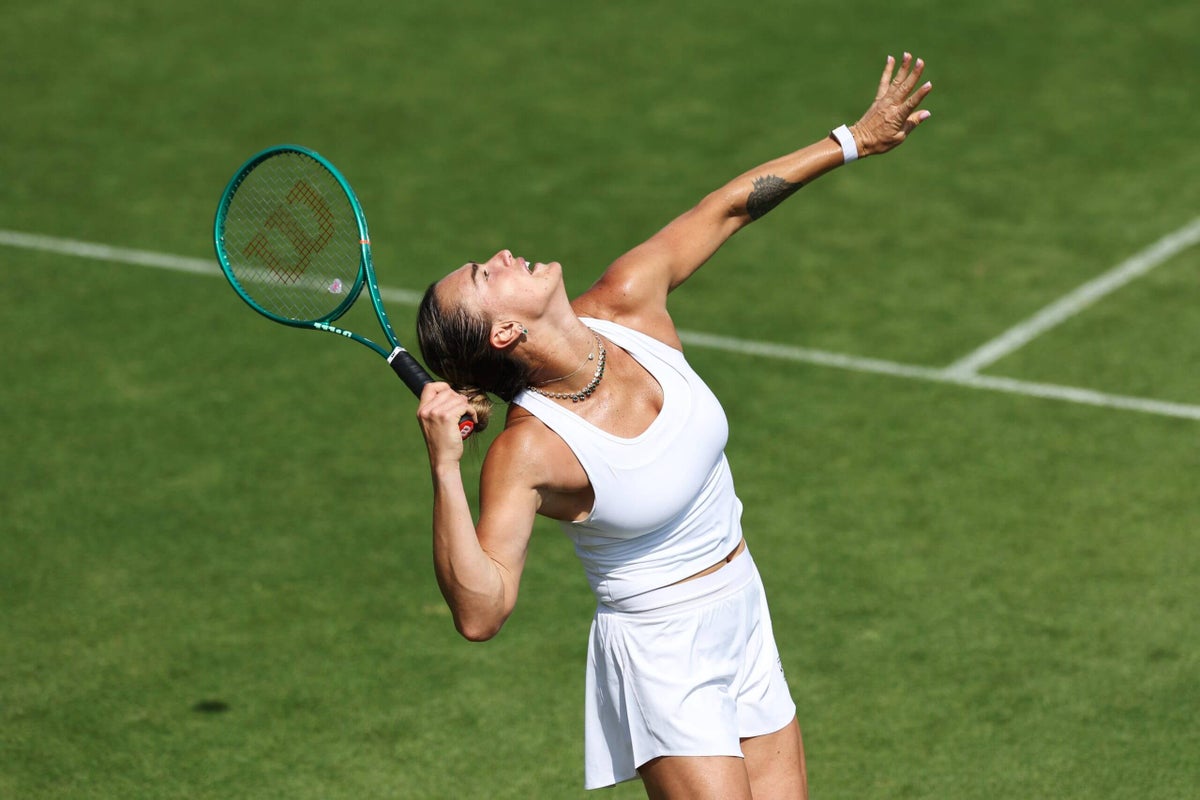
Tennis returns to the storied All England Lawn Tennis Club in London, and so does Serena Williams. As legends clock back in and the titans of today try to defend their titles, can’t-miss action (and afternoon tea) is sure to be brewing at the 2026 Wimbledon Championships.
Main-draw play at Wimbledon begins Monday, June 29, and goes through Sunday, July 12. Here’s how to tune in.
How to watch 2026 Wimbledon from the U.S.
- Venue: All England Lawn Tennis and Croquet Club — London
- Dates: June 29 to July 12
- TV (U.S.): ESPN, ESPN2, ABC, ESPN Deportes
- Streaming: Fubo (Stream Free Now)
All ESPN networks and individual court streams are available on ESPN Unlimited.
Other global broadcasters:
- BBC (UK)
- beIN Sports (France, select countries in Africa and Middle East)
- RDS and TSN (Canada)
- ESPN (Latin America)
- CMG and Tencent (China)
- 9Now and Stan Sport (Australia)
- Star Sports (India)
The full list can be found on the Wimbledon website.
Key players to know
The Williams sisters are back! For the first time in a decade, Venus and Serena Williams will be competing together at SW19, an event they’ve won as a doubles pair six times. Serena was also granted a wild card in the women’s singles draw, marking the 23-time Grand Slam champ’s first singles appearance since the 2022 U.S. Open.
As she showed in her promising comeback in doubles at Queen’s, a prestigious warmup event, Serena’s serve and groundstrokes still pack quite the punch, even after a four-year hiatus. A major question surrounding the 44-year-old is how long she can withstand the physical demands of playing both singles and doubles. But it’s still a privilege to witness her back on Wimbledon’s grass courts, 28 years after her main-draw debut.
Elsewhere in the women’s bracket, No. 1 Aryna Sabalenka will hope to secure both her first major of the year and her first Wimbledon championship. She’s coming off a grass-court prelude that ended on a third-set bagel from Jessica Pegula.
Second-seeded Elena Rybakina is also looking to get back to her winning ways after a rather quiet run since her Australian Open triumph. The 2022 Wimbledon champion has failed to win more than two matches in a row since the French Open. No. 3 Iga Świątek has yet to win on grass this year, but she broke through to win her first Wimbledon title 12 months ago.
Why is Wimbledon still played on grass?
Tifo Sports
As one legend returns on the women’s side, another in the making is missing on the men’s side. Carlos Alcaraz announced in May that he will miss Wimbledon due to a right wrist injury.
Alcaraz’s biggest rival is set to compete, but Jannik Sinner has not played an event since a one-sided loss to Juan Manuel Cerúndolo and the conditions at Roland Garros. While the defending champion remains a clear favorite to repeat at Wimbledon, Sinner’s struggles at the French Open punctuated concerns about his endurance in hot climates.
Sinner says he and his team addressed those heat-related issues in between Slams, but the next couple of weeks will determine if the Italian needs more than strawberries and cream to remain cool in his pursuit of back-to-back trophies on Centre Court.
Other men’s names to watch at the All England Club include 24-time Grand Slam champion Novak Djokovic and top-ranked American Ben Shelton.
Wimbledon TV coverage schedule
ESPN is the main home for Wimbledon coverage. ABC gets portions of the round of 16 as well as encore presentations, while ESPN carries everything from the first round through the championships. ESPN Deportes handles the Spanish-language broadcast throughout the tournament.
Meanwhile, ESPN Unlimited is the hub for individual court streams. Viewers can subscribe to ESPN Unlimited directly, and it is also available to customers of select pay TV services, including Fubo.
For the first time, veteran ESPN presence Rece Davis hosts the network’s Wimbledon coverage. He shares those duties with Malika Andrews. Former No. 1 men’s player Andy Roddick is also making his debut as an analyst.
Below is the TV breakdown for singles play. ESPN will also air the mixed doubles final on July 9, the men’s doubles final on July 11 and the women’s doubles final on July 12.
All times listed are ET.
First Round: June 29-30
Monday, June 29
- 6 a.m. to 4 p.m. — Main coverage on ESPN and Disney+
- 6 a.m. to 4 p.m. — Individual court streams on ESPN Unlimited
Tuesday, June 30
- 6 a.m. to 4 p.m. — Main coverage on ESPN
- 6 a.m. to 4 p.m. — Individual court streams on ESPN Unlimited
Second Round: July 1-2
Wednesday, July 1
- 6 a.m. to 4 p.m. — Main coverage on ESPN
- 6 a.m. to 4 p.m. — Individual court streams on ESPN Unlimited
Thursday, July 2
- 6 a.m. to 4 p.m. — Main coverage on ESPN
- 6 a.m. to 4 p.m. — Individual court streams on ESPN Unlimited
Third Round: July 3-4
Friday, July 3
- 6 a.m. to 4 p.m. — Main coverage on ESPN
- 6 a.m. to 4 p.m. — Individual court streams on ESPN Unlimited
Saturday, July 4
- 6 a.m. to 4 p.m. — Main coverage on ESPN
- 6 a.m. to 4 p.m. — Individual court streams on ESPN Unlimited
Round of 16: July 5-6
Sunday, July 5
- 6 a.m. to noon — Main coverage on ESPN
- Noon to 5 p.m. — Main coverage on ABC
- 6 a.m. to 5 p.m. — Individual court streams on ESPN Unlimited
Monday, July 6
- 6 a.m. to 4 p.m. — No. 1 Court and Outer Courts on ESPN2 and ESPN Unlimited
- 8 a.m. to 4 p.m. — Centre Court on ESPN and ESPN Unlimited
Quarterfinals: July 7-8
Tuesday, July 7
- 8 a.m. to 3 p.m. — Centre Court on ESPN and ESPN Unlimited
- 8 a.m. to 3 p.m. — No. 1 Court on ESPN2 and ESPN Unlimited
Wednesday, July 8
- 8 a.m. to 3 p.m. — Centre Court on ESPN and ESPN Unlimited
- 8 a.m. to 3 p.m. — No. 1 Court on ESPN2 and ESPN Unlimited
Semifinals: July 9-10
Thursday, July 9
- 8 a.m. to 1 p.m. — Women’s semifinals on ESPN and ESPN Unlimited
Friday, July 10
- 8 a.m. to 2 p.m. — Men’s semifinals on ESPN and ESPN Unlimited
Finals: July 11-12
Saturday, July 11
- 11 a.m. to 2 p.m. — Women’s final on ESPN and ESPN Unlimited
The women’s final will re-air on ABC from 3 to 6 p.m.
Sunday, July 12
- 11 a.m. to 3 p.m. — Men’s final on ESPN and ESPN Unlimited
The men’s final will re-air on ABC from 3 to 6 p.m.
Updated Wimbledon odds
Streaming links in this article are provided by partners of The Athletic. Restrictions may apply. The Athletic maintains full editorial independence. Partners have no control over or input into the reporting or editing process and do not review stories before publication.
>
Sports
Spain’s collectivism, England’s hero worship and how a nation’s societal norms can shape its football

It was a passing comment from Liverpool’s new head coach during their pre-season tour to the United States, but one that spoke to a defining theme of football history: a nation’s cultural norms can shape the way it plays the game.
“People often ask why a lot of Basque managers especially have arrived at this level, and why a lot of Spanish teams are winning a lot of things,” Andoni Iraola said in July.
“I always say that a sense of collectiveness is very important.
“Spain has never had the best athletes. If you analyse, in swimming, track and field, they don’t normally win medals. But in collective sports, they are very good. In football, basketball, handball, hockey — we always put the team first.
“An example is someone like Rodri. He didn’t score or make an assist, but at the end, they won the World Cup, and he won best player of the tournament. ‘Team-first’ was always integrated in how we’re raised.”
Spain has shaped the way football has been played in the 21st century — from Pep Guardiola’s paradigm-shifting possession-based style at Barcelona, Bayern Munich and Manchester City to the dominance of the national team from 2008 to 2012, when they won two European Championship titles either side of their first World Cup.
Yes, star players shone in each of those sides, but Iraola’s point remains pertinent. Spain’s defining strength has long been the collective, with individuals thriving within a wider framework rather than carrying the burden alone.

Spain celebrate winning their first World Cup in 2010 (Ryan Pierse – FIFA/FIFA via Getty Images)
This summer served as a reminder of Spanish dominance as Luis de la Fuente’s side lifted the World Cup, two years on from winning another Euros, with an approach that was not dissimilar to that which brought success with their previous golden generation. Their women are current world champions, too.
Spain’s superpower was a coherent tactical system that no other national team — or their respective talismans — could find an answer to.
At club level, Paris Saint-Germain became back-to-back Champions League winners in May, thanks to Spanish coach Luis Enrique’s fluid attacking style, packed with rotations and a cohesive network of players.
It is no coincidence their European success has come for PSG after star forward Kylian Mbappe, a player who thrives off individual accolades as much as collective success, left for Real Madrid in summer 2024.
The club PSG beat in this year’s final were Arsenal, led by Mikel Arteta, who days earlier became just the second Spanish manager after Guardiola to win a Premier League title.
A strong defensive foundation was at the heart of Arteta’s success, but their victorious season saw them share the attacking load across 18 different goalscorers — their most since he was appointed in December 2019. Summer signing Viktor Gyokeres was their most prolific player with 14 goals in the top flight, the second-lowest leading-scorer total of any Premier League champions since 2000.

Mikel Arteta’s Premier League champions Arsenal spread the attacking load across the team (Michael Regan/Getty Images For Premier League)
The Europa League champions last season? That would be Arsenal’s fellow Premier League side Aston Villa, led by another meticulous Spanish manager in Unai Emery. Amazingly, all three are from the Basque province of Guipuzcoa, population 750,000, in northern Spain.
Each of those teams had a co-operative effort woven into their style by their head coach or manager.
Iraola’s perspective on the cultural importance of football will be music to the ears of Liverpool fans, who have consistently used the sport as a shield to fight against political, social or financial adversity throughout the club’s history — an approach that reflects the values of the Merseyside city as a whole.
“Things work in general when we aren’t just selfish, when we prioritise the situations of those who have less. That happens as well in football,” Iraola said.
“The ones who don’t play, the ones who come from the academy, the ones who earn less, it’s a reference if you want to compare it with society.”
Football can shape the culture within a city, region or country, but the relationship works in both directions.
As Iraola implies, society impacts football as much as the game impacts society.
Expanding on Iraola’s comments, there are methods to measure how different countries integrate individuals into groups. One method is to look at the sociological differences between ‘individualism’ and ‘collectivism’.
Individualist societies typically focus on independence within social groups, encouraging personal expression, and are more accepting of differences — and are typically found in Western countries, according to studies.
By contrast, collectivist societies focus more on social harmony and prioritise the group over individual goals, with decisions made based on what is best for the wider community. These have been found to typically be most prevalent among African and South Asian nations.
The research on this topic is extensive and widely debated, but a 2026 study has re-modelled a global individualism-collectivism scale to measure where each country falls.
Across a sample of 102 nations, Nordic ones (Sweden, Denmark, Norway, Iceland and Finland) come out as the most individualist. Spain’s index score still falls within the upper echelons of an individualist culture, but is lower than some of its fellow major footballing nations, including France, Germany, Great Britain (England, Scotland and Wales) and the Netherlands.
If cultural norms do shape footballing identities, that gap may help explain why the Spanish game has historically placed a greater premium on collective structures than some of its European neighbours.

How much these psychosocial factors directly correlate with on-pitch success remains unclear, but this would not be the first time cultural links are made between football and national identity.
In England, Scott Murray’s playful article in the first edition of magazine The Blizzard, titled How Roy Race Ruined English Football, highlighted how much the comic book Roy of the Rovers has created an unrealistic expectation of national identity that relies on the heroic acts of an individual rather than wider teamwork or tactical systems.
The comic was first published in the 1950s, but the emphasis on last-gasp winners and talismanic performances continued until the mid-1990s — with narratives that cascaded through English football culture in the decades in between.
How often have the hopes of the nation fallen on the shoulders of Kevin Keegan, Paul Gascoigne, David Beckham, Wayne Rooney or Harry Kane? Each generation has had a star individual who rose above the collective, with Jude Bellingham seemingly the next in line after his starring role at this year’s World Cup.
That individualist approach tallies with comments by former England captain Steven Gerrard’s last year. He told ex-England team-mate Rio Ferdinand’s podcast that the so-called ‘Golden generation’ of talented English players in the mid-2000s, which they were both part of, were “all egotistical losers”.
“It was down to the culture within England,” Gerrard said. “We weren’t friendly or connected. We weren’t a team. We never, at any stage, became a really good, strong team.”

Steven Gerrard said England’s ‘Golden generation’ at the start of this century were not a ‘friendly or connected’ unit (Shaun Botterill/Getty Images)
The failures of England’s previous generations were multi-faceted, but how much did the national culture feed into the acceptance of their behaviour? Gareth Southgate’s recent success as England coach was made even more impressive by the way he curated a squad made up of rival players at club level who worked together in harmony for the national team.
With the help of team psychologist Dr Pippa Grange, England cultivated a team ethos in a manner that was incongruous to generations before them — and felt somewhat jarring, based on English societal norms.
In the Netherlands, David Winner’s excellent book Brilliant Orange: The Neurotic Genius of Dutch Football reflects the deeply-rooted societal influence towards the style that was synonymous with ‘Total Football’ from that country’s sides in the 1960s and 1970s.
Beyond historical and political analogies, Winner makes a fascinating link between architecture and football in the Netherlands — in which its flat landscape and crowded cities meant the optimisation of space and appreciation of geometry became an inherently Dutch trait.
The Best of the World Cup: The stars, tactics, and viral moments
It was that same appreciation of geometry that became the foundation of the Netherlands’ on-pitch success, pioneered by coach Rinus Michels and player Johan Cruyff.
While it is difficult to accurately measure its direct impact, football can often act as a mirror held up to reflect society.
The culture a manager grows up in can inevitably shape their ideas, and that becomes particularly intriguing when they take those principles to a new club or national team.
Going full circle back to Liverpool, Mohamed Salah’s summer exit means there is a gap in their squad for a new star of the show — but maybe they do not need a single individual leading the way to find new success. Team-first, as Iraola says.
If he brings the same values of his Basque and Spanish roots to Anfield, there is every reason to believe Liverpool’s new head coach will have similar success to his fellow countrymen.
>

As Cristian Romero pulls on the famous red shirt, he hums the words to North London Forever before making his way into the tunnel at the Emirates Stadium.
As the team walk out onto the pitch, Romero high-fives mascot Gunnersaurus, who points to the Argentinian’s brand new ‘Once a Gooner, always a Gooner’ tattoo on his right calf and gives a thumbs up.
Unlikely? FantasyLand? Well, if Arsenal pursue their surprise interest in the 28-year-old centre-back, perhaps not.
Not that Tottenham Hotspur appear willing to consider an approach from their neighbours and bitter rivals for their captain, let alone sanction a sale.
He may have been born in Cordoba, northern Argentina, but after five years at the Tottenham Hotspur Stadium, the notion of Romero being allowed to head the four miles south to the Emirates feels extremely problematic at best, sacrilegious at worst.
And yet, it wouldn’t even be the most controversial transfer in the history of the Arsenal-Spurs rivalry, let alone English football and certainly not globally. It would, though, add to the list of highly-disputed mooted moves that never happened.
“I was asking myself why he’d choose Arsenal when you know how much it’s going to affect your personal life,” ex-Spurs defender Stephen Clemence previously told The Athletic. “That’s what surprised me most about his decision. You turn your whole life upside down with a move like that.”
Sol Campbell was heading towards Tottenham-legend territory. Born a 30-minute drive from White Hart Lane in the Plaistow district of east London, academy graduate Campbell was still a teenager when he made his first-team debut for Spurs and would blossom into one of the Premier League’s best defenders, an England regular, their captain who lifted the League Cup in 1999 and a player who made more than 300 appearances for them.
Then, aged 26, he left on a free transfer to further his career ambitions. Disappointing, yes, but understandable. Inter of Italy and Spain’s Barcelona were possible destinations, but instead Campbell shocked English football and caused unimaginable consternation and fury… by joining Arsenal.
Spurs fans took this very, very well.
They hung an effigy of Campbell from a lamppost on Tottenham High Road, flooded their stadium with ‘Judas’ banners when he returned as an Arsenal player, threw drink bottles and missiles in his direction and endlessly chanted ‘scum’, among many worse words. His new Arsenal team-mates had booed Campbell in training to prepare him for the reception but, well, nothing could quite compare to the abuse he took.

Tottenham fans direct their anger at Sol Campbell in November 2001 (Tom Jenkins/Getty Images)
“In hindsight, I’m not sure if I would sign him again, bearing in mind the difficulties he faced,” Arsenal’s then manager Arsene Wenger later said.
It was the most controversial transfer in modern English football history, but one Campbell could justify via the two Premier League titles and three FA Cups he won in six seasons with Arsenal. “Spurs fans have not forgotten it, but it was the best thing I could have done for myself,” Campbell said.
Fellow defender William Gallas may have gone in the opposite direction to Tottenham (also on a free) a few years later, but nothing has compared to Campbell’s move since.
Imagine Bruno Guimaraes ditching this week’s Arsenal move to join Sunderland from Newcastle United instead, or Erling Haaland swapping Manchester City for neighbours United and you’d have something comparable.
The latter switch is not without precedent, though.
Carlos Tevez sort-of swapped Old Trafford for the Etihad Stadium in 2009; he had won two Premier League titles in two seasons having been loaned to United for two years from West Ham but, having elected not to join the club permanently that summer (despite United wanting to sign him), he instead went to City.
This was before their dominance era, so the old noisy neighbours wanted to make a big song and dance out of the deal and erected a huge ‘Welcome to Manchester’ billboard to reflect what would soon be a changing of the guard in the city.

Manchester City’s ‘Welcome to Manchester’ billboard after signing Carlos Tevez angered Sir Alex Ferguson (Dave Thompson/PA Images via Getty Images)
It was a marketing idea laced with genius, although United manager Sir Alex Ferguson didn’t quite see it that way, calling the stunt “stupid and arrogant”.
The Manchester rivalry is fairly hate-filled, so Wayne Rooney’s dalliance with City when he submitted a transfer request at United in 2010 was pretty controversial, ditto Cristiano Ronaldo’s flirtation with the Etihad in 2021 before he returned to Old Trafford after more than a decade with Real Madrid and Juventus. But it’s nothing compared with United’s rivalry with Liverpool.
Players swapping one of those clubs for the other is almost unheard of, to the extent that it has not happened since 1964, when Phil Chisnall moved to Anfield for £25,000 ($34,000) when the rivalry was devoid of the intensity that fills it now.
Even playing for both clubs in a career is rare, with only two men doing it in the Premier League era: Paul Ince (in 1997, two years after leaving United for Inter) and Michael Owen, with the latter seen by many Liverpool fans as a traitor for moving to Old Trafford in 2009, five years after leaving Anfield for Real Madrid.
Only one player has come close to leaving one for the other in modern times, although given United’s staunch opposition to the mooted deal, it perhaps never came that close at all.
Defender Gabriel Heinze wanted to leave in 2007, having lost his place in the team to Patrice Evra. Liverpool were his preferred destination and submitted a bid of £6.8million, which they believed met a minimum-fee release clause.
But United rejected it, and the dispute became bitter. Heinze believed the offer should legally have been accepted, so it went all the way to a Premier League tribunal, which ruled in United’s favour. Heinze never played for them again, eventually joining Real Madrid that same summer.
The Argentina international defender, now a coach at Arsenal, came to regret the saga. He said in 2011: “I was aware of the rivalry, I knew the risk of going from Manchester to Liverpool and what it means. I hope it doesn’t tarnish the way they (supporters) see me and they will remember the three years I had in the team.”
How many transfers do Liverpool actually need?
Jon Mackenzie
Given how unpopular United are with many other fanbases, moving there can destroy a legacy, like when Robin van Persie joined from Arsenal in 2012, or Alan Smith, who was Leeds United through and through before he broke Yorkshire hearts when signing for the team they despise like no other in 2004.
Steven Gerrard had his Liverpool legacy and connection in mind when he rebuffed Chelsea in 2005 after a long, protracted dalliance with the best team in England at the time, albeit he had just won the Champions League under Rafael Benitez.
“I’d have regretted it for the rest of my life,” Gerrard said recently of moving to Stamford Bridge.
“I went to see my dad and my brother, who are two Liverpool fans, and they completely took all the external out of it and just said, ‘If you go and win two or three Premier Leagues, or a European Cup, with Chelsea or Inter Milan, or Real Madrid, will it be good?’
“And I went, ‘Yeah, of course it will be good, because you’ve won’. They said, ‘But will it be good or better than if you win one more trophy with Liverpool?’ And I said, ‘No, I’d feel better to do it with Liverpool’. They said, ‘Well, just make it all go away’. And it all went away.”
Transfers just do not happen between certain clubs, like Glasgow’s big two Celtic and Rangers, for example, given their deep-seated rivalry which encompasses far more than football.
Rangers famously had an unwritten policy against signing Catholic players, which was smashed in 1989 when former Celtic striker Mo Johnston joined from French club Nantes. It was hugely controversial.
Johnston’s agent Bill McMurdo later said: “After the signing, Maurice and I had security with us 24 hours a day. I had people stay in my house for six months, and Maurice had a minder with him all the time.”
It takes an audacious player to sign for both Celtic and Rangers during their whole career, with Kenny Miller and Steven Pressley among a very small post-Second World War number to have done it.
It’s a similar story with Barcelona and Real Madrid in Spain. Only a handful have moved directly between the clubs in the past 50 years, such as Argentine striker Javier Saviola in 2007 (he joined Madrid on a free transfer after his Barca contract expired) and Spain midfielder (and now Paris Saint-Germain head coach) Luis Enrique, who went the other way in the same circumstances in 1996.
By far the most prominent and hate-filled such transfer was when Luis Figo made a then-world-record £37million move to Madrid in 2000. The Portuguese forward had won La Liga with Barca in 1998 and 1999, but that was not enough to stop him ditching the Camp Nou for the Bernabeu, leaving a trail of destruction in his wake.

Missiles rain down on Luis Figo at the Camp Nou in November 2002 (Firo Foto/Getty Images)
When he returned to Camp Nou in a Madrid shirt, glass whisky bottles were thrown onto the pitch by angry fans, and every time Figo took a corner, the game had to be halted due to the barrage of missiles hurled in his direction.
“When we warmed up and saw that atmosphere, I’d have been happy if the referee decided to call off the game,” then Madrid full-back Roberto Carlos said.
Why Real Madrid have quietly made the most sensible transfer of the summer
JJ Bull
It got worse two years later, when a pig’s head was thrown at Figo during a Barca-Madrid match.
Romero may or may not have it that bad at the Tottenham Hotspur Stadium as an Arsenal player if he makes this move, but it might be wise not to find out.
>

A number of Welsh players have secured moves during the summer going into the 2026-27 season.
Goalkeeper Karl Darlow left Leeds United to join Manchester United while Harry Wilson, arguably the star performer of the Bellamy era, moved from Fulham to Leeds.
Liverpool youngster Lewis Koumas, who scored his first international goal against Ghana in June, is also expected to secure another loan switch away from Anfield having had spells with Birmingham City and Hull City last season.
“I’ve seen Lewis quite a lot in pre-season, he looks very, very good,” said Rush, who scored 28 times in 73 appearances for his country.
“Harry Wilson, he came on in the second half, he was a major influence for Leeds in beating Liverpool.
“We’re looking forward, but we’ve got to keep it as a team, it’s up to them to do that, but I can see us doing alright.”
Wales start their Nations League campaign against Portugal in Lisbon on 24 September and face Denmark in Copenhagen three days later.
Bellamy’s side then host Norway and Denmark at Cardiff City Stadium in October.
The final two matches of the campaign take place in November with Wales travelling to Norway before hosting Portugal.
>

Spain’s collectivism, England’s hero worship and how a nation’s societal norms can shape its football

Football’s most controversial transfers: ‘Judas’ chants, mocking billboards and a pig’s head

Wales must learn from Bosnia and Herzegovina loss in Euros bid – Ian Rush
-

 movies3 months ago
Search For Canadian TV Actor Stewart McLean Now Homicide Investigation
-

 Fashion9 years ago
These ’90s fashion trends are making a comeback in 2017
-
Fashion9 years ago
According to Dior Couture, this taboo fashion accessory is back
-
Fashion9 years ago
Model Jocelyn Chew’s Instagram is the best vacation you’ve ever had
-
Fashion9 years ago
Your comprehensive guide to this fall’s biggest trends
-
Fashion9 years ago
Emily Ratajkowski channels back-to-school style
-
Fashion9 years ago
9 Celebrities who have spoken out about being photoshopped
-
Fashion9 years ago
A photo diary of the nightlife scene from LA To Ibiza