
Entertainment
Indie Films Are Turning to Roadshow Releases When Distribution Fails


On June 13, hundreds of true believers gathered at the Alex Theatre in Glendale, California dressed in colorful, reflective, space-age outfits to watch a film and celebrate the existence of aliens. They weren’t there to watch Steven Spielberg’s “Disclosure Day” but “Welcome Space Brothers,” a documentary about the Unarian movement and their benevolent leader who believed she communed with extraterrestrial life, Ruth Norman.
The movie has played film festivals since 2023, but absent any real distribution, the producers, alongside Elijah Wood’s SpectreVision, took it upon themselves to release the film whichever way they could. June 13 was the beginning of a roadshow on behalf of the film in which director Jodi Wille plans to tour to at least 15 different cities, do Q&As, and engage with local followers of Norman’s teachings. The Alex Theatre screening also featured a live performance from rocker Moby, who is a co-executive producer on “Welcome Space Brothers” and personally bankrolled the film’s P&A to make this tour happen.


Wille is not a household name, and Moby will not be performing at other tour dates. But the initial screening netted $17,000 in profits, and the team at SpectreVision is confident the film will find its audience even in communities like Boise, ID, Roswell, NM, and more places that aren’t New York or LA.
“That specific community wants to show up to be with each other and to have the conversations about being an experiencer,” Christina Campagnola, who co-heads SpectreVision’s Management division, told IndieWire. “One person came up to me after the screening and was like, ‘This film is going to usher us into the Age of Aquarius!’ I love that so much. It just takes on a life beyond the film, and it’s really about finding like-minded people that share the same weird beliefs you have. The question is how do we continue to do this for other movies? It has to be a specific film that we feel we can tap into that audience.”
SpectreVision is just one indie shingle experimenting with the roadshow method of release, staging individual screenings of the film and making each into an event featuring the film’s stars, subjects, or filmmakers. Even distributor Utopia and their boutique label Circle Collective, which has released far more music docs for which the roadshow makes perfect sense, is touring around director Greg Vrotsos and his film “Situations” to make sure it doesn’t disappear on streaming.
It’s hardly a new idea, but it’s rapidly becoming more prevalent a method for independent releases, as well as for traditional distributors trying to shake things up. Filmmakers and production companies are looking at the traditional means of distribution and believe something is broken.
“Look at some of the box office. It’s insane. Something runs an entire week and does $600. That doesn’t make any sense to keep that movie for a week,” said Jessica Rosner, an independent distributor and theater booker currently working on a roadshow for the film “The Last Picture Houses.” “If you do know your audience, if you’re able to target your audience, you’ll get them there to those one or two shows, and it’s better for the theater.”

Rosner is one of the masterminds behind the roadshow for “Hundreds of Beavers,” which looks like the template everyone wants to copy. The black-and-white, slapstick silent comedy made for just $150,000 became a cult hit surpassing over $1 million in box office after launching a tour of the film around the Midwest, not the coasts.
To this day, it continues to play one-off screenings nationwide, many of them involving appearances with costumed beavers from the film. Rosner clarifies it wasn’t the Midwest tour that secured the movie its New York and LA dates, but it did spark the word of mouth that drove more people to it.
If before the roadshow was built around stars touting their own movie, like Kevin Smith with “Clerks 3” or what John Early is currently doing to support “Maddie’s Secret,” “Hundreds of Beavers” proved you can do a successful roadshow without star power, so long as you know your audience.
In the case of “Welcome Space Brothers,” the film has people who belong to a literal cult who are now coming out to watch it. “The Last Picture Houses” is a documentary about independent movie theaters past and present, and Rosner and distributor Gary Rubin are taking it directly to those offbeat theaters the movie is profiling.
Karol Martesko-Fenster of distributor Abramorama said the roadshow’s popularity for indies is emblematic of our “direct-to-audience” era. Rather than blanket your movie across the country and try and drum up attention through national press and marketing, filmmakers are appealing directly to theaters with a pitch for why their movie can perform there by packing the house on a single night, selling them on Q&As that can help make the screening more of an event. They’re tapping into local news outlets to drum up attention and then doing hyper-targeted marketing through social media using zip codes to make sure the right audience finds the title and is willing to go out for this one-night only event.
All of this requires massive coordination and effort on the part of the distributors — sometimes handled by the filmmakers themselves — to not just do the marketing but also geographically map out a tour schedule where a filmmaker can reasonably get to day-to-day. You also have to navigate exhibitor schedules if a date doesn’t work or if they have studio commitments that bar them from screening another title, and Rosner explains that you may literally not have the luxury of booking numerous screenings in advance.

Martesko-Fenster shouted out Sam Green’s “32 Sounds,” an experimental film that needed to be seen in a theater and wound up having Green touring around in a station wagon for a full calendar year on behalf of the film. Martesko-Fenster said it was that effort that got the attention of the Criterion Channel to eventually place the film on streaming.
“This is really where the work of a distributor comes into play,” Martesko-Fenster said, “The roadshow is more work, but they’re open to it because there’s a financial return that’s better, and there’s an awareness return that is much better, because you’re able to get regional PR to compliment national PR, and you’re able to get pockets of supporters to interact with the filmmakers.”
Campagnola with SpectreVision — which itself is not a distributor — is literally doing the outreach to these arthouse theaters herself, and she and her partner at the company believe artist-led distribution is the future. If they can raise the P&A budget, is there a means in which all the profits can go back to the filmmakers?
That requires tracking down audience data that can literally be a black box, and it’s a huge burden on anyone to be a creative and a data scientist or marketing executive, Campagnola said. But it’s incumbent on distributors in whatever format these movies are released to begin asking those questions.
“A lot of them don’t ask the filmmakers, ‘Where do you think your audience lives?’ The filmmaker’s involvement is crucial because they would know where the touch points are. Identifying those keywords and finding the audience is an important first step,” she said. “I don’t want to come across as bashing traditional distribution, but obviously the system is broken. It’s not a surprise to anyone. I know they’re trying to figure it out, but a lot of times they’re trying to satisfy an international, 100-screen deal. So they put it in 100 screens in the U.S. and it’s playing in the middle of nowhere, California. The audience of the film does not live in middle of nowhere, California. That’s what’s always baffled me. If a filmmaker knows they can sell out a theater in Glendale, California, why wouldn’t you book that theater?”
>

On Sunday’s Last Week Tonight, John Oliver wasted no time jumping right into his main topic: the “bizarro-world version of civil rights” that he says Donald Trump’s Department of Justice is persuing.
“In normal times, the DOJ does some incredibly important work. But sadly under Donald Trump, while political prosecutions have risen, other genuinely important one have either been messed up or just tossed aside,” said Oliver. “For all the headlines about bullsh*t cases like the reflecting pool and the ‘sandwich murderer’ [the man who famously threw a sandwich at ICE officers], the real decay at the department has unfortunately gotten much less attention. Which isn’t good, because after [Pam] Bondi took over, the agency began shutting down more than 23,000 investigations into things like terrorism, white collar crime, drugs and other offenses.”
Oliver went on to point out that the new head of the DOJ’s Civil Rights Division, Harmeet Dhillon, recently said the biggest social justice issues facing Americans in 2026 are the following: “They have to lie every day about pronouns. They have to lie about the person in the cubicle next to them being qualified. They have to laugh at certain kinds of jokes [from] late-night comedians, even when they don’t agree with them.”
Oliver took particular umbrage at that last one, but called all Dhillon’s assertions “a bizarro-world version of civil rights where the only ones that matter are those of conservatives.” He cited as an example the the Civil Rights Division’s investigations into potential voting fraud. “Notably,” said the host, “their record in those cases is 21 straight losses.”
>
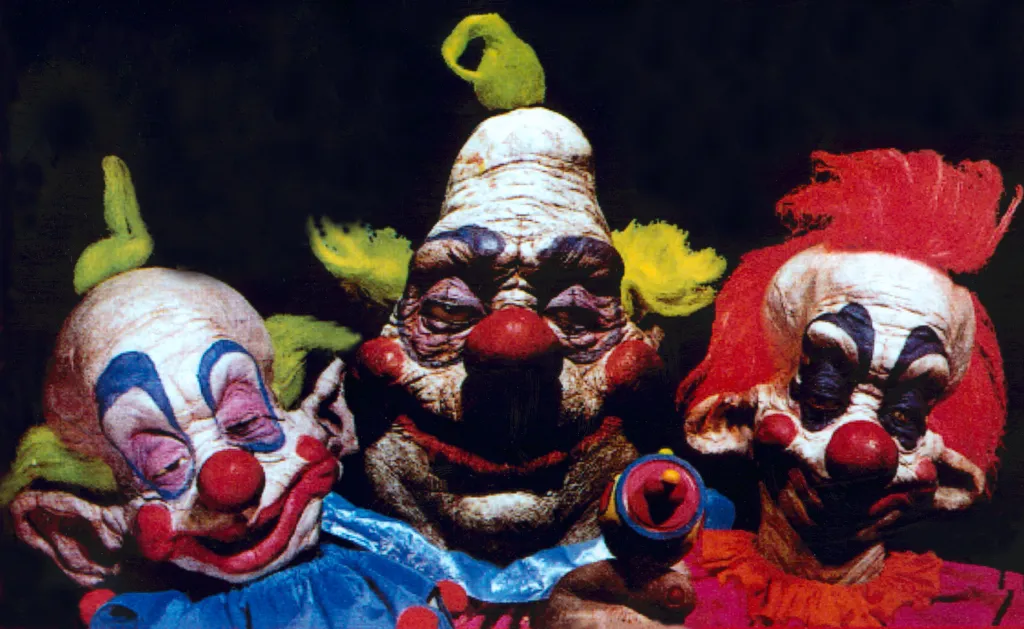
Universal Studios Hollywood has unveiled the final additions to its fan-favorite Halloween Horror Nights event.
Among them are the return of a haunted house based on the 1988 camp slasher classic Killer Klowns From Outer Space. Other new frights include “KILLceañera: Music by SLASH” and “Dead, Deader, Deadest.” There will also be a fiery stunt show based on The Purge franchise. Additionally, the park’s Halloweenified Terror Tram returns with an all-new host, Art the Clown from the Terrifier movies.
Halloween Horror Nights starts on Thursday, September 3 and continues select nights through Sunday, November 1.
Previously-announced haunted houses include those based on Sinners, Stranger Things, Hellraiser and Evil Dead as well as one that pays homage to Ozzy Osbourne, the Prince of Darkness.
Additionally this year, Universal Studios Hollywood will debut “Unmasking the Horror Tour Add-On,” a behind the scenes, daytime experience for guests who want a closer look at the craftmanship that goes into Halloween Horror Nights.
Ticket options for the main event include General Admission, Universal Express Ticket, R.I.P. Tour, Day/Night Ticket and After 2 p.m. Day/Night Ticket. Plus, Early Access Ticket provides entry to select haunted houses beginning at 5:30 p.m. (subject to change). Also, the popular Frequent Fear Pass and Ultimate Fear Pass allow guests to experience scares again and again throughout the season.
>
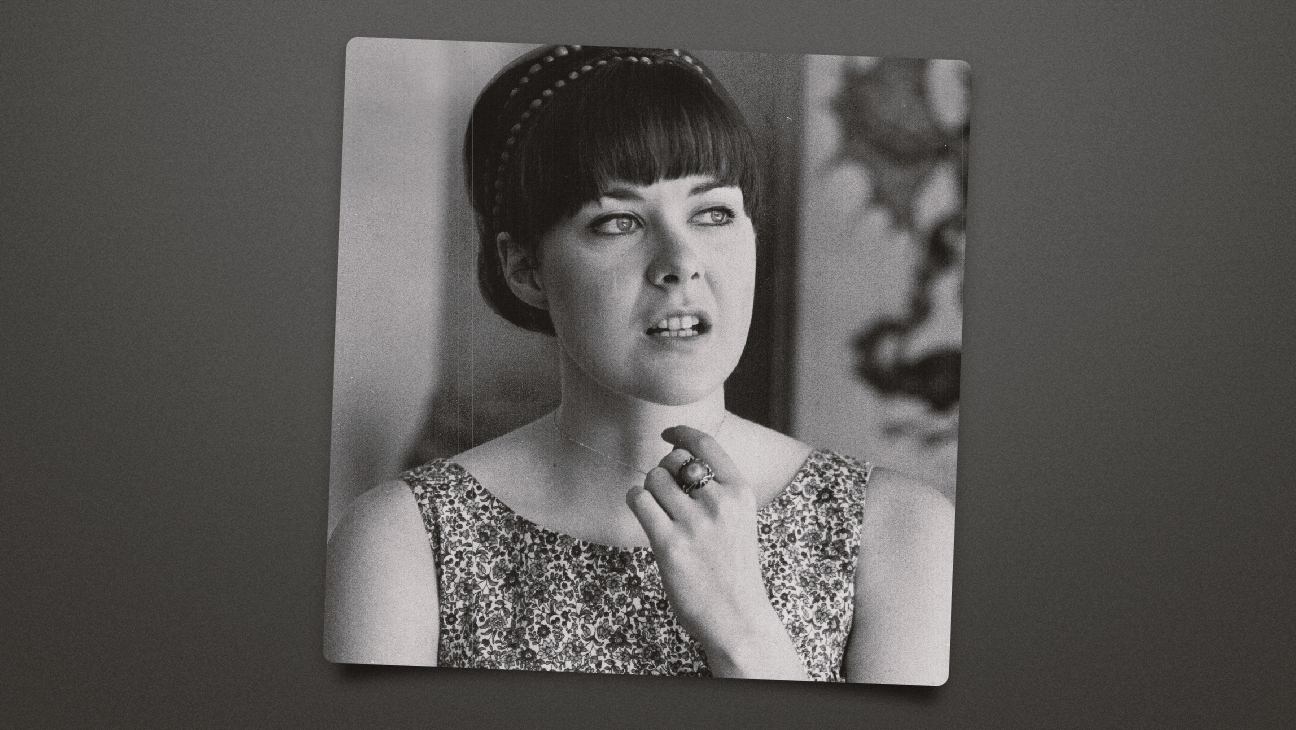
Tedde Moore, an actress who is best known as playing young Ralphie Parker’s teacher in A Christmas Story, has died. She was 79.
Moore died Wednesday in Huntsville, Ontario, according to a post on her Facebook page. A cause of death was not given.
“On Wednesday August 5th under sunny skies overlooking Fairy Lake, Tedde passed away surrounded by family physically and spiritually in her beloved Huntsville Muskoka,” the post reads. “Her bravery in this choice was almost overwhelming, beyond beautiful and also difficult. Forever the teacher, she had a quote for every occasion and a special way of touching the lives and hearts of everyone she met. Her magic and love will be remembered by all she took under her generous and welcoming wings.”
Moore played Miss Shields in the 1983 Christmas classic opposite Peter Billingsley. She memorably gives Ralphie a bad grade on his paper about wanting the Red Ryder BB gun for Christmas and also has to deal with Flick (Scott Schwartz)’s getting his tongue stuck on a ice-cold flagpole. Moore was nominated for a Genie Award, presented by the Academy of Canadian Cinema and Television, for best performance by an actress in a supporting role. She reprised her role for 1994’s My Summer Story, which, like A Christmas Story, was based on Jean Shepherd’s semi-autobiographical stories.
Her other TV appearances include spots on Friday the 13th: The Series, RoboCop: Prime Directives, Odyssey 5 and This Is Wonderland.
Moore played Mrs. Claus in the 2011 TV movie Mistletoe Over Manhattan and also portrayed Nanny Shaw in the miniseries The Kennedys that same year. According to iMDB.com, her final credit was the 2017 TV movie Magical Christmas Ornaments.
Born April 11, 1947, Moore was the daughter of Darwina Faessler Moore and actor Mavor Moore, best known for playing the title role in a Canadian radio drama adaptation of Nero Wolfe in 1982. Her grandmother was Canadian theater pioneer Dora Mavor Moore.
She attended the Royal Academy of Dramatic Art in London, graduating in 1967 with the Principal’s Medal of Honor. After graduating, she starred opposite Christopher Walken in the Stratford Festival production of A Midsummer Night’s Dream.
In 2009, Moore was diagnosed with multiple sclerosis.
Moore had two children with Canadian film and television director Donald Shebib, who directed many documentaries, including 1970’sGoin’ Down the Road and 1973’s Between Friends. Their children are daughter Suzanna, a child actor (Are You Afraid of the Dark?) turned teacher, and Noah, a child actor (Goosebumps) turned Grammy-winning music producer, also known as “40,” who is a frequent collaborator of Drake’s. 40, who produced the Drake hits “Hold On, We’re Going Home,” “One Dance,” “God’s Plan,” “Toosie Slide” and “Take Care,” was diagnosed with multiple sclerosis in 2007, two years before his mother.
Moore has another daughter, Zoë, from a previous relationship with actor Patrick Christopher Carter, and raised a foster daughter, Chaunce Drury.
>

John Oliver Eviscerates Trump’s “Bizarro World” DOJ On ‘Last Week Tonight’

Twin Engine, Bandai Form Strategic Partnership to Co-Create New IPs

Frankie Harris shoots 59 in final round before winning Korn Ferry Tour’s Pinnacle Bank Championship in play-off | Golf News
-

 movies3 months ago
Search For Canadian TV Actor Stewart McLean Now Homicide Investigation
-

 Fashion9 years ago
These ’90s fashion trends are making a comeback in 2017
-
Fashion9 years ago
According to Dior Couture, this taboo fashion accessory is back
-
Fashion9 years ago
Model Jocelyn Chew’s Instagram is the best vacation you’ve ever had
-
Fashion9 years ago
Your comprehensive guide to this fall’s biggest trends
-
Fashion9 years ago
9 Celebrities who have spoken out about being photoshopped
-
Fashion9 years ago
Emily Ratajkowski channels back-to-school style
-
Fashion9 years ago
A photo diary of the nightlife scene from LA To Ibiza