Connect with us

Sports

Coco Gauff won a tennis match on grass for the first time in two years. Can she build on it?

Published

on

THE ALL ENGLAND CLUB, London — At some point, Coco Gauff was going to win another tennis match on grass.

Gauff waited all afternoon for No. 2 Court to free up, and when it finally did just after 7 p.m. Monday, she made quick work of Germany’s Tamara Korpatsch, the world No. 78.

Needless to say, Gauff has win bigger matches in her life and her grass career, but this was a long time coming. It was her first win on grass in two years, which goes a long way toward explaining the big-old grin that spread across her face when Korpatsch’s last ball flew long.

“i don’t regret the past, I just learn from it,” Gauff said on court with a laugh about her grass losing streak, after winning 6-2, 6-1 in less than an hour.

There wasn’t a ton of mystery to this one. Gauff had more aces than double faults. She had more winners than unforced errors.

She was tidy. She was clean. She took charge early and didn’t let up, stepping on the gas like she said she wanted to after establishing a lead in way she often hasn’t the past month. She was everything she hadn’t been the past two years on the most rarefied surface in tennis.

In 2024, Gauff’s campaign ended with her standing on Centre Court in tennis disarray, yelling at her coaches as she slid to a fourth-round defeat against compatriot Emma Navarro.

Last year, she lost her first warm-up match, at the Berlin Tennis Open, and then her first-round match at Wimbledon, too. Two weeks ago, she lost another opening match on the grass in Berlin.

“We don’t have the best relationship,” Gauff, 22, joked in her pre-Wimbledon news conference Saturday. “I definitely think I have the ability to play on it. I think it’s more about the confidence.”

Why are some players better on clay than grass?

Tifo Sports

Seven years after her breakthrough week at the All England Club, when Gauff upset her idol Venus Williams as a 15-year-old and made it to the round of 16, Wimbledon remains the one Grand Slam where Gauff has yet to make the quarterfinals.

That seems a little strange, given the way Gauff started all those years ago. During her three wins in 2019, she was aggressive, took control of points and used her serve to keep her opponents at bay. Against Williams, she fired four aces in 10 games. She won 78 percent of her first-serve points, and 73 percent on her second serve. She converted all three of her break points.

More than that, she stroked the ball with authority. At one stage, she won 11 consecutive points, against a five-time Wimbledon champion. There was little sign that day, or during the rest of the week, that grass would become something of an Achilles heel for her.

Conventional wisdom would say Gauff is too talented a player, and too good an athlete, to never figure out grass — and preconceptions about a player’s style can sometimes hide the reality of their records. Coming into Wimbledon last year, Aryna Sabalenka, Iga Świątek, Gauff and Elena Rybakina were ruling the top of women’s tennis.

Rybakina, the 2022 Wimbledon champion, and Sabalenka, the world No. 1, were seen as favorites. Gauff was in with a shot; Świątek appeared to be the outsider. Their grass-court win percentages were as follows: Rybakina 71; Świątek 68; Gauff 67; Sabalenka 64.

Come the end of the tournament, Świątek held the trophy.

“I didn’t dream that because I thought it was impossible,” Świątek, who won her 2025 semifinal 6-2, 6-0 and the final 6-0, 6-0, said Saturday.

Not so much, as it turned out. Świątek served about as well as she ever has during those two weeks. She hit the corners and scarred the lines on her first serve like Novak Djokovic.

Coming into Wimbledon last year, Iga Świątek’s grass-court win percentage was 68. (Henry Nicholls / AFP via Getty Images)

Telling a tennis player to serve well is like telling a pitcher in baseball to make batters swing and miss more. But there is more to it than that. Gauff may be the best athlete in women’s tennis, but Świątek has the best footwork, the adjustment steps and tiny movements that take her to the ball and propel her from attack to defense and back again.

Gauff is incredibly fast, which helps on any surface. But speed doesn’t always translate into good footwork, especially on grass, where acceleration can actually work against players if they don’t know how to optimize it for a surface that can change in a matter of minutes if the humidity shifts.

Świątek also has the racket speed, hand speed, and controlled aggressiveness to consistently step in and take the ball on her forehand, even with her extreme Western forehand grip, the same one that Gauff uses. Gauff can do this when she is feeling good on the court, but recent defeats on all surfaces have seen her dial back on aggressiveness when she has had a lead, taking the ball later than she might want and putting herself on the back foot.

“She’s got fast hands, fast feet, so she can adapt,” Matt Daly, a coach specializing in grip technique who has worked with several top-10 players, said of Świątek during an interview. “If you don’t have, let’s call it, the same skill set, it’s just very tough to adapt.”

When Świątek lifted the Venus Rosewater Dish, Daly had a vested interest in how she did it. He was one of Gauff’s coaches at the time, working with her to adjust her grip and swing path to improve her serve and her forehand.

Gauff’s adaptability and Daly’s guidance helped her win the French Open in 2025, but three weeks later came that Wimbledon loss to Ukraine’s Dayana Yastremska, who skidded the ball through under the No. 1 Court roof and rushed Gauff out of the building.

In Świątek’s box was Wim Fissette, who grew up in Belgium playing on fast carpet, which requires footwork similar to grass.

“Too many players focus on being low, where my main focus is always being light, especially with like the first steps, but also running through the ball,” Fissette, who Świątek split with earlier this year, said in a voice message this week that was about as good a primer on grass court tennis there is.

“There shouldn’t be any hard stops or hard starts.”

Velocity is also key to the shots players choose.

“A fast ball will be very fast. It will like kind of skid through,” he said. “But on the other hand when the ball is slow it is super slow. It’s probably the slowest of any surface. Let’s say the ball falls out of the air, or it’s like a very defensive ball. It bounces low and you have to add a lot, so it’s actually the opposite.

“So the fast balls, you kind of have to try to use the pace of the opponent, maybe redirect but stay light on the feet. And when the ball is slow, very slow, you just have to load your legs and try to get as much energy as possible to really do something with the ball.”

Coco Gauff made it to the round of 16 at Wimbledon in 2019. (Daniel Leal / AFP via Getty Images)

To understand Gauff’s path forward on grass requires a journey backward, into Gauff’s childhood. Gauff’s father and phonetic namesake (he’s Corey, she’s Cori) trained her to hit the ball differently than most women, to swing with the big sweeping forehand with heavy topspin and power that is more common among men.

Gauff was in her formative years when Rafael Nadal, Świątek’s idol, was taking over men’s tennis with his remarkable forehand. Nadal also uses the Western grip, which sends the racket strings from low to high while practically facing downward. The violence of the motion generates prodigious amounts of topspin.

During a neutral rally, that grip and motion usually work best when players can take a few steps back from the baseline. Unfortunately, that’s a terrible way to play tennis on a grass court, where the ball stays low and slides through the court. Gauff makes a lot of her living hanging back, using her speed to chasing down balls, and using her topspin to reset points until she can find an easy one to put away. Assuming the ball bounces high, that is.

“Her ball on the forehand is heavy and high and that is kind of frustrating for players, but on grass it doesn’t get above the shoulders,” Rennae Stubbs, the former player and commentator who is helping coach Serena Williams during her comeback, said during an interview.

There is a workaround though, as Nadal and Świątek proved (though Nadal’s grip is a little less severe than Gauff’s, Daly said).

They shortened their swings, stayed as low as they could, and got through the first week of the tournament, with the grass at its slipperiest. After a week of play — and perhaps sun — the courts have a slightly higher bounce, giving Nadal and Świątek’s strengths a better platform to shine.

All that requires the ability to anticipate shots and to stay light on the feet. Digging in and pushing hard off the grass, the way a gifted sprinter like Gauff does to generate speed on the first step can spell doom, even though grass tennis shoes have small dimples on the bottom to give players more traction.

Like Gauff, Steffi Graf had otherworldly straight-ahead speed. “Twinkle toes” is how Stubbs describes her. She tells players to imagine they are running on ice.

Daly mentioned his good friend James Blake, who reached No. 4 in the world and won 10 titles but never got past the third round of Wimbledon.

“One of the fastest on the hard court, but he didn’t move quite as well on grass,” Daly said. “He had the game to be very good on grass. I just think the movement wasn’t quite as natural.”

Gauff isn’t ready to give up yet. She wants to create more good memories on the grass. She says her practices are going well.

“Just really focusing on the footwork, the game style, and really trying to find my grass identity,” she said.

>

Continue Reading

Sports

Jaissle begins with win in Valencia. Could Wissa thrive this season? Was there a captaincy clue?

Published

on

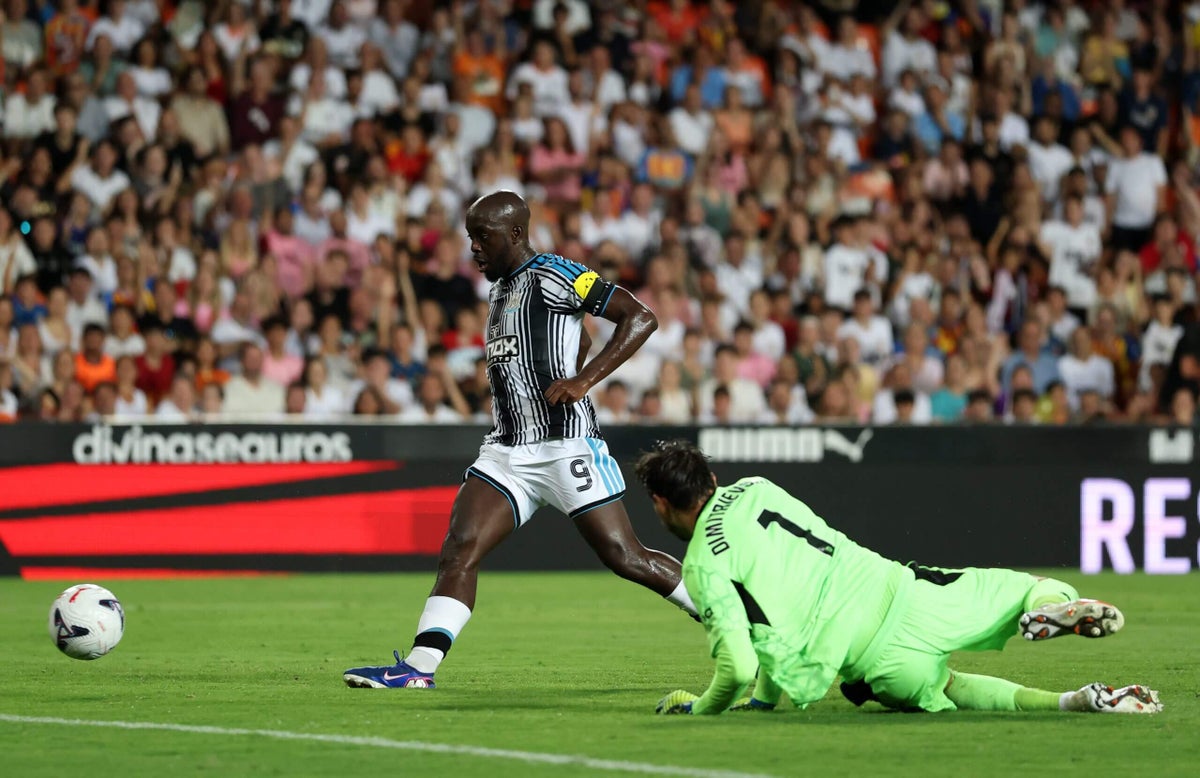
Newcastle United fought back from behind to overcome 10-man Valencia at the Mestalla and hand Matthias Jaissle a 2-1 victory in his first friendly as head coach.

The Spanish side took an early lead when Filip Ugrinic curled in from distance, but the home side were reduced to 10 men when Jose Gaya went in dangerously on Anthony Elanga.

Elanga was worryingly taken off on a stretcher, much to Jaissle’s anger, though the early prognosis is he has avoided serious injury.

In the 52nd minute, Yoane Wissa, on as a half-time substitute, capitalised on a defensive error to equalise. The DR Congo international also scored the winner, tapping into an empty net after debutant Bazoumana Toure unselfishly squared to him, and following a difficult first season on Tyneside, this was a really encouraging cameo for Wissa.

Chris Waugh was at the Mestalla and these were the key takeaways…


A first glimpse of ‘Jaissle-ball’

“Energy” was the word on everyone’s lips inside Newcastle’s training camp this week and the high-intensity, high-pressing, “vertical” nature of ‘Jaissle-ball’ was evident against Valencia.

Newcastle started both halves at lightning-quick pace, with the double-pivot midfielders tasked with sending the forwards in behind Valencia’s high line.

As he often did at Al Ahli, Jaissle deployed a 4-2-3-1 formation, with Nick Woltemade as the No 10.

It was not ‘heavy-metal football’ throughout, though. Newcastle did have spells where they were more patient in possession, when Jaissle encouraged his defenders to push high and squeeze.

On the touchline, Jaissle barked instructions and clapped encouragement throughout. Rarely did he remain in his technical area, literally following the ball up and down.

Having worn Newcastle’s grey training tracksuit for intense sessions during the week, when he was also sporting a whistle and a stopwatch and sprinted around after his players, leading some staff members to joke they should have attached a GPS tracker to the head coach as well, Jaissle emerged at the Mestalla in a stylish white shirt, dark trousers and white shoes. There was also a black armband, as Newcastle continue to pay their respects to the late Kevin Keegan.

Matthias Jaissle won his first friendly in charge of Newcastle (Clive Brunskill/Getty Images)

When a hydration break was called on the half-hour mark, Jaissle emerged with a tactics board and relayed clear messages.

“With a hard week behind us, the players did well in the camp and they did well in the heat,” Jaissle said. “It was a friendly — we will not smash the locker room and celebrate a lot. We are quite balanced and we still have a lot to work on.”

Almost 2,000 Newcastle fans (officially) were in attendance and they were dancing in the streets of Valencia and up high in the stadium, chanting, “Oh Jaissle, I can boogie”.

Jaissle’s Newcastle tenure is less than a week old, but already his ideas are discernible.


Injury fears eased after tempers flare

For a player to be shown a straight red card during a friendly, they must have done something serious.

Gaya was not necessarily off the ground when he lunged, but Elanga had already jinked beyond him and, as Jaissle immediately gestured to the assistant referee, the Spaniard appeared to go in with his studs up.

The challenge not only riled Jaissle, but also his players. Will Osula, who is close friends with Elanga, sprinted across and confronted Gaya, while Jacob Ramsey shoved the Valencia winger.

“I was in fear, definitely,” said Jaissle. “It’s just a bad challenge, especially in the context of a friendly. It was not expected. Fouls are part of the game, but that was really harsh.”

After a testing first season on Tyneside, there are high hopes Jaissle’s style can bring the best out of Elanga, and he started the match promisingly, having a goal disallowed for a marginal offside and regularly getting in behind.

Fortunately, the early prognosis is that Elanga only suffered a painful contusion to his shin.

“It seems to be not bad, so we are blessed,” Jaissle said. “I hope it’s true and he can start next week.”

What kind of coach is Matthias Jaissle?

Sebastian Stafford-Bloor and more


Thiaw’s birthday gift — or a permanent appointment?

Bruno Guimaraes’ £75million ($101.2m) move to Arsenal was confirmed earlier on Saturday, leaving Jaissle without arguably the most important player of the Eddie Howe era.

Critically, the new head coach is also without a skipper and leadership roles are very much up for grabs. There is a feeling within the club that certain individuals have already stepped up, looking to assume greater responsibility.

Unsurprisingly, perhaps, Jaissle selected a fellow German to wear the armband for his first match. Malick Thiaw was handed a 25th birthday gift by being named skipper.

“It was a small birthday gift,” Jaissle joked with a smile. “I still have time to make the final decision, but there is not only one captain, there (will be) a leadership group.”

It is a move which makes sense. Although Thiaw is hardly the most vocal, he is a consistent performer, level-headed and likely to start most matches.

The suggestion is further captaincy trials will follow — Jacob Murphy was given the armband when Thiaw was withdrawn — but bringing in more experience during the closing weeks of the window is also on the agenda. Marseille’s Pierre-Emile Hojbjerg, the 31-year-old Denmark international, is among around half a dozen midfielders who are under consideration.


Trio make their bows — and Wissa thrives

Newcastle paid around £25m to bring Lukas Hornicek to Tyneside and the early indications are he will be Jaissle’s No 1.

Nick Pope has been out in Spain at the week-long training camp in La Manga, but he was not named in a matchday squad which featured three goalkeepers. Mark Gillespie and Aidan Harris, the 19-year-old, were selected instead.

Following Hornicek’s arrival, the expectation had been Pope would depart in search of first-team football. “We wanted to give the new signing 90 minutes,” Jaissle said. “I had a talk with Nick. I really appreciate what he did in his career so far and he knows exactly his situation right now, and we need to deal with it in the best possible way.”

There was no Ewen Jaouen, either, as he had a small injury issue.

For Hornicek, this was a decent introduction. He displayed reasonable distribution and made a few good saves, as well as showing sweeper-keeper skills.

There were early communication issues with his centre-backs, mind. Thiaw and Sven Botman tried to clear lofted balls forwards which Hornicek should have been claiming, with the latter almost heading into his own net.

Aladji Bamba, meanwhile, started as part of the double pivot, with the 20-year-old making his first appearance since joining last month for a fee rising to €40m (£34.2m, $46.2m). The defensive midfielder partnered Ramsey and the pair were tasked with getting the ball forward quickly.

Bamba has a languid style and his passing is sometimes erratic, yet he carries well and looks to be ideally suited to the Premier League from a physical perspective. He was withdrawn at half-time.

Toure came on at the interval for his debut, too. A direct, left-footed left-winger, he initiated the press which forced the mistake to allow Wissa, who was also a half-time substitute, to equalise.

The DR Congo international will thrive upon the service Toure is able to provide — the 20-year-old already has an assist to his name, albeit in a friendly — and, unlike the right-footed Harvey Barnes, the Ivorian offers a different threat.


Full-back priorities only grow

Jacob Murphy deputised as a right-back at Bristol City and 19-year-old Leo Shahar has started three of Newcastle’s four pre-season friendlies. Now, Miodrag Pivas, who is a midfielder or a centre-back by trade, is providing cover at left-back.

The primary reason why the 21-year-old was asked to switch across is because Newcastle are desperately short of full-backs in general — never mind fit ones.

Tino Livramento, the right-back, is still being nursed back from a groin problem and it may take the 23-year-old a matter of weeks to reach full match sharpness.

The loss of fellow England international Lewis Hall for this game due to a knock provided Jaissle with a headache. The 21-year-old flew back to Tyneside on Friday — alongside Fabian Schar and Lewis Miley — with a very minor injury, though he is due to train on Sunday and may feature against Everton at Murrayfield, in Edinburgh, on Wednesday.

Miley filled in at right-back last season, but he too is unavailable, though his 17-year-old brother Mason is also able to play there and has featured at full-back in recent weeks, and Dan Burn is yet to rejoin his team-mates following his World Cup exploits. Dylan Charlton, 20, came on at left-back.

Newcastle have needed to sign at least one full-back all summer and, although Jaissle is still assessing his squad, it is evident he requires a minimum of one wide defender, if not more, in the coming weeks. Full-backs are integral to the way he wants to play and Newcastle are still alarmingly short of senior options, with the season opener a fortnight away.

As Jaissle put it: “Our squad is not complete.”

>

Continue Reading

Sports

Humor, memories and emotional moments: What stood out from NFL Hall of Fame speeches

Published

on

The Pro Football Hall of Fame officially welcomed five new members to football immortality Saturday.

After longtime New England Patriots head coach Bill Belichick was denied the nod by voters earlier this year in his first year of eligibility, the Class of 2026 became one of the most widely discussed Hall of Fame classes in recent history. The class featured five individuals, all players. Quarterback Drew Brees, linebacker Luke Kuechly, wide receiver Larry Fitzgerald and kicker Adam Vinatieri were the modern-era inductees, while running back Roger Craig was selected as a senior inductee in his 28th year of eligibility.

Brees, Kuechly, Fitzgerald and Vinatieri all gave speeches live on stage while Craig was present but had his speech delivered with a prerecorded video in which he revealed he’s been diagnosed with dementia. The speeches included many walks down memory lane, light-hearted humor and emotional moments. Here’s what stood out from each player as they took the stage to receive their golden jackets:

Drew Brees, QB

Draft: 2001 second-round pick (No. 32 pick)

Playing career: 2001-2005, San Diego Chargers. 2006-2020, New Orleans Saints

Career highlights: Super Bowl champion and Super Bowl MVP. First-Team All-Pro in 2006 and two-time Offensive Player of the Year. Thirteen Pro Bowl selections. Led the NFL in passing yards seven times, completion percentage six times, touchdown passes four times and passer rating twice. First-ballot Hall of Famer.

From the speech: Brees was the last member of the Class of 2026 to deliver his speech, and it was the longest of the afternoon. In the 25-minute speech, Brees spoke about the key role that his upbringing played, both on and off the field with his family and coaches, in his success. Brees also spent time reflecting on his time in New Orleans, where he spent the majority of his NFL career.

“It doesn’t take you long to realize what makes New Orleans so special,” Brees said. “New Orleans has been through a lot, to the point where, in some cases, the feeling was that we may have lost everything. It may never come back the same. Storms teach us that our greatest treasures aren’t the things that we own. They’re the people we love and the way we show up for one another. It reminds us to hold our loved ones a little closer, to love a little harder, to laugh a little louder and to never take a single day for granted.”

Luke Kuechly, LB

Draft: 2012 first-round pick (No. 9 pick)

Playing career: 2012-2019, Carolina Panthers

Career highlights: Five-time First-Team All-Pro, Defensive Player of the Year in 2013. Selected to seven consecutive Pro Bowls from 2013-2019 and led the NFL in tackles twice. Helped the Panthers to a Super Bowl appearance in 2015. Selected to the Hall of Fame in second year of eligibility.

From the speech: Kuechly spent a lot of time thanking people from throughout his life, including his “first team,” which was his family, as well as various individuals from his football journey. Kuechly also talked about what football brought him and what he misses about it.

“The relationships formed through football are unique,” Kuechly said. “You see each other at your best, and you see each other at your worst. You spend long days together in meeting rooms. You learn how different people communicate, lead and overcome challenges. Over time, teammates become friends and friends become family. That’s why when people ask me what I miss most about football, it’s not one specific game or one specific play. It’s the locker room, which I feel like I have again with you guys (fellow Hall of Famers) up here.

“It’s the conversations that have nothing to do with sports. It’s celebrating together after wins and hurting together after losses. There’s no way to measure what the game of football has given to me, the joy it’s provided and, more than anything, the people I have been so blessed to be around as a result of this game.”

Larry Fitzgerald, WR

Draft: 2004 first-round pick (No. 3 pick)

Playing career: 2004-2020, Arizona Cardinals

Career highlights: Led the league in receptions twice and led the league in receiving touchdowns twice. First-Team All-Pro in 2008. Helped the Cardinals to a Super Bowl appearance in 2008, in which he set records for most receiving yards and receiving touchdowns in a single postseason. First-ballot Hall of Famer.

From the speech: Playing in an era that spotlighted flamboyant wide receivers such as Randy Moss, Terrell Owens and Chad Johnson, Fitzgerald took a more soft-spoken approach and let his play do the talking.

In his speech, Fitzgerald showed more of his personality. He thanked Hall of Fame wide receiver and mentor Cris Carter, while saying he always had better hands than Carter. He thanked Randy Moss, complimenting the fellow Hall of Famer by saying he couldn’t learn anything from Moss because Moss was such a unique talent. He referenced Emmitt Smith’s wrestling skills in the locker room and Kurt Warner’s love for spaghetti, while thanking both for their mentorship.

Fitzgerald thanked many people, from former coaches and teammates. He also honored his late mother, Carol, who passed away from breast cancer in 2003 and his late father, Larry Sr., who passed away this summer. He finished his speech with words of wisdom to his children.

“The one thing I want you boys to remember most from everything you’ve heard: surround yourself with people who tell you what you need to hear, not what you want to hear,” Fitzgerald said. “Those are the people who actually love you. Copy their examples. And remember, there’s never much traffic on the extra mile in life. Bring others along with you. Don’t just pursue excellence for yourself; help others pursue it, too. That’s the part of this story that matters the most.”

Adam Vinatieri, K

Draft: Undrafted

Playing career: 1996-2005, New England Patriots. 2006-2019, Indianapolis Colts

Career highlights: Four-time Super Bowl champion, known for making clutch kicks, including two in the snowy Tuck Rule Game during the 2001 divisional round and game-winning field goals in two Super Bowls. Three-time First-Team All-Pro and three-time Pro Bowler. Holds the record for most field goals made in a career, most consecutive field goals made, most combined regular season and postseason games played and is the league’s career scoring leader. Selected to the Hall of Fame in second year of eligibility.

From the speech: Vinatieri spoke for nearly 20 minutes and delivered a speech that had a little bit of everything. In thanking various teammates from his 24 seasons in the NFL, Vinatieri took playful jabs at legends, such as Tom Brady and Peyton Manning. He joked about Drew Bledsoe being the best quarterback in Patriots history, then added he didn’t want to make more jokes about Brady out of fear he would give Vinatieri a “Will Smith” slap, the way he recently did to Logan Paul. He thanked Manning for donating his “gigantic” forehead as the teleprompter for his speech. Vinatieri also joked that Bill Belichick couldn’t make it because he’s judging his girlfriend’s cheerleading competition and that his former teammate Pat McAfee is the “only person who enjoyed holding my balls more than my wife.”

Vinatieri had plenty of sincere moments as well, including ending his speech with an open letter to the sport.

“I want to thank the game of football,” Vinatieri said. “Football, it would be so easy for me to forget to tell you how much you mean to me. If you were sitting here in the crowd today, this is what I would say. ‘I loved you with everything I had. There was a time when I thought I wanted you more than air, but I was wrong. You were the air. You gave me purpose. You gave me direction. You gave me a life I could have never imagined. The beautiful thing about our relationship is that the more that I gave to you, the more you gave back to me. The more I devoted myself to you, the more you rewarded me. The more I committed to you, the more you committed to me.’”

Roger Craig, RB

Draft: 1983 second-round pick (No. 49 overall)

Playing career: 1983-1990, San Francisco 49ers. 1991, Los Angeles Raiders. 1992-1993, Minnesota Vikings.

Career highlights: Three-time Super Bowl champion, Offensive Player of the Year and First-Team All-Pro in 1988. Led the NFL in receptions in 1985, a season in which he became the first player to top 1,000 yards rushing and receiving in the same season. Selected to the Hall of Fame in his 28th year of eligibility.

From the speech: Craig was present in Canton, but he didn’t deliver a speech from the stage. After he unveiled his Hall of Fame bust alongside his son, Roderick Craig, and his longtime teammate and presenter, Jamie Williams, a 10-minute prerecorded video played. Craig spent most of the time reflecting on his football journey, including former coaches and teammates, and his role in the 49ers’ dynasty in the ’80s. At the end of his speech, Craig revealed that he has been diagnosed with vascular dementia. 

“I want people to know this diagnosis doesn’t define me,” Craig said. “I am still Roger Craig. I am still a father, a husband, a teammate, a friend and someone who loves this game and the people who brought it to my life. If sharing my story helps even one family or one former player, then it’s worth it. Football gave me everything.”

>

Continue Reading

Sports

Washington Mystics claim former Liberty forward Betnijah Laney-Hamilton off waivers

Published

on

Betnijah Laney-Hamilton attempts a 3-pointer during a game.

Betnijah Laney-Hamilton was waived by the Liberty on Thursday after almost six years and a championship with New York. Dustin Satloff / Getty Images

Betnijah Laney-Hamilton has been awarded on waivers to the Washington Mystics, the team announced Saturday.

The New York Liberty waived the 11-year veteran Thursday after four full seasons with the franchise, including the 2024 season when the Liberty won their first WNBA championship. After missing the entire 2025 campaign while recovering from surgery to repair a meniscus injury in her left knee, she signed a one-year, $400,000 protected veteran contract.

After starting the first four games of the season, Laney-Hamilton’s role was diminished substantially. She appeared in 13 more games for the Liberty, starting just one. She was a healthy scratch for eight consecutive games before being waived.

Because the Mystics claimed Laney-Hamilton off waivers, they will pay out the remainder of her $400,000 contract. They had over $1.8 million in cap space before acquiring Laney-Hamilton, but had to waive guard Rori Harmon to make room for her on their roster.

The Mystics’ decision to claim Laney-Hamilton came down to a desire for a veteran presence as they attempt to clinch a playoff spot for the first time since 2023, according to a team source who spoke on the condition of anonymity because they are not authorized to speak publicly about an ongoing transaction. The Mystics expect her to come off the bench, but are excited to see what she can contribute as a rotation wing.

The team source also said Laney-Hamilton is “excited” to be in Washington.

The Mystics have one open developmental spot they hope to use to bring Harmon back.

Connections: Sports Edition Logo

Connections: Sports Edition Logo

Connections: Sports Edition

Spot the pattern. Connect the terms

Find the hidden link between sports terms

>

Continue Reading

Trending

Copyright © 2017 Zox News Theme. Theme by MVP Themes, powered by WordPress.