
Sports
How will the NHL’s unusually cash-rich, talent-poor free agency change the league?


As the two sides prepare for contractual battle when free agency opens on Wednesday at noon, NHL executives and player agents are surveying the landscape and trying to get a handle on where the day will take them.
In an unprecedented offseason — with most teams flush with cash and the unrestricted free agent class as weak as it has ever been — it certainly feels like some things are about to get broken. Longstanding salary norms, for one.
Already, depth players such as Beck Malenstyn are cashing in, as the fourth-line winger who had seven goals in 11 minutes of ice time a game last season received a handsome six-year, $17.5 million deal from the Buffalo Sabres on the weekend. Elsewhere, Jack Drury, a 26-year-old depth center who was just acquired by the Nashville Predators, landed a five-year deal for $22.5 million — more term and dollars than someone with 30 career goals would have typically garnered in the NHL’s boring ol’ flat-cap environment between 2018 and 2024.
With the salary cap rising to a record high of $104 million — an 18.2 percent jump over the past two years — it has injected $512 million in new money into the system league-wide, a historic shift that is only just beginning. With that in mind, I remarked to one high-profile agent (who doesn’t represent either of the above players) that it felt like 2026 would be a great year to be an agent in the NHL.
“Better year to be an average player,” the agent shot back.
Other agents, meanwhile, lamented they didn’t have many clients going to free agency, meaning they would have to sit out what should be one of the stranger July 1s the NHL has witnessed.
On the team side, general managers are trying to ensure they don’t end up on the wrong end of this weird game of reverse musical chairs, where the losers will be left with a big bag of cap space and nothing of value to spend it on. For many, trying to find talent in free agency appears to be an undesirable backup option, which explains why the trade market has been overheated of late.
That could continue into the summer, as players signed to reasonable contracts — even if you have to squint to make them so — are suddenly the NHL’s most valuable asset class of all. Even bad deals have become far more movable in this environment, as evidenced by the Canadiens sending Brendan Gallagher (albeit at half his $6.5 million salary) home to Vancouver and the Hurricanes deciding not to buy out Jesperi Kotkaniemi’s $4.82 million AAV deal despite Kotkaniemi not playing a minute for them during the Stanley Cup run.
Anything, in this new world, can be traded — provided the other team isn’t on one of those pesky no-trade clauses. Adding real value, however, is something you’ll have to work for.
The cap escalating as fast as it has post-pandemic is only part of the story here. What’s also at work is that almost all of the NHL’s stars are locked in long term at what are now underwhelming dollars, leaving what we’ll charitably call the league’s middle class — bottom-six forwards and depth defensemen — to benefit from the roughly $400 million that’s still out there to be spent.
Most of the big names still without contracts are restricted free agents, younger players who are under team control, and as a result those negotiations could prove difficult in the months to come. Dallas’ Jason Robertson, for one, just turned down a deal worth approximately $15 million a season with the Seattle Kraken, effectively killing a sign-and-trade to Seattle.
The ever-contending Stars are one of the NHL’s few cap-strapped clubs right now and as such are likely unable to meet that kind of extreme asking price — a number that would hand Robertson, 17th in points per game the past five seasons, the second-highest AAV in the league behind the Minnesota Wild’s Kirill Kaprizov. If that is this league’s new economic topography, teams such as Dallas will need to find a way to adjust on the fly. That means shedding talent, to the delight of teams below them in the standings.
Other RFAs set to cash in include a handful of the league’s next guard of stars — Connor Bedard in Chicago, Leo Carlsson and Cutter Gauthier in Anaheim, Adam Fantilli in Columbus and Simon Edvinsson in Detroit — but it’s not a terribly long list. What’s clear already is that all of their GMs need to be ready in case there is either an offer sheet or a prolonged holdout as the two sides try to redetermine what they’re now worth.
Especially given that worth is a moving target that will only shoot up after what’s sure to be some bad-contract carnage on Wednesday.
Even some RFAs further down the hierarchy in terms of experience and value — such as young defensemen Simon Nemec and Alexander Nikishin — are using this new world order to demand more than players of their ilk have ever received in the past. It’s forcing their GMs into tough decisions. The Devils dealt Nemec to Calgary last week for draft picks; the Hurricanes had Nikishin’s name out there in trade talks mere days after he helped them win a championship and was named to the NHL’s All-Rookie team.
It’s fair to ask what a good contract now looks like for one of the NHL’s full-blown superstars, if someone like Nemec can demand $8 million (or more) and Bowen Byram — who the Buffalo Sabres similarly offloaded to the Chicago Blackhawks last week — wants $12 million.
Is Quinn Hughes justified in becoming the league’s highest paid player ever, with an AAV north of Kaprizov’s $17 million? And if so, can the Wild possibly have two players earning that kind of money and still compete?
I’m not sure there’s a right answer at this point, not with how fast this is evolving.
Still, Minnesota’s is a better problem to have than a team such as Seattle, which is set to lose a few useful veterans to UFA and has more than $20 million still to spend on a roster that needs a lot of help to become a playoff club. If they continue to struggle to acquire a star, given many seem to have the Kraken on their NTCs, should they attempt to spend that money on lesser talent anyway, rather than sit out the frenzy? Or will that just lead to more Chandler Stephenson-like mistakes on the roster and not move the needle on the ice?
Other teams that have work to do to hit the $76.9 million salary floor include the San Jose Sharks, Pittsburgh Penguins and Anaheim Ducks, the latter of whom are set to lose three veteran right-shot defensemen (John Carlson, Jacob Trouba and Radko Gudas) with no obvious replacement incoming.
But many of the other teams with a lot of cap room right now are like Seattle in that they’re tired of losing and looking to get back to the playoffs. Chicago, Detroit, Toronto, Winnipeg and Columbus, for example, can all theoretically take a big swing or two to try to move up the standings. But will they be able to find a trade partner willing to give up someone at a coveted position like a top-two center or top-pairing defenseman? Will anyone waive a no-trade to go where it’s cold, the taxes are higher and the team may miss the playoffs again? And will the acquisition cost be prohibitive in a climate where so many teams are trying to add, driving up the asking price?
There are a number of theories out there as to what all this will mean for the league going forward. One prevailing one is that more teams simply won’t spend to the cap anymore, either due to fiscal pressure from ownership to limit costs or because there’s more value in remaining flexible than spending on what little is available. (Or some combination of both.)
If that ends up being the case, expect all the activity in the trade market to continue throughout the summer — and possibly even into September. We could have more RFA holdouts asking for big money, who, like Robertson, end up on the market, and more teams that get desperate enough to fill holes by moving picks and prospects to improve their teams in the fall.
In the old world, July 1 was often an endpoint for remodeling your franchise, a day when you finished your roster off with a capstone piece or two after making trades in advance of the draft. In this rapidly evolving new one, that’s likely not going to be possible for a lot of teams, which could lead to an anxious offseason for some GMs as they try to adapt and find other ways to improve.
Our prediction is that this will make things most difficult for the retooling teams that haven’t already established their talent base, as top teams such as Carolina and Colorado aren’t going to be shedding their reasonably priced talent. We obviously don’t expect this weak free agent class to help crown any new contenders. But the trade market doesn’t seem as though it will swing the balance, either, as to date it appears to have mostly weakened middle powers, such as Ottawa (Brady Tkachuk), Anaheim (Mason McTavish, John Carlson, Olen Zellweger), Buffalo (Alex Tuch, Byram), Utah (JJ Peterka) and St. Louis (Jordan Kyrou) rather than maim the established contenders.
Some of those teams will be able to replace those players internally, with up-and-coming talent. Others will be lucky enough to pull off savvy trades to try to fill the void. But there will definitely be teams left wanting come the start of next season, as there just isn’t enough star power to go around.
That brings us back to Wednesday’s lackluster UFA class and what it all means. Here we’ll give the final word to our source at the top, the agent who predicts an incoming windfall for the “average” player.
“Never in the history of the NHL will so much money be spent on such little talent,” he said.
>

Big Buck’s, one of the greatest staying hurdlers of all time, has died at the age of 23.
Owned by the late Andy Stewart, he was part of a golden age for trainer Paul Nicholls as he counted Kauto Star, Denman, Master Minded and Neptune Collonges among his stablemates.
Big Buck’s had always been viewed by connections as a potential top-class chaser, however, a fall at the final fence in the 2008 Hennessy Gold Cup saw him revert back to hurdles and he never looked back.
He won what is now the Stayers’ Hurdle a record four times, the Liverpool Hurdle four times and three times he came home in front in the Long Walk Hurdle.
Big Buck’s, who struck up a great relationship with Ruby Walsh, was a fan favourite as he would often hit a flat spot in his races before powering to victory.
Nicholls told the Press Association: “Ability-wise he was probably as good as anything I’ve ever trained, it’s just a shame he couldn’t jump a chase fence.
“He was a wonderful horse for a wonderful owner who deserved to own a great horse like that. Andy enjoyed the whole journey and shared it with everybody.
“The horse had a brilliant life and had a great time with us and then a great time with Mike and Lucy Felton in retirement, but sadly time caught up with him.
“I was very lucky to have him at the same time as Kauto Star, Neptune Collonges, Master Minded and Denman. He was definitely as good as any of them.”
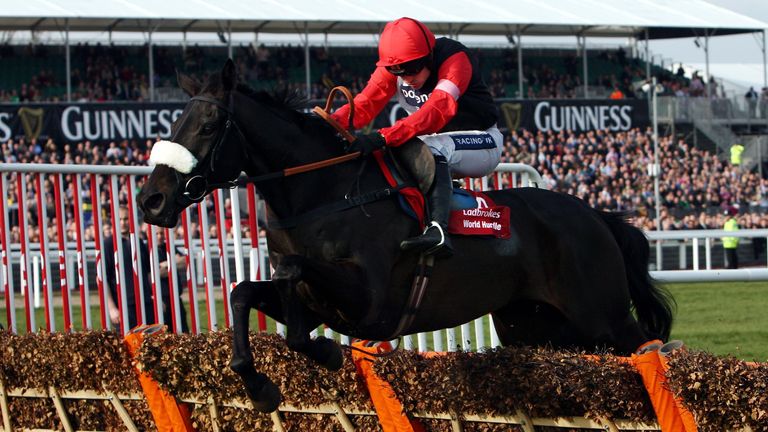
Big Buck’s and Ruby Walsh formed a formidable partnership
One of the last surviving members of that halcyon period for the Ditcheat handler, Big Buck’s would go on to pass Sir Ken and win a then record 18 straight National Hunt races when reverting to hurdles, an achievement only eclipsed by Altior since.
However, for Nicholls there will always be the question of how high he could have climbed if remaining over the larger obstacles.
“He won the Graded race at Aintree over fences, jumped 18 fences and jumped them 18 different ways and still won,” said Nicholls.
“It made me think he was a certainty in the Hennessy and he was unlucky that day, but he just wasn’t a natural jumper of a fence.
“If Kauto Star hadn’t been about at that time then we probably would persevered over fences and he had the ability to win a Gold Cup. If he had won the Hennessy that day it would have definitely given us a headache and it would have been interesting where he would have ended up.
“But over hurdles he was invincible. Andy said I was bonkers, but going back over hurdles was the best thing we ever did. History tells you how good he was and Cheltenham, Aintree, Newbury, Ascot – if there was a big staying hurdle race, he won them all – all those Grade Ones on the trot, what a horse.”
Big Bucks would become a standing dish on Thursdays at the Cheltenham Festival, with his famous flat spot often sparking nervous gasps from supporters before hitting top gear and surging up the Cheltenham hill under Walsh.
When asked to nominate just one race in Big Bucks’ decorated career littered with so many great triumphs it was his fourth-straight success in the day three feature, when seeing off arguably the deepest field he met, edging out Irish raider Voler La Vedette, that Nicholls remembers most fondly.
“His fourth World Hurdle was the one that sticks out as being very special,” said Nicholls.
“But we had so many great days with such a brilliant horse and we were all very lucky to be associated with him.”
>
Sports
Today on Sky Sports Racing: True Love seeks Prix Maurice de Gheest crown at Deauville | Racing News

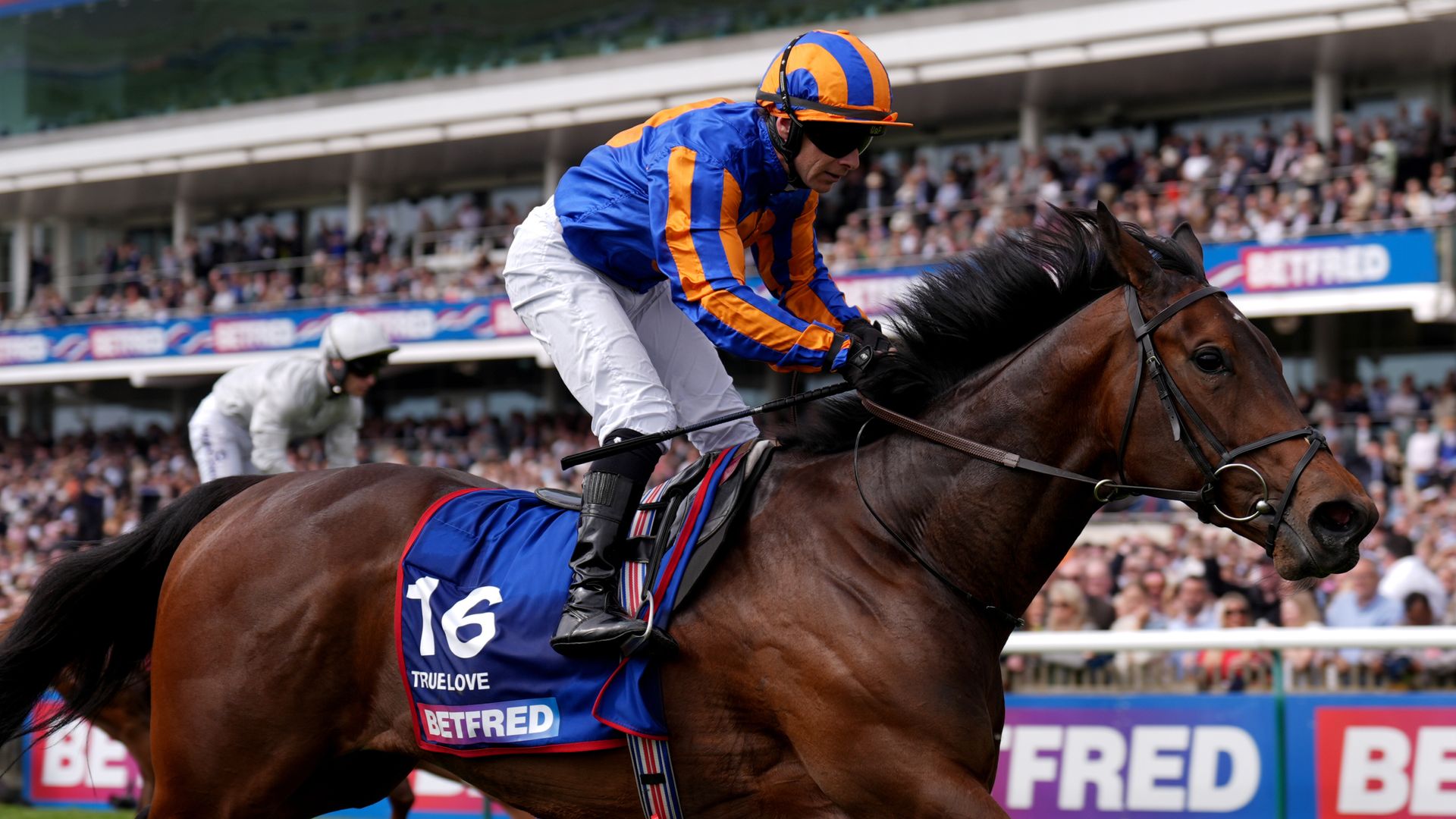
True Love heads the markets for the 2026 renewal of the Prix Maurice de Gheest – live on Sky Sports Racing at 3.40pm.
3.40 Deauville – True Love headlines strong field of 12 in Prix Maurice de Gheest
Today’s feature on Sky Sports Racing takes us to Deauville, where True Love headlines this afternoon’s Group 1 Prix Maurice de Gheest.
The 1000 Guineas winner was narrowly touched off at the track in last month’s Prix Jean Prat over a mile, with Jersey Stakes winner Thesecretadversary taking out the honours that day. Having won the Cheveley Park Stakes over this distance in September, she clearly has sufficient speed for this test and her versatility will be invaluable in her future career as a broodmare. Wayne Lordan makes the trip to France for the ride, replacing Ryan Moore in the plate.
Stolen Kiss has rapidly improved this year since being dropped back into sprinting trips. The clear improvement also has seen this colt beat last year’s winner, Sajir, on back-to-back occasions as well as finishing a very close fourth in the Queen Elizabeth II Jubilee Stakes. That is probably the best piece of form in the race and although he has to give weight to True Love, he could put it up to her under Alexis Pouchin.
Fresh from a successful Goodwood Festival, Wathnan Racing will be keen to strike again – this time with William Haggas’ Division. This son of Kingman has hit the crossbar a few times this year, finishing second in the Sandy Lane Stakes and then third in the Commonwealth Cup – beaten both times by Venetian Sun. He was a commendable fifth in the July Cup and could easily pop up and win this.
Samangan isn’t dismissed but will have to show more after being beaten last time out by Division and True Love in successive starts, albeit by narrow margins. Take Charge Star represents Johnny Murtagh and enters calculations, having only been beaten by True Love’s conqueror Thesecretadversary by a neck in the aforementioned Jersey Stakes at Royal Ascot.
3.05 Deauville – 2000 Guineas third Distant Storm returns
Distant Storm returns to the track after not being seen since May in the Group 3 Prix Daphnis from Deuaville.
Charlie Appleby is bang in form and sends this son of Night Of Thunder to France in search of a first win since September. In the meantime, he was third in a Dewhurst and began this campaign with a third place finish in the 2000 Guineas. The form of the race has worked out well with fifth place Thesecretadversary taking out the Jersey Stakes and Venetian Prince winning the Italian Derby. The mount of Billy Loughnane today closed the gap on Gstaad in the Irish 2000 Guineas and could progress further in the Godolphin blue.
Komorebi was second in the French 2000 Guineas but subsequently disappointed when stepping up in trip for the Prix du Jockey Club, where he finished 10th. Dropping back to the mile looks to be the way to go and if he repeats his performance when last seen over that distance, he’s a big contender.
Campacite was beaten one place into 11th by Komorebi in the French Derby after also chasing him home in April. However, the form with Hawk Mountain on his penultimate start is interesting and a repeat of that would make him a player.
Lord Clover lacked the turn of foot to mount a meaningful challenge in the German 2000 Guineas the last day, but on his prior French form could trouble the judge.
5.01 Chepstow – Crimson Road bids to follow up course and distance success
Crimson Road rounds off the card on Sunday afternoon at Chepstow, looking to follow up the win over course and distance here last month in the Capital Windscreens Supports Chepstow Centenary Celebrations Handicap.
On his fourth start for John and Rhys Flint, he skipped clear inside the final furlong and has been raised 3lb for that success but could easily go in again here.
Pride Of Nepal disappointed last time out at Epsom but was bang in form prior, winning four in a row – including a course and distance success here in June which completed the hat-trick. Carrying top weight today, this Tony Carroll gelding will surely put it up to Crimson Road.
>

It was the undignified scrap that marred the World Cup final.
After Spain’s narrow 1-0 win following extra time last month, with coach Luis de la Fuente’s squad celebrating on the pitch, a series of scuffles ensued, leading FIFA to investigate Argentina player Leandro Paredes for three counts of assault and team-mate Nahuel Molina for two.
During the confrontation, Paredes put his right hand on opponent Gavi’s face, with one finger going into his mouth, as he shoved him to the ground. It was a moment that most would not consider any form of ‘art’.
Unless, of course, your name is LJ Rader.
The New Yorker has been linking art and sport since December 2019 on his social media accounts called Art But Make It Sport, building hundreds of thousands of followers.
He compared the flashpoint from the World Cup final with a zoomed-in version of Les Femmes Se Battent (‘women fighting’), a Louis-Leopold Boilly painting from 1818 that shows two ladies in a brawl as others try to break it up.
“The account becomes the most exciting during large-scale events. I put the World Cup up there with the Olympics,” says Rader, whose Instagram and X accounts grew 20 per cent in audience during the five-week tournament.
“What makes them unique is that you’re not just highlighting what happens on the pitch, you’re also highlighting the fans, the colours, the pageantry. There’s a lot of other things that are going on in addition to just the sport itself.”
Rader, who has written a book on his work, is most commonly found comparing moments in American sport to artwork.
While he has posted football/soccer comparisons before, this World Cup was his biggest yet, and he posted several times on the day of the final. Some commenters responded to his choices by calling him a genius.
Any sport is within his remit, though he tries to avoid both player injuries and the work of problematic artists.
During the World Cup’s quarter-final between England and Norway, an image of opponents Erling Haaland and Jude Bellingham embracing side-by-side with one of Gerard David’s painting Lamentation became Rader’s most-liked comparison.
He says he is conscious of the online discourse surrounding teams and players — in this case, he played up to the ‘bromance’ between Haaland and Bellingham.
The bromance between these two🥹😅
Haaland🤝Bellingham pic.twitter.com/tsEZ5moWVQ
— BBC Sport (@BBCSport) July 12, 2026
“You try to keep them tasteful. You don’t want to do anything that doesn’t meet like a high editorial standard, but anytime there’s like additional layers that you can build into a post, it takes it to that next level.”
Another post compared Kylian Mbappe with a portrait of Napoleon by Emanuel Bachrach-Baree, as memes circulated online calling France’s striker and captain a dictator.
Napoleon, by Emanuel Bachrach-Barée, early 20th century pic.twitter.com/TTXwgIJhMu
— ArtButMakeItSports (@ArtButSports) July 10, 2026
“(In soccer) you don’t get a ton of unique moments,” says Rader, a Tottenham Hotspur fan who also founded sports data company FanFlare Sports. “There’s only so much a soccer player can do with their body at any given moment, but at the World Cup you introduce various jersey colours, the fans and the storylines.”
His personal favourite find was seeing Untitled by Alma Thomas in a sea of Norway fans doing their famous en-masse ‘row’ movement in the stands during a match.
These comparisons do not come by accident.
Rader often visits art galleries and museums — the weekend before talking to The Athletic, he had gone to the Philadelphia Museum of Art and the Pennsylvania Academy of the Fine Arts. “Every time I travel, I try to carve out the time to go see something new,” he says.
He told The Athletic in 2023 that his grandmother would take him to museums and that he almost majored in art history at university, before being talked out of it by his parents — instead choosing a degree in human and organisational development with a minor in corporate strategy.
Large chunks of his mind and camera roll, upwards of 15,000 photos, are made up of artworks ready to be linked to sporting moments.
“There are a bunch that I have memorised and know exactly what I want to post. Others take a little bit more thought, knowing it looks like a certain artistic style or theme and trying to find the right one,” he says.
“So this Paraguay vs France one, this player flying… there are lots of paintings of Saint Francis receiving the stigmata.
St. Francis Receiving the Stigmata, by Lorenzo Ghiberti, 1400-05, 📸 by Buda Mendes pic.twitter.com/7XWdl4SFGR
— ArtButMakeItSports (@ArtButSports) July 5, 2026
“I then know that Alma Thomas has symmetry, brush strokes, a similar colour palette, and then landing on the right painting has become the most gratifying, because it’s leveraging my knowledge as opposed to something I’ve just memorised.”
I tested him on the spot with a photo of Michael Skubala, who last season managed Lincoln City (my hometown club) to promotion from League One, the third tier of English football, doing a fist-pump to their fans. Skubala was quickly compared to a statue of Julius Caesar by Nicolas Coustou from the Garden of Versailles near Paris.
It was an apt comparison.
So, it’s not AI?
“AI is never going to be as good as me,” Rader says. “I’ve thrown some images in just to see what happens and it doesn’t come close.
“What my account does is it shows the power of the human brain and what we can be capable of when we study things and memorise things and have a joy for sports.”
>

Webtoon ‘Villains Are Destined to Die’ Gets TV Anime

Big Buck’s: Paul Nicholls pays tribute as legendary stayer dies aged 23 | Racing News

Today on Sky Sports Racing: True Love seeks Prix Maurice de Gheest crown at Deauville | Racing News
-

 movies3 months ago
Search For Canadian TV Actor Stewart McLean Now Homicide Investigation
-

 Fashion9 years ago
These ’90s fashion trends are making a comeback in 2017
-
Fashion9 years ago
According to Dior Couture, this taboo fashion accessory is back
-
Fashion9 years ago
Model Jocelyn Chew’s Instagram is the best vacation you’ve ever had
-
Fashion9 years ago
Your comprehensive guide to this fall’s biggest trends
-
Fashion9 years ago
9 Celebrities who have spoken out about being photoshopped
-
Fashion9 years ago
Emily Ratajkowski channels back-to-school style
-
Fashion9 years ago
A photo diary of the nightlife scene from LA To Ibiza