
Sports
Why can’t college sports be fixed? Look at Michigan’s response to Dusty May leaving

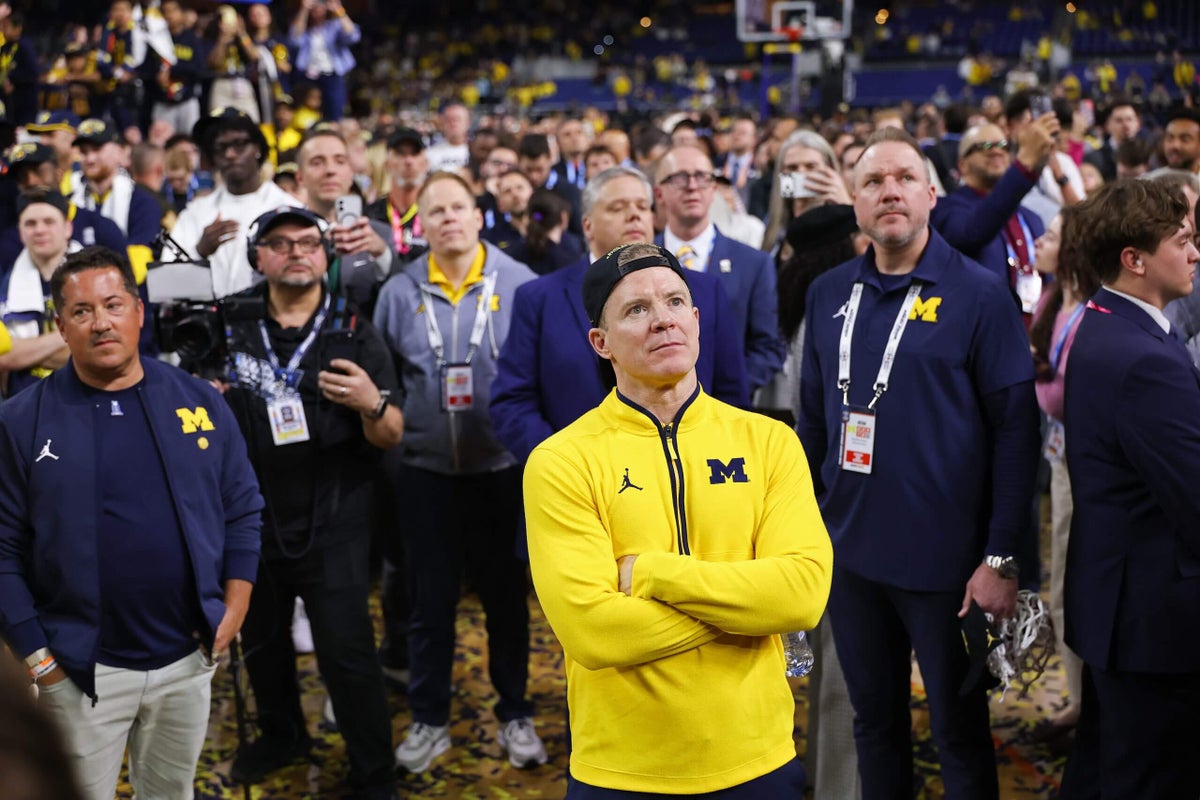
A two-minute clip from a recent meeting of Michigan’s board of regents was a Rosetta Stone for understanding why college sports leaders can’t seem to fix the problems that everyone sees so clearly.
Domenico Grasso, Michigan’s president, addressed the departure of men’s basketball coach Dusty May, whose decision to coach the Dallas Mavericks blindsided a lot of people in Ann Arbor. At Michigan and elsewhere, losing one of college basketball’s brightest minds was viewed as another canary in the increasingly toxic coal mine of college sports.
“Coach May told me that among his reasons for leaving were uncertainties and pressures involving the transfer portal and NIL support for student-athletes,” Grasso said. “He and I agreed that the future of college sports is headed in the wrong direction.”
In the next breath, Grasso voiced Michigan’s objections to the Protect College Sports Act, a bill that is intended to address those very problems. While acknowledging that college sports are in “dire need of clarity and equitable reform,” Grasso echoed the stance of the Big Ten and the SEC, which do not support the legislation.
“We want what’s best for the Big Ten and for Michigan,” Grasso said. “We are not going to sacrifice the competitive advantage that we have built for more than a century.”
Dusty May leaving for pros is familiar for Michigan fans
Austin Meek
By now, it should be obvious that “equitable reform” and “competitive advantage” don’t fit neatly in the same box. In trying to have it both ways, leaders in college sports sound a lot like St. Augustine: God, grant me chastity, but just not yet.
In college sports, the optimal amount of money to spend on a roster is whatever your school and its donors can afford. Any school that pays less lacks the want-to and resources to fully support student-athletes; any school that pays more is contributing to out-of-control spending. Schools with competitive advantages want to preserve those advantages, while the schools at a disadvantage want to rein in the big spenders.
None of this is meant as an endorsement of the Protect College Sports Act, a bipartisan bill that recently advanced out of the Senate Commerce Committee. The Big Ten and SEC aren’t wrong to feel targeted by provisions that could curb future conference realignment and open the door for the pooling of media rights. And any attempt to cap what college athletes can be paid, absent a collective bargaining agreement, is fair game for criticism.
The point is that everyone’s definition of “equitable reform” is a solution that enshrines all of the privileges schools believe they are entitled to. If Michigan is doing what’s best for Michigan, Texas Tech is doing what’s best for Texas Tech and LSU is doing what’s best for LSU, no one is actually fixing anything.
Under May, Michigan’s men’s basketball program was a paradigm for success in the modern era. May built one of the most dominant teams in Big Ten history by outmaneuvering his peers in the transfer portal. Three of Michigan’s transfers — Morez Johnson Jr., Yaxel Lendeborg and Aday Mara — were selected in the first 12 picks of last week’s NBA Draft. A fourth, point guard Elliot Cadeau, was the Final Four’s most outstanding player.
May did what all good coaches do: He maximized Michigan’s competitive advantages within the system that’s in place. It’s a gross oversimplification to say the Wolverines won because they spent money in the transfer portal. Lots of other programs spent money, too. It was the combination of everything — the coaching, the chemistry, the players’ buy-in and the financial resources — that carried Michigan to the top.
May said repeatedly that he wouldn’t stop to savor Michigan’s accomplishments until the season ended. It never seemed like he got the chance. He was already scanning his phone for messages from recruits on the walk back to the team hotel after the national championship game. Three weeks later, he was so deep in roster-building mode that he said the accomplishment of winning a national championship hadn’t sunk in.
“Your roster is the priority,” May said. “If we don’t do the work necessary now, then you don’t have a chance to compete again. It’s been difficult … for me, no, it doesn’t feel any different at all.”
In one sense, May is a bellwether. If the most successful portal-builder in the sport thinks college basketball is headed to a bad place, what hope does anyone else have? In another sense, he’s an outlier. It’s not as if he left Michigan to coach in the G League. He won a national championship and left for the NBA, which is not a new development in college sports. If Michigan had been pretty good instead of historically good, we might not be having this conversation.
The Mavericks can offer more money and a better quality of life, but they can’t offer the same competitive advantages May had at Michigan. There’s a good chance he’ll succeed anyway because he’s an excellent basketball coach, though his success will depend in large part on the people around him. For better or worse, he’ll be operating in a much more structured environment than the one he had at Michigan.
College sports could replicate parts of that structure, but it would require people in charge to do what’s best for college sports as a whole, not just their own conference or institution. Most people don’t want to do that. Unless that changes, coaches will keep leaving, fans will keep grumbling, and college sports will remain stuck in the status quo.
It’s no wonder nothing gets fixed.
>
“We were lucky if we even saw half a million [as a team], I’d say,” says the former rider.
“There was even no money at team camps and other stuff they didn’t pay for. There were big bills.
“I know there were other riders still owed money – a lot of it.”
It all began with some modest results, but a 15th place at the 2025 Women’s Tour of Britain was about as good as it got in the bigger races, and the team never made it above ‘continental’ level, which is the third tier of women’s road cycling.
The rider says: “There were reasonable money issues from the start where riders were paid late or wouldn’t get reimbursements.
“It pushes you into [bad] situations.”
And it wasn’t just the riders – business partners who supplied the team with equipment are owed a lot of money.
One mechanic – who asked to remain anonymous through fear of having any future employment jeopardised – claims to have had to find hire vehicles a day before a race upon landing at an airport to discover nothing had been arranged.
As well as trying to prepare bikes and equipment – while finding his own way to pay for it.
Money was promised to be settled at various stated points since the team’s demise in August last year, but the latest statement from Hess says ”negotiations regarding funding is ongoing despite headwinds and a difficult market situation”.
Some have been waiting to be paid for a year.
In a statement Hess said: “Unfortunately, [our] sponsor withdrew from the partnership at the beginning of 2025.
“Hess Sports Group continued to fund operations, contributing more than £200,000 over the course of summer 2025, while working to enable the team to compete under a financially sustainable model.
“This shortfall in funding had a material impact on our operations, but allowed our athletes to compete while we worked on securing the team’s future.
“Hess Sports Group remains committed to repaying all its creditors.”
At the outset, Hess the man was full of passion for the project, and praise for the athletes.
But there were plenty of other distractions given the Hess Group includes oil and gas producer Carraigmore, water purification companies and make-up businesses.
The civil claim initiated against a group which includes the director of the cycling team was in Spain, over accusations of misleading investors for the delayed floating of a water company on the stock market. The allegations are denied.
Norbert Stocker, a member of the cycling team’s management, told BBC Sport the loss of a title sponsor occurred after the sponsor was spooked over the allegations relating to the water company.
“To influence the commercial negotiations with equity investors in a separate company, the cycling team was targeted to exert pressure, even though it is wholly unrelated,” he said.
“Although all the claims are unfounded, media speculation destabilised the relationship with the cycling team’s core external sponsor.”
>
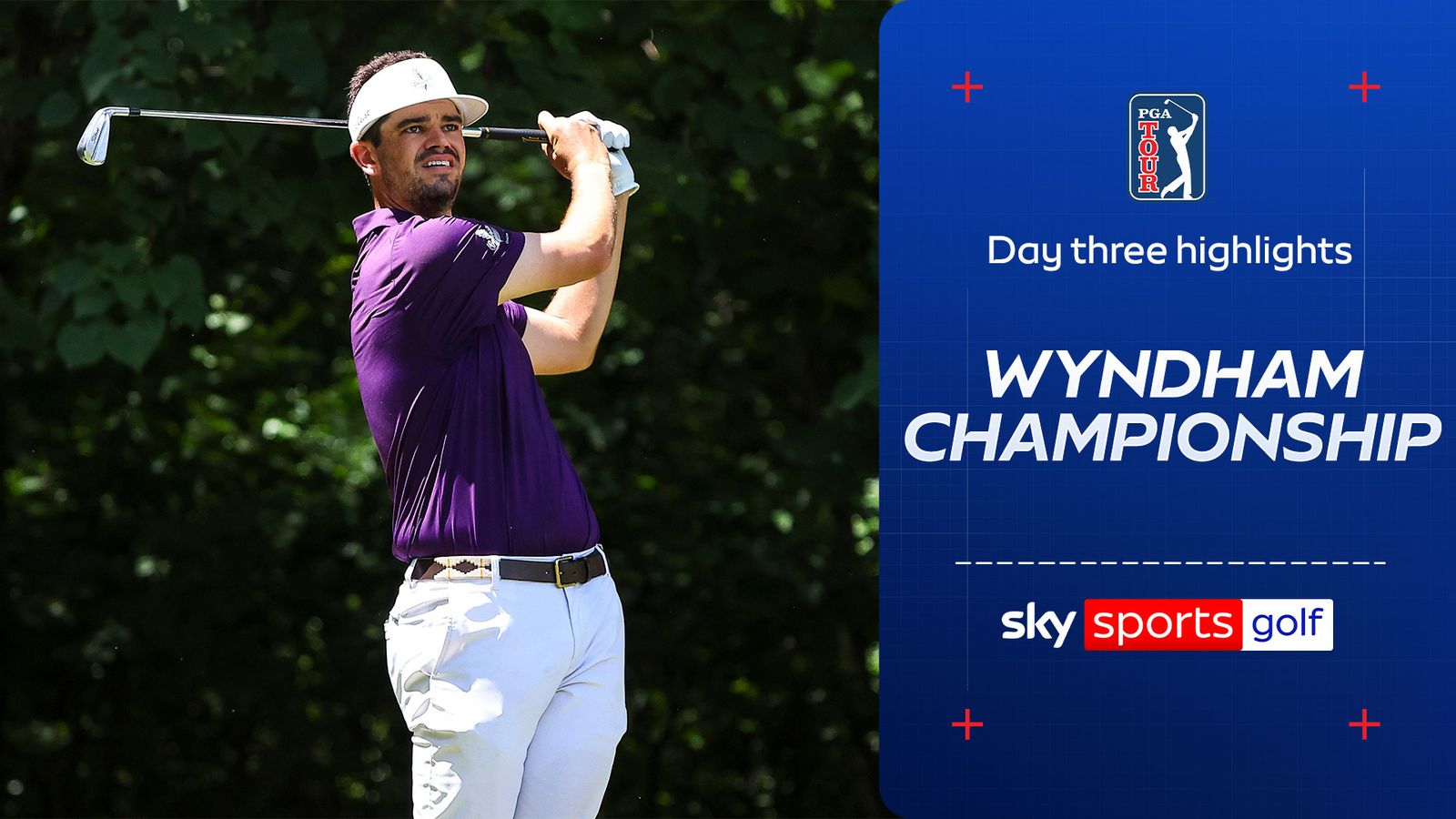
Highlights from day three of the Wyndham Championship held at Sedgefield Country Club in Greensboro, North Carolina.
>
Sports
Nottingham Forest’s double friendly: Schlager’s energy, classy Gibbs-White and why Diomande is needed

Nottingham Forest were beaten 1-0 by both Udinese and Barcelona in the Friuli Venezia Giulia tournament in Italy, but there were more positives than negatives for Oliver Glasner to consider as the pre-season preparations continued.
Glasner fielded different teams in both 45-minute games, with the team that faced the Spanish side looking more like his strongest XI.
But there were talking points to consider from both fixtures as Forest look to get themselves ready for the visit of Leeds United for the Premier League kick-off on Saturday August 22, as The Athletic outlines here:
The artist vs the soldier
In his first interviews as a Nottingham Forest player, Xaver Schlager was reluctant to talk about his own qualities.
But in his first public appearance for the club — he had previously scored in the behind-closed-doors 2-1 victory over Portimonense — he firmly underlined everything he had been cajoled into saying about himself.
“I’m a hard-working player,” he said last month. “I also want to play football. I don’t like to kick and rush. Maybe I’m not as skilful as some, dribbling all the time… but I want to play smart, I want to play fast, I want to be quick in my head. The most important thing is I want to make my team-mates around me better.”
Schlager already feels like the kind of player that Forest fans will love — and opposition sides will be less keen on, for all the right reasons.
The Austrian was a whirl of energy from start to finish in the 45 minutes he played against Udinese, when it felt as though he almost covered the kind of ground that many midfielders would expect to cover in full 90.
Glasner may have a choice to make in the centre of the pitch, with James McAtee again starting in a deeper role, alongside Ibrahim Sangare, in the second game.
The former Manchester City man offers a different skill set to Schlager — and repeatedly picked out some incisive, dangerous passes. He had real moments of quality but he was not the same kind of destructive pest as the former RB Leipzig player.
It will be interesting to see whether Glasner will prefer the graft of Schlager or the guile of McAtee when the season kicks off — or could it be that some games suit an artist and others a soldier.
A goal that highlights why Forest want Diomande
Forest made significant progress off the pitch on Saturday as a deal was finally secured to sign defender Ousmane Diomande from Sporting CP prior to kick-off. Glasner views the Ivory Coast international as being a potentially key addition to his squad.
And, in the game against Udinese in particular, it was easy to see exactly why.
Glasner believes the 6ft 3in central defender will bring some much needed physical presence and stature to the Forest ranks. The former Palace manager has been concerned about Forest’s potential fragility from set pieces, with Nikola Milenkovic, Chris Wood, Taiwo Awoniyi, Jair Cunha and Sangare the only players with any substantial height in the dressing room.

Forest have agreed a deal to sign Ousmane Diomande, left, from Sporting CP (Patricia de Melo Moreira/AFP via Getty Images)
And Glasner may have felt a little additional joy at the prospect of Diomande completing his move to the City Ground in a €40million deal, following the Udinese goal just before the half-hour mark.
When Callum Hudson-Odoi did not fully track Oumar Solet’s driving run into the box, the Udinese man was able to rise high above Luca Netz in the air to powerfully connect with Zaniolo’s corner, delivered towards the far post.
It would be naive to claim that Diomande’s presence alone will immediately stop such goals. But he might be a player who can make them less of a regular occurrence.
Ndoye catches the eye in a No 10 role
Swiss forward Dan Ndoye was given additional time off after helping his country to reach the quarter-finals of the World Cup, joining up with his team-mates at the start of the week.
Ndoye managed only one goal and one assist during his debut season with Forest, after joining from Bologna.
But his six appearances in the U.S. for his country — and the two goals he scored — have ensured he has returned looking relatively sharp and confident.
Ndoye played as one of two No 10s within Glasner’s preferred 3-4-2-1 formation, with Morgan Gibbs-White the other, the pair operating behind Igor Jesus. And it was a role that seemed to suit him very well, whether he drifted into wider areas on the right or came more narrow.
Ndoye had two good chances to score — firing wide with one and seeing the other well saved — and was unlucky not to be awarded a clear-cut penalty.
It was Ndoye’s first Forest appearance in pre-season and it would be unwise to read too much into it, but there were clear early signs that he could have a role to play in Glasner’s favoured system.

Forest’s Eric Moreira gets a shot away against Udinese (Timothy Rogers/Getty Images)
Forest’s leading light provides a reminder of his quality
Ndoye was not the only Forest forward to look bright.
Gibbs-White was, at times, a joy to watch amid 45 minutes of football in which he often performed more like a Barcelona player than many of the Spanish giants’ team did.
He rattled the bar with one effort that would have been a goal worthy of gracing any stage and, while playing with swagger and verve, he also set up a fine chance for Jesus. The Brazilian, who was a key figure as Forest reached the semi-final of the Europa League, looked lively in the central striker role, where his movement and work-rate stood out.

Murillo challenges Barcelona’s Karim Adeyemi (Timothy Rogers/Getty Images)
Both were two of Forest’s most important players last season and, to add to that group, Neco Williams also cut a rampaging figure down the left. He has always had a significant degree of attacking ambition but it is hard to escape the notion that the wing-back role — and the even greater level of freedom it allows to push forward — might work in his favour. He conjured up some superb deliveries.
The Wales international also came close to scoring a spectacular goal, only to see his dipping volley drop just the wrong side of the post.
Forest were unlucky not to get more out of the Barcelona game but if their key figures can continue to play to the same level when the season starts, they will not be in a bad place.
>

Women’s cycling: Why is it so hard to run a team?

Wyndham Championship | Day three highlights as Brennan and Hossler share lead

Nottingham Forest’s double friendly: Schlager’s energy, classy Gibbs-White and why Diomande is needed
-

 movies3 months ago
Search For Canadian TV Actor Stewart McLean Now Homicide Investigation
-

 Fashion9 years ago
These ’90s fashion trends are making a comeback in 2017
-
Fashion9 years ago
According to Dior Couture, this taboo fashion accessory is back
-
Fashion9 years ago
Model Jocelyn Chew’s Instagram is the best vacation you’ve ever had
-
Fashion9 years ago
Your comprehensive guide to this fall’s biggest trends
-
Fashion9 years ago
Emily Ratajkowski channels back-to-school style
-
Fashion9 years ago
9 Celebrities who have spoken out about being photoshopped
-
Fashion9 years ago
A photo diary of the nightlife scene from LA To Ibiza