Connect with us

Sports

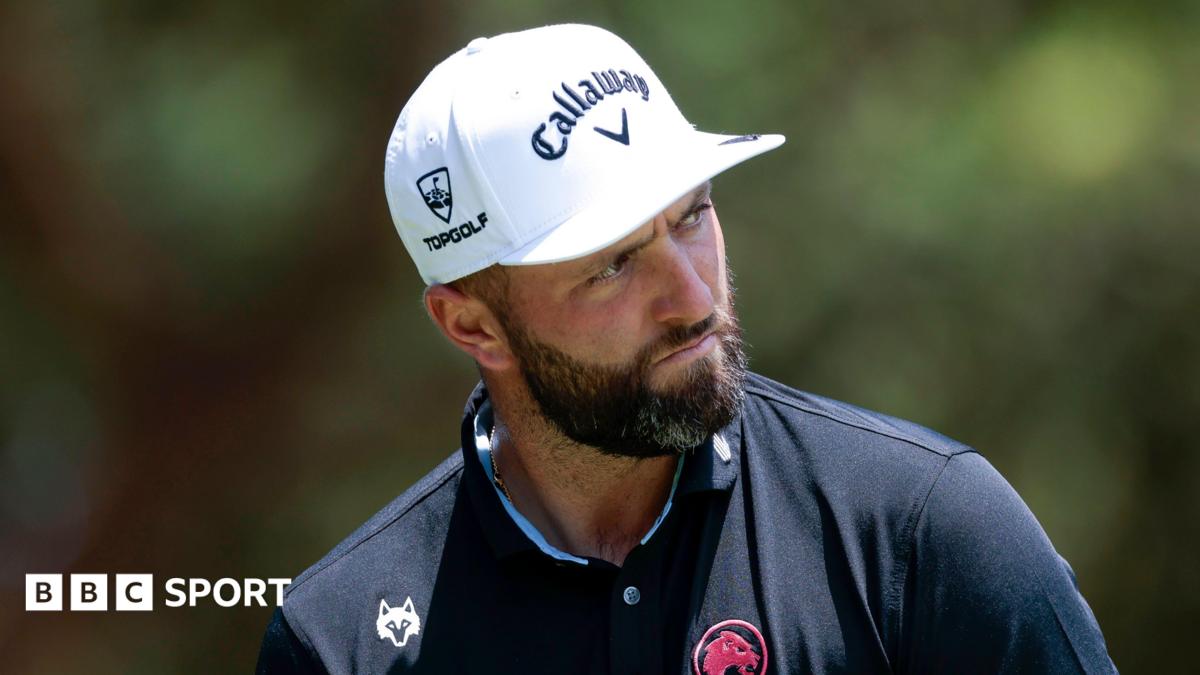
LIV Golf secures unnamed lead investor for 2027 season

Published

on

The competition will reduce to 10 events from next season, with five in the United States and five held around the world.

There were 14 events planned for the 2026 season but in April, LIV postponed June’s New Orleans competition amid questions over its future and has not announced a rescheduled date.

O’Neil said LIV is focused on “delivering a great week for fans and players at Bedminster” in New York, starting on Sunday and “finishing the 2026 season strong” – but made no explicit mention of the final two events scheduled this season, in Indianapolis from 23 August and the concluding team championship in Michigan from 30 August.

Major winners including Bryson DeChambeau, Dustin Johnson, Jon Rahm, Cameron Smith, Martin Kaymer and Sergio Garcia remain part of the LIV roster after having left the PGA Tour.

American major champions Brooks Koepka and Patrick Reed rejoined the PGA Tour after it introduced a returning member programme.

In July, the PGA Tour and DP World Tour struck an alliance with the Asian Tour in another blow to LIV Golf.

O’Neil added: “We’re also seeing strong interest from more than a dozen additional parties to potentially serve as minority investors, creating a multi-partner model built for long-term stability and growth.”

LIV was founded in 2021 and launched the following year with 54-hole events and took its name from the Roman numeral for 54.

However, it moved to the tradition 72-hole format for golf tournaments from this season.

>

Continue Reading

Sports

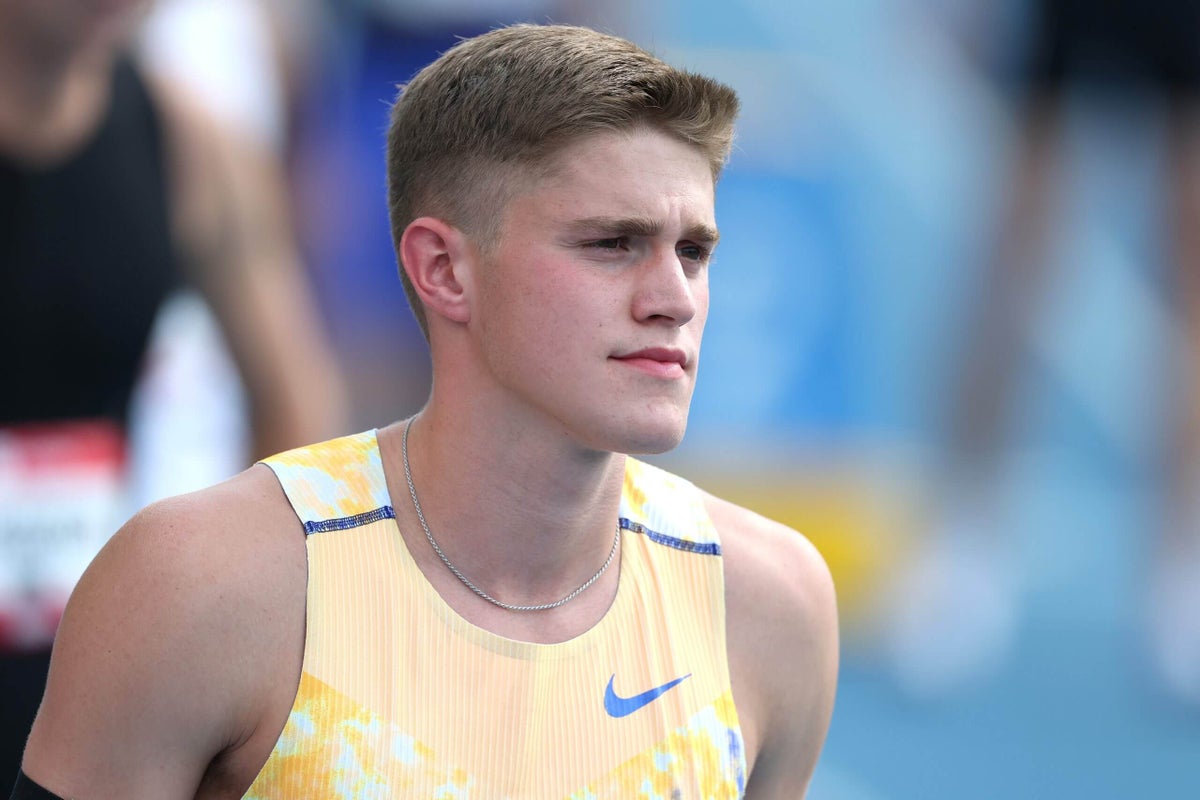
Meet Cooper Lutkenhaus, the track phenom who has gone pro while still at high school

Published

on

It’s a humbling reminder of Cooper Lutkenhaus’ youth that, even as a double U.S. champion and world indoor gold medalist, the teenager joins the video call from his dad’s account.

“Let me go holler at Cooper, he’s out in the foyer,” says George Lutkenhaus. He’s a proud dad, a former collegiate runner, and now directs the athletics program at the Texas high school that his son Cooper, 17, attends.

That’s where Lutkenhaus is calling from: a white-walled office at school, with dad George working in the background.

“I’m a pretty normal kid for the most part, besides the running,” Lutkenhaus says. Not normal is an apt way to describe what he’s achieved over two laps in the past two years.

It started with a collection of age-group bests, notably taking down Michael Granville’s 800m high-school record from 1996. Last year, over the same distance, he became the youngest man to qualify for the final at U.S. nationals. Then, in said final, he produced the fastest second lap in the field to finish runner-up to Donovan Brazier, earning his place at the Tokyo World Championships with an under-18 best time (1:42.27s).

He signed with Nike just after that, the first time an American middle-distance runner has turned professional in high school. Then, two months before his 17th birthday, he became the country’s youngest athlete in World Championship history.

That brings us to this season. Lutkenhaus describes 2026 as “an incredible freshman year of the professional scene”.

He’s gone stratospheric over the past eight months, with a record (excluding heats) of eight wins from 10 races. That includes indoor and outdoor national titles in March and July. “There weren’t too many negatives,” he smiles. “I learned a lot about myself and how to be a better racer.”

“The two big goals were to be the U.S. Champ indoor and outdoors, so we knocked that off the bucket list. Coming into the indoor season, we didn’t really know where training was at. I was pretty nervous just before my first race (800m indoors in New York, late January). I didn’t know how it was going to go.”

Lutkenhaus is more than aware of his talent and age, and expected “a decent amount of eyes (to be) watching”. Confidence, he says, came from that first win: “I felt like it kept growing race after race.”

The best example of his self-assurance came two months later at the world indoor championships in Torun, Poland. Despite being the youngest in the field by six years, Lutkenhaus affirmed his golden-boy status, adding world indoor champion to the list of things he’s the youngest to achieve. “Pretty special,” is how he looks back on it. It’s his favourite race of the season.

“I made the Tokyo team (in 2025) and I didn’t achieve what I was hoping to,” he says of his global debut, when he placed seventh in his heat and did not progress. “To come back the next year for indoors, make another USA team and then actually win the gold medal… it didn’t feel like it was just for me. It felt like it was for the whole country.”

Lutkenhaus’ racing brain often gets overlooked because of his times. He’s joint-14th on the men’s 800m all-time list, the second-fastest teenager ever and the third-quickest American. Just how high his ceiling might be is a scary thought.

His world indoor gold was a triumph of brains as much as brawn. “We were looking for moves to be made when we wanted to make them,” he says.

The pre-final talk with his coach, Chris Capeau, gave him clarity. “Coach told me: ‘When you feel you need to make the move, no second thoughts, you explode out of a cannon’.”

Cooper Lutkenhaus’ win at the World Indoor Championships was as much about race strategy as speed (Dan Mullan/Getty Images)

He did just that. Lutkenhaus hit the front at 500m and made a smart surge as the bell sounded (200m to go, indoors is a short track). This ensured he kept the rail, and prevented Belgium’s Elliot Crestan from overtaking. “I wanted to make that move (because) I felt like the pace had slightly slowed,” he says. “So with 300m left, I decided to go a little sooner than most expected.”

The teenager recalls being more nervous in the heats than the final. He did not want to repeat what happened in Tokyo. “I kept getting more confident every race that weekend. It led to a great final.”

If his March was good — winning national and world crowns indoors — then June was something else. “Europe was amazing, probably my favorite trip that I’ve had racing,” he says, reliving his two Diamond League victories three days apart in Stockholm and then Oslo.

He beat North American 800m record-holder Marco Arop in the Swedish capital, chasing down the Canadian on the home straight. “I was nervous. I’ve watched so many of these races and all these guys so many times,” Lutkenhaus says, suddenly sounding his age.

“That was the first time I competed (outdoors) against a worldwide field, so it was different. To come across that line first in a race like that, in almost a new PR of 1:42.7s, I knew I was in good shape.”

The cynical side of Lutkenhaus knows he could have raced it better. “I sat a little too far back in the first 400m,” he explains. At the bell, he was fourth, and had to overtake Slimane Moula before latching onto Arop. “I needed to get more into lane one, because I was on the outside (of it), almost in lane two. Small things like that really can change a lot.”

He corrected his error in Oslo, running the first bend harder and darting across into lane one, slotting himself behind Emmanuel Wanyonyi — a real frontrunner and the third-fastest man over 800m. Lutkenhaus is respectful, though he knows his own ability: “Wanyonyi is incredible, I mean, he’s the Olympic champion, 1:41-low (personal best). But I just kept telling myself, ‘You’re going to make your move at 200.’”

Cooper Lutkenhaus ran his fastest time so far in winning the Diamond League event in Oslo (Heiko Junge / NTB / AFP via Getty Images)

Lutkenhaus did exactly that, opening his stride and peeling around the diminutive Kenyan in a way very few can. It’s the mantra that he races with: “I always want to be active. I want people to know that I’m there, breathing down their neck.”

That burst took the teenager right to his limit. He tied up with fatigue on the final straight as Wanyonyi came back. Lutkenhaus half collapsed and half threw himself over the line, winning by photo finish.

“I knew in the back of my mind that it was a little aggressive,” he explains of his tactic. “I wasn’t worried if it was too soon. I wanted to make a big statement. To hold him off at the end, to dive to the line, that’s one of my favorite races ever.”

His 1:42.08s time in Oslo stood, for two weeks, as the fastest this year (until Arop ran 1:41.84s at the Paris Diamond League), and brought him within half a second of Nijel Amos’ world under-20 record from 2012. That’s on borrowed time.

The finishing kick has become a Lutkenhaus trademark. What goes through his head in that final half-lap? “Being fearless. You can’t be worried about it hurting (or) how it’s going to feel,” he says. “It will hurt no matter what, so you might as well be in the front.”


Lutkenhaus is proof of the younger sibling theory: that being born later, or last, is correlated with greater sporting achievement. George Jr, the eldest of the three Lutkenhaus brothers, swam at collegiate level. Middle child Andrew runs for the University of Tulsa, and boasts a 1:48 personal best for 800m.

“If we ran against each other for a mile, Andrew would probably beat me. The 800m might be mine,” the youngest Lutkenhaus smiles. Winning Diamond League races or world titles does not diminish the significance of sibling bragging rights.

Growing up, Lutkenhaus played basketball and American football, wrestled, and ran track and cross country. “Football was my favourite sport. I liked it more than track, honestly, in middle school,” he remembers. “I loved the team aspect.”

He played quarterback, not exactly a shock for someone with his athletic prowess. “I always got to touch the ball, I wanted to impact the game every single play,” he adds. It’s easy to see how his winning mentality was shaped.

When did he first realise his talent on the track? “In eighth grade, I was 14, and I ran 1:53s in the 800m and 48s in the 400m. I was still pretty new to track, and I didn’t really know how good that was. So I asked my parents and my brothers. They told me, ‘That’s pretty good’.”

A year later, he knocked six seconds off his 800m best. “It was an incredible race,” Lutkenhaus says of his 1:47.58s run in June 2024, which earned him the win, plus the U.S. high-school freshman record and the Texas high-school state record. “Once I ran that, I was all-in. I wanted to see how well I can run.”

Cooper Lutkenhaus has made the decision to forgo collegiate athletics and turn professional (Wojtek RADWANSKI / AFP via Getty Images)

When he signed with Nike last summer, Lutkenhaus forewent his NCAA eligibility, which meant giving up a collegiate athletics career. He had plenty of offers and was “super interested” in some schools. “I really wanted to go to college to run, so it was kind of sad not to get to. I feel like it would have been a good fit, but we felt as a team — with my coach and parents — that this (turning professional) was the best idea.”

Even so, he’s considering a kinesiology degree. “I’m still going to go to college, for the education, because running doesn’t last forever. I really want to be a coach, so hopefully that will happen down the road.”

It almost feels laughable to hear Lutkenhaus already contemplate what might be beyond his track career. Development for youngsters is never linear, though, and managing his body, mind and talent are essential, particularly since he’s broken onto the professional scene earlier than anyone in U.S. middle-distance history.

Even if Lutkenhaus wins an Olympic gold in Los Angeles in two years’ time, he will still not be old enough to buy a beer. He’s the present and future of the 800m. A normal kid, just not a normal runner.

>

Continue Reading

Sports

Bills stock report: Who’s up, who’s down after two weeks of practice?

Published

on

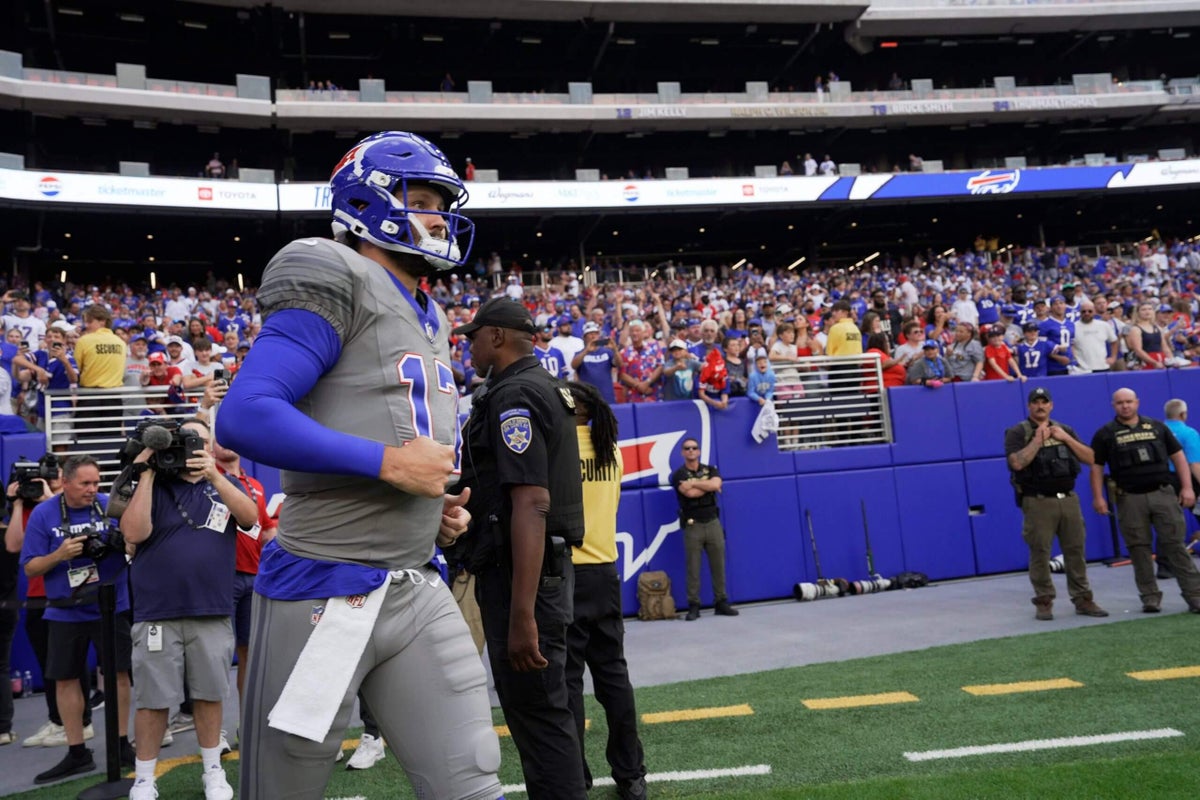
ORCHARD PARK, N.Y. — The long-awaited debut of Highmark Stadium, the new state-of-the-art home of the Buffalo Bills, officially arrived Saturday night. The team returned to Orchard Park to continue training camp, kicking it off with their annual Return of the Blue & Red practice.

While the stadium was the headliner for fans, the practice didn’t go without some new injuries to key players. Starting center Connor McGovern suffered a lower body injury, as did third-down running back Ty Johnson. Neither player returned to practice, and coach Joe Brady said the team would know more next week.

Despite those injuries, Saturday’s practice was another puzzle piece for what the Bills are putting together in 2026. With the conclusion of the session, we’ve now seen nearly two full weeks of Bills practices.

Who has stepped up, and who has work to do? Here’s a stock report with the Bills preseason opener against the Carolina Panthers just six days away.


Stock up

TE Dalton Kincaid – Kincaid’s performance, health and how often Buffalo’s used him with the first unit may have some Bills fans anticipating a breakout season for the tight end. The athleticism, route running and ball skills come easily to Kincaid. The question is whether he can stay healthy, as it’s clear that whenever he’s on the field, Josh Allen trusts him and isn’t shy about looking his way. And to Kincaid’s credit, he hasn’t missed a practice yet. The big challenge for Brady will be turning Kincaid into more than just a situational receiving threat. If the Bills can find a way to use him more unpredictably — and he stays healthy — the potential is tantalizing. However, we’ve also been wondering this about Kincaid the last two seasons. So, at this point, you can’t believe it until you see it.

NCB Dee Alford – Alford made an interception Saturday night, but his camp has been so much more than that. I’ve been trying to fit him into my daily notes for days on end, but other news got in the way each time. Alford has been an outstanding fit for this defense, showing the man-cover skills the Bills desire and combining them with physicality and ball skills. The Bills targeted him first in free agency, and the early returns on that investment seem incredibly promising.

NT Phidarian Mathis – The Bills have shown they trust Mathis more and more as the summer has gone on. He replaced third-year player DeWayne Carter as the second-team nose tackle after just two days of camp. It’s reached the point they’ve been using Carter at 4i more often than not, further cementing Mathis’ current hold on the backup spot behind Deone Walker. Mathis may have been on the bubble before training camp, but he might be an indispensable piece of their depth if this keeps up.

DL Landon Jackson – Since the pads have come on, Jackson’s game has taken a step forward. He packed on a ton of weight, and he’s playing a new position compared with last year, but it has come together over the last week. He’s had impressive reps that combine his length and strength versus interior offensive linemen. What’s more, he has bumped up the depth chart. Most interestingly, when the Bills scaled back Ed Oliver’s reps near the end of Saturday’s practice, Jackson was the guy getting an increase in playing time, pairing with Walker and T.J. Sanders. He’s got a long way to go, but there have been promising signs about this transition to a new role.

OT Tylan Grable – The Bills have wanted to see how their reserve offensive line group would shake out, but Grable has been impressive and shows good potential. The team has used him at left and right tackle and at guard, and he’s had nice reps at all spots. Grable’s trajectory suffered a setback in 2025 after a concussion landed him on the injured reserve to begin the season. When they drafted Jude Bowry at the top of the fourth round, it was another blow to Grable’s chances to make the team. Buffalo had high hopes for Grable after his rookie season in 2024, however, and it seems he’s returned to that upward trajectory.

LB Keonta Jenkins – Very quietly, as all the attention has rightfully drifted toward rookie linebacker Kaleb Elarms-Orr, Jenkins has consistently run with the second unit alongside Elarms-Orr. He’s gotten bigger and proves to be a good fit into defensive coordinator Jim Leonhard’s scheme. Jenkins also has special teams upside. If there’s someone who makes the team whom no one is currently talking about, I think Jenkins has a case to be that player. I still think Terrel Bernard, Dorian Williams and Elarms-Orr are locks, and Joe Andreessen is in as of now for his special teams ability. But keeping Jenkins isn’t as far-fetched as you’d think. Five inside linebackers is justifiable if two to three carry special teams functionality.

TE Keleki Latu – I don’t know how the Bills can find a spot on their 53-man roster for a fourth tight end while keeping a fullback, but Latu has been extremely impressive in his second summer with Buffalo. He made two outstanding catches during the stadium practice Saturday, one of which was a fully extended, diving contested grab with a defender draped all over him. It’s been a continuation of his entire summer. There’s a stronger case for Jenkins to make the 53-man roster at this point due to roster functionality, but with all the 12 and 13 personnel the Bills use, perhaps there’s a path for Latu in 2026.

P Tommy Doman Jr. – You didn’t think I could do this list without getting some #Puntapalooza talk in there, did you? I think Doman is leading this competition for a few reasons. He has been impressive on most of his reps, even shaking off a dropped catch in the heavy rain on one play Saturday night by booming a 55-yard punt that hung in the air for 5.2 seconds on his next chance. He also showed he has good holding ability, as kicker Tyler Bass went 8-for-8 on Saturday with Doman as his holder. Plus, Doman’s competition — veteran Mitch Wishnowsky — has sat out the last two practices with an undisclosed injury. It’s not over just yet, but all signs continue to point toward Doman.

Buffalo Bills wide receiver Skyler Bell holds a football in his right hand.

Rookie fourth-round pick and Buffalo Bills wide receiver Skyler Bell has left much to be desired at training camp. (Tina MacIntyre-Yee / USA Today via Imagn Images)

Stock down

LG Austin Corbett – Corbett’s spot on the roster isn’t in question, but when it comes to the starting competition at left guard, there have been more negative reps than what we’ve seen from Alec Anderson. Corbett has experience on his side, but some of the speedier defensive linemen he’s gone up against have given him trouble. Anderson isn’t nearly as polished as Corbett, but Anderson has a higher ceiling to this point in camp. If the Bills started the season next week, I think Anderson would be the starting left guard.

WR Skyler Bell – An extremely popular sleeper heading into camp, he has faded into the background a bit as the pads have come on. His separation skills and his releases at the line of scrimmage are good, but his ball skills have held him back. At this point, the top four of the Bills’ receiver room clearly are DJ Moore, Khalil Shakir, Keon Coleman and Joshua Palmer. Bell is a roster lock, but his game-day role will be determined by how he finishes through the three preseason games. Especially if the Bills keep Mecole Hardman as a sixth receiver and their primary punt returner, it wouldn’t be stunning if Bell begins the regular season as a healthy scratch.

T/G Chase Lundt – It’s been a rough go for Lundt the last few practices. The team has attempted to cross-train him at tackle and guard, and he’s struggled in one-on-one opportunities. Lundt was a sixth-round pick in 2025, but with Grable playing well and offering similar versatility, along with the fourth-round investment in offensive tackle Bowry this year, Lundt looks as if he’s currently on the wrong side of the bubble.

IOL Lloyd Cushenberry III – Similarly to Lundt, there is going to be a numbers crunch along the offensive line. Should the Bills choose to go with nine rather than 10 on the final 53-man roster, after Lundt, my next best current guess at where they’d trim would be Cushenberry. Although he has a lot of starting experience, he has struggled at times against speed and physicality. Given his relatively low-cost deal and the fact he signed near the end of March, well after the start of free agency, it makes you wonder whether the Bills could bring him back on the practice squad. If released, Cushenberry would not be subject to waivers, and the Bills have generally liked to keep a veteran offensive lineman on the practice squad each year.

>

Continue Reading

Sports

How to watch Reds vs. Nationals: TV channel and streaming options for August 9

Published

on

The Washington Nationals aim to sweep a three-game series versus the Cincinnati Reds, at 12:15 p.m. ET on Sunday. Brad Lord (5-2, 3.81 ERA) will start for the Nationals, who are 58-61 this season and fourth in the NL East. Brady Singer (5-10, 4.67 ERA) is the expected starter for the Reds, who are 56-60 and fifth in the NL Central.

How to watch Cincinnati Reds vs. Washington Nationals

Reds vs. Nationals odds

  • Favorite Moneyline: Nationals -110
  • Underdog Moneyline: Reds -110
  • Total: 9.5
  • Total Over Odds: -105
  • Total Under Odds: -115

Injury reports

Nationals

James Wood: 10 Day IL (Oblique), Drew Millas: 10 Day IL (Finger), Connelly Early: 15 Day IL (Elbow), Josiah Gray: 60 Day IL (Elbow), DJ Herz: 60 Day IL (Elbow), Ken Waldichuk: 60 Day IL (Forearm), Richard Lovelady: 60 Day IL (Tricep), Mitchell Parker: 60 Day IL (Elbow), PJ Poulin: 60 Day IL (Flexor)

Reds

Spencer Steer: 10 Day IL (Wrist), Hunter Greene: 15 Day IL (Elbow), Tony Santillan: 15 Day IL (Oblique), Nick Lodolo: 15 Day IL (Finger), Graham Ashcraft: 60 Day IL (Forearm), Brandon Williamson: 60 Day IL (Shoulder), Blake Dunn: 60 Day IL (Elbow)

Stats to know

  • Washington’s CJ Abrams is slashing .288/.361/.548 this season with 28 home runs (8th in MLB), 89 RBIs (1st in MLB) and an OPS of .909 (7th in MLB). He has a 22.9% strikeout rate and an 8.5% walk rate in 493 plate appearances, and he has scored 73 total runs. Abrams has recorded 21 steals on 26 attempts.
  • In 484 plate appearances, Daylen Lile has hit 15 long balls, tallied 60 RBIs and scored 60 runs. He is batting .244/.295/.419 and has posted a 19% strikeout rate and a 5.8% walk rate. Lile has recorded 11 steals on 16 attempts.
  • Cincinnati’s Sal Stewart is slashing .255/.333/.477 this season with 25 home runs (13th in MLB), 86 RBIs (2nd in MLB) and an OPS of .810. He has a 21.9% strikeout rate and a 10.4% walk rate in 502 plate appearances, and he has scored 64 total runs. Stewart has recorded 12 steals on 16 attempts.
  • In 435 plate appearances, Elly De La Cruz has posted a 26.7% strikeout rate and an 11% walk rate while slashing .274/.356/.504 with 20 home runs, 54 RBIs and 66 runs scored. He has stolen 21 bases on 27 attempts.

This watch guide was created using technology provided by Data Skrive.

Betting/odds, ticketing and streaming links in this article are provided by partners of The Athletic. Restrictions may apply. The Athletic maintains full editorial independence. Partners have no control over or input into the reporting or editing process and do not review stories before publication.

Photo: Jamie Squire, Ishika Samant, Scott Taetsch, Alika Jenner / Getty Images

Connections: Sports Edition Logo

Connections: Sports Edition Logo

Connections: Sports Edition

Spot the pattern. Connect the terms

Find the hidden link between sports terms

>

Continue Reading

Trending

Copyright © 2017 Zox News Theme. Theme by MVP Themes, powered by WordPress.