
Entertainment
I Rarely Wake Up Dreaming Review: A Queer Couple Tries to Escape Kyiv

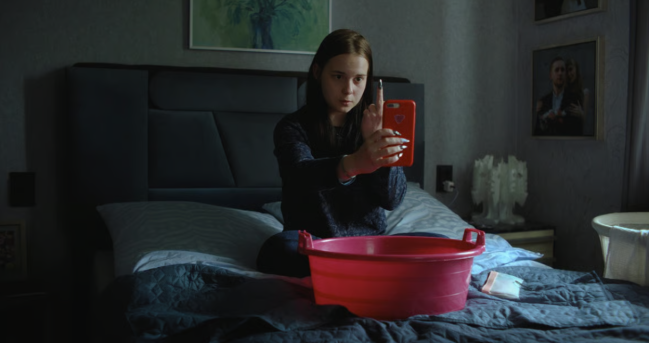

The influx of Ukrainian documentaries on the festival circuit makes it easy to overlook how sparse the country’s fiction film out has become. No wonder: shooting a feature in post-invasion Ukraine is closer to running a military operation with a slate. Daily air raids interrupt the take and take lives; an 11 p.m. curfew comes with the liturgy of bureaucratic supplication required to work past it; the crew is assembled from an industry whose irreplaceable people are in uniform. And then there is a producer fearless enough to cross the minefield, knowing that on the far side waits a festival circuit slightly fatigued by war stories from Ukraine. What survives is a tight spectrum: ultra-low-budget meta-dramas like “To the Victory!” at one end, patriotic war spectacles like “Killhouse” at the other, with the gems in between few enough to count on one hand.


But now, a ray of light arrives in the form of “I Rarely Wake Up Dreaming,” a film by power couple Isabelle Stever and Anna Melikova, who gamely fold the obstacles of wartime reality into a disarmingly tender drama. This German production, predominantly shot in Ukraine, carefully dissects how a gender transition and Russia’s invasion converge on the love between Olya (Tania Myronyshena) and Oleh (Markus Bright).
Their resemblance extends beyond their names to the shared short haircut, the glasses, and matching green-blue eyes that the camera obsesses over at a New Year’s party. But real proximity comes from a distance, through a five-minute unbroken shot that catches their bodies moving slowly in a strip of mirror, talking through traumas old and new as they disassociate from the news of troops massing at the border.
A morning that opens with explosions can hardly get worse. Until it does, with Oleh taking a call from his father and forced to speak of himself in the feminine terms he’s otherwise left behind — a transition he will soon have to conceal from Olya’s parents, who provide refuge in the country’s West. With the radio reporting on Russian troops on Chornobyl, the couple soon after sets course to Berlin. Throughout the evacuation, Olya fixates on the fact that men aged 18 to 60 are barred from leaving, all the while wearing a ridiculous big fluffy hat that seems to protect her more from the societal meltdown around her than from the cold.
Stever keeps company with compromised souls caught in cycles of social and moral precarity, but rarely bothers to rescue them, and so her ascetic form and stiff sarcasm have rarely made empathy an easy passage. Before the poorly received “Grand Jeté,” her story of an ex-ballerina falling into an incestuous bond with the son she once abandoned, the German director had already ventured into wartime diegesis with “The Weather Inside,” in which she aimed her irony at European humanitarianism through a German aid worker holed up in a luxury hotel amid an unnamed civil war.
For all the eclecticism of Stever’s previous work, “I Rarely Wake Up Dreaming” feels almost entirely different in its approach to the material, something that seems to come from Anna Melikova, both Stever’s trusted screenwriter and her Ukrainian wife. A Crimea-born curator and novelist, Melikova is also known as a gifted ex-film critic, the kind who published long, knotty interviews with such deep-cut German directors as Stever. This screenplay, based entirely on her own writing, first came to her before the full-scale invasion, taking inspiration from queer friends as they navigated shifting relationship dynamics after one’s transition. The subsequent war did much of the reshaping. From Melikova’s intimate prose and local industry connections arises an essential sensory texture of national belonging, alongside a moral register sharp enough to carry a critical charge and light enough to keep it wry.

Cinema has lately exhausted the emotional mileage of the Ukraine–EU border, but one wittily choreographed setpiece involving the couple’s border crossing finds in transition an ingenious point of convergence between gender and geography. For Olya and Oleh, there are two patrols to clear, one per gender, in an elegant sequence that starts with a pair of male officers who are so bewildered by their first encounter with transgender documents that they wash their hands of the case, sending the couple further on to the girls who will “figure it out.” There, in a room crowded with women and crying children, we witness Oleh’s grand act of humility as he explains his “psychiatric diagnosis” to two uniformed dragons, aka “the girls,” whose lingering Soviet catechism leaves them outraged that this self-declared man seems to dodge the trench.
Here as elsewhere, Melikova’s script lays bare an intergenerational fault line running straight through morals and social attitudes, while elegantly reinforcing the idea that Ukraine is fighting for European values — as Olya caps the homophobic humiliation: “You’d be jailed for this!” But what awaits the couple, for the time being, is a particular purgatory: Olya’s mother insisting on children, a Kafkaesque maze of exit paperwork, topped with some real existential dread of the mundane.
It is striking how seamlessly Stever’s Berlin School grammar passes through Ukrainian talents, many of whom have honed their eye and ear on some of the country’s finest war documentaries. Take one of the film’s sound artist Mykhailo Zakutskyi, who mastered his sombre soundscape on such celebrated docs as “Intercepted,” “Divia” and “Timestamp“; or virtuoso cinematographer Volodymyr Usyk, one of three to shoot the decorated “Songs of Slow Burning Earth.” Those are some of the striking examples of observational register, one that uses tactical distance, sound, slowness and associative montage to convey pain without resorting to the evidentiary shock of graphic imagery. Here, too, Usyk’s camera renders that echoing dissociation through hypnotic close-ups of mundane gestures: a market woman’s hands fumbling a slick piece of fatty liver, the sharp needle of a manicure drill pressing deep under a cuticle, each image ablaze with a screaming muteness that cannot but drive one insane.
The film’s fragile documentary sensitivity is nowhere more vivid than in its two non-professional leads. Bright is himself transgender and co-founder of The Third Place, an NGO for autistic adults; Myronyshena is a journalist covering the war for The Kyiv Independent. Both bring rawness to the screen with an instinctive precision. This is what gives the film its experiential sincerity — the lived perspective of its Ukrainian crew leaving a nonfictional trace across every level of the fiction, something Stever handles with unusual reverence.
Even if the last stretch hurries itself toward a verdict, it nonetheless reveals something essential about Stever’s career. Having always filmed the collision of personal freedom and convention, she finds in war the ground where that collision is least survivable — a place where gender comes apart in her hands, only to be deftly reassembled on her terms. And so, on one of the grimmest terrains our present has to offer, Stever arrives at her brightest film to date.
Grade: A-
“I Rarely Wake Up Dreaming” premiered at the 2026 Locarno Film Festival. It will also screen in the Main Slate of the 2026 New York Film Festival. It is currently seeking U.S. distribution.
>
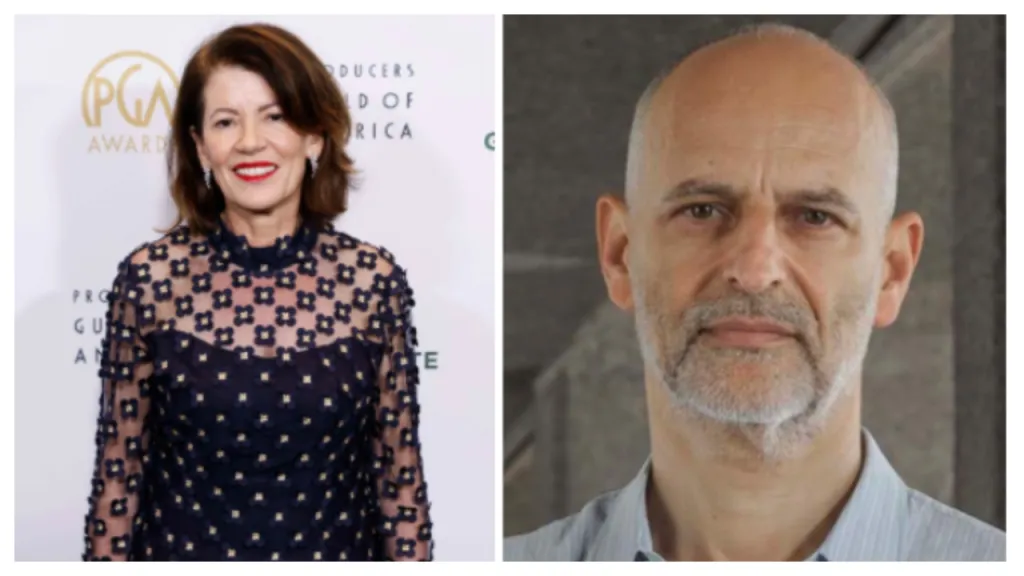
Hamnet and 1917 producer Pippa Harris and The Zone of Interest producer James Wilson are set to participate in individual spotlight conversations at the 70th BFI London Film Festival’s Industry Forum in October.
Harris, who co-founded Neal Street Productions with Sam Mendes, is currently filming The Beatles – A Four Film Cinematic Event, four separate theatrical biopic films about the British quartet starring Paul Mescal, Joseph Quinn, Barry Keoghan and Harris Dickinson. Mendes is directing the project.
Harris will join LFF for a deep dive into her pioneering work, including The Beatles films, as well as discussing the challenges of development and production and her relationship with filmmakers and talent across her career. Her credits include Oscar, Golden Globe and BAFTA winning films Hamnet and 1917, Oscar and BAFTA nominated Revolutionary Road, British box office hit The Magic Faraway Tree with Andrew Garfield and Claire Foy and Jarhead. Harris is also behind a raft of hit TV productions including Call the Midwife, Penny Dreadful, Britannia, The Hollow Crown and Stuart, A Life Backwards.
Prominent indie producer Wilson, who has been in the business for more than thirty years, will join LFF to discuss his career and bold creative collaborations. He has worked with visionary indie filmmakers to great creative and commercial success on films including Oscar and BAFTA winning The Zone of Interest and Under the Skin, both from Jonathan Glazer, Lynne Ramsay’s You Were Never Really Here, Kaouther Ben Hania’s The Voice of Hind Rajab, Aneil Karia’s Hamlet, Iain Forsyth and Jane Pollard’s 20,000 Days on Earth and Sophie Fiennes’ The Pervert’s Guide to Ideology.
In the conversation, Wilson will touch on his key career moments from his years at Fox Searchlight Pictures and Film4, where he was a production executive on films such as Sexy Beast and Dancer in the Dark through to the creation of his own company JW Films.
“This year our industry programme puts a spotlight on producers and the vital role they play in shepherding artistic visions from their earliest stages through to the screen,” said BFI London Film Festival Director Kristy Matheson. “I’m delighted that industry colleagues will have the opportunity to hear from Pippa Harris and James Wilson – two esteemed producers whose unique creative careers have given us some of the most memorable and critically acclaimed films of recent years.”
The 70th edition of the BFI London Film Festival takes place October 7-18, 2026. The Industry Forum Spotlight and Discussion events take place October 8-15.
>
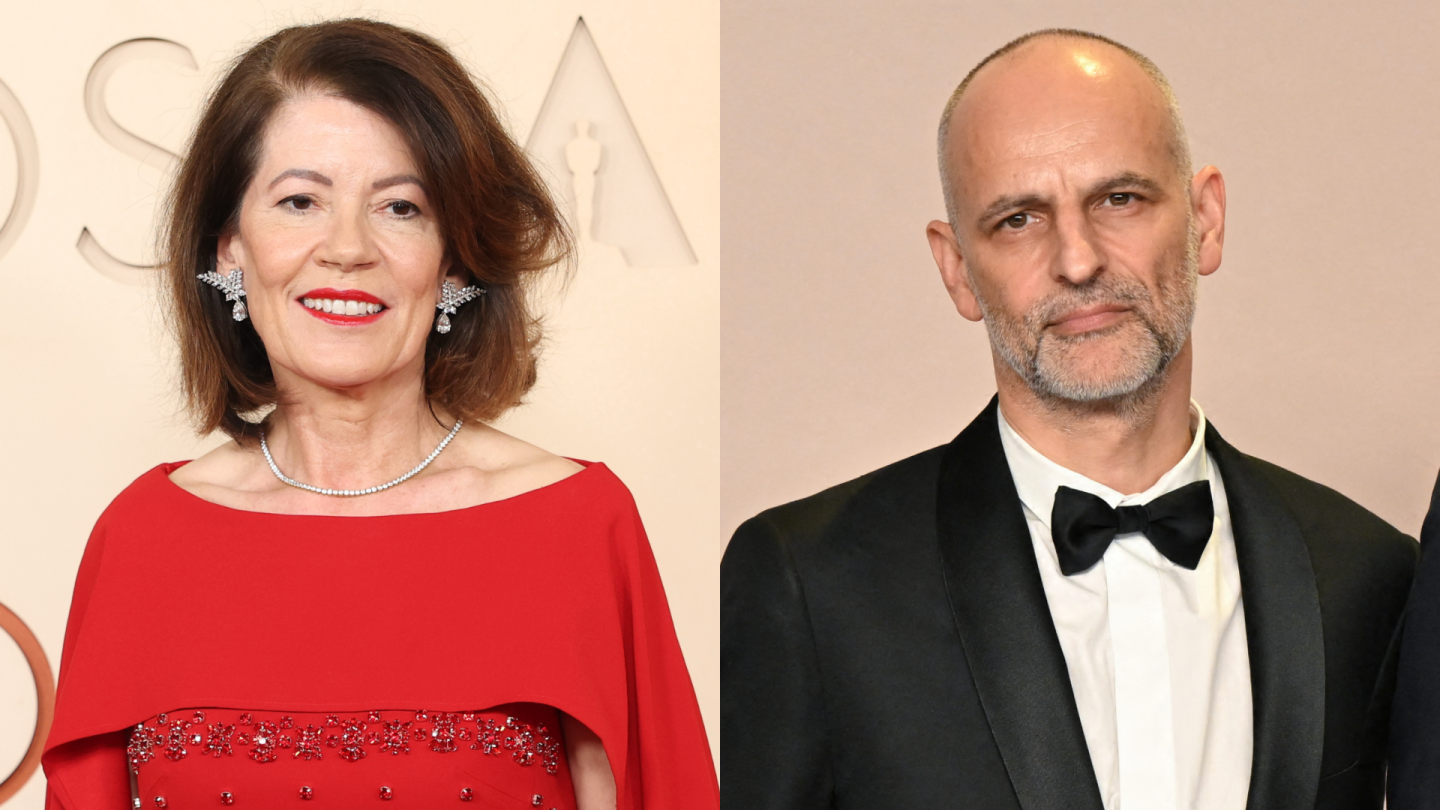
Two of the U.K.’s most successful producers will have individual Spotlight Conversations at the 70th BFI London Film Festival‘s Industry Forum this October.
Neal Street Productions co-founder Pippa Harris (The Beatles, Hamnet, 1917) and indie producer James Wilson (The Zone of Interest, The Voice of Hind Rajab) are set to discuss their careers, current projects and navigating the international film and TV market in a rapidly changing landscape.
The LFF Industry Forum welcomes industry delegates from all over the world for a program of “thought-provoking conversations with some of the most exciting practitioners working in the screen industries and networking events with professionals from all over the world.” The full lineup will be announced in mid-September.
Harris will take a deep dive into her work on the hugely ambitious and much-anticipated quartet The Beatles films, directed by her Neal Street co-founder Sam Mendes, and discuss the challenges of development, production and her relationship with talent across her career. A prolific British film producer, her credits include the Oscar, Golden Golden Globe and BAFTA-winning Hamnet and 1917, Oscar and BAFTA-nominated Revolutionary Road, as well as Jarhead and The Magic Faraway Tree, Call the Midwife, Penny Dreadful and more.
Wilson is one of the U.K.’s most successful independent producers. He has worked for three decades in the business — for Fox Searchlight Pictures and Film4 before heading up his own company in the 2000s — and will speak during his Spotlight Conversation about the bold creative collaborations that have shaped his career so far. He has worked on the Oscar and BAFTA-winning The Zone of Interest and Under the Skin from Jonathan Glazer, as well as Lynne Ramsay’s You Were Never Really Here, Kaouther Ben Hania’s The Voice of Hind Rajab and Aneil Karaia’s Hamlet.
“This year our industry programme puts a spotlight on producers and the vital role they play in shepherding artistic visions from their earliest stages through to the screen,” said Kristy Matheson, BFI London Film Festival Director. “I’m delighted that industry colleagues will have the opportunity to hear from Pippa Harris and James Wilson — two esteemed producers whose unique creative careers have given us some of the most memorable and critically acclaimed films of recent years.”
Attendance of international industry professional delegates to the LFF has doubled over the last five years. The 70th BFI London Film Festival, running Oct. 7-18, is set to open with Andrew Scott and Olivia Colman’s Elsinore, and close with Jesse Eisenberg’s musical-comedy The Debut.
>

Spider-Man: Brand New Day is now the highest-grossing Hollywood film of all time in India after taking $10.6M over the weekend for a cumulative $52.8M take.
The film, starring Tom Holland and Zendaya, overtook the record previously held by James Cameron’s 2022 Avatar: The Way Of Water after only 11 days of release. Opening in India on July 30, the day before its global release, the film has not faced much competition, although two big local films – Batwara 1947, starring Sunny Deol, and Nitin Kakkar’s Awarapan 2, starring Emraan Hashmi – are set to open this coming weekend.
It’s been a strong summer for Hollywood films in India, with both Christopher Nolan’s The Odyssey, which opened on July 17, and Obsession, an early summer release on May 29, reportedly grossing more than the INR1B ($10M) benchmark.
Hollywood and other foreign films usually only have a 10-15% share of the Indian market, where local fare dominates. In 2025, international films clocked up a 10% market share with Avatar: Fire And Ash the top-grossing Hollywood film on $26.4M, according to Ormax Media figures. In comparison, the highest-grossing local film last year, Hindi-language action epic Dhurandhar, took $104.8m
In the first half of 2026, international films had an 8% share, with Obsession grossing around $10M (INR1B) and Project Hail Mary on $9.2M (INR880M). Dhurandhar: The Revenge topped the first half chart with $132m.
Overall, India is having an encouraging year at the box office. Ormax Media has reported that revenues for the six months January to June 2026 reached $661.66M (INR63.98B), making it the highest-grossing first half of any year since the pandemic, and surpassing the first half of 2025 by around 10%.
Upcoming films include Geetu Mohandas’ Toxic, starring Yash, scheduled for August 26; and Ramayana: Part 1, which is expected for Diwali in November and was recently picked up by Sony for worldwide distribution.
>

Live-Action Blue Lock Film Confirms 3 More Cast Members – News

Why won’t the Cowboys ever retire No. 88? It’s more than just a number

Shiori Teshirogi Launches Manga Miniseries in September – News
-

 movies3 months ago
Search For Canadian TV Actor Stewart McLean Now Homicide Investigation
-

 Fashion9 years ago
These ’90s fashion trends are making a comeback in 2017
-
Fashion9 years ago
According to Dior Couture, this taboo fashion accessory is back
-
Fashion9 years ago
Model Jocelyn Chew’s Instagram is the best vacation you’ve ever had
-
Fashion9 years ago
Your comprehensive guide to this fall’s biggest trends
-
Fashion9 years ago
9 Celebrities who have spoken out about being photoshopped
-
Fashion9 years ago
Emily Ratajkowski channels back-to-school style
-
Fashion9 years ago
A photo diary of the nightlife scene from LA To Ibiza