
Tech
New Mexico court orders Meta to pay additional $567M in child safety case


A New Mexico Court judge on Thursday ordered Meta to pay a fine of $567 million, on top of the $375 million levied in March, in a case regarding social media harms and addiction. This brings the total fines the company has to pay to $942 million.
The court also ordered Meta to make changes to its platforms: it wants the company to removing Like counts, and only showing such metrics to children under 18 only with approval from a parent or a guardian. Push notifications to underaged users are also to be paused between 10 p.m. and 7 a.m, and their usage should be limited to 90 hours a month, which amounts to roughly three hours per day.
“Significant numbers of people in New Mexico experience harm from Meta’s products due to risks of sexual exploitation, interference with education, and adverse mental health outcomes,” the order said.
The judge acknowledged that Meta is not the only platform causing a mental health crisis among youth in the state, but maintained that its platforms play a significant part. He said that the company has caused a significant “public nuisance” in New Mexcio, and is required to abate that.
Meta said that it is going to appeal the judgment.
“We work hard to keep people safe on our platforms and have been transparent about the challenges of identifying and removing bad actors and harmful content. We remain confident in our record of protecting teens online and will continue to defend ourselves against claims that misrepresent the facts,” company spokesperson Andy Stone said in an emailed statement.
“For years, Meta knew its platforms were harming New Mexico’s kids, from feeding a youth mental health crisis to connecting predators with children, and it chose engagement and profit over their safety,” state Attorney General Raul Torrez said in a statement.
“Today, Meta is paying for that choice. This judgment holds the company accountable for the damage it caused to our children, our families, and our schools, and it forces real changes to how Meta operates in New Mexico,” he added.
The ruling comes in the wake of another loss in Los Angeles in March, where the court also ruled against the social media company for creating addictive patterns.
Meta is facing several other cases in the country. One of the notable cases is a joint lawsuit by 33 states, which was consolidated in an Oakland, California federal court. Several other states, like Tennessee, have brought their own cases against the company.
When you purchase through links in our articles, we may earn a small commission. This doesn’t affect our editorial independence.
>

Samsung is starting August with a security sweep that patches dozens of flaws across Galaxy phones and tablets.
The company has published details of its August 2026 Security Maintenance Release (SMR), which addresses 56 security vulnerabilities affecting eligible Galaxy smartphones and tablets running Android 14, Android 15, and Android 16.
The update includes 38 Android security fixes from Google’s August Security Bulletin and 18 Samsung-specific patches for One UI and Galaxy software. Of Google’s fixes, eight are rated critical, and 30 are classified as high priority.
Samsung also noted that nine Google-listed vulnerabilities are not part of this month’s release. One was already included in the July update, while the remaining eight do not affect Galaxy devices because they are tied to hardware or configurations Samsung does not use.
The rollout is expected to begin in the coming days, with Samsung’s latest flagship devices, including the Galaxy Z Fold 8, Galaxy Z Flip 8, and Galaxy S26 series, likely receiving the update first before it expands to older flagship models and supported Galaxy A-series phones.
One UI patches close Galaxy-specific security gaps
Beyond Android itself, Samsung is fixing 18 Samsung Vulnerabilities and Exposures (SVEs) affecting its own software.
Among the more notable fixes is a patch for an authorization bypass in SemClipboardService that could have allowed local apps to access clipboard contents without proper permission. Samsung also addressed vulnerabilities affecting Samsung Contacts, Dialer, Messages, Galaxy Themes, and AppLock.
Several of the fixes target media components and system libraries, including the VC1 and MPEG4 codecs, where memory-handling flaws could potentially be exploited by local attackers. The company also strengthened access controls for the Weaver hardware component, closing a vulnerability that could have allowed attackers with local access to render a device unusable.
Some Samsung-specific vulnerabilities remain undisclosed, as the company noted that certain SVE details cannot yet be publicly released.
Must-read security coverage
What Galaxy owners should know
Security updates rarely introduce new features, but they remain one of the most important software releases users receive.
This month’s package addresses multiple high-risk Android vulnerabilities alongside Galaxy-specific flaws affecting core apps and system services. While many of the Samsung-specific issues require local or physical access to a device, installing the update reduces the risk of privilege escalation, unauthorized data access, and attacks targeting multimedia components.
Because Samsung distributes updates in phases, availability will vary by model, carrier, and region. Some users may receive the patch days or even weeks after the rollout begins. Users can install the update through Settings > Software update > Download and install once it becomes available for their device.
Editor’s note: This article originally appeared on our sister publication, eSecurityPlanet.
>
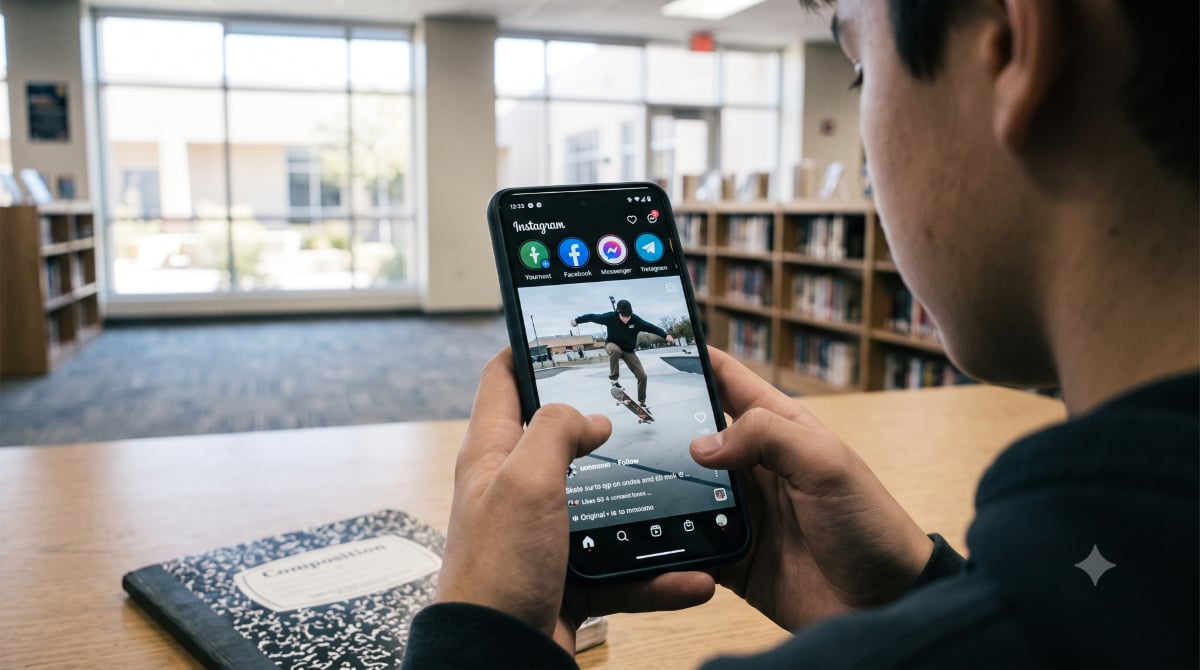
Meta’s latest legal headache comes with a $567 million price tag and a five-year to-do list for Facebook and Instagram.
A New Mexico state court ordered Meta to pay $567 million and change how its platforms operate for young users, including limits on teen screen time, overnight notifications, adult contact with minors, and safeguards for AI chatbots. The ruling follows a separate $375 million penalty imposed in March, bringing Meta’s total liability in the case to $942 million.
For product, privacy, and trust-and-safety teams, the bigger story is the scope of the order. The court is not only demanding compensation. It is prescribing how Meta must redesign parts of Facebook and Instagram for minors.
Court order reaches into Facebook and Instagram design
Judge Bryan Biedscheid ruled that Meta had created a public nuisance in New Mexico, siding with state Attorney General Raúl Torrez in the second phase of the lawsuit.
The Business Times reported that the five-year decree requires Meta to block push notifications to underage users between 10 p.m. and 7 a.m. and limit their use of Facebook and Instagram to no more than 90 hours per month.
Meta must also tighten restrictions on adult contact with minors, strengthen its handling of child sexual abuse reports, and add safeguards around AI chatbots.
Of the $567 million judgment, $420 million will fund treatment services for young people in New Mexico, according to The Associated Press. The remaining money will support awareness, prevention, screening, and related costs over five years.
Meta must also add recurring banners and informational screens explaining protection features, recommended practices, and tools for dealing with inappropriate comments. The Guardian said that those changes and an educational campaign will be subject to state review.
AI age checks become a compliance requirement
Age assurance is one of the more technically significant parts of the order.
The court stopped short of requiring broad age verification for every child. AP noted that federal protections under the Children’s Online Privacy Protection Act limit requirements that would involve collecting additional personal information from children under 13 simply to verify their age.
Instead, Meta must continue improving age-assurance systems that use signals such as a user’s friends and the content they post or consume. The company must also attempt to develop a dedicated model for predicting whether a user is under 13 within two years.
Users estimated to be under 13 must be treated as such until they verify their age. Meta must also delete personal information collected from under-13 users and work with schools or a child-safety organization on a portal where staff can flag accounts suspected of belonging to children under 13.
The company will have to report on its compliance progress twice a year.
For technology companies, those requirements illustrate how youth-safety enforcement can extend directly into AI models, data retention, user interfaces, notification systems, and compliance reporting rather than stopping at privacy policies or parental controls.
Meta said it will appeal the ruling and defended its existing safety work.
“We remain confident in our record of protecting teens online and will continue to defend ourselves against claims that misrepresent the facts,” the company said in a statement, per The Guardian.
The New Mexico case is also unlikely to be the end of the dispute over social media product design. Meta faces thousands of lawsuits involving alleged harms to young people, while another federal case involving attorneys general from multiple states is scheduled to reach trial in California later in August.
AP said that Meta faces a federal multidistrict lawsuit involving 29 states, while separate state cases are also moving through the courts.
New Mexico’s ruling therefore matters beyond the $567 million judgment. If similar claims succeed elsewhere, social media companies could face growing pressure to treat youth protection as a product-engineering and compliance requirement, with courts scrutinizing everything from recommendation systems and notifications to age prediction and data deletion.
For Meta, the immediate question is whether its appeal changes the order. For the wider industry, the question is how many of New Mexico’s requirements could become a template for the next round of youth-safety cases.
Read next: Meta avoided a closely watched social media addiction trial after the plaintiff dropped the remaining claim, leaving broader questions over platform design unresolved.
>

Boston Dynamics’ Atlas humanoid robot doesn’t just know when it needs a break. It can swap its own battery and get back to work.
The production version of Atlas can autonomously return to a battery station, replace a depleted battery in under three minutes, and resume working without a person performing the swap, according to Boston Dynamics’ Atlas specifications. The feature is part of the company’s effort to turn Atlas from an impressive demonstration machine into an industrial robot capable of operating across long shifts.
The battery swap sounds like a small engineering detail. But it could help solve one of the least glamorous and most important problems facing humanoid robots: downtime.
Atlas is being built to keep working
Boston Dynamics says Atlas gets roughly four hours of battery life during typical use and around two hours during heavy lifting.
Context: A conventional recharge takes about 90 minutes. Rather than sitting idle, Atlas can swap batteries autonomously in less than three minutes. That could allow companies to keep a robot operating across multiple shifts with much less human intervention. In its breakdown of the production Atlas, Boston Dynamics describes the robot as being designed with continuous industrial operation in mind.
The robot stands about 6 feet 2 inches tall and weighs roughly 198 pounds. According to its specifications, Atlas can handle sustained loads of about 66 pounds and briefly lift as much as 110 pounds.
Its hardware also includes tactile sensing in its hands and a camera system that provides a 360-degree view of its surroundings. Those capabilities are aimed less at robot acrobatics and more at the repetitive lifting, moving, and material-handling jobs common in industrial environments.
From viral robot videos to factory work
For years, Atlas was best known for videos showing robots jumping, running obstacle courses, dancing, and performing movements that looked suspiciously athletic for a machine.
Boston Dynamics is now trying to make Atlas useful when nobody is filming. The company unveiled the production version of Atlas at CES 2026 and said its initial 2026 deployments were already committed. Early Atlas fleets are going to Hyundai Motor Group’s Robot Metaplant Application Center and Google DeepMind, where the companies will continue developing and training the platform.
That does not mean humanoid robots are about to flood factory floors overnight. Hyundai’s robotics roadmap calls for Atlas to begin performing validated manufacturing tasks at its Georgia Metaplant in 2028, beginning with parts sequencing. More complex assembly work is targeted for 2030.
Hyundai has also laid out plans to build production capacity for as many as 30,000 robots annually by 2028.
AI could turn physical skills into software
The hardware is only part of the equation.
Boston Dynamics is working with Google DeepMind on research that aims to integrate Gemini Robotics foundation models with Atlas and expand the humanoid robot’s ability to perform industrial tasks. The companies announced the AI partnership at CES 2026, saying the research will explore how advanced AI models can strengthen Atlas’ cognitive capabilities alongside its existing physical abilities.
Another part of Boston Dynamics’ approach could have even broader implications: skills learned by one robot can be shared with others. According to the Atlas specifications, once one Atlas learns a new task, that functionality can be deployed across the fleet. That begins to make robotic behavior look a little more like software.
Instead of programming every robot individually to perform every movement, developers could train and validate a new behavior and then distribute that capability across other Atlas robots.
Why this matters
A robot changing its own battery matters because it removes another human dependency from the equation.
Performing useful work is only one part of industrial automation. Machines also need to recharge, recover from interruptions, handle changing conditions, and undergo maintenance. The more of those tasks a robot can handle autonomously, the closer it gets to becoming a system that can operate for long periods without constant supervision.
Battery swapping could be especially important for humanoid robots because stopping for a lengthy recharge cuts directly into the economic argument for using them in warehouses or factories.
Boston Dynamics is designing other parts of Atlas around the same principle. The company says the robot’s limbs can be replaced in the field in under five minutes, while onsite maintenance teams can be trained to service robot fleets.
Still, self-swapping batteries do not answer the biggest questions surrounding humanoid robots. Companies will ultimately care about whether machines such as Atlas can perform useful tasks reliably, safely, repeatedly, and cheaply enough to justify deploying them at scale.
A three-minute battery swap solves only one piece of that puzzle. But it points toward a future in which humanoid robots do more than perform impressive physical feats. They may increasingly be expected to handle the mundane work of keeping themselves on the job, too.
Also read: Boston Dynamics isn’t alone in racing to put humanoid robots to work: Tesla plans to ramp up Optimus production ahead of a major expansion in 2027.
>

Samsung’s August Update Patches 56 Security Vulnerabilities Across Galaxy Devices

How to watch Braves vs. Yankees: TV channel and streaming options for August 7

Meta Ordered to Pay $567M and Overhaul Teen Safety on Facebook, Instagram
-

 movies3 months ago
Search For Canadian TV Actor Stewart McLean Now Homicide Investigation
-

 Fashion9 years ago
These ’90s fashion trends are making a comeback in 2017
-
Fashion9 years ago
According to Dior Couture, this taboo fashion accessory is back
-
Fashion9 years ago
Model Jocelyn Chew’s Instagram is the best vacation you’ve ever had
-
Fashion9 years ago
Your comprehensive guide to this fall’s biggest trends
-
Fashion9 years ago
9 Celebrities who have spoken out about being photoshopped
-
Fashion9 years ago
Emily Ratajkowski channels back-to-school style
-
Fashion9 years ago
A photo diary of the nightlife scene from LA To Ibiza