
Sports
A 2000s tennis takeover at the Canadian Open as the ATP Tour evolves

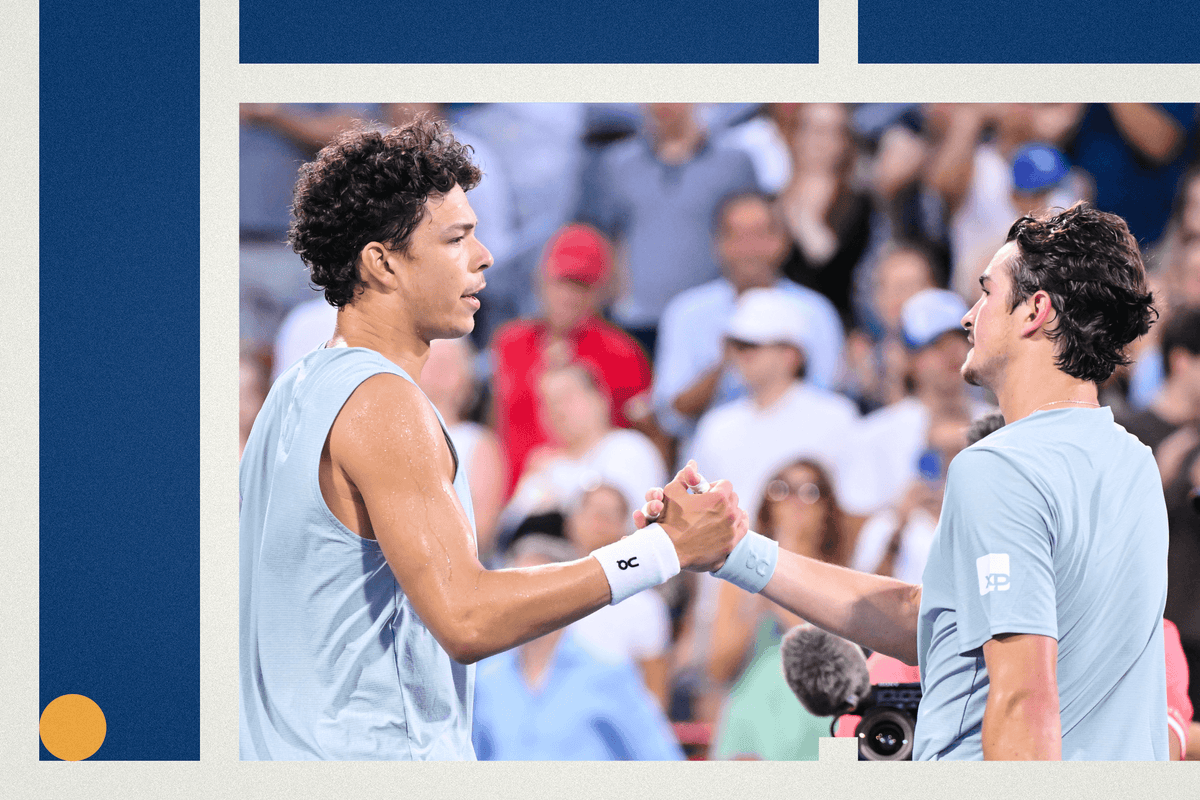
Welcome back to the Monday Tennis Briefing, where The Athletic will explain the stories behind the stories from the past week on court.
This week, there was a first on the ATP Tour, a quest for world No. 1 hung on one shot and a rising talent made up for some lost time.
If you’d like to follow our fantastic tennis coverage, click here.
How did a generational takeover happen at the Canadian Open?
It was “Retro Night” Saturday at the Canadian Open in Montreal, where during changeovers and in the walkways between courts the tournament spun classics by such luminaries as Michelle Branch, Smash Mouth, Vanessa Carlton and No Doubt. It was a great playlist. Not even tennis tournaments can resist the nostalgia for the 1990s and 2000s holding society hostage lately.
As trendy as they were, Montreal’s throwback vibes were in direct opposition to the action on court this week, where the ATP Tour’s youths have taken over.
In the wake of a raft of upsets and injuries to the more experienced players, the 2026 Canadian Open is the first ATP Masters 1000 event (one rung below the Grand Slams) to have a quarterfinal field made up of players born in the 2000s. At 25, American Brandon Nakashima is the elder statesman of the bunch, while Spaniard Rafael Jódar is the youngest at 19.
This milestone puts some pressure on the generation just above them. If the guys in their late 20s aren’t going to take advantage of Jannik Sinner, Carlos Alcaraz and Novak Djokovic’s absence from big tournaments, the young players are happy to lap up the experience and rankings points.
Why do tennis players change their rackets so often?
Tifo Sports
The surge isn’t quite a movement. Not because the young players weren’t the ones beating the top seeds, or because some contenders were injured, but because the players involved have been serving notice to their elders for some time.
“It’s interesting to look at. I think it’s cool, obviously, to see the ‘Next Gen’ do so well,” 23-year-old American Ben Shelton, who beat 19-year-old João Fonseca 6-3, 7-6(3) on Sunday to advance to the quarterfinals, said in a news conference.
“I think it’s funny that it’s all kind of happening at once. But it is guys who’ve had massive breakthrough seasons and are continuing to inch towards the top of the game. So it’s something that I love to see. I’m a big fan of a lot of the guys who are still in the draw, you’ve got guys who went to college, young Americans, other guys that I’m friends with.”
In the semifinals, Shelton will face 20-year-old Jakub Menšík of the Czech Republic, who last year won the Miami Open. Shelton is defending champion in Canada, and looking to even out a season full of high highs and low lows to claim his fourth title this year.
The other quarterfinalists are less established than Shelton but have been working in the wings to overtake not just their elders, but players of their own generation, too.
World No. 24 Arthur Fils, 22, returned from a stress fracture in his back in March to go on a tear before facing another injury setback ahead of the French Open. He’ll play Jódar in the blockbuster matchup of the quarterfinals.
Jódar has claimed the most wins of any teenager within his first 50 ATP Tour matches in the Open Era, and if he reaches the final in Montreal, he will become a top-10 player for the first time. He only made the top 100 for the first time at the end of March.
Learner Tien, 20, who next faces another young Spaniard in the shape of 20-year-old Daniel Mérida, sees the competition as a boost for everyone involved.
“All the younger guys are playing with a lot of confidence. They’re playing free against the older guys, they want to prove themselves,” he said in a news conference.
“I think it’s great for the sport. All the younger guys are also pushing each other — one guy has a great week, another guy wants to match that, and so on.”
— Ava Wallace
Why does Elena Rybakina’s serve tell a story?
World No. 2 Elena Rybakina’s Canadian Open is a conundrum. On one hand, the reigning Australian Open champion is into her fifth WTA 1000 quarterfinal of 2026, rallying from down a double break in the third set to defeat Russia’s Liudmila Samsonova 6-4, 4-6, 6-4. But it’s been a difficult tournament, notably on her serve, a strength of Rybakina’s game.
Rybakina leads the WTA Tour in aces in 2026. She entered the Canadian Open with 268 aces, having won 81.6 percent of service games and 73.3 percent of first-serve points on the year. But the biggest weapon in her game has not been firing for Rybakina in Toronto, as she tries to reach world No. 1 for the first time.
In her three matches, her average first serve percentage is 50.2 percent; at one point during her match against Samsonova, she was serving at 39 percent. The lack of free service points is hindering Rybakina’s game, forcing her to play from neutral too often. Even in defeat, Samsonova won 57.1 percent of second-serve return points against her.
There has been a steady decline in Rybakina’s delivery since January, when she won the Australian Open title. Her average first-serve percentage for that tournament was just over 60. Across her 10 matches prior to the Canadian Open, it was at 53.4 percent, while this tournament it has dropped again.

Elena Rybakina’s serve is the cornerstone of her game. (Leonardo Ramirez / Eyepix Group/Sipa USA)
How often a player makes their first serve is not always a useful metric. A high percentage doesn’t necessarily mean that the serve is effective, and the best servers in the world accept that making fewer of their serves is the price they pay for hitting the lines and racking up aces, unreturned serves and easy put-away shots. Rybakina remains 2nd on the tour for first-serve points won in 2026, so she is making the most of the first serve when it goes in, but the pressure on the rest of her game is making her matches more difficult.
“It’s just the motion itself,” Rybakina said of her serve in a news conference. “And the toss, when it’s windy you are trying to adapt, same as if the sun is really bothering. So you’re trying to always find a way. It might also make it worse.
“Then of course the push of the legs. When the ball is getting old, it’s more difficult to control. The ball by itself is light and it’s flying a lot. So all these little things I need to focus on, and when it comes together it’s a good serve.”
Rybakina plays Naomi Osaka in the quarterfinals. It’s their first career meeting and not an easy opponent if the serve is struggling. Osaka is one of the purest hitters on a hard court, punishing the ball off the return. If Rybakina is going to bookend a successful year on the hard courts, she will likly need to rediscover consistency on her first serve to go with its potency.
— Lukas Weese
How is a young talent making up for lost time?
At the start of 2025, French Open champion Mirra Andreeva was the only teenager in the WTA Tour top 100. On her way up the tennis ladder, she reached the Australian Open girls’ final in 2023. There, Russia’s Andreeva lost to compatriot Alina Korneeva, one month her senior. Since then, Andreeva has risen and risen, while Korneeva has seen her own rise largely deferred by repeated setbacks with wrist injuries.
She is making up for lost time now. Despite a one-sided defeat to two-time Grand Slam champion Coco Gauff in Toronto Sunday, 19-year-old Korneeva’s run to the Canadian Open fourth round means she is world No. 75. She defeated two top Americans — former top-10 player Emma Navarro and 18-year-old rising star Iva Jović — to face Gauff, and backed up a run to the semifinals of the Athens Open on a much bigger stage.
In the same year that she beat Andreeva in Melbourne, Korneeva ended up with a 31-8 record and made her full WTA Tour debut. In January 2024, she qualified for the Australian Open and defeated Spain’s Sara Sorribes Tormo — a draw from hell for an inexperienced player — in the first round.
But then, a seven-month absence broke the back of her 2024 season. In 2025, she lost more matches than she had become accustomed to losing, but far more importantly, played a great deal more of them, despite missing nearly six months between January and June with another injury.

Alina Korneeva is establishing herself on the WTA Tour after a series of injuries. (Matthew Stockman / Getty Images)
Now she is one match away from playing 50 in a season for the first time in her career, and the more time she can spend on court building rhythm, the better — for her and for tennis at large.
“Everyone know that in juniors it could happen that you win the tough game and then the opponent give you kind of presents,” she said in a news conference after defeating Jović.
“Now I feel like more, as I play against good players, top players, I have to be, like, into it in the match every single point. I have to be, like, to be in, you know, full focus.
“I think the main goal for me now is to play like all the match without up and downs. Of course you can have it because we’re all people and we can have up and downs, tennis and mental-wise. That’s the main goal for me to improve.”
— James Hansen
Strange shot of the week
Argentina’s Francisco Cerúndolo won a point by mistake, taking advantage of the rule that says if a serve hits an opponent on the full, it is the server’s point. Britain’s Lloyd Glasspool was the unfortunate party:

📅 Coming up
🎾 ATP
📍Montreal: Canadian Open (1,000) featuring Ben Shelton, Rafael Jódar, Arthur Fils, Learner Tien.
📺 UK: Sky Sports; U.S.: Tennis Channel 💻 Tennis TV
🎾 WTA
📍Toronto: Canadian Open (1,000) featuring Iga Świątek, Coco Gauff, Elena Rybakina, Naomi Osaka.
📺 UK: Sky Sports; U.S.: Tennis Channel
Tell us what you noticed this week in the comments below as the men’s and women’s tours continue.
>
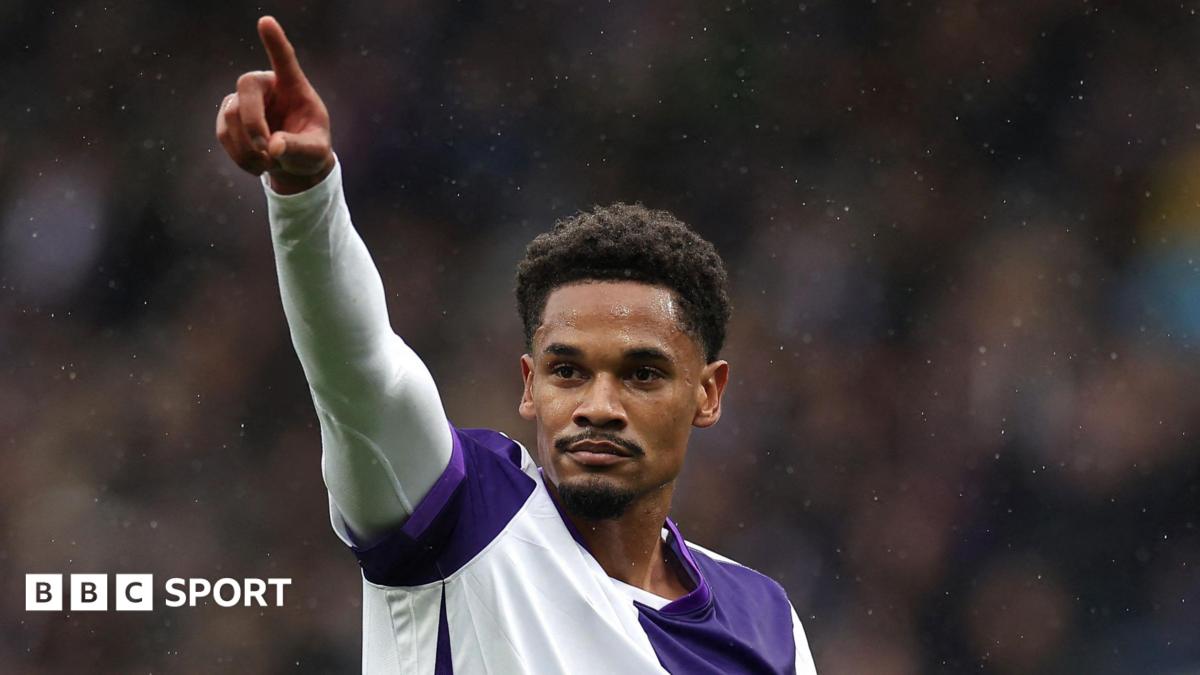
Ashton acknowledges that one of the key lessons from their previous Premier League campaign was the need to bring in more athletic players “with a different set of physical attributes”.
The midfield lacked power and ball-winning ability in 2024-25, and it is imperative that new arrivals Florentino Luis and Sasa Lukic – both experienced at the highest level – hit the ground running. That will be especially important with last season’s mainstays Azor Matusiwa and Jack Taylor doubtful for the opening game following operations over the summer.
It is no surprise that O’Neil is also seeking greater cutting edge given that no Ipswich player scored more than 10 non-penalty goals in the Championship last season.
The Blues broke their transfer record to sign Brazilian striker Emersonn, 22, for an initial £24m. He certainly fits the desired physical profile but is relatively raw, having only established himself as a regular last season at Toulouse, where he scored seven goals in 31 appearances, 22 of them starts.
Maeda, a hardworking forward or winger, had an excellent record at Celtic, netting 79 times in 212 games, but won’t get the same volume of chances in a team battling to stay up.
The Suffolk side have also recruited two Dutch goalkeepers, including Kjell Scherpen, whose imposing 6ft 9in (2.06m) frame means he is set to become the tallest player to appear in the Premier League.
With a new manager in place and a £30m training ground redevelopment close to completion, this could be a defining summer for Ipswich. But will their transfer business be enough to secure successive top-flight campaigns for the first time in a quarter of a century?
Only three promoted clubs have splashed out more in a summer window – Sunderland in 2025, Nottingham Forest in 2022 and Aston Villa in 2019 – and all survived.
Yet Fulham, Southampton, Burnley and Ipswich themselves have spent comparable figures in recent years only to swiftly return to the Championship – with that level of investment increasingly the bare minimum needed to be competitive rather than a guarantee of safety.
>

OXNARD, Calif. — Shavon Revel was stunned. He dropped his head in disbelief. George Pickens had just done what he has been doing throughout the first two weeks of Dallas Cowboys training camp: making impressive catches.
But this one during red zone work on Saturday particularly bothered Revel because he was in great position to intercept the back-shoulder throw from Dak Prescott. Somehow, Pickens snatched the ball away at the last second.
Instead of allowing that to negatively impact the rest of practice, though, Revel came back about five minutes later and made a diving deflection on a throw intended for Pickens in the back of the end zone.
“I can’t believe he caught that,” Revel told The Athletic after Sunday’s practice. “Short memory. You gotta bounce back. There are great players like that. It’s gonna be 50-50 sometimes. At the end of the day, don’t give up on yourself. And that’s what I didn’t do.
“I just kept trying. They’re giving me the looks that I need, and sharpening my skills at the end of the day.”
Shavon Revel stands out at Cowboys training camp
Jon Machota
Cowboys coach Brian Schottenheimer was not surprised by Revel’s response after the Pickens touchdown. Those are the expectations that have been set for the 2025 third-round pick who probably would have gone much earlier if not for a season-ending knee injury his final year of college.
Revel was still working his way back from the injury last season, wearing a protective brace in practice and games. No longer needing the brace, Revel is getting thrown in the fire, working with the first- and second-team defenses, covering all of Dallas’ top wide receivers, including stars Pickens and CeeDee Lamb.
“I think he’s responded that way the whole time,” Schottenheimer said of Revel’s impressive play on Saturday. “He’s going against a couple of the best in the league and he doesn’t back down at all. His confidence is growing. I watch him in meetings and he is literally hanging on every word that (defensive coordinator) Christian Parker, (defensive backs coach) Derrick Ansley and (secondary coach) Ryan Smith are saying.
“He’s very raw. Small-school guy, hasn’t played maybe a ton of football. But the talent is real. The makeup of the young man is real. And he is attacking his craft and really trying to learn the intricacies of playing corner in this system.”
Sunday’s practice was the most entertaining of camp, with highlight plays routinely being made on both sides of the ball. Revel was right in the mix. When it comes to listing early camp standouts, no one should be surprised when Pickens and Lamb are mentioned. But Revel is near the top of the list.
If the season started today, the two starting outside cornerbacks would probably be DaRon Bland and Cobie Durant. But Revel is knocking on the door.
“I feel great,” Revel said. “Way better than I did last year. Running-wise, cutting-wise, breaking-wise, it’s pretty sharp. You’re going to have bumps and bruises so I have to keep my treatment stuff together, and that’s what I’ve been doing.”
What is the next step for him?
“Just being consistent,” Revel said. “Situationally, third down, fourth down, what they might run in this formation. Those little things, I’m getting better at. It’s all coming together. There are little details that I want to fix in my game.”
Parker shared a similar response when asked about Revel. He wants to see the 25-year-old “making sure he’s able to live in a single play.”
“He has all the physical attributes,” Parker said. “Everything with him now is just working on everything from the neck up and just making sure that we’re thinking the game properly. And that’s a quick two- or three-second assessment because once you’re getting in your stance and you’re ready to play ball, you want to play with a clear mind.
“So just being able to do that and just finish plays. But he’s doing a good job. He’s extremely hardworking. He’s extremely willing. He wants to be coached. He runs towards that.”
Standing a legitimate 6-foot-2, 200 pounds, Revel excels in man coverage. The Cowboys are looking for him to improve in zone, something they believe has been progressing thanks to the extra time he’s been investing.
“He’s taken a big jump from last year,” Bland said. “He’s definitely honing in on his skills and techniques. Just keep learning. Every day he’s trying to learn.”
“He’s definitely super physical,” Pickens said. “I feel like him being that physical at the line of scrimmage can definitely deter a lot of other receivers in the league.”
Late in Sunday’s practice, veteran wide receiver Jonathan Mingo got past Revel on a deep ball up the left sideline. Revel caught up in time and knocked the pass away before Mingo got a chance to secure the grab.
“It felt great,” Revel said. “It was a little mental error. I picked it up real fast. Never gave up on the play, and that’s just kind of what was going through my head. I didn’t see the safety back there. So I was like, ‘Oh, damn, this is going to be my play.’ I just had to keep my head in the game, don’t panic. Just get out there and chase it. Don’t give up.”
It was a play that he likely would not have made a year ago. But now that he has the brace off and is moving like he did when he was a standout at East Carolina, Revel is looking like the player the Cowboys spoke so highly of following the draft.
And it’s easy to see his confidence has been elevated.
“Oh my gosh I can’t even tell you, but it’s like taking a deep breath,” he said. “It’s like you’ve been holding your breath under water forever and you can finally lift your head up out of the water and breathe that fresh air.”
>

KANSAS CITY, Mo. — There was an at-bat in late June that showed everyone with the Chicago Cubs just how much Pete Crow-Armstrong had matured as a hitter. Late in a tie game against the San Diego Padres, lefty Adrian Morejon, one of the best relievers in the game, came in to face the Cubs’ leadoff man.
Crow-Armstrong worked a seven-pitch walk, at one point challenging a called strike three he rightfully felt was below the zone. Over the last few weeks, unprompted, manager Craig Counsell and team president Jed Hoyer have brought up that plate appearance to discuss Crow-Armstrong’s improvement against left-handed pitching.
“I thought his at-bat against Morejon was the best at-bat I’ve ever seen him take,” Hoyer said recently. “He battled one of the best lefties in the game and laid off a chase slider to walk. We all watched him not do that a lot of times in that situation.”
As a whole, no matter who is on the mound, Crow-Armstrong has improved his pitch recognition. It’s been especially impressive against lefties. Coming into the year, Crow-Armstrong had a 60 wRC+ against lefties. Last year, that number was 59, the sixth-worst in baseball among eligible players. This season, he’s dominated southpaws, posting a 165 wRC+, the 10th-best mark in the league.
Why the Red Sox resurgence is historic
Ken Rosenthal and Johnny Sweet
“It has completely flipped,” Counsell said. “It’s just different now.”
But even this season, it’s been a process. Though his performance in April and May against lefties was strong (114 wRC+), it’s taken off since. In June, he posted a walk rate of 18.9 percent against southpaws; in July, that number soared to 26.7 percent. Overall, his wRC+ against lefties from June 1 on is a robust 217.
Assistant hitting coach John Mallee, who worked with Crow-Armstrong when the two were at Triple-A Iowa in 2023, has been working hard with the young center fielder for years now. The veteran hitting coach said hitting lefties is hard because batters don’t face them often, and lefties have a tendency to pull off the ball and roll over when facing same-sided pitchers. Crow-Armstrong has worked hard to stop doing that this season.
“His ability to stay in and have zero fear — you watch his video from the side, you wouldn’t know if a righty or lefty is pitching,” Mallee said. “The patterns and the movements don’t change. Usually, left-on-left guys have trouble with the ball going away from them. But his strike zone discipline has improved. He has a really good plan going into the box. He knows what he’s looking for, and he’s disciplined enough now to wait for it.”
That last point is what Crow-Armstrong has said is the reason for his higher walk rate in general. Before he gets to two strikes, he’s only looking for a certain type of pitch in a certain zone. A pitch might end up being a strike, but if it’s not what he was looking for, he’s laying off.
“He moved closer to the plate against lefties, so the plate’s underneath him,” Mallee said. “When he starts to feel himself lean or back up out of the way of things, he knows that’s probably a ball. So that move has helped him.”
Along with the patience, Crow-Armstrong is also starting to display power against lefties. In the first two months of the season, Crow-Armstrong had a .120 ISO and just four extra-base hits in those situations. Since then, he’s got a .313 ISO with five home runs, two doubles and two triples.
“I had some success against lefties in the minor leagues,” Crow-Armstrong said. “I feel like I’m capable of doing damage against anybody that steps on the mound. That’s important for me to take into every at-bat. I’m proud of the success I’ve had against left-handed pitching.”
It’s rare to see these types of leaps in these specific areas, especially so quickly. But Crow-Armstrong has proved over and over he is the exception. There are few talents like Crow-Armstrong.
Taking away the option for opposing managers to just go to a lefty to shut down Crow-Armstrong has helped him reach another level. The development has taken him from a very good player to one who is emerging as the National League MVP favorite. It’s made him a more complete player and ultimately, one of the best in the game.
“I’m not surprised,” Crow-Armstrong said. “I’ve done the work, and I’ll continue to do so.”
>

Championship all-stars to global gamble – will Ipswich Town’s approach work?

Cowboys CB Shavon Revel is healthy, confident, ready for ‘big jump’ in Year 2

Pete Crow-Armstrong has ‘flipped’ performance against lefties, taking game to MVP level
-

 movies3 months ago
Search For Canadian TV Actor Stewart McLean Now Homicide Investigation
-

 Fashion9 years ago
These ’90s fashion trends are making a comeback in 2017
-
Fashion9 years ago
According to Dior Couture, this taboo fashion accessory is back
-
Fashion9 years ago
Model Jocelyn Chew’s Instagram is the best vacation you’ve ever had
-
Fashion9 years ago
Your comprehensive guide to this fall’s biggest trends
-
Fashion9 years ago
9 Celebrities who have spoken out about being photoshopped
-
Fashion9 years ago
Emily Ratajkowski channels back-to-school style
-
Fashion9 years ago
A photo diary of the nightlife scene from LA To Ibiza