
Entertainment
Anders Danielsen Lie Revisits the Making of ‘Oslo, August 31st’

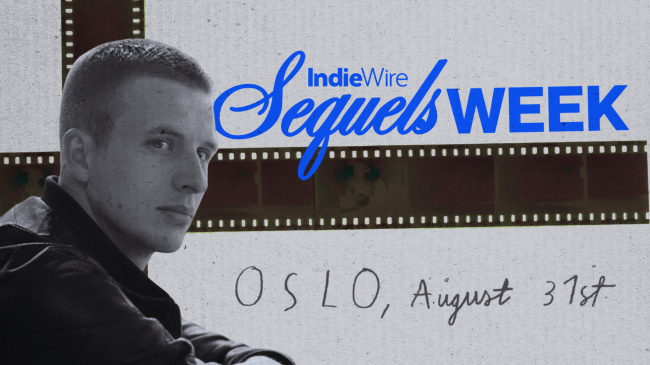

“Oslo, August 31st” (2011) is not a sequel in the sense that “Jaws 2” or “Aliens” are sequels. It only assumed position as the middle child of Joachim Trier’s “Oslo Trilogy” retroactively, once the “The Worst Person in the World” (2021) catalyzed a link between the two above titles and “Reprise” (2006). An actor in all three, Anders Danielsen Lie tells me about making the connection: “I read the script for ‘The Worst Person in the World,’ and one of my initial reactions was that it made ‘Oslo’ and ‘Reprise’ feel more related. It makes sense to call them a trilogy, because of the themes and these characters being shuffled around in this cultural milieu in Oslo.”


Danielsen Lie and Trier first met in the summer of 2005 when the director was casting “Reprise,” his kinetic, fragmentary, French New Wave-inspired debut feature about two young men with passionate literary ambitions. Danielsen Lie was cast as Philip, who outpaces his best friend in the pursuit of literary success only to unravel with equal pizzazz. Years later, Danielsen Lie was pleasantly surprised to receive a call from Trier, saying that he wanted him to lead an Oslo-set remake of “Le Feu Follet” (“The Fire Within”), a French novel by Pierre Drieu La Rochelle, published in 1937, and the basis for Louis Malle’s 1963 cinematic despair poem of the same name.
It wasn’t a casual inquiry.
“I wrote it for him. I wouldn’t have done it without him,” Trier told Interview magazine in 2012. “Anders in real life is kind of a renaissance man. He’s a doctor, and he’s working as a doctor at the moment. He’s also a musician. He’s released a couple of albums. He’s written a book. He’s done a lot of work. He’s done some journalist work, and he’s an actor. So I actually sort of triggered his curiosity about this part by saying, ‘Listen, man, with all your talents in a dark alternative universe, it could come to nothing. And how would that feel?’”
The dark alternative universe version of Anders (also called Anders) is a recovering heroin addict suffering from suicidal depression. The timespan of the film is maybe 24 hours yet it holds the weight of the life that hangs in the balance. He starts the day by silently leaving the bed of an unknown woman and wading into a lake with rocks in his pockets. When this attempt doesn’t go to plan, he returns to his inpatient rehab facility before heading off to Oslo to visit his best friend, attend a job interview, see his old family home, and go to a party. As he does these ordinary things, dread seeps into the film like an invisible poison. A lot of this emerges from Danielsen Lie’s untouchable embodiment of despair.
“It’s the closest I’ve been to a method acting experiment,” Danielsen Lie said. “It was built from the inside out. It was all character psychology for me.” He haunts his own film like a ghost before the fact. His physical charms distract companions from the desperation of his internal plight. Like many of the characters he has played within Trier’s films, he wears the educated arrogance of someone primed to belong to intellectual culture. He has an Olympian smile and is adept at charming women (a tortured sense of mystery is scarcely a turn-off), still, he is barely keeping his head above water.
“Oslo, August 31st” premiered in the Un Certain Regard strand at the 2010 edition of the Cannes Film Festival. It went down a storm. Amongst its admirers: Cate Blanchett who hooked Danielsen Lie up with Hylda Queally, the American agent he has to this day. But Danielsen Lie was at a crossroads. Pre-Oslo he had been studying medicine and he didn’t want to let that go. So, he didn’t!
Although he has built a name over the years as an international arthouse actor, he has remained a medical professional. For most of his career, while not on acting jobs, he has been a GP in Oslo. During Covid-19, he moved to administration as a Chief Medical Officer and now he works on public healthcare planning. It’s educational but he is missing his patients. (“That’s the essence of doctoring.”)
We talk while he is on vacation near Harstad — a town above the polar circle — after a day hiking in the mountains with his family. Many people would be deliciously tired after such wholesome exertion and not want to spend their evenings raking over the past with a chatty English journalist. However, he revealed that he enjoys working on vacations, using the freed up headspace to focus on projects there is no time for when working on a film. “I don’t have that on and off switch, unfortunately,” he said, and dropped intriguing details about a book project he is researching on the history of a particularly colorful family member.
He hasn’t watched “Oslo, August 31st” in a long while — he doesn’t like to watch any of his films more than three times. Still, it remains a formative experience. Over the course of 100 minutes, I learn how instrumental he was in the creation of this film in ways that extend beyond (and yet are held within) that formidable lead performance.

IndieWire: Did you ever get lost in the character? You hear these stories of, for example, Vivian Leigh having a breakdown after “A Streetcar Named Desire”. What was your experience of embodying Anders?
Anders Danielsen Lie: The shoot was around 40 days, and I remember staying in a bubble for those 40 days. The English translation of the French book [by Pierre Drieu la Rochelle] is The Fire Within. That was my guiding star. I wanted to make the audience feel that there was something burning inside me, but there would never be any very expressive emotional eruption and that was also Joachim’s style. He had a much more restrained style then. He was very interested in Bresson. I had also read Bresson and was inspired by all his ideas about the actor as a canvas for the audience’s thoughts and feelings. So I wanted to create quiet intensity and at the same time, I wanted the character to be open enough for interpretation. I want to provoke thoughts in the audience but I don’t want to tell you what to feel. That’s not my taste and I try to think about it in my own work as an actor.
This was not supposed to be a film about drug addiction, per se. Mostly we thought of it as a film about loneliness, and a portrait of someone who can’t connect with other people. But, given my medical background and medical training — I’d worked at a drug facility a couple of years before we shot the film — it was tempting to start smuggling in research. We did that too. We visited a lot of addiction clinics and facilities for addicts. There’s a group therapy scene in the film where we had cast people from one of these clinics and I also think the therapist in the film worked as a real therapist at the clinic.
What is your most vivid memory from the shoot?
It’s very hard to answer that question because, in many ways, my most vivid memory is trying to be in the present moment for 40 days. It was like being on a silent retreat, I’ve never been to a silent retreat in my life. But I was so concerned about concentration, trying to stay in the present moment.
Do you feel a little disassociated from it, like it was almost a 40-day trance?
I was definitely dissociated from whatever else happened on that set, because, to engage with other people on the set, eating lunch with them, etc, felt like a violation of the rules I had set for myself. I was not supposed to step out of that bubble. I’ve never worked like that again. If I were to do a similar role today, I don’t think I would work that way. I would think of it as a bit naive. But it worked for me on that film. At that point in my life and in my career I had done one film as an adult, so I was pretty inexperienced. I didn’t have a bunch of other techniques to rely on. I didn’t have any formal training. So I was just trying to follow my intuition.
Can I ask how you and Joachim first met, and how you realized you shared a kind of cinematic affinity?
Yeah. So we met during the casting of his first film. I think we immediately sensed that there was a chemistry and a willingness to work in a very intuitive fashion and in a very analytical way at the same time. I remember on “Oslo, August 31st,” we almost didn’t communicate with words at all on set, because we had reached a new level of communication. In the preparations to the film, we discussed a lot about everything, character psychology and the story, and how to adapt this old French novel and French film into something that felt like a contemporary Norwegian story. But the moment we started shooting the film, I could just look at his face and know exactly what he wanted and vice versa.
And was it like that from “Reprise,” or was it more from “Oslo” that you started to have an almost telepathic connection?
I think we used “Reprise” to get to know each other. For me, “Reprise” was a very tough shoot. It was a difficult part and complicated script with complicated ambitious structure. And it was his debut as a director. We maybe both felt that there was something more to explore in our director-actor relationship. So I was very happy when he called and wanted me to play in “Oslo.”

Did you know he had written “Oslo” specifically for you?
He said that. And it made sense that he wanted me to do it, even though that character is very different from me and I’ve never been in such a dark place in my life. But I had a personal story with addiction-not myself, but someone close in my family, and I also had a feeling of being lonely sometimes. I could feel alienated and not always able to connect, even though I was surrounded by friends and people that I knew loved me very much. If you know that feeling, you can play it. So maybe he felt that I was someone who could do that in a convincing way. I don’t know.
That quality of feeling alienated while role-playing in company really comes over in your characterization. There are scenes where you have a lot to say, or you’re charismatic and flirty, but it doesn’t convince us. Maybe because of the way the film is crafted and that early scene that is really hard to watch when you walk into the lake. Were those real rocks or movie rocks that you were holding?
They were real rocks! We had divers in the bottom of that lake, but it turned out there was something wrong with the oxygen tanks, so when I got to the bottom, there was no oxygen.
What?!
I had a feeling that the shot for that scene, which was supposed to be one take, was just perfect. So I was on the bottom of that lake, thinking, “Well, now I really have to just rise to the occasion and stay here for as long as possible.” I counted how many seconds that was. I don’t remember now.
I timed it. 22 seconds.
22? Wow, that’s pretty impressive. Oh, I mean, it’s not.
It is.
There was so much to think about during that scene. I remember thinking at the bottom, “Now I should go up. I think this is good enough,” because it couldn’t be too long either, because it was supposed to be one take and we had to get on with the scene and we wanted this morning light! We were pretty happy with the scene, and we had a couple of scenes like that where we felt that we just had a great day at work. We shot on film. It was a very ambitious, complicated mise-en-scène with a lot of shots that we had planned in detail. For example, the ending is a nine minute-one take shot. People had to move furniture so that we wouldn’t see any of the crew or the equipment. I had one phone call, I was supposed to play a piano piece and shoot up heroin with a needle in my arm. Prepping for some of these scenes was like prepping for sports championships, so we had a lot of fun. Actually, even though the film might be dark and depressing and even disturbing for some people to watch, we had a lot of fun making it because it was really “making movies.”
“It was super fun to make “Oslo, August 31st”!”
There are some nuances. If you asked my wife, she would say that I was not in a good place during those 40 days.
Maybe you had a bubble in your brain from the lake scene.
Luckily, it wasn’t very deep in that lake. I don’t remember how deep I went, but I went to the bottom and stayed there until I figured it was time to get up.
And am I right in understanding that you just did one take and that was the take that was in the film?
We did two takes. And I think they were both pretty good, but in the second take, I was too emotionally expressive when I got up from the lake. Right after we had shot the second take, I felt that that was the best take. But then I knew that Joachim wanted a very restrained style of acting. As an actor, you tend to sometimes be more emotionally expressive than you should, because the only thing that feels true is when you reach some kind of emotional state that feels good. But it’s not always right. It’s been a while since I watched the film in its entirety, but I think it would have been too early for the character to crack up emotionally. He is not supposed to do that at that point in the film. Some of his problems are that he can’t connect. He can’t release his emotions either. So there was a dramaturgical thing but I have never seen the second take.
I understand that you had a great period, where you were in rehearsals testing Eskil Vogt’s writing, and feeding back on what worked and what didn’t in the writing and then rehearsing the new material, etc?
It was a very special working process because Eskil and Joachim were supposed to start shooting “Louder Than Bombs,” and then that film was postponed, and Joachim got an idea: what if we shoot a film in Norway really fast? They don’t usually work like that. They spend a couple of years writing a script, and then it’s casting, pre-production, everything. But on “Oslo” they got this idea. I think it was in March or February 2010, and because it was technically a remake, we had the framework of the film, so we could actually start pre-production without a script.
We had an idea of the key scenes, and then they wrote a couple of drafts for those scenes. We tested them out in casting, finding especially the Thomas character, the friend of Anders, but also some improv that we did with the party sequence. So we could test out the material, and they could go back to the writing room and integrate some of the improv and the results from the rehearsals. And then we could rewrite, test out and go back to the writing room…
We’ve always been interested in getting a mix between written scenes with composition and dramaturgy but at the same time, the style of acting should be close to a reality that we know. It is supposed to almost feel improvised and documentary-like. So we wanted to get the best of both worlds and that seemed like a very useful way of working. We continued working that way on “The Worst Person in The World,” and I believe they also did that on “Sentimental Value.” I was not such a big part of that film, but this is the Trier-Vogt way of working, and I feel like I’ve been one of the contributors to that style. I don’t think it’s unique. People have had that kind of ambition before. For example, Cassavettes has been a big inspiration, at least for me, and I think for Joachim too.

Between “Reprise” and “Oslo,” it feels like you were invited into the film earlier, and through this process, even informed the script. So, it feels like a film that might contain some of your ideas within the writing?
Yeah, I think so. I could also contribute quite a lot because I had that medical background. We got easier access to medical facilities and clinics and people that were interesting to talk to and so we could do research very effectively given the time frame of the production. We didn’t have much time. Everything was happening simultaneously, writing the script, doing research, location scouting and that created a very interesting momentum. I don’t think it would have been possible to do that for a film like “Sentimental Value”, which was much more complicated to make in terms of locations and production, but for “Oslo,” it made sense.
There’s a very funny exchange when you go to your dealer and he says, “I thought you were clean,” and you say, “Yeah.” And he’s like, “Oh, congrats! “That’s awesome!” He’s so happy that you’re clean as he is weighing out a gram of heroin for you.
Absolutely. Sometimes I forget the humor in the film. There are many moments that really make me laugh. I was afraid that people would be bored by watching my face being depressed throughout the course of a movie. I wanted there to be dynamics, both in the mood of the character, but also in the film, like I really wanted there to be funny moments and also moments where you could watch this character laugh and be in a lighter place. If you’re depressed all the time, there’s nothing to lose, there’s nothing at stake. But if you watch him smile or laugh, then you get a hope that maybe this will turn out well after all.
To me, there was never any hope because he was already half-checked out of everything that he was doing. He had feelings and emotions that he would express imperfectly, especially with his friends, but he never seemed very into things.
No, I think you’re totally right. At the end where these two girls are in the pool with his friend, he’s watching them, and you can see a very ambivalent expression on his face. What I was trying to play there was that the character is thinking, “Why don’t I enjoy this? Why don’t I desire? Why don’t I cherish this moment? This is the most beautiful thing a person can experience in life. To hang out with these people on a beautiful summer night in Oslo, why am I unable to enjoy this moment?”
It’s that term, anhedonia, where you can’t feel joy.
Right, exactly.
So, you have immersed yourself in a character like this as an actor, do you encounter people in a similar situation to Anders as a doctor?
Absolutely, I’ve met many people like that.
And what’s your approach?
Well, every person, every individual, every patient is unique. As a healthcare professional, I think that this is one of the worst diseases or worst tragedies a person can experience, when you get that feeling that people are desperately in need of help, but they’re almost impossible to help. And they have good people around them, and people who love them and care about them, and still they’re not able to enjoy that help and appreciate it. What do you do in that situation? It’s easier for me as a medical professional to deal with that because I know that there are obvious limitations to what I can do. Healthcare in Norway is basically a voluntary thing. If people don’t want my help, I can’t do anything about that. I can only try to motivate as much as I can but I shouldn’t be too emotionally involved as a doctor. But if you’re a family member or this is your girlfriend or boyfriend or your brother or sister, it’s much much harder. I feel their desperation.
There is an interesting contrast in the two roles you have in life. Actors make themselves incredibly vulnerable. You don’t have control over the cut. You wait in between takes for a setup, and then you come and give something. Whereas doctors are the authority figures and it’s the patient exposing themselves, so it’s interesting that in one role you’re the person with the power and then another like you’re giving up a lot of power .
Yeah, I think you’re onto something there, but the biggest difference in my head is that when I work as a doctor, I’m more rational. I’m not investigating a chaotic emotional part of my brain. It’s the opposite. I have to deal with people in crises and people in very emotional states, but I have to try to stay calm and focused and work out solutions. That’s something I enjoy because in life in general – and when I work as an actor — I’m very neurotic. There’s a lot of emotions all the time. So when I work as a doctor, I get some free time away from that part of myself. Other people can be emotional. Other people can be irrational and I can be responsible.
You’re probably one of the few people that sees being a doctor as downtime.
[Laughs], no I would never say that.
I know. I’m sorry. I think my jokes are stressing you out.
No, not at all. I know it sounds crazy to say that. Being a doctor is exhausting and it’s stressful, but in a totally different way to acting. I feel like I’ve landed in my office as a GP after very tough shoots because it’s something totally different, and I get to use a different part of my brain. I feel very privileged to have that opportunity to do such different things. In theory, it’s not supposed to work to do both. I’ve said that to myself many times that I have to quit something. But I still haven’t been able to do that.
And now you’re writing a book as well.
And now I’m doing things even more complicated.
Well, you are a man who appreciates that we only have limited time on Earth. Speaking of time, how does it feel looking back on the fact that Renate Reinsve had a small role in “Oslo,” knowing that you went on to work very intimately together on “The Worst Person in the World” and “Sentimental Value.” Do you recall meeting her during the making of “Oslo”?
Yeah, absolutely. We met during the casting of “Oslo.” We didn’t know exactly what role she was supposed to play. We just enjoyed her energy and her vibe, and we thought she was very talented. So we wanted to have her in the film. I remember saying to her, “Some time you should play the lead. I can play a smaller role.” That ended up being “The Worst Person in the World”. And the rest is history. I’m very proud of her. She feels like a little sister to me, and I feel very closely connected to her. I can sometimes be annoyed with her and then jealous, but deep down, I think she’s a very, very talented actor, and I love working with her. It’s always a treat. If she’s my fellow actor, I know that we will always figure out a difficult scene because she adds so much, and we can get to crazy places. She’s a lot of fun to work with.

So “Oslo” premiered in Cannes. Can you remember what that was like?
Oh, that was a very special experience. Although sometimes in those ecstatic moments in your life, the hardest thing is to really take it all in. To be present is the toughest part. I was a bit overwhelmed. I was very nervous because I was such a big part of that film. It was incredibly well-received and I was very happy about that. At the same time, I felt a bit empty. I was supposed to start my medical residency in the fall after Cannes. It all looked very nice on the outside, but I was also very confused because I knew that, “If I go all in on this acting career now, there’s a risk I might not complete my education as a doctor.” That was a big dilemma at the time. What should I do about that?
So what I ended up doing was I got a fantastic American agent. I went to the U.S. and met a lot of casting people, and I got back to Norway and went straight to this remote town outside of Oslo and started my residency. I didn’t shoot any films for one and a half years. I sometimes ask myself, “Would I’ve gotten the kind of career that Renate has gotten if I had seized that opportunity?” But at the same time, I’ve always had this strong feeling that I have to do something else. It’s not enough for me to be an actor. It doesn’t feel like real life, and it’s not. It’s fiction in every sense of that word. Maybe if I was a different person, if I enjoyed it more…
You don’t enjoy acting?
It’s complicated. Often it’s very painful. It might have to do with the kind of parts I’ve played, because I’ve played a lot of depressed characters and terrorists. I’ve struggled to play those characters in a convincing way. When I feel like we’ve nailed a scene that gives me a lot of satisfaction but I need something else to feel like a full human being.
Maybe, as you suggest, acting would be a different experience if you played less tormented characters. Would you like to, I don’t know, play a rom-com lead?
Yeah yeah, yeah. And I’m trying to do that more now. I’ve done a couple of… “Everybody Digs Bill Evans” is not that kind of film. There, I’m playing a heroin addict again! But I’ve done a couple of films (“Low Expectations” and “Brave New Love”) that are coming out now, where I’m playing much lighter, funnier characters and I’ve experienced now for the first time in my life that it’s actually possible to have a great day at work. To laugh and to be in a great mood. I realize how many tormented characters I’ve played, and that it’s been hard, but I’ve done it so much that that’s what I know.
Break the cycle.
That’s what I’m trying to do.
Do people tell you their experiences of depression because you were in “Oslo”?
Yeah, actually, that still happens every once in a while. It feels like there is something special about that film that resonates with audiences in many parts of the world, and that’s really… I think-that’s wonderful. It makes me very proud, and it means a lot.
>

Jennifer Stone, an alum of Disney Channel’s “Wizards of Waverly Place” and current nurse, shared she auditioned for HBO Max’s “The Pitt,” but had a physical reaction to the script.
During a Monday appearance on the “CHEERS! with Avery” podcast, the former Disney Channel star reflected on almost landing a part on the Noah Wyle-led medical drama, confessing she used to work on her lines while at her nursing job.
“I auditioned for one of like the series regulars for ‘The Pitt’ when that first came out,” Stone recalled. “At the end of the pilot episode, the Noah Wyle character, he’s having like COVID flashbacks. As I often do, I was reading the script and like, working on lines while we were waiting for a patient to get admitted or something like that. Kind of in those brief little, you know, pockets of time that you have. So I was working on the lines and reading the script at work and it got to those last few pages and … I started having a panic attack.”
She added: “Even, like, just hearing about that, I started having like the heavy breathing and I started having to do like the, ‘Okay this is the floor. That’s a table.’ I started having to like talk myself down ’cause it’s still back there you, know?”

Elsewhere in the interview, Stone confessed that she has a “hard time” watching “The Pitt” as “it’s too close to home a little bit.” Though, she admitted that she’s a big fan of “Grey’s Anatomy,” adding, “Like, the first two seasons, I played on repeat during nursing school because it also helped me get the lingo down, right? Because it is a different language.”
“There is more of a fantasy aspect to that show than there is on something like ‘The Pitt,’” she explained on her preference for “Grey’s” over “The Pitt.” “And more of an entertainment value.”
Nonetheless, Stone applauded “The Pitt” for sparking conversations between healthcare workers and their loved ones.
Watch Stone’s commentary above.
While Stone currently works as a registered nurse in the emergency room, she rose to fame starring opposite Selena Gomez on “Wizards of Waverly Place” between 2007 and 2012. She later reprised her role of Harper Finkle in the final season of the sequel series, titled “Wizards Beyond Waverly Place.”

>
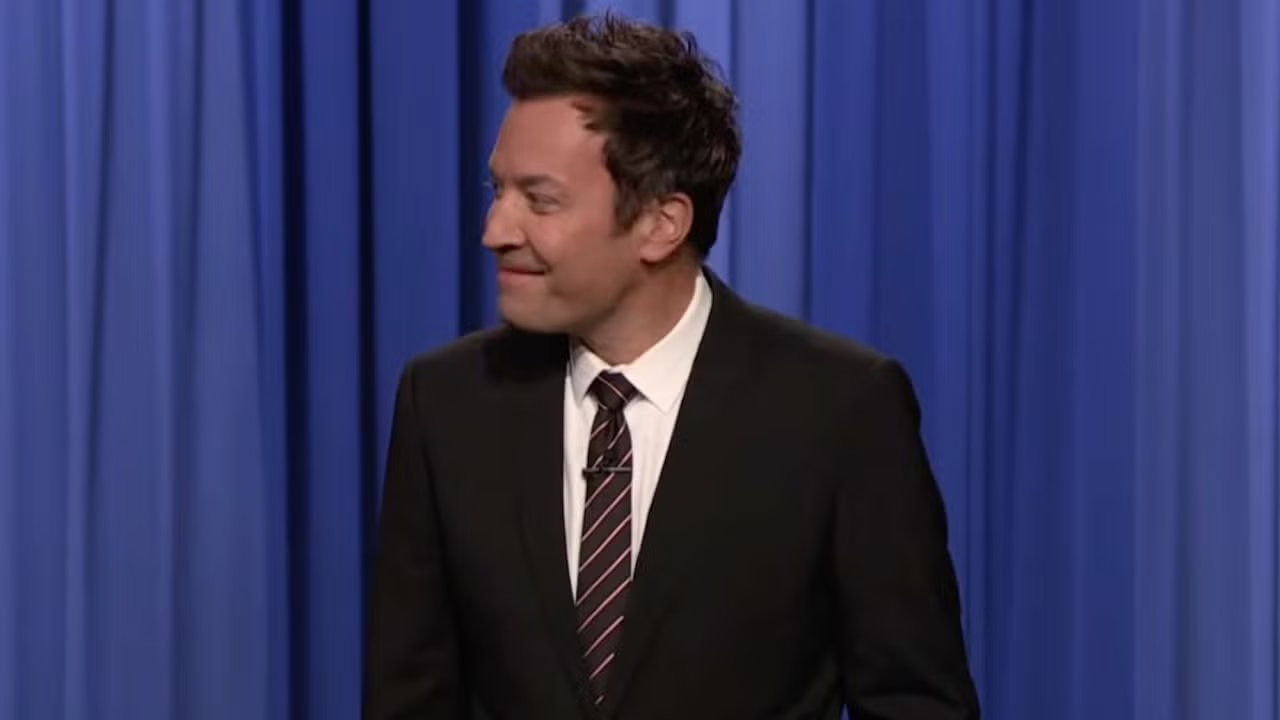
Jimmy Fallon found himself with the case of the giggles in the middle of his “Tonight Show” monologue, but not over one of his jokes. Rather, the late night host struggled to keep a straight face after a member of his studio audience loudly reacted to the news of Karoline Leavitt’s resignation.
“Some more big news today, Trump announced that Karoline Leavitt is resigning as White House press secretary,” Fallon noted during his opening address. However, before he could move on to the next beat in his joke, an audience member audibly cheered in the distance – prompting others to get in on the celebration. (Though, a few others notably groaned at the monologue interruption.)
Fallon took the loud reaction in stride, laughing at the unexpected moment for a few beats before regaining his composure and getting the monologue back on track.

“That story again, Karoline Leavitt was definitely one of the staffers left on Air Force One. ‘Oh, really, you didn’t take me?!’” Fallon quipped, referencing Trump being covertly moved to a second plane when leaving the NATO summit in Turkey over an Iran missile threat (subsequently leaving press and his own staff to be decoys).
“Apparently, she’s moving on to an easier job, working as the press secretary for Taylor Farms Lettuce,” Fallon said, calling back to the cyclosporiasis outbreak linked to the food producer.
Watch the moment for yourself below.
Fallon’s jokes came mere hours after President Donald Trump took to Truth Social and shared that Leavitt was set to step down as White House press secretary.
“Our wonderful White House Press Secretary, and one of my most trusted aides, Karoline Leavitt, will be departing her role at the end of the month so she can spend more time with her beautiful young children and family, a decision I totally understand and respect!” Trump wrote on Wednesday.
He also confirmed that Leavitt would stay on “as one of my TOP outside Advisors, and will remain an influential voice within the Republican Party as we head into the Midterms.”
In her own statement, Leavitt said being the press secretary had been “the honor and adventure of a lifetime.”
“Most of all, I am thankful to the President for entrusting me with the distinct privilege of speaking on his behalf at the White House podium,” she added. “I have spoken with great pride about the many historic accomplishments of this Administration, and I have relished holding the liberal media accountable and ensuring the American people hear the truth about President Trump’s successes.”
You can read her full statement here.
“The Tonight Show Starring Jimmy Fallon” airs weeknights at 11:35 p.m. ET on NBC.

>

The Zurich Film Festival has announced its first selection of gala titles for this year’s edition, which runs September 9 to October 10.
Films include the European premiere of Peter Farrelly’s I Play Rocky, starring Anthony Ippolito as Sylvester Stallone, Matt Dillon, Stephan James and more as well as Channing Tatum and Gemma Chan starrer Josephine from director Beth de Araújo.
I Play Rocky follows unknown actor Stallone, who is writing a screenplay title Rocky that a studio is desperate to acquire. But Stallone refuses to sell the rights – unless he gets to play the lead himself. Despite numerous setbacks and rejections he remains determined to make his dream a reality: playing Rocky Balboa.
Josephine follows 8-year old Josephine who witnesses a violent crime and her world is out of joint as she tries to find a way to regain a sense of security. Her emphatic mother (Chan) wants to help her process what happened while her father (Tatum) believes in preparing her for the harsher realities of life, but increasingly finds himself overwhelmed with by the situation.
Further titles include German productions Love, After All by Andreas Dresen and How Can I Help from Doris Dörrie, both of which will world premiere in Zurich.
Here’s the full list:
I PLAY ROCKY
European Premiere
Biography
USA, 2026
Director: Peter Farrelly
Cast: Anthony Ippolito, Matt Dillon, Stephan James, AnnaSophia Robb, PJ Byrne, Toby Kebbell, Tracy Letts, Jay Duplass
JOSEPHINE
Drama
USA, 2026
Director: Beth de Araújo
Cast: Channing Tatum, Gemma Chan, Mason Lily Reeves
111 – ECHOES FROM HALIFAX
European Premiere
Drama
Switzerland, Canada, 2026
Director: Mauro Mueller
Cast: Ursina Lardi, Kris Holden-Ried, Djebril Zonga, Fathia Youssouf, Natalie Brown
On September 2, 1998, the crash of Swissair Flight 111 off Halifax changes the lives of many people forever: relatives struggle for certainty about their loved ones, helpers try to offer comfort, and the residents of the Canadian coast are confronted with the traces of tragedy. As time passes and questions remain unanswered, the film shows how grief connects, relationships change, and new perspectives emerge.
COMPANY
Mystery
Canada, USA, UAE, 2026
Director: Casey Affleck
Cast: Nick Nolte, Ben Mendelsohn, Adelaide Clemens, Scoot McNairy, Emily Alyn Lind, Caylee Cowan
On a winter night in 1975, a mysterious woman named Evelyn arrives uninvited at a holiday gathering and tells the story of Tom, an aging hermit who rescues a stranded actress during a Colorado blizzard in 1953. To pass the night, the actress recounts an older tale of a farming couple who take in a troubled young drifter as a series of grisly murders spreads fear across the frontier. As the stories intertwine across generations, COMPANY becomes a meditation on grief, vengeance, forgiveness, and the quiet acts of compassion that can heal even the deepest wounds.
POSSIBLE LOVE
Drama
South Korea, 2026
Director: Lee Chang-dong
Cast: Jeon Do-yeon, Sul Kyung-gu, Zo In-sung, Cho Yeo-jeong
Possible Love follows the intertwined relationship of two married couples facing different paths and hidden desires. Mi-ok (Jeon Do-yeon) lives quietly with her laid-off husband Ho-seok (Sul Kyung-gu) and their young son Cheol until a
funeral brings them into the orbit of Ye-ji (Cho Yeo-jeong), a documentary filmmaker chronicling laid-off workers, and her husband Sang-woo (Zo In-sung) – a couple whose affluent lifestyle stands in sharp contrast to their own. When Mi-ok agrees to be filmed, she grows close to Ye-ji, and finds herself uneasily drawn to the unreadable Sang-woo. As their worlds collide, fractures begin to appear in their daily existence.
LOVE, AFTER ALL
World Premiere
Tragicomedy
Germany, 2026
Director: Andreas Dresen
Cast: Dagmar Manzel, Joachim Król
Lore (Dagmar Manzel) and Harry (Joachim Król) have been married for nearly 40 years and there is rarely a moment of silence between them. Old stories, missed chances and the uncertainties of retirement fuel heated discussions. Lore is afraid of growing old and bitter in the garden alongside Harry while he longs for stability and peace. There is only one thing they agree on: Their daughter Gloria has little luck in love. Now, she wants to get married for the third time – this time to a wealthy man who is almost the same age as Harry.
IT WILL HAPPEN TONIGHT
Romance
Italy, France, Spain, 2026
Director: Nanni Moretti
Cast: Louis Garrel, Jasmine Trinca, Hippolyte Girardot, Angela Finocchiaro, Melina Åkerman Kvie, Elena Lietti, Andrea Lattanzi, Antonio De Matteo, Nanni Moretti
I’ll wait for you, for as long as you want me to. But will it ever happen?
BURGUNDY
Documentary
France, 2026
Director: Michael Dweck, Gregory Kershaw
Cast: Enzo Ferraroli, Céleste Kalis, Eric Goettelmann, Patrick Maniere, Guillaume Baroin, Bertrand Devillard
Burgundy is one of the world’s most famous wine regions. Through the eyes of novices in hospitality and viticulture, BURGUNDY offers a fascinating glimpse into its unique wine culture, where time-honored traditions live on in rituals centered on luxury and indulgence. Blending documentary and fictional elements, directors Michael Dweck and Gregory Kershaw pay homage to the remarkable and charming people whose zest for life shapes and preserves this unique region and its centuries-old culture.
HOW CAN I HELP?
World Premiere
Drama/Comedy
Germany, 2026
Director: Doris Dörrie
Cast: Angela Winkler, Laura Tonke, Josef Ellers, Via Jikeli, Eugene Boateng, Zoë Baier
Mrs. Winkler has a fall and becomes a nursing case. Her daughter, overwhelmed by her needs, hires a care robot. After some initial resistance, Mrs. Winkler grows quite fond of him. He takes perfect care of her and keeps her entertained – except that he is also supposed to kill her in case her condition deteriorates further.
THE HAMMER
World Premiere
Documentary
France, USA, 2026
Director: Simon Wallon
Cast: Simon de Pury, Jeff Koons, Marina Abramović, Chloe Wise, Lou Zhenggang
A documentary portrait of famed auctioneer Simon de Pury, whose career saw him leading auction houses such as Sotheby’s and Phillips, being the curator of major world collections, an artist, even a DJ, and always being an unavoidable personality “the Mick Jagger of auctions” takes us behind the curtain of the extravagant art market.
>

Arsenal fans and Myles Lewis-Skelly don’t want this to end. The heart says keep him

Eddie Jones says he shows videos of geese flying in formation to coach his Japan side

Ruby Evans: British gymnast on coping with fame and followers
-

 movies3 months ago
Search For Canadian TV Actor Stewart McLean Now Homicide Investigation
-

 Fashion9 years ago
These ’90s fashion trends are making a comeback in 2017
-
Fashion9 years ago
According to Dior Couture, this taboo fashion accessory is back
-
Fashion9 years ago
Model Jocelyn Chew’s Instagram is the best vacation you’ve ever had
-
Fashion9 years ago
Your comprehensive guide to this fall’s biggest trends
-
Fashion9 years ago
Emily Ratajkowski channels back-to-school style
-
Fashion9 years ago
9 Celebrities who have spoken out about being photoshopped
-
Fashion9 years ago
A photo diary of the nightlife scene from LA To Ibiza