
Sports
Jelani Woods fixed his body. Now, the Jets TE is aligned for a comeback season

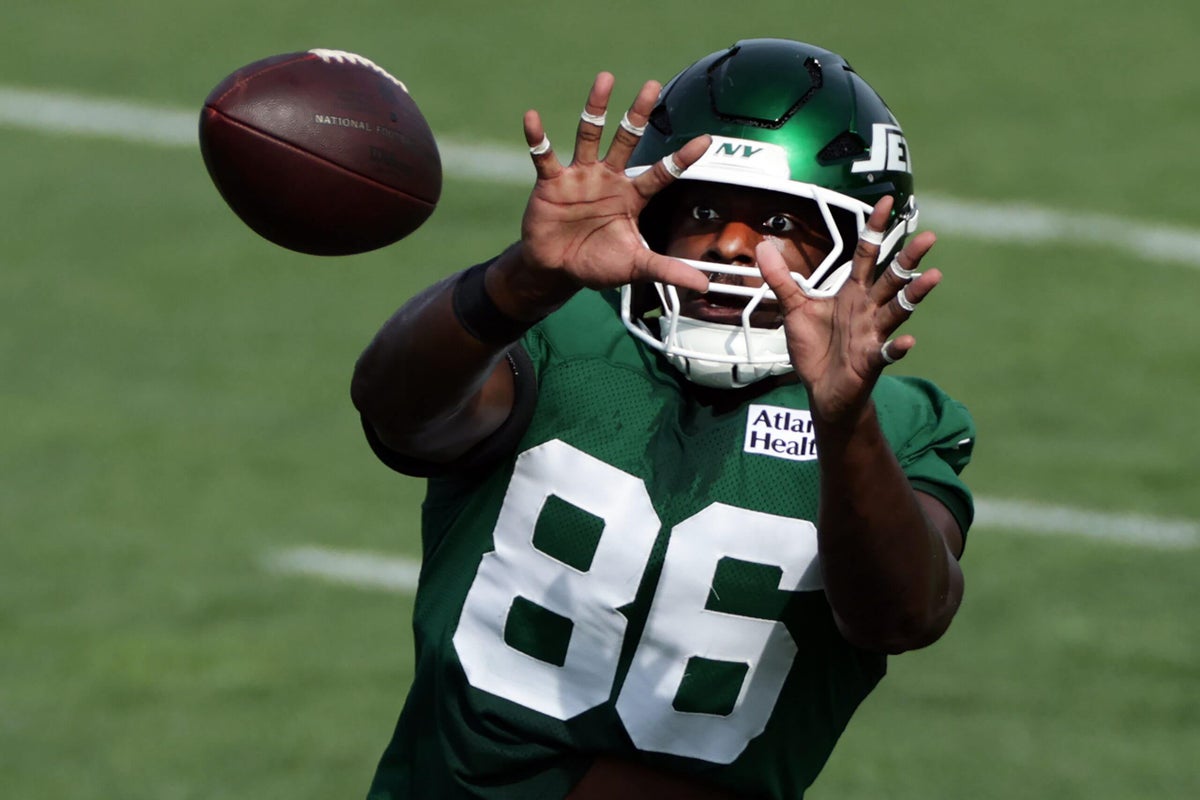
FLORHAM PARK, N.J. — The moment was small enough that most people didn’t notice — or, maybe, care. It was a minute detail toward the end of a miserable New York Jets season, occurring late in another blowout loss. A Jets tight end lined up on the left side of the line of scrimmage. When quarterback Brady Cook took the snap, the tight end blocked a New England Patriots linebacker before leaking across the middle. Cook found him. The tight end caught the ball as he fell to the ground.
And then life went on. It registered as a 4-yard reception in the box score. But for Jelani Woods, it was much more.
“It was meaningful,” Woods said, his large frame — 6-foot-7, 253 pounds, 83-inch wingspan — crowding a small chair at the Jets facility after a recent practice.
Woods went 1,085 days between catches. Injuries robbed him of two full seasons with the Indianapolis Colts, stalling what was an otherwise promising start to his career. His athletic testing leading up to the 2022 NFL Draft was historic — according to one measurement, it was the most impressive testing for any tight end prospect since at least 1987. But despite a 4.61-second 40-yard dash and 37.5-inch vertical leap, Woods couldn’t outrun or out-jump the imbalance in his body. A hamstring strain cost him one season. Turf toe cost him another. Two full seasons, and most of a third, without playing a football game that counted.
Woods had to relearn his body. Specialists discovered things he was doing, or not doing, that could have contributed to his injuries. He changed his regimen, his workouts and his approach to fitness. It wasn’t until he walked through the doors at the Jets facility for the first time, after the Colts gave up on him, that he started to feel like himself again.
Now, he’s thriving. Last week, he caught a touchdown toward the end of an intrasquad scrimmage. Quarterback Geno Smith recently was asked to name someone on offense who had surprised him. The quarterback’s answer: Jelani Woods.
“I like the way he’s been making plays,” Smith said.
Jets coach Aaron Glenn lights up when he talks about Woods. He’s played his way into a role in a new Jets offense that is going to emphasize the tight end position. If he was on the bubble to make the team at the start of training camp, he isn’t anymore.
“It’s training camp. It seems hard, but just going through the past two, three years makes me appreciate waking up in the morning like, all right, I got another opportunity to just get better,” Woods said. “You appreciate it way more. So, on days like today, when you’re just grinding — you gotta love it. I’ve got a whole different mindset now.”
Woods has found his place, and his peace. All it took was his body feeling like it was in one piece.
The two early MVPs of Jets training camp
Zack Rosenblatt
Woods returned to the Jets facility in March to re-sign with the team that claimed him off waivers last summer. As he walked through to the coaches offices, he saw Glenn first. The coach saw him and smiled; the two have developed a bond. Woods kept walking, heading to meet new tight ends coach Alfredo Roberts for the first time. But Frank Reich’s office comes first in the hallway.
Woods and Reich locked eyes. They both smiled. Reich “shot up” out of his seat, Woods said, and yelled: “JELANI!”
They hugged “for a good little minute”, Woods said, and then Frank, jubilant, told him: “Man, I’m so glad to have you back!”
“It was just big smiles,” Woods said. “And it’s been like that every day since.”
“Yeah,” Reich said recently, “I love Jelani.”
Woods always wanted to come back to the Jets — he felt a connection to this team and the organization. But Glenn hiring Reich as his new offensive coordinator in February sealed it.
“I was like, I’m there,” Woods said. “Ain’t no ifs, ands or buts about it. I didn’t even need to think about it.”
Reich was the head coach of the Colts when they selected Woods in the third round of 2022 draft. The last time Woods felt like himself was when Reich was coaching him, pushing him. “He was on me my rookie year,” Woods said. “That helped me big time because it helped me understand: This is the NFL.”
Their time together didn’t last as long as either had hoped. Woods had 312 receiving yards and three touchdowns as a rookie, but Reich was fired midway through the year. Woods flashed even after Reich was gone; there was optimism that he’d take the next step in 2023. Then he pulled his hamstring in OTAs, aggravated it during training camp and tore his other hamstring before the season started. His second year ended before it started, and he’s never been the same since.
In the 2024 preseason, Woods suffered a turf toe injury that required surgery and sidelined him for another full season. NFL players who suffer season-ending injuries often talk about how isolating that can be — spending so much time in rehab, away from your teammates, alone. Instead of falling into that, Woods stayed active in the tight end room. His brother, Jaleel, moved into his apartment so he wasn’t alone on the days when it felt that way. And then he worked to find out what was wrong, why these injuries kept happening.
“It was actually crazy because I started feeling like myself again” in 2024, he said. “I had to knock the rust off and, you know, deal with being scared about the hamstring stuff and trying to get over that. When I finally felt like I got over it — then that (turf toe) happened. It was just like, oh my gosh, OK, what am I doing wrong? What am I not paying attention to?”
He met with various specialists and arrived at a conclusion: Without realizing it, Woods’ body was unbalanced. Whether because of his injuries or his long legs and limbs, Woods was overcompensating in some areas. One side of his body was stronger than the other, and the way he was working out and lifting weights only intensified that.
“It was just learning my body because I’m kind of not normal,” Woods said. “I had to balance things out and learn my body — the whole body is a chain. So I saw the specialists to see where my weaknesses are, how it’s related to where my strengths are and to try to get it to balance out.”
Woods learned that some parts of his body were “way stronger” than the others, which is why he was “overcompensating in some ways.” The injuries exacerbated that — a calf strain left him putting more weight on his foot, which likely contributed to the turf toe.
“There’s so much that went into it that I didn’t know at the time,” Woods said.
He worked with a physical therapist who helped him discover areas of tightness on his lower body that he’d never noticed before. His new workout plan involved isolated exercises. An example: instead of doing regular squats, Woods does split squats to give each side of his body equal footing. When he used to work out, he’d favor his stronger side without realizing it — and he lifted a lot of weight, too. “You do it so often and it (your body) can get out of whack,” Woods said. “And then you train hard, you do it over a set amount of times, your balance is off and then that can lead to injuries.”
The new approach seems to be working.
Said Roberts: “I just want him to have some luck.”
Woods said he felt like “himself” the moment he joined the Jets after training camp last season, though he didn’t really get the chance to show it on Sundays. He didn’t play in a game until Week 8, when he played one snap, and then not again until Week 15. But Woods didn’t even mind — he was centrally focused on staying healthy for a whole season. He was happy to grind out reps on the scout team — at least he was playing football.
“I know the talent is there, so it was just about staying healthy and proving that I can stay healthy,” Woods said. “I felt like I got a lot of opportunities, even in practice, to showcase what I can do. That was my biggest thing: Show them who I really am, because they don’t really know.”
He still played enough to etch himself in Glenn’s memory.
“Once you say his name, I always go back to Jacksonville (in Week 15) and just watch the way he blocked,” Glenn said. “If you get a chance to go back and watch that game, just watch it and just watch how physical, how tough he is, the way he was bending. For a 6-7 guy, the way he was getting underneath guys.”
Glenn envisions Woods as someone who can help as a blocker while also splitting out to go one-on-one with safeties and linebackers who will be overmatched by his size and strength. “I’m expecting him to win that matchup,” Glenn said. Reich called him “super talented” and highlighted his skills as an “explosive blocker,” his length and his speed. “People don’t realize how fast he is once he gets the ball in his hands. He’s dangerous with the ball in his hands — he’s a big man, and he can run.”
Reich has a vision for how to use Woods even in a crowded tight end room featuring three recent high draft picks: Kenyon Sadiq (2026 first round), Mason Taylor (2025 second round) and Jeremy Ruckert (2022 third round).
Woods is an elder statesman of sorts in that room, even if he’s technically only appeared in 19 NFL games. He is a veteran of Reich; he understands how the offensive coordinator operates and the intricacies of his system. His teammates have turned to him for tips.
“Jelani’s been helping me out a lot,” Sadiq said. “He’s been giving me the rundown of how to do this, how to do that.”
Said Reich: “Jelani’s wicked smart. He’s helped that tight end room learn aspects of this offense, knowing what we want to do.”
Sadiq missed all of the spring and a chunk of training camp after surgery on his hernia, which has provided Woods an opportunity to get valuable reps with both Smith and backup quarterback Cade Klubnik. His target share in team drills has been on par with both Ruckert and Taylor. On Friday, he’ll play in the Jets’ preseason opener against the Tampa Bay Buccaneers.
He’s just happy to be playing at all.
>
The year is 2035. Ryan Day has decided to try his hand in the NFL after 17 seasons and two national championships at Ohio State. The Buckeyes have hired a splashy replacement: Super Bowl champion Mike Macdonald, who is returning to the college ranks after a successful run with the Seattle Seahawks.
Because everything in the Michigan-Ohio State rivalry is magnified, Macdonald’s lone season as Michigan’s defensive coordinator in 2021 is a hot topic. During his first appearance at College Football Super League media days, Macdonald is asked if his former boss, Jim Harbaugh, will be welcome at practice.
“If Jim wants to come to practice, he can come every week but one,” Macdonald says.
Ohio State fans would have some feelings about Harbaugh, their archnemesis, being welcomed into the Woody Hayes Center by a Buckeyes head coach. Perhaps this thought experiment explains why people reacted as they did when Michigan coach Kyle Whittingham said the same thing about Urban Meyer, his former boss at Utah.
“Based on what Urban has told me about it, I just think that a rivalry can be intense and emotional without the hatred factor,” Whittingham said at Big Ten media days. “I don’t think there’s any place for that, personally.”
Can Kyle Whittingham bring stability to Michigan?
Austin Meek
Nothing Whittingham said was wrong. The Michigan-Ohio State rivalry is too good to be overshadowed by flag-planting, logo-stomping, petty insults and off-field skullduggery. In trying to dial down the vitriol, Whittingham got a “welcome to Michigan” moment and an introduction to the all-consuming nature of the rivalry.
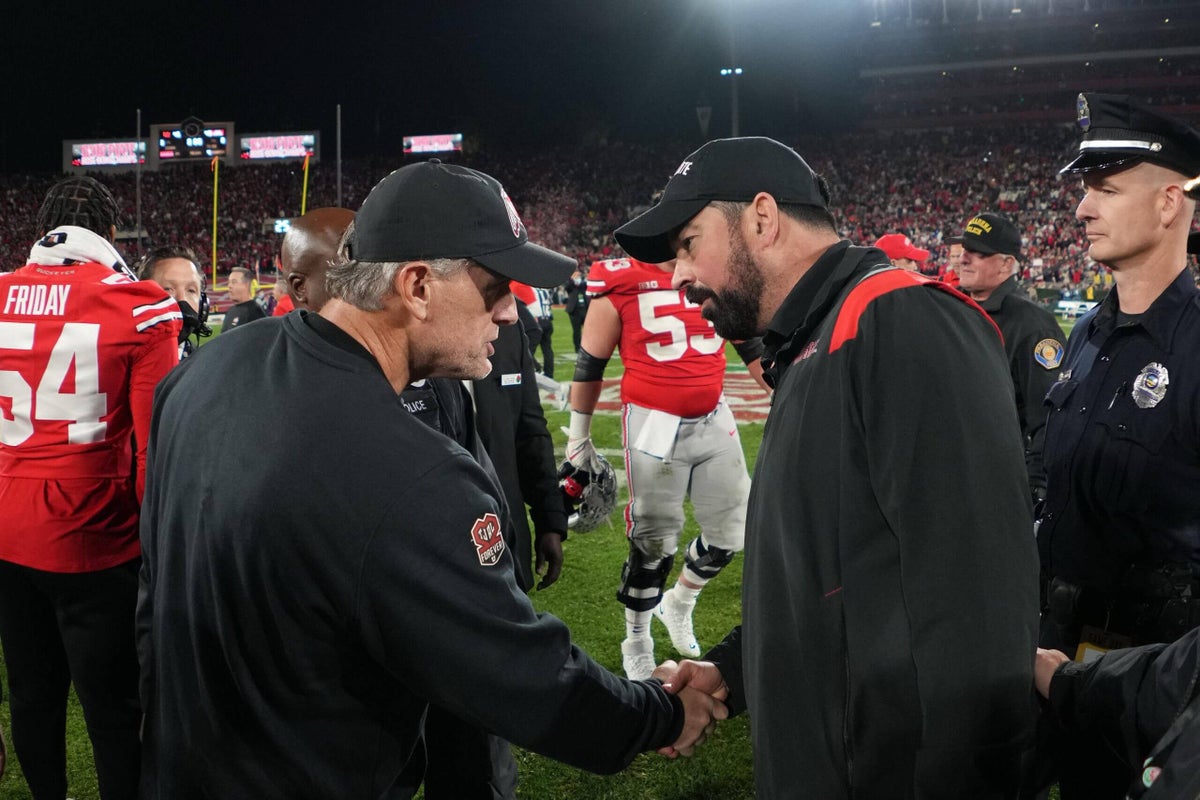
Whittingham was being sincere when he described Meyer as a friend and called Day a “good guy,” but Michigan coaches typically don’t talk that way about their counterparts at Ohio State. Grudging respect is one thing, but Whittingham went a step further, expressing familiarity and even fondness. If those comments touched a nerve, it’s because they underscored the strangeness of Michigan’s new coach having deeper ties in Columbus than he does in Ann Arbor.
Faced with the accusation of being nice to his rival, Whittingham did a bit of clean-up this week while standing by his main message.
“I’m not trying to downplay (the rivalry) at all,” Whittingham said Monday. “It’s a huge game. Gigantic. It’s something that we all have in the back of our mind 24/7. I probably should have worded it differently, but that game is of the utmost importance.”
Managing the narrative is a big part of the rivalry. When Harbaugh started 0-5 against Ohio State, the perception was that Michigan couldn’t match Meyer’s maniacal focus on the rivalry. When Day lost four in a row to the Wolverines, the perception was that Michigan was in his head. Coincidence or not, the Buckeyes snapped their losing streak last season after they tried treating Michigan more like any other game.
(Now, it’s Michigan quarterback Bryce Underwood who told NBC Sports: “It’s just another game. Just, we’re guys in a different color. That’s how I see it.”)
Whittingham knows what college football rivalries are all about: The Holy War between Utah and BYU is about as intense as it gets, with 22 meetings decided by single digits since Whittingham joined Utah’s staff in 1994. His challenge is to show that he gets this rivalry, despite spending most of his career 1,600 miles away.
Though he ultimately switched allegiances, Whittingham played for legendary coach LaVell Edwards at BYU and counts Edwards as one of his greatest influences. Whittingham’s Michigan staff includes running backs coach Tony Alford and special teams coordinator Kerry Coombs, both of whom coached with Meyer at Ohio State. The idea that coaching staffs can cross-pollinate in a rivalry is part of Whittingham’s history.
In that sense, Whittingham’s approach is truer to the spirit of the Michigan-Ohio State rivalry than the more recent us-against-them antagonism. Bo Schembechler played for Woody Hayes at Miami (Ohio) and coached under him at Ohio State. The two were fierce combatants in the Ten Year War but maintained a relationship of mutual respect.
“One of the reasons why I’m a football coach is because I grew up with Woody and Bo,” said Coombs, who coached with Ohio State offensive coordinator Arthur Smith with the Tennessee Titans. “There’s no reason for any of it to be nasty. It doesn’t have to be hateful. It doesn’t have to be unnecessarily violent.”
Fans and coaches at both schools have struggled to keep the rivalry in perspective. Threats to Day and his family, Michigan’s sign-stealing scheme and the violence that erupted on the field after Michigan upset the Buckeyes in 2024 speak to the intense pressure that both sides feel. If Whittingham is able to normalize relations with Ohio State, he’ll be doing a service to both programs.
Whittingham’s comments made a bigger splash on social media than they did with Michigan fans, who are still in the honeymoon phase with their new coach. If Whittingham beats Ohio State in November, no one will care that he counts Meyer as a friend. But if the Wolverines lose, you can imagine the message board posts wondering if Whittingham’s lack of Buckeye Hate is a problem.
“Would we have a better chance to win if I hated them? I don’t understand,” Whittingham said Monday. “Whatever gives us the best chance to win, I’m all for. (I) want to beat them worse than anybody around.”
With time, perhaps Whittingham will learn to dislike Ohio State as much as Michigan fans do. He’s right to say that no matter how intense the rivalry is, it doesn’t have to turn nasty or vindictive. Whittingham can be respectful of the Buckeyes and cordial to his coaching peers, but now that he’s the coach at Michigan, he’ll have to draw some lines between his old life and his new one.
Maybe let Meyer stand outside like everyone else.
>
FAYETTEVILLE, Ark. — The jersey was just a prop, something for Ryan Silverfield to hold up at his news conference: His name and the No. 35, because he’s the 35th Arkansas football coach. It could’ve been tossed aside and forgotten.
Silverfield framed it. He hung it in his office, a reminder of the challenge he’s been given.
He knew Arkansas was a program at a crossroads — in football and in finances. And Silverfield knew that he’s the 35th Arkansas football coach — and 10th since 1992 — because this place has eaten up so many others.
“You think about it: Ken Hatfield, who won here, was run out. Houston Nutt, who won here, was run out,” Silverfield said, referencing two coaches who left for other jobs amid issues with administrators or fans. “If we’re going to get serious about football, it’s going to take a lot of people understanding that this is what it takes.”
They wanted to run Silverfield out before he was even hired. Well, a small group of unhappy Hogs fans held a short-lived demonstration on campus, though they staged their protest at the wrong building. Silverfield’s introductory news conference went off anyway, and then he spent the next nine months doing what he believes needs to be done for Arkansas to compete in this era.
Get the money.
This is the new reality for a first-year coach of an SEC team trying to punch its way up in 2026: Silverfield, recognizing that Arkansas was financially behind rival programs, estimated he spent 75 percent of his offseason time on fundraising efforts.
Silverfield, who spent the last six seasons as Memphis’ head coach, may have been an underwhelming hire in the eyes of some fans. But he could also prove to be exactly what Arkansas needs: A natural fundraiser and blunt-talking realist who knows his job is to get Arkansas back to relevance, or get left behind, perhaps permanently.
“Every single day, that’s my job,” Silverfield said. “That’s why if I sit there and say, ‘This is what we’ve always done here,’ they’ll be on their 36th coach sooner than we want to be.”

Ryan Silverfield sits with athletic director Hunter Yurachek at his introductory news conference last December. (Nelson Chenault / Imagn Images via Reuters Connect)
Playing catch-up in a new era
Arkansas was a charter member of the Southwest Conference, where the Razorbacks won 14 conference titles and routinely went to major bowl games under Frank Broyles, Lou Holtz and Hatfield. Many Razorback fans rue the demise of the Southwest Conference and wonder if their program would do better in the Big 12, but even after joining the SEC, there were good years under Nutt, Bobby Petrino and Bret Bielema.
But since Petrino’s motorcycle escapade got him fired before the 2012 season, Arkansas has gone 0-8 in SEC play four times with only six winning seasons. Since 2017, its overall record (40-69) and SEC record (15-59) are both the worst in the conference.
“All of the former glory of Razorback football in the ’60s, ’70s, and ’80s, some good times here and there, has largely been erased in the minds of most people,” Trey Biddy, an analyst at HawgSports, decreed recently.
The era of paying players has not helped. One state over, Ole Miss got the Grove Collective going and capitalized, its investments culminating in a College Football Playoff semifinal run. Arkansas, however, was slower into the collective game and had trouble attracting and signing players. That stalled the momentum of Silverfield’s predecessor, Sam Pittman, who won nine games in 2021 but was fired after a 2-3 start to last season.
“In fairness, we got a little bit behind the 8 ball,” said Merritt Dyke, a Razorback Foundation board member and CEO of Dyke Industries, a millwork distributor. “We’ve got to figure out how to raise money, but we’ve got to figure out — the athletic department’s got to figure out creative ways to create the opportunity to raise money.”
There are, of course, hurdles: Arkansas is the second-smallest state by population in the SEC, after Mississippi. And although Walmart and Tyson Foods are based in Arkansas, it’s still the fourth-poorest state in the nation by median household income.
“We have per capita, I think, the greatest depth of billionaires of any state in the country, but per capita, we have kind of the shallowest pool of millionaires,” said athletic director Hunter Yurachek, now in his ninth year at Arkansas. “And so we have so many incredible donors, but this football piece, this NIL piece, it just exploded. And anybody that said they were well prepared for it, I think would be fooling you.”
Arkansas’ financial position came into focus this spring when the school announced it would shut down the men’s and women’s tennis programs. It reversed course 20 days later, after Yurachek said donors had stepped up.
And while most — if not all other — SEC athletic departments shrugged off the $20.5 million in revenue sharing this past year that could now go to players, Arkansas had to adjust: It raised $10 million by re-seating the basketball arena, and it saved $10 million by eliminating 15 jobs, not filling other positions, freezing raises and cutting travel expenses.
And yet, if the athletic department had a hard cap of around $50 million — as the Protect College Sports Act would do — Yurachek said that would be doable. Arkansas also increased its football coaching salary pool: Pittman was dealing with the second-lowest in the SEC, Yurachek said, while Silverfield was bumped up to “middle of the pack,” which the AD thinks should give his coach “a fighting chance” for College Football Playoff contention, especially if the Playoff expands to 16 or 24 teams.
“Right now, my focus, our department’s focus, is all in on football,” Yurachek said. “This is a key period of time for us in our football program.”
Could this be the SEC’s year to win a national title? It starts with QBs
Seth Emerson
Chasing donors, big and small
The day before preseason practice began, Silverfield stood in a tunnel just outside the field. A visitor pointed to the Walmart logo, prominently painted on a concourse wall. How did Oregon become Oregon, the visitor asked rhetorically.
“A thousand percent,” Silverfield said. “When Dan Lanning took that job, it wasn’t the same as it is 500 days later, when NIL became a thing. It went from a top-25 job to a top-five job real quick.”
But while Nike made Oregon a top-five job, the prospect of Walmart doing the same for Arkansas has yet to be unlocked. The Walton family has been generous with its support in Fayetteville: hundreds of millions to the university for various projects, in addition to bike paths and other community projects. Walmart as a company is the No. 2 athletic sponsor at nearly $2 million annually, and the name of the basketball arena is Bud Walton Arena. The Walton family is the third-highest donor to the Razorback Foundation, the fundraising arm for all sports.
Tyson Foods, the other local behemoth, has shown more direct interest in football, and is Arkansas’ jersey patch sponsor. Silverfield has worked hard to establish relationships and get donations from many others, with some checks already written.
Walmart remains the Holy Grail. The program just can’t sit around waiting for it.
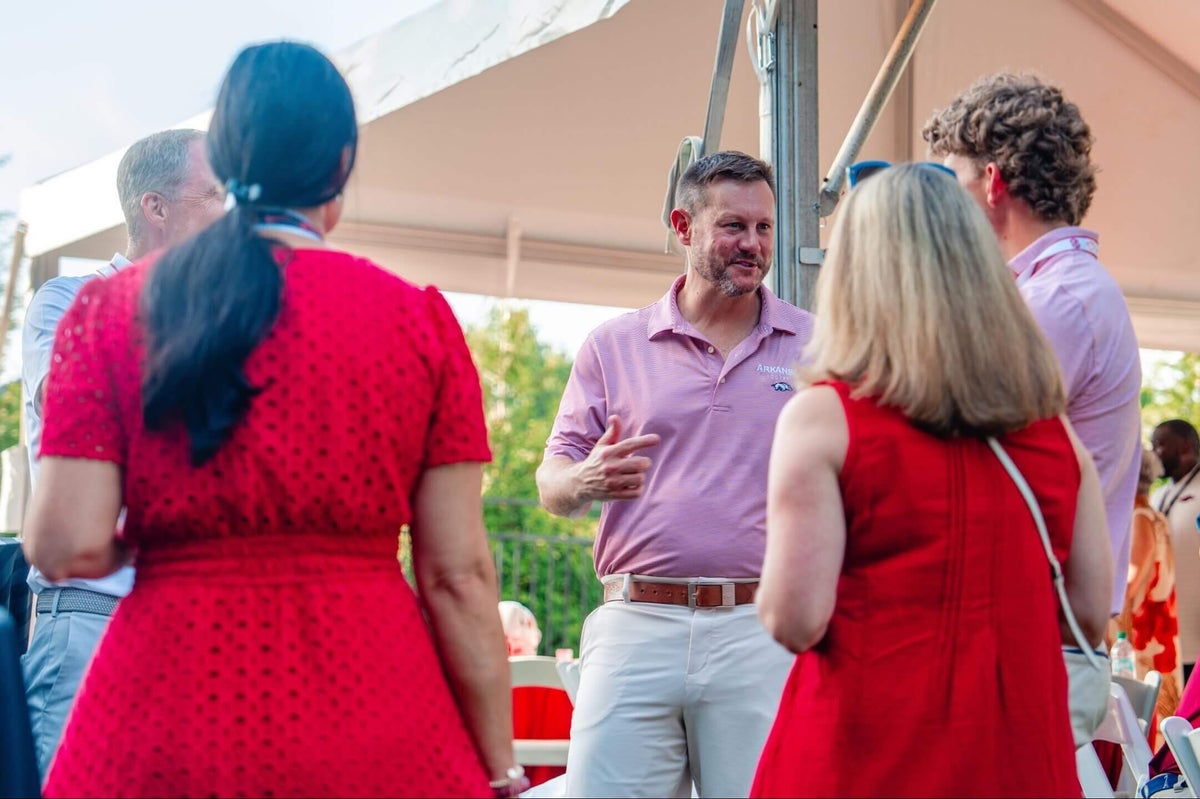
That 75 percent of Silverfield’s offseason spent fundraising? Sometimes, that was people being brought directly to his office. Sometimes, he traversed the state. He had dinner at the governor’s mansion.

Ryan Silverfield poses for a photo with a fan at an Arkansas-Kentucky men’s basketball game in January. (Nelson Chenault / Imagn Images via Reuters Connect)
The result: Arkansas says $25 million has already been raised for its Razorback Foundation, directly for football, and the program raised its annual goal from $30 million to $50 million. Silverfield said his player pool will increase in 2027.
But this year’s team came with a set budget, which was lower. (He won’t say how low.)
“I said we need to increase this, so I put on my fundraising hat and spent a lot of the last eight months doing so,” Silverfield said. “In order for us to compete in the SEC, there’s a certain amount we need to get to financially to give yourself a chance. I think at some point, most people realized that around here, that we weren’t where we needed to be.
“Listen, I give most people credit that they fight the good fight, to try to get better. But I can’t sit here and allow other people to do it. It’s my job as the head coach and the CEO to do that as well.”
One willing donor has been Jordan Wright, founder and CEO of Wright’s Barbecue, a growing chain in the state. Wright is a lifelong Razorbacks fan and believer in Silverfield, but thinks the big support will only come if the new coach generates wins.
“If you think about Indiana, Curt Cignetti didn’t come in with huge fanfare” ‘Oh my gosh, they hired the guy that’s going to win a national championship in two years,’” Wright said. “But he recruited and built the right team, played their ass off, and then the (Mark) Cubans of the world were like, ‘We want to be a part of this.’”
If that means victories, it may be hard to impress donors right away. Arkansas was picked 14th in the SEC in the preseason media poll, has a tough schedule and 80 new players, including a new quarterback.
But donors — and Silverfield’s boss — said that people should be looking for other things: fundamentals, attention to detail, discipline.
“You’ve got to be better in all those intangible areas because we may not have the same money we can spend for talent acquisition and things of that nature,” Yurachek said. “So, we have to do other things differently that help us win games.”
Can Arkansas evolve?
Arkansas is winning in other sports: The men’s basketball team made the Sweet 16 last season in its second year under John Calipari. The school has won 43 different SEC championships in a dozen other sports over the last eight years, and 10 national championships.
Football, of course, is a different animal, and could determine Arkansas’ place in the next era of college sports. That responsibility now falls to Silverfield, who went 50-25 at Memphis — including a win over Arkansas last year. But he never won a conference championship, and many Razorbacks fans wanted Jon Sumrall (who took the job at Florida), Alex Golesh (who took Auburn) or Arkansas alumnus Rhett Lashlee (who stayed at SMU).
Silverfield knew the criticism was there. He has won over donors like Wright and Dyke. But most of his work has been behind the scenes: Having stairwells at the facility repainted with the team logo, replacing dumbbells in the weight room, and all those fundraising efforts.
The job of head college football coach is so much less about football these days.
“More so than ever. And probably here more than most places,” Silverfield said.
At most jobs, he said, the head coach is either really good at Xs and Os or recruiting. This job has required both of those — in the 25 percent of his time when he’s working to raise money.
“And that’s OK,” he added. “I hope five years from now we’re not saying that I’m spending 75 percent of my time fundraising. I hope I’m spending 95 percent of my time with my current players on my roster and helping this program in other ways. But we’re not there yet.”
>
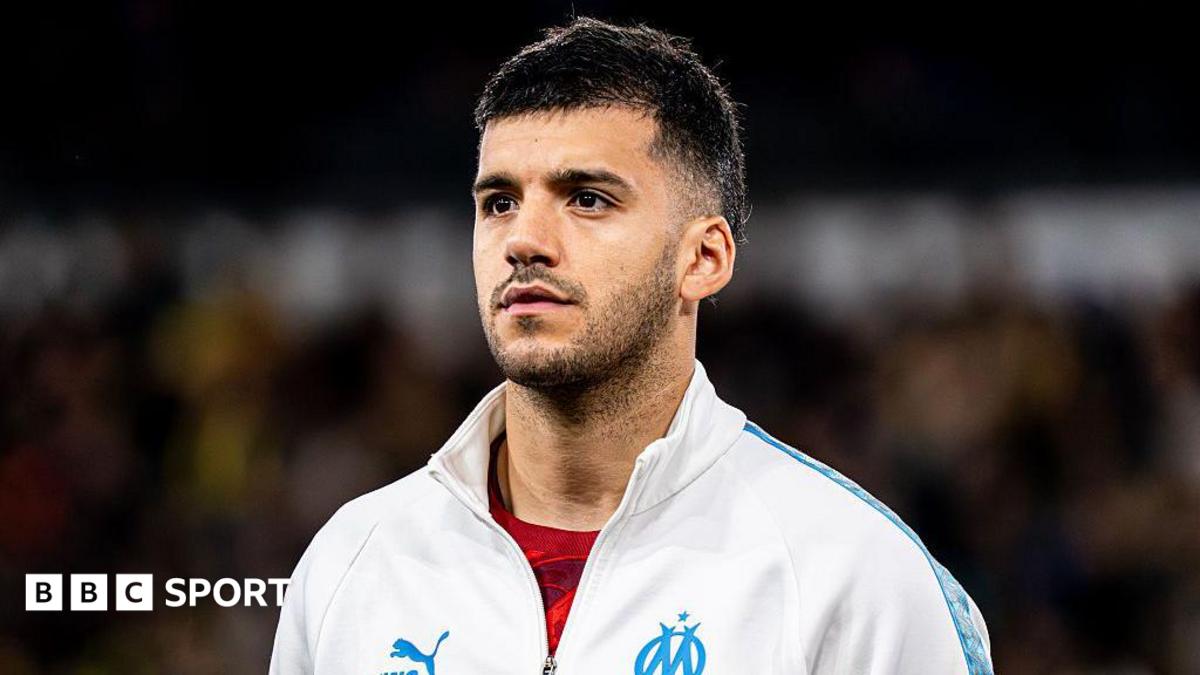
Manchester City have completed the signing of Argentina goalkeeper Geronimo Rulli from Marseille.
The 34-year-old returns to the Etihad Stadium – where he spent the 2016-17 season without making a first-team appearance – on a two-year deal.
BBC Sport previously reported that City have paid a fee of £1.7m.
He comes in as a replacement for England goalkeeper James Trafford, who left City to join Leeds in a deal worth up to £45m, and will be understudy to number one Gianluigi Donnarumma.
“This is an amazing opportunity for me and one I had to grasp. When the chance to join Manchester City comes along you have to go for it,” Rulli said.
“Everyone knows what an impressive club this is. City’s success over a long time has been impressive. Everyone I have spoken to about City said I had to join them because they are a club with incredibly high standards.
“Every professional wants to be in a high-performance environment and I can’t wait to get started because I know I will improve and learn, which is always my main priority.”
Rulli famously scored a penalty in Villarreal’s 2021 Europa League final victory over Manchester United, before denying opposite number David de Gea to decide the marathon shootout.
He has won eight caps for Argentina and was part of the squad that won the 2022 World Cup and 2024 Copa America, and reached the 2026 World Cup final.
Rulli has also had spells at clubs around Europe including Real Sociedad, Montpellier and Ajax.
>

Was Kyle Whittingham wrong about Michigan-OSU rivalry? No, but there are lines to learn

A new college football coach wears many hats. At Arkansas, fundraiser is chief among them

Man City sign goalkeeper Rulli from Marseille
-

 movies3 months ago
Search For Canadian TV Actor Stewart McLean Now Homicide Investigation
-

 Fashion9 years ago
These ’90s fashion trends are making a comeback in 2017
-
Fashion9 years ago
According to Dior Couture, this taboo fashion accessory is back
-
Fashion9 years ago
Model Jocelyn Chew’s Instagram is the best vacation you’ve ever had
-
Fashion9 years ago
Your comprehensive guide to this fall’s biggest trends
-
Fashion9 years ago
9 Celebrities who have spoken out about being photoshopped
-
Fashion9 years ago
Emily Ratajkowski channels back-to-school style
-
Fashion9 years ago
A photo diary of the nightlife scene from LA To Ibiza