Entertainment
Clues That Set Up the ‘Hacks’ Ending
The series finale of “Hacks,” which dropped on HBO Max in late May, wrapped up the comedy series’ five-year run with a richly satisfying episode that stayed true to its characters while taking them in a few surprising directions.
After five seasons of bickering, reconciling, double-crossing, warring and collaborating on great comedy together, veteran stand-up comic Deborah Vance (Jean Smart) and cynical millennial comedy writer Ava Daniels (Hannah Einbinder) take a sad and in many ways shocking girls’ trip to Europe so that Deborah can end her life in a Swiss assisted-suicide clinic rather than endure more cancer treatments. (Spoiler alert: At the last minute, Deborah changes her mind and decides to stick around and write more jokes with Ava.)
The dark turn blindsided many viewers, but the show’s co-creators, Lucia Aniello, Paul W. Downs and Jen Statsky, were aware that it was coming from the moment they pitched “Hacks” to a variety of networks and streamers in 2019. And they spent all five seasons dropping hints and constructing setups that would pay off by the finale.
“We knew that Deborah was going to get this diagnosis and we knew they were going to go on this trip since the pitch,” Downs said.
“It was aiming toward that,” Aniello added. “The themes of life and death and legacy were what we wanted to explore. And because of that, we were able to build all five seasons toward this finale.”


The trio have eight Emmy nominations among them this year: Aniello for producing, directing and writing; Downs for producing, writing and acting; and Statsky for producing and writing. They sat down with TheWrap for an exclusive look at the various ways in which they peppered the entire series with moments, themes and lines that paved the way for the finale.
The video of that interview, complete with film clips showing the key scenes, can be seen above.
Here’s a breakdown of setups and payoffs.


The Tracking Shots
The opening scene of Season 1, Episode 1 captures Deborah from behind as she finishes her act on stage in Las Vegas. The camera trails just behind her as she walks through the wings of the theater, finally showing her face at the end of the long tracking shot. Five seasons and 47 episodes later, a similar shot trails Ava on her first day on the soundstage as the showrunner of “Who’s Making Dinner?,” her reboot of Deborah’s 1970s TV series. (Many of the staffers Ava passes in that shot are actual “Hacks” crew members.)
“We were always trying to think in a visual way,” said Aniello, who directed both of those episodes. “The opening shot was written to show a person from behind, and then you’re brought into their inner world once you reveal their face. And in this finale, when you see the back of Ava and then you eventually see her face, it’s of course a mirroring to that first shot. But also, it’s the opposite: This is somebody we’ve been with the whole time, and now we’re going to see where she’s going in her future.”
But that’s not the only instance in which directorial choices in the pilot are echoed in the finale. “In the pilot, when she’s having lunch with (casino owner) Marty (Christopher McDonald), there are a lot of smooth and still shots,” Downs said. “And then when Marty says, ‘I’m cutting some of your dates,’ it switches to handheld. Then in the finale, when (Deborah and Ava are) at lunch, they’re having a nice time. But when Deborah says, ‘I have this diagnosis,’ we switch to handheld again.”

The Specter of Death
In the fourth episode of the first season, Deborah asks Ava to write lines for a QVC appearance hawking Deborah Vance Progesterone Drink Supplement Packets. “Sustained use does sort of raise the risk of ovarian and breast cancer,” she tells Ava with a shrug. “Anyway, got jokes for that?”
In the finale, after telling Ava about her diagnosis, Deborah adds, “Yeah, I probably shouldn’t have doubled up all those years” on the packets.
“The progesterone packets were seeded in Season 1, knowing that eventually she would have a kind of cancer,” Aniello said. “We were aware that in Season 5 we would have her say, ‘I’m sick and this is what’s going on,’ and we didn’t want the audience to think that totally came out of nowhere.”
They also established Ava’s connection to suicide: When we first meet her in the pilot, she’s telling her agent, Jimmy LuSaque Jr. (Downs), that if she were going to kill herself, she’d wear a suicide vest on “Watch What Happens Live.” Five episodes later, a one-night stand of Ava’s leaps from a window to his death; in the fourth season, Deborah thinks Ava is going to drown herself and races into the surf to “save” her.

“When we wrote the opening joke for Ava, we did know that this decision of Deborah’s to end her own life was coming,” Downs said. “The idea of taking your life has always been on the edges of Ava’s character, with a recurring gallows humor that we’ve used knowing that we were going to get to this place of potential euthanasia for Deborah.”
Another twist: In Season 4, after Deborah lands a historic gig that makes her the first female late-night host and she goes back on her promise to hire Ava as that show’s head writer, Ava says that Deborah is so selfish that she’ll die alone. But in the finale, Ava agrees to go to Europe specifically so that Deborah won’t die alone.

Recurring Lines, Recurring Behavior
Throughout all five seasons, lines jump from one character to the other. In Season 2, Ava pleads, “Don’t leave me” as Deborah tries to teach her to swim. In Season 3, Deborah uses the same line when the two women get lost in the woods. In Season 5, it’s back in Ava’s mouth as she begs Deborah not to end her life. “You can’t do it without me” and “You’re a big, brave girl” also recur at different times.
“We try to build the series like music, with the idea that refrains can come in and out and can mean different things at different times,” Aniello said. “For us, that’s part of the larger tapestry of the show: How can we use language in a way that feels like it’s at times surprising and yet inevitable?”
The language also reinforces the growing bond between the pair. Early in the second season, Deborah scoffs at an email in which Ava uses the greeting “y’all” to avoid the gendered “you guys,” but later Deborah begins to use the phrase in her own stand-up. “It was another way of showing how little Ava-isms have embedded themselves into Deborah in ways that she doesn’t even totally realize,” Aniello said.
One of the show’s key phrases is “That’s the better joke,” which at times is followed by Deborah pulling out a notebook and jotting down the preferred punchline. The line first shows up at the climax of the pilot episode, when Deborah pursues Ava down the driveway of her estate, and it returns in the finale when Deborah realizes that she wants to keep on living so that she and Ava can write new material together.
“The very first time they meet, the thing that excites Deborah and makes her chase Ava down the driveway is that she wants to tell her that she’s got the better joke,” Statsky said. “That is very much set in stone in the pilot as what will be their love language. No matter what they clash over, what will remain is that they speak the same language — and that’s the language of jokes, and always striving to find the best possible joke. That has tied them together for the entire series.”

Big Hands
In Episode 2 of the first season, Deborah mocks Ava for having large hands. She returns to the subject later, but the punchline doesn’t come until the finale, when the women compare hands and it turns out that Deborah’s are bigger.
“That was very much a discovery,” Downs said. “We had written that Deborah was going to make fun of Ava’s hands in the pitch doc, before we cast anybody. And when we cast Hannah, I will say that Hannah has large hands.”
“But beautiful,” Aniello added quickly.
“It’s important to note that we had the big-hands joke before we cast Hannah,” Statsky said. “It’s not like we saw Hannah’s huge hands and thought, this would be hilarious!”
Later, they noticed that Smart’s hands were actually larger. “We were holding on to that nugget for a long time,” Aniello said. “When it felt like we were rounding the bases, we said, ‘Right — it’s for the end.’”

More Finale Prep
The final episode circles back to a couple of additional motifs from earlier seasons. In the second episode of Season 1, Deborah is established as a fanatic collector of salt and pepper shakers, and in the middle of Season 3, after Ava admits she’s never been out of the country except for one trip to Montreal, Deborah says that if she’s never been to Paris, “you’ve never had real bread.” In the finale, they go to Paris together, Ava eats “real bread” and they shop for salt and pepper shakers at Deborah’s favorite flea market, though she opts not to buy a particular pair at a time when she thinks her next stop will be the Swiss clinic.

“So much of this show has been both of them changing each other and making each other better,” Statsky said. “And one way Deborah’s made Ava better is opening her up to a world Ava didn’t know before. Part of that is going to Paris, having real bread and going to the flea market that she absolutely adores.”
The salt and pepper shakers, Aniello added, are a symbol for the two. “They really are better as a set,” she said. “She’s always collected these things, but now that she’s grappling with the end of her life, she doesn’t see a use for them anymore.”
Then again … “In our mind, Ava did buy the salt and pepper shakers without Deborah knowing, with a small shred of hope that Deborah would reconsider ending her life,” Aniello said. “That’s our writer’s truth.”

The Vegas Arc
Not everything was meticulously planned from the start. Take the changing relationship between Deborah and Marty: In the first season, he’s her boss and he’s trying to cut her residency at his Vegas casino, but by the finale Deborah owns a casino and she’s hired a grateful Marty to run it after he’s lost his job. “That wasn’t in the initial pitch,” Downs said. “That was testament to Chris McDonald and how fantastic he and Jean are on screen together. That was something that evolved and developed.”

“The Amazing Race“
One of the more memorable episodes in the final season follows Deborah and her daughter, DJ (Kaitlin Olson), as they appear on the reality show “The Amazing Race.” Again, it didn’t come out of nowhere: In the final episode of the second season, Deborah and Ava watch the show and decide they’d do well on it. (The jury’s out on how Deborah and Ava would have done; Deborah and DJ are eliminated in short order.)
“We knew in that Season 2 finale when a joke is made about how they would do, it’s the setup that we knew we would eventually do,” Statsky said. “’Amazing Race’ has always been a huge part of the lore of this show. Some of us wanted maybe even a full season of it.”
By some of us, she means Aniello, who Downs said would have liked to do 10 episodes with Deborah on the reality show. “I still think there’s something there,” Aniello insisted.

The Love Story
The “Montecito” episode in the final season finds Deborah and a reluctant Ava pretending to be lesbian lovers in order to persuade rival comic Kelly Kilpatrick (Cherry Jones) to lend Deborah a Bob Mackie-designed jumpsuit once worn by Carol Burnett. On a weekend retreat at the home of Kelly and her partner, Monica (Leslie Bibb), the hosts ask Deborah and Ava how they met — and Ava comes up with an origin story that pretty much describes what happened in the Hacks pilot, albeit with a lesbian spin.
“You could write that so many different ways, and it would’ve still been funny, coming up with some insane story about the way they met,” Statsky said. “But I think what’s so satisfying about that episode is that so much of Ava and Deborah’s real history is baked into what they talk about. It’s all real things that the audience has seen over five seasons. And I think that makes it, as a viewer, so much more enriching and fun because you feel more a part of it. And so, yeah, we decided that she would tell the real, true story of how they met.”
Aniello laughed. “It mapped on a rom-com a little too well.”
In the end, the showrunners agreed, the final season was a mixture of what they planted early on and what they came up with along the way. “It’s a delicate balance of all these things that were very intentionally planned out since the beginning, but also knowing that the process of making a show is alive,” Statsky said. “You have to pay attention at all times and be willing to adjust if it’s going to make for a better show.”
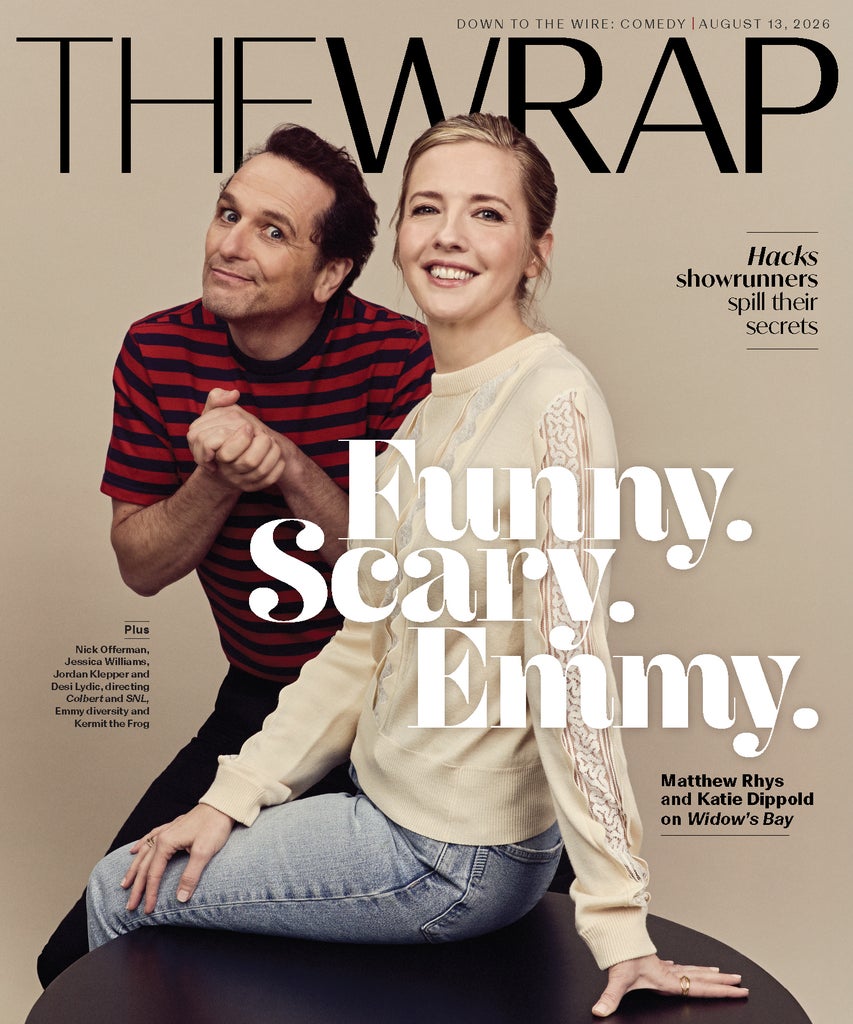
This story first ran in the Down to the Wire Comedy issue of TheWrap’s awards magazine. Read more from the issue here.


>