
Tech
England and Wales Courts Ban Meta Smart Glasses Over Recording Risks

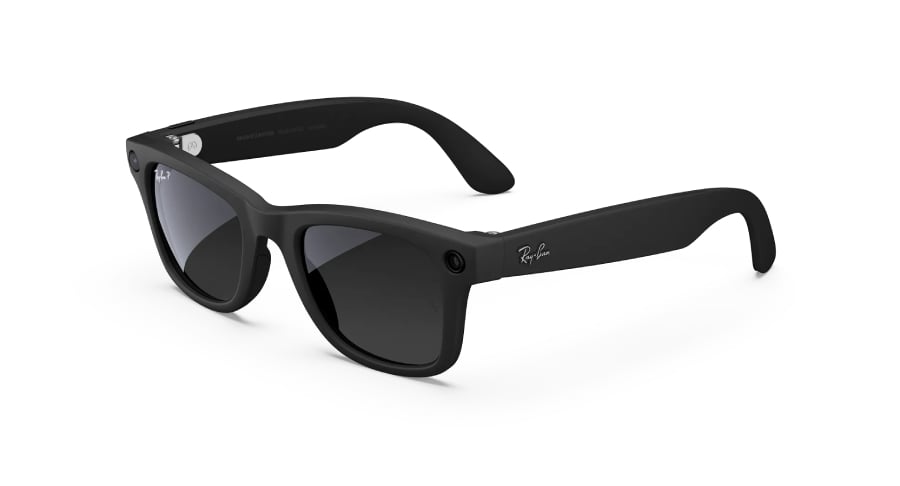
Courts across England and Wales will no longer allow Meta smart glasses inside court buildings, with security staff instructed to confiscate the devices on entry and return them when visitors leave.
The ban was introduced by His Majesty’s Courts & Tribunals Service (HMCTS), which oversees criminal, civil and family courts throughout England and Wales. The move follows a similar decision announced last month by New York’s court system.
“There are clear restrictions on taking images or videos within courts and tribunals which is why the use of Meta glasses is prohibited,” an HMCTS spokesperson told The Guardian.
Taking unauthorized images or video inside court buildings in England and Wales is prohibited and can result in legal penalties, including contempt of court proceedings. Smartphones remain permitted, provided they are not used to record hearings, but HMCTS is not extending the same exception to smart glasses because the glasses can record while being worn.
The policy comes amid growing scrutiny of wearable cameras in public spaces. Meta’s Ray-Ban smart glasses can record photos and video while being worn, raising concerns that court proceedings, witnesses or jurors could be filmed without obvious signs that recording is taking place.
According to The Guardian, visitors who bring Meta glasses into court buildings will be required to surrender them before entering.
The issue has already surfaced in a UK courtroom. Earlier this year, a claimant in a High Court case was accused of using smart glasses to receive “coaching” while giving evidence during cross-examination. He denied the allegation and said the glasses were not connected to his phone.
What’s hot at TechRepublic
A wider backlash against smart glasses
This judicial crackdown is part of a much wider societal pushback. Venues ranging from pubs to high-end restaurants and theaters have banned the glasses over privacy concerns — earning them the unflattering moniker of “pervert glasses” in the UK.
Meta sold roughly 7 million pairs of these glasses last year, suggesting the device is moving from a niche gadget to a mass-market accessory. Yet the court bans reveal a critical business and consumer tradeoff: the glasses’ core utility—seamless, hands-free recording—directly conflicts with the social and legal need for ambient consent.
The company counters that a pulsing LED light activates during recording and that tamper-detection technology prevents users from covering it. But for courts, relying on a small light to enforce contempt law is a non-starter. The risk of unauthorized recordings of proceedings, witnesses or jurors outweighs the utility of the hardware in court.
For consumers, this means wearable tech faces a fragmentation problem. What is perfectly acceptable in a public park may be illegal or confiscated in a pub, theater, or courthouse. The biggest risk for Meta is institutional inertia: if the world’s busiest legal systems treat your product like a covert surveillance tool rather than a fashion accessory, the hardware hurdle for mainstream acceptance grows significantly higher.
Read more: New York’s court system introduced similar restrictions to prevent smart glasses from being used to record proceedings discreetly.
>

OpenAI has replaced chief revenue officer Denise Dresser after just nine months on the job, tapping Wiz president and chief operating officer Dali Rajic to take on frontier lab’s top sales job.
The move comes as part of a broader shake-up in the organization in the last month, which has seen the departures of COO Brad Lightcap, and the company’s number two executive, CEO of AGI deployment Fidji Simo.
OpenAI co-founder and president Greg Brockman has taken a larger role in management following Simo’s departure, and announced Rajic’s arrival today in a blog post. Wiz, Rajic’s previous employer, was acquired by Google for $32 billion this year in the tech giant’s largest-ever acquisition.
“Denise has led our revenue organization through a formative period for the business and has worked tirelessly to get the team to where it is today,” Brockman wrote. “The way we’re deploying this technology is changing rapidly, and Dali will turn what we’ve learned into repeatable execution as we build out the full system to make AI broadly useful for people and businesses.”
OpenAI says its products reach more than one billion weekly active users, and two million businesses. Despite the incredible growth and its powerful models, however, executives have suggested both privately and publicly that the company hasn’t hit all of its revenue goals.
The company says it has filed confidentially with the SEC ahead of a potential IPO, but it’s not clear when that will take place. Private firms often try to round out their executive ranks ahead of a public markets debut. OpenAI purchased $7 billion worth of shares from employees this week in a tender offer that allowed them to cash in on some of their equity compensation, which may suggest a delay in the public offering.
Bloomberg News’ coverage of the change-up referenced an OpenAI blog post that said the company needed to have a “relentless focus” on “measurable business impact,” but those comments appear to have been removed from the published version.
However, this year CEO Sam Altman has spoken about focusing the company on enterprise deployment and cut back on technology projects and experiments seen as distracting from that goal.
When you purchase through links in our articles, we may earn a small commission. This doesn’t affect our editorial independence.
>

Ford made a $2 billion bet two years ago when it closed its Louisville Assembly Plant in Kentucky and scrapped the assembly line system it had used for more than a century. Its goal was to transform the factory into one capable of making a new generation of affordable EVs.
The auto giant provided an update on Thursday, stating that its factory overhaul is on track and in 2027 will be ready to start producing the Fathom, an all-electric midsize truck that costs less than $30,000 and the first EV built on its new universal platform.
Ford said it expects to begin prototype builds of the Fathom in the first quarter of 2027, with customer vehicles to follow later in the year. The U.S. automaker is already testing production-level tooling ahead of the prototypes.
The stakes for Ford are high. The company’s previous EV efforts were a drag on its profitability, while Chinese competitors and Tesla leapt ahead with vehicles that sell at volume and with a profit margin.
To catch up, Ford ditched the moving assembly line system that its founder Henry Ford launched and turned to a system developed by its skunkworks team led by former Tesla executive Alan Clarke.
This “universal production system,” as Ford calls it, uses a three-branched assembly tree. Ford will use large single-piece aluminum unicastings that use far fewer parts — a technique that Tesla has popularized — and that will allow the front and rear of the vehicle to be assembled separately on two of the branches. The third branch is where the structural battery will be assembled with seats, consoles, and carpeting. The three components will come together at the end of the line to form the vehicle.
As part of the factory rebuild, Ford has also nearly tripled the Wi-Fi coverage density in the factory to 1,080 access points to the kind of high-bandwidth, low-latency connectivity required for software quality checks.
Ford said it will be able assemble the Fathom a net 15% faster than the former vehicles that were built at the Louisville plant.
The company said some employees have already spent months training on the new system at its New Models Program Development Center in Allen Park, Michigan.
When you purchase through links in our articles, we may earn a small commission. This doesn’t affect our editorial independence.
>


If you haven’t already seen a job listing for a “product engineer,” you probably will soon. The job everyone’s suddenly hiring for, this role is like a cross between a product manager and an engineer (as the name suggests). And it’s a hiring trend worth paying attention to.
Companies are opening more of these roles every single month, but they’re struggling to fill them. The reason has almost nothing to do with engineers’ coding skills or years of experience.
The best career move you can make to prepare for these types of roles has almost nothing to do with getting more technical. Instead, it comes down to one of the fluffiest, most overused, and potentially cringiest words in all of tech: mindset.
Stick with me, I promise this goes somewhere useful.
The problem: We were trained to be task-takers
When I started out, my job looked like this:
Drive to an office. Sit through meetings that led to other meetings until a project manager handed me a task they’d already chopped into tiny pieces.
My job was to turn that task into code.
It took years for me to get good at a coding language and tech stack, and once I did, I executed that knowledge against specs that somebody else wrote.
You know what’s freakishly good at that exact job? I’ll give you a hint: It starts with A and ends with I.
Boris Cherny, the creator of Claude Code, recently said: “coding is basically solved,” and “the bottleneck is going to be good ideas.”
So if your entire value is “hand me a task and I’ll build it,” you’re in a footrace with the robots. I don’t like that for you.
The bad news… that is also good news
Many companies are flattening. Middle management is getting stripped out, for better or worse (mostly for worse), which means many of us are doing more with less.
This might sound like purely more work, but it’s also an opening for anyone who cares about what they’re building and can put on their manager hat. Companies are no longer just hunting for the strongest engineer in one narrow domain.
What’s rare, and what actually moves revenue, is an engineer who can spot the thing that’s quietly costing money and either flag it to leadership or just go fix it.
What this actually looks like
Being product-minded has NOTHING to do with your tech stack.
Here’s where to start:
Have an opinion and back it up. As a former engineering manager, the worst thing I ever heard was silence. I’d often ask the team what they thought because I doubted myself and wanted a gut check. I was grateful to the ones who said “nope, bad idea, here’s why.” Pushback is a gift.
Learn the domain, casually. Work for a plumbing company? You don’t need to become a plumber, but spend an hour on Reddit threads where plumbers vent. Now your ideas come from your potential customers.
Make experiments cheap and safe. This is where any engineer has massive leverage. Experiments are not free. A bad one loses customers and frustrates users. Tools like LaunchDarkly and Optimizely let you ship a change to 5 percent of users and roll it back the second it tanks. Learn them, or build a scrappy version yourself. A team that can quickly run safe experiments will out-learn everyone else in the building.
Be data-driven. Stop fighting about button colors. Pick a goal: making money, finding product-market fit, or making the product sticky so people come back. Then measure it. If your gorgeous redesign tanks time-on-site, it failed, no matter how good it looked to you. If the ugly version makes more money, ship the ugly version.
You don’t have to be the ideas person. Maybe you’re not a visionary. That’s fine. Organize a hackathon around an actual company goal. Pull up your company’s quarterly targets and build something against one of them. Don’t know what those targets are? That’s your first assignment.
Good ideas are the new bottleneck—and they always have been
When I was a manager, I asked myself one question every week: What’s the single most impactful thing I could do right now? The answer was almost never “write more code.” It was understanding a gnarly problem nobody had defined yet. Building a deck to spread knowledge that was in one person’s head. Getting the right three people in a room to actually make a decision we’d been putting off.
Code is cheap, and it always has been. We just couldn’t see it, because for decades the typing took so long that it felt like the hard part. It never was. The hard part was always knowing what’s worth building.
— Brian
In January 2025, Siobahn Day Grady launched the first AI research institute at a historically Black college or university. The institute aims to help expand AI skills for all students at North Carolina Central University, where Grady is an associate professor, through both AI research opportunities and skills training. Though the institute is the first of its kind, Grady hopes it could serve as a model for other HBCUs.
Read more here.
AI is increasingly used in the scientific research process. So does publishing need to change to keep up? Jiachen Liu recently co-authored a paper published on ArXiv arguing that the PDF should be replaced with an “Agent-Native Research Artifact” designed with AI in mind. In this interview with IEEE Spectrum, Liu lays out a provocative vision of AI-driven research and an infrastructure that captures—and learns from—details that often get left out of today’s papers.
Read more here.
Astronomers still don’t know exactly what dark matter is, but they can detect it—and so can you. With a small radio telescope and a few other pieces, you can create a DIY setup to gauge how fast hydrogen clouds are moving across the Milky Way. Feed those measurements into a spreadsheet, and you can see the same signals that have baffled the astronomical community for decades.
Read more here.
From Your Site Articles
Related Articles Around the Web
>

Are These Yuri Anime Poisonous? – This Week in Anime

How to watch Brewers vs. Dodgers: TV channel and streaming options for August 13

Will Poulter and Noah Centineo on ‘Union County’ INTERVIEW
-

 movies3 months ago
Search For Canadian TV Actor Stewart McLean Now Homicide Investigation
-

 Fashion9 years ago
These ’90s fashion trends are making a comeback in 2017
-
Fashion9 years ago
According to Dior Couture, this taboo fashion accessory is back
-
Fashion9 years ago
Model Jocelyn Chew’s Instagram is the best vacation you’ve ever had
-
Fashion9 years ago
Your comprehensive guide to this fall’s biggest trends
-
Fashion9 years ago
Emily Ratajkowski channels back-to-school style
-
Fashion9 years ago
9 Celebrities who have spoken out about being photoshopped
-
Fashion9 years ago
A photo diary of the nightlife scene from LA To Ibiza