Entertainment
How LatiNation Survived the Digital Transition
In 2019, Los Angeles media mogul Walter Ulloa approached his son with a proposal: Take over and fix their family-owned, millennial-leaning television station or shut it down. Bruno Seros Ulloa, a producer, on-camera host and clothing designer, said he had to sleep on it.
The older Ulloa founded Latino Alternative Television in 2001 to offer programming to the young and vastly underrepresented bilingual Latino viewers in Los Angeles that reflected their real lives, rather than the stereotypes still perpetuated in mainstream and legacy media. It started with about four hours worth of shows that were mostly in English. The early years featured live interactive shows like LA Live TV and gave a spotlight to Latino talent like Pitbull, Eugenio Derbez, Daddy Yankee and Julieta Venegas. In 2007, the network went national, shifting into a 24-hour linear cable and digital subchannel model that expanded its reach to millions of households through major TV station affiliates. But after a dozen years, the slowing linear television business brought LATV to an existential crisis, relying on cheap content made in Mexico to fill airspace.
Which brought things back to that ultimatum.
Seros Ulloa had been circling the network’s operation since he was nine years old, and grew up learning to make television in between other creative endeavors. He shared his father’s drive to celebrate the Latino community and relished the opportunity to make content on his own terms. He told his father he was up for the challenge of transforming the network into a profitable business, but he needed longtime colleague Andres Palencia by his side. Palencia joined the company as a writer for LATV Live in 2007 and stayed close to the West L.A.-based studio ever since.
Seven years and a major rebrand and expansion later, the duo transformed the TV station into LatiNation, a digital media company focused on entertainment, culture, comedy and sports content for Latinos from Latinos. Ulloa, who was also chairman and CEO of Entravision Communications Corp., a network of TV and radio stations appealing to Latino audiences, died in 2023 of heart failure.
“It’s been a roller coaster, but we’re on the right side of it now,” Seros Ulloa told TheWrap of running LatiNation Media as COO and president.
This year, LatiNation celebrates its 25th anniversary having grown into a multiplatform digital, streaming and linear ecosystem with an estimated annual revenue of $10–$15 million — a range the company expects to grow after its upfronts sales end in the third quarter of 2026. In doing so, it showed how catering to a highly specific, but underserved, segment could be sustainably profitable. Beyond its LATV linear, AVOD and FAST channels, the company boasts its own studio creating original and branded content — produced in its studio space in Los Angeles — along with a lucrative digital advertising and marketing business.
Third-party database projections value the private company at approximately $31 million. LatiNation content reaches 46 million households, nearly 70% of the total U.S. Hispanic population and 122 million in total market reach, about 43% of the U.S. population, per internal data. It has gathered 59,400 subscribers on YouTube, 182,000 followers on Facebook, 66,700 followers on Instagram and 33,000 on TikTok.
Across platforms, the company boasts 559 million impressions and 118 million video views annually. It also scores 5 million monthly viewers for its Connected TV and FAST channels, and 34 million unique visitors to the LatiNation website. And there’s plenty of room to grow, as Ulloa and Palencia put it.
“We have big goals,” CEO Palencia, said. “We understand how strong the brand is, how big its reach is. The potential of it is almost bigger than media.”

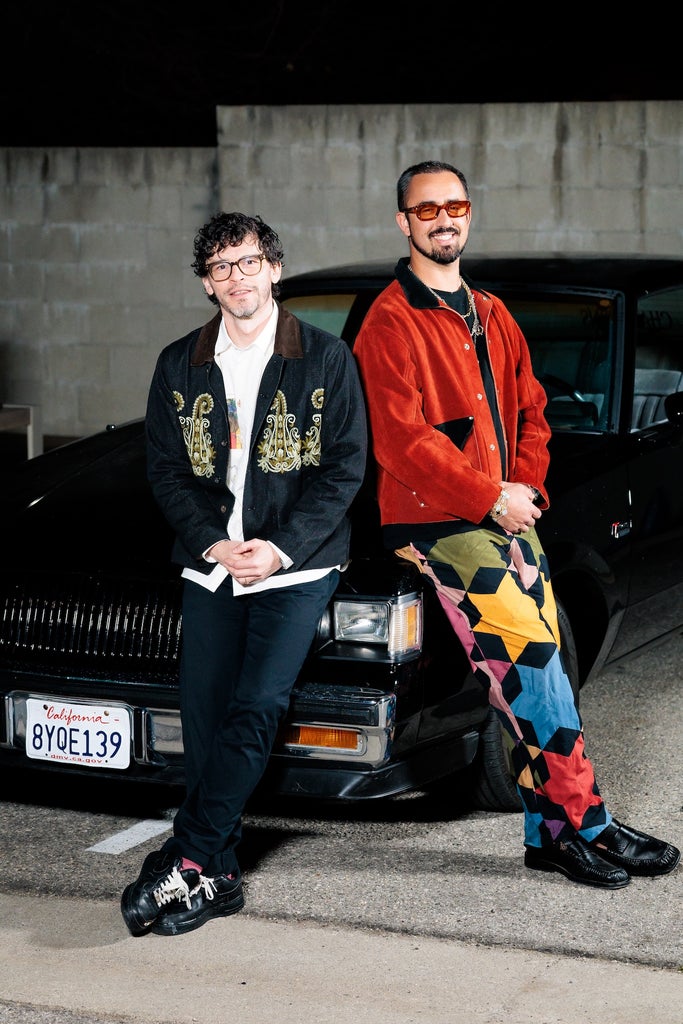
The staff has grown from about 12 full-time employees in the early years to almost 100 across production, sales, creative and social media teams based in Los Angeles, New York and Miami.
Unlike legacy Hispanic networks like Univision or the NBCUniversal-owned Telemundo, which cater strictly to Spanish-speaking audiences, LatiNation’s slate relies heavily on English-first and bilingual storytelling. It produces more than 300 hours of original programming annually across genres — including shows that cater to racially diverse and queer Latino audiences.
It helps that the company is targeting an audience demographic that is only getting bigger. Between 2000 and 2024, the U.S. Latino population nearly doubled, growing from 35.3 million to 68 million per census data, cementing it as the nation’s largest racial or ethnic minority group. Latinos are also significantly younger than the national average, with a median age of 31.4, and nearly 1 in 4 children under the age of 5 in the U.S. are of Latino descent. Most young Latinos in the U.S. also learned to speak English first but speak or at least understand Spanish from home.
So Ulloa’s guiding principle of catering to the growing bilingual Latino community set up LatiNation for success even amid massive shifts in the television and media landscape.
“Second-generation Latinos, those of us born here, didn’t feel represented in Spanish-language media because we knew that Univision and Telemundo focused on our parents. Those of who are us looking for English-language content about our own communities, you look at the English-language stations — NBC, CBS, ABC — and they aren’t providing it either … LatiNation has been able to be around for 25 years because it fills that void,” said Claudia Cruz, journalism professor at the University of Nevada, Reno, and managing editor of the student-operated bilingual news site Noticiero Móvil. “We need more of these hybrid, multicultural media outlets.”

Passion-driven transformation
Despite being the founder’s son, Seros Ulloa recalled starting at LatiNation from the ground up, helping to transcribe interviews by hand or tracking down everyone involved in a particular production to manually type up the end credits.
As an independent and leaner operation than its broadcast competitors, Seros Ulloa and Palencia benefited from coming up in a space where bold ideas led to rapid growth opportunities. For example, a production assistant could rise through the ranks to produce segments and eventually their own show within one or two years, bypassing layers of corporate hierarchy.
That “rewarding the hustle with freedom” philosophy became a cornerstone for talent development at LatiNation, Seros Ulloa said, offering young creatives a path to learn while doing in an environment that encouraged experimentation.

“We would launch segments if they were funny. We would insert jokes. We would post things on our social media just for the love of the game,” Palencia said. “There was no end goal to it. We just thought this was creative and fun. And if people like it, they like it. If they don’t, at least we got something made.”
As millennial executives, Palencia and Seros Ulloa recognized the growing digital advertising market and distribution model and jumped at developing LatiNation’s digital footprint. They also fostered relationships with social media creators to raise its profile, including establishing a licensing partnership with comedian Jenny Lorenzo, who boasts nearly 230,000 subscribers on YouTube and more than 330,000 followers on Instagram.
“We felt the urgency on ourselves to ask ‘How do we actually consume content? How do other people consume content?’ And at the time, medium and short-form video content on YouTube and then Facebook was starting to pop off and the market was starting to understand it,” Palencia. “But we had no formats for a half-hour show producing machine … somehow, kicking and screaming we figured it out.”

A bright future
These days, LatiNation’s programming is packed with original series produced in-house — including “Foodies on the Go,” a digital cooking series headlined by actress Chiquis Rivera, the GLAAD award-winning queer talk show “The Q Agenda” and shows like “Blacktinidad,” focused on the Afrolatino experience. It also partnered with Red Bull to create the freestyle rap competition series “Batalla Nation,” with Season 2 set to premiere in 2027.
Just like big broadcast and streaming distributors like NBC and Netflix look to sports for surefire viewership gains, LatiNation sees sports as a big growth opportunity. It launched “LatiNation Fútbol Club,” an hourlong sports commentary program co-produced with betting news site SportsGrid.
“‘LatiNation Fútbol Club’ started with a simple idea: create a fútbol show that feels like the conversations Latino Gen Z and Millennial fans are actually having — passionate, funny, opinionated and connected to culture,” host and LatiNation Head of Sports Marcelino Ortiz said in a statement. “That idea has grown into a broader sports platform grounded in that same authenticity. The World Cup accelerated our growth, but it also confirmed that the opportunity is much bigger than one tournament. We’re building LatiNation Sports for a generation of Latino fans who deserve sports coverage that reflects their culture, their voices and the way they experience the games they love.”

The company also entered a partnership with Fox Deportes and the Mexican soccer league Liga MX to broadcast live soccer on its channels.
“We’re not SportsCenter, we’re not trying to be. We’re doing it our own way, with some cheeky humor,” Seros Ulloa said. “We never thought we’d have live sports. That’s been really cool.”
Also on its slate for the coming TV season is a collection of microdramas, made in partnership with LA-based production studio Fumero Films to launch in the first quarter of 2027. Fumero has already produced 50 microdramas of their own, achieving success with “Academy of Lies,” which went viral on TikTok with over 200 million views.
LatiNation also boasts key partnerships with brands like McDonald’s, Verizon, Gilead Sciences, Disney, Coca-Cola and the Ad Council for branded content and activations, including an in-person soccer experience and World Cup watch party earlier this summer. Event partnerships will continue as part of the company’s yearlong 25th anniversary celebrations, kicking off Friday.
“There’s a lot of different dates we could count as the official anniversary … My dad passed away three years ago, so to honor him, I’m doing the party on his birthday,” Seros Ulloa said.


>