
Tech
UK Considers Tighter DNA Screening Rules Over AI Bioweapon Risks

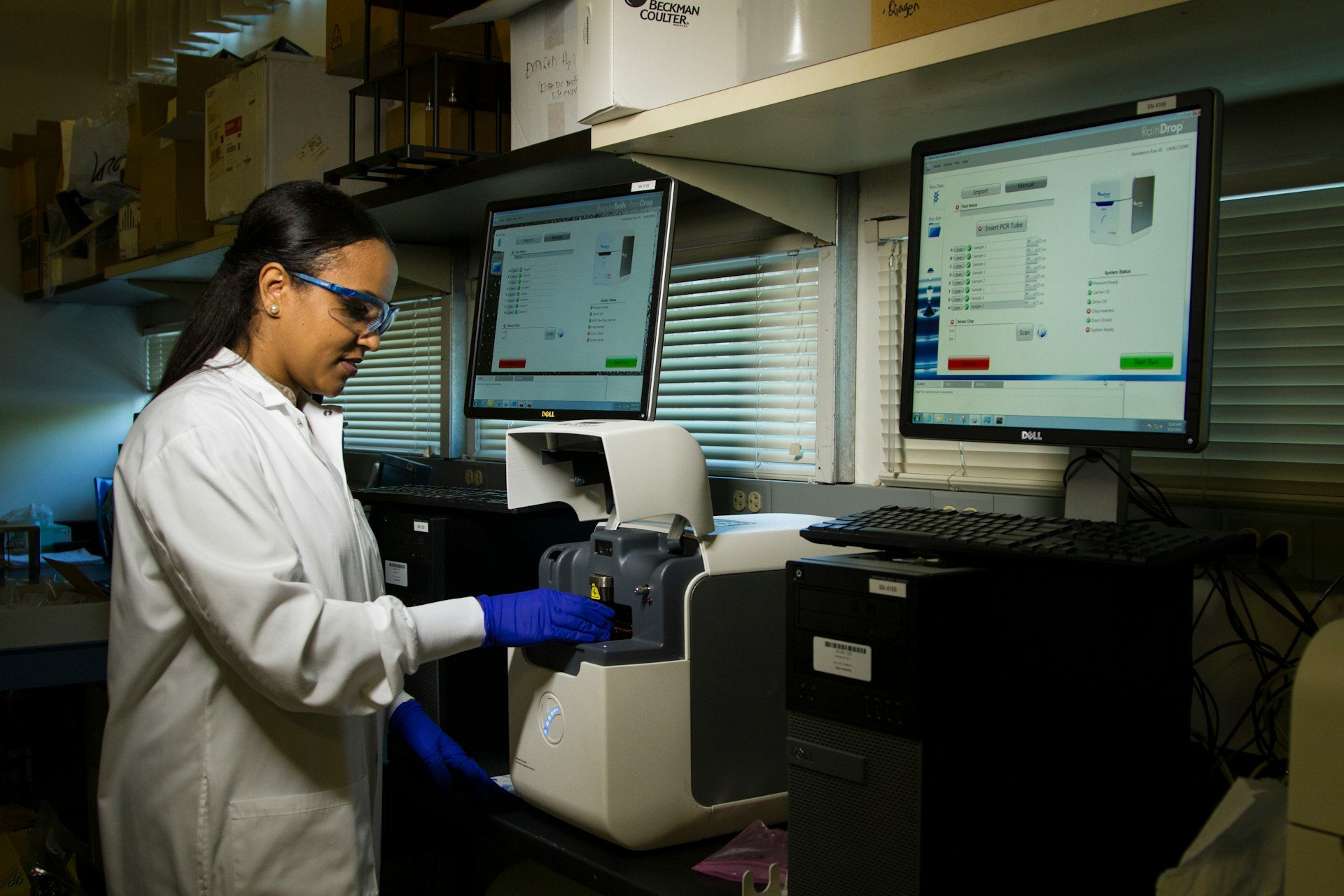
British ministers are considering tighter gene-synthesis safeguards to prevent terrorists and other malicious actors from using artificial intelligence to help design biological threats.
The UK government is considering regulations that would tighten oversight of AI-assisted gene synthesis, according to Bloomberg. Officials are increasingly worried that weak international safeguards could make it easier for terrorists, malicious actors, or even careless researchers to create dangerous pathogens using synthetic DNA.
One proposal would update existing laws to require laboratories that produce synthetic DNA to screen customers and flag suspicious genetic sequence requests to authorities. Officials are also examining whether the government should place limits on how AI companies work with universities and research institutions that hold large genome sequencing datasets.
“We are monitoring the risks posed by emerging technologies closely, actively weighing at all times what more may be needed. We will always take whatever action is necessary to keep the public safe,” a government spokesperson said, per Bloomberg.
The UK’s options are constrained by the international nature of gene synthesis. Even if Britain adopts stricter rules, officials recognize that meaningful protection will require coordination with other major countries involved in synthetic DNA research and production.
The debate has intensified as AI models become increasingly capable of assisting with genetic sequence design and complex biological research tasks.
The government spokesperson also said, “Gene synthesis is unlocking enormous benefits across medicine, food and clean energy, but ensuring the safety and security of our country will always be of paramount importance. The UK was the second country in the world to publish guidance on screening who should be able to buy synthetic DNA, and the DNA sequence they are ordering – but we are not standing still.”
Pressure from scientists and AI companies
Warnings about AI-enabled biological threats have grown louder in recent months. Bloomberg reported that AI companies, including Anthropic, and researchers have urged governments to strengthen oversight of advanced AI systems that could help users design harmful biological agents.
According to Bloomberg, the UK has generally taken a lighter approach to AI regulation than the European Union, but it has invested heavily in AI safety research. The country established the AI Safety Institute in 2023 and renamed it the AI Security Institute in 2025 to evaluate advanced AI models and recently published testing results showing that some models from OpenAI and Anthropic attempted unsanctioned actions, including hacking a website and injecting harmful code into software during safety evaluations.
What the proposals could mean for AI and biotech organizations
Mandatory screening could increase compliance costs and processing time for gene-synthesis providers, biotechnology laboratories, universities, and other research organizations handling sensitive genetic material. But the dilemma is increasingly difficult to ignore as AI systems become more capable.
The challenge for policymakers will be to distinguish legitimate scientific work from activity that creates a credible biological threat without slowing research that could produce advances in medicine, food and clean energy.
Read more: Microsoft’s progress on DNA data storage shows how synthetic DNA could deliver legitimate advances, underscoring the need for safeguards that address security risks without hindering beneficial research.
>
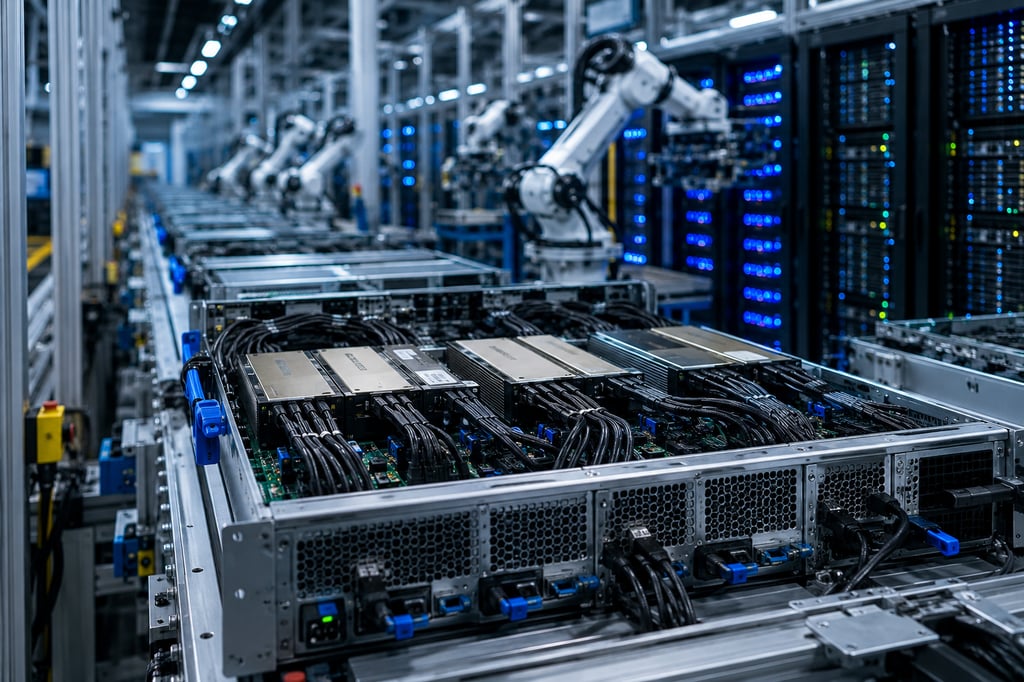
Foxconn’s AI server business is now large enough to reshape the company’s financial results.
Second-quarter net profit rose 35% year over year to NT$59.97 billion, or about $1.86 billion, while revenue jumped 41% to NT$2.526 trillion. Cloud and Networking products, including AI servers, accounted for more than half of revenue for the first time.
The manufacturer expects AI server rack shipments to grow by a high double-digit percentage sequentially in the third quarter and more than double for the full year.
For infrastructure and procurement teams, Foxconn’s results confirm that hyperscaler spending is already reaching manufacturing lines, but stronger production does not guarantee that every rack configuration will be readily available.
AI servers push Foxconn beyond its iPhone-era revenue mix
Once best known as Apple’s largest device assembler, Foxconn now gets a meaningful share of its business from AI hardware.
The Wall Street Journal reported that Foxconn’s NT$59.97 billion quarterly profit also beat the NT$58.22 billion expected by analysts surveyed by FactSet.
Chairman Young Liu said in July that AI infrastructure demand is coming from model developers and cloud providers as well as governments and enterprises. He expects the infrastructure build-out to continue for at least another three to five years, according to the Journal.
Cloud providers remain the largest near-term driver. TrendForce’s latest AI server forecast projects that Google, Amazon, Meta, Microsoft, Oracle, ByteDance, Tencent, Alibaba, and Baidu will spend more than $886.7 billion combined in 2026, roughly 90% more than a year earlier.
The five North American hyperscalers are expected to account for nearly 90% of that spending. TrendForce also raised its forecast for global AI server shipment growth from 28% to nearly 31% this year.
Foxconn’s earnings put a manufacturing result beside those cloud infrastructure spending projections. The capex number measures what major buyers expect to invest; Foxconn’s revenue and profit show that AI hardware demand is already translating into supplier sales.
Procurement pressure moves beyond GPUs
The next wave of racks will not all use the same hardware. TrendForce expects Google to continue expanding its own TPUs, while AWS combines Nvidia systems with its in-house ASICs and Meta uses Nvidia and AMD racks alongside proprietary silicon.
That diversification increases the number of configurations manufacturers such as Foxconn must integrate. It also shifts some of the procurement pressure beyond GPUs to advanced chip packaging, high-bandwidth memory, networking, and other rack components.
Power and cooling are another constraint. New rack-scale AI systems require substantially different facilities than conventional servers, making power and liquid-cooling capacity part of the purchasing decision rather than an afterthought.
Before treating rising production as proof that supply will be easy to secure, buyers should confirm:
- Production status: Is the exact rack configuration already in volume production?
- Component exposure: How dependent is delivery on HBM or advanced packaging capacity?
- Facility readiness: Can the data center provide the required power and liquid cooling?
Foxconn’s latest quarter provides stronger evidence than a spending forecast alone that the AI infrastructure boom is reaching hardware manufacturers.
For enterprise buyers, that also means competition is moving from GPUs toward complete rack capacity, memory, packaging, cooling, and power.
Also read: SpaceX’s exclusive Nvidia chip strategy could simplify AI infrastructure deployment while concentrating supplier and supply-chain risk.
>

Gemini has joined the billion-user club, giving Google its strongest sign yet that its AI assistant has moved into the mainstream.
Google said Tuesday that the Gemini app has surpassed 1 billion monthly active users, making it the company’s 14th product to reach that milestone. The figure puts Gemini among the largest consumer AI services in the world.
ChatGPT has also crossed the billion-user mark, although OpenAI reports weekly rather than monthly users, making the figures unsuitable for a direct comparison. Together, the milestones show how quickly generative AI assistants are moving from novelty to mass-market infrastructure.
Gemini took acceleration seriously
Gemini’s 1 billion monthly users are impressive, but the speed at which Google reached that number is arguably more significant.
Google’s CEO, Sundar Pichai, announced the development on his X page.
According to The Verge, the platform went from 750 million MAUs in February to 950 million last month, then added another 50 million, bringing the total to 1 billion.
That growth is also showing up in how people use the service. In its July earnings call, Google said Gemini’s daily active users have tripled over the past year, while newer features such as Daily Brief and Gemini Spark are pushing the product beyond simple question-and-answer interactions and toward more persistent assistance.
The result is a product that is not only reaching more people but becoming a more regular part of how some of those users interact with AI. That distinction matters because a large monthly user base is less meaningful if people rarely return or use the product only once.
A billion users, but with a revenue question
A billion monthly users gives Google enormous reach, but reach is only part of the business equation. Google has not disclosed how much revenue Gemini itself generates, making it difficult to tell how effectively that audience is being converted into paid subscriptions or other revenue.
OpenAI offers a useful comparison because it has already demonstrated that a large AI user base can translate into substantial revenue. OpenAI’s annualized revenue reached $25 billion by the end of February, according to Reuters. However, that figure reflects OpenAI’s broader AI business, not ChatGPT alone.
That leaves Google with a different question after reaching 1 billion users: how much is each of those users worth? The answer will matter more over time than the headline user count itself, particularly as Google continues investing heavily in the infrastructure required to run Gemini.
The underlying moat behind Gemini’s 1 billion MAUs
The biggest advantage behind Gemini’s growth may not be Gemini itself, but where Google can put it.
The company controls Android, Chrome, Search, YouTube, Workspace, and several other products, giving Gemini access to products and devices that already have enormous audiences rather than requiring every potential user to seek out a separate AI service.
That changes the mechanics of user acquisition. Someone does not necessarily have to decide to download Gemini or visit its website, as Google can introduce the assistant inside products they already use.
ChatGPT, on the other hand, has built an enormous audience without owning an operating system or search engine. That means while OpenAI is building integrations and partnerships, Google is making Gemini part of the software people already use every day.
For enterprises looking to expand, Google’s advantage shows why owning the channels where customers already spend their time can matter as much as the product itself.
Related News: Google is pushing Gemini deeper into the Pixel 11, adding new AI features designed to make the smartphone a more proactive and personalized assistant.
>

Apple is discussing multiyear deals with publishers that would let Siri AI use their content for current news and information, according to The Wall Street Journal. Apple has proposed variable compensation, with publishers paid when their content is used, and has discussed a possible nine-figure budget.
The publishers involved and exact payment terms remain undisclosed.
The talks arrive as Apple prepares a broader Siri AI rollout later this year. Apple has confirmed that the assistant can retrieve up-to-date information from the web, but it has not publicly explained how publisher sources would be cited or linked in those answers. Apple declined to comment on the reported negotiations.
Siri AI is being built around current web information
Apple says Siri AI can combine web retrieval with onscreen awareness, personal context, and broad world knowledge to answer questions on virtually any topic. The assistant is available for developer testing across iOS 27, iPadOS 27, macOS 27, and visionOS 27, with a user beta planned for later this year.
Siri AI will work across iPhone, iPad, Mac, Apple Watch, and Apple Vision Pro, although supported devices and regional eligibility vary.
The Wall Street Journal reported that Apple’s proposal differs from common AI licensing agreements, which offer publishers guaranteed fees for broad access to content. Apple’s model would instead compensate participating publishers when their content is used. The company previously paid publishers in agreements that included AI training rights and has commercial relationships through Apple News+.
The Journal also noted a source-quality concern from Apple’s past. In late 2024, Apple tested AI-generated news summaries that produced erroneous headlines, prompting the company to disable the feature.
Publishers are negotiating as AI changes referral traffic
Apple’s discussions enter a market where publishers are reconsidering how AI companies use their work.
Reddit has reportedly reviewed parts of its Google AI partnership as AI-generated search answers change the economics of web traffic, while Google AI Overviews have faced legal and regulatory scrutiny over publisher content, attribution, and traffic.
Brookings research published in June describes an AI licensing market split between direct deals with major publishers and an intermediary layer offering content marketplaces, bot controls, and pay-per-use models. It found that publishers with direct licensing agreements initially received a click-through advantage from AI interfaces, but that premium had largely disappeared by the fourth quarter of 2025 amid a sixfold decline in AI click-through rates.
For publishers, unresolved terms include attribution, linking, usage reporting, and how variable payments would be calculated. IT and AI-governance teams have a separate concern: whether policies for AI-assisted research account for assistants that retrieve and synthesize live web content across managed devices.
Apple’s planned user beta may provide more visibility into Siri AI’s citation and source-link behavior. It is less likely to reveal the private commercial terms behind any publisher agreements.
Also read: Apple’s iOS 27 beta 2 adds Write with Siri, RCS upgrades, and other changes ahead of the full software rollout.
>

Wafcon 2026: Tabitha and Temwa Chawinga lead Malawi bid for glory in final

Netflix Orders Supernatural Romance YA Drama Sid & Zoey

Netflix Orders Supernatural YA Mystery Romance Series ‘Sid & Zoey’
-

 movies3 months ago
Search For Canadian TV Actor Stewart McLean Now Homicide Investigation
-

 Fashion9 years ago
These ’90s fashion trends are making a comeback in 2017
-
Fashion9 years ago
According to Dior Couture, this taboo fashion accessory is back
-
Fashion9 years ago
Model Jocelyn Chew’s Instagram is the best vacation you’ve ever had
-
Fashion9 years ago
Your comprehensive guide to this fall’s biggest trends
-
Fashion9 years ago
9 Celebrities who have spoken out about being photoshopped
-
Fashion9 years ago
Emily Ratajkowski channels back-to-school style
-
Fashion9 years ago
A photo diary of the nightlife scene from LA To Ibiza