Entertainment
How ‘Widow’s Bay’ Became the Year’s Creepy, Kooky Breakout Hit
For nearly 20 years, “Widow’s Bay” was nothing more than the project that Katie Dippold kept in her drawer — and the project that Dippold, who created, showruns and executive produces the Apple TV hit, had been thinking about since her childhood.
“The inspiration was really a feeling,” she said, recalling the sensation she experienced growing up in New Jersey in the 1980s whenever she and her friends would walk past the local (supposedly) haunted house. “I would be so giddy going out on a summer night because I knew I was going to be scared, but we would also laugh and it was very communal,” she said. “That’s been something I’ve wanted to capture my whole life.”
She took a crack at the series for the first time 18 years ago, and it was the original version of the “Widow’s Bay” pilot that landed her a job in 2009 as a staff writer on the Mike Schur-created NBC sitcom “Parks and Recreation.”
While there are many similarities between Dippold’s initial spec script and the finished version of the pilot that premiered in April, including its coastal New England setting and many characters, the showrunner describes her original take as more “joke-focused” than she ultimately wanted. She’d always envisioned the show as a horror comedy, but she needed both sides to be serviced well and — even more important — respected.

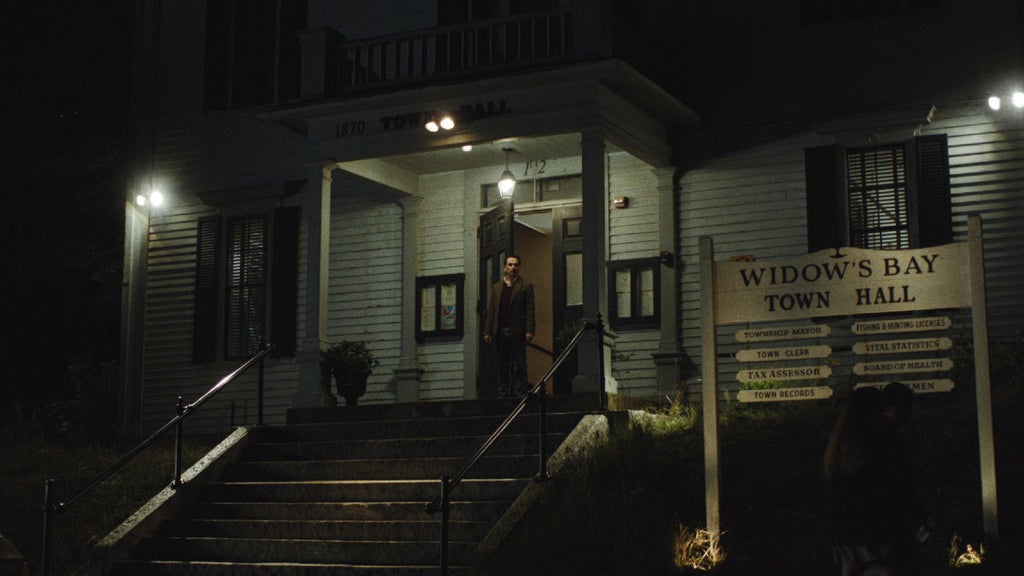
“I don’t know that I would have watched that version of the show,” Dippold said of that draft. “It felt like a parody, and I wanted [the island town of] Widow’s Bay to feel like a very real place in a real world. A place I would want to go to, even if I would die immediately. As a horror fan, I want the tension and the stakes to be taken seriously. I just kept digging away at it.”
It was time and effort well spent. When it debuted, “Widow’s Bay” felt fully formed. How else do you explain the word-of-mouth hype it built over the course of its 10-episode first season? Or its haul of 19 Emmy nominations, the most of any eligible freshman show, including Outstanding Comedy Series and noms for actors Matthew Rhys, Stephen Root, Dale Dickey, Kate O’Flynn, Hamish Linklater and Betty Gilpin?
According to Rhys, who earned an Outstanding Lead Actor in a Comedy Series nod, the show felt just as complete on the page as it does on the screen.
“When I read it, I was like, ‘Oh my God, who do I have to kill to make this?’” he said. “I was like, ‘I’ve never read anything like this. I just want to be a part of that.’
“That was the hard pitch I gave them: desperation,” the actor said with a laugh about vying for the starring role of Widow’s Bay mayor Tom Loftis, who is trying his best to promote the community as a tourist magnet despite the unnerving tales that the island may be home to evil spirits that demand human sacrifice.

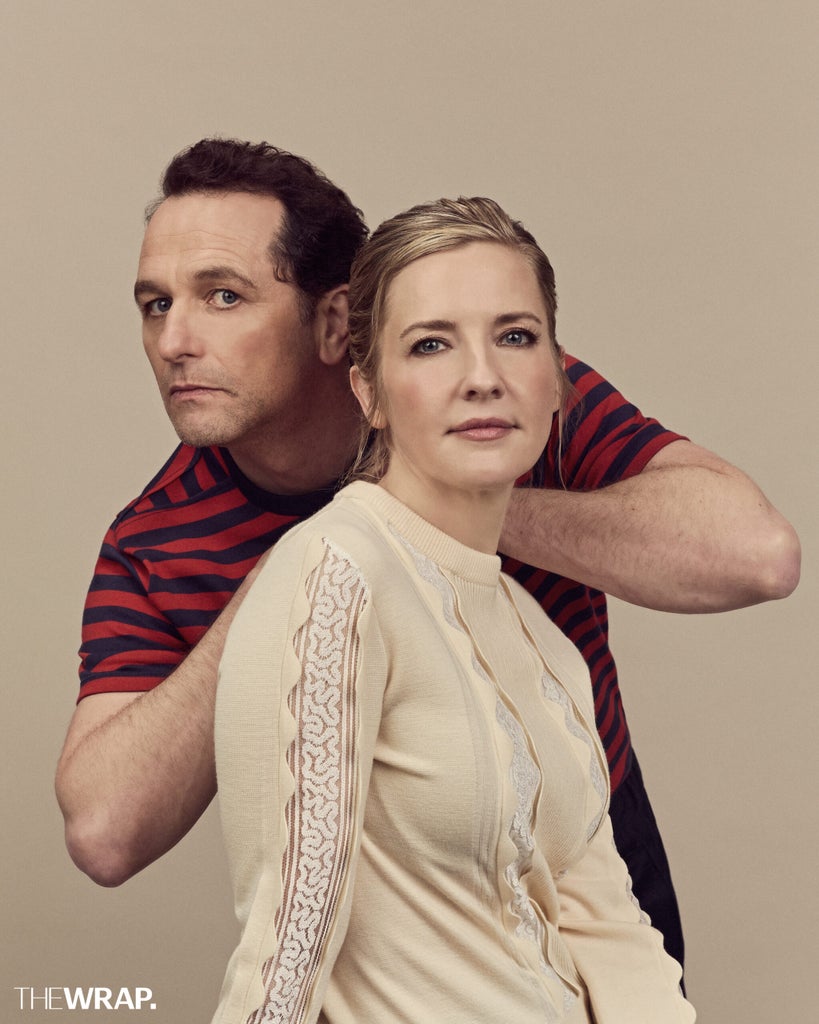
Attributing the show’s success to any single element would be foolish. Part of the magic of “Widow’s Bay” is that every aspect of it works. But of all the reasons it makes such an immediate and lasting impression, chief among them may be the very thing that kept Dippold “digging away” at it for 18 years: On screen, its world feels vast, mysterious and, its many outlandish details aside, real.
That was a goal that Dippold, Rhys and executive producer and lead director Hiro Murai all latched onto early. “Our baseline visual language for the show became ‘What if this was real?’” said Murai, who nabbed a directing nom for the pilot. “Obviously, there are moments where we’re milking tension and having fun and leaning into the genre of it, but our base language is sort of plainspoken. I think what that does, hopefully, is when the genre piece shows up or something surreal or absurd happens, it hits you like a shock.”
When I read it, I was like, ‘Oh my God, who do I have to kill to make this?’
Matthew Rhys
Murai had previously played with the line between authenticity and surreality in his award-winning work on series like “Atlanta,” “Station Eleven” and “Barry.” His ability to manage unruly tones is what made him Dippold’s dream director for “Widow’s Bay.” Murai, meanwhile, found the show’s “combination of cozy and unsettled” appealing.
“When I talked to Katie, she explained the show as a place that she always
dreamed about,” he said. “It’s tied to her childhood experience of watching horror movies and it was tied to a lot of nostalgia, but it was also about her own anxieties. I just thought, ‘Oh, there’s a lot here. I don’t know what the show is going to be, but it feels like there’s a lot of material and things to excavate.’”
Murai was a trustworthy presence that Dippold welcomed as they shot the series in various Massachusetts locations in the summer of 2025. Not only is the series
a complicated creative beast for any writer to wrangle, but it also marks her first go at being a showrunner. Though she wrote such big-screen features as “The Heat” and the 2016 “Ghostbusters,” Dippold’s television experience had been largely limited to the few years she spent writing for “Mad TV” and “Parks and Recreation.”
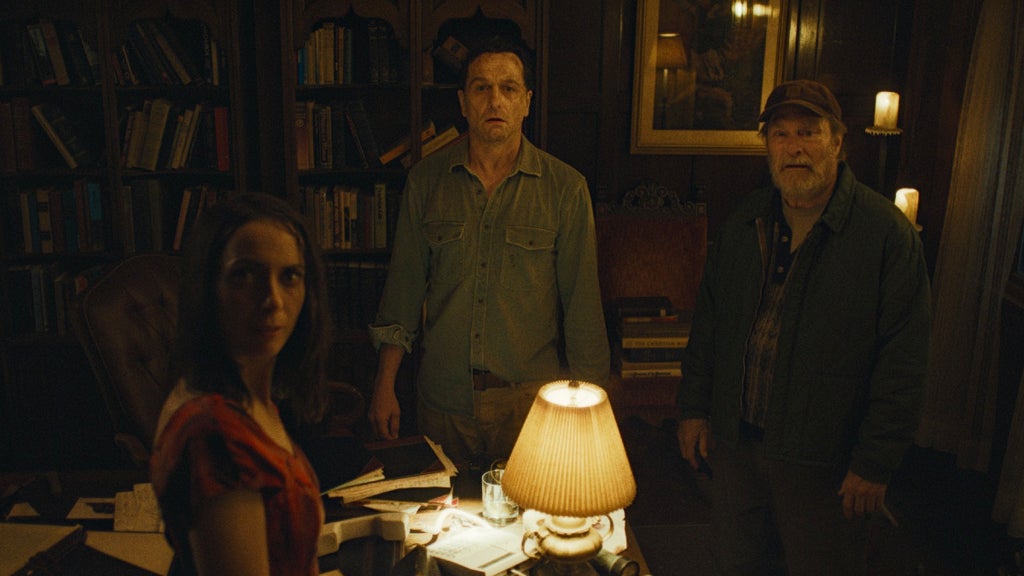
“Going from being a featured writer to a showrunner was a real shock to the system,” Dippold admitted. “As a featured writer, you go months without an email or phone call. I feel like I would wake up in the morning and my email would just have, like, the New York Times. And that’s how I’d start my day.” Her life running “Widow’s Bay” is considerably busier: “I fell asleep standing in the shower once.”
Dippold compares making “Widow’s Bay” to walking an artistic tightrope — not just because of its mix of screwball comedy and genuine human drama, but also because of its use of horror and absurdity. She knew how possible it would be for one to detract from the other. “It felt like, if you had one false moment or if you undercut the horror, the show would just feel dead,” she said. “It just felt very easy to fall off the rails completely.”
Staying on the tightrope meant taking risks, like confirming the existence of the island horrors in the third episode rather than delaying the reveal to the finale, as many prestige television shows might have. “A lot of this was just following my gut,” she said. “I knew I would be frustrated by a show where the whole time Tom refuses to believe it, so I looked at Episode 3 as the end of Act 1.”
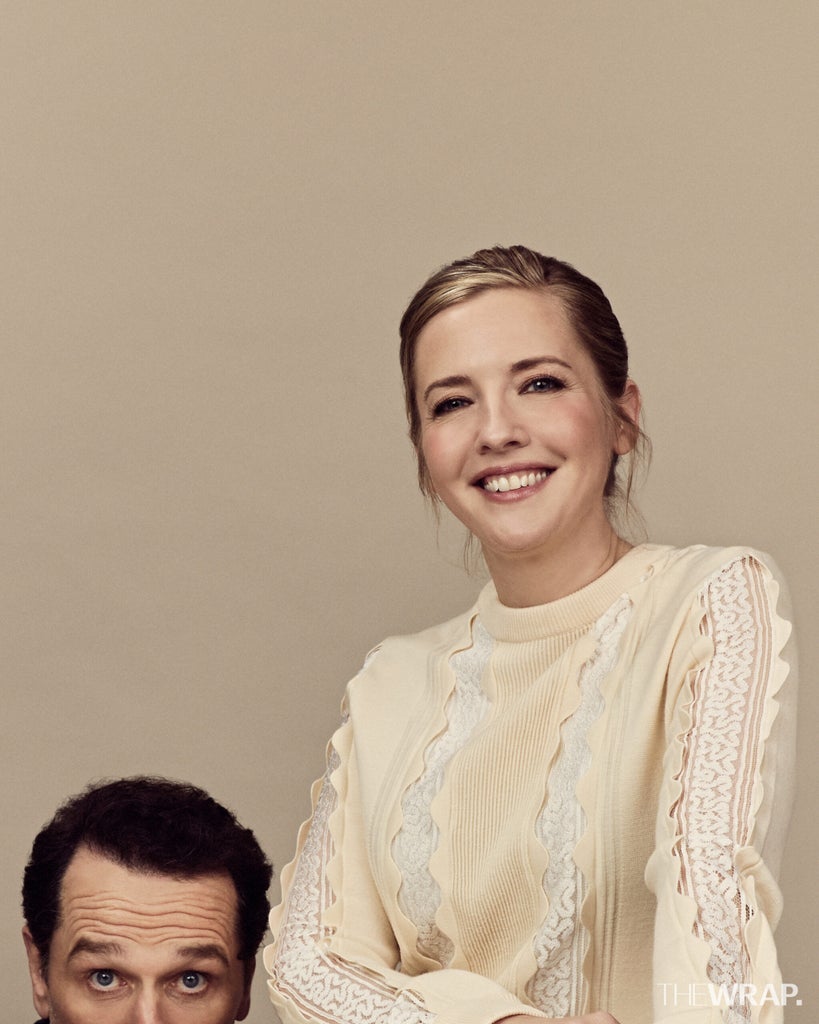
That episode includes an attack by the Sea Hag, an evil entity who nearly kills Tom in his own house. “I wanted to have something happen that was just undeniable,” Dippold said. The supernatural dangers are then reinforced in the standout fourth installment, “Beach Reads,” in which Kate O’Flynn’s Patricia is tricked by a witch’s book of spells into throwing a cocktail party that nearly claims the lives of a significant portion of the island’s citizens.
“Beach Reads” was key to pulling off all of “Widow’s Bay’s” many, varied horror experiments. “That brought in the one thing we always try to do when we’re using these horror tropes, which is tell a story about a character who is feeling very real, human emotions,” Dippold said. “Even though the book is scary, there’s nothing scarier to Patricia in that episode than no one coming to her [party].”
Rhys remembered Dippold describing her interest in using the show to explore “the social horrors that we all go through.” For that reason, the actor sees a parallel between “Widow’s Bay” and the FX drama that won him an Emmy in 2018 for Outstanding Lead Actor in a Drama Series.
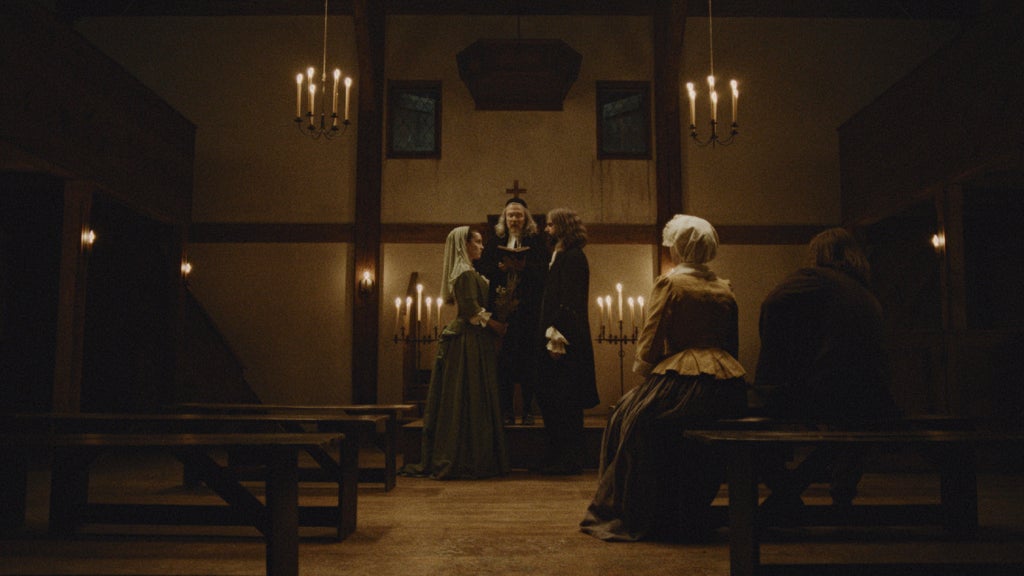
“Patricia has that massive arc of social horror that she’s trying to overcome, and it’s so relatable,” he said. “It was like The Americans. The Americans was just a show marriage that had this elevated and heightened backdrop of the intelligence community. But ultimately, it’s about people when they lie to each other about themselves. It’s all f—ing relatable.”
O’Flynn’s character isn’t the only one who has her fears and desires reflected back at her in terrifying fashion. As the mayor on the lonely island where his teenage son, Evan (Kingston Rumi Southwick), was born, Tom strives to turn the place into a tourist draw on the order of Martha’s Vineyard, despite the supernatural dangers he has always suspected may not be imaginary even as he publicly dismisses them as superstitions. He is repeatedly humbled for his refusal to accept the reality in front of him, while also clashing with the rebellious Evan — who, if the curse is true, will die if he ever leaves the island, as will anyone else who was born there.
“With Tom trying to win the respect of the town, I think it’s more to do with his son,” Rhys said. “He’s trying to prove something to himself through proving it to his son — that if this place flourishes, his son can flourish. He’s just trying to prove [something], like so many of us are.”
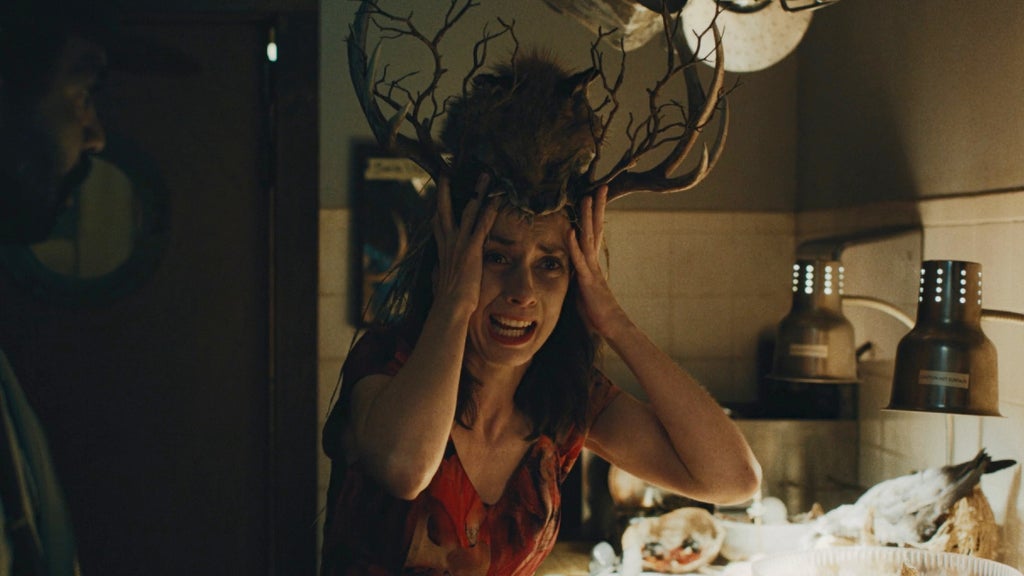
The show’s coastal New England setting and focus on a mayor who ignores the threats right in front of him bring inevitable comparisons to Steven Spielberg’s “Jaws.” While Dippold & Co. have all been quick to acknowledge the connection, Rhys contends that Murray Hamilton’s gutless mayor is not the only “Jaws” character that Tom Loftis shares traits with. He sees elements of Richard Dreyfuss’ marine biologist Hooper, Roy Scheider’s police chief Brody and Robert Shaw’s shark hunter Quint in Tom as well.
“I know they say Tom is cowardly,” he said. “I never saw him as cowardly. I think he’s obstructive because he wants to stay tunnel-visioned. He’s just desperately trying to get this thing over the line and bring the people in. There are elements of all three characters from ‘Jaws’ that I could relate to.”
That amalgamation of influences courses through the series. It is a show that is never content to be just one thing. Its inspirations may be obvious to dedicated film and television fans, but it is not a direct homage to any one movie or show, a conscious goal of everyone involved.
“Katie and I were always talking about how we didn’t want this to be a send-up where we’re dutifully re-creating certain shots from horror movies we love,” Murai noted. Dippold added that she preferred the show to bounce not just between horror and comedy but between horror subgenres, turning each installment into its own, quasi-standalone adventure.

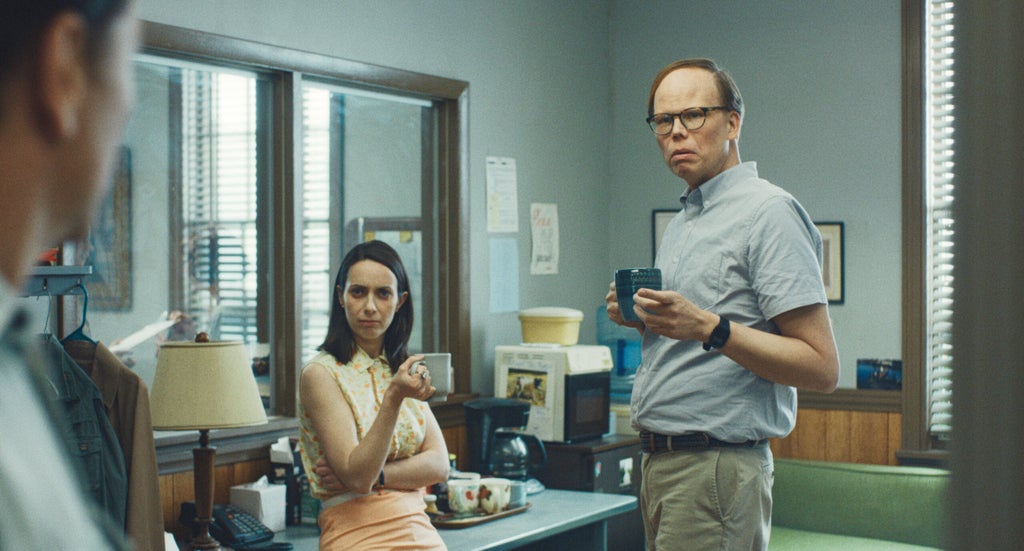
“I really love the idea that, even though it’s serialized and it should all feel of one piece, you could just say, ‘I want to watch the episode with the spooky inn’ and it could feel special on its own,” she said. “That was a real goal for me.”
The first season breaks down the entire history of the island and ends on a cliffhanger, as the malevolent spirits demand more human sacrifices, but Dippold has no interest in resting on her laurels. As she looks toward the future of “Widow’s Bay,” which has been renewed by Apple, she sees limitless possibilities. “There’s a lot I would love to do,” Dippold said.
As for how her own life has changed since the show became a hit, the former “Parks and Recreation” staff writer laughed and said her mornings are different now for one specific reason: “There’s more emails.”
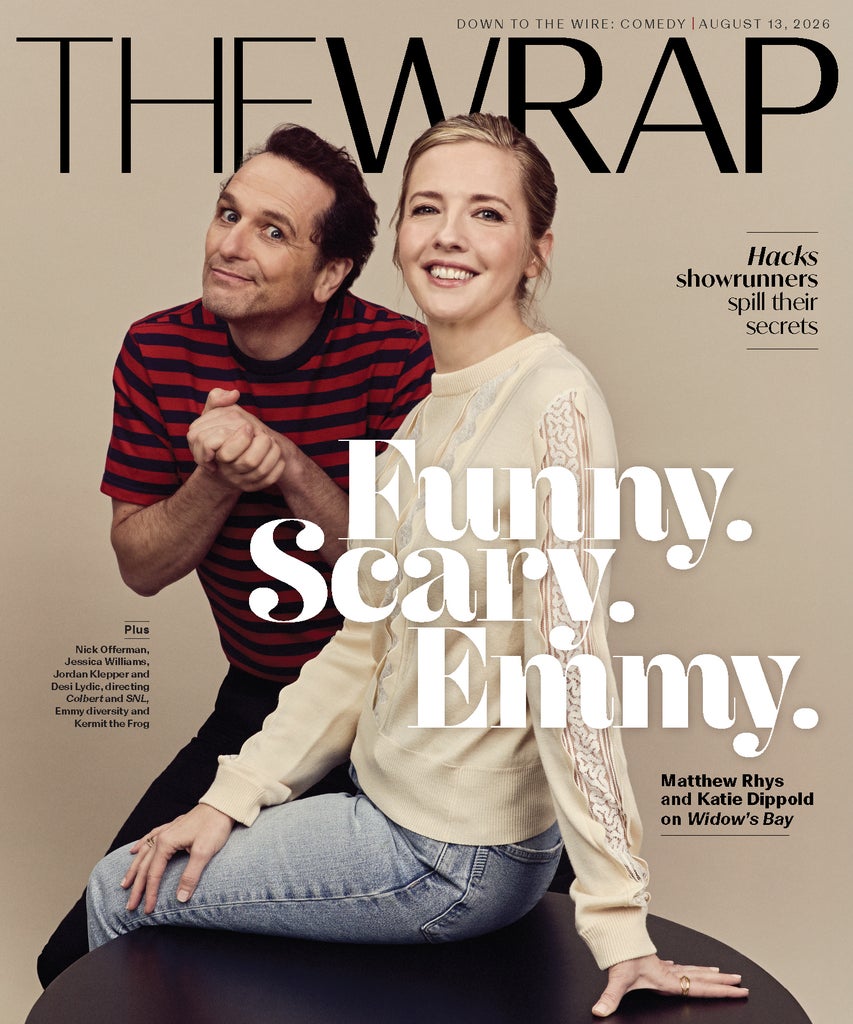
This story first ran in the Down to the Wire Comedy issue of TheWrap’s awards magazine. Read more from the issue here.



>