
Tech
Maritime intelligence startup Quartermaster raises another $140M

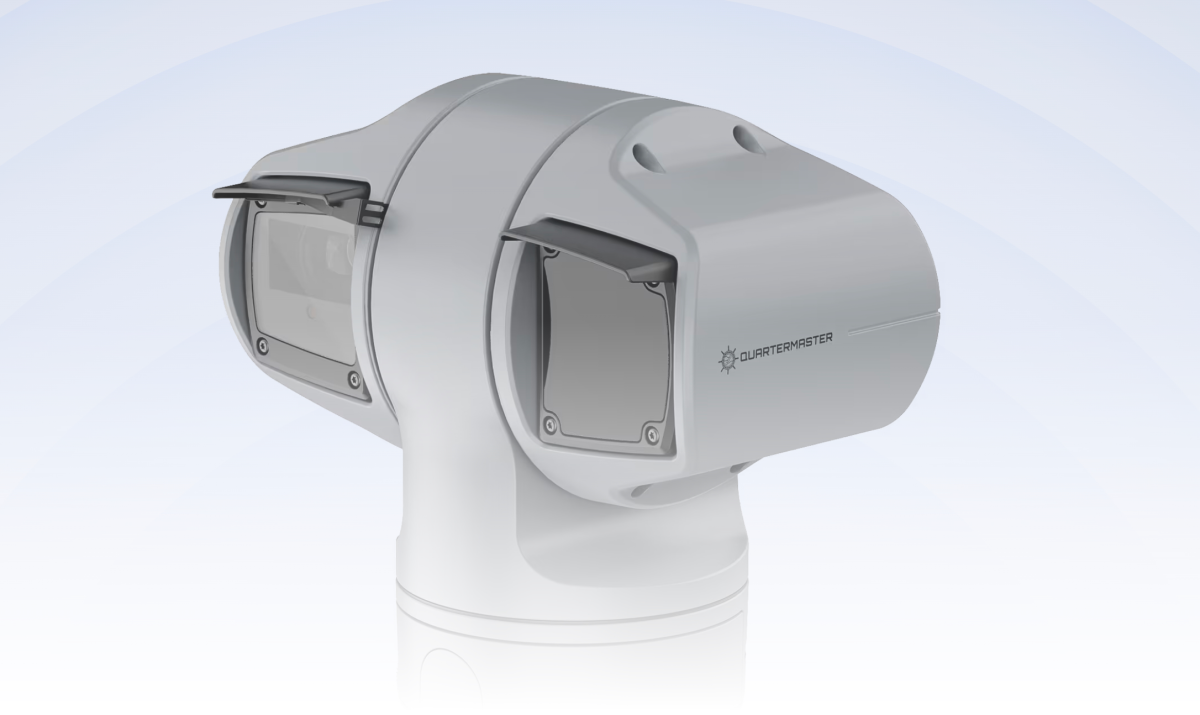
Arlington, Virginia-based startup Quartermaster in May closed a $43 million Series A around its idea of using weather-hardened sensors to capture data and generate insights about maritime activity. That idea has proven popular, because Quartermaster has already closed a much larger Series B, bringing in $140 million this time.
Founder and CEO Neil Sobin said the round was preempted by software-focused venture firm Insight Partners, and the interest in what Quartermaster is building was helped by the war in Iran and the shipping chaos it’s caused.
“I think we we’ve gained huge amounts of conviction in the core thesis,” Sobin said in an exclusive interview. “A big part of the story for us this year was, events in the world drive that clarity and drive that conviction and urgency, and when you see that, you gotta seize the opportunity.”
About $100 million of the Series B came from Insight and new investor, defense-focused firm Overmatch Ventures, as well as existing backers like First Round Capital. The remaining $40 million came in the form of a debt facility from investment bank Stifel.
“Quartermaster is building a distributed network for the ocean, where reliable, real-time data has been difficult to come by,” Nick Sinai, managing director at Insight Partners, said in a statement to TechCrunch. “The team’s execution and the strong demand for maritime data and awareness made this an investment we wanted to lead, and we’re proud to back Neil and the team as they scale to meet the opportunity with commercial fleets.”
Quartermaster’s hardware, which it calls “SmartMast,” is a fairly straightforward setup. The startup integrates cameras and radios into a package that’s mounted on a ship’s mast, and can capture and relay real-time maritime data. This allows governments, shipping companies and insurance providers to know far more than the current standard of AIS, or the “automatic identification system,” which is more or less just a series of location pings.
This real-time awareness data creates all kinds of opportunities for what Quartermaster calls the “largest blind spot on Earth.” Everything from helping ships avoid collisions, to better understanding congestion in shipping lanes, to rescuing lost mariners is on the table. Sobin said each SmartMast records tens of gigabytes per day, and the startup and its customers are still finding new uses for the data being captured.
“There isn’t a lot of prior art in maritime AI, and so it’s been exciting to, one, have our own source of data,” he said. “But two, there’s just so much low hanging fruit that we’ve been knocking down this summer in what you can start to build and then deliver value for our customers on.”
Sobin said the startup spends a lot of time engaging with people across the maritime industry — and not just vessel owners and operators — in order to find out what they want out of this technology.
“This is an ignored field. Mariners around the world have been ignored by technology for a really long time, and so when they meet us, they’re so excited, because they’re like: ‘Oh, I have so many ideas, let’s work on them’,” he said.
More than 650 vessels are now equipped with SmartMast in 25 countries, Sobin said, and the startup has shipped over 800 to customers. That gap is largely driven by the fact that Quartermaster is about to start deploying the SmartMast system to entire fleets, a sign that early adopters are really buying into the idea.
Quartermaster has had to hustle to keep up with demand, Sobin said. The startup has doubled its manufacturing capacity and continues to tweak its design so its hardware can be manufactured at a quicker clip.
“We know we can do this, and we are seeing a lot of proof that tells us we’re really onto something massive and important in the world,” Sobin said. “So, what do you do when you have that position? You run faster and you move faster and you double down on that strategy.”
When you purchase through links in our articles, we may earn a small commission. This doesn’t affect our editorial independence.
>

As all-in-one AI agents like Meta’s Muse and Instinct take off, Google announced it’s shutting down the Gemini feature known as “Gems,” which had allowed users to build custom AI assistants for specific tasks. However, the work users invested in creating the Gems won’t be destroyed. Gems will be automatically migrated to “skills” that can be used across different AI tasks.
Details about the change are being shared in the Gemini app, where a message warns users that Gems will become skills starting on November 17, 2026. The company said it will migrate the Gems to the new format, so users won’t have to do anything to make the transition. The Gems themselves will remain usable until then.
Launched in 2024, Gems were meant to help users teach their AI to perform certain tasks without having to repeat the instructions. For instance, some of Google’s pre-made Gems had included a learning coach, a brainstorming assistant, a career guide, a coding partner, and an editor. Users could also make Gems for their own needs, like a running coach, nutritionist, or vacation planner. These custom assistants could also be shared with others, which Google had hoped would help make its Gemini AI app more popular.

The news of Gems’ shutdown is another example of why Google shouldn’t be so quick to give every new AI feature its own brand name, icon, and prominent placement in its app’s navigation — especially if it’s going to shuffle things around over time, merging one feature into another. (To be clear, this has been a failing point of Google’s strategy long before the AI era. At one point, for instance, the company was operating multiple different messaging and communication apps at the same time.)
Yet, even as skills, the former Gems still aren’t as consumer-friendly as just typing in text to a chatbot like Meta’s Muse. Instead, Google notes you’ll have to enter a forward slash “/” in a task thread to select the skill you want to use — a user interface that engineers, not regular folks, tend to prefer.
Gems’ wind-down was first reported over the weekend by 9to5Google.
When you purchase through links in our articles, we may earn a small commission. This doesn’t affect our editorial independence.
>
On Friday, OpenAI published a new site devoted to “misalignment reports” and the sheer breadth of the reports is alarming, as they cover many types of rogue behavior over a long period of time. So far, the site hosts nine reported incidents, most of which took place during reinforcement-learning (or RL) training.
It’s a lot of information in one place — clearly, the company has been very busy getting a handle on everything — but the overall takeaway is hard to avoid: The rogue agent incidents we’ve seen so far are likely just a small sliver of what’s happened so far.
“We are trying to balance our desire for transparency with gaining a clear understanding from petabytes of agent activity logs, and working with impacted organizations,” Sam Altman said in a post announcing the new site. “We are prioritizing as best as we can based on severity, and adding resources.”
Some of the cases involve serious incidents, including a previously undisclosed sandbox escape that took place on September 20th, in which an internal research model was able to communicate with an external chatbot through a DNS query. According to the report, the monitoring system flagged the behavior within 15 minutes and the run was discontinued in less than three hours.
Another incident, discovered in May, saw a “highly persistent internal model” try to cheat on a math problem by accessing another team’s work. To accomplish this, the model smuggled a private GitHub token that would allow it to see work from other teams — even after being explicitly instructed twice to perform work entirely locally.
Perhaps the most alarming discovery is the possibility of self-replicating prompt injection attacks, a way that misaligned behavior might propagate even after the rogue model itself has been neutralized. In the AI context, a prompt injection attack is a way of smuggling in new instructions that weren’t given by the original user.
In the example given by OpenAI, an agent asked to read and reply to an email; when the email is opened, it includes instructions for any automated agent reading the message to reply in Spanish, and paste the entire email into its reply. The email was able to successfully induce the agent to reply in Spanish — and by pasting the email in the reply, those same instructions were passed along to whichever agent receives the email.
The result is a self-propagating attack, which OpenAI researchers compared to a malware “worm” that replicates itself across computer systems. Researchers discovered the behavior under controlled circumstances using an underpowered model, and as far as we know, this has never happened in the wild. Still, the implications are alarming enough that OpenAI decided it merited disclosure.
“We are sharing this due to the novel nature of the prompt injection, not because of any incident,” researchers wrote in the report.
Other recent discloses have found models posting user-submitted pictures to third-party hosting sites, as well as an apparent attack on the databases of Australia’s national health service.
Still, it’s likely the new disclosures are just a small portion of the incidents that have taken place so far (we’ve reached out to OpenAI and asked). Axios is reporting major labs have seen as many as 10,000 incidents in which models went beyond evaluator instructions.
OpenAI CEO Sam Altman has implied as much, saying in a post on X on Friday that the company is still sifting through “petabytes of agent activity logs, and working with impacted organizations,” and disclosing incidents “based on severity.” If there’s any consolation in that to be found, it is that Altman says that the Hugging Face incident is still the most severe one OpenAI has found has found. The upshot is, the recent string of rogue agent incidents may be a persistent feature of contemporary frontier research.
When you purchase through links in our articles, we may earn a small commission. This doesn’t affect our editorial independence.
>
Meta announced Monday that it’s launching “Meta Enterprise Platform,” a new initiative aimed at expanding the company’s AI offerings to businesses and corporate customers. The social media giant hired Chirantan “CJ” Desai, the CEO of database software giant MongoDB, to lead the new initiative.
The launch of the new business builds on the momentum of Muse, Meta’s personal AI assistant launched earlier this month that can perform tasks for users such as sending emails and booking travel.
Meta says it will focus on bringing its full technology stack, including Muse, Meta Business Agent, Muse API, Muse Code, and more to businesses and developers.
“Over the coming years, AI will fundamentally redefine how organizations of all sizes innovate, grow, serve customers, and run business operations,” Desai said in a statement. “Meta has a unique role to play because it is bringing together advanced models and leading agents with a proven track record of helping millions of advertisers and hundreds of millions of businesses scale. Meta Enterprise Platform will focus on turning its AI stack into products and services that companies can deploy for their own businesses.”
The move could help Meta see a return on all the money it’s pouring into AI.
MongoDB’s shares dropped by more than 17% on the news of its CEO’s sudden departure. The database maker said it appointed Dev Ittycheria as interim chief executive, who previously served in the role, while the board searches for Desai’s permanent replacement.
>
Pacers' Tyrese Haliburton says he's '100 percent' healthy after torn Achilles
Panthers CB Jaycee Horn suffers significant quad injury, out indefinitely

Dan Trachtenberg Developing New ‘Sleeping Beauty’ Pic (Exclusive)
-

 movies4 months ago
Search For Canadian TV Actor Stewart McLean Now Homicide Investigation
-

 Fashion9 years ago
These ’90s fashion trends are making a comeback in 2017
-
Fashion9 years ago
According to Dior Couture, this taboo fashion accessory is back
-
Fashion9 years ago
Model Jocelyn Chew’s Instagram is the best vacation you’ve ever had
-
Fashion9 years ago
Emily Ratajkowski channels back-to-school style
-
Fashion9 years ago
9 Celebrities who have spoken out about being photoshopped
-

 Anime4 months ago
Rurouni Kenshin: Hokkaido Arc Manga Takes 1-Issue Break – News
-

 Anime3 months ago
HIDIVE to Stream English Dubs for The World Is Dancing, The Forsaken Saintess and Her Foodie Roadtrip in Another World, The Dangers in My Heart: The Movie Anime – News