
‘Rescue’
Troels N´Koya Jensen


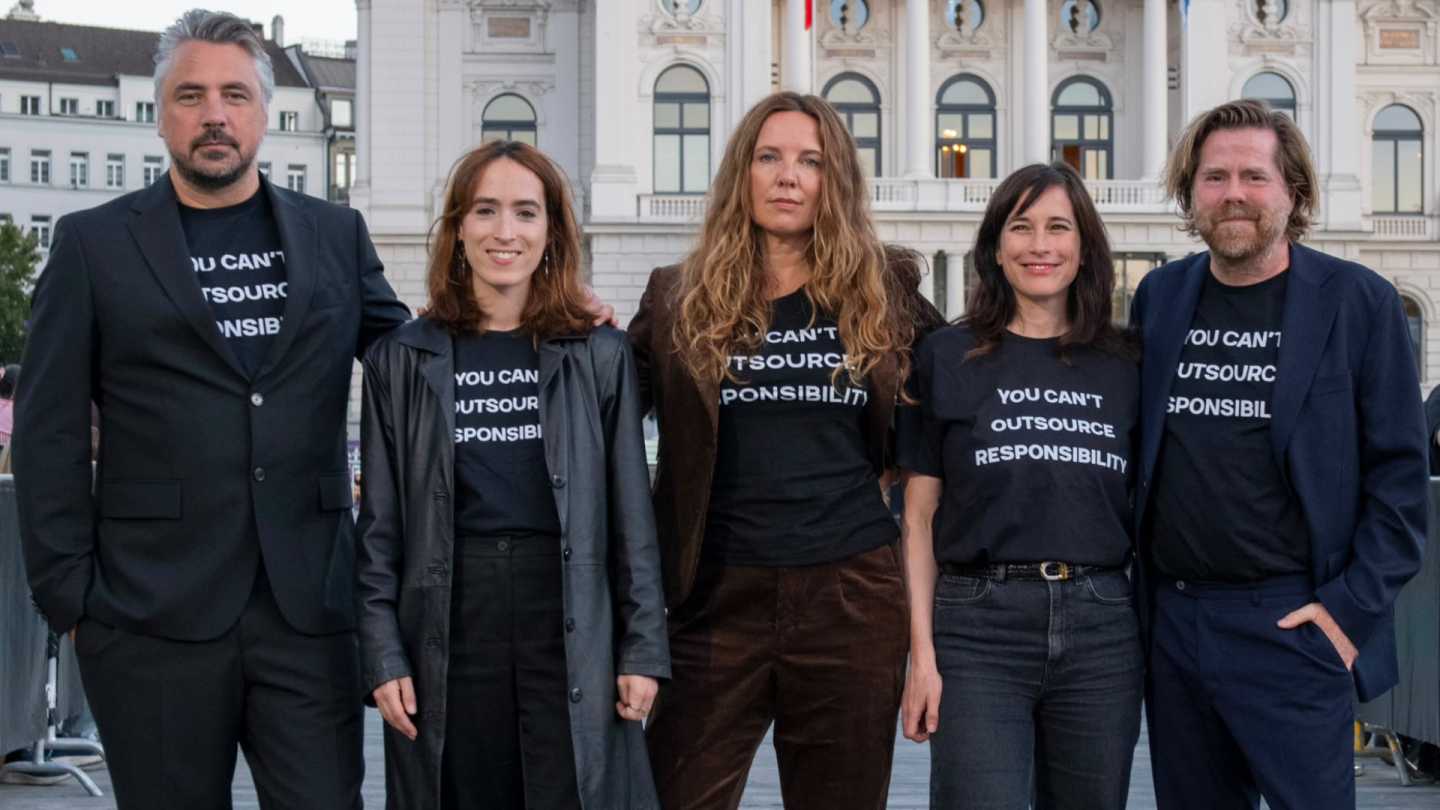
Hot on the heels of its world premiere at TIFF, Danish filmmaker Sine Plambech’s harrowing migrant tale Rescue has given European audiences food for thought at the Zurich Film Festival this week.
Also an anthropologist for nearly 20 years, the filmmaker was last here at the Swiss film festival with 2018’s Heartbound, another immigration story following the cross-cultural marriage between Thai women and Danish fishermen. After winning the prestigious Golden Eye, Plambech returns with another searing analysis of the immigrant experience. She also heads up Zurich’s documentary competition jury, and her relationship with this festival has never been stronger.
With Rescue, however, Plambech has admittedly never received so much social media hate. The doc opens off the Libyan coast, where a dinghy overcrowded with refugees is spotted by the crew of the Doctors Without Borders-operated rescue ship Geo Barents. During the rescue operation, Libyan militiamen intervene and abduct several people, including a woman, Roro, and her two young children. For months, Plambech follows Roro’s husband, Hani, and his struggle to reunite his family. It shines a glaring light on the EU-funded system in which North African countries are paid billions to seal off migration on the Northern shores.
“I felt very strongly that my job was to document whatever I was witnessing, but I didn’t know we were going to witness such a huge human rights violation in front of our camera,” says Plambech to The Hollywood Reporter following the film’s premiere in Zurich. A warning: Rescue is a distressing watch. Roro is beaten and raped for seven months while trapped by the Libyan militia. The ordeal suffered by her, her young baby and son is chronicled through videos Roro sent through Hani, with whom Plambech developed a close relationship. “Even though he was in such a distressed situation, he was like, ‘I want to tell my story,’” Plambech says of the Yemeni man.
The film is written by Plambech and Janus Metz, and produced by Elk Film’s Andreas Dalsgaard, Sofie Husum Johannesen, and Tereza Šimíková. Plambech hopes she’s continuing an urgent conversation by taking Rescue on the festival circuit — and is buoyed by the nearly 3,000 Euros raised so far for Hani and Roro’s family upon its premiere — but it is, in her words, hard not to become an activist witnessing the work of the rescue teams out on the water. “I did have nightmares,” admits the director.
Rescue also pulls into sharp focus Europe’s worsening migrant crisis, exacerbated by the EU’s “externalization” of migrant control to North Africa. “[Europe] has decided that we will let other countries do our dirty laundry,” says Plambech. With the discourse on immigration at boiling point and far-right politicians weaponizing the issue to wield power, the narrative has never been so fraught. It doesn’t help that the EU regularly detains Geo Barents for up to 60 days at a time, meaning the life-saving work they do in international waters is often halted.
Below, Plambech dives into the impossibly challenging Rescue and heading up Zurich’s doc jury. She reveals that she has never received so much hate as she did when posting about this film, and why it exposes a deep-rooted shift in our collective empathy: “Some people consider rescue ships an ambulance, but some consider them a taxi. I think these two images of the taxi and the ambulance tell us a lot about where we are in European politics.”
What is it that’s pulled you back to this theme time and time again?
There [are] always so many new aspects of migration to explore. It’s one of the most important topics of our time. It involves so many policies and people and emotions and discussions and violence. So it has just continued to be part of my thinking. But then, as an anthropologist and as a filmmaker, I always wanted to understand what that looked like from the refugees’ or migrants’ perspective, and in particular from the women’s perspective. So it’s trying to use the camera to tell the stories that we don’t hear so often, and get a more intimate understanding. And that was why I decided to have Roro as a main character, even though she was in captivity. It’s the first time I’m making a film about a woman who was actually in captivity that I hadn’t met.
[It’s] what continues to drive me, and of course now with the political situation… I mean, we had what we call the migration crisis 10 years ago, but now the situation is different because, as you see in the film, Europe is paying North African countries to keep migrants away.
‘Rescue’
Troels N´Koya Jensen
What was your way into this story? How did you find Hani and Roro?
There were certain things that I knew I wanted. I knew that I wanted a story that combined the political with an intimate human story, and I also knew that I wanted to go on land. With the ship, you don’t know who you’re going to meet because right now people are crossing from all over the world: Bangladesh, Afghanistan, Sudan, Syria, Yemen. Everyone has a story to tell, and you don’t know what story you’re going to find. We were out several times on the rescue ship, and the first time was more what is called a “normal rescue.” It doesn’t look normal, but they are so experienced, so it just [means] there weren’t people in the water. People were rescued directly from the ship. There were no life-threatening situations.
On that day when we were going to film, we had the visual and we saw the boat in distress in front of our camera. I told our [DP], “When you go out now, just follow on one person who comes into your the rescue boat and see what his story is.” And then Hani came and was like, “My baby, my baby.” And bless my [DP] for being like, “Okay, I think this is what my director needs. I’m following this person.”
And you were back on Geo Barents?
They came back to the mothership where I was filming. I was standing on the bridge filming the kidnapping, and I was just thinking, ‘What is it my people are facing there? Is my photographer able to document the situation?’ Because twice we have experienced that the [cameramen] have to put down the camera and rescue people, because that’s one of the conditions when you go out with the rescue ships — the rescue is more important than making the film. So I didn’t know what he would come back with. But then he came on board and he said, “I think we should follow this man.”
How was Hani at that point?
From the very start, Hani was very welcoming. Even though he was in such a distressed situation, he was like, “I want to tell my story.” Many people are telling their stories [now.] They are even saying, “I want the world to know my story.” I have never really been in a situation where so many want their stories to be told in front of the camera. So this whole idea of people wanting to be anonymous, that was not really an issue because they were like, “I want people to know what’s happening in Libya.” So then, I decided to go on land with Hani and follow him up to the refugee center in Italy. After some weeks, he said that Roro is sending these videos. I didn’t consider it material for the film because it was filmed so roughly. I thought my film would be about a Muslim man from Yemen, seeing the world from his perspective. But then all this material continued to come, and he just forwarded it to me. And then one day I was on a call with him, and Roro came on the call as well. And then I began to connect with her, and we were trying to help her for all these months, to get her out of Libya. When we were in the editing process […] I agreed with Roro and Hani, “Okay, let’s focus on Roro.”
A practical question: How do you get access to Geo Barents? Because that is such a dangerous situation. The other boat had weapons.
Yeah. It started with Doctors Without Borders contacting me because I [was] working as a researcher. They had some questions about what [my] research was saying about the situation in the Mediterranean, and maybe they could use that for a campaign. And then, because I have worked with migration for so many years and followed the routes from West Africa and in many places, but I hadn’t been at sea. As an anthropologist and filmmaker, I wanted to be able to see: What does it feel like in the middle of the night? With the waves, and the only light is the moon? So I asked if I could get permission to go there, and it’s not uncommon that they bring journalists or documentaries [on board], but with the rescue ships they wanted us to come and document the human rights violations.
And get the story out there.
I felt very strongly that my job was to document whatever I was witnessing, but I didn’t know we were going to witness such a huge human rights violation in front of our camera. That was something no one could have known. I got special access because we were allowed to come on board several times rather than just once. But of course, it’s also something you have really to be careful. I didn’t want to make an activist film, even though it’s very difficult to make a film about migration and not be seen as an activist. Also, witnessing the crimes going on, it’s very difficult not to become an activist. So all that balancing is something we’re still working on.
How do you — not as an anthropologist and not as a filmmaker, but as a human — steady yourself through witnessing something like this?
I did have nightmares. The good thing now is the Danish Film Institute made sure that we have psychological debriefings. Like 10 years ago, when I wrote documentaries, that was not part of the funding, but it’s actually [enforced] now. But when [Roro] was captured and I was back in Copenhagen and Hani was in the refugee camp in Italy, I had these nightmares where I was seeing her going back at sea, and then drowning, and there was no one to pick her up because the ship was not out; it was in detention.
So it’s definitely the project that has followed me the most emotionally as well. And also my cameraman. I mean, the guys who had to put down their camera and rescue people… But also, just editors sitting with that material for hours and hours and hours. It’s difficult because it’s always worse for all the survivors and the rescuers. They witness this every day. So I also don’t want to be the film team to [say], “Oh, I’m watching these different things, and I’m traumatized.” But of course, when you document these atrocities, brutalities, you are a human more than you are a filmmaker.
I was thinking, when the ship was in detention, [the rescuers] must feel so powerless. What kind of conversations are you hoping this prompts out of Zurich, but also when it’s released more widely? Because this is EU-funded, these atrocities.
There are two or three main things that I hope we can discuss in the wake of the film’s premiere. Definitely the lack of accountability for the money that is being sent to North Africa , not only to Libya. I mean, even the Libyan population is suffering from this. There’s just no accountability in terms of how the money is spent and all the violence that this produces. So that’s a conversation we’re going to have over the next year, where the EU in June next year will renegotiate the deal with Libya. And we have this campaign [too]. At the premieres, we all wore this T-shirt that says, “You Can’t Outsource Responsibility.”
That’s one of the conversations we want to have, and use the film for that. We’re launching it with Think-Film producers to have a screening at Parliament, because a lot of the people crossing the sea are men.
That was really apparent watching the film.
Yeah, that breaks a lot of people’s emotions. Not necessarily in our audience, because they come and they want to see a film about it. But politically, the image of so many able men, [there is] the idea that they should stay in their home country and build up their home country rather than escaping to Europe. It’s a strong narrative around the rescue ships. So that’s also why I want to talk about a refugee family who is coming from a place of war […] and I also wanted to focus on a woman, because you can see she gets pregnant, she’s suffering from all kinds of sexual violence, all kinds of issues that are connected to women’s migration and women as refugees. Between 80 and 100 percent of women in Libya are being raped before they cross to Europe. So Roro’s story is one among many.
How do you think the conversation around the migrant crisis has changed in recent years as we hit this peak of right-wing politicians weaponizing the issue? People are literally being elected on the basis of their immigration stance. Are we at a boiling point?
I think we are at a very tough point, and I have followed this for 20 years. First of all, [Europe] has decided that we will let other countries do our dirty laundry and keep people out of Europe. Even when we had the previous refugee crisis, Europe had a shared rescue flotilla, and then they decided to let go of that and consider migrants and refugees as [people] who should be stopped. That’s why we now have the NGO. So that whole change from a refugee being someone that we are going to rescue and take care of in our European ideal of humanity, to being someone who needs to be stopped. And there will be collateral damage, with people drowning. That’s definitely something we are seeing culminating right now. Even when Hani was trying to come to Germany, 90 percent of people from Yemen would get asylum. Now it’s down to 15 percent. The whole narrative of asylum and refugees as being someone that we could handle and take care of [has changed] to stopping them on the northern shores before they even come here.
I use social media quite a lot to communicate about my work, and I said I’m going to do a film and follow this rescue ship. I have communicated with media and journalists for the past 20 years on this topic, but going on a rescue ship is definitely the post that got me the most hate, and I was not even going to rescue anyone. I was just going to document it, and they were like, “You are a traitor to the European ideals,” and “Do you know that you will be part of bringing in rapists into Europe?” That’s what rescuers and rescue ships are facing every day. Some people consider rescue ships an ambulance, but some consider them a taxi. I think these two images of the taxi and the ambulance tell us a lot about where we are in European politics.
It’s hard not to feel really cynical about the state of the world.
But I would say audiences are different. I mean, we started a GoFundMe campaign for Roro and Hani at our [Zurich] premiere to support the legal situation and medical costs. And we had one screening and we’re already at 3,000 Euros [$3,400]. There is hope.
How do you find balancing this with your duties as head of the documentary jury? You obviously have a wonderful relationship with the Zurich Film Festival.
What I really like about it is not only, of course, that they invite my films to have European premieres, and we won the Golden Eye [with Heartbound], but also that the festival really understands my work as an anthropologist and a filmmaker. I feel very understood and welcomed here.
What are you looking for in the doc lineup this year?
I’m looking for a personal story with a global perspective. Intimate stories that are going to tell [us] something more than just the environment we are in in that film. There [are] so many horrible and important and crucial things going on in our world. So I think our documentaries should reflect that through human stories […] that are representative of certain communities that we don’t have access to.
The 22nd Zurich Film Festival runs Sept. 24-Oct. 4.
>
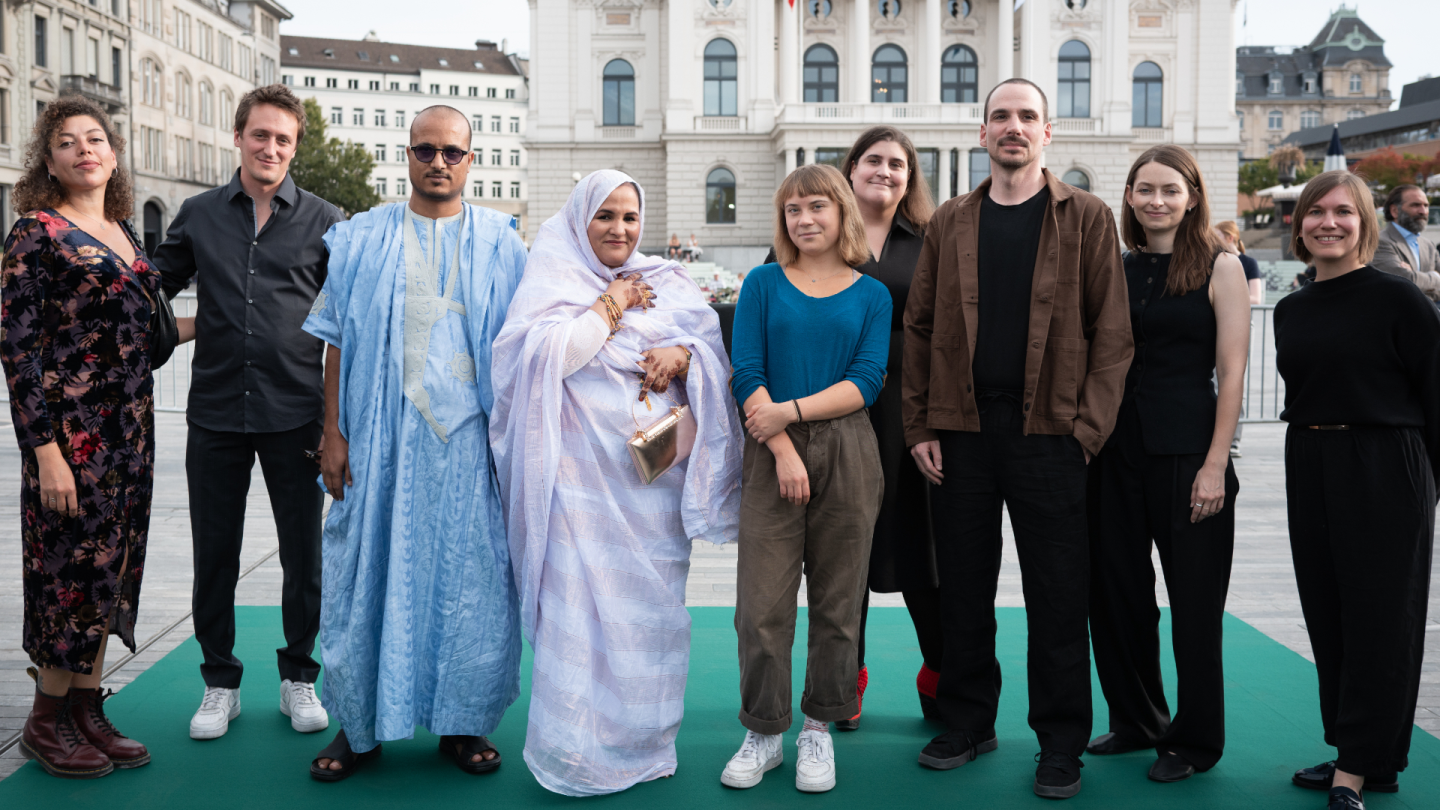
Swedish climate activist Greta Thunberg has thrown her weight behind the Zurich-premiering My Home of Wind and Sand, an important and affecting documentary following a young woman’s fight for her community’s independence.
From Austrian filmmaker Patrick Wally, who shot the feature over a 10-year period, My Home of Wind and Sand is a portrait of Sahrawi activist Najla Mohamed Lamin. She was born and raised in the refugee camps near Tindouf, Algeria, and has devoted her adult life to campaigning for Western Sahara’s liberation from Moroccan sovereignty. We follow Lamin from her studies in the U.S. to representing the Sahrawi people at the United Nations, where she argues for peaceful resistance as a generation born in exile (Spain withdrew its occupation of the region in 1975) grows older and angrier without resolution.
When armed conflict resumes after decades of ceasefire, the convictions that have shaped Najla’s public life are tested. And then, toward the end of the doc, comes a kick to the gut: The UN Security Council adopts a US-sponsored resolution describing genuine autonomy under Moroccan sovereignty as the “most feasible solution” to the conflict.
Lamin and Wally, whose sweet and unlikely friendship anchors this depiction of the Sahrawi people’s fight for justice, were celebrated at the Zurich Film Festival premiere on Tuesday evening, where they urged attendees to spread the word about the issue.
And Thunberg, who in January 2025 visited the Sahrawi camps with Lamin accompanying and translating for her, spoke plainly about what must change and called out the media for its silence. “This movie is so much about betrayal,” said the young activist. “First, it is the occupation and the violence in itself that somehow becomes viewed as normal. […] It’s not attractive enough to gain any media attention or clicks, which is yet another betrayal. And then it’s the whole international community, all the international organizations that people are putting their entire trust to, but are being met with nothing but betrayal.”
She continued, asking the audience to take Lamin’s story with them: “We do not talk about Western Sahara — people don’t even know about Western Sahara, and there’s just this extreme hypocrisy that makes me so, so angry and upset. While this story is, of course, incredibly inspirational, it is about perseverance, steadfastness, and continuing the fight as a matter of duty. I am convinced that Najla [and her community] do not want thank-yous or applause, but action. It falls on every single one of us in this room, especially us privileged people who have a platform or access to resources, to actually take that moral obligation to amplify the Western Saharan struggles. […] We will spread the word, and do everything in our power to ensure global solidarity and justice. Because otherwise, we are nothing more than hypocrites ourselves.”
Lamin reflected on seeing a decade of her life up on screen and paid tribute to the thousands of people — including her late sister — who will never have their voices heard. She said at Zurich’s Kinokoni: “Standing in Europe, in Switzerland, I think it’s very easy for us to think that we are completely separate from each other as nations, as cultures, as activists, as women, as men. ‘Oh, she lives in Africa. She has nothing to do with me. I live in Switzerland. I have nothing to do with the person in Gaza or in Sudan or in Congo.’”
The campaigner added: “But when you really sit with yourself, you do a little bit of research, or just take the courage to be honest with yourself… We’re only one small planet, and we’re not separated. We’re not different. Morocco cannot do what it’s doing without the support of Europe and the U.S., and Israel cannot do what it’s doing to the Palestinian people without the support of Europe and the U.S. […] Free European citizens, you have a very, very big responsibility to look back at your privileges, to look back at your government, at your interests, and see where [you] can make a difference.”
The room erupted into raucous applause as Lamin spoke. All she is asking for, she added, is a referendum where her people can decide their own future. Wally added: “I was so astonished of her story and how she tells it, and even [at] the first meeting, everything she told me… It was eye-opening for me. She had so much knowledge, and I learned so much from her that I wouldn’t have expected. So that’s why I tried to make a film about her.”
Lightdox is handling worldwide sales on My Home of Wind and Sand, a WyFilm production. The 22nd Zurich Film Festival runs Sept. 24-Oct. 4.
>
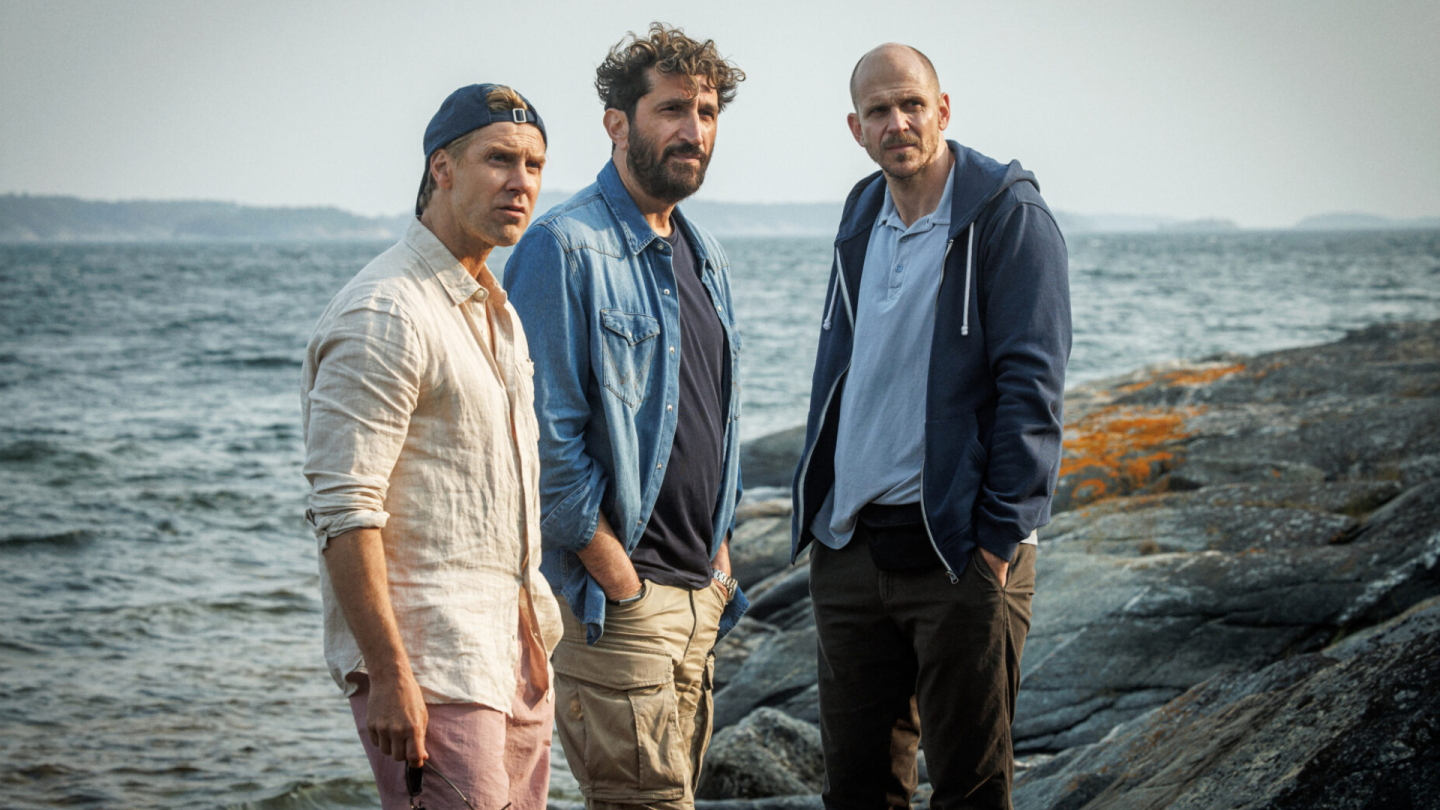
It is equally as intriguing as it is concerning that so much of Alex Schulman’s debut feature, Adult Supervision, is inspired by real-life events.
Like his protagonist, Bill, the first-time filmmaker — also a famed author, journalist and podcaster in his native Sweden — chaperoned a school trip to the Stockholm Archipelago in a bid to reconnect with his daughter. “We had such a close, close relationship when she was a child, and then all of a sudden, I just noticed that as I got into her room, she left it,” Schulman tells The Hollywood Reporter outside Zurich‘s Hotel Ambassador this week. “It was the saddest thing, and then I said to my wife, ‘I’m going to go on the trip because I need to get her back.’”
Thankfully, now 17, Schulman’s daughter has resurfaced from under the choppy waters of teen angst and rediscovered that precious connection with her father. But the aforementioned class excursion had already left a profound impact on Schulman. It not only served as the basis for an entire film about the particularly chaotic trifecta of paternity, masculinity and childhood trauma, but would also make an Oscar hopeful out of the newly anointed director, whose Adult Supervision — premiering at the Zurich Film Festival this week — has been selected as Sweden’s official pick for best international feature at the Academy Awards.
It also gave him the irresistible opportunity to work once again with Gustaf Skarsgård (son of Stellan, brother of Alexander and Bill), with whom Schulman once had a complicated relationship. “We were very bad friends because I have a podcast, and we were making fun of him on this podcast,” he begins.
The long-running Alex & Sigges podcast is, according to Schulman, the biggest pod in Scandinavia. So when this particular member of the beloved Swedish acting dynasty released a rap song, Schulman’s mocking of the video played out pretty publicly in the press. “I get so angry, offended, proud and sad and a little murderous,” Skarsgård reportedly told Swedish press about Schulman and his co-host Sigge Eklund some years ago. “And then I think: ‘But what the hell, come on, laugh at yourself a little and have a little distance. [And] fuck those two.’”
Schulman smiles as he talks about it now. “Gustaf was very angry, so he went out publicly and [said] what he thought about us, and then we had a war for a couple of years,” he explains. But in 2022, Schulman had written a monologic stage show, Comfort Reports, and was directing it at Stockholm’s Royal Dramatic Theatre. He needed a heavyweight actor to lift the performance to the great heights he believed it could reach. “I thought, ‘There’s no one that can do it as good as Gustaf.’” But he couldn’t contact Skarsgård because the tension between them was so rife. “So I sent [the script] to the head of the theater, and Gustaf read it and liked it,” he says. “Then after being public enemies for so long, we met in this restaurant. I remember him coming in, and I rose from the table, and we just hugged. Then it was over.”
Adult Supervision marks Schulman and Skarsgård’s second collaboration. It follows Skarsgård as the anxiety-ridden Bill, who accompanies his daughter and her school friends on a remote trip, desperate to repair their icy relationship. He is joined by two fellow fathers: the secretly domineering Bobo (Fares Fares) and Pontus (Linus Wahlgren), who takes a fancy to one of the camp counsellors. The men believe themselves to be up for the task of handling an unruly class. But tensions quickly escalate and their grip on the situation begins to slip. As buried memories resurface, games turn into power struggles — and power into violence. Soon, no one can tell who’s in charge and who’s in danger.
From left: Director Alex Schulman with stars Gustaf Skarsgard, Linus Wahlgren and Fares Fares at the Zurich premiere of ‘Adult Supervision.’
Courtesy of Getty
Perhaps Schulman can do the best job at putting into perspective how authentic his script is: “You know the scene with the name [introduction] game, with the throw of the ball, and the students say, ‘I’m Leopold Dogfucker’? That actually happened.” Just as Bill does in the film, Schulman turned to his daughter and asked for the misbehaving kid’s name. “You can imagine that my daughter hated me. [She was] so embarrassed.”
It isn’t the only real-life event that Schulman wove into this deftly crafted portrait of authority, anarchy and the unpredictable nature of children. Adult Supervision opens with a school teacher showing parents anonymous screenshots from the kids’ Snapchat conversations, in which they hurl unfathomably vicious and antisemitic abuse at one another. Another scene on the trip depicts a student spraying an antiseptic cleaning bottle into his peer’s water, before Fares’ character comes and, in what he believes is an astute bit of discipline, slams his palm on the table so hard that the whole room stops. Many of these incidents were inspired by Schulman’s experience. “There were so many things happening on that trip,” he remembers. “And when I came home, I remember I was crying in my wife’s lap for hours. And then after a couple of weeks, I thought that this is a story that I want to tell.”
The director likens his own role on the trip to that of Bill, who is slowly driven to madness by worrying about a particular child, the class punching bag Kenneth (Olof Olingdahl). “I am very much like Bill in the movie. I’m not a conflict guy,” says Schulman. “And I always believe in discussing a conflict with kids, but that didn’t work.” He is admittedly relieved that Skarsgård was able to bring alive Bill’s gentle, yet neurotic nature. “It must be hard for an actor to play a person who’s struggling so much,” wonders the director. “And it’s a big challenge because he’s in almost every frame. It’s completely his movie […] and for me, I think it was obvious that [no one] in Sweden can do it as well as he did.”
Skarsgård’s performance completely anchors the gradual descent from decorum to disorder. He is a man acting out of parental responsibility, while carrying his own baggage from being bullied as a child himself. But Kenneth, to Bill’s dismay, is not your usual victim. “You see so many bullied boys and girls in movies that are just so one-dimensional,” says Schulman. “They’re bullied and they’re victims. But I know from being bullied when I was young, [that] I was also bullying. That’s how you survive, right? It’s very, very complex,” he continues. “I liked the idea of one thinking that this boy is a victim, but he’s also a perpetrator.”
The finished product is, oddly, very aesthetically pleasing. Schulman enlisted one of Joachim Trier’s most trusted cinematographers, Jakob Ihre, who also worked with Fares on HBO’s Chernobyl. Together, they came up with replacing bog-standard drone shots of the island with miniature models — fake trees and tiny cabins — which help evoke a sense of childlike play.
Adult Supervision has so far been described as a dark comedy, but it’s quite the mash-up of genres. Schulman blends light-heartedness and discomfort to create something of a thriller. Those moments of humor are, for Schulman, when all esteem for the art form went out the window. “When I write books, I can’t write comedy. I don’t know why. It’s so sad,” he explains. “Books are divine for me. I can’t soil them by writing comedy. When I started to write a movie script, I had no respect. So I could finally do the things that I wanted to do.” He did show the film to Ruben Östlund, he adds, who told him it was a relationship horror. That feels right for Schulman.
Perhaps a one-two with prolific auteur Östlund is standard practice for one of Sweden’s most famous journalists, but an ensuing Oscar campaign? Now that has stumped the self-assured Schulman. “I can’t even describe it,” he beams. “It’s crazy that I’m now going to L.A. to do screenings for Academy members.” He just about understands the hype: “It’s an arthouse movie, but it’s also quite commercial. It’s a perfect mix. And they test fun, those scenes. But almost all scenes are from my life in some way.”
Viewers will be relieved to know that the last few minutes — in which Schulman delivers us a shocking act of violence — are fiction. Producers weren’t immediately convinced, but the filmmaker was delighted to have final cut on his first feature and insisted that Adult Supervision had to go there.
And now, after its award-winning world premiere in the Next Wave competition at Fantastic Fest and a major screening at Zurich Film Festival, Schulman is slowly but surely relinquishing control. “I’m not nervous,” he says. “I love seeing the movie with other people, just to be there and to see where it works and [doesn’t]. But the last time I did it was in the test screenings, and then I could always go back to the editing room and fix things. And now I obviously can’t fix anything because it’s done.”
He has definitively caught the directing bug and has plans for a second feature (you might not be surprised to learn it’s another story inspired by a trip away for Schulman). With Adult Supervision, at least, this debut filmmaker has a whole nation behind him: “Now it’s the Oscars submission, I can go to festivals,” he grins. “And I might be able to do one more movie.”
>

Blame it on the rain? Broadway box office dropped by 11% last week as New York suffered a decidedly soggy Nor’easter weekend.
All but three of the 26 productions on the boards last week saw a drop in grosses from the previous week, with the total tally coming in at $24,093,388 (compared to $27,070,361 the previous week). Total attendance for the week ending September 27 was 209,194, also down 11% from the previous week.
Bucking the trend were School Girls; Or The African Mean Girls Play, which performed eight previews compared to the previous week’s seven (it opened last night to excellent reviews), grossing $322,044. That’s up $34,290 over the previous week.
Also up was Paranormal Activity, which had a largely comped gala performance the week before last, moving grosses for that week downward. For the week ending September 27, the spooky play grossed $871,364, a jump of $85,939 over the previous gala week.
But the biggest gain by far was made by Harry Potter and the Cursed Child, which saw the return of the ever-popular Tom Felton as Draco Malfoy after a week off. Grosses for his return week were $1,573,469, a jump over the previous week of $607,271.
Top earner for the week was, hands down, Hamilton, riding high with the return of original cast member Christopher Jackson in the role of George Washington (through January 3). The musical grossed a whopping $2,608,571, easily besting runner up The Lion King‘s $1,700,873. Rounding out the Top Five were Harry Potter, MJ ($1,544,512) and Oh, Mary! with Bowen Yang in the title role ($1,458,262).
Hamilton, as usual, carried the top average ticket price at $243.50, with Oh, Mary! second at $204.15. The overall average for the 26 shows was $115.17.
Only Hamilton and Oh, Mary! were sell-outs for the week, although Chicago (with Reece Weaver as Roxie), Hadestown, Paranormal Activity and The Book of Mormon came close, with attendance at 95% of capacity or more.
New to the roster was non-prof Roundabout’s The Imaginary Invalid starring Bill Irwin at the Haimes, filling 94% of seats for three previews for a take of $183,153. Opening night is October 22.
In the 18th week of the 2026-27 season, Broadway has grossed season-to-date $565,480,589, down about 7% from last year at this time, with total attendance of 4,680,491 down 2% year-to-year.
All figures courtesy of The Broadway League. For more box office information visit the League’s website.
>


Search For Canadian TV Actor Stewart McLean Now Homicide Investigation


These ’90s fashion trends are making a comeback in 2017
According to Dior Couture, this taboo fashion accessory is back
Model Jocelyn Chew’s Instagram is the best vacation you’ve ever had
Emily Ratajkowski channels back-to-school style
9 Celebrities who have spoken out about being photoshopped


Rurouni Kenshin: Hokkaido Arc Manga Takes 1-Issue Break – News


HIDIVE to Stream English Dubs for The World Is Dancing, The Forsaken Saintess and Her Foodie Roadtrip in Another World, The Dangers in My Heart: The Movie Anime – News