
Entertainment
Range Managers on the New Rules for Hollywood Representation

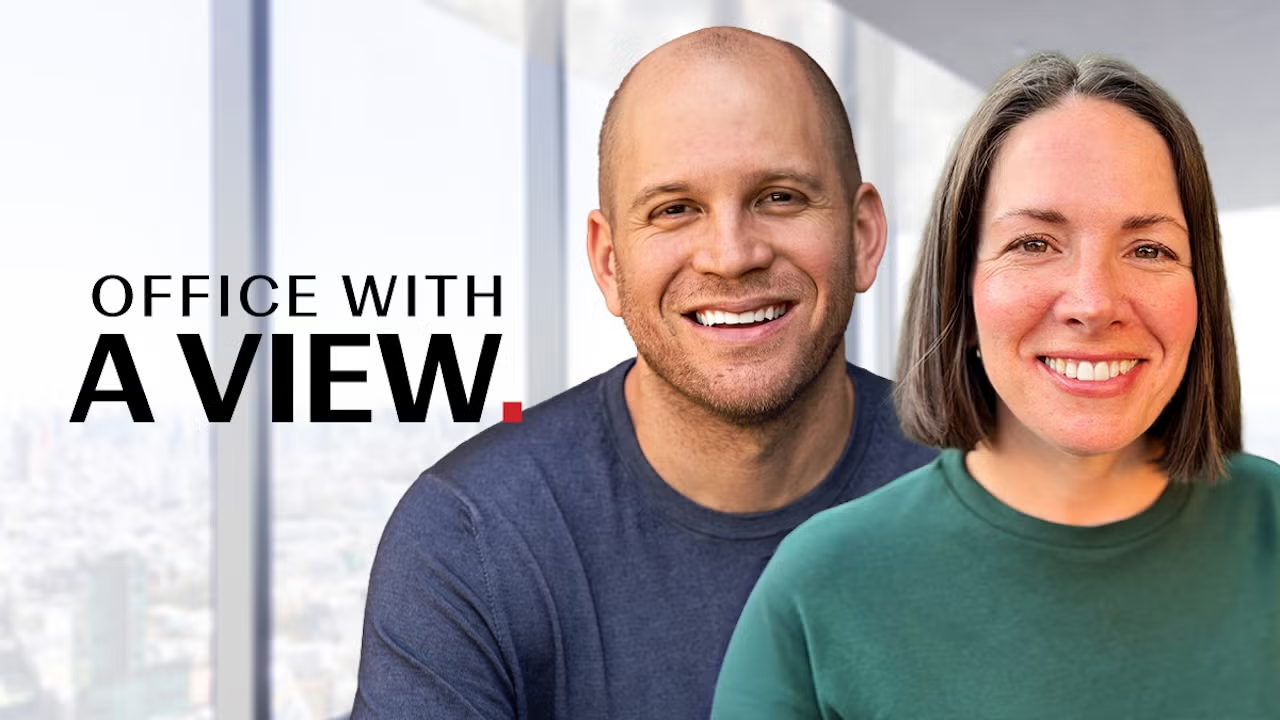
Like every job in Hollywood, managers have grappled with plenty of change in their work in the last decade. Luckily for Range Media Partners’ Cora Olson and Michael Diamond, they have each other.
The duo has worked as a unit for 10 years, since being brought together at Mgmt Entertainment and eventually grew to run the lit division. They joined Range as partners in 2024 with a desire to evolve alongside the modern talent management firm, founded during the pandemic by a collective of former CAA, UTA and WME agents hoping to shake things up in the entertainment marketplace. The management company operates its talent representation business alongside an in-house production studio, allowing the operation to finance, develop and build equity in intellectual property.
All those contributing factors can help when putting together the right package to get a film or TV project off the ground in today’s precarious Hollywood model — one with fewer greenlit projects and a reliance on safer bets from major distributors. But Olson and Diamond, who represent Hollywood big shots like “Schitt’s Creek” Emmy winner Dan Levy, actress-producer-director Kyra Sedgwick and “Pig” filmmaker Michael Sarnoski, counter the assumption that original ideas are a tougher sell.
It just takes more work to get there.
“You’re not just marrying this actor with this part, or this writer with this assignment. It’s not as much mix-and-match as it used to be, because there isn’t that same amount of volume,” Olson told Office With a View. “If you look at the shows and movies that are breaking through right now, it’s those really fresh points of view that seem to resonate with audiences.”
“There’s going to be more obstacles now than ever. There’s great opportunity and growth in that,” Diamond said. “We’re all on this adventure together.”
Below, the managers discuss the new rules for Hollywood representation in the age of streaming, finding opportunities beyond film and television, selling a comedy to platforms begging for drama and more. This conversation has been edited for length and clarity.

TheWrap: You celebrated two years since jumping to Range as partners. What are some moments that you’re particularly proud of from your time in the company so far?
Cora Olson: I can’t believe it’s been two years. It’s kind of shocking. It was such a big, big thing for us to move over, and we’re so excited to be here. I can mention a project called “Family Movie,” which was something that came together pretty early on after coming over to Range. I work with Kyra Sedgwick and this was a really important project for her that she was working on with her family. It was something that within a couple months of moving over to Range, I handed it to our colleagues that run our 100 Zeros program, our partnership with Google, and they read it quickly, they fell in love with it, and very soon after that, expressed a desire to commit to it and get it off the ground. That team identified the partners to put it together and get it into production. From handing it to them in November 2024, the movie was then shooting in June of 2025. It premiered this year at South by Southwest and it’ll be released in theaters. It’s going to go on 1,000 screens through AMC and Variance Films in April of next year. Really exciting to see that.
That’s something we had been working on at our previous company, and it was great to see it come to life so quickly via that partnership. It’s just one of many examples of the tools that we have to work with at Range, and how quickly momentum can come when you find the right partners on a project.
Michael Diamond: For me, as a kind of bridge into Range early on, a couple films were released that clients worked on and wrote, like the “Lilo and Stitch” live action reboot. Our client Chris Kekaniokalani Bright, Cora and I represent together. [Jeff Kaplan and Ian Springer] wrote the latest “Fantastic Four.” Our client Dan Levy, his series “Big Mistakes” launched, which we were across quite intimately, and also made a new first-look deal for him at Netflix and we’re now in production on Season 2.
“A Quiet Place: Day One” was also released as I was coming to Range, and I put a lot of energy into getting “The Death of Robin Hood” [starring Hugh Jackman] off the ground for Michael Sarnoski, and he’s got a lot in front of him in film and television. And a number of other projects are coming into fruition.

What was it about Range that appealed to you when you decided to leave Mgmt Entertainment to become partners there?
Olson: For everyone working in this ecosystem, the business has changed so much in the last 10 years. It’s just a remarkable amount of shifting and growth. We’re at a time where technology is affecting the way we make things, the way we market things, the way we watch things as consumers, the way we monetize what we’re making. That’s something that has been a theme.
Most recently, there’s so much focus on AI and if that’s changing everything. But in the earlier days, it was about digital and what’s the slow strain put on theatrical; and the evolution of broadcast into streaming — all these pieces have affected the business. We found ourselves in just wave after wave of change. The strikes are a really easy thing to point to that affected everybody in this business.
When the opportunity arose to make the move, we were really drawn to the expertise in the building — the way that all of the founders have operated at a very high level — and they have a collective curiosity and ambition and vision for the future. We were really excited and drawn to that. Michael and I have been working together for years, and looking at how unrecognizable things seem since we started working together, and knowing how much change is likely ahead, we wanted to be at the forward edge of what comes next.
Diamond: We were both drawn to the managing partners’ entrepreneurial spirit, vision and leadership, and just the multiple verticals that they’re investing in, so our clients and ourselves have the opportunity to participate when appropriate. Our interests are not just limited to film and television. We love what we do, but our clients are multifaceted and have ambitions that extend well beyond. So we can speak to some of those vertical departments. Some of them I didn’t even know existed candidly and maybe they didn’t exist. So to Cora’s point, the forward look at what awaits us and trying to anticipate and diversify is something that differentiates Range. That’s something we were looking for.

You’ve been working together for 10 years across jobs and eras of Hollywood. How did you first join forces and what has kept the collaboration going all these years?
Diamond: Our former colleagues [at Mgmt] brought Cora into the company, and they identified early on that we were going to be a great fit and get along well, which we do. Cora was such a breath of fresh air and is so uniquely well-rounded. Her expertise, both as an indie producer in a different life, and then running a TV pod at Warner Brothers, and transitioning to management. It’s been so helpful, because she understands the scope of everything across film and television, which is just an amazing resource for myself and clients alike.
We’re both relatively measured and are in it for the right reasons, that’s helpful as we are on this journey together.
Olson: We have a lot of fun together, since the earliest days of getting to know each other. I did come into representation from a totally different angle. I was making independent films, and I was running a pod at Warner, as Michael said. So when I came into Mgmt with my first couple of clients, Michael and I locked arms really quickly. He has such incredible taste. The things that he was working on I was so excited about, and [he had] a real tenacity for how to put projects together. Watching him do that was very inspiring.
We started signing together really early on, which gave us a reason to be talking all the time. The clients that we’re drawn to are generators. They’re people that want to put projects together, whether it’s movies or shows. So it gives us an opportunity to get our hands dirty and put together a strategy. We have different styles and wouldn’t necessarily approach every situation in the same way. But it’s good to have complementary points of view and complementary skillsets because it creates a well-rounded experience for clients.
This isn’t one of your questions, but we bonded really early on with our mutual love of food. We used to joke that we spend a good amount of our time talking about clients, and a good amount of our time talking about what we’re going to be eating. But it makes the work more joyful, more fun. We giggle a lot. We take our work very seriously, but we try to have fun while we’re doing it.

You both have individual clients, but you primarily operate as a managing unit. What are the benefits to establishing a partnership like this as you navigate everything you have to, working in Hollywood?
Cora: It’s nice to have a shorthand. We work very closely on Dan and Chris Bright. We have a number of shared clients, and that gives us a strong foundation. But we’re pretty up to speed on what all of our clients are doing, whether they’re just Michael’s or just mine, because of that shorthand. We’re on the phone all day, every day. We’re in meetings, and we’re keeping each other in the loop.
Michael would be my first call if in a tricky situation, or if I need to bounce something off of someone. He’s going to be that call, and I’m going to get the perspective that I need and know that he’s discreet and that he already knows all the context of the client. I don’t need to catch him up on every detail to figure out how to work through a specific situation. And that goes both ways. Sometimes we say it’s like peanut butter and jelly. We go together, but we’re very different as people. It becomes easy to bounce things off of each other.
Diamond: There may have been a couple colleagues of ours in other departments at the time who thought that we were a married couple, just because of the way in which everyone talks about us as a unit. And we both have two kids and we’re all close as families. My daughter knows Cora’s voice so well. Like, this runs deep.
Cora you spent more than a decade as an independent film producer, and you Michael started as an assistant at UTA before moving to literary management. What appealed to you about being a manager then?
Diamond: I started as an assistant at UTA. I had a great time. I was really drawn to representation, but I wanted to be a little bit closer to the creative process and be an extension of the client, and I also wanted to be across both TV and film. And for the most part as an agent, you’re limited to these departments. I wanted to travel with my clients across whatever their ambitions may be. That was something that unlocked early on for me while at UTA. And then I worked at a series of boutique management companies on the journey, working with some great people and learning quite a bit.
Olson: For me, it was a bit of a left turn — not something I really expected to find myself in. But what I have loved is the opportunity to build a strategy for clients, to really understand what their goals are, and be very disciplined about where they’re trying to go in the short, medium and long term. We talk a lot about that with our clients, and really focus on putting our energy where it’s going to make a difference.
I love building things. I have since I was a producer, and I feel like here we really have the tools to do that. Whether it’s an independent movie, whether it’s a huge movie, anything in between. We’re building a lot in television with Range Studios right now, which we’re really excited about and it’s great to see those things materialize from an idea to stepping on set and making something that’s actually getting made. Giving things liftoff is very rewarding.

How has the job changed as Hollywood has evolved in the last decade and even since the pandemic?
Diamond: You have to be really nimble and entrepreneurial, and realize that there’s going to be more obstacles now than ever. There’s great opportunity and growth in that, and we’re all on this adventure together.
We’ve seen the sea changes and we’ve had to adapt along the way, and most of us are better for it. Ultimately, people who are in it for the right reasons prioritize making great work. We’re going to continue to find a path forward.
Olson: I think there’s a move towards, maybe, less of a transactional business. You have to really be strategic about what you’re building because it’s not like there’s tons and tons of production. You’re not just marrying this actor with this part, or this writer with this assignment. It;s not as much mix-and-match as it used to be, because there isn’t that same amount of volume. So I think the people who really have something to say and a point of view that’s fresh, and that we need to hear from, that’s what we see breaks through. Even if you look at the shows that are breaking through right now and movies, it’s those really fresh points of view that seem to resonate with audiences. We think about that a lot, and we look at “What does this client have to say?” And “How do we help lift this voice?” and make it really visible.
It’s harder to get projects made today. What is your key piece of advice for clients as you’re talking through how to get their vision through the finish line?
Olson: Finding the right partners is where it all begins. Finding the right producers, making sure that the vision is aligned, and being present as a thought partner to make sure the strategy is there. It’s not as easy as, “Oh, I like this. Let me bring it out to the buyers.” Positioning matters a lot and strategy matters a lot, and I think that’s something we take really seriously here.
In terms of how we do things, Michael and I have always taken that seriously. We’re happy to be at a place that puts equal emphasis on that. I don’t mean to speak in too vague of terms, but whether you’re packaging it with a writer client or someone behind the camera; or packaging it with some on-camera talent, or putting a cool music partner in, pulling from different spaces. We have clients from other arenas and are creative and open minded about how to mix the right ingredients together. It’s a really big part of what we’re doing now.
Diamond: It’s just less transactional. You have to be really deliberate and purposeful and thoughtful. I don’t really chase trends. I’m just drawn to story and that’s what I prioritize. If we see a real challenge, we educate clients on the landscape while still supporting their vision. You find that balance. We’re very honest to a fault on that front, but ultimately we’re an extension of the client, and when these artists have ideas they want to bring to life, we will do our absolute best to realize it.

Cora, you represent creator Delaney Rowe. What have you learned as you add creators into your roster and the ways they can grow their business in Hollywood?
Olson: It’s so interesting and it’s so different, but I also think it comes down to what Michael was saying. You have to be drawn to the artist. For someone like Delaney, who’s creating these small stories with this huge platform, she has such a sharp voice. She’s so skilled and frankly, watching her on her brand business side, watching what she’s able to create for brands and do it in her own voice with a lot of authenticity and a lot of sharpness and skill, it’s an incredible talent that she has to be able to pull that off and do it so well.
It’s not really that surprising when she sits down to write a book and the writing is so crisp. She’s such a generational voice. When you look at what she was able to build on TikTok, and look at what she’s doing on the page. It’s not that big of a leap, because the skill, the talent, the voice, the perspective is all there.
There’s such a big spotlight on the creator economy and all the ways that it’s changing Hollywood, and trying to adapt to what’s happening over on that side. For you guys on the management side, are creators the next frontier?
Diamond: It’s definitely the next frontier as far as where to identify talent. The barrier for entry has kind of opened up. With technology, people are able to make great work and realize a vision with way fewer resources, and usually it’s a representation of their voice.
It’s a different form and it’s exciting to be here in this moment, and I think there’s enough business to go around. We’re especially seeing our younger colleagues have their finger to the pulse quite a bit as it relates to that. When I was a young manager, my first two clients came in as unsolicited screenplays via email. I’m doing less of that now, but at that stage of time that was a place to discover talent. Now it’s a lot of digital talent that’s emerging. It’s where the talent is living, and you have to find them where they are. With them comes often an audience and a subculture.

What’s easier to make today, a film or a TV show?
Diamond: It all has its different set of exciting challenges. It’s so project- and client-dependent. There’s so many variables and there are trends. Some people are saying the film business is coming back, and I think it is. Television is still a healthy ecosystem, so it really depends on the idea. It depends on the client and where they are at. I wouldn’t necessarily say one is more difficult than the other. I think projects, big and small, are challenging. We put projects together, under $1 million dollar movies are a challenge, and big films are equally challenging and exciting and rewarding.
Olson: But it scratches a different itch to work on TV versus features. I know I brought up “Family Movie,” but Kyra Sedgwick is also producing a series at Amazon that she’s doing through her company Big Swing, and they’re partnered with Amblin. It’s called “The Challenger” and Kristen Stewart is playing Sally Ride. It’s this class of astronauts in 1978, the first real diverse class of astronauts, told through the prism of the Challenger explosion. They started shooting on Friday. It’s such an incredible moment after many, many, many years trying to make a TV show to finally start shooting. Whereas something like “Family Movie,” it was also years in the making but we got it done a little bit faster.
There’s different challenges in distribution, too. There’s not as much independent television, hardly any that gets made. So you’re almost invariably working with a big media company that’s going to put money into a show they’re putting out. Whereas with features, it’s very different. It could be a giant movie with tons and tons of marketing, or it could be a small movie that has to really be the little engine that could, and it’s all satisfying. Small films are where often the new voices come from and where we see real innovation, and have a little glimpse of what’s to come. We saw that this year with Curry Barker’s movie and Kim Parsons’ movie. There’s so much excitement that happens in that space. So I don’t know, I love it all.
Diamond: Our client, filmmaker Laure de Clermont-Tonnerre, is really drawn to scope and period pieces. Those films can be challenging to build for all the obvious reasons. We put a lot of energy into realizing them. She just directed three episodes of “East of Eden” for Netflix and Florence Pugh. Television is a wonderful way to flex those muscles. In that case, it’s tethered to significant IP. But that’s something for filmmakers and writers alike, there are projects that they want to bring to life or participate in that would be more challenging as films, and vice versa. Luckily our clients develop both film and television and our interests live across both. We’re able to explore all avenues.
Laure had directed television previously with “The Act” and just directed the pilot for “Presumed Innocent” Season 2 (with Rachel Brosnahan). Michael Sarnoski — who has been the architect on every film that he’s brought to life as a writer-filmmaker — is developing something in television, but his bridge into television is Damon Lindelof’s new series “The Chain” for HBO. To be working alongside the maestro and Mr. Lindelof is such a privilege for him to be introduced to that format. He’s a great consumer of television as we all are, but it has a different cadence and rhythm, and that’s been an incredible experience as he’s prepping that right now to shoot top of the year.
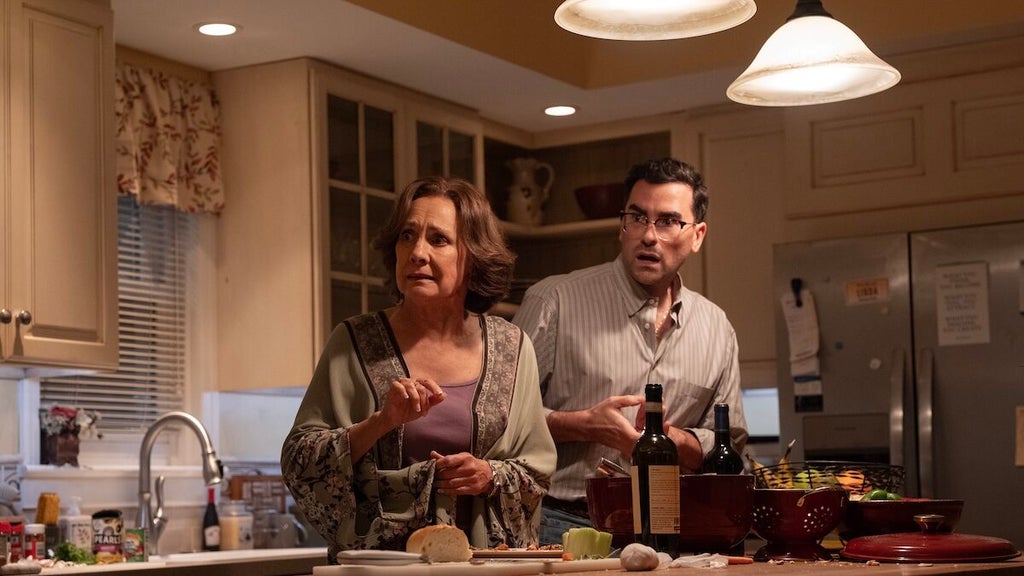
You both represent Dan Levy, who premiered “Big Mistakes” on Netflix this year and is already in production for Season 2 — a rare achievement for streaming television. How was it working with Dan through landing that show and his first-look deal at the streamer?
Olson: It’s incredible to work alongside such an incredible talent. Dan has a totally singular voice. When we first started talking about the idea for the show, we could see his vision instantly. And it’s like any project, a journey to get it realized.
We were just with him last week for the Emmys and he’s having the time of his life on Season 2. Artists don’t want to make the same thing over and over again. I think we all agree “Big Mistakes” feels like a tonal departure and something very different for him; it’s celebrating another side of his delightful point of view. Netflix has been a really good partner. It is a remarkable achievement in this market to have something be embraced and be really invested in. We’ve read all the scripts for Season 2 and we’re really excited.
The show comes as streamers grow more hesitant to pursue comedy projects, aiming instead for big IP shows that can grab big audiences. What’s the advice you give to your clients about what ideas or stories to pursue in this time of Hollywood volatility?
Diamond: People are really drawn to original ideas if they’re compelling. IP is important, and there’s certainly some fatigue alongside it. It requires the right voice for IP to unlock something different and make it their own. I think people have been successful doing that. But we’re drawn to original ideas. Our clients sometimes are totally left of center. That’s the stuff that I’m often drawn to.
Olson: We try to empower our clients with an understanding of what is out there in the market. We are always communicating the feedback we’re getting from buyers to our clients, so that they are empowered with that information to make decisions.
It’s true, the appetite for comedy has shifted, and we’re at a place where the tendency has been for shows with big noisy hooks and engines that keep people coming back, that are bingeable. But I do think there are trends and then there’s shifts that happen. As a trend matures, we’re on to the next thing, so we try to not be led around entirely by market trends. We have to embrace and work on the things we believe in, and we have to have thoughtful timing. I think about myself as a consumer first. What am I watching? What’s getting me to turn on the TV or go to the theater? What’s motivating me? How are things being marketed to me? I draw upon that in how I work with clients. Sometimes we forget that.

What conversations are you having with your clients about AI, rather it be about how they can protect themselves or what they need to be doing to stay ahead of the curve?
Diamond: For me, it’s about the comfort of the clients specifically. For some clients, it hasn’t quite yet been as relevant in their day-to-day travels. But for others, it can be a tool as they develop an idea. There are clients who have utilized those tools and they’re cautiously moving forward as we all are as we learn and adapt and protect. We’re moving forward cautiously, educating ourselves and listening to our clients, to our colleagues and others who know the ecosystem better than I do.
Olson: All of us are aware that we’re in this moment where things will yet again look unrecognizable probably fairly soon as it’s more and more integrated. But from a client perspective, I’m mostly seeing them engage with it to be able to articulate their vision a little more clearly, whether it’s using tech or using it to analyze what worked about a campaign or whatever. They’re using it in very targeted ways to communicate their goals more effectively.
I had lunch with a producer maybe a month ago who has had this movie that he calls “unpitchable.” It’s a very auteur, out of the box concept. A very unique piece of material that he feels like, maybe there’s a way of using AI to help make this movie producible at a responsible budget for the first time. So there’s some use cases that I think we’ll see create a space for more innovation. Something that otherwise might have had to sit in a drawer can actually come to life using it. I found that kind of encouraging. We’re not in those conversations for how the technology is exactly going to be harnessed, but I’m encouraged in certain, limited contexts about it.
The Paramount and Warner Bros. merger will be closed in weeks, shifting Hollywood even further into contraction. What do you tell your clients, and yourselves, about how to keep doing what you love as the business changes?
Diamond: There’s always been contraction. There’s always and often consolidation, new regimes, new ownership. That is the story of Hollywood. What we prioritize are the storytellers. Buyers come and go, but I think what remains is compelling storytelling that has a point of view. Whatever format and form, those people who have something to say are in pole position.
Olson: The focus needs to be on great stories and the ideas and the projects that we’re willing to fight for collectively.

>

The SCAD Savannah Film Festival’s third annual TV Sidebar is set, with four TV program screenings followed by award presentations and conversations with the stars of the series.
The fest, which runs October 24-31 in Savannah, GA will spotlight episodes of The Good Daughter, VisionQuest, Furious and The Lowdown.
Based on Karin Slaughter’s bestselling novel, The Good Daughter stars Meghann Fahy and Rose Byrne. Fahy will receive the Spotlight in Television Award on October 24 at a screening of one of the show’s episodes. In The Good Daughter, Fahy stars as Charlotte “Charlie” Quinn alongside Byrne as Samantha “Sam” Quinn. Written and executive produced by Slaughter and directed by Steph Green, the limited series premieres November 12 on Peacock.
Paul Bettany will receive the Virtuoso Award on October 26 at a screening of Marvel Television’s VisionQuest. The Disney+ series continues the story of Vision following the events of WandaVision, with Bettany returning to the role he has portrayed across the Marvel Cinematic Universe. The actor’s latest superhero installment will close out the trilogy that began with WandaVision, for which he received an Emmy nomination, and Agatha All Along.
Emmy Rossum will receive the Outstanding Achievement in Television Award on October 28 at a screening of the Hulu Original drama series Furious. Created, written and executive produced by Elizabeth Meriwether, the thriller stars Rossum as FBI agent Alice Black, who is on the hunt for a mysterious and calculating female serial killer (Lola Petticrew). The series, on which Rossum serves as an EP, also stars Quincy Tyler Bernstine and Scoot McNairy.
RELATED: ‘The Lowdown’ Gets Season 2 Release Date At FX; First Photos Of Tommy Lee Jones & Betty Gilpin
Ethan Hawke and Sterlin Harjo will receive the Outstanding Collaboration in Television Award on October 30 at a screening of their FX and Hulu series The Lowdown. Created, executive produced, written and directed by Harjo, the Tulsa-set noir series stars Hawke as Lee Raybon, a self-proclaimed “truthstorian” and citizen journalist whose relentless pursuit of the truth continually lands him in trouble.
In addition, Deadline during the fest will present “Below the Line: Scoring for the Screen with the Alliance for Women Film Composers,” a behind-the-scenes look at how today’s most innovative voices are redefining the sound of cinema. The conversation will feature members of the Alliance for Women Film Composers discuss their creative process, the challenges and triumphs of the industry, and the role composers play in bringing depth and resonance to film and television.
>

>

Veteran comms executive Erik Bright has joined PMK Entertainment as Executive Vice President, Content and Strategic Communications.
Based in Los Angeles, Bright will oversee PMK’s bi-coastal content publicity team, which handles film and TV campaigns. The company said he will also play a key leadership role in the firm’s global strategic communications practice.
For the last 16 years, Bright has served as President and CEO of the boutique agency he founded, Prodigy Public Relations. Bright will segue his Prodigy PR content and corporate business portfolio into PMK Entertainment and report to PMK’s President of Strategic Communications, Dennis Dembia.
Over his career, Bright has worked on multiple Oscar-winning and nominated titles, including Crash, Sideways, Little Miss Sunshine, Margin Call, and Hamnet. He is also a regular on the domestic and international festival circuit. Before founding Prodigy, Bright was a Partner and Vice President at Insignia PR and Media Strategies, where he serviced the firm’s corporate and film clients. He began his career at Eddie Michaels & Associates, supporting campaigns for talent including Drew Barrymore, Anjelica Huston, Lou Diamond Phillips, and Noah Wyle.
PMK Entertainment CEO Cindi Berger said: “Erik brings an exceptional combination of creative vision, deep industry relationships, and strategic communications expertise to PMK. His track record of building a successful agency and delivering impactful campaigns makes him a tremendous addition to our leadership team.”
Dembia added: “I’ve known Erik for many years and respect his resolute commitment to delivering for clients and the deep industry relationships he’s forged. Wearing multiple hats, Erik has orchestrated incredible campaigns launching many films and TV series in innovative fashions, while also operating as one of the savviest corporate media strategists in the space. As we continue layering influence within PMK, having experienced, forward-thinking leaders like Erik creates leverageable strategic efficiencies. His leadership will be vital as we focus on unlocking new opportunities for our clients across the entertainment, media, and sports ecosystem.”
>

SCAD Film Festival TV Sidebar Spotlights ‘Furious,’ ‘VisionQuest’, More
College football picks up during best sports month, plus Senate comedy

Kevin Feige Honored by Chris Pratt, Jon Favreau at Will Rogers Foundation
-

 movies4 months ago
Search For Canadian TV Actor Stewart McLean Now Homicide Investigation
-

 Fashion9 years ago
These ’90s fashion trends are making a comeback in 2017
-
Fashion9 years ago
According to Dior Couture, this taboo fashion accessory is back
-
Fashion9 years ago
Model Jocelyn Chew’s Instagram is the best vacation you’ve ever had
-
Fashion9 years ago
Emily Ratajkowski channels back-to-school style
-
Fashion9 years ago
9 Celebrities who have spoken out about being photoshopped
-

 Anime4 months ago
Rurouni Kenshin: Hokkaido Arc Manga Takes 1-Issue Break – News
-

 Anime3 months ago
HIDIVE to Stream English Dubs for The World Is Dancing, The Forsaken Saintess and Her Foodie Roadtrip in Another World, The Dangers in My Heart: The Movie Anime – News