
Politics
The House Article | How Zack Polanski’s Greens Are Dealing With Their Andy Burnham Problem

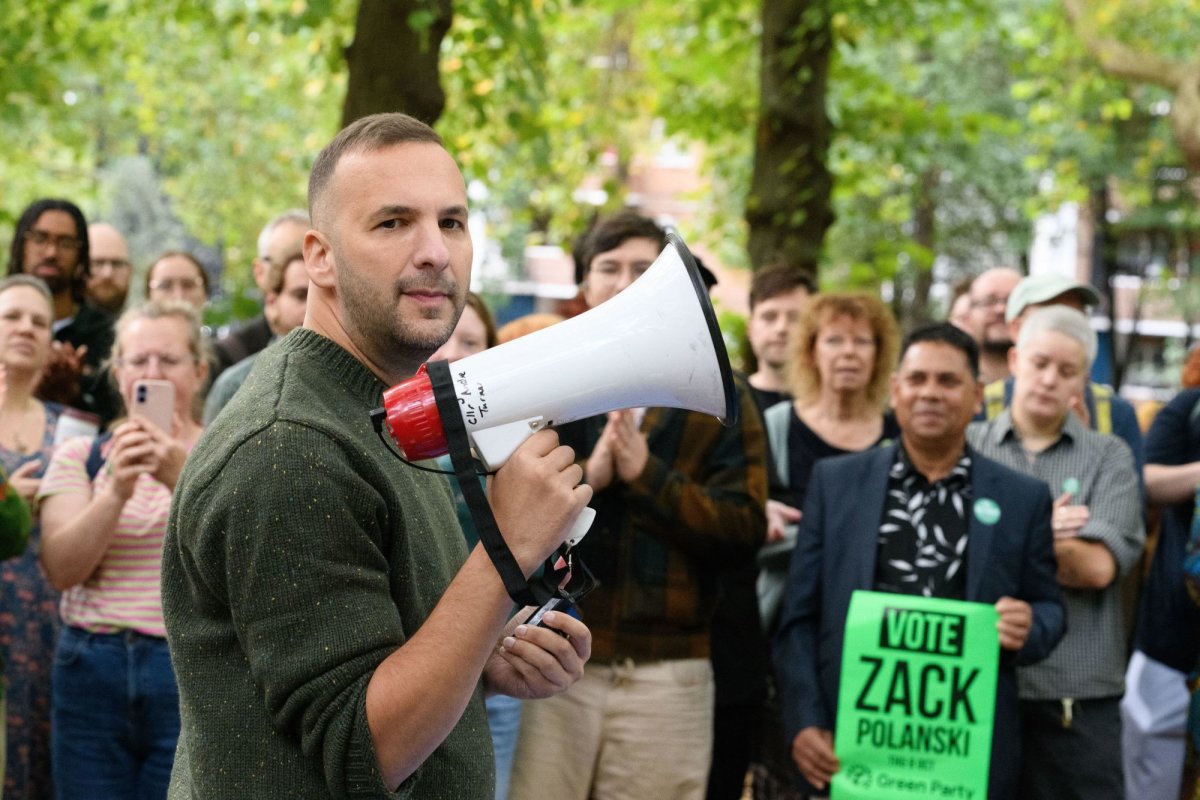
Green Party leader Zack Polanski with supporters in Holborn and St Pancras, 20 September 2026 (Ron Fassbender/Alamy Live News)

9 min read
Zack Polanski reshaped the Greens into a populist left party, which worked well against Keir Starmer. Andy Burnham is now threatening to take that argument away. Sienna Rodgers reports
The Green Party has a problem: it may be a victim of its own success. In raising the salience of issues like Gaza and pushing radical cost of living policies, while getting cut-through thanks to a sharp social media strategy and the ability to speak human, Zack Polanski may have done himself a serious disservice.
Among Greens, there is a widespread view that the governing party would never have made the bold move of ousting its leader just two years after a landslide victory without pressure from the left.
Perhaps, then, Polanski did too well too early. Now there’s a new Labour leader who can communicate in an engaging – even deeply moving – way, while moving leftwards, all from No 10 and unhindered by the ceiling that inevitably comes with heading a minor party.
Of course, there is another way of looking at it: that supporting the Green Party can have such a dramatic impact is proof, for many of its activists, that it is worth doing.
“Keir Starmer was the most unpopular prime minister in British history, but it took people voting Green in their thousands in May to force him out,” says Southwark council leader James McAsh. He was a Labour councillor until his well-timed defection to the Greens in February, a few months before a historic Green-Lib Dem coalition was established in the borough.
For him and others, the local elections proved that voting Green is a sure way for the left to effect real change. But under first-past-the-post, which makes tactical voting essential for many, does Labour only need a more palatable figurehead and message to win back those voters who were so dissatisfied with Sir Keir Starmer that they backed a left-wing alternative?
Recent polling suggests Andy Burnham may be doing just enough to unite the progressive vote, at a time when support on the right is fragmented between the Conservatives, Reform UK and Restore Britain.
A survey by More in Common last month showed Labour retaining 52 of its 59 MPs in London, while the Greens would fail to win any, according to the projection. Until June, the Greens were reliably in double figures in national polling, even reaching highs of 21 per cent, whereas they have now fallen back to hovering between seven and 12 per cent.
From the Greens comes a simple answer to such doubts: just wait.
“A lot of these noises sound positive but we don’t know the substance behind them,” McAsh says of Burnham, citing the upcoming Budget and new drilling of oil and gas. “The general view of the people who switched to the Greens from Labour in Southwark is that Burnham is a step forward from Keir Starmer but that’s a low bar and people want to see much more.”
Labour-Green switchers want to see rent controls, climate policies and further action following Ed Miliband’s “positive initial steps” on Israel-Palestine, he says.
Green peer and former party leader Natalie Bennett agrees. While voters on the left would like the Burnham government to succeed, “there’s already a significant degree of disillusion”.
We’ve seen “hopeful noises on a whole range of areas”, Baroness Bennett says, adding: “We really haven’t actually seen anything delivered, and many things have been backed away from, like, for example, council tax.”
The messaging for the Greens is obvious: “For us, the simple thing to say is, ‘What sort of Andy Burnham do you want? The stronger the Greens are, the more he’s going to be pressured to be the kind of PM that you actually want.’”
But haven’t the Greens dialled down their ambition? Under Starmer, they talked of replacing Labour as the party of the left. Now that Burnham has arrived, they aspire merely to influence Labour’s direction.
“The country is hanging on somewhat by its fingernails to the hope. That’s where we are at this moment,” Bennett replies. “But one month, two months, three months? We would hope that we would see some real delivery from Burnham on things like oil and gas drilling; even the absolute basics – some real action on ensuring genuinely affordable rent for people.
“If we don’t see those things, I have absolutely not in any way given up on the Greens replacing the Labour Party as the party that genuinely delivers hope and real change.”
Privately, there are Green insiders and members who are willing to admit that Burnham has reshaped the dynamics for their party: he speaks a language that appeals to those Starmer had alienated, and this has been reflected in polls. There has been some feedback on the doorstep, too, that switchers have become less certain of their support for the Greens and want to give the new PM a chance.
Internally, the Green Party is grappling with how far it is possible to get credit for pulling Labour leftwards. In the meantime, it plans to push Labour on vulnerable areas: North Sea oil, wealth taxes, rent controls, Thames Water and public ownership of key industries more broadly. Eye-catching policies along these lines are expected in the conference speeches of Polanski and deputy leader Rachel Millward.
The party reckons its narrative of Burnham merely “tinkering” is cutting through to the voters who matter most. While Miliband’s announcement of sanctions on West Bank settlements has reduced some of the anger around Gaza, Green insiders report that informed left-wing voters still have concerns around UK surveillance flights over Gaza as well as the government’s refusal to use the word “genocide”. Meanwhile, John Healey and Wes Streeting are seen, from a Green perspective, as weak points in the Cabinet.
At first, the “continuity Starmer” line was not working so well, insiders say, but now the narrative is moving towards the Budget and tricky Treasury decisions – defence spending and welfare cuts – the story can shift from “We want to give Burnham a chance” to “But is he going to deliver?” The new Chancellor’s market-reassuring interviews, in which he sounds increasingly like Rachel Reeves, are offering particular encouragement for the Greens.
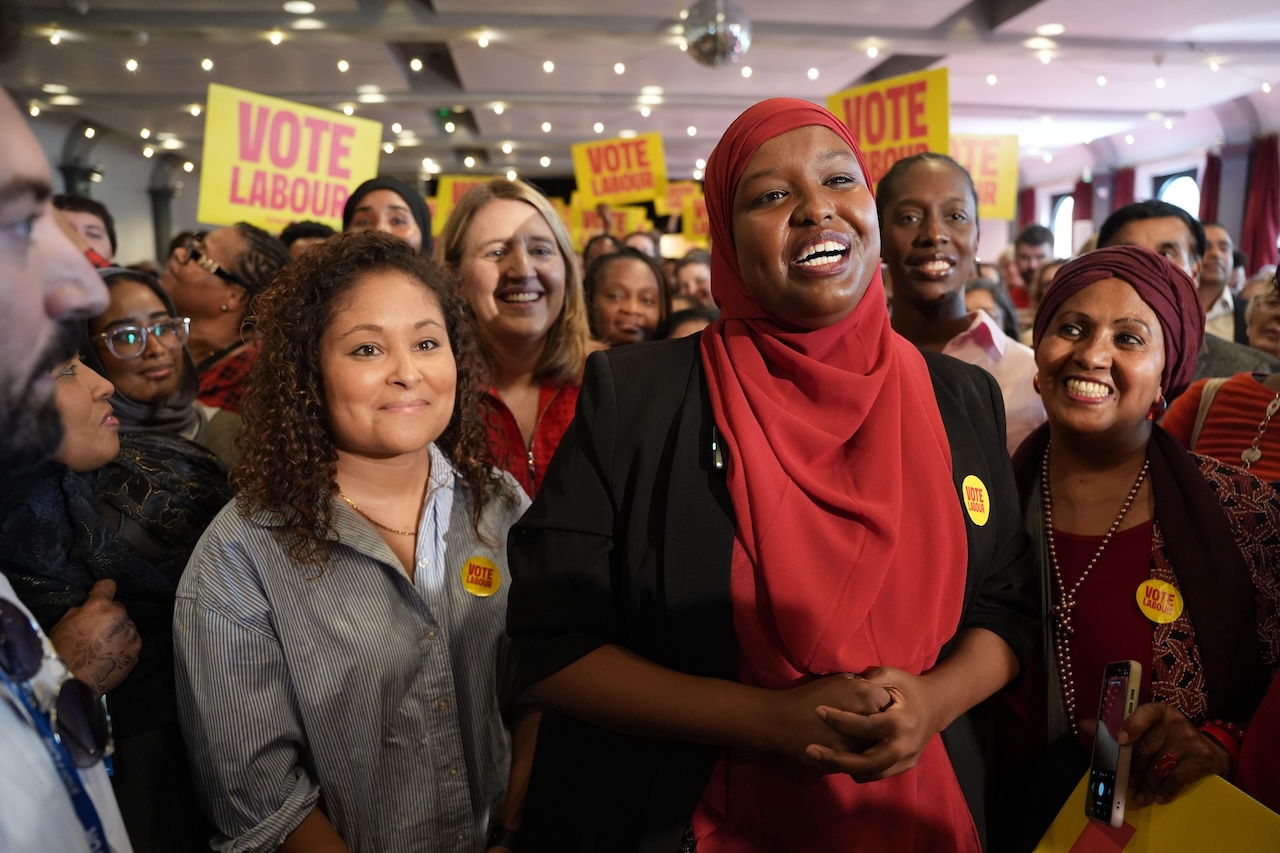
A crunch point is coming: the Holborn and St Pancras by-election, in which Polanski has taken a significant risk in standing as the Green candidate himself.
Labour sources are confident of holding onto Starmer’s former seat. They say their candidate Sagal Abdi-Wali – currently the leader of Camden council – is well-liked, and that targeted online ads as well as her face on vans going around the constituency have been effective in raising her profile. Burnham’s emotional Labour conference speech – which, while not going as far as the Greens would, announced moves on public ownership of water, electoral reform and possibly even rejoining the EU – only raised their hopes further.
The Greens are doing little expectation management, however, instead emphasising that – although they are very much “the underdogs” – the constituency is completely winnable. The Burnham bounce is wearing thin, say party sources, and locals have many complaints about the council that the Labour candidate leads.
They admit a Green win would be a huge upset, though, considering it is a former PM’s seat in a solid Labour area and one that has never been held by another party. Some acknowledge, too, that unlike in neighbouring Haringey, for example, the Greens did well in the local elections in Camden – including ousting the then-leader from his own seat – but the party did not come near taking control.
So, will their optimism here turn out as with Gorton and Denton, the pre-Burnham by-election that Hannah Spencer won decisively, pushing Labour into third place, or as with the Greater Manchester mayoral contest, which saw the Greens come a very distant third despite hopeful briefings?
“I’ve been knocking on doors in Holborn and St Pancras, and quite a lot of people know and have really noticed that Labour put off the Rosebank and Jackdaw decisions until after the election,” says Bennett.
“People really don’t like that. Whatever your view is about that, ‘We’re going to do something, but we’re going to make you vote before we tell you what we’re going to do’ is really not a good look.”
The message being put across on the doorstep is, she says, “this is just a Labour person who’s just going to vote according to the whip, and they’re not really going to speak up for you”. In a general election scenario, the party intends to use the same approach.
The Greens say their data is showing that the fight in north London is on a knife-edge. They are getting record activist turnout, with more than 200 campaigning in the seat each day over the last weekend of September, and party conference in Brighton is being used as an opportunity to mobilise further – expect politicians with many members in tow to travel up for more canvassing.
The biggest chunk of voters identified by the Greens in the Holborn constituency is known in the party as “L3s”: previous Labour voters who currently sit between ‘1’ (reliable supporters) and ‘5’ (those who would never vote for the party). And they, according to the Greens, are swinging in the right direction.
Looking ahead to a general election scenario, one insider warns against paying any attention to MRP (Multilevel Regression with Post-stratification) polling as it fails to take into account the efficient targeting of resources a party like the Greens always undertakes.
“When we come to the next general election, whenever it might be, we’re going to see 650 individual fights up and down the country. It’s going to be really localised, and people are going to be really looking at who’s their candidate and how will that person behave in Parliament,” says Bennett.
Put to her that there is a paradox – the more successful the Greens are in shaping Labour, the less a vote for the Greens is needed – she dismisses the idea: “If you can see there’s the possibility of that direction of travel, do you want the pale imitation or do you want the real thing?”
>
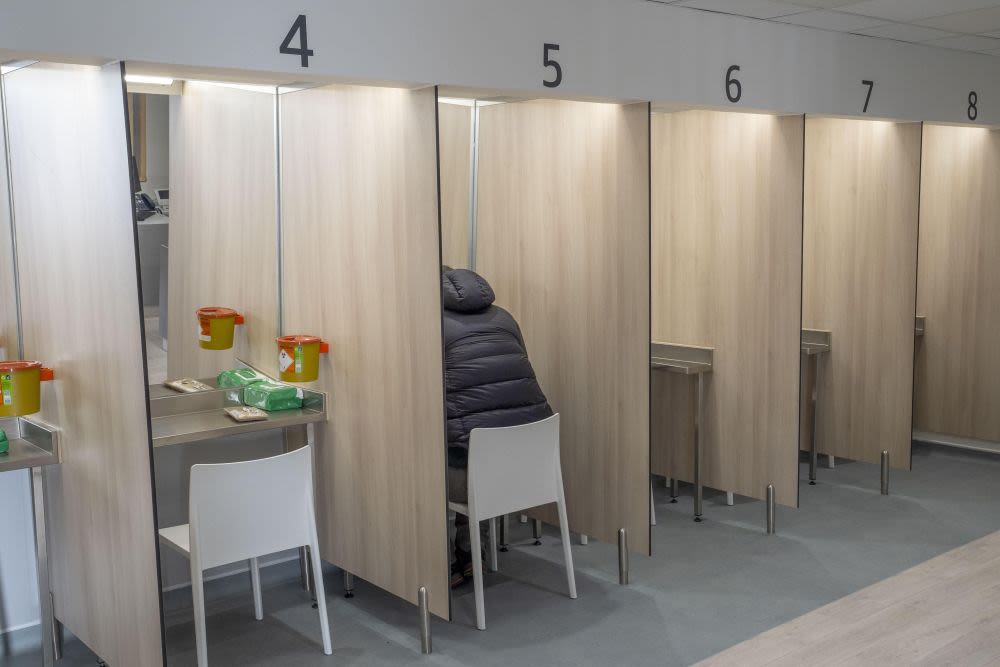

Glasgow, The Thistle injection bay areas
(Alamy)
12 min read
The Green Party’s success in English local elections has put fresh impetus behind efforts to follow Scotland in providing safer drug consumption facilities to addicts. Matilda Martin investigates
At the end of a short and unassuming driveway at 55 Hunter Street in Glasgow lies The Thistle. From the outside, the pebble-dash-style one-storey block looks like any other NHS healthcare centre. But what unfolds behind its doors is unique. In January 2025, the site became home to the first safer drug consumption facility (SDCF) in the United Kingdom. Here, individuals can inject their own drugs under clinical supervision, while at the same time accessing treatment and support.
Ultimately, campaigners and experts argue that such a move could be replicated in England at a local authority level, if arrangements were made with local police forces. While a change in the law to allow such facilities would be more straightforward for councils, it may not be entirely necessary, as Scotland has demonstrated.
Now well into its three-year pilot, and with frustration growing over the Westminster government’s refusal to change course, Green-run councils in England are looking to The Thistle to see if a similar approach could be replicated south of the border. The House has spoken to multiple Green-run councils, many of whose administrations were freshly formed in May 2026, about how they are exploring safer drug consumption facilities/rooms and other harm reduction spaces.
There is understandable nervousness among Greens pushing for the change. While Labour’s attack line in Gorton and Denton, which focused on the Greens’ position on drug legalisation, is seen as having been largely ineffective, there is awareness among those advocating for harm reduction spaces that the public will need to be on board for this to work. And formidable regulatory and legal hurdles remain.
The path to the opening of The Thistle was far from smooth and took almost a decade. The site was first proposed in 2016 after an HIV outbreak in Glasgow was detected among people who inject drugs.
The UK government had refused to waive the Misuse of Drugs Act 1971, under which those in possession of drugs attending the clinic would likely be criminalised. In Scotland, drug policy is not devolved, so the council’s hands were tied – until January 2025, when the then lord advocate for Scotland Dorothy Bain made a watershed decision, stating that it would not be in the public interest to prosecute users of the centre for possession.
Drug policy expert Professor Alex Stevens, who once sat on the UK Advisory Council on the Misuse of Drugs, argues that councils in England could replicate the move by working with local police to agree that it would not be in the public interest to prosecute the users or staff of a facility for drug possession.
He tells The House that “this would clear the way” for those agencies who want to run a SDCF to do so.
It’s being realistic about drugs and bringing them under control rather than just pretending we can just police our way out of the problem
These facilities are sometimes referred to as “overdose prevention centres”, a term Stevens claims is more accurate: “That’s what they’re intended to do. They’re not there because we want to facilitate drug consumption. They’re there because we want to reduce the deaths and health harms related to overdose.”
Niamh Eastwood, executive director of Release, the UK’s centre of expertise on drugs and drug laws, agrees: “If local police forces provided a memorandum of understanding to providers to allow people who are in possession of a controlled drug to access such centres, this would go a long way to reducing or eliminating the legal risk, as is the case with The Thistle in Glasgow.” The ideal approach for them, of course, would be a change in the law.
The Home Office maintains that the use or running of such a facility would likely engage “a range of offences” under the Misuse of Drugs Act, including “possession of a controlled drug, production of a controlled drug, permitting premises to be used for the production of a controlled drug, provisions of paraphernalia and supply of a controlled drug”.
Eastwood argues that the issue of supply is not unique to drug consumption rooms and is in fact something that many premises, including nightclubs, need to consider when customers bring drugs into their establishments. She also pushes back on the paraphernalia point, asserting that The Thistle only provides equipment that is lawfully exempted.
However, the issue of production is a more grey area, she says, stating that, hitherto, the preparation of heroin for injection for personal use has not been treated as a production offence under the current law – and such an expansion of the legal definition would be unlikely. She contends that this wasn’t a matter of concern for the lord advocate in relation to The Thistle, who limited the scope of prosecution policy to disregard the possession of controlled drugs for personal consumption offences only.
In England, the Councillors Harm Reduction Network, set up a year ago, is gaining momentum in the aftermath of the May 2026 local elections when the Green Party swept to victory in five councils and formed minority administrations in several more.

Leading the way is councillor Cara Lavan, who has been exploring how or whether Bristol city council could open an SDCF and other harm reduction spaces since she was first elected to the council in May 2024. Earlier that year, Bristol had become home to the UK’s first regular drug checking service, after it was licensed by the Home Office.
In July, the Green-led council made headlines after councillors voted through a motion declaring Bristol a “city of harm reduction”, encouraging a supportive rather than a punitive approach towards drug users.
The motion, which drew support from Labour and Liberal Democrat councillors, also pledged to advocate for permission and funding from the government to establish supervised drug consumption facilities in Bristol.
For Lavan, who put forward the motion, the issue is personal. Lavan lost her partner Jake Coe to drug overdose poisoning more than a decade ago.
“It’s being realistic about drugs and bringing them under control rather than just pretending we can just police our way out of the problem, which any police officer will tell you privately we can’t,” she tells The House.
Lavan is confident that the public can be won round when it comes to harm reduction measures, including SDCFs: “It’s a matter of educating the public on it because any time you educate the public, you see there’s a light-bulb moment. I’ve been in so many public meetings where I’ve talked about this issue, and you see the light bulb go.”
In Bristol, Lavan says council leader Tony Dyer and local MP Carla Denyer have written to the last few home secretaries to ask for permission to establish a centre. Lavan tells The House that permission has always been denied, with successive ministers saying there is not enough evidence of the success of these facilities.
Could Bristol in theory move forward with a centre without a change in the law if they struck up an agreement with local police?
“The issue is moving parts”, replies Lavan, pointing out that in Bristol they would need buy-in from the director of public health. But she admits that “in theory, we could do it without the Home Secretary’s permission”.
Lavan has been unable to persuade local police, however. “I know from my work in Bristol that both Avon and Somerset Police and Public Health are deferring to the Home Secretary for that effective letter of comfort, the same as they have in Scotland, that says we understand this is not in the public interest to prosecute, and we understand these are measures that will save lives.”
Policy expert Stevens says this is a decision local police could make on their own – it is “a question of political will, not legality”.
“Chief constables have operational independence from the Home Office. And it is the police and the Crown Prosecution Service who decide whether a prosecution is in the public interest. Going against the wishes of the Home Office is politically difficult, but not illegal.”
In London, Green councils are pooling ideas for how they could move the city closer towards a harm reduction approach, with a range of harm reduction options being looked at, including SDCFs.
It is in the capital that the problem seems most pressing. In October last year, the largest increase in the rate of drug-poisoning deaths was recorded in London, with 662 deaths recorded in 2024, compared with 500 deaths in 2023. The release date for the 2025 stats is yet to be announced by the Office for National Statistics.
For Zoë Garbett, the new Green mayor of Hackney, the issue is one she has long campaigned for. As a member of the London Assembly, she put forward plans last year for a drug consumption room in the capital.
Like The Thistle in Glasgow, the facility – this time a mobile one – would have been a three-year pilot scheme. While the plans were ultimately voted down, Garbett was far from deterred. The Greens’ manifesto for Hackney this year included a pledge to work with other cities, leading harm reduction efforts to lobby the government to allow local areas to “set up safe consumption rooms (overdose prevention centres like The Thistle in Glasgow)”.
Hackney is historically the locus of the Green Party’s drug policy, with the current approach being drawn up and agreed upon by those based in the area in 2019. Garbett herself was one of those involved.
Garbett tells The House that her cabinet lead for healthy communities and adult social care is currently speaking to the public health team about how this could be achieved. The council also held a pop-up event on 31 August with the London Harm Reduction Collective, showcasing what a drug consumption room would look like.
“It was to start that conversation,” Garbett explains, “because I hear a lot from communities as a councillor when I was in Dalston and as the mayor, people are really worried about people using drugs in public. They’re worried about them for the drug users’ safety, and they’re worried about it from their safety or the safety of their children. But most people want a public health approach.”
When she went door-knocking in an area of high drug use in Dalston, Garbett recalls, most people she spoke to said: “‘I just want these folks to be OK. I just want them to survive. I want them to get the support they need.’ And that is exactly what a drug consumption room would do.”
People will slag it. I know they will. People will criticise it, but the majority of people who are criticising it don’t understand it
Garbett says such a room would not only prevent overdose but also be a space in which users can access support from health professionals.
Hackney council is also setting up an independent advisory group to investigate what harm reduction spaces, including a SDCF, could look like in the area. The group will also look at how to advocate for change and engage other organisations.
Garbett tells The House that a meeting with the six Green-run councils in London in mid-September discussed approaches to harm reduction and their desire to explore progressing drug consumption rooms.
Elsewhere in London, other Green-run councils are interested in a range of harm reduction options, including the opening of an SDCF.
The House understands that in Lambeth, the council is looking at a range of options. An SDCF is one option, another for example would be a space with toilets and some support, which addicts could go to, but not necessarily consume in. However the plans are in early stages and it is not clear exactly what this would look like yet.
There is also an awareness within the council that whatever model is agreed upon will depend to an extent on what the feeling of the police is in Lambeth towards any option and strategy. The council is alive to the risk that a change in police policy could have an impact, which will need to be factored in.
While the council had hoped to make some progress in the coming months, The House understands that there has now been a pause to consider the impact of any harm reduction space (not specifically a SDCF) on those who might work in them, ensuring employees are not put in a compromised legal position, as well as collecting evidence to counter concerns over a potential ‘honeypot effect’.
The possibility of a harm reduction space operating below the radar, using informal agreements under which street outreach teams go to areas where drug users are found, has been raised. But this lack of formal recognition could make the policy more problematic.
The council has also carried out a needs assessment in the past few months, which will report on the number of crack users in the borough later this year.
In Lewisham, Green mayor Liam Shrivastava feels a harm reduction facility “would be really important and positive”.
As a former Labour councillor, why does Shrivastava think the government is unwilling to change its stance on this?
“It’s fear, the sort of political risk attached, worrying that the Tories are going to say that they’re crazy, letting people take drugs, or they’re pro-drugs, or they’re this, or they’re that. And that is obviously an attack that Labour is trying to use on us, and that Labour used,” Shrivastava says, referring to the Gorton and Denton attack line.
Ronnie Cowan, the former MP for Inverclyde who helped campaign for The Thistle for over a decade, tells The House that the fight for a harm reduction approach is far from over, despite the Glasgow centre opening its doors: “People will slag it. I know they will. People will criticise it, but the majority of people who are criticising it don’t understand it. My biggest disappointment is that some people who I think should understand it are still critical of it. So, it’s a battle.”
As countries in Europe, from Spain to Amsterdam, begin to open drug consumption rooms, the UK seems unmoving. While a policy change at government level seems unlikely, an increasing number of councils pushing for this in England could become a thorn in the Home Office’s side.
>


Zack Polanski delivered his speech to Green Party conference on Friday (Alamy)
3 min read
Zack Polanski has urged people to keep voting for the Greens to force Labour into more left-wing positions.
“Vote Green and watch Labour move,” the party leader said in his conference speech in Brighton on Friday.
Polanski is hoping to defeat Labour in the by-election to succeed former prime minister Keir Starmer in the London constituency of Holborn and St Pancras next week.
The Greens have performed well in the capital in recent months after enjoying a surge in popularity when Polanski first took over last year. However, Labour sources are confident that their candidate Sagal Abdi-Wali will win on Thursday.
Polanski is facing questions about how he will combat Labour now that it is under the leadership of Prime Minister Andy Burnham.
Labour’s polling has improved significantly since Burnham replaced Starmer in No 10 this summer, while the ratings of both Polanski and the Greens have dipped.
Polanski used his speech to urge Green members to keep the pressure on Labour, arguing that their electoral threat has forced the government to change position on several occasions.
“Through our sustained pressure – and our historic wins – we have held the worst instincts of the Labour government in check. And we have started to move them in the right direction,” the London Assembly Member said.
Polanski pointed to examples such as Gaza, where pressure on Labour has forced the government to change direction.
Speaking at Labour conference in Liverpool, Foreign Secretary Ed Miliband said that “political pressure” played a part in the government moving to a harder stance on the Israeli government’s conduct in Gaza.
The Green leader said there were still plenty of issues on which the party could push Labour further, including on climate action and energy bills.
On climate change, Polanski said that the “silence” around extreme heat “shocked him the most” this summer as wildfires spread across the country.
“The silence from our government. From the people whose first duty is to keep us safe.”
“This summer’s fires should have been the final nail in the coffin for new oil and gas. We know that drilling for new fossil fuels won’t bring down bills. We know it won’t make us more secure. And we know that it locks us into a hotter, more dangerous climate. And we say no. No more fossil fuel extraction – and a clean energy revolution, now.”
Polanski had previously faced criticism for not focusing on the environment since taking over as leader around a year ago.
Former leader Caroline Lucas told The House magazine earlier this year that she would “love” for Polanski to spend more time talking about the environment.
>


Andy Burnham spoke about the UK’s future with the EU in his speech on Tuesday (Alamy)
4 min read
Andy Burnham opening the door to rejoining the European Union has been well-received by large parts of the Labour Party. But starting a new debate about Brexit is not without risk.
Addressing Labour Party conference on Tuesday, the Prime Minister said he would return from a UK-EU summit later this year with a series of options for Britain’s long-term relationship with the bloc that he would then present to the public in a bid to find consensus. He later confirmed in interviews that the options could include rejoining.
The announcement was one of the stand-out elements of Burnham’s speech.
PoliticsHome understands that a previous draft was more explicit, specifically questioning the government’s long-standing red lines of staying out of the Single Market or Customs Union.
No 10 is now asking think tanks and pollsters for evidence on public opinion about the UK’s EU relationship, as reported by The Guardian. The Institute for Public Policy Research think tank, influential in Labour circles, plans to publish a paper setting out its stance on rejoining the EU in the coming weeks, PoliticsHome understands.
According to Anand Menon, Director of the UK in a Changing Europe think tank, there is a risk for Burnham in that his EU position shifts the political debate to “culture and identity” and away from the economic issues that he put at the forefront of his conference speech, like public ownership and reforming the triple lock to fund social care.
It could be “all-consuming and drown out the stuff that Labour should be doing”, he said.
“What you don’t want to be doing is talking about immigration…
“There is a potential danger that you rejuvenate Reform and Reform voters, because this is the issue they really care about,” Menon told PoliticsHome.
Reform leader Nigel Farage has claimed since Burnham’s speech that the EU announcement “might just have given me the biggest boost in my career I’ve ever had”.
Will Jennings, politics professor at the University of Southampton, believes some MPs with memories of the Brexit referendum and polarised nature of the debate will be nervous about reopening the issue.
“I understand why members of the government, MPs probably on all sides, but particularly those who are on the receiving end of it would be rather nervous about re-entering another extremely destabilising period,” he said.
Former Labour leader Lord Kinnock, a strong advocate for rejoining the EU, acknowledged that ministers would need to spend time persuading voters about the merits of doing so.
“There is work to be done on further building trust and relationships [with EU countries], and on proving to the public that joining again would be the practical patriotic way to bring strong material advantages. I’m sure that the government can do that over the coming years,” he told PoliticsHome.
A YouGov poll published in recent days found that 59 per cent of people support rejoining the EU, while 32 per cent oppose it.
There was even greater support for closer ties with the bloc without rejoining or being part of the Single Market or Customs Union. Nearly three-quarters of respondents were in favour of this (73 per cent), while 15 per cent opposed it.
However, the same pollster notes that previous research has found net opposition to rejoining the EU if the UK cannot keep its previous opt-outs.
Speaking at a Labour Movement for Europe rally in Liverpool on Sunday, Menon warned that polling numbers are “soft” and would change in the event of a new Brexit debate because renegotiating with the bloc will be “very, very difficult” and “take a significant amount of time”.
“The whole thing is just a bit messier than it’s being made to sound,” he said.
“It is not a negotiation. The EU lays down a bunch of conditions and says, when you’ve ticked all the boxes, get back to us, and it works in a very bureaucratic way.”
Jennings agreed, telling PoliticsHome: “We’re far too obsessed with opinion polls in British politics as a means to what the public really want, because, actually, public attitudes can be influenced by the framing of questions, but also just actually the framing of debates.”
Labour MP Stella Creasy, chair of the Labour Movement for Europe, argued that the EU is actually showing “a huge level of flexibility and creativity” in its dealings with non-members.
However, when asked whether there should be another referendum, she told PoliticsHome that any move to rejoin the EU would need the public’s “consent”.
“I want the [next] manifesto to say what we know is the truth, that we are better off when we’re trying to face the challenge of the future being part of the EU, than outside. How we do that and how quickly we can rebuild some of that is a very open question.”
>

The House Opinion Article | Green Councils Fight For Drug Consumption Rooms

Show Your ‘Siga’ Pride With New Goodbye, Lara Sweatshirt & T-Shirt – Interest

Fury vs Joshua: Anthony Joshua brings back Tyson Fury’s former trainer Ben Davison for heavyweight grudge match in Cardiff | Boxing News
-

 movies4 months ago
Search For Canadian TV Actor Stewart McLean Now Homicide Investigation
-

 Fashion9 years ago
These ’90s fashion trends are making a comeback in 2017
-
Fashion9 years ago
According to Dior Couture, this taboo fashion accessory is back
-
Fashion9 years ago
Model Jocelyn Chew’s Instagram is the best vacation you’ve ever had
-
Fashion9 years ago
Emily Ratajkowski channels back-to-school style
-
Fashion9 years ago
9 Celebrities who have spoken out about being photoshopped
-

 Anime4 months ago
Rurouni Kenshin: Hokkaido Arc Manga Takes 1-Issue Break – News
-

 Anime3 months ago
HIDIVE to Stream English Dubs for The World Is Dancing, The Forsaken Saintess and Her Foodie Roadtrip in Another World, The Dangers in My Heart: The Movie Anime – News