
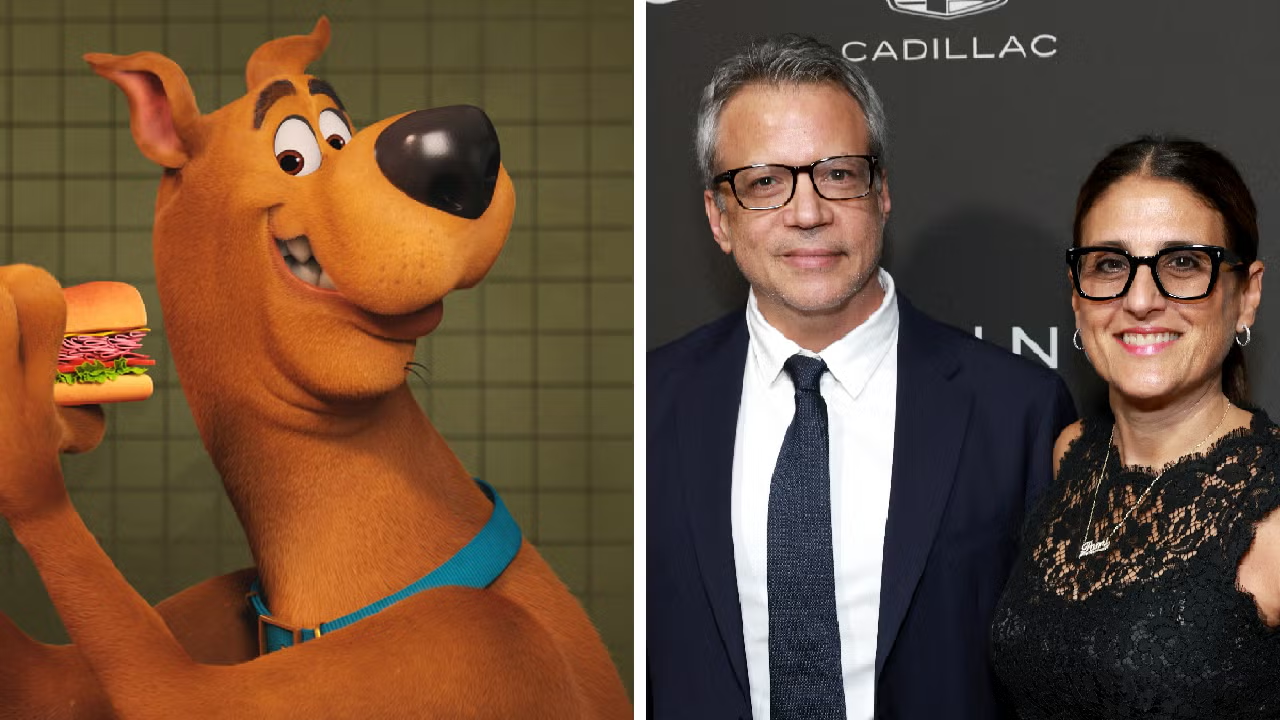
Russell Crowe as Henry Murray and Annabelle Wallis as Christiana Morgan in Unabomber.
Philippe Bosse/Netflix


>
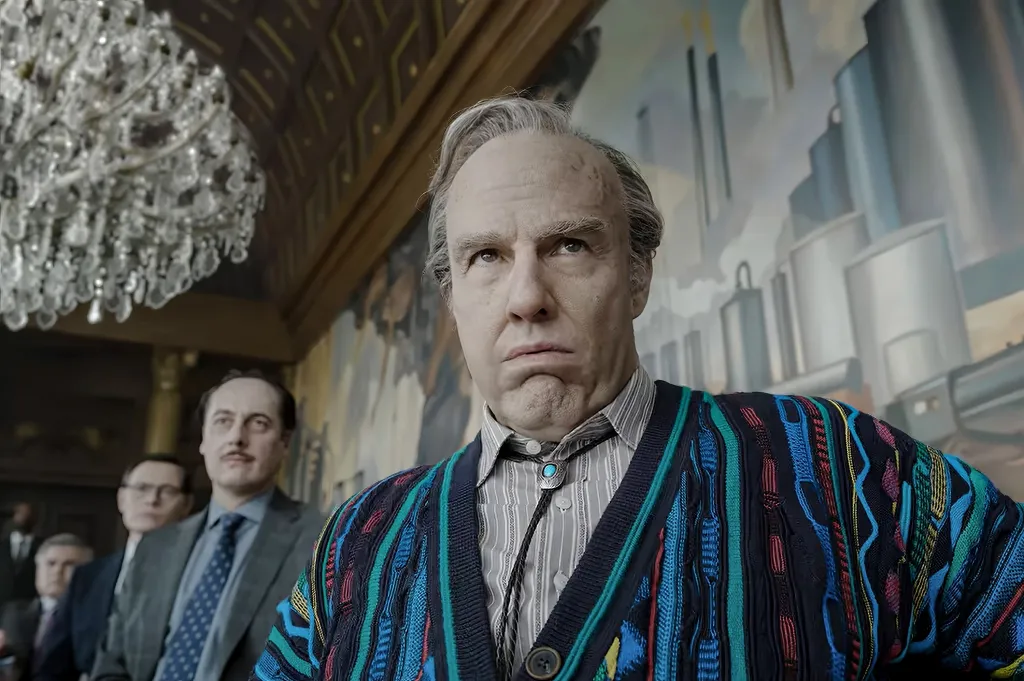
Digger may be the lowest opening for a Tom Cruise joint since 2007’s Lions for Lambs, but the mega-star has only mad respect for those who joined him on the Alejandro G. Iñárritu-directed film.
In an Instagram post, Cruise said that “I am so honored to have had the opportunity to create this film alongside such talented artists. Thank you to the entire cast and crew for your dedication, hard work, and joy. The experience was truly unforgettable and I’m so proud of what we created.”
Earlier Saturday, Deadline’s Anthony D’Alessandro reported that Cruise’s satirical comedy had an $8 million opening. Iñárritu has said that he made the movie for the Gen Z generation; 60 percent of those who bought were between 18-34. More than 70 percent of the audience has been male. The dark comedy that stars Cruise as wealthy oil tycoon Digger Rockwell earned a C+ from CinemaScore.
The movie is playing on the coasts with AMC Lincoln Square counting the best sum for the film.
In his review, Deadline’s Pete Hammond said Digger “is unlike any film coming from a major Hollywood studio in years” and that Iñárritu “takes things much further and thus could be one of the more divisive movies for the masses in a very long time.:
>
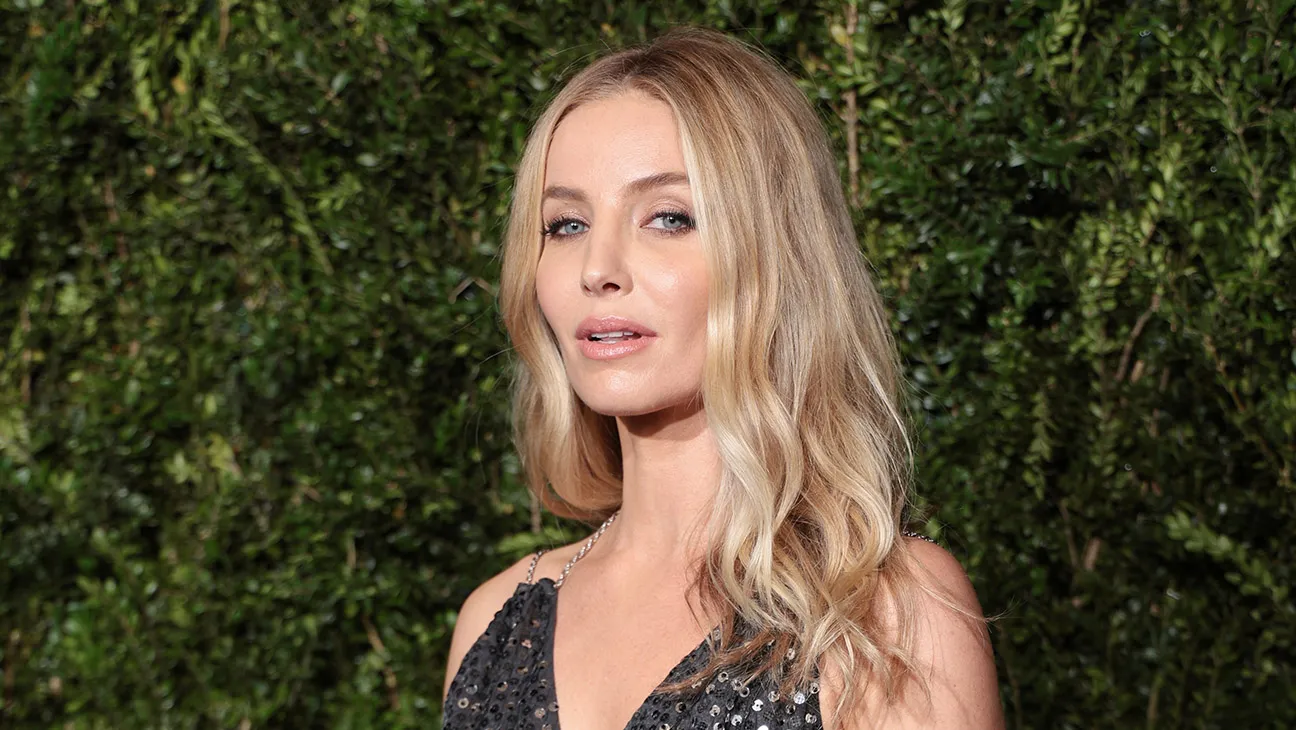
Annabelle Wallis has long considered herself an outsider, but she still has a knack for getting inside Hollywood’s most impenetrable personas.
She may look like she’s from Southern California and sound quintessentially English, but the Oxford-born actor’s heart and sensibility belong to Portugal, where she spent her formative years before returning to the U.K. at 17 to pursue an acting career. That cultural duality made her early casting endeavors more challenging than anticipated.
“I was expected to be a very classical, conventional period drama actress, but I had a very Latin life. So it became very confusing for me to understand why casting directors found it so hard to place me in things,” Wallis tells The Hollywood Reporter in support of Unabomber.
The end of 2013 proved to be a game-changer when she debuted as an undercover Irish cop named Grace Burgess opposite Cillian Murphy’s Tommy Shelby in Steven Knight’s BBC series Peaky Blinders. Posing as a barmaid at the Birmingham gangster’s favorite watering hole, she soon found herself caught between her assignment and her growing feelings for Tommy, eventually becoming the love of his life. The first season was critically well received, but it wasn’t a ratings juggernaut (yet).
Nonetheless, Wallis’ status as an early fan favorite likely helped land her another major role just a couple of months after Peaky Blinders season one concluded. Producer James Wan and director John R. Leonetti cast her as the lead of Annabelle, the first spinoff in the Conjuring universe, which went on to gross $257 million against a $6.5 million budget. Its runaway success paved the way for seven more films, and pound-for-pound and dollar-for-dollar, the Conjuring series might now be the most successful cinematic universe outside of Marvel.
It was through her collaboration with the famously introverted Murphy that Wallis began to develop a reputation for working well with stars who have distinct personas. Murphy may be the anti-movie star compared with the larger-than-life personas of Tom Cruise, Russell Crowe, Jason Statham, Sacha Baron Cohen and Jude Law, but Wallis has shown a natural ability to get past each of their defenses. Wallis credits her “tomboy” childhood in Portugal, as well as growing up in a social household where she, her brother and their friends spent a lot of time together.
“People say, ‘Annabelle’s great with these big alpha males.’ I want to connect to who they really are in their essence, and you can’t avoid it with me. There’s no escaping it,” Wallis says. “I will etch away at their being until they give me that kernel of humanity. It’s a je ne sais quoi that I’m very comfortable in, and it’s become a niche.”
At the start of Peaky Blinders season three (2016), Wallis’ character, the newly minted Mrs. Tommy Shelby, was murdered in heartbreaking fashion. With Tommy being a tormented World War I veteran turned brilliant criminal, Wallis understood that happiness could only be temporary in his cutthroat world. She had also begun receiving other major studio film offers around the same time, including The Mummy with Cruise, so she was already looking ahead.
What nobody could have known was that season three would transform Peaky Blinders into a global cultural phenomenon via Netflix. And in the years that followed, Knight came to understand just how deeply audiences had connected with Grace. Wallis would return as an apparition in season five, but she says Knight still has regrets about the decision to kill her off.
“Steve and I remain very close, and he has always said to me, ‘I think I messed up with Grace. If I had known Grace and Tommy would be a dynamic that people longed for all these years later, I would’ve perhaps done something very different,’” Wallis shares.
In 2019, Wallis reunited with her other The Mummy co-star Crowe in Showtime’s The Loudest Voice, playing Laurie Luhn, the Fox News booker who accused CEO Roger Ailes (Crowe) of sexual harassment over two decades. Wan was so taken with Wallis’ performance that he rehired her to lead Malignant, his bonkers horror movie that became a cult hit despite being released as part of Warner Bros.’ pandemic-era day-and-date experiment, dubbed Project Popcorn. Wallis now says she and Wan might be reteaming on something else soon.
“James actually sent me a message the other day: ‘Annabelle, watch this space. I’m about to tell you something,’” Wallis says. “So, for the fans out there, who knows? He might ask me to trust him again, and I bloody will. I cannot wait to see what James brings to me.”
Currently, Wallis can be seen next to Crowe for the third time in Janus Metz Pedersen’s Netflix chart-topper, Unabomber. She portrays Christiana Morgan, the co-creator of the Thematic Apperception Test (TAT), a psychological test that asks people to interpret ambiguous images. Morgan developed the test with her longtime collaborator and romantic partner, Harvard psychology professor Henry Murray (Crowe).
In the late 1950s, they oversaw the grueling and highly controversial personality experiment involving a teenage Harvard student named Ted Kaczynski. The 16-year-old was subjected to severe psychological stress over a series of sessions spanning 200 hours, raising the disturbing question of how much influence Morgan and Murray actually had on the young man who would go on to become the infamous Unabomber.
The real Kaczynski has referred to the study as the “worst experience of his life,” but he denied the notion that it helped turn him into a domestic terrorist. Wallis, however, believes the study left a lasting psychological imprint, whether he realized it or not.
“In my opinion, I do believe that the study had an impact. Adolescence is such a pivotal moment in all our lives. If you were subjected to that kind of pressure at 16, what would become of you?” Wallis asks rhetorically. “So, of course, he would deny its impact. He became so unwell that how would he even know? How would he be able to reflect and recollect?”
Below, in a conversation with THR, Wallis also discusses Morgan’s inner life before remembering her late friend and Peaky co-star Sam Neill.
***
You and Russell Crowe share the screen for the third time in Unabomber, but it’s your fourth time in the same cast. The first glimpse of you in a studio movie was Ridley Scott’s Body of Lies with Crowe and DiCaprio.
Wow, I had totally forgotten about that. Thank you for the reminder. Body of Lies is interesting. I was cast for this whole other segment of the movie, but then, for either budgetary reasons or so many other reasons that I’m not even aware of, they cut that whole section. I was out in Morocco for a long time, just waiting to be used. (Laughs.) I remember Mark Strong. I remember Leonardo DiCaprio. I remember being on that big set, but Russell had fallen by the wayside in my mind. God, I’m going to have to tell him about this.
Russell Crowe as Henry Murray and Annabelle Wallis as Christiana Morgan in Unabomber.
Philippe Bosse/Netflix
The main three projects — The Mummy, The Loudest Voice and Unabomber — each involve monsters in various forms. And like The Mummy, Unabomber has the two of you conducting a study of another monster — teenage Ted Kaczynski at Harvard in the late 1950s. So, to start with the defining question of Unabomber, how much influence do you think that study had on the horrors to come?
We’re all born with a bedrock of genetic code, epigenetics, that makes us susceptible to high-pressure situations. There are circumstances in life that one can’t control, and he might have had the bedrock that allowed him to be the perfect candidate to then become the Unabomber. Therefore, in my opinion, I do believe that the study had an impact. When you subject someone to a study like this, you have no idea where they come from, what their epigenetic line is and what cellular trauma can be triggered. So there’s no doubt in my mind that it affected him later on in life.
The real Kaczynski said that the study had no bearing on him becoming the Unabomber, but we can’t exactly trust his own self-diagnosis.
Can you imagine going to Harvard as a 16-year-old boy? He had immigrant parents, and he was the first in his family to go to such a prestigious school. The societal pressures and the weight that he bore must have made him so vulnerable. And whether or not he was conscious of that, clearly he wasn’t if he denies it.
Adolescence is such a pivotal moment in all our lives. If you were subjected to that kind of pressure at 16, what would become of you? So, of course, he would deny its impact. He became so unwell that how would he even know? How would he be able to reflect and recollect?
Annabelle Wallis as Christiana Morgan and Jacob Tremblay as Ted Kaczynski in Unabomber.
Philippe Bosse/Netflix
In her private moments, do you imagine your Christiana Morgan felt guilty about how much she and Henry Murray (Crowe) manipulated and misled this 16-year-old boy?
I do. It’s the only way I could relate to a woman who was able to subject a young boy to this. It’s the only way I could empathize with her. There’s no doubt that she felt guilt. How could you not?
She led a very unconventional life. She had an open marriage with Henry Murray for more than 20 years while being academic colleagues. She also had a son, and she was perhaps not the most loving mother, from what I’ve read in the family accounts that I was able to get.
For a woman in that time to even get to her position at Harvard, you’d have to have been so intellectually savvy and so emotionally intelligent to rise through the ranks within that male-dominated environment. The mercurial aspect of the ego wants so much to be validated, respected and understood for a pursuit. And she might’ve felt like this was her chance to stand amongst the greats. So I have no doubt that in her private moments she wondered about the decisions she made through her academic ego.
You are often paired with leading men like Russell who have reputations that precede them: Jason Statham, Jude Law, Sacha Baron Cohen and Tom Cruise. I would also add Cillian Murphy to the list just because his introverted self is the stuff of legend on the internet.
(Laughs.) Yes.
Have you noticed this pattern by now?
It’s interesting, because when you bring it up, it makes me reflect on how unconscious it was. I didn’t really think about it much at the time, but I have heard people lead with that line. They’ll say, “Annabelle’s great with these big alpha males.” I think I’m a strong woman, and I always try to be equal to those I work with. And I wonder if it’s the fact that there’s a level ground when you are not overwhelmed by the stature of the person in front of you. When you play the truth so wholly, it allows them to play the truth, and you can both separate the persona that they walk into the room with.
I’m always so curious about humanity. I want to connect with the human being in front of me so much that I can’t fake anything. When I meet someone or work with someone, I really want to connect to who they really are in their essence, and you can’t avoid it with me. There’s no escaping it. I will etch away at their being until they give me that kernel of humanity that I’m looking to connect with in the scene. So I treat them nicely, and they feel safe enough to expose something that works on screen. Therefore I get cast onward. It’s a je ne sais quoi that I’m very comfortable in, and it’s become a niche, I suppose.
You were able to crack Cruise’s shell in a way that few have. For example, you got him laughing about stories he wouldn’t normally volunteer.
Whenever we’d go on a chat show, he’d say, “If you dare say that we did this on set …” And I’d say, “Well, well, Tom, now I’m going to say it.” (Laughs.) I’m a contrarian by nature. I’m very mischievous, and so are all these men.
I grew up in Portugal, I did motocross. I rode horses. I was a real tomboy, even though my aesthetic is very feminine. I grew up in a house where a lot of kids came over because they perhaps didn’t have as nurturing a dynamic in their home. So we had a lot of other kids around, and it became a lot of boys because I have a brother. But I didn’t realize then what an asset it would be to be able to rough and tumble in this vehicle of femininity.
With these big personas, everyone has all these ideas about them, but I’m not interested in the ideas. I’m interested in how they treat me and how they are in the scene with me and how close we can get to the humanity of it. So I’ve been fortunate that the people I’ve worked with have responded, and I’m proud of all the work that we’ve done together.
Annabelle Wallis and Tom Cruise in The Mummy
Courtesy of Universal Pictures
You touched on it already with Christiana Morgan, but you’re often asked to play women in male-dominated arenas. Besides Morgan, Angie Ellis from Mutiny fits that description, as does Grace from Peaky Blinders and Alice from The Silencing. So I wonder if your upbringing is helping influence that in some intangible way.
I do think my upbringing informs the work now. Starting out in the U.K., I remember feeling very much like an outsider compared to the classical actresses I was up against because I’d grown up in a Latin country. I was expected to be a very classical, conventional period drama actress, but I had a very Latin movement and passion and life. So it became very confusing for me to understand why casting directors found it so hard to place me in things.
That’s still true to this day. And when you look a certain way, they want to cast you in a certain role or certain stereotype, but then you don’t quite fit because of the way you speak or your intellect or the way you see the world. So it’s been a very interesting journey just to observe how people view you in ways you don’t expect.
In my mind, I’m a character actor who is longing to be seen as a character actor, but the vehicle that I’m in confuses people. So there’s a pigeonholing that’s forced upon you that you’re constantly up against. But through the vehicle of these men you named, I get to show a different side, a strength, that is innately honest. So I’ve really had to find a little niche for myself.
A few years ago, your Mutiny director Jean-François Richet made a film called Plane with Gerard Butler, and he was going to executive produce a sequel called Ship until Butler reportedly dropped out a couple weeks before cameras rolled. Do you know if Richet repurposed that script into Mutiny?
Firstly, I had no idea about that bit of information.
It’s been known to happen, especially with Statham. He’s made a couple other movies that were originally designed for Sylvester Stallone.
That’s very interesting. Maybe it was fate. But I don’t think so. I think the powers that be at Lionsgate had something cooking themselves, but that would’ve been a good story.
We’ve reached the Peaky Blinders portion of the interview. Can I first get your take on The Immortal Man?
(Wallis breaks the news gently.) I didn’t watch it.
What!? You’re Grace Shelby. You can’t say that.
(Laughs.) There were conversations about different versions, and so I know about those films. Obviously, none of them transpired. They weren’t the right directions to take. I’m still friends with everyone from the core season one and two group, and we all have the best memories. But from what I’ve heard and what I’ve sensed from people who’ve watched it is that perhaps they were longing for a throwback to the earlier characters or things like that.
Look, Peaky Blinders stands alone. The brand, the IP, can go anywhere. And with Steve Knight at the helm, he’s unstoppable. He’s such a talent. But I did get the sense that people had waited all these years for some answers and perhaps they didn’t get them. So who knows? You never know what Steve is up to. He might feed them to fans later in some other way.
Annabelle Wallis and Cillian Murphy’s Grace and Tommy Shelby in Peaky Blinders.
Robert Viglasky/Netflix
My one hang-up with the movie is that several people, including Ghost Grace, were absent from a particular moment in which they really should have been present.
Thank you. It’s amazing when people resonate with a piece of work. I remember being like, Oh, I’ve done this great piece that I love. There’ll be so much more of this caliber. And I’ve had to reconcile with the fact that it’s very rare for things to come together like that. It’s rare that you get actors who are involved in things for the right reasons and with that kind of passion behind it. It was very special for all of us. Cillian calls it the gift that keeps on giving.
The seismic loss of Helen McCrory led to the final season being rewritten. Were you slated to come back for that original iteration?
Steve and I remain very close, and he has always said to me, “I think I messed up with Grace.” You have to remember, nobody watched Peaky Blinders when it came out on BBC. It wasn’t a popular show, so decisions were made without an understanding of the audience at the time. It took a few seasons to really gain momentum. Once it got bought by Netflix before season two, it was off and running by season three.
Steve sent me this video where the public got to vote on their favorite scene of all time, and the “already broken” moment was number one. Tommy and Grace are in the pub, and she stands to sing to him. None of us could have imagined the chemistry and the ease between Cillian and me, considering it was a storyline that was written in the moment. They had no idea what they were going to do with Grace at first, but they responded to the rushes [dailies] so much that they used Grace to propel Tommy’s story.
So Steve is often like, “If I had known Grace and Tommy would be a dynamic that people longed for all these years later, I would’ve perhaps done something very different.” But because he did [kill her off at the start of season three], it created a deep longing and a deep wound for the audience and their leading man’s journey. So Grace’s death was a very useful tool for the show.
The Peaky family endured another huge loss recently in Sam Neill. You worked together quite a bit in the first two seasons. Do you have a memory that you keep coming back to in recent months?
What a life he lived. He was such a lovely man. He nurtured young talent, and he was so generous and so kind. He’d be like, “Annabelle, we’re in Liverpool. Let’s go to a cathedral.” He had an obsession with cathedrals. Then he’d take me to all the wine shops that sold his wine, Two Paddocks, and we’d go in to do our sell-the-wine schtick. He always checked in, and he always stayed connected. It was just a great, great loss for so many people. Every actor that I’ve worked with either has a story about Sam Neill, or they loved him as much as I did. He was a great friend, and he’ll be very much missed.
I interviewed him in the summer of 2022, and he was an absolute delight. He cracked himself up numerous times, and he seemed without a care in the world. It wasn’t until months later that we all learned he’d been going through cancer treatment during that exact time period.
He didn’t tell any of us — and same with Helen McCrory. She didn’t say a word. God bless both of them.
Annabelle Wallis’ Mia in Annabelle
Warner Bros./Photofest
In 2020, there was a viral news story about the Annabelle doll escaping from the Warren Museum in Connecticut. Many fact-checking websites then sprang into action and traced the root of this obviously bogus story to an interview being mistranslated overseas. There seems to be a lot of that lately.
(Laughs.)
Well, the root cause of that particular Annabelle story was my last interview with you.
Stop it!
We talked about the Annabelle doll because you starred in the first Annabelle, and then we talked about how Annabelle the actor pulled off the rare feat of running side by side with Tom Cruise. Somehow, those ingredients were garbled up, leading to headlines about Annabelle the doll escaping her museum. So that viral story was partially our fault.
We went viral — and I didn’t even know it! Oh my God, that’s wild. That shows you the madness of the time that we’re in. Maybe we’ll start something in another part of the world with this interview. What might the miscommunication be now?
Let’s wait and see what France has in store for us.
(Laughs.) Exactly.
I’m surprised it hasn’t happened more given the name overlap.
There was such a bizarre synergy between that film and being the same namesake as this doll. I’m very spiritual. I like to think there’s a message out there for you in that way. And while I don’t believe in ghosts or negative spirits, bizarre things definitely happened on that film. [Writer’s Note: Priests started blessing all the future Conjuring universe sets.]
We shot in some of Koreatown’s old Art Deco buildings, and someone would say, “Oh, someone was murdered here.” And when we would go over time, these lights would flicker, amongst other things. It’s a testament to James Wan, [director] John Leonetti and the world they created really creeping into your being to where it’s never forgotten.
I still hear from people about Annabelle. Around Halloween, around right now, I see the residuals and the appetite for those films. (Laughs.) So I like to think I’ve transmuted something terrifying into a blessing.
I have to pay my belated respects to your work in Malignant. The pandemic robbed us of many riches, and while I’ll always wish I could have experienced it in a packed house, it was nevertheless one of the few silver linings of that time.
That’s really kind of you to say. I remember sitting down with James Wan, and he was like, “Annabelle, do you trust me?” And I was like, “Yeah.” And he was like, “Are we going to go for this?” And I was like, “Yeah.” And we went wild. There were options for certain moments, and it was always like, “Let’s go for the strongest, most giallo-inspired, most outrageous thing that we can do.”
I feel really proud of that fearless expression. It’s so rare, especially now, in the fear culture of Hollywood and the consolidation that’s happening. It’s so rare to ever be in the presence of someone who has the freedom to go wild, and I love that. And for women, we don’t often get the opportunity to play rage and darkness in that way where you’re physically embodying it. It was such a fun riot.
James actually sent me a message the other day. He was like, “Annabelle, watch this space. I’m about to tell you something.” So, for the fans out there, who knows? He might ask me to trust him again, and I bloody will. Yeah, we were robbed of an opportunity [for a proper Malignant release], but regardless, I cherish the closeness I have with him, his wife, Ingrid [Bisu], and the whole Atomic Monster team. I love to see them thrive, and I cannot wait to see what James brings to me.
Annabelle Wallis in James Wan’s Malignant.
Courtesy Warner Bros. Pictures
He just regained creative control of the Saw franchise he created, and even though he’s not directing the next one, I wonder if that’s what he’s thinking.
I would love to try a bit of everything. It’s important to embrace all the genres. I don’t have that tactic like some other actors who are so clear about the one direction they want to go. I would like to try all of it and then see what lands. If something does, it does. But at least there’s movement, expression and a deep dive into the psyche of all things. I’m not a linear person, so a movie like that really represents the left turn that I can make in a moment. Some people are fearful of that, but I’m not. Not at all.
***
Unabomber is now streaming on Netflix.
>
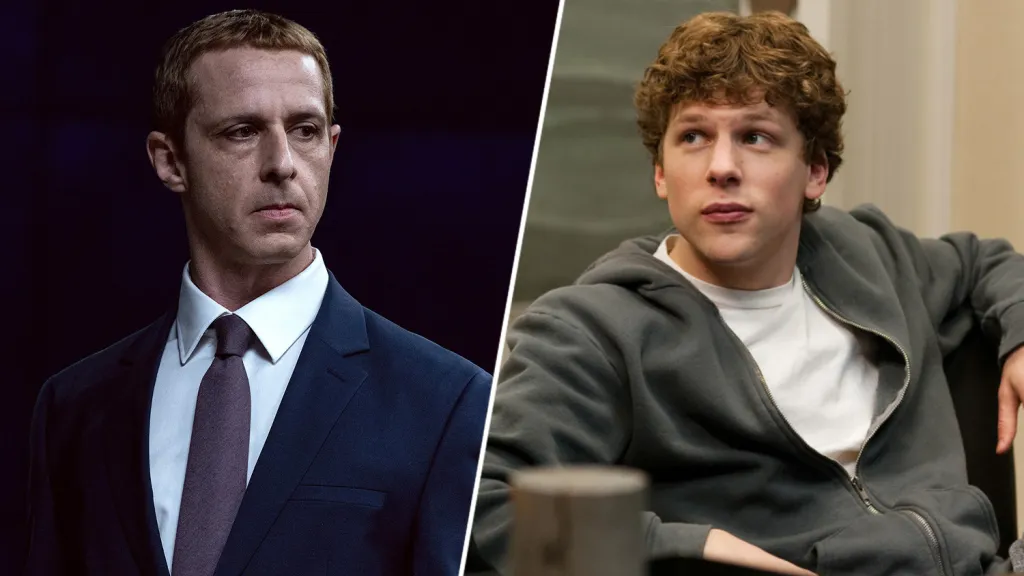
As Aaron Sorkin logged back into Facebook for The Social Reckoning, his friend request to Jesse Eisenberg was denied.
The Oscar-winning screenwriter of The Social Network (2010) explained that “it never occurred” to him that Eisenberg wouldn’t want to reprise his portrayal of Meta mogul Mark Zuckerberg in the sequel, which premieres Oct. 9 in theaters.
“I knew what the studio was offering him to do it, but money does not motivate Jesse. It’s infuriating,” he told Entertainment Weekly. “If anything, money is a disincentive for him. It’s admirable. He’s very concerned about raising his kids with too much money.”
Sorkin said he was “just a couple of pages from being done” with the script for The Social Reckoning when he ran into the actor “and said, ‘I’m gonna be sending you something in a couple of weeks.’ And he smiled and nodded, and I sent it to him. It never occurred to me that he wouldn’t wanna do it.”
Before ultimately casting Jeremy Strong as Zuckerberg last September, Sorkin spent a three-day weekend attempting to persuade Eisenberg to return.

Aaron Sorkin attends ‘The Social Reckoning’ gala screening on Sept. 29, 2026 in London, England.
Tristan Fewings/Getty Images
“This is the only time I’ve written myself an outline. I don’t do it for the movies, but I did it for my conversations with Jesse,” he noted. “It was arguments for why he should do it. They included, ‘We already know you’re gonna be great because you were already once.’ You know, ‘Here are the great moments that you’re gonna get to play in the movie.’ And I laid it out for him.”
Sorkin added, “He just doesn’t like being conflated with Mark Zuckerberg anymore. He doesn’t like that he kinda resembles the guy physically; that role is probably what he’s most known for.”
After The Social Network (2010) recounted Mark Zuckerberg’s creation of Facebook and the controversy that ensued, Sorkin returned to write and direct the upcoming sequel, which focuses on a 2021 document leak that exposed harm Facebook caused on society.
In The Social Reckoning, Facebook engineer Frances Haugen (Mikey Madison) goes to Wall Street Journal reporter Jeff Horwitz (Jeremy Allen White) with the social media platform’s most guarded secrets. Bill Burr, Wunmi Mosaku, Billy Magnussen and Betty Gilpin also star.
>


Search For Canadian TV Actor Stewart McLean Now Homicide Investigation


These ’90s fashion trends are making a comeback in 2017
According to Dior Couture, this taboo fashion accessory is back
Model Jocelyn Chew’s Instagram is the best vacation you’ve ever had
Emily Ratajkowski channels back-to-school style
9 Celebrities who have spoken out about being photoshopped


Rurouni Kenshin: Hokkaido Arc Manga Takes 1-Issue Break – News


HIDIVE to Stream English Dubs for The World Is Dancing, The Forsaken Saintess and Her Foodie Roadtrip in Another World, The Dangers in My Heart: The Movie Anime – News