
Entertainment
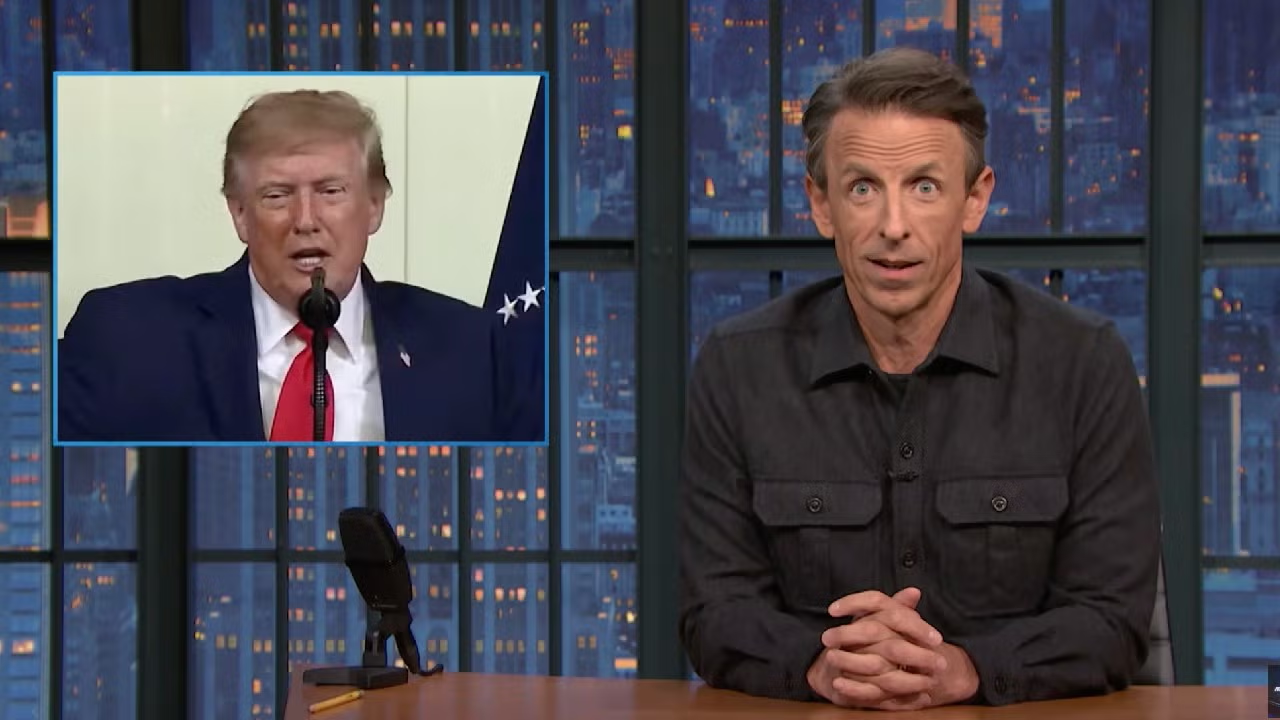
Seth Meyers Roasts Trump for Bragging About Stair Recognition

>

>
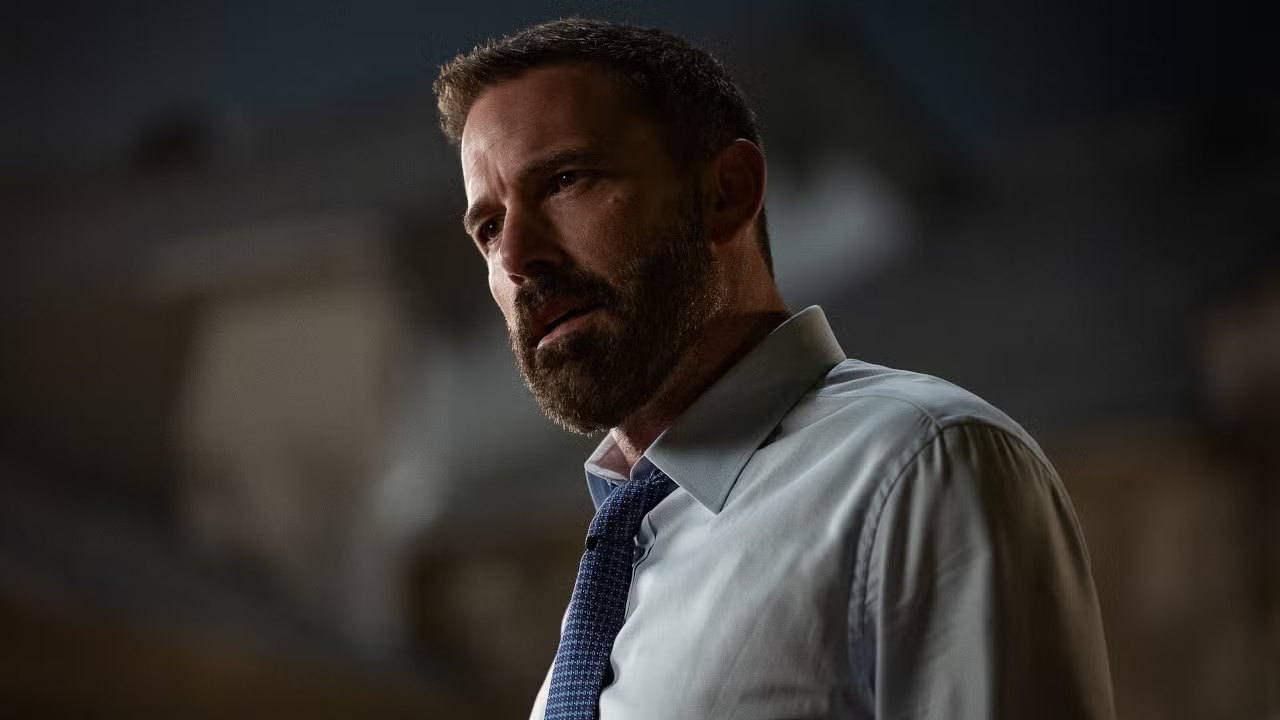
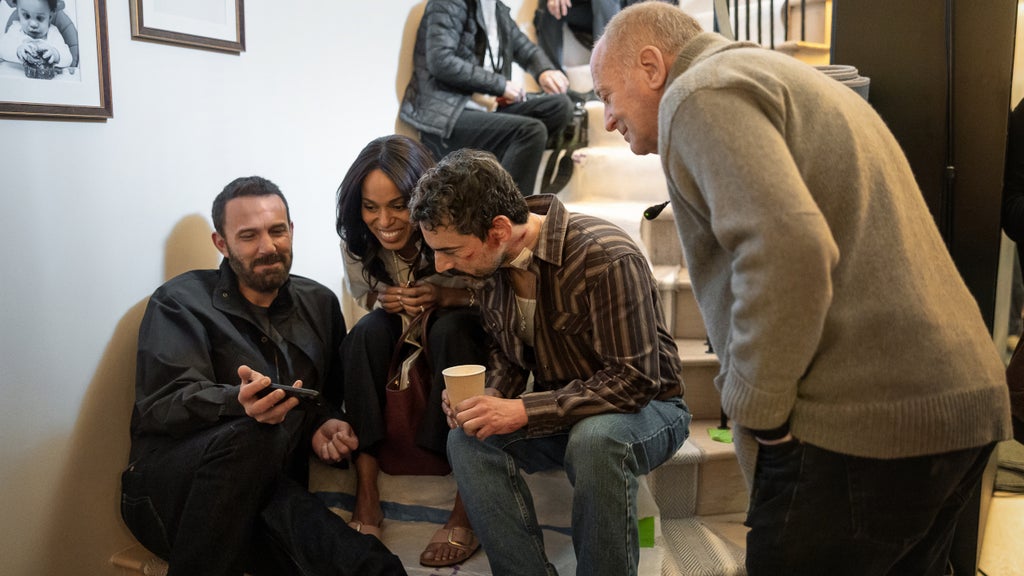
“Animals,” Ben Affleck’s sixth feature film as a director, hits Netflix this weekend, but a very different version of the movie almost happened first.
Initially, Affleck was set to direct but not star in the thriller about a Los Angeles mayoral candidate and his wife who must grapple with the kidnapping of their son. He had enlisted Matt Damon and Jennifer Garner for the starring roles, excited to bring out “some aspects of both of them that I know exist that they haven’t shown, frankly, in their work,” he told TheWrap in an interview days before the film’s release. But then he got a phone call he described as devastating.
“What do you mean there’s another movie with a similar plot in production and it’s being done by Spike Lee and Denzel Washington? These are not people with whom I’m interested in competing,” Affleck remembered thinking as he learned about Apple’s “Highest 2 Lowest” So, a few weeks out from the start of filming on “Animals,” he pulled the plug and put the project aside.
Something about the story kept gnawing at him, though. He couldn’t stop thinking about it. So a few months later, he decided to put the project back on, but by this point Damon had committed to starring in “The Odyssey,” so Affleck took on the starring role himself. Concerned that audiences would read too much into the marital dynamics explored in the film, Garner respectfully bowed out of playing the wife of her real-life ex-husband, so Affleck cast Kerry Washington in the role instead.
And then he set about reworking the script.

He described the original version as a “really contained thriller exercise” with characters who, in hindsight, he felt were archetypal – the mayor was more feckless, his wife more angelic. Everyone behaved as you would expect them to in this kind of situation.
“I really would rather tell something that feels more nuanced and honest,” Affleck remembered thinking. So he leaned into the gray areas.
“The themes around marriage and the degree to which we are willing or capable of showing one another our total true selves, warts and all, is a really interesting question,” he said. “And the nature of morality as increasingly performative was exciting to dig into, then what happens when something so scary or urgent or desperate happens that the mask has to come off, and you’ve got to reckon with who am I really?”
Making the characters’ morality murky also added a layer of tension to the story, as Affleck fine-tuned his approach to keep the audience guessing.
“The world as it is is complicated and nuanced, and defies easy, convenient assignment of rules and expectations, and to reflect an idealized version of the world we live in is boring. That’s the real issue: You’re gonna bore the fucking audience if they already know what’s gonna happen and how people are gonna behave,” he explained. “Rather, I wanted to do a movie where my hope was that audiences would continue to need to calibrate how they were estimating, how they were judging, how they were considering the characters in the movie as it went along, and that seemed like a really exciting thing to do.”
Much has been made about Interpositive, the AI company that Affleck founded and sold to Netflix. Many of the Interpositive employees worked on “Animals” and AI technology trained only on this film’s inputs was used in post-production; when asked how he explained to his collaborators, like Oscar-winning cinematographer Robert Elswit, they’d be working with the technology, he said that was “the easy part.”
“For one thing, it’s a deliberate and specific attempt to show ways in which this technology can be incorporated that not only doesn’t eliminate any jobs, but where we have some tools in post that sort of help us with challenges that are otherwise sometimes vexing. Whether it’s changing some lights or optics of a shot or doing some visual effects removals,” he said.
“And I do want to distinguish this because I know people think of AI as a kind of a binary thing. There’s either no AI or you’re generating totally artificial material, and that’s just not the case. With this technology, with what we’re doing, it’s about where can it strategically help us adjust and tweak and enhance the experience of the audience when we get to finishing the movie, and in a way that has to be invisible and consistent with all the artist’s intention, and derived from the work of the human beings.”
The filmmaker said he rejects the promise from some tech companies that AI can “do it all,” and sees it more like a tool that will aid filmmakers going forward, like the advent of sound or LED lights.
Read on for my full interview with Affleck on how he made “Animals,” how he chooses which projects he directs, if knowing the film would premiere on streaming changed anything in his approach and much more.
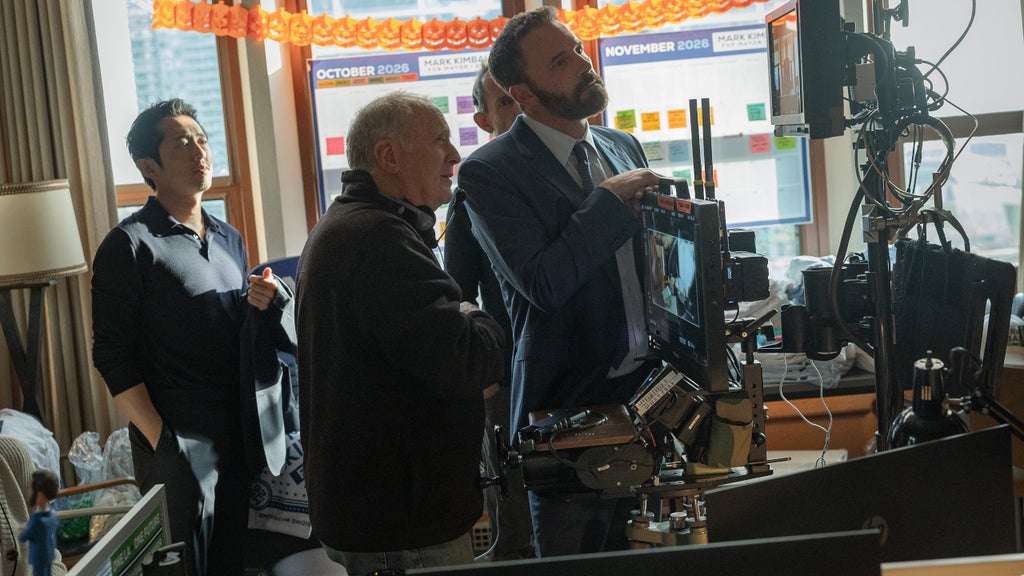
This feels a bit like the kind of movie they don’t really make a lot of anymore. A talky thriller-drama.
Yeah, I think there come to be these maybe self-imposed sort of rules or sensibilities or this notion of like “Well, you can’t say this” or “You can’t do that.” I wanted to try to be free of some of that, because I thought it would, for one thing, feel more authentic to the audience, and for another, feel refreshing to be honest and provocative. If you’re trying to hold a mirror up to the world, it doesn’t really work if the world you’re reflecting is the idealized version of the world.
You have a full time job running Artists Equity, you have acting roles. At this point in your career, how do you decide this is what I’m going to direct next? Because there’s a world in which you direct “The Rip,” but what made “Animals” the one?
The really honest answer is that as an actor there’s a different set of criteria. Like principally you probably have to work anywhere between a few weeks and maybe 10 weeks, and for a director, it’s usually more than a year of time. And really the truth is, you have to feel like this is going to be really fertile ground to explore, and I’m going to stay interested and engaged with this for a year. Because if the director loses interest, the movie’s dead. You’ve got to be the last person standing who really gives a shit and who really believes in it, so you’ve just got to have a higher bar for whether you think it’s fertile ground. Like not only is the story itself interesting, but are there elements of this story that I can continue to mine?
In this case, there was a lot of stuff. The themes around marriage and the degree to which we are willing or capable of showing one another our total true selves, warts and all, is a really interesting question. And the nature of morality as increasingly performative was exciting to dig into, then what happens when something so scary or urgent or desperate happens that the mask has to come off, and you’ve got to reckon with who am I really? To what extent are we moral creatures who hew to a a moral code, or are we in fact kind of self-seeking and creating stories retroactively around our behavior in order to justify that, and tell stories that allow us to be comfortable with ourselves? So stuff like that, to me, I think, “OK, there’s a lot of mileage in this.”

And you stuck with this one for a while. As I understand it, you prepped it before and it didn’t go. How different was the version that you made vs. the one that you were about to make with Matt Damon and Jennifer Garner?
Pretty radically. It was a lot more plot specific, and really kind of relied on the twists and turns of the plot. A really contained thriller exercise seemed interesting to me, and in particular with the actors that I want to work with, I thought this is a really interesting combination of actors, both of whom I know really well, and who I was really looking to kind of try to bring out some aspects of both of them that I know exist that they haven’t shown, frankly, in their in their work.
The first thing that happened was when I found out — you know it’s that phone call where all of a sudden it’s sort of devastating, like what do you mean there’s another movie with a similar plot in production and it’s being done by Spike Lee and Denzel Washington? These are not people with whom I’m interested in competing, and the decision then was really simple. I was like, “OK fuck it, I’ve been in the second asteroid movie, so we’re gonna let that go.”
And then what I stayed interested in was the sort of direction that I started wanting to go. Luis Gerardo Mendez’s character wasn’t in the first version, and Adriana Paz’s character was extremely minor. In retrospect, the characters were a little bit more archetypal. The wife was just kind of purely virtuous and sort of lecturing, and you had the sort of feckless politician husband who, in that original version, had an affair, and then the woman had brain damage. It started to feel a little bit dated to me. In fact, it started to feel a little bit like this is the movie that you would have made in 2021 because you’d be trying to obediently hew to expectations around what was considered virtuous storytelling. And that, in and of itself, gave me this reaction to run counter to that and say, I really would rather tell something that feels more nuanced and honest.
The world as it is is complicated and nuanced, and defies easy, convenient assignment of rules and expectations, and to reflect an idealized version of the world we live in is boring. That’s the real issue: You’re gonna bore the fucking audience if they already know what’s gonna happen and how people are gonna behave. Rather, I wanted to do a movie that my hope was that audiences would continue to need to calibrate how they were estimating, how they were judging, how they were considering the characters in the movie as it went along, and that seemed like a really exciting thing to do.
I knew what I would need was real collaborators as castmates. Luis and Adriana and Kerry and Steven (Yeun) all did meaningful amounts of writing on the movie. I got two weeks where I said we’ve actually got to workshop this on the actual set first, so that we get all of this discussion about what we’re gonna say and how it’s gonna work out of the way so when we get there and shoot, we know what we’re doing. Because if you just show up on the set and your first day, there really isn’t any practical room to change anything. I mean, you can give lip service to it, but you’ve got lights in certain places, and other actors have learned their lines, and that’s why it feels like bullshit when you tell actors like, “It’ll be collaborative.” If you’re waiting until you get to the set, there’s only about 10% of movement that you can even really do.
You’ve got your shot list. Your DP’s worked out the lighting and everything. You can’t move over there, over here, all that stuff.
Exactly.
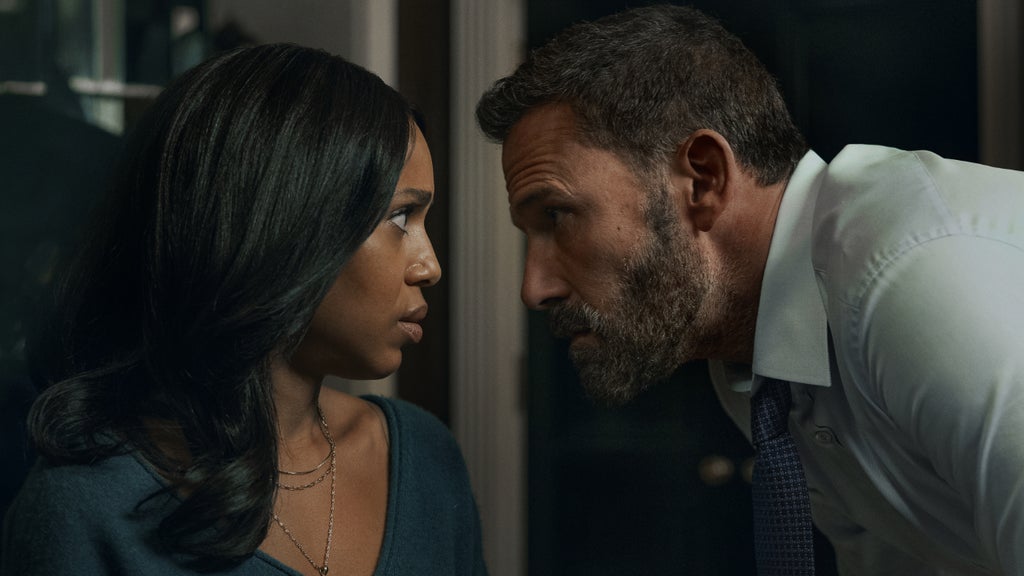
That evolution is interesting because something that I find fascinating about the film is its set pieces aren’t shootouts or car chases, but instead these big dialogue sequences — there are two fights between your character and Kerry’s character that are explosive. And it’s pushing you, the viewer, to consider and switch which character you think is “right” in any given situation.
Right, precisely as you described, what I thought was exciting was the idea that these dramatic scenes were the action set pieces. In other words, they performed exactly the same function that an action set piece does, which is sort of ramp up the tension, yank the audience closer to the screen, create a bunch of urgency, connect you to characters, resolve conflict in climactic ways, and I thought the kinds of movies that I am interested in, by and large, are ones where those goals are accomplished in human ways by human interactions, because I think actually some of the most dramatic events in our lives are the big fights that we have with our spouse, or are really those moments where you have something in your life, your home, your job that’s jeopardized, and I want to be able to make the case that you don’t need to condescend to the audience.
You don’t need to look at movies in this bifurcated way. You’re making a genre movie and either it’s an action movie or a thriller or a romantic comedy or a horror movie or it’s a thoughtful movie, where you’re allowed to do more nuanced, interesting stuff. So, my belief is you have genre conventions, which just give the audience kind of handrails, not to make it easy, but in order to establish a certain set of parameters which you either cue to or subvert. But it’s sort of like a language. Strunk and White in “Elements of Style” talk about how you’ve got to know the rules in order to break them, so that you understand what breaking them means, as a writer. I feel that the same holds true for the grammar of film.
So by existing within a certain genre — with “The Town” or a movie like “Argo” or “Live by Night” or “Air,” we’ve seen other movies that have similar storylines and function similar ways, but it doesn’t mean that it has to be reductive. They’re just forms within which to work, and I find that they also give the audience some purchase at the beginning of this rock they’re climbing. It’s like a few handholds, put your foot here, put your hand here, and then it’s going to get challenging as we get up the mountain.
I’m also genuinely curious as someone who has worked in theatrically released film for as long as you have and made Oscar-winning movies, do you as a filmmaker consider the fact that people are watching this in their home as you’re making it? Because the barrier to changing the tile on Netflix is so low. And this is not a sneaky way to ask if Netflix asked you to move an action set piece to the first five minutes of the movie or anything.
First of all to answer the explicit question, and I’ve kind of addressed this a little bit so I won’t go into the whole song and dance, but no, Netflix didn’t ask to make any obvious changes. In fact I didn’t get any notes from Netflix, really. They were kind of astonishingly liberating, almost scary. To the point where typically I feel like, “OK, now since I’ve done all your guys’s notes, we’re all on the same page, and we’re all going to go down together if this doesn’t work.” Whereas Netflix is kind of going, “We believe in you. We think you’re a good filmmaker. Go make your movie.” It was almost more freedom than I thought. Like, “Oh my God, I guess it’s gonna be all my fault if it doesn’t work” (laughs).
But honestly, I think of it the same way. Which is to say, no matter who you do a movie for — streamer, theatrical, hybrid, and I have done and acted in every sort of various combination — you know you’re gonna sit down in front of a test audience before it comes out, and you’re gonna ask them questions, which I think is a very healthy process. But more than asking them questions, you’re gonna sit in the theater with them, and when you’re sitting in the theater with them, you could have been in love with the first 15 minutes of your movie and been absolutely certain that this is the story you want to tell and it means this and that and the other thing, and then you get into the audience with them and you can feel when they connect, and you can feel when they disengage. And as soon as you feel an audience disengage, especially collectively, it’s just an irrefutable fact that you know you’ve lost them.
Billy Wilder said something about the audience: As individuals, they may be idiots, but collectively they’re geniuses. You don’t even need to look at cards. So I try to be mindful of the audience’s time and their interest, and I know that my responsibility as a filmmaker is sort of analogous to if you’re going to tell a story at a dinner table, right? You’re gonna ask everyone else to stop talking. You’re gonna ask them to listen to your story, and you’re gonna be the person who talks for a period of time. And there’s a kind of implicit expectation, essentially, that you will be relatively brief and not dominate the entire conversation. That it will be interesting and that at the end, it will have a point, and if you can meet those three expectations, you might get invited back to dinner. So I think about it in those terms. Brando said an actor’s only responsibility is not to bore the audience, and I feel like that’s absolutely just truer of directors even more than actors.
You’ve got to continue to engage them because if they’re not interested, if they’re not watching, if they’re not paying attention, if it doesn’t feel urgent, well, none of what you have to say and none of the observations that you’re making, whether nuanced or obvious, are going to land or resonate with them, and you’re not going to cultivate any empathy with any of the characters. You’re not going to do any of the things that the art form, at its best, can allow you to do. So, the way I think about it is really the same.
And by the way, another dirty little secret is no matter what your movie is, most people see it on streaming. I myself saw all the great ’70s movies on VHS cassettes on a 15-inch color TV. That’s where I watched “Dog Day Afternoon” and “The Godfather” and “Serpico” and “Mean Streets” and “Being There” and all the great movies. They were no less powerful for having seen them on television. I don’t think the medium itself diminishes what you’re doing. Nor do you have to change for that expectation.
I do think the one interesting thing that has happened, and it’s happened in theatrical movies and in streaming movies, if you look at movies from 20, 30 years ago, and you look at movies now, I do think the first act has gotten shorter. You go watch “The Verdict” and you had what feels like a luxurious 30 minutes to get your movie started, and you don’t see that anywhere anymore because I think what’s happened collectively is attention spans have gotten shorter, just in general, I think because of the surfeit of options available to us and the speed with which we’re now accustomed to having our expectations gratified.
I was lamenting this to somebody recently, and they sent me a clip on Instagram, ironically, of Orson Welles saying exactly the same thing 50 years ago (laughs). So maybe it’s something people just bitch about when they get older, or it’s just an ongoing phenomenon, or I’m just old and cranky. But it does feel that way to me.
I know you’ve spoken about Interpositive and AI was used in making this film, trained only on the inputs you gave it. But I’m curious about the conversation you have with people like Robert Elswit, like William Goldenberg, these department heads who have worked without it, and it’s this new and scary technology. How are you navigating those conversations with your creative partners?
That’s the easiest part because, for one thing, it’s a deliberate and specific attempt to show ways in which this technology can be incorporated that not only doesn’t eliminate any jobs, but where we have some tools in post that sort of help us with challenges that are otherwise sometimes vexing. Whether it’s changing some lights or optics of a shot or doing some visual effects removals.
And I do want to distinguish this because I know people think of AI as a kind of a binary thing. There’s either no AI or you’re generating totally artificial material, and that’s just not the case. With this technology, with what we’re doing, it’s about where can it strategically help us adjust and tweak and enhance the experience of the audience when we get to finishing the movie, and in a way that has to be invisible and consistent with all the artist’s intention, and derived from the work of the human beings.
And frankly, just in a very mundane sense, when you’re one of the partners like you mentioned, like Robert or Billy or Chris or the actors, part of what is scary about AI is that it feels distant and frightening and something that replaces you. And in fact, this is just another tool in your belt, it’s giving you some more control and ability to modulate things. It actually feels comfortable and augmentative and, frankly, not particularly radical or dramatic.
It should be said, I have no interest in, nor did I develop a technology, nor did I want to participate in something that replaced human beings, or the artistic experience, or anything of the kind of workflow that we have. I created this technology specifically so that we wouldn’t be obviated or or be threatened by what I see as the approach that some tech companies do have, which is that, “The technology can do it all.” I firmly reject that. I don’t believe that it will ever work. I’m very confident in that for lots of personal, creative, and technical reasons that I won’t bore you with, but it is something that I feel very strongly about.
And actually, what happens when people get exposed to it is they go, “Oh, this is what we’re doing. Oh, this is cool. Oh, this is kind of interesting.” And it doesn’t feel anathema or contrary in any way to the artistic, creative human experience that we’ve had throughout this. It actually feels much more in line with the tradition of expanding and embracing technologies that come along, from color to talkies to LED lights and digital photography and so on.
“Animals” is now streaming on Netflix.

>
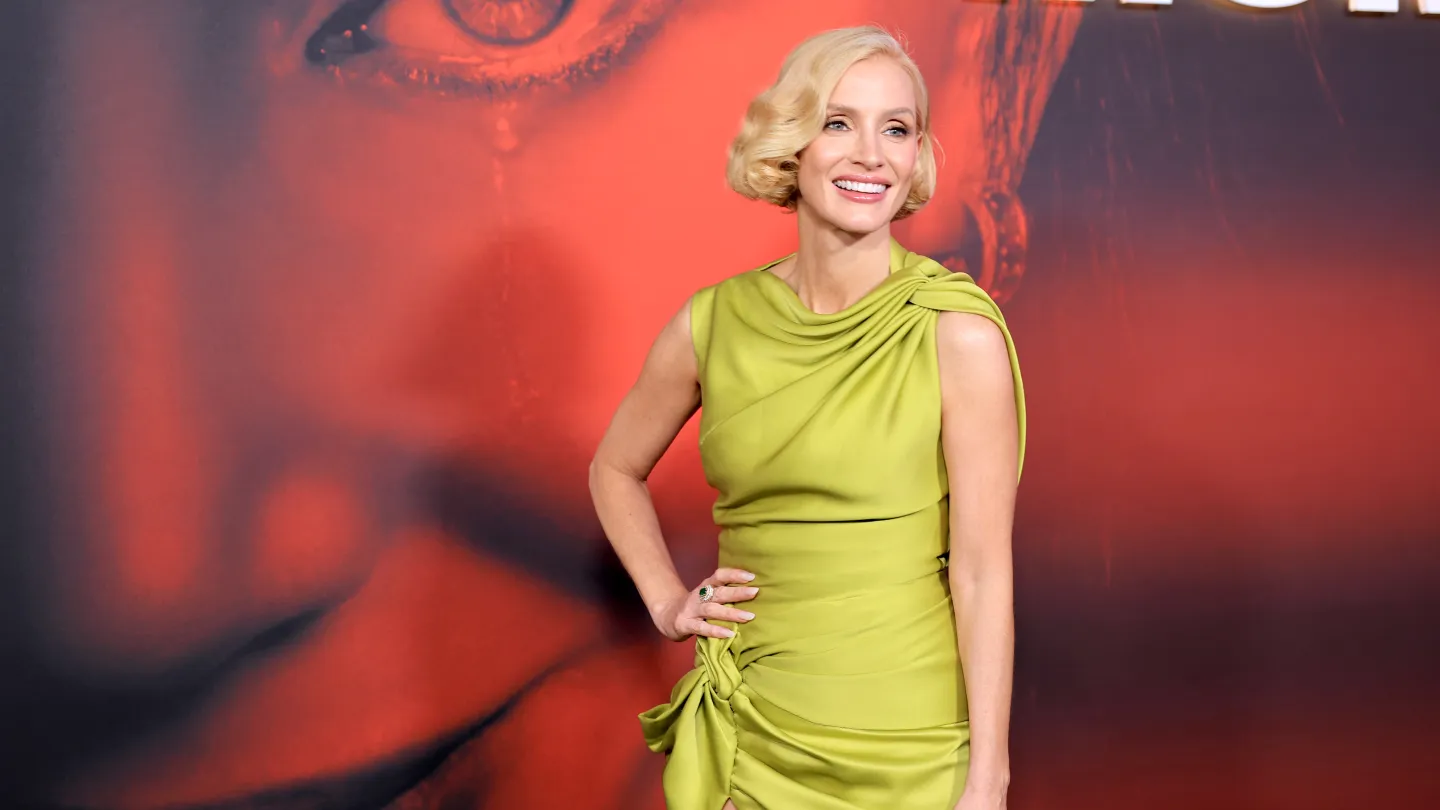
Jessica Chastain is back in Scream Queen territory, playing dual roles in the much buzzed-about horror Other Mommy.
The film, based on Josh Malerman‘s 2024 novel Incidents Around the House, follows a family whose house is haunted by a sinister entity that looks and sounds identical to the mother, with both versions played by the star.
Chastain, whose resumé includes horror films It Chapter Two, Mama and Crimson Peak, has a deep love of the genre, recalling at the new movie’s Los Angeles premiere on Thursday that “when I was a kid going to the movies, it was very rare to see a female character that I looked up to. And then I realized that the horror genre had a lot of incredibly strong women that I could recognize as the women around me in my life. Usually the women defeat the monsters in the genre, they’re the heroes, and the other genres that I grew up with I didn’t see that.”
In the months leading up to its release, Other Mommy has gotten lots of attention online for its campy title and premise, as well as its major jump scares — which were first on display when the trailer debuted in theaters in front of The Odyssey, spooking plenty of moviegoers who were not prepared for the horror moment.
“I got really funny texts from my friends and family who went to go see The Odyssey, because I have a lot of friends who love to go to the cinema, so it was really funny,” Chastain noted of the trailer’s viral impact.
Director Rob Savage also weighed in on that unexpected tie-in, revealing, “The thing that was so insane about launching in front of The Odyssey was the movie was far from finished. My phone was blowing up and we were there in the color grade, in the mix, approving VFX shots, being like, ‘Are we going to make release?’ Working for 18 hours a day to get it done. So it was a nice shot in the arm but it was also like, ‘We better have a movie at the end of it.’”
And despite the attention it has brought, the original title of the film was actually not Other Mommy, but Incidents Around the House to line up with the book. Savage — while lamenting how the internet was “annoyed it wasn’t Other Mother” — explained of the change that Other Mommy was simply “a better title,” and “if we’re trying to create the next iconic horror villain, that’s gotta be the foot you lead with.”
The film has faced some harsh reviews but is still set for a big weekend at the box office, opening against Aaron Sorkin‘s The Social Reckoning. Chastain starred in Sorkin’s 2017 film Molly’s Game and is also close friends with Social Reckoning star Jeremy Strong (who takes over from Jesse Eisenberg in the Mark Zuckerberg role), so is she feeling any competition as the two movies debut?
“The funny thing is actually Aaron wrote me an email, he’s the one who brought it to my attention. I don’t know if you know this, he’s a bit of a wordsmith, and he sent me a very fun email about it, that we were going head to head. But no competition,” she teased, though is open to a Barbenheimer-style collaboration. “Can we get Zuck in Other Mommy, doing press together?”
Other Mommy is now playing in theaters.
>
NBA statement defends second apron after Knicks player says it 'sucks' for middle class

FCC’s Brendan Carr Dodges Questions About Public Execution Livestream
How to watch Colts vs. Steelers: TV channel and streaming options for October 11
-

 movies5 months ago
Search For Canadian TV Actor Stewart McLean Now Homicide Investigation
-

 Fashion9 years ago
These ’90s fashion trends are making a comeback in 2017
-
Fashion9 years ago
According to Dior Couture, this taboo fashion accessory is back
-
Fashion9 years ago
Model Jocelyn Chew’s Instagram is the best vacation you’ve ever had
-
Fashion9 years ago
Emily Ratajkowski channels back-to-school style
-
Fashion9 years ago
9 Celebrities who have spoken out about being photoshopped
-

 Anime4 months ago
Rurouni Kenshin: Hokkaido Arc Manga Takes 1-Issue Break – News
-

 Anime3 months ago
HIDIVE to Stream English Dubs for The World Is Dancing, The Forsaken Saintess and Her Foodie Roadtrip in Another World, The Dangers in My Heart: The Movie Anime – News