
Entertainment
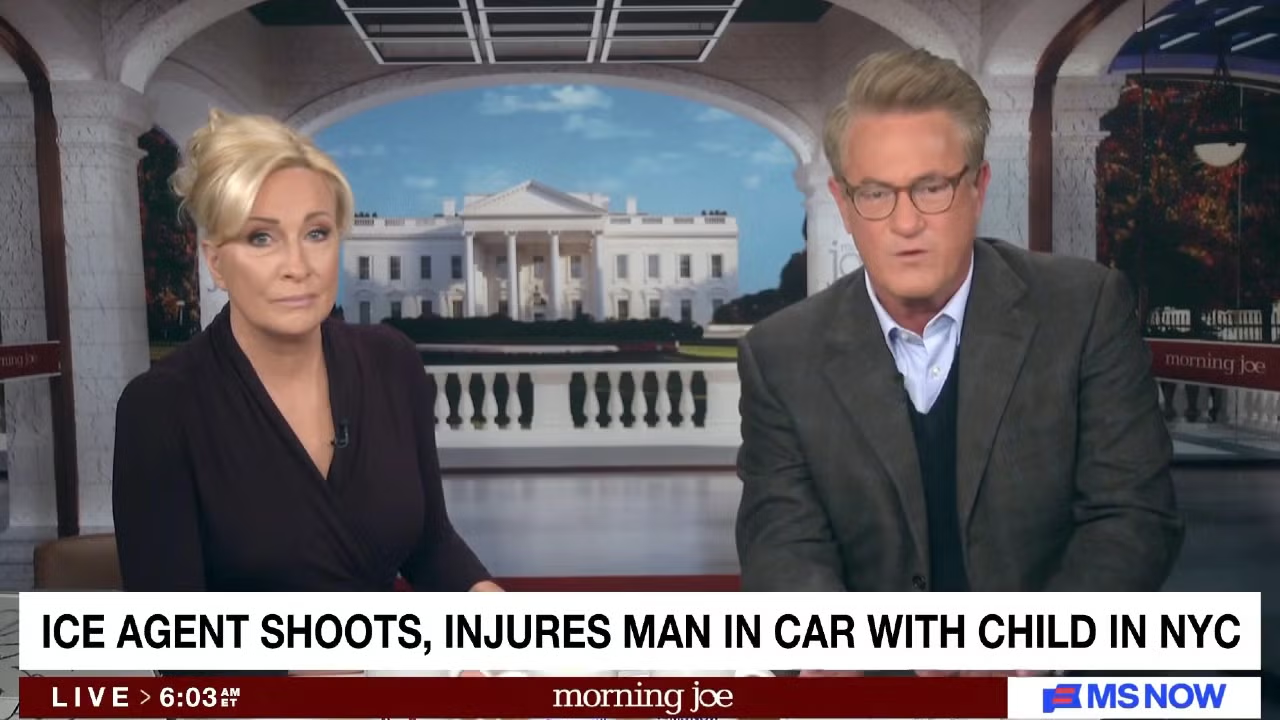
‘Morning Joe’ Condemns ‘Beyond Outrageous’ NYC ICE Shooting

>

Warner Bros. Discovery’s International President Gerhard Zeiler is exiting the company after its $110 billion merger with Paramount Skydance.
“I have started writing this message several times, and each time I stopped. Perhaps because after so many years, it is surprisingly difficult to find the right words to say goodbye,” Zeiler wrote in a memo to staffers. “At the end of next week, I will leave the company. Some of you, I have known for four years. With many of you, I have worked for seven years. And with some of you, I have shared almost fifteen years of my professional life.”
He praised his employees for their hard work over the years and acknowledged that sometimes leadership “simply asked too much.”
“But you kept going. You adapted. You found solutions. You supported one another. And you delivered. Again and again and again. I will never forget it,” he continued. “You made me a better leader. You also made me a better listener. And, on more than a few occasions, you made me change my mind. Now it is time for me to leave. And while I am excited about the next chapter of my life, I would be lying if I said leaving you was easy. It isn’t. I will miss you.”

The exec has had strategic oversight of WBD’s brands and joint responsibility for direct-to-consumer in more than 220 international markets. He has also been responsible for local theatrical production and acquisitions, as well as managing the country and region-specific networks and businesses in Latin America, Europe, the Middle East, Africa and Asia Pacific.
Zeiler, who was appointed WarnerMedia International president in 2020, added responsibility for Discovery Inc.’s international footprint following the close of the Discovery-WarnerMedia merger in April 2022. He first joined Turner in 2012 as President, Turner International, where he oversaw the entertainment and kids’ networks in all markets outside of North America, working with core global brands on local and regional channels.
Prior to joining Turner, Zeiler was CEO of RTL Group, a division of German conglomerate Bertelsmann and Europe’s largest television production and broadcast company. Under his leadership, RTL expanded its international footprint, bringing hit competition shows like Idols and Got Talent to the U.S. market and growing its holdings to 41 channels and 34 radio stations across 10 countries.
Though the memo didn’t reveal his plans post-WBD, Zeiler has signaled he would make a bid for the leadership of Austria’s ruling Social Democratic Party. If selected, Zeiler would replace Austrian Vice Chancellor Andreas Babler.
Read the full memo, below:

Dear All,
I have started writing this message several times, and each time I stopped.
Perhaps because after so many years, it is surprisingly difficult to find the right words to say goodbye. At the end of next week, I will leave the company. Some of you, I have known for four years. With many of you, I have worked for seven years. And with some of you, I have shared almost fifteen years of my professional life. Fifteen years.
When I think about everything that has happened during those years—in our company, in our industry, in the world, and in our own lives—I realize just how much we have experienced together. And that is why this is not simply the end of a job for me. I want you to know how profoundly grateful I am.
I have spent much of my professional life in leadership positions, and I have learned one thing above all: titles matter much less than people think.
What matters are the people around you. Their character. Their commitment. Their courage. Their willingness to take responsibility. And their willingness to stand together when things get difficult.
And this is what has made all of you so special to me. Your integrity. Your work ethic. And your solidarity.
There were many years when we asked an extraordinary amount of you. We asked you to protect and manage our linear businesses and make them as efficient and successful as possible—even as the entire industry was moving in a different direction. At the same time, we asked you to build and strengthen our streaming business and to embrace a future that none of us could completely predict.
We asked you to sell our content successfully to third parties, even while we were increasingly using that same content to build our own platforms. We asked you to help our Theatrical colleagues grow their international businesses and to support Consumer Products in bringing our extraordinary franchises and characters to consumers around the world. And often we asked you to do all of these things at the same time.
Sometimes the priorities competed with one another. Sometimes the strategy changed. Sometimes decisions taken today looked different six months later because the world around us had changed again.
And sometimes, I know, we simply asked too much. But you kept going. You adapted. You found solutions. You supported one another. And you delivered. Again and again and again. I will never forget it.
As leaders, we often thank people for their performance. We thank them for delivering a budget, launching a product, growing a business or completing a transformation.
Today I want to thank you for something more important. I want to thank you for the way you behaved when things were difficult.
Success is easy to share when everything is going well. Character shows itself when it isn’t. And the last four years were anything but easy years.
I saw integrity. I saw decency. I saw loyalty—not blind loyalty to a company or to a leader, but loyalty to colleagues and to the teams around you. And I saw solidarity.
For me, that matters more than any financial result we ever delivered.
There are many things I will remember.
I will remember all of you I met in São Paulo, Buenos Aires, Santiago and Mexico City; in London, Paris, Madrid, Milan, Munich, Stockholm, Oslo, Copenhagen and Warsaw; across the Middle East and Central Eastern Europe; in Singapore, Tokyo and throughout Asia; in New York, Los Angeles and so many other places.
The conversations in offices. The dinners after long days. The calls very early in the morning and very late at night. The airport lounges. The difficult meetings. The moments when we knew something had gone wrong—and the wonderful moments when we knew we had achieved something special together.
Those are the things I will remember.
Not the PowerPoints. Not the budgets. Not the organization charts.
What I will remember is YOU
There are thousands of you receiving this message, and I wish I could thank every single one of you personally. Because whatever we achieved, we achieved together.
Leadership is not about having all the answers. It is about surrounding yourself with people who are better than you at many things, trusting them, challenging them, listening to them—and then trying to create an environment in which they can succeed.
You made me a better leader. You also made me a better listener. And, on more than a few occasions, you made me change my mind.
Now it is time for me to leave. And while I am excited about the next chapter of my life, I would be lying if I said leaving you was easy. It isn’t. I will miss you.
It has been one of the greatest privileges of my professional life to work alongside you. From the bottom of my heart, thank you.
Yours
Gerhard

>
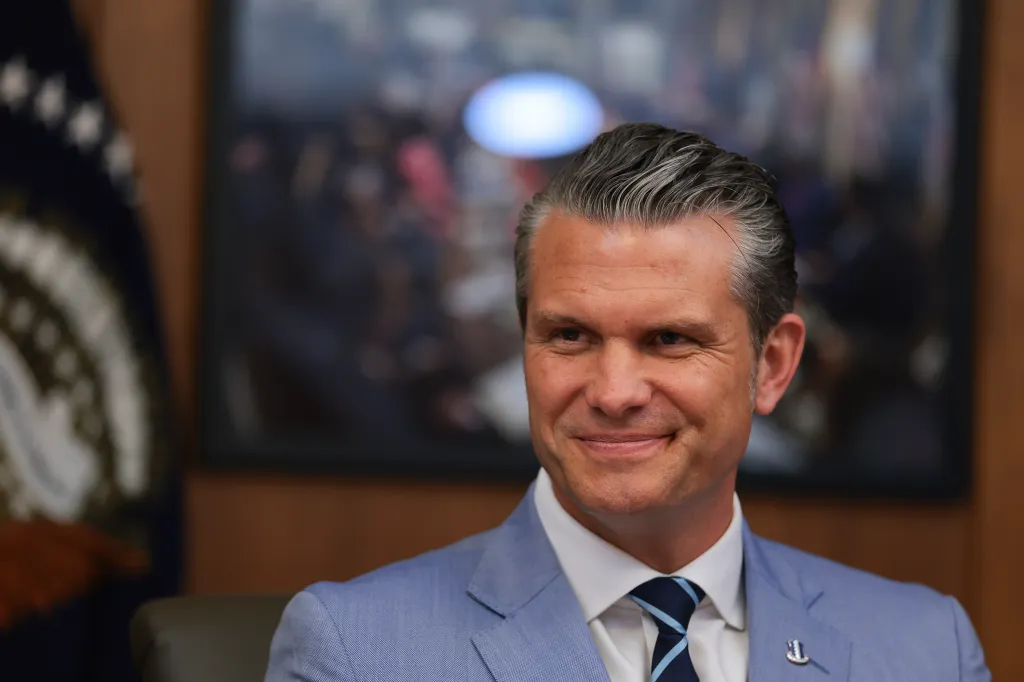
The Pentagon announcement that it plans to livestream the execution of the Fort Hood shooter in December has generated an outcry from public officials and religious figures, including the president of the U.S. Conference of Catholic Bishops.
None of the networks have yet to comment publicly on whether they would air such an event, and there is substantial doubt that they would do so. It undoubtedly would get news coverage surrounding the stream of the execution, which Defense Secretary Pete Hegseth has made clear he wants to be public.
On Friday, FCC Chairman Brendan Carr was asked on CNBC if the execution is “something you would allow on broadcast if they wanted to.”
“Ultimately we’re going to defer to Secretary Hegseth and his decisions on how to move forward with this,” Carr said.
A Pentagon spokesperson said that the Dec. 3 execution of Maj. Nidal Malik Hasan would be live streamed and that “details will follow.” Hasan was convicted of killing 13 people and injuring dozens of others in shooting rampage at the Fort Hood military base in 2009.
A livestream falls outside of the FCC’s regulatory power, but the Pentagon feed is something that, absent restrictions, broadcasters could pick up. The FCC’s obscenity, indecency and profanity guidelines do not directly address executions, but under his tenure, Carr has launched investigations of networks on the grounds that they may not be meeting their public interest obligations. FCC guidance earlier this year emphasized, among other things, that stations must air programming that is “responsive to the needs of their local communities.”
“My understanding is it’s not on broadcast TV, so I don’t think there’s a role for the FCC one way or the other there,” Carr said on CNBC. “But I trust Secretary Hegseth. I mean, he’s implementing the laws and regulations that are relevant to the Department of War, and I think he’s doing a great job, and I trust that he’s making the right call on these issues.”
The execution by firing squad is planned for 1 p.m. on that day and will take place at Fort Hood, Hegseth said.
“It hasn’t been since World War II that we have done that, and I kind of like the mentality that we had in World War II,” Hegseth told Real America’s Voice, a pro-Trump network, in an interview this week.
“We will make sure that people are able to watch it, that it is public, because people need to understand there are serious consequences for these types of things,” Hegseth said.
There has been a tradition of state executions allowing a handful of journalists to witness executions, including in Texas, but with a prohibition on photos and video. It’s possible that Hasan’s legal team will try to block those plans as well.
The announcement was condemned by some lawmakers on both sides of the aisle, as well as Archbishop Paul S. Coakley, president of the U.S. Conference of Catholic Bishops, called the plans for a livestream “a barbaric promotion of a culture of death” and said that it “must be reconsidered.”
“The public execution even of one who has done grave harm will only further undermine the moral fabric of our nation and be a blight on the conscience of its people,” Coakley said.
Networks have been cautious about any airing of a public death, issuing viewer advisories or having general policies against airing the moment of death. YouTube also has a policy prohibiting “violent or gory content intended to shock or disgust viewers,” but has exceptions for educational, documentary, scientific or artistic content, “including content that is in the public interest.” A YouTube spokesperson did not immediately return a request for comment.
Another issue will be in how children will be restricted from a livestream. The U.S. Army Corrections System guidelines on military executions does not allow anyone under 18 to be a witness to such an event.
>
After a long, bruising takeover battle and a contentious lawsuit, Skydance is ready to roll with promises of over $30 billion in content spending and the formation of a disruptive player in Hollywood ready to take on Big Tech.
But talk is cheap. Knocking down $80 billion in debt is not. While co-CEOs David Ellison and Ynon Kreiz were busy talking to the press about their plans to reinvigorate the entertainment business, Wall Street was fixated on its extreme leverage and a sordid history of failed media mergers that doesn’t bode well for Skydance.
There’s a reason Skydance shares closed at $9.29 on Thursday, down 8% from its opening day high of $10.
Still, while Skydance will face challenges integrating the sprawling, overlapping businesses of Paramount and Warner Bros. Discovery, its sheer size will force other media companies to re-evaluate if they need to make deals in order to grow.
We talked to money managers and analysts to get their take on what ramifications this merger will have on the industry. We also take a look at Kreiz’s old company Mattel, which is being urged to consider a sale, and the outlook for cable stocks.
Thanks for reading.

THE DEEP DIVE

Skydance vs. History and a Whole Lot of Debt
There’s good reason for Wall Street investors and analysts to be bearish on Skydance even if you take out the debt issue: The track record for M&A in this industry has been dismal.
“The history of media deals has not been great, but that doesn’t necessarily condemn them to the same fate,” Chris Marangi, president and co-CIO of Value at Gabelli Funds, told The Ledger.
One doesn’t have to look much further than the merger that formed Warner Bros. Discovery to see big problems. The dilemma, according to TD Cowan analyst Doug Creutz, is that management needs to invest in content while cutting costs to help service its debt. In the case of WBD, the company was able to cut $4 billion in expenses but saw revenue fall by the same amount — resulting in no gains.
Skydance, which took on significant debt to fund the acquisition of Warner Bros., faces a similar challenge.
“The risks (leverage, integration) of the combination with WBD are high; we remain skeptical that Skydance management will be able to create value from this deal when so many other major media deals have failed,” Creutz said in a research note.
- The company aims to grow revenue while reducing its debt, but Wall Street is skeptical.
- The creation of a new streaming powerhouse will force other media companies to reconsider their strategy in the market.
- The deal could also set off a wave of mergers and acquisitions, as media companies attempt to accelerate growth.
Redbird Capital Partners, the longtime backer of Skydance and one of the driving forces of this deal, increased its investment in the company by $4 billion to a total of $6 billion.

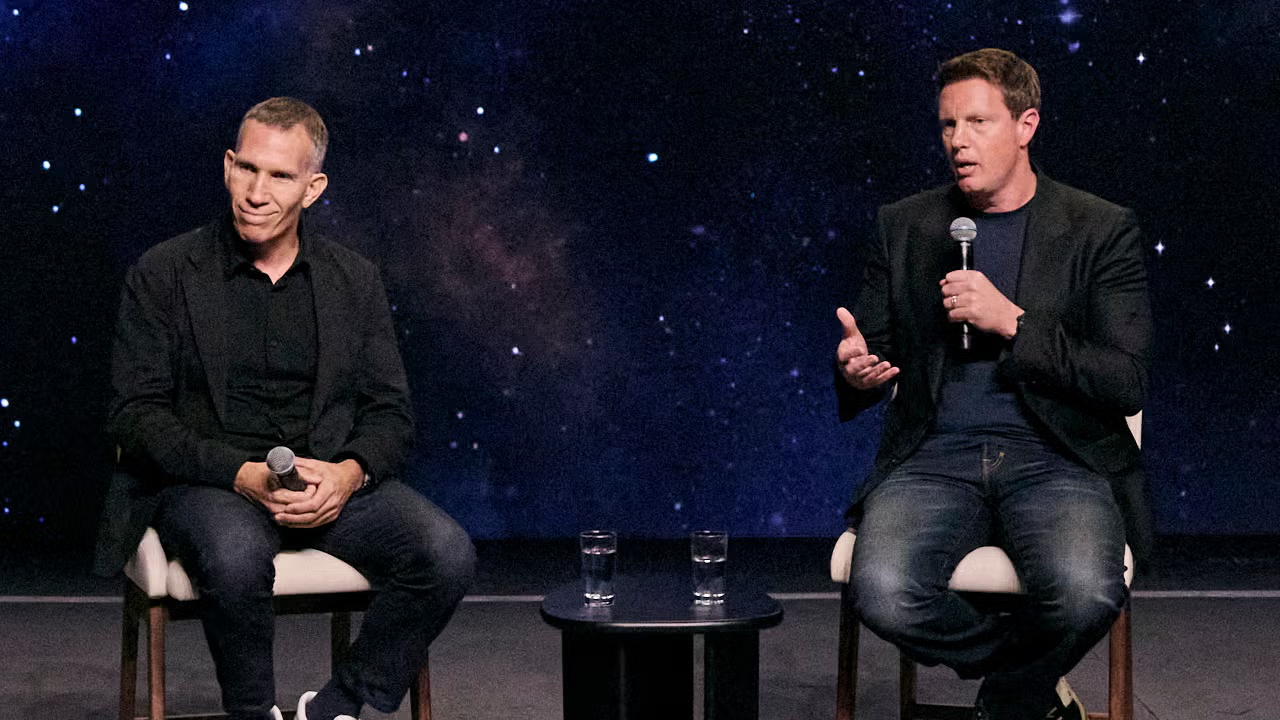
Skydance co-CEOs Ynon Kreiz and David Ellison hold a press conference following the Paramount-Warner Bros. Discovery merger closure on Oct. 6, 2026. (Credit: Nate Jensen for Skydance)
Just before the deal closed, Fitch downgraded its ratings on Paramount and Warner Bros. debt, citing the higher leverage the company would have after completing the deal.
Barclays’ Kannan Venkateshwar reduced his target price for Skydance by $1 to $7 a share. “The company’s commentary around its synergy realization path, its content and streaming plan post-merger, its plans around its news assets and its capital structure plans all need more details,” he said.
Venkateshwar added that boosting revenue was a challenge facing all of the big media companies.
“We expect Disney, Skydance and Netflix to potentially expand on efforts to accelerate streaming growth. The track record of companies being able to convert recent investment cycles into revenue acceleration is at best patchy,” he said.
The Next Deal
One top money manager expects these challenging times will lead to more M&A activity.
Media companies will have to reset their strategies to compete with Skydance.
“The question is what does Lionsgate do? What does Universal do? What does Sony do? Where do I fit now is what these companies need to be asking themselves,” the money manager said. “I think over the next couple of years, you’ll see more deals.”
Gabelli’s Marangi points out that consolidation has left investors with only a handful of players when it comes to publicly owned media companies. The giant tech companies, YouTube owner Alphabet and Amazon appear to be gaining ground, while questions surround other potential buyers and sellers.
Under its new leadership, “Disney is doing many of the same things that Skydance needs to do, sharpening their cost focus. They have the benefit of being heavily weighted towards experiences, which should continue to do well,” he said.
“We eagerly await the spinoff of NBCU next year, but we’re not sure where Peacock goes. There are a limited number of seats at the streaming table and one of them clearly belongs to Skydance at this point,” Marangi said.
He also noted that some investors overlook Sony as a studio owner: “My perception is they are buyers, not sellers, of media assets. But again, it is not clear what’s left to buy.”
Outside of the U.S., Canal has been aggressive in consolidating markets. Another company that looks attractive is TelevisaUnivision. “I think there’d be a number of entities that would love to own the largest Spanish-language content producer in the world,” he said.
Worth Reading:

DEAL SHEET
- Melius, which uses AI to generate ad campaigns and videos for marketers and brands, raised $25 million, including $20 million in Series A led by CRV and a $5 million seed round led by General Catalyst. The company claims to have generated more than $1 million in annualized revenue since exiting a stealth phase in July.
- Authors First, which works with writers to turn books into movies and TV shows using AI, raised $10 million in a seed round led by Brand Foundry and company founder Robert Hamwee. Other participants include Bolt Ventures, Andy Mills, Mike Duggal and John Kline. The company’s first book-to-screen adaptation is “Genghis: Birth of an Empire,” created with author Conn Iggulden.
- Golf media company Pro Shop raised $24 million in a series B funding round led by the family office of Home Depot founder and Atlanta Falcons owner Arthur Black, according to The Hollywood Reporter. Also participating in the fund raising were Causeway Partners, Ares Sports, PGA Tour, Phoenix Capital Ventures and Powerhouse Capital. The company, founded in 2023, acquired the PGA Tour’s digital and social media brand Skratch after raising $20 million in 2024. It also co-produced Netflix’s “Happy Gilmore 2” and produces “Full Swing” for the streamer.
FINANCIAL ROUNDUP
Mattel Gets a Message
After Ynon Kreiz left Mattel to become co-CEO of Skydance, Ariel Investments, which owns 5.4% of the toymaker, urged Mattel to explore strategic alternatives, including a sale of the company.
Ariel had been concerned about Mattel being undervalued for some time, and Kreiz’s departure seemed like a catalyst for change.
“We had lots of conversations with Ynon, and I have a lot of respect for Ynon,” Ariel Chairman and Co-CEO John Rogers told The Ledger. “We’re patient investors at Ariel, but with the CEO leaving, it was a window of opportunity.”
In a statement to The Ledger, Mattel said, “Our Board of Directors and management team are committed to acting in the best interests of all shareholders and will consider the views expressed in Ariel Investments’ letter, as well as the views of Mattel’s other shareholders.”
Rogers said that Mattel has a number of strong brands and IP that could be franchises that generate greater revenue. The “Barbie” movie was a big success, but sequels have been slow in coming. Hot Wheels is another big brand that could be exploited in movies and TV, and Jon M. Chu is developing a film based on the toy line for Warner Bros. “Matchbox: The Movie,” starring John Cena, comes out this weekend on Apple TV.
“I think there’s lots and lots of potential there, but it is clouded by some of the brands that haven’t grown,” said Rogers. He called pre-school brand Fisher-Price a major disappointment. It has become a commodity brand with no product differentiation and weak profits.
“If they didn’t have that albatross, they would have shown a lot more growth overall,” he said.
Mattel is a relatively small business and “in this day and age, scale matters,” he added. Combining with another company would enable it to spread costs over a larger platform.
Rogers noted that there have been rumors that Hasbro has serious interest in buying Mattel. “This might be an opportunity for them to show that,” he said.
Authentic Brands Group, which owns various media, lifestyle and sports assets, has reportedly been considering an offer for Mattel that could value the company at more than $20 a share.
Speaking of Kreiz, Rogers said that he was “good at rationalizing costs and bringing change when necessary. I give him high grades as a CEO.” That’s despite Mattel stock falling from a 52-week high of more than $22 a share in February to a low of $12.66 last month, just before Ariel sent its letter to the company. Since then, Mattel’s stock has jumped to above $16 a share.
Rogers noted that Mattel’s incoming CEO, former Condé Nast boss Roger Lynch, “has a good record for creating value for shareholders. I have high confidence in him.”
The Cable Guy
With earnings around the corner, analyst Gregory Williams of TD Cowan said he expects cable subscriber losses to be near record levels at about 428,000.
Comcast’s bearish remarks in September set the tone, and fiber to the home and fixed wireless access continue to dominate the industry. “Investors desperately seek ARPU (average revenue per subscriber) and subscriber stability,” Williams said.
Since just before the last round of earnings announcements in July, Cable One is down 70%, Charter is down 16%, Comcast is down 9%, while Optimum is up 10%. At the same time, the S&P is up 4%.
A new worry for the cable network is the ability of Meta’s new AI agent Muse to help users find cheaper internet and TV plans. Although Williams doesn’t see it having much impact now, others see it hurting cable’s pricing power and increasing turnover if it makes it easier for subscribers to switch providers and plans.
Williams concluded that the industry is in a rough place and could face further structural changes. “With a Charter/Cox deal now complete, perhaps the next move is Charter/Comcast,” he said.
FROM THEWRAP
Skydance Signals a New Dawn for Hollywood. Will David Ellison Be Up to the Task?
Merzigo Launches $200 Million US Content Push With Wendy McMahon
Fox News Built a Cable Empire. Now It’s Building Around It
HEARD AROUND
Huge in Japan, Setlog’s Hour-by-Hour Video App Is Coming for the US
TikTok Quietly Gutted Its Advertising Rules. Scams Have Exploded Ever Since.
Advanced Stats and $500 Bats: Why Baseball for 6-Year-Olds Is Breaking the Bank
The Internet Is Building an AI Cinematic Universe Out of Sam Altman and Dario Amodei

>
Nvidia’s $1 Billion Research Plan Targets AI, Quantum Computing and Medicine

WBD International President Gerhard Zeiler to Exit

FCC Chairman Declines To Say If Broadcasters Can Air Live Execution
-

 movies5 months ago
Search For Canadian TV Actor Stewart McLean Now Homicide Investigation
-

 Fashion9 years ago
These ’90s fashion trends are making a comeback in 2017
-
Fashion9 years ago
According to Dior Couture, this taboo fashion accessory is back
-
Fashion9 years ago
Model Jocelyn Chew’s Instagram is the best vacation you’ve ever had
-
Fashion9 years ago
Emily Ratajkowski channels back-to-school style
-
Fashion9 years ago
9 Celebrities who have spoken out about being photoshopped
-

 Anime4 months ago
Rurouni Kenshin: Hokkaido Arc Manga Takes 1-Issue Break – News
-

 Anime3 months ago
HIDIVE to Stream English Dubs for The World Is Dancing, The Forsaken Saintess and Her Foodie Roadtrip in Another World, The Dangers in My Heart: The Movie Anime – News