

movies
Sofia Coppola Plans Narrative Film Return After Marie Antoinette Doc

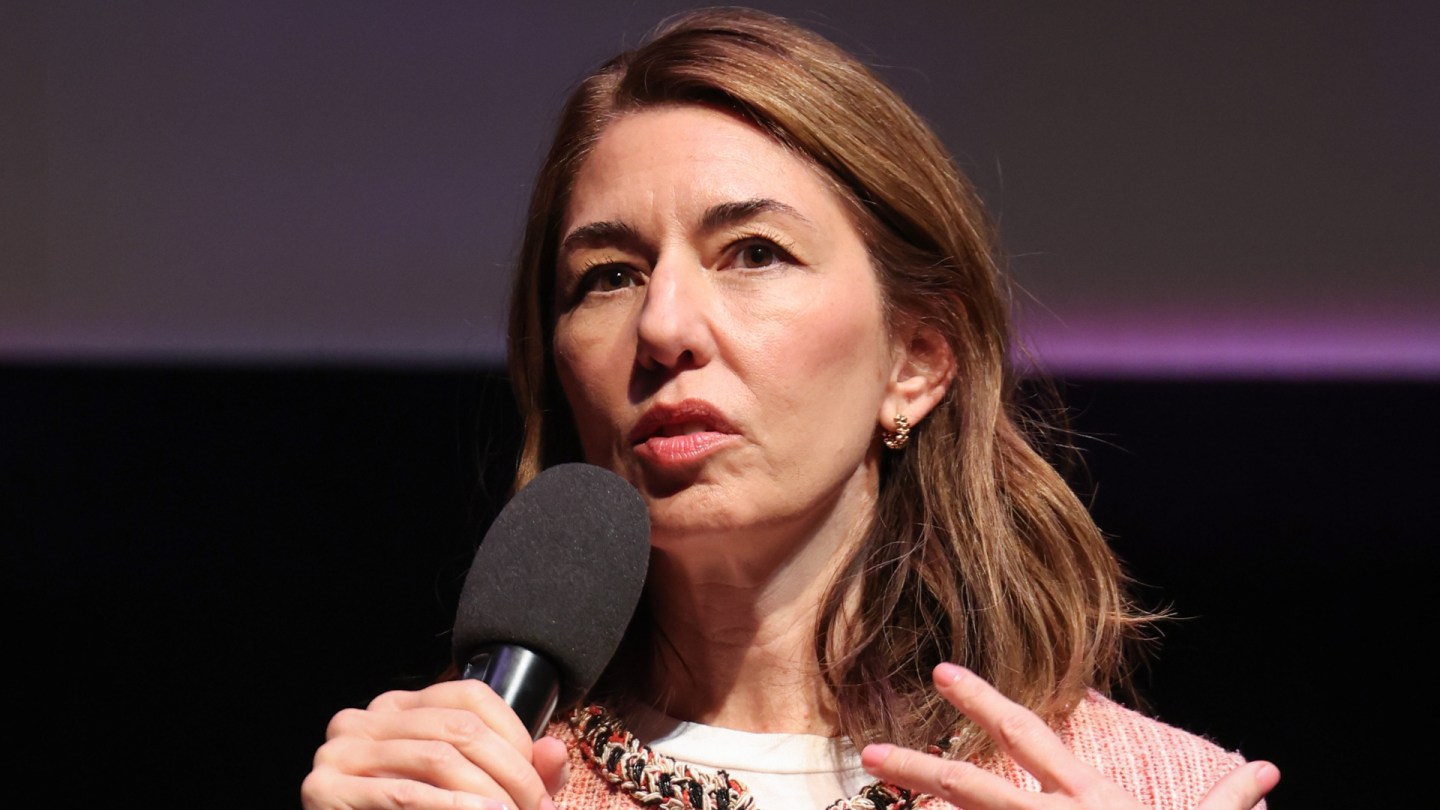
Sofia Coppola spoke tenderly about her late mother and their family’s film legacy at a BFI London Film Festival session on Thursday afternoon.
The Oscar winner, best known for directing The Virgin Suicides (1999), Lost in Translation (2003) and Marie Antoinette (2006), admitted she couldn’t have made the latter without the awards success of Bill Murray and Scarlett Johansson’s Tokyo-set genre mash-up. “You kind of get a free pass to do whatever you want,” she told interviewer Edith Bowman at London’s Royal Festival Hall. “I wouldn’t have been able to make [Marie Antoinette] before because it was a big-scale, big-budget movie. So because [Lost in Translation] was successful, people [were] approaching me, ‘What do you want to do?’”
Her answer? A deliciously vibrant, sugary take on the ill-fated 18th-century Queen of France with Kirsten Dunst in the titular role. Eleanor Coppola — who had Sofia with fellow filmmaker Francis Ford Coppola in 1971 — turned the camera on her daughter and captured over 80 hours of behind-the-scenes and on-set action while musing on what it means for a mother to watch her 34-year-old daughter at work. The documentary Making Marie Antoinette, assembled by Sofia Coppola and editor Aaron Matthews with input from Eleanor’s close friends, is screening here at the 70th London Film Festival, two-and-a-half years after Coppola’s death.
When Coppola came to film her daughter (who actually shot at the Palace of Versailles), Sofia remembered the documentarian immediately switching into filmmaker mode. “But it was really nice to have her on set because it was a big, stressful, daunting project,” said the younger Coppola. “And when my mom shows up… Everyone was happy to have my mom there because she’s such a grounding presence, and something she always loved to visit. […] And she loved being on that set because she loved the costumes and all the visual beauty and seeing the flowers and corsets.”
Coppola wasn’t aware just how much footage her mother had in the archives. “I went home to Northern California… and she was like, ‘Oh, let’s get out that footage.’ She wanted to revisit it, and I’d never seen it before. And then there were hours of all this footage on set, and it really brought me back. She was excited about it, like: ‘Let’s make it into some major thing. What can we do with it?’ So we started talking about what could happen with it,” Coppola recalled, “and then she passed away a few years ago. At the end of her life, she said, ‘I want my book to be published, and I want this film to be finished.’ And so I felt like, ‘Okay, I have to do it.’”
In a very sweet moment, Coppola reflected on being a parent now and why that’s informed her relationship with the doc. “I didn’t realize how challenging it would be, but it was also a gift to spend time seeing that set [through] my mom’s eyes, and then see her as a mother watching me. Now I have almost- grown daughters. I can see it as a mother, so it was a really meaningful project for me to work on.”
Bowman took Coppola through the major milestones of her career, including Virgin Suicides, which was born out of her desire to depict authentic teenage relationships. “Growing up, I didn’t see movies where the teenage girls were normal… I just didn’t see a lot of characters that I related to and treated young people with respect,” she explained. “The teen movies were always cheap and had bad photography!”
The audience was shown a clip from her melancholy drama for dreamers, Lost in Translation, and Coppola lauded the improv work from Bill Murray, revealing that she spent a year trying to track him down for the film and wouldn’t have made it without his involvement.
On the subject of Marie Antoinette — which received mixed reviews upon release but has gone on to become quite the cult classic — Coppola recalled: “At the time, people did not like [Dunst’s] performance. I think they were like, ‘What’s going on with the different accents?’” she laughed. Coppola later said about her many collaborations with the U.S. actress: “She just had this quality that was so unique, this depth in her eye and this sense of humor, this playful quality.”
At the very end of the session, Bowman asked: What could we expect next? Coppola replied that after working on two documentary features (her Marc Jacobs film hit last year’s Venice Film Festival), she’s still enthralled by “movie magic” and is going back to “writing, creating, imagining the world and imagining the challenge.”
The 70th BFI London Film Festival runs Oct. 7-18.
>
Continue Reading
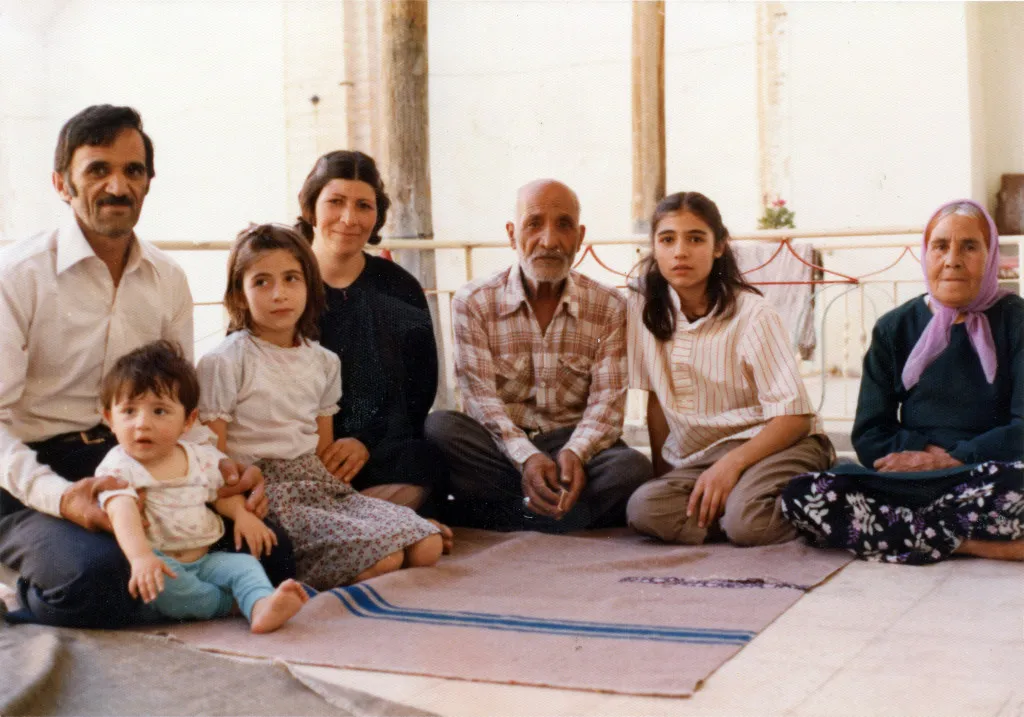
The UK has selected Pegah Ahangarani’s Rehearsals For A Revolution as its entry to the Best International Feature Film category of the 99th Academy Awards.
The film explores Iranian filmmaker Ahangarani’s experience of exile as she rebuilds her life and creative practice in London, through five portraits of relatives and mentors, which are also expressions of resistance. The UK played an integral role in the film’s journey, serving as the base where it was written.
Drawing from personal archives, home videos, street protests footage, newspapers, and recorded voices, Ahangaran retraces more than 40 years of Iran’s history. From the early days of 1979, until the war that began in 2026, she pieces together intimate and collective memories, forming the portrait of a country shaped by political repression and in constant hope for a revolution.
Sony Pictures Classics announced the selection of the film as the UK’s entry and also detailed release plans.
The distributor said it will give the film qualifying runs in New York and L.A. in December. It will then open it exclusively at Landmark’s Nuart Theatre in L.A. and the Film Forum in New York on January 8, 2027, and before rolling it out across the country over the following weeks.
The deeply personal debut feature premiered as a Special Screening at the Cannes Film Festival where it won the L’Oeil d’Or, and played last month at the Telluride Film Festival and Toronto International Film Festival.
It was recently honored with an Albie Award from the Maysles Documentary Center, an award honoring those who inspire, not only through their work, but also through their roles as mentors, role models, and champions of social justice.
“How extraordinary to see Pegah’s remarkable film recognized in this category. From winning the L’Oeil d’Or at Cannes to the standing ovations at TIFF and now this recognition, Rehearsals For A Revolution is building incredible momentum and marking a significant moment for a formidable female filmmaker creating in exile from her home country,” said SPC in a statement.
“This selection in the Best International Feature category has the potential to be truly transformative for the film, opening doors to audiences around the world while shining a spotlight on Pegah’s extraordinary talent and her vital voice. It’s a recognition that will have a lasting impact not only on the life of this film, but on Pegah’s future career as a filmmaker.
>

If David Ellison wants a ticket to the Oscars this year it most likely won’t be with anything from Paramount or even (so far) from Warner Bros, but if you said Netflix you might be on the right track. Ray Gunn, from Oscar-winning filmmaker Brad Bird (Ratatouille, The Incredibles), comes out of Skydance Animation‘s original deal with the streamer, counts Ellison among its producers, and is the kind of smart, visually sumptuous and clever ‘toon that is ripe for the Best Animated Feature category.
Having its world premiere Saturday at the London Film Festival, Ray Gunn is a throwback to Bogart-style film noir detective classics like The Maltese Falcon, The Big Sleep and other ’40s gems that come out of the Dashiell Hammett, Raymond Chandler and Sam Spade mode. Throw in a little Chinatown via Jack Nicholson or Altman’s The Long Goodbye, or Robert Mitchum in Farewell My Lovely, and you get the idea, and then think elements of The Jetsons or Who Framed Roger Rabbit animated hits, marry them with Blade Runner, and then toss in a bit of Madonna in Dick Tracy, take a visit to the Star Wars bar, stir them all together and you have something approximating the world Bird has cooked up here.
In other words it is a love letter to the movies past and futuristic. They call its main setting, Metropia, an “alternate future” channeling 1939, and that seems about right.
No matter what the inspirations, and there were clearly many, they all come from cinema and that’s a delicious thing here. Bird, who also wrote the nifty script with Matthew Robbins, has been blessed to collect a sensational voice cast to match an intriguing bunch of characters who make up this mashup.
Chief among them is Sam Rockwell‘s Ray Gunn, an analog private dick in a digital planet. The methods he uses are mainly all AI’ed in this futureworld, but he operates like its San Francisco circa 1941, handling cases with his partner in grime Eye Ra Kadock (a wonderful Tom Waits), a cyclopian alien at the ready for any assignment that comes their way. And boy do they get a doozy when sultry Venus Nova (Scarlett Johansson), a troubled pop superstar, walks in the door. Of course its all about a murder she is accused of, one of her ex-husbands, and the timing couldn’t be worse for her beleaguered record company Megamax, now run by her first hubby and manager Barry Vogel (Alan Tudyk). Gunn is hired to keep her out of trouble, something she constantly finds herself in. Could there also be an instant attraction here? They don’t need the scandal or the nagging competition from Slugsy (Matt Berry), an alien mob boss who would like to bring Venus back under his purview. There are all sorts of sides to Venus, a lot of shady characters complicating things, and in pure Bogie-Bacall fashion Ray gets to sort them all out while dealing with this colorful group.
Using vibarant CGI techniques to bring this world to life, Bird and his talented artisans manage to successfully merge two very different worlds, centuries apart in a cohesive and viable original universe that somehow seems right. You don’t have to be a fan of noir and Dark City detective yarns to appreciate the story, and it doesn’t matter if you aren’t a sci-fi aficionado either. The human/alien blend blends and helps to make this Skydance Animation production an entertaining proposition for adults and even their kids who get dragged to see it, rather than the usual other way around for ‘toons.
RELATED: The 30 Highest-Grossing Animated Films Of All Time At The Global Box Office
Rockwell is the perfect lead here, his voice work right on target as a guy who is trying to hang on in a world passing his old-school style right by. Johansson, as the PR nightmare pop diva, matches him and even gets to show off her musical chops in a couple of the songs provided by New Zealand’s Kimba. Among the rest of the cast, Bobby Cannavale scores as Arnold Dam, co-owner of the Moon Room, the place where Venus sound-alike Levity Love (Kether Donohue) performs covers of her hits. Working the cop beat is Police Capt. Roz Drexler, nicely etched by Michelle Rodriguez. There’s also former cop Sam Stelfreeze (Michael Chernus) in the mix, and among others the slimy ralien smuggler Vanzine Kaluta (Kathryn Hunter).
Setting the shifting moods expertly is Michael Giacchino’s score that nicely avoids the clichés of the genre(s) while still honoring them.
Producers are John Lasseter, Bird, Lisa Beroud, David Ellison and Dana Goldberg.
Title: Ray Gunn
Festival: London Film Festival
Distributor: Netflix
Release date: December 4, 2026 (theatrical); December 18 (streaming)
Director: Brad Bird
Screenwriters: Brad Bird and Matthew Robbins
Cast: Sam Rockwell, Scarlett Johansson, Tom Waits, Bobby Cannavale, Alan Tudyk, Matt Berry, Michelle Rodriguez
Rating: PG
Running time: 1 hr 59 mins
>
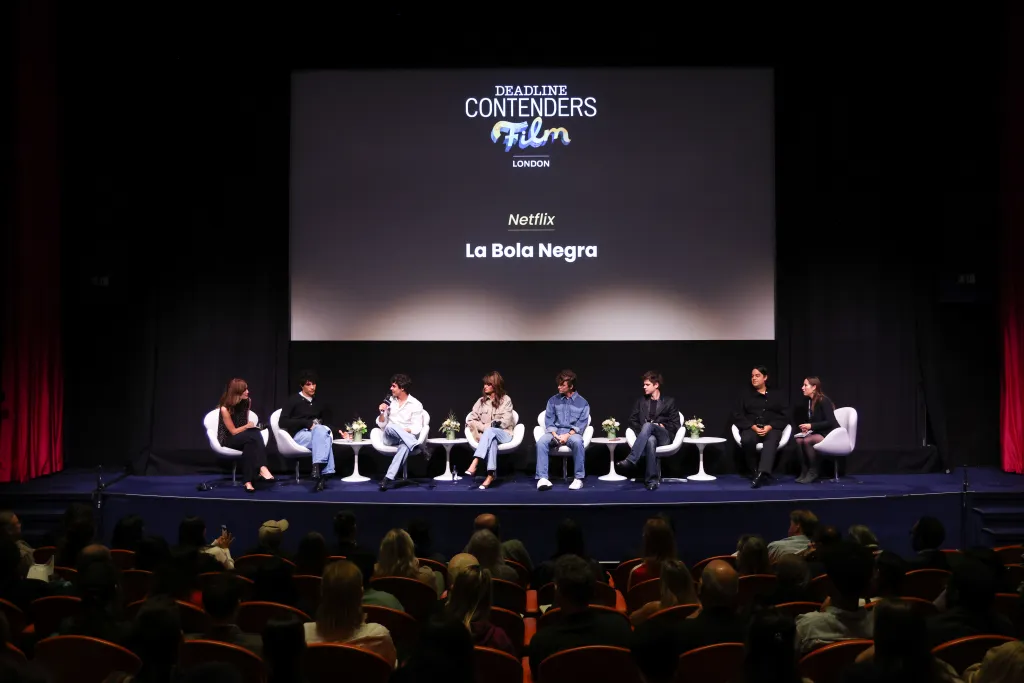
Spanish directors Javier Calvo and Javier Ambrossi delved into the generational trauma behind award-winning film La Bola Negra at Deadline’s Contenders London.
The feature – revolving around the interconnected stories of three gay men in 1932, 1937 and 2017 – took its cue from Alberto Conejero’s 2013 play La piedra oscura, which in turn was inspired by García Lorca’s unfinished play La Bola Negra.
At the heart of the La piedra oscura is the love story between real-life football player Rafael Rodríguez Rapún and Lorca during the Spanish Civil War. The work is spun into another story in the film about a young trumpeter called Sebastián, played by singer-songwriter Guitarricadelafuente.
“When I read in the plane the first monologue, I started to cry… something touched deep inside, like a wound I didn’t know I had about like my country and what happened like 90 years ago,” he said.
He and Javier Ambrossi then investigated Lorca’s play and discovered it was unfinished.
“We realized it was the first play he was going to portray a gay character, so it was going to be revolutionary. But he was murdered. He couldn’t do it, and we were like, ‘What a loss!’”
The directorial duo went to Granada to consult the screenplay which is preserved at the Centro Federico Garcia Lorca.
“We got to see the four pages and there was like a power in those pages, like art as a physical thing, because the niece of Lorca said that fascism wanted to destroy all the manuscripts when the war started, but everyone hid it. So, it felt like a weapon that fascism wanted to destroy. We start from there, imagining what ‘La Bola Nera’ could have been, mixing it with ‘La pieda scura’, and then we had our present timeline.”
Ambrossi said the four pages had acted as a character blueprint for their film.
“The beautiful thing about the four pages that exist of the unfinished work by Federico Garcia Lorca is that the first page is a list of characters he was going use,” he said. “It was like a challenge, you know. I was like, oh my god, if we reimagine this world, it could be something very beautiful.”
Penélope Cruz, who has a small role as Nené Romero, a Cuplé singer entertaining soldiers during the Spanish Civil War, also joined the conversation.
Cruz said she was a big fan of the directors’ work – which includes The Messiah and Veneno – and instructed her to set up a lunch.
“Like after 10 minutes we were friends and then they told me they were writing this movie, and there was a character that they thought about sending, but they thought it was too short. And I told them never worry about that with me. Like I don’t choose the material based on how many minutes the character is on screen,” she recounted.
“A few days later they sent it, and I completely fell in love with the Nené, and I was blown away by this script. I thought I don’t know if they realize how incredible and powerful this is what they have in their hands.”
>

movies4 minutes ago
UK Submits ‘Rehearsals For A Revolution’ For International Film Oscar

Sports6 minutes ago
Australia vs South Africa: Matt Renshaw epic innings puts tourists in command
Sports14 minutes ago
Angel Reese is WNBA's last young star standing — just as she manifested
-

 movies5 months ago
Search For Canadian TV Actor Stewart McLean Now Homicide Investigation
-

 Fashion9 years ago
These ’90s fashion trends are making a comeback in 2017
-
Fashion9 years ago
According to Dior Couture, this taboo fashion accessory is back
-
Fashion9 years ago
Model Jocelyn Chew’s Instagram is the best vacation you’ve ever had
-
Fashion9 years ago
Emily Ratajkowski channels back-to-school style
-
Fashion9 years ago
9 Celebrities who have spoken out about being photoshopped
-

 Anime4 months ago
Rurouni Kenshin: Hokkaido Arc Manga Takes 1-Issue Break – News
-

 Anime3 months ago
HIDIVE to Stream English Dubs for The World Is Dancing, The Forsaken Saintess and Her Foodie Roadtrip in Another World, The Dangers in My Heart: The Movie Anime – News