

Entertainment
Quentin Tarantino, Sacha Baron Cohen Making ‘Popinjay Cavalier’ Play


Shakespeare. Ibsen. O’Neill. Tarantino?
Throughout its storied history, the West End has played host to the greatest playwrights. Now, Quentin Tarantino, the director of classics like “Pulp Fiction” and “Inglourious Basterds,” is bringing his snappy dialogue, pop culture obsessions, and talent for mayhem to the London stage.
He will write and direct “The Popinjay Cavalier,” “a rambunctious comedy of deception and disguise inspired by the grand swashbuckling epics of stage and screen.” Or so the show notes go. Sacha Baron Cohen of “Borat” and “Bruno” fame has been tapped to star in the production, which will hold previews beginning Feb. 23, before officially opening on March 18.


“I’m keen with anticipation to give the West End a great night out,” Tarantino said in a statement. Baron Cohen was more enthusiastic and profane. “Quentin called, I said yes before he even got to say his first ‘motherf — er.’ When the best director in the world calls, you don’t ask questions. I am beyond delighted that we will be losing our West End virginity together, I have made him promise not to be gentle.”
Sony Pictures Entertainment, which made Tarantino’s most recent film “Once Upon a Time in Hollywood,” is producing the film alongside Sonia Friedman, a West End mainstay whose credits include the Tony-winning revival of “Merrily We Roll Along” and “Stereophonic.”
If Tarantino succeeds in the theater he will join a handful of film directors, such as Elia Kazan and Mike Nichols, who moved seamlessly between the mediums. However, those men primarily directed other people’s scripts, not their own work. Tarantino’s been on stage before — starring in an ill-fated revival of “Wait Until Dark.”
Tarantino has been busy of late. He wrote the script for “The Further Mis-Adventures of Cliff Booth,” but is handing over directing duties to David Fincher for the “Once Upon a Time in Hollywood” sequel. Having his West End debut on the horizon will also mean delaying Tarantino’s next film, which he has promised will be his final picture. So in the interest of cinema, here’s to a Broadway transfer!
>
Continue Reading
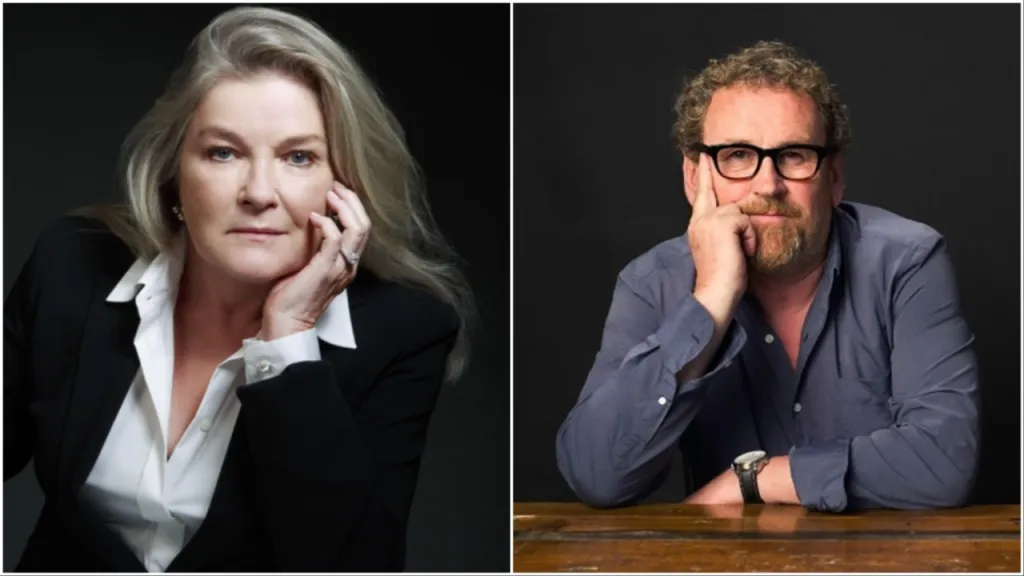
ITV has bought upcoming Irish thriller The Galway Bay Murders starring Star Trek icon Kate Mulgrew and Colm Meaney.
The show from new TV writer Eithne Verling follows seasoned NYPD detective Nora Savage (Mulgrew), who arrives in the west of Ireland hoping to escape a traumatic past and find a quieter life. However, her plans are shattered when the body of a young woman is discovered in a bog, drawing Nora into a complex murder investigation alongside the local Garda team. The ensemble cast also includes John Connors (The Gentlemen, Irish Blood), India Mullen (Normal People, Under Salt Marsh), Cillian O’Sullivan (Daredevil: Born Again, Star Trek: Strange New Worlds) and Jack Rowan (A Town Called Malice, Wreck).
Mulgrew is playing the lead and the show was born out of a conversation she had with Verling after the pair had a chance meeting in Galway while the actor was on holiday.
Irish broadcaster RTÉ is already aboard and the news was revealed at MIPCOM Cannes, where ITV Studios, which is distributing the show, also unveiled a new Australian drama label under Sara Richardson.
Two Cities Television is producing The Galway Bay Murders, which was previously called The Yank. Bosses at Two Cities recently told us the series, which has deficit financing from distributor ITV Studios, is an example of the indie “taking a bit more control of our own destiny” by making a lower-budget show for which they have almost total editorial control
Darren Nartey, Head of Content Acquisitions at ITV, said: “The Galway Bay Murders is precisely the kind of bold, high-calibre drama our audiences love. Eithne Verling has crafted a completely magnetic crime thriller, with an outstanding cast led by Kate Mulgrew and Colm Meaney, a compelling central mystery and the stunning backdrop of Ireland’s west coast. We’re thrilled to partner with ITV Studios, Two Cities Television and RTÉ to bring this captivating new series to the ITV audience”
The series is directed by Joe Lawlor and Christine Molloy (Baltimore, Kin) and produced by STV Studios-backed Two Cities, Keeper Pictures and AS I AM Productions. The Galway Bay Murders is made in association with and distributed internationally by ITV Studios.
>

EXCLUSIVE: A raft of buyers have snapped up Greek period drama The Great Chimera. Adapted from M. Karagatsis’ landmark novel and starring Fotinì Peluso, it has sold to buyers including Global Series Network for Walter Presents in the U.S. and SBS in Australia.
The six-part drama featured in Deadline’s Global Breakout section earlier this year, having broken viewing records on home turf where it played on pubcaster ERT’s streaming service ERTFLIX.
Peluso’s credits include Netflix’s Everything Calls for Salvation, and she leads the cast as Marina, a restless young Italian woman fascinated by classical Greek culture. Marina falls in love with Greek shipowner Yannis, played by Andreas Konstantinou (Milky Way), and joins him in starting a new life on the idyllic island of Syros.
A love triangle forms when she falls in love with Yannis’s brother Minas, played by Dimitris Kitsos (Maestro in Blue) and she becomes trapped in a Greek tragedy of her own.
The novel was published in 1953 and is set in the 1930s. The adaptation is reckoned to be the biggest-budget Greek period drama of all time, The Great Chimera was filmed at iconic locations in Athens including the Acropolis.
Foss Productions made the series as a co-production with ERT, Mompracem, Boo Productions, and Beta Film.
“The setup is in the 1930s, but we wanted the story to be of our time,” Stelios Cotionis, the Foss boss told Deadline earlier this year.
“It’s about the protagonist’s sexuality and freedom and her childhood and sadness, and her taking what she thinks is an opportunity for a better life. It’s something that nowadays is the same, with people wanting to leave their country to find a better future elsewhere.”
The series is directed by Vardis Marinakis (Silent Road) from scripts by Panagiotis Iosifelis (The Beach).
>

In the week before he speaks to Deadline, the French-Brazilian entrepreneur Thomas Benski has been busy indeed. First, he was in Paris for a VC conference about gaming. He then touched down in London, where his next-gen company Lumina Media has an office, before heading back to his adopted hometown of New York City.
This packed schedule is a small window into how Benski has been living and working after leaving Gangs of London producer Pulse Films in 2022. He is laser-focused on finding the next iteration of media and entertainment, whether that’s in gaming, consumer brands, the creator economy, film and TV or technology. Those “catalysts”, as Benski dubs them, could be anywhere. His company engages in around 75 productions a year, but Benski is not precious about where they originate.
“I’m more interested in meeting different people and seeing different things than I am in just being on the same circuit,” says the self-described “outsider” who built a reputation in the industry for going against the grain.
Pulse, which he formed with Marisa Clifford in 2005 before selling to Vice Media in 2016, was certainly a curiosity for a particular generation of British producers. Some from the more traditional world struggled to understand a TV and film production company that began life as a music video producer and doubled as a commercials maker and talent house for directors. But these days, a multi-pronged approach feels like the only way to survive. Lumina is also following those principles.
Benski and Clifford are currently in dispute with Vice over payments related the sale of Pulse. You can read about that here. However, that’s unlikely to derail Benski’s plans for his new venture.
Lumina was formed two years ago with offices on both sides of the Atlantic and in the Middle East, and a business model that has verticals in talent and IP, innovation, creators economy and youth sports.
Early investments were made to launch Omar Sy and Louis Leterrier’s Carrousel Studios as well as ’71 director Yann Demange’s Wayward Films and Jamie Johnson FC maker Strike. His long-term business partners Clifford and Davud Karbassioun are leading multi-disciplinary production business Magna Studios, which is the closest entity to Pulse in the group, while it also acquired a stake in Benedict Cumberbatch’s SunnyMarch Productions last year. Other investments have brought the likes of AI firm Perplexity and gaming biz Creators Corp into the fold.
A fifth strategic focus is a venture capital arm that has made investments in consumer brands such as swimwear company Hunza G and luxury handbags business Métier. “What wraps it all together is this idea of talent and IP as the catalyst,” says Benski. “You can apply that to a consumer brand, all the way to a film and TV studio.”
His thesis was borne out of a realization post-Pulse that he was a “builder”, not an investor. Initially expecting he would simply invest in other people’s businesses, he developed an idea for a creator-led operation that “was not just another studio and not just another production company,” but “a media company suited for today.” In effect, an alternative to the Hollywood model, based out of Europe.
Benski had seen technology rapidly changing the business of media and began scouting for IP and talent, both of which he describes as “extremely scarce” at the time. “We were moving away from the golden era of streaming, where there was a huge amount of demand,” he recalls.
The Lumina model appealed to the likes of Tetra Pak mogul Magnus Rausing’s BFK, film producer Charles Dorfman’s Dorfman Media Holdings and SVS Holdings, a firm founded by producers Marie Savare and PJ van Sandwijk, who have all invested in the company.
Benski’s own investment vehicle, TBI, has been a major shareholder since day one. “I believe that to have more independence, to be able to cut through the noise, you need to put your money where your mouth is,” Benski says of risking his own capital.
The model attracted Lupin star Sy, who said in 2024 as Carrousel launched, “Lumina and Thomas not only bring capital but a strategic and operational approach that offers artists like us the resources and expertise to go out and realize our ambitions.” This, said Sy, came “at a time when talent is too often not at the table to benefit from a project’s long-term success.”
In September 2025, Lumina invested a seven-figure sum in Arcade, the U.K.-based creator management firm that looks after The Sidemen. Jordan Schwarzenberger, the creator economy specialist who co-founded Arcade, is effusive in his praise of Benski’s vision.
“Thomas and Lumina, I would say, have been the single most transformative thing that’s happened to our business,” he says. “What Thomas specifically gave us was rigor and structure, and the confidence to go after an intentionally built business with a creative core, without becoming too onerous and corporate, and away from who we really are.”
‘Sidemen Present: SideMenu’
Sidemen Productions/Prime Video
In total, Lumina has invested in 15 companies with combined total revenue of more than $100 million annually. The concept Benski sold them was based on that one word: “catalyst.”
“That’s what Lumina is built around,” says Benski. “We find exceptional cultural catalysts. They could be talent, like Omar Sy or Benedict Cumberbatch, they could be audience-focused talent, like Arcade and The Sidemen and the community around them, or they could be a brand.
“We see the ecosystem in a very wide fashion, not just as film and TV production output. That is, to me, just one of the pieces.
“Instead of starting as a big group, we started from the catalysts and built businesses around them. We bring capital, we bring strategy and we build infrastructure to transform that cultural momentum into owned IP, long-term enterprise value, and ultimately a direct relationship with audiences. The main thing is that I want to build the operating system for talent and IP.”
According to Benski, focusing on talent over consolidation has been an important factor in Lumina’s lifecycle. “That is a very big North Star,” he says. “It’s effectively a more modern media group that’s betting on storytelling, creativity, ownership and audience, rather than scale for scale’s sake. We feel that might have been a relevant point a decade ago, but nowadays, with the way the ecosystem is evolving, we feel very bullish about our approach.”
Deadline wonders what, in that case, he makes of transformative industry mergers like Banijay and All3Media, which will be at MIPCOM this year as a united front (under the name Banijay Entertainment) for the first time following their $8 billion merger.
“I think it works once you’re already there, but I’m not sure creating another big roll-up from scratch right now would make sense,” he says, suggesting top-level M&A is more an option for established players, but less so for emerging businesses. “Both truths can happen,” he adds.
Benski has been watching Paramount’s chase $110 billion takeover of Warner Bros. Discovery, and he praises David Ellison’s much-debated commitment to releasing 30 movies theatrically each year. “I can understand the logic of it, and I think there’s motivation to make it work,” he says. “I’m curious to see how they do.”
Should consolidation come for Lumina in the future, it would most likely be in the creator economy space, Benski says, though there’s no sense he’s looking at that now. “We have the resources of a private equity company, but without any of the restrictions,” Benski says. “We’re trying to take advantage of that and, in fact, be an alternative to that hugely consolidated place.”
Proving the model
In the company’s first 12 months, the focus was on demonstrating the model to talent and consumers. “We proved that,” he says, adding that Lumina has been “cashflow-positive since day one” and profitable since its second year.
Besides getting into the black, year two has been about “proving there was a real business underneath,” he adds. Essentially, this means allowing its investments to scale: Arcade has recently expanded from its management roots to becoming a fuller entertainment operation, while Cumberbatch’s SunnyMarch has been encouraged to lean into its Letters Live events. These attract big audiences, who listen to the likes of Olivia Colman, Jessie Buckley and even Queen Camilla reading remarkable letters aloud.
“It’s absolutely unbelievable,” says Benski. “It’s such a natural evolution, or extension, of that business because it’s the community that Benedict, Adam [Ackland] and Leah [Clarke] foster. It sells out the Royal Albert Hall and Royal Festival Hall. So, yes, SunnyMarch as a cultural catalyst can do film and TV, but why couldn’t it also own a really substantial place in the live IP space?”
Outside the system
The willingness to scrutinize his own “thesis”, as Benski often calls his business model, is notable in an industry in which CEOs usually present journalists with black-and-white certainty. Indeed, Benski has never been one to do things in a traditional way.
By his own assessment, the BAFTA- and Grammy-nominated producer with credits for Gangs of London, Pig and No Distance Left to Run has “always existed outside the system.” He has previously talked about attending Goldsmiths, a famed arts and culture college in London, where some of his ideas around creativity crystallized, and how his unusual upbringing informed his relentless ambition to play by his own set of rules.
After moving to London aged 17 from his home in Milan, Italy, Benski had to learn the entertainment business on the job, initially driving camera trucks and working in art departments. Eight years later, at the age of 25, he and Clifford founded Pulse, which quickly developed a reputation as a hipster music video producer before diversifying into commercials, film and TV.
“I got into this business when I was very young,” says Benski. “I didn’t come from a business or development background. At first, I was affected by not feeling part of the system, and now I feel very blessed that I can just carve my own path.”
He says filmmaking is “still something that fascinates” him, and adds that, “more than ever, we’re at a moment where storytelling is such a valuable skill. I know sometimes it gets taken as a little bit of a cultural elitist thing, but I really mean it. Storytelling is the differentiator between a company and a brand.”
Noel Gallagher and Liam Gallagher attend the ‘Oasis: Don’t Look Back in Anger’ UK premiere in September
Joe Maher/Getty Images
Lumina’s companies have built out a smart collection of productions. Magna Studios produced Disney+’s Oasis: Don’t Look Back in Anger, which is from Peaky Blinders creator Steven Knight, and an AR/VR project for Apple and Real Madrid. “I’m so proud of what they’ve achieved in two years,” says Benski. “To have achieved that scale is pretty bonkers.”
Demange is directing family thriller Lineage, starring Isabelle Huppert, Dani Benssalah, Adam Bessa and Raye, which launched in Cannes this year. Carrousel is a co-producer on the upcoming fourth season of Lupin on Netflix, and Sy and Strike are working together on Senegal’s first microdrama. They are currently in talks with “a major partner” to scale it across the African continent.
Lumina Studios, Benski’s own production arm, is one of the partners behind Guy Ritchie’s upcoming Jason Statham starrer Viva La Madness. “I can’t wait for that,” he says. “It’s really good.”
Benski reveals he and Statham are teaming up to develop projects, though he won’t say too much beyond: “Statham is an absolutely generational talent at his peak, and is doing so well, but what I came to do was really try to help him own more. We’re building a slate of film and TV projects where we can have more ownership.”
According to Benski, who counts Stanley Kubrick’s Apocalypse Now and Mathieu Kassovitz’s La Haine among his favorite films and The Sopranos as his top TV show, the industry has been “shy” about applying its storytelling skills in other businesses.
“For me, the liberation of Lumina is the fact that I can do it now,” he says.“I can go and invest in a consumer company and bring that storytelling rigor, the knowledge of content creation, the understanding of talent, and the understanding of the value chain.
“I’m quite amazed by the fact that there’s not more of that. I’m sure if I had different partners, they would have fired me if I said, ‘One of the big investments we’re going to make is Hunza G, a women’s swimwear brand.’ But I think there’s logic to it, and we stand by that.”
As for the future, Benski is working on “a couple of big projects that hopefully will get over the line,” more hires and growth in the Middle East. “We’re very much in that expansion phase,” he says. What is clear is that you never know where he and Lumina will pop up next.
>

Sports10 seconds ago
Josh Allen clinches first overtime win of NFL career as Buffalo Bills beat Los Angeles Rams in thriller | NFL News

movies3 minutes ago
ITV Buys ‘The Galway Bay Murders’ Drama Starring Kate Mulgrew

Anime5 minutes ago
Voice Actress Manaka Iwami Announces Marriage
-

 movies5 months ago
Search For Canadian TV Actor Stewart McLean Now Homicide Investigation
-

 Fashion9 years ago
These ’90s fashion trends are making a comeback in 2017
-
Fashion9 years ago
According to Dior Couture, this taboo fashion accessory is back
-
Fashion9 years ago
Model Jocelyn Chew’s Instagram is the best vacation you’ve ever had
-
Fashion9 years ago
Emily Ratajkowski channels back-to-school style
-
Fashion9 years ago
9 Celebrities who have spoken out about being photoshopped
-

 Anime4 months ago
Rurouni Kenshin: Hokkaido Arc Manga Takes 1-Issue Break – News
-

 Anime3 months ago
HIDIVE to Stream English Dubs for The World Is Dancing, The Forsaken Saintess and Her Foodie Roadtrip in Another World, The Dangers in My Heart: The Movie Anime – News