
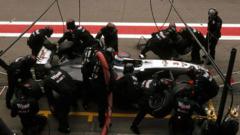
A seven-second McLaren pit stop at the 2001 Spanish Grand Prix didn’t just win a race — it ended up saving lives in hospitals hundreds of miles away. When the McLaren crew refuelled a car, changed its tyres and relayed information to their driver in under seven seconds, they were just doing their jobs. But in a break room at Great Ormond Street Hospital (GOSH), Dr Martin Elliott and his colleagues were watching after completing a life-saving operation on a young child — and that brief glimpse changed how they approached patient care forever.
An F1 pit stop in action (Credits: BBC Sport)
From Pit Lane to Operating Theatre
At Ferrari’s factory in Maranello, the medical team studied how pit crews organised roles, communication and handovers. Doctors and nurses started each procedure with a checklist, setting out specific roles and tasks — reducing human error and making sure key tasks were completed. All patient data was shared from the operating theatre to the care unit, gaps in performance were identified and addressed, and repeated rehearsals refined the process.
The result was a more organised journey from surgery to intensive care. A 2007 study by researchers at GOSH and the University of Oxford found the F1-inspired handover process reduced technical errors, information omissions and handover time — a model later adopted by healthcare teams around the world.
Reflecting on the project, Dr Elliott — then a consultant paediatric cardiothoracic surgeon at GOSH — drew the parallel directly: F1 had created an environment of complete precision because it simply couldn’t afford to slip up. “The precious parcel on the trolley is the same as the precious parcel in the car,” he said. “You have to get all of those steps right.”
Saving Babies With F1 Engineering
Fifteen years ago, Williams worked with the University Hospital of Wales to improve neonatal resuscitation. Former Williams human performance specialist Gemma Fisher recognised that the organisation of pit-crew equipment to prevent delays could apply in a hospital setting.
Video analysis revealed the chaotic reality of medical emergencies — overlapping voices, misplaced equipment. Standardising roles (who stood where, who needed to be heard at what moment, where equipment was stationed) allowed a faster, more efficient response, and debriefings helped staff improve. It also encouraged junior doctors to raise concerns without fear of blame.
The collaboration even extended into engineering: Advanced Healthcare Technology and Williams developed the Babypod, a carbon fibre carrier designed to withstand a 20G crash, helping prevent injury when transporting babies from ambulance to hospital.
Ninety Seconds That Feel Like Years
The work continues today. At this year’s race at Silverstone, a collaboration with Air Ambulance Cornwall showed how response times could improve, cutting take-off time from five minutes to three and a half using the same methods: quick, organised starts, equipment ready for use, and clear communication.
David Richards, chairman of Motorsport UK, put it best: “One and a half minutes when you’re lying by the side of the road… those minutes must seem like years for the person who’s injured.”
Also Read: Gareth Southgate Rules Out Premier League Return: “I Don’t See a Scenario Where I Do That”
Source: BBC Sport — read the full story there.