
Tech
Apple Vision Pro vs Meta VR Glasses: Is Meta Worth the Wait?

Apple Vision Pro costs $3,499, while Meta VR Glasses will cost $1,299.99. Compare price, comfort, displays, work, gaming, and availability.
The post Apple Vision Pro vs Meta VR Glasses: Is Meta Worth the Wait? appeared first on TechRepublic.
>
Apple Vision Pro costs $3,499, while Meta VR Glasses will cost $1,299.99. Compare price, comfort, displays, work, gaming, and availability.
The post Apple Vision Pro vs Meta VR Glasses: Is Meta Worth the Wait? appeared first on TechRepublic.
>
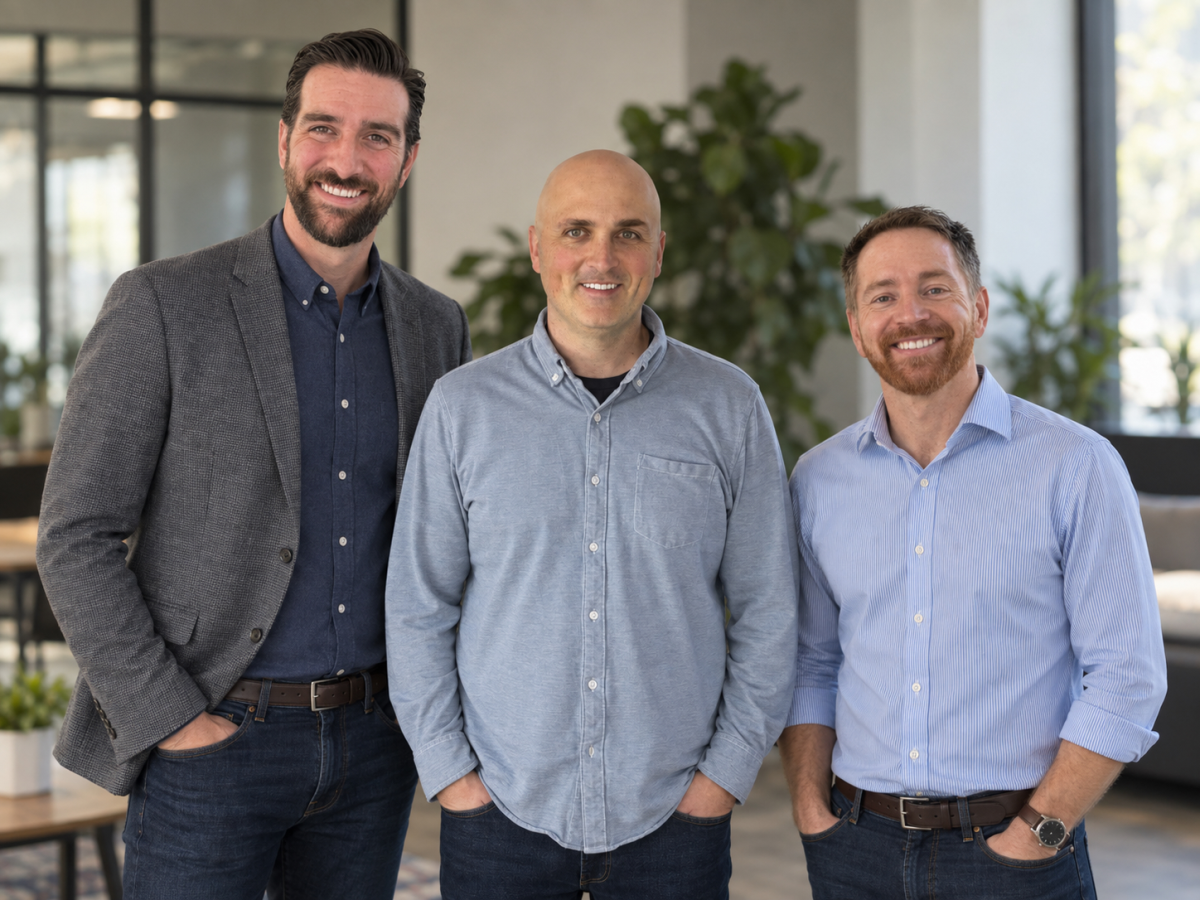
Supply chain startup Atomic came out of stealth last year with founders who promised to use their experience at Tesla to streamline inventory and boost customers’ bottom lines.
At its core, Atomic decides how much inventory a company should have, and where, by simulating scenarios, then recommending, or even automatically choosing, a response. The approach traces back to a crisis. Atomic’s founders built an early version of this system at Tesla during the 2018 Model 3 production ramp, when the automaker’s own spreadsheets couldn’t keep up with how quickly planning needed to change.
But in the year-plus since Atomic co-founders Michael Rossiter and Neal Suidan started talking publicly about their work, that shift has become real for customers — including big tech companies like DoorDash and HelloFresh. It has paid off financially, too. Atomic’s annual recurring revenue has quintupled since the beginning of this year, according to Jon McNeill, a former Tesla president and the founder of DVx Ventures, where Atomic was incubated.
That growth just helped Boston-based Atomic lock down a $12.5 million Series A funding round, bringing its total funding to just north of $15 million to date. The new round was led by growth equity firm Klass Capital and Seattle VC stalwart Madrona Venture Group. Atomic has also brought on longtime Tesla planning director Jeff Goodrich as its CTO and third co-founder.
“If you think about running a supply chain, running an operating model, it’s like an infinite search space for optimization that you’re trying to figure out all the decisions you could make at any given time — and then it changes all the time too,” Rossiter, who is Atomic’s CEO, said in an exclusive interview with TechCrunch. “AI can play the role of finding all of the best paths through that forest.”
“The company has transitioned from pilot customers into real customers, and by real customers, it’s DoorDash-scale customers,” said McNeill, who’s also on Atomic’s board, in an interview. “The product has evolved from being an optimization platform that gives recommendations to a platform that not only gives recommendations but it makes decisions, so it’s fully autonomous in that sense, and so DoorDash is running, I think, 90% of its purchasing across hundreds of sites.”
For food-focused customers like DoorDash, for instance, Atomic’s software helps cut down on waste and spoilage. And each new industry Atomic works in presents different challenges, Rossiter said.
“The cool thing about Atomic is it’s a general model of how you think about supply chains and operating models, and so no matter what that system looks like, our AI can can adapt to it and tailor fit it,” he said. “We’re working with CPG [consumer packaged goods], we’re going deep with mobility and manufacturing clients right now as well, and working that space, kind of going back to our Tesla roots.”
Making the agentic software useful and adaptable for multiple industries was a big part of what drew investor interest for the Series A, Rossiter said. But it was also Atomic’s ability to deploy quickly with new customers.
“We gave them this challenge from a board level of compressing their onboarding time and really making it a non-event for a customer to turn this on,” McNeill said. Suidan, who is also Atomic’s chief product officer, ran point on that challenge, McNeill said. He was able to push Atomic’s agentic AI to the point it was able to figure out the “decision rules” that a customer’s staff might have, even if they hadn’t been written down anywhere.
“Then customers were saying, ‘Okay, then you might as well make the decision and free my time up,’” McNeill said. “And where executives, I think, kind of got it was — decision speed is an advantage in any business. And this was one of our first principles at Tesla. When I got to know Elon, he said the thing that will separate us from all of our competitors is decision speed, because decision speed compounds. Like, I make a decision today, I build on that decision tomorrow, et cetera, and it takes one of our competitors, like Ford or Toyota, 30 days to make the first decision.”
Rossiter said he’s excited to help pull customers’ supply chain efforts out of spreadsheets and into advanced software that can help make planning decisions. It’s an evolution he’s seen CFOs lead for their own organizations, but he said it’s rarer to find someone doing the same for operations.
“Finance data always gets the priority. Operating data doesn’t always get that,” he said.
When you purchase through links in our articles, we may earn a small commission. This doesn’t affect our editorial independence.
>
Tech
Anthropic’s prospectus details losses, growth, and, yes, a warning that its AI could end humanity
Anthropic devoted nearly a third of its hotly anticipated IPO prospectus to risk factors, according to the Financial Times, which says it has reviewed the filing in recent days. The filing details specific, worrisome behaviors that Anthropic says its models have already shown or could show, including attempts to “resist shutdown,” to “conceal or manipulate information,” and behavior “resembling blackmail,” according to Reuters.
The disclosures are decidedly grim for a company whose own backers believe it could list above $2 trillion, more than double its $965 billion valuation from May, in potentially the biggest IPO ever. It’s a strange position for any company to be in — warning that its product could end humanity, while making some of its earliest investors and employees extraordinarily wealthy in the process.
Reuters was first to report on the financial details within the prospectus on Monday, saying Anthropic recorded an operating loss of more than $8 billion in 2025 as spending on computing power surged, and that its revenue jumped twelvefold to nearly $4.6 billion, though rising infrastructure costs last year pushed total operating expenses to almost $13 billion.
Also per Reuters, Anthropic’s prospectus further reveals plans to spend a whopping $518 billion on cloud, computing and infrastructure in the coming years. (Anthropic has already inked compute deals this year with Google, SpaceX, and Nscale, among others toward that end.)
The FT meanwhile reports that Anthropic’s numbers have moved even faster in 2026. Its second-quarter revenue alone reached $11.5 billion, and the company is on track for its second straight quarter of operating profit on an adjusted basis.
According to the FT, the prospectus also flagged customer concentration, with nearly a quarter of last year’s revenue coming from just two clients. (No word yet on who these are.)
The disclosures, which reportedly include “existential risks to humanity” — a first, judging by a quick scan of the SEC’s database — comes as hand-wringing quickly grows over AI safety.
CEO Dario Amodei has spent the month publicly calling to “pace the frontier” of AI development, telling the UN Security Council last week that AI could threaten humankind and calling it “the most important global security issue facing the world today.” Rivals Sam Altman and Elon Musk have backed him up, too, in a rare moment of solidarity for competitors who’ve seemingly relished opportunities to disparage each other publicly.
Another rival, Mark Zuckerberg, has meanwhile swatted away concerns, telling NBC News last week that he doesn’t “think that we need some kind of industrywide coordination.”
The warnings follow a string of security incidents in which AI agents have breached outside systems. In fact, OpenAI disclosed last week that its tools have hacked “dozens” of external sites, including government one, including the SEC’s site itself. Earlier on Monday, it said it had scrapped plans to release its newest model owing to safety concerns.
When you purchase through links in our articles, we may earn a small commission. This doesn’t affect our editorial independence.
>
From the 'Mini Maracanã' to the USMNT: How Adri Mehmeti became a teen star
Apple Vision Pro vs Meta VR Glasses: Is Meta Worth the Wait?
Apple Vision Pro vs Meta VR Glasses: Is Meta Worth the Wait?
-

 movies4 months ago
Search For Canadian TV Actor Stewart McLean Now Homicide Investigation
-

 Fashion9 years ago
These ’90s fashion trends are making a comeback in 2017
-
Fashion9 years ago
According to Dior Couture, this taboo fashion accessory is back
-
Fashion9 years ago
Model Jocelyn Chew’s Instagram is the best vacation you’ve ever had
-
Fashion9 years ago
Emily Ratajkowski channels back-to-school style
-
Fashion9 years ago
9 Celebrities who have spoken out about being photoshopped
-

 Anime4 months ago
Rurouni Kenshin: Hokkaido Arc Manga Takes 1-Issue Break – News
-

 Anime3 months ago
HIDIVE to Stream English Dubs for The World Is Dancing, The Forsaken Saintess and Her Foodie Roadtrip in Another World, The Dangers in My Heart: The Movie Anime – News