
Entertainment
How ‘Primetime’ Pulled Off Its Insane Cinematography

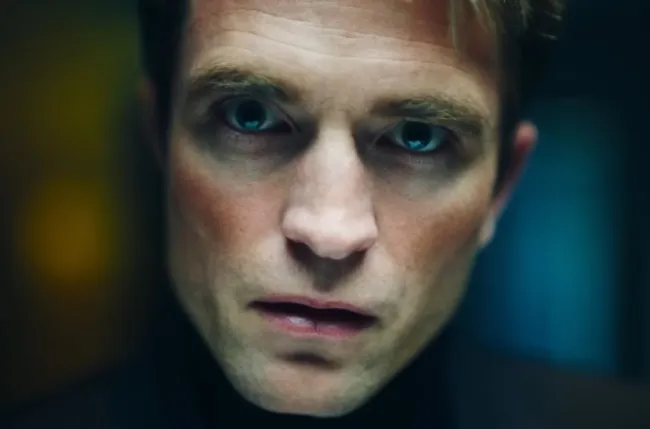
Before “Primetime” director Lance Oppenheim had seen formative films like Abbas Kiarostami’s “Close-Up” or Orson Welles’ “F for Fake,” in which masters of cinema blurred the line between fiction and reality, he had watched “To Catch a Predator.”
“I remember thinking, ‘What am I watching? Is this a documentary? Is this a scripted movie? Is it something new, something different?’” said Oppenheim of watching the news program that lured child predators into homes rigged with hidden cameras as TV journalist Chris Hansen waited in the wings to confront the unsuspecting molesters. “I couldn’t tell if it was like a prank show or a horror movie or a news program.”


For a documentary filmmaker, who shot nonfiction subjects (“Ren Faire,” “Spermworld,” “Some Kind of Heaven,” and the soon-to-be-released Nathan Fielder joint “You Can See Everything”) as if they were scripted narrative films, “Primetime,” starring Robert Pattinson as Hansen during the rise and fall of “To Catch a Predator,” became the perfect project. It gave the young auteur a chance to blur the line between fiction and reality from the scripted side of the equation.
Oppenheim could plug into how the news program created, in his words, “this manufactured reality,” where adult actors pretended to be children, houses that looked like sets (some reminding Oppenheim of David Lynch’s “Blue Velvet”), and “props that looked like cookies, pepperoni pizzas, and sweet tea, that took on this feeling of dread.” It was a manufactured reality that would then collide with the “hyperreal situation” of a potential predator walking in to attempt something terrible.
“Hansen had created this space and world where time seemed to freeze, and the laws of gravity and physics and reality would be a little different; it was almost like the zone in [Andrei] Tarkovsky’s ‘Stalker,’” said Oppenheim. “I liked the challenge of attempting to express that through visual, cinematic terms.”
The result is a film that looks radically different from anything else we’ve seen on the big screen in recent years, which was the filmmaker’s stated intention. Here are four ways Oppenheim and his longtime cinematographer David Bolen achieved that distinctive look.
Multiple Formats

Oppenheim wanted to instill in his audience that same “What am I watching?” sense that he had experienced with the original series. To pull it off, Bolen used 12 different camera formats, including mini-DV (many mirroring Hansen’s hidden cameras), vintage tube and broadcast cameras, a micro-endoscope used for colonoscopies, along with a more standard modern-day movie camera (Arri Alexa 35).
The goal, according to Oppenheim, was to create an “elastic aesthetic value system,” where they might run a shot with an Arri Alexa 35, then do another take with a radically different camera, something Oppenheim admits befuddled some of his crew.
“I think a lot of people thought I was like Tommy Wiseau on the set of ‘The Room,’ not knowing what I was doing and just kind of arbitrarily making choices,” said Oppenheim. “ I love Tommy Wiseau, and I love the way he made ‘The Room,’ so I was like, ‘I don’t care. I’m going to run the scene once on an Alexa, and do it again on a broken Plumecon tube camera.’”
Plumecon: A Collapsing Image
Oppenheim consulted with veteran TV cameraman Mitchell Wagenberg, who worked on the original “To Catch a Predator,” “Cash Cab,” and traditional news programs with TV journalists like “60 Minutes” Mike Wallace. Oppenheim wasn’t only trying to learn how shows used to be shot; he was also looking for new emotional and narrative brushstrokes.
While much has been made of the novelty of the medical colonoscopy camera, it was Wagenberg introducing the “Primetime” team to the Plumbicon that became the game-changer. It was an early attempt at a digital camera, used briefly by Wagenberg and others on news programs in the late ’80s before being discontinued.
“It was this antiquated technology where the tubes inside the camera would be physically warmed up, like microwaved, until it would produce an image,” explained Oppenheim.
Oppenheim was intrigued, desperate to better understand the long-gone technology, and set out to find and acquire one he could possibly use in the film.
“The Plumecon we found, the tubes had been burnt to a crisp, so every time we turned the camera on it would distort the images. It almost looked like a nuclear explosion had been set off right in front of us, and I loved that about it. It reminded me of the [Werner] Herzog quote, ‘The moment you turn the camera on, you’re seeing a fiction,’ [and] the camera felt like it was honoring the spirit of that.”
Oppenheim admits that while shooting with the Plumecon, he had no idea how or if the image would hold up, but he also liked the idea that the image could “collapse a little.”
Describing his Plumecon brushstroke, Oppenheim said: “The colors all kind of bleed and run, and they’re kind of funny looking, and it feels a little dreamlike.”
Printing to 16mm

All the footage, regardless of which camera format it was shot on, was printed to 16mm film stock and then digitized for the edit. The reasons for this, and what it accomplished, are threefold.
“With the cinema camera [footage shot on the] Alexa, Dave and I were always sort of allergic to how digital it looked, and how crisp it felt,” said Oppenheim. “[The 16mm scan] was an effort to make the Alexa images feel tactile.”
Oppenheim also liked the layer of removal the scan supplied between the audience and the original image. He was inspired by a leaked version of director Lynne Ramsay and cinematographer Seamus McGarvey’s 2025 film “Die My Love,” starring Pattinson.
“A cam scanner version had come out from ‘Die My Love,’ and that movie was shot with Ektachrome, and I remember just thinking, ‘Wow, this is so fucking crazy, just the way it looks,’” said Oppenheim. “Obviously, when the movie came out it was even more beautiful, but there was something about that contact high, kind of like being a little bit removed from it that was interesting.”
Oppenheim also wanted to honor and expressively capture how “To Catch a Predator” today only exists online, and how the scan allowed him to create an expressive language of the internet.
“[‘To Catch a Predator’] doesn’t exist on DVDs, Blu-ray, all that we really have of it are these 360p and 480p versions that have seemingly been digitized by somebody else. So we’re watching something that’s been essentially reprinted twice. The audience is interacting with an object that had been scanned, that had been corrupted in some way. I liked conceptually that it rhymed with what we were doing with this sort of operatic, heightened portrait of Chris Hansen, the internet’s version of Chris Hansen.”
Color and the Colorist
While “Primetime” lays bare the dangers of what 2000s reality and new programs unleashed, Oppenheim said he still enjoys watching reality TV, but like many, the 30-year-old director is nostalgic for the TV of his youth.
“The thing that’s sort of depressing about the news when I look at it [today], aesthetically, everything is so grayscale, and there’s no color anymore. When you looked at things in the 2000s, especially in 2006, you’d turn on any program, like, ‘What Would You Do? With John Quiñones,’ and the colors were so saturated, almost pastel-like.”

While Oppenheim’s cinematic references for “Primetime” are works of Billy Wilder, Oliver Stone, Tarkovsky, and numerous films from the canon of film history, Oppenheim explained he wanted to capture the color saturation and feel of the TV he consumed during the time of “The Catch a Predator.”
“I grew up with these television shows and network shows like ‘The O.C.’ and ‘Smallville,’ and I [wanted] that stuff to enter the movie in some sort of way aesthetically.”
One of the reasons Bolen and Oppenheim felt comfortable with their bold experiments in creating the collapsing images of “Primetime” was that their longtime colorist, Damien Vandercruyssen, was at the controls. Vandercruyssen not only orchestrated how the brittle tube camera’s image, 16mm scans, and Bolen’s inventive cinematography would come together, he simultaneously pulled out the bold color and tactile quality Oppenheim associated with the images of that era.
“He’s an artist, and we couldn’t have done it without him,” said Oppenheim of Vandercruyssen. “[Damian] did so much insane work; he is the essential piece in the collaboration with David. What he did with this in the scanning process and creating this really tactile image – he’s a master.”
>
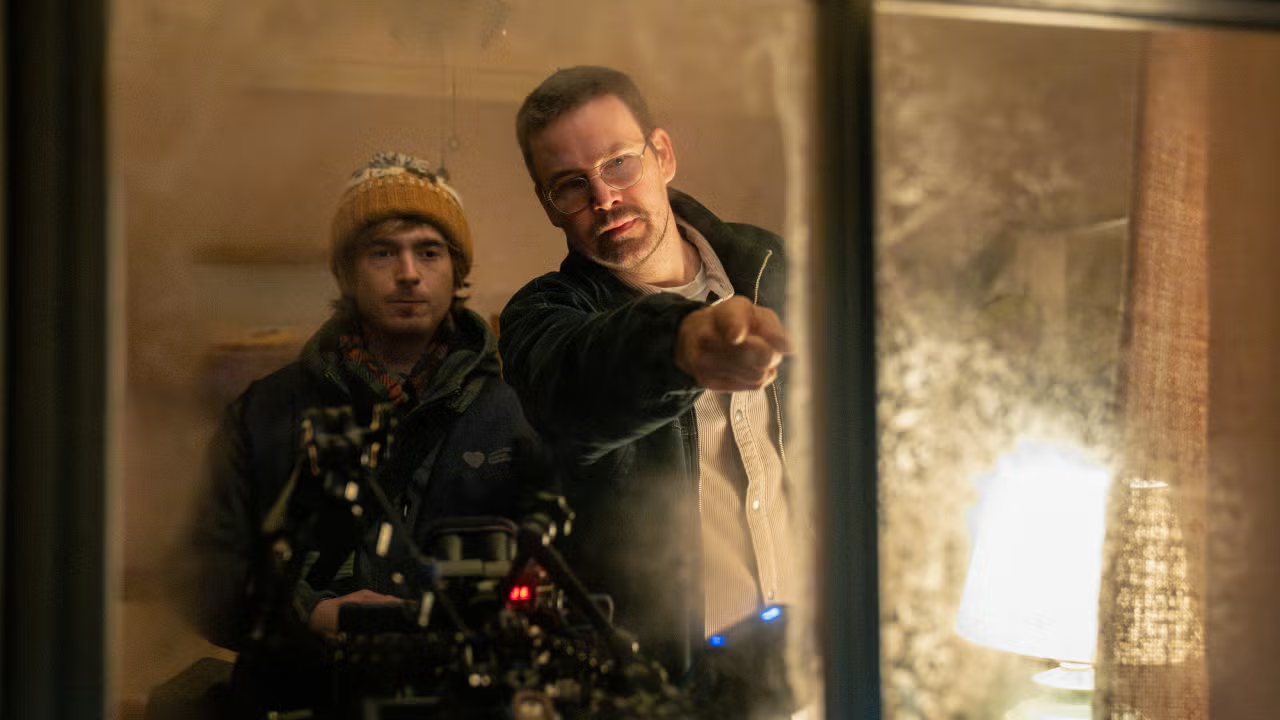
Zach Cregger’s “Resident Evil,” in a little more than two weeks, has already amassed nearly $200 million at the global box office.
Instead of a straight adaptation of the long-running video game series (or an extension of the already-existing film franchise), Cregger chose to tell a new story within the world of the games – a story that follows a hapless medical courier named Bryan (played by Austin Abrams), who is sent on a desperate mission to the heart of Raccoon City during a zombie outbreak. It is an all-gas, no-brakes rollercoaster ride that is carried along by Abrams’ performance – vulnerable, hilarious, inquisitive, the perfect audience surrogate. Even when things get weird, really weird, Abrams’ oddly emotional performance keeps us engaged.
Abrams said that Cregger first mentioned the project while the two were working on “Weapons,” which would go on to be a box office hit and an unlikely Oscar winner. But Cregger didn’t say anything specific about Abrams joining the project.
“It wasn’t until he was in post-production for ‘Weapons’ that he called and wanted me to read the script basically,” Abrams said. He hadn’t played the games (“Other than seeing it and being too afraid to play it”) but once he got the part it emboldened him to play horror/survival games that had a similar spirit.
Whereas “Weapons” was an ensemble piece, with Abrams portraying an unforgettable character (a junkie/thief who stumbles upon the mystery of a missing classroom of kids), with “Resident Evil” he would take center stage. The movie is him. And that left him a little nervous.
“You never know if you can do something until it’s done. It’s huge question marks. I feel personally like we’re going to be interested enough in watching this person,” Abrams said. “Not that everyone could feel that way. Or are they going to be like, I don’t really care about this guy that much. I don’t really want to watch this movie? It could happen. There’s a lot of feelings of the unknown came up.”
While shooting the movie, Abrams started to get the impression that it was going to be okay. “You catch the vibe of the people around you and they’re seeming to be into the character and that helps. You’re not getting like red lights. You keep going,” he added.
And while Abrams knew that he would be the audience stand-in, crafting a character through physicality rather than dialogue (“It feels good being in the body and using it as a tool,” he said) there were still some pretty radical changes to the final film, like when Cregger admitted that, after a test screening, he went through the movie and pulled out most of the jokes.

“There were some asides where I was like, ‘Are you going to keep that?’ Or ‘maybe check that out again.’ There was a bunch of stuff like that where we would take it to a place that was too far, really for our own enjoyment. And you never really know, until you get in the edit, how much you’re going want or not,” said Abrams. ”Especially for like this, where it’s a straight shot and there aren’t all these other characters that you’re interacting with. You want options. I don’t think it would be as enjoyable to watch if it was just straight through. If there wasn’t any laughs in it, I think it would be too unrelenting. Adding comedy, which is what I think Zach is so smart about too, really helps the enjoyment of it and relieves some of the pressure.”
One thing scarier than zombies or plague-infested monsters was the response of the die-hard Resident Evil fans to Cregger making a movie that eschewed the classic characters and established lore of the series. They were very upset about his approach.
Abrams was sympathetic. “I read a book that I love and then they’re going to do another one or make it into a different one. You don’t want someone to f–k it up. You have a personal connection with it. I get what that feeling is like. There’s that passion there,” Abrams said.
He said that he and Cregger “did the best job we could.” “We had a strong base of love and I think our best shot at making something that they would enjoy,” Abrams said. Cregger is a huge fan of the games and has played them all, including this year’s Resident Evil: Requiem. Their approach? “Make what you dig and then hope that other people dig it,” said Abrams.
Fan service was not something that they were interested in (Abrams said it doesn’t work in “a meaningful way”). “If you’re going to end up making something that feels fresh, I think that’s the best shot you have making something interesting,” he said. But still, he said, “I only send love to all those people.”
Before he started working with Cregger, Abrams was a fan of “Barbarian,” his debut feature. He remembers thinking, I love whoever’s made this movie, because they have guts and extreme talent and skill, and a comedic understanding that is really rare and that I relate to. Meeting him, Abrams found that they were perfectly in sync.
“We connect on many other levels, aspiring for the same thing and we have a similar level of what we deem to be the work that we want to make,” Abrams said. “I think that helps us to push each other. We both understand what it is we’re trying to make and have a similar sensibility.”
“He is a total dream to work with. I mean, truly a dream, and he is a beautiful, kind person. And he’s such a formidable actor. He’s so good at whatever he tries to do. I have yet to see him find his limit. That guy’s range is miraculous,” said Cregger. “When it was time to go and put this one together, it was like there wasn’t even a decision. There was not a moment of like, Well, who else could we? No, it’s Austin.”

There isn’t a role for Abrams in Cregger’s upcoming sci-fi freakout “The Flood” (which just cast Jennifer Lawrence in the lead role), but when we asked Abrams if he was the Kurt Russell to Cregger’s John Carpenter, he smiled wide and said, “Hey, you said it. I didn’t say it.”
When it came to – spoilers ahoy! – Abrams’ monstrous transformation towards the end of the film, he said that he actually found the motion-capture process enjoyable.
“I was shocked at like how minimal they needed to be able to capture everything,” said Abrams. “It’s all those other guys. You see them in a room, just imagining all this stuff.”
And given the open-endedness of the movie (and the fact that the video game series has been running for so long), we had to ask if Cregger had said anything to him about coming back for another installment. Another entry seems more and more likely, especially as its box office tally continues to grow.
“We’ve had the smallest of discussions. I also don’t want to go into it too much at all because I don’t know how things would play,” said Abrams.
Still, it’s very clear – if Cregger has an idea for how to bring Bryan back to snowy Raccoon City, Abrams would be there. In whatever shape – monstrous or otherwise – that would take.
“Resident Evil” is in theaters now.

>
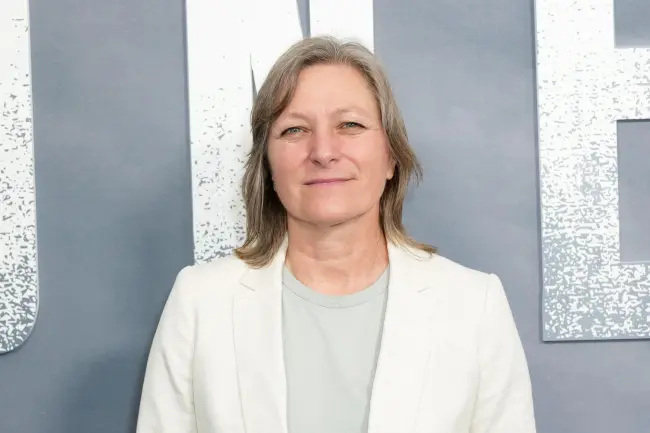
Cindy Holland, the chair of Paramount‘s direct-to-consumer division overseeing the company’s streaming plans, announced in a memo to staff that she’s exiting the company, according to reports in Variety and Deadline. The move most likely paves the way for Casey Bloys, who leads HBO and HBO Max at Warner Bros. Discovery, to lead streaming, something Holland hinted at in her exit memo. Today, September 29, is her last day at Paramount.
Holland’s exit provides some clarity for Paramount’s streaming vision. While Holland’s memo didn’t mention Bloys by name, it hints that “David is optimizing for HBO stability as we move into this next chapter, and I fully support that.” Bloys became president of HBO programming in 2016 and his role has only expanded since then to encompass HBO Max and other aspects of Warner Bros. Discovery.


Holland joined Paramount in January 2025 and described in her memo that she was tasked with reviving Pluto TV as well as integrating Paramount+ and advising on the WBD merger, and she helped grow Paramount+ to 79.6 million subscribers. She also was a pivotal force in the early days of Netflix’s expansion into original streaming programming with shows like “House of Cards” and “Stranger Things,” and she ultimately spent 18 years at Netflix.
While Bloys coming aboard isn’t official, nor has the merger itself closed just yet, it could be solidified in a matter of days. And what happens to HBO and HBO Max, how it’s integrated into Paramount+ or whether it stands alone, are big questions that remain. Bloys, though, has as good a track record as anyone in town. Consider HBO’s continued dominance at the Emmys and how the brand has sustained over the years even as Paramount’s own premium cable brand Showtime has dwindled, ultimately becoming integrated into Paramount+.
Unanswered still is what will be the fate of Warner Bros. Pictures executives Mike DeLuca and Pam Abdy and what their role would be in a combined WarnerMount. Paramount still needs to deliver on an aggressive slate of 30 movies per year across the two studios, so there’s plenty of opportunity to go around.
>
>
Darius Garland says post-Kawhi LA Clippers are 'gonna shock a lot of people'
White Sox pounce early in tone-setting victory over Astros: Can they finish the job?
Michael Jordan 'Last Dance' NBA Finals jersey sells for record $12.26 million
-

 movies4 months ago
Search For Canadian TV Actor Stewart McLean Now Homicide Investigation
-

 Fashion9 years ago
These ’90s fashion trends are making a comeback in 2017
-
Fashion9 years ago
According to Dior Couture, this taboo fashion accessory is back
-
Fashion9 years ago
Model Jocelyn Chew’s Instagram is the best vacation you’ve ever had
-
Fashion9 years ago
Emily Ratajkowski channels back-to-school style
-
Fashion9 years ago
9 Celebrities who have spoken out about being photoshopped
-

 Anime4 months ago
Rurouni Kenshin: Hokkaido Arc Manga Takes 1-Issue Break – News
-

 Anime3 months ago
HIDIVE to Stream English Dubs for The World Is Dancing, The Forsaken Saintess and Her Foodie Roadtrip in Another World, The Dangers in My Heart: The Movie Anime – News