
Tech
The founder’s guide to TechCrunch Disrupt 2026: Everything you need to know


TechCrunch Disrupt 2026 is built around one question: How do you build an enduring company in the AI era? Our programming and speaker lineup reflect that, based on the feedback we’ve gotten from the community and the reality on the ground.
Last year at Disrupt, we spoke with founders about their experiences and discovered the results of their attendance firsthand. One founder saw a 3x oversubscription rate after their confirmation for Startup Battlefield and more than 100 investor inbounds helping fuel conversations about a future fundraising round. Another founder had nearly 30 back-to-back conversations with investors who flocked to them after a pitch onstage and followed them to their booth.
That’s not the exception at Disrupt — that’s the point. And those opportunities aren’t just available for Battlefield finalists. Every conversation in the Expo Hall or in a Side Event can create an opportunity for your startup. For years, whether it’s been held in New York, San Francisco, or elsewhere, Disrupt has brought together thousands of founders, investors, startup team members, and tech leaders.
We’re keeping that mission alive at SF’s Moscone West, this October 13-15 with a packed lineup of speakers, more than 200 expert sessions, a wealth of organized and serendipitous networking opportunities, and most of all, the chance to be in the same room as the person who could change your nascent idea for a company or your current startup’s trajectory.
This guide is for the founders out there who are just learning about Disrupt, who need a refresher, or are skeptical of whether it’s worth it. TechCrunch has been around for more than 20 years; we can take it. And before you dive in, we have two discounts that run up until Disrupt begins you should be know about. Founders can bring a team member along for 50% off their ticket by following this link, or you can help laid off members of your network find their next opportunity at Disrupt with our steep discount of Expo+ passes.

The reality of what makes Disrupt, Disrupt
If you’re asking Claude or ChatGPT if TechCrunch Disrupt is worth it, you’re not alone. The reality is that Disrupt is a unique event, and it’s happening at a unique time for the startup community.
This year’s Disrupt isn’t about predicting the future of AI; it’s about building companies in it. Across six editorially curated stages, founders will hear practical lessons from the CEOs, investors, engineers, and operators shaping the next decade of technology.
Whether you’re raising your first round, scaling your team, or deciding how AI changes your product, every session is designed to answer one question: “What can I take back to my company on Monday morning?”
The founders Disrupt empowers
Disrupt works a bit differently, depending on where you are in your founding journey, with different tracks you can follow to make the most of the three days:
Pre-seed and idea stages
You’re here to pressure-test your thesis, meet your first angel or pre-seed investors, and figure out who else is building in your space. Prioritize the Builders Stage, the Startup Battlefield semifinalist pitches, and the Expo Hall, along with roundtables tied to your industry and conversations you’ll want to learn more from.
Early revenue or actively raising
You’re here for capital and validation above all else, and your time is valuable. Prioritize our investor-matchmaking tools and the connections that come with your Founder Pass, including the networking tools in our app. You also get access to the Deal Flow Café, where we foster one-on-one conversations between founders and investors.
And when your schedule isn’t packed with dealmaking, learn from VC perspectives and fundraising-focused sessions at the Builders Stage.
Scaling, hiring, in search of partnerships
You’re here in search of talent, strategic partners, and market visibility. Those same networking tools and opportunities can help you meet potential hires and partners and deepen those connections or make new ones. Disrupt’s Side Events aren’t to be missed — there’s one for every industry, interest, or post-event vibe you could be looking to find.
Startup Battlefield: The most iconic pitch competition
The Startup Battlefield winner’s reveal packs the Disrupt stage and is each year’s capstone event. But it’s the lead-up to that $100,000 check and the deluge of attention the winner receives that’s the most valuable for founders attending Disrupt.
The 200 startups chosen on August 20 to compete go through a rigorous prep process and get the opportunity to pitch onstage in front of top-tier VCs and the Disrupt crowds. You’ll also get to watch those pitches, take notes, learn from the peaks and valleys, and potentially meet the teams behind the ideas and innovations. It could be in a follow-up meeting or just walking through the halls of Moscone.
And if that all leaves you inspired, here’s an insider tip: Most Battlefield participants, and several winners, have gone through the process multiple times. We’re no longer taking applications for 2026’s competition, but we’re expanding the program to more international markets, and the 2027 process will be similar to this year’s, so take note for the future!
The founder-focused programming
Disrupt 2026 spans several stages, each built around a different founder need:
- Disrupt Stage: The biggest conversations in technology, featuring the founders, CEOs, and industry leaders defining what’s next. These are the conversations you’ll be talking about long after Disrupt ends.
- Builders Stage: The tactical playbook for building a startup. From fundraising and hiring to GTM, product, and scaling, every session is designed to give founders practical advice they can put to work immediately.
- AI Stage: AI isn’t the future — it’s the present. Learn how the fastest-growing startups are building, deploying, and monetizing AI, with practical lessons on agents, models, infrastructure, and what it takes to win in the AI era.
- Real World AI Stage: AI is moving beyond the screen and into the physical world. Explore how robotics, autonomous systems, manufacturing, healthcare, and defense are turning AI breakthroughs into real-world products and businesses.
- Smart Money Stage: Follow the money. From fintech and stablecoins to payments, embedded finance, and AI-driven financial services, this stage explores how technology is reshaping the movement of capital.
- Smart Systems Stage: Every AI breakthrough depends on the infrastructure behind it. Discover the innovations in chips, compute, energy, networking, and data centers that will determine the next generation of technology companies.

Conversations you can only get at Disrupt
- RJ Scaringe (Rivian): Building a generational company.
- Panos Panay (Amazon): Designing products people love.
- Paolo Ardoino (Tether): Money, AI, and infrastructure.
- Toni Schneider and Rose Wang (Bluesky): Can social start over?
- Amjad Masad (Replit): Every founder becomes technical.
- Andrew Feldman (Cerebras): Winning the AI compute race.
And that’s just the beginning — we’ll have more speakers to announce as we get closer to Disrupt. Check out the full lineup of speakers across all stages and events here.
How to get the most bang for your buck at Disrupt
Disrupt’s prices increase as we get closer to the event, but we have a couple of promotions for Founders looking to save. You can save 50% on a second ticket by following the link here, and bring a coworker or co-founder along for the ride.
If there are colleagues in your network who have been impacted by layoffs who you’d like to have join up, we have an option for them as well, with a special $75 Expo+ Pass available at a limited volume for those impacted by cutbacks this year.
Your time at Disrupt is valuable, too, so before you head there, check on our regularly updated schedule of speakers and Side Events, get ahead of competitors’ schedules by booking your networking opportunities in advance, and get your own elevator pitches in order to make the most of those magical Disrupt moments that can come at any point October 13-15!
When you purchase through links in our articles, we may earn a small commission. This doesn’t affect our editorial independence.
>

Meta’s Muse, a personal AI agent that books travel, fills out forms, and shops on a user’s behalf, has already proven popular with the masses, but a new side project could be particularly alluring to tinkerers and hackers.
On Friday, the company introduced Muse Gadgets, an open-source project that lets developers build their own hardware that connects to Muse.
Meta is providing open-source firmware (the low-level software that runs a device), and a Linux software development kit (SDK), along with a few project ideas to get users started. These include giving Muse a color e-ink display or loading it onto a stick that plugs into a TV’s HDMI port.
There don’t appear to be many limits, either. Users can set up a low-cost hobbyist computer like a Raspberry Pi or an off-the-shelf ESP32 board, and then connect Muse “to your displays, buttons, sensors, actuators, and whatever else you’ve got lying on your workbench,” Meta notes.
The company has also set up a Discord channel to support users.
Meta has already tried the code itself, naturally. Nat Friedman, head of product at Meta’s Superintelligence Labs, said in a post on X that the company built a gadget called Muse Home Link. The USB-C-powered device lets Muse connect to a home network and talk to the smart devices on it, including speakers and smart TVs.
Meta made 5,000 of these Home Links, in fact, and is giving them away for free to Muse subscribers while supplies last, according to Friedman. Considering Friedman’s post about Home Link received nearly 30,000 views in a few hours, we’re guessing those freebies have been claimed. Friedman said Home Link would be ready to ship a few weeks.
Muse Gadgets may not have wide appeal, but it fits nicely into Meta’s all-in strategy to make Muse more than a standalone chatbot. Meta isn’t content to push Muse on everyday consumers; it’s also trying to woo small businesses and enterprises.
The company earlier this week introduced Muse for Small Business, which is free with usage limits and connects Muse to tools such as Shopify, Dropbox, and Slack. It has also launched a new business unit, Meta Enterprise Platform, to help it push its AI offerings to businesses and corporate customers.
When you purchase through links in our articles, we may earn a small commission. This doesn’t affect our editorial independence.
>
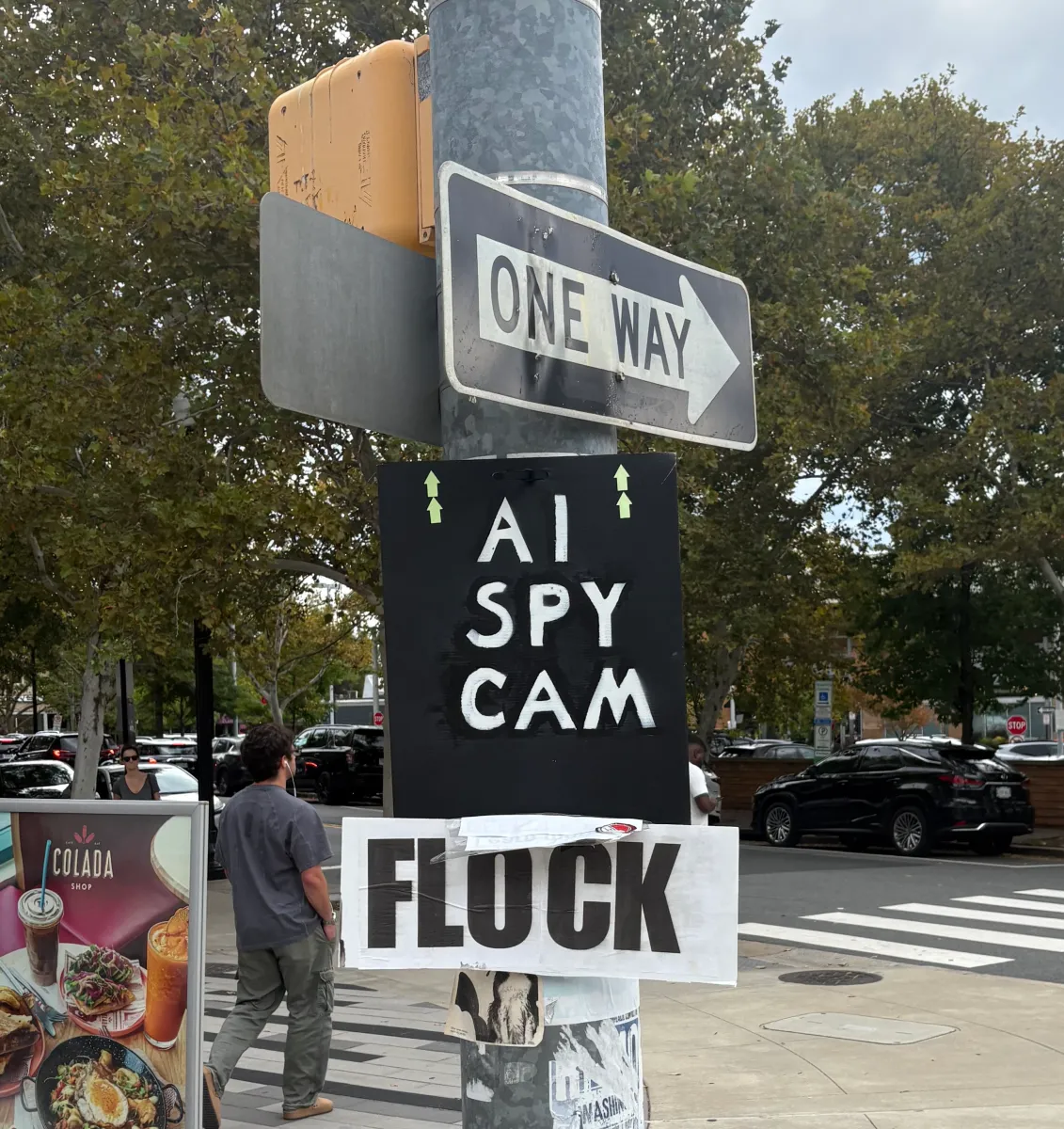
Flock, whose cameras scan license plates across the country, continues to draw public anger, and now Senator Bernie Sanders wants the federal government out of the business altogether.
Sanders (D-Vermont) on Friday introduced the Ban Flock Act, which would bar federal agencies from using automatic license plate readers (ALPRs) or tapping into data collected by readers run by local police and private companies. Despite its title, the bill doesn’t call out Flock in the text and covers any and all ALPR systems.
The bill allows exceptions only for toll collection and for uses that Congress approves in future legislation, which would have to limit data retention to no longer than 48 hours.
State and local governments would be dinged financially for not complying if the bill became law. (Like most bills, this one faces long odds.) Starting the first fiscal year after enactment, they would lose grants from five federal departments, including the Justice Department and the Department of Homeland Security, unless they ban the tech.
Americans could also sue the federal government over violations, and state attorneys general could enforce the law.
Flock is the largest ALPR vendor in the U.S., according to Sanders, with more than 120,000 cameras. In a blog post back in February, the company said its network processes more than 20 billion vehicle reads each month.
Under increasing pressure from communities that are protesting the product, suspending their use, and, at an escalating rate, canceling their contracts, Flock has tightened its rules. In August, CEO Garrett Langley, who’d previously said that how police use the cameras is up to local agencies, announced a new default data retention period of seven days, down from 30.
Customers must also now use an audit tool that locks officers out pending review when it flags unusual searches. In one of the highest-profile cases of an officer abusing Flock’s platform, a former Milwaukee officer pleaded guilty to misconduct after searching for his then-partner and her ex 179 times, listing the reason as “investigation.” (During a recent podcast interview, investor Jason Calacanis suggested a “double-key” system in which two people must approve a search, and Langley said the idea is “on the whiteboard.”)
Representative Alexandria Ocasio-Cortez (D-N.Y.) and Senator Jeff Merkley (D-Ore.) are co-sponsors.
We’ll be sitting down with Langley at our upcoming Disrupt event, October 13-15 in downtown San Francisco.
When you purchase through links in our articles, we may earn a small commission. This doesn’t affect our editorial independence.
>

Sean Parker, the Napster co-founder, has jumped back into the music industry, and he tells The Information that he’s playing by the rules this time. (Asking for forgiveness rather than permission didn’t work out so well last time around, he readily concedes.)
Two years ago, he joined an $80 million rescue of Stability AI, the image-generator startup that nearly collapsed after overspending and internal turmoil led to founder Emad Mostaque’s ouster. Now Parker and his longtime friend Prem Akkaraju, who became CEO, are taking the wraps off what they’ve been building.
The big idea, Parker says, is to turn Stability into the go-to AI toolmaker for music professionals. Toward that end, in late August, the company announced $76 million in funding from, among others, Sony, Warner, and Universal, which also licensed their catalogs for training as part of the deal. Stability has since released three new audio models and AI music-editing software. The AI can generate whole instrumental tracks or short snippets from text prompts. Parker says an upcoming update will let users hum a melody or beatbox a drum pattern to steer it.
>
What's it like to be a Catholic priest rooting against the White Sox, Pope Leo XIV's favorite team?

Too quiet for too long, can McGinn recapture best for Scotland?

UFC 332: Wang Cong says Joker persona helps her ‘feel the fear’ in opponents
-

 movies4 months ago
Search For Canadian TV Actor Stewart McLean Now Homicide Investigation
-

 Fashion9 years ago
These ’90s fashion trends are making a comeback in 2017
-
Fashion9 years ago
According to Dior Couture, this taboo fashion accessory is back
-
Fashion9 years ago
Model Jocelyn Chew’s Instagram is the best vacation you’ve ever had
-
Fashion9 years ago
Emily Ratajkowski channels back-to-school style
-
Fashion9 years ago
9 Celebrities who have spoken out about being photoshopped
-

 Anime4 months ago
Rurouni Kenshin: Hokkaido Arc Manga Takes 1-Issue Break – News
-

 Anime3 months ago
HIDIVE to Stream English Dubs for The World Is Dancing, The Forsaken Saintess and Her Foodie Roadtrip in Another World, The Dangers in My Heart: The Movie Anime – News