
Anime
Skull Dragon’s Precious Daughter Anime Unveils 1st Promo Video, Main Cast, 2027 Debut – News

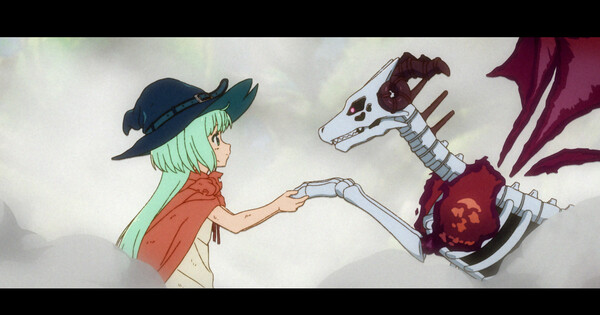
Kadokawa revealed the first main promotional video, main visual, main cast members, and 2027 debut for the television anime of Ichi Yukishiro‘s Skull Dragon’s Precious Daughter (Hone Dragon no Manamusume) manga, on Thursday.

©雪白いち・マッグガーデン/「骨ドラゴンのマナ娘」製作委員会
The anime will star:
Kana Hanazawa as Eve, a girl abandoned in the Forest of Scraps

©雪白いち・マッグガーデン/「骨ドラゴンのマナ娘」製作委員会
Kazuhiko Inoue as Nemu, the Skull Dragon who raised Eve

©雪白いち・マッグガーデン/「骨ドラゴンのマナ娘」製作委員会

©雪白いち・マッグガーデン/「骨ドラゴンのマナ娘」製作委員会
J-Novel Club releases the manga digitally, and Seven Seas Entertainment publishes the manga in print. J-Novel Club describes the story:
In the Forest of Scraps, a place where all manner of things are discarded, an old dragon sleeps away his final days—that is, until an abandoned child suddenly appears before him. The tiny human is Eve, and despite being only five years of age, she has somehow endured the many dangers that surround them. In an act of pity, the dragon decides to raise her as his own…but his time is still running out.
After five years together, he takes his last breath, leaving his precious daughter on her own. Little does the dragon know, Eve is capable of more than he realizes, and their reunion may be sooner than he thinks…
Hoping to improve Eve’s control over her magical abilities before his resurrected body gives out, the skull dragon sets out on an adventure with his reckless human daughter—but who knows what kind of trouble awaits them?
Kuniyasu Nishina (Oshi no Ko, Blue Period, 86 episode director) is directing the anime at Dōga Kōbō. Yuka Yamada (Miss Kobayashi’s Dragon Maid S, Nina the Starry Bride, Tokyo Mew Mew New) is in charge of the series scripts, and Tomoya Atsumi (Demon Slayer: Kimetsu no Yaiba, Love Live! Nijigasaki High School Idol Club, The Quintessential Quintuplets episode key animator) is designing the characters. Kusanagi‘s Daiki Kuribayashi (7th Time Loop: The Villainess Enjoys a Carefree Life, Dragon Ball Super: Broly film) and Yūki Hatakeyama (Black Butler: Emerald Witch Arc, One Piece Film Gold) are in charge of background art.
Yukishiro launched the manga on Mag Garden‘s Mag Comi website in 2020. Mag Garden published the manga’s sixth compiled book volume in August 2025. Seven Seas will publish the sixth volume in English on December 1. The manga went on hiatus in July and will return in spring next year.
Source: Press release
Disclosure: Kadokawa World Entertainment (KWE), a wholly owned subsidiary of Kadokawa Corporation, is the majority owner of Anime News Network, LLC. One or more of the companies mentioned in this article are part of the Kadokawa Group of Companies.
>
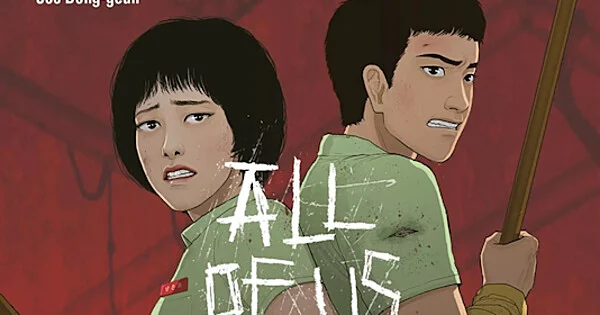

Dong-geun Joo, the creator of the popular webtoon All of Us Are Dead, visited Los Angeles to participate in an event at the Korean Culture Center Los Angeles celebrating Korean webtoons on September 11.
Joo made his debut in 2009 with All of Us Are Dead, which was serialized in Korea until 2011 and quickly gained popularity. The series stood out for making zombies its central theme at a time when zombie stories were relatively uncommon in Korea. It was later adapted into the hit Netflix live-action series of the same name.
Thanks to the success of All of Us Are Dead, Joo has traveled to eight countries to meet fans. After his Los Angeles appearance, he said he would be heading directly to Mexico.
Joo spoke with Anime News Network about his debut, the influences behind his work, the Netflix adaptation, and his latest series, Adonai.
Wonhee Cho (ANN): Why did you choose zombies for your debut?
Dong-geun Joo: I thought that if I was going to draw something, I should draw what I liked the most. The first thing that came to mind was a zombie story.
I’ve always been a huge fan of zombie movies. When I was in college, two of the movies I enjoyed the most were Dawn of the Dead and 28 Days Later. So creating a story about zombies felt very natural to me.

Were you influenced by Japanese manga or anime?
Joo: There weren’t that many zombie stories in Japan at the time, so I wasn’t directly influenced by them.
I’m a fan of horror and thriller stories in general, not just zombies. I grew up reading Japanese manga, including Junji Ito‘s works, so I think those works probably influenced me subconsciously.
Personally, I think creators have to be careful about being influenced by other works. When I was working on All of Us Are Dead, The Walking Dead was the most popular zombie series around. I really wanted to watch it, but I deliberately avoided it because I was afraid it would influence my work. I eventually watched it and loved it. (laughs)
Why did you choose a school as the setting for All of Us Are Dead?
Joo: When I started drawing it, I had only recently graduated from high school. I simply wanted to draw a world that I knew best.
I also think of a school as a miniature version of society. So many different kinds of characters gather in one place, and I thought there would be a lot of stories I could tell.

How involved were you in the live-action adaptation?
Joo: Director Jae-kyoo Lee, who contacted me about adapting All of Us Are Dead, was already a huge star in the industry at the time. I considered the live-action series to be a separate creative work from my webtoon, so I didn’t get very involved.
The director even gave me the script, but I never opened it. Rather than reading the script and imagining what it would look like, I wanted to see it as a finished piece of video.
As a creator, I respect Lee, so I was more interested in seeing how he would reinterpret my work.
When a live-action series or film is based on a manga or webtoon, fans are always very interested in how closely the adaptation follows the original. But from the original creator’s perspective, it’s sometimes more interesting when the adaptation differs from the source material.
People who discover the story through the live-action series may become curious about how it differs from the webtoon and seek out the original. I think that’s a positive thing.

All of Us Are Dead has brought you fans around the world. Is there a memorable fan encounter?
Joo: Thanks to All of Us Are Dead, I’ve been able to visit eight countries. I’m grateful that so many fans came to meet me wherever I went.
Recently, I’ve also started to feel that the webtoon platform itself has grown significantly.
In the past, most fans would tell me that they had watched the live-action series first and then found the webtoon. But since last year, I’ve met many more people who tell me, “I read the original webtoon first. I’m a fan of the original.”
Is there another one of your works you would recommend?
Joo: All of my works are like children to me.
But if I had to recommend one, I’d choose my most recent work, Adonai. It deals with a cult and aliens. It’s similar to the Netflix series 3 Body Problem.
Readers had very divided opinions about the ending, so I’m curious to see how English-speaking readers would respond to it.
There isn’t an official English translation yet, but I hope to meet readers overseas soon.
>
Welcome back, folks! I don’t pay much attention to Star Wars, being that it’s never really been my thing. But the outright adulation that’s been going around for Star Wars: Galactic Racer has my attention. Apparently, ex-Burnout devs worked on the game, which in and of itself ought to be encouragement enough. But I’ve also seen videos of the legendary new Glup Shitto going around, Biddy Blas. I, too, have been entranced by “SCRIB DOON!” (I am not immune to silly voices.)
This is…

Godzilla Minus Zero Director Worked On Games Before Films
People around the world who love tokusatsu and giant monsters rampaging through cities are excited for Godzilla Minus Zero. (Hi, my name is Jean-Karlo, I love tokusatsu and giant monsters…) A long-awaited sequel to the award-winning and fan-cheered Godzilla Minus One, Minus Zero reunites us with old friends and old fears, in addition to director Takashi Yamazaki. Yamazaki’s been at this game for a long time; a look at his filmography reveals a treasure trove of anime films, like Lupin III: The First (which I covered years ago on This Week in Anime with fellow alumni, Nicky) and Stand By Me Doraemon (which I covered with Sylvia)! There are other notable titles, like the 1987 The Drifting Classroom and 1997’s Parasite Eve, which the Parasite Eve games are partially connected to. He also wrote and directed Dragon Quest: Your Story, which I don’t hold against him.
Would you believe me if I told you Yamazaki also dabbled in games? Not small ones, either. He worked on Metroid: Other M!
Yamazaki’s history with games is rather limited; MobyGames only lists six titles to his name, and he mostly handled stuff related to CGI art design or direction. But when you consider some of the stuff he worked on, you can see how he came to direct so many great CGI films (and Godzilla). Consider: the Onimusha 3 opening, which also featured stunt coordination by Donnie Yuen.
Quite possibly the biggest bit of games work in Yamazaki’s oeuvre is the intro to Onimusha 3. Practically a six-minute short film unto itself, the sequence shows protagonist Samanosuke taking on a demonic juggernaut on his own in an attempt at fighting one of Nobunaga Oda’s high-ranking soldiers—single-handed.
Yamazaki responded to a tweet reminding folks of this work from his past, saying, “It was over 20 years ago. That brings back memories.” It goes to show that talent comes out from all over, and skills in one field can apply to others. (And, considering he worked on Metroid: Other M, you can’t really measure someone’s skills off of their past failures.)
Onimusha 3 is still lost in limbo, with fans still awaiting the day that it gets ported to modern consoles. You’d think that managing the likeness of actor Jean Reno, who plays Jacques in Onimusha 3, would be a factor. But Reno actually voiced his willingness to reprise his role last year, so who knows what the hold-up is. You reckon reminding CAPCOM an award-winning filmmaker worked on their game would help…?
Dead of the Brain goes up on Steam
Back in July, we reported how Fakku (the Portland,OR-based eromanga publisher) acquired licenses from studio FairyTale to publish a number of their PC-98 games in the United States. Good news, and very well-timed at that: the first game’s Steam page is already up. As befitting October, the month of Spoops™, it’s Dead of the Brain!

© Fakku, FairyTale
While Dead of Brain isn’t strictly an eroge (it’s mostly horror, nudity aside), it’s still one of FairyTale’s most well-known PC-98 games: a first person adventure where you play as a young man named Cole trying to help a scientist clean up a mess of zombies in the wake of him developing a serum that brings corpses back to life. It’s a little Re-Animator, a little Night of the Living Dead. And it’s gruesome. You mostly interact with the game as a point-and-click adventure, with some quick-time events to deal with some pesky undead.
Fakku‘s playing this one as close to the hilt as they can; while the game is mostly unchanged, they’ve added a few quality-of-life features like the option to restart a scene if you get a “game over,” or displaying hover hints and hit boxes. The Steam page still underlines, however, that Dead of Brain is 30 years old and that it “may seem clunky by modern standards.”
So far, Dead of Brain doesn’t have a release date; one would hope it releases in time for Halloween. But we do know that its FM Synthesizer-backed soundtrack will be available as DLC. We’ll keep folks posted!
Monster Hunter Rise hits 20 million sales
Gonna be honest: I haven’t kept up with Monster Hunter Wilds all that much. Haven’t even played it. Not because I have some kind of issue against it, I was just busy with Xenoblade when it came out. (Man, now I can’t use that as an excuse anymore…) But I know the initial launch was a disappointment for folks. And while the upcoming Ascendance DLC has folks excited, there was a lot of consternation over Wilds. The good news is, that did help people come around on Monster Hunter Rise. Not only that, Monster Hunter Rise hit 20 million copies sold!
\【祝】/
『モンスターハンターライズ』が累計販売本数2,000万本を達成!
ハンターの皆様、応援ありがとうございます!
これからも「モンスターハンター」シリーズをよろしくお願いします!
未プレイの方は、現在各デジタルストアにてセールを実施中!
ハンターデビューのチャンスをお見逃しなく。
#モンハンライズ— モンスターハンターライズ:サンブレイク公式 (@MH_Rise_JP) October 6, 2026
Monster Hunter is in a weird place; while each game is mostly iterative, building upon the mechanics and quality-of-life features of its predecessor, it’s a bit like Street Fighter in that it’s not uncommon for people to pick just the one game and stick with it. Maybe they like the Styles from Monster Hunter Generations. Maybe there’s a movelist they’re attached to. Maybe they hate that you can’t use oils on sword-and-shields anymore. Take your pick. The end result is that you can still play some of these older Monster Hunter games and find folks to play with (especially since Monster Hunter 4 Ultimate is still available on the Switch). This not only gives the older games a ton of longevity, it also helps the games get re-evaluated later on.
This is important, because Rise was… well, I hesitate to say “maligned,” but there was definitely some grousing regarding Rise. Instead of following Monster Hunter World‘s approach and giving players massive detailed maps, Rise toned back some of the size of the game in order to accommodate it being on the Switch. And while you had a ton of nifty movement options like your Wirebugs and the Palamutes, it really did feel like a gussied-up 3DS Monster Hunter, which felt quite stark in the wake of Monster Hunter World.
But again, with the issues folks had with Wilds, it allowed folks to re-evaluate Rise. Which I’m all for. I love the movement options in Rise, and it disappoints me that stuff like the Wirebug weren’t made permanent going forward. While Wilds maintained mounting (a mechanic wherein you could “mount” a monster and deal extra damage to it while effectively rodeo-riding it as it bucked around), Rise introduced Wyvern Riding, wherein you not only mount a monster but have limited control over it. This allowed you to do neat things like steer a monster into a wall to knock it out, or control it to attack some other monster in the area. It’s a bit repetitive, mechanically speaking, but nothing amuses me more than steering a Rathian into a sheer cliffside and watching it brain itself.
What does this mean for Monster Hunter? Well, in the here-and-now: not much. Wilds is still their main project, and CAPCOM isn’t going to course-correct for the game just yet. But I think the next Monster Hunter title after Wilds might take on some aspects from Rise. And it might even combine them with some of the sophistication from World and Wilds… but me, I wanna see the Styles come back. Aerial Lance Style was just fun, man.
Sony Scraps AI Plans, Sells Patents
A few weeks ago, we covered Meta (née Facebook) and its inroads with virtual reality, specifically its attempts at a bespoke VR platform with a handful of games. This week, they got a big boost to their efforts: Sony has seemingly washed their hands of continuing their VR efforts, and have sold their patents related to the field to Meta.
It’s pretty obvious why they’re doing this; ignoring how slow VR’s adoption has been, Sony would rather cut their losses than keep tossing money down that pit. Which is a shame, because the PSVR on PlayStation 4 was actually pretty neat. But PSVR2 wasn’t very well-supported (not to mention, making a numbered continuation to something as niche as VR always seemed like a bit weird of an idea).
Do we stand to lose much from this? Well, other there’s Meta’s growing dominance in the field—for a given number of “growing,” since VR is still really expensive and impractical for a large population of potential buyers. Even if the hardware wasn’t so expensive and people had a hard time setting aside room in their precarious living situations for VR, the experience isn’t very comfortable and is liable to make a lot of people feel unwell from motion sickness. Meta’s staking everything on making “fetch” happen with VR, though. We’ll see how that pans out.
Wada Sachiko Rings In 22 Years of Fire Emblem: The Sacred Stones
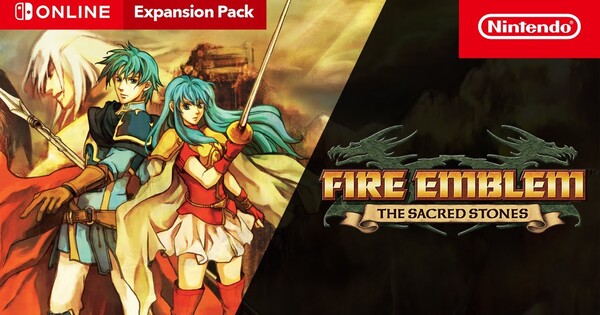
Wada Sachiko’s a renowned name when it comes to the Fire Emblem series, being that they’ve been involved with the series for quite a while–particularly all three Game Boy Advance entries. This October 7th marked the 22nd anniversary for Fire Emblem: The Sacred Stones, an Wada rang the occasion in with new artwork of game co-protagonist, the Lord (“Lady”?) Eirika.
#FE聖魔の光石
https://t.co/44aVeaSH7m… https://t.co/uu6QjK57xr— ワダサチコ (@wadadot_Lv) October 7, 2026
The first two GBA Fire Emblem games were rather special in their own way; The Binding Blade never came stateside, but it featured Roy, who went on to appear in Super Smash Bros. Melee. Roy’s father, Eliwood, would star in the follow-up, Fire Emblem: The Blazing Blade, which ironically went on to be the first Fire Emblem game released in North America. While The Blazing Blade wasn’t exactly the best game in the franchise, it was rather liked by North American fans. So a follow-up was greatly anticipated. Wada, who had mostly served as the main artist for the other two GBA Fire Emblem games, also served as director for the new game. And for what it was worth, Sacred Stones took quite a few swings.
Sacred Stones told the story of the twin siblings Ephraim and Eirika, whose nation was overrun by a childhood friend in pursuit of the titular sacred stones. While you could choose either sibling at the outset of the game, they had their own unique routes through the story, with different characters they could meet along the way. North American fans were introduced to both branching promotions for characters and a map screen that could be explored, with old maps giving the options of being revisited via random encounters. These weren’t strictly new to the Fire Emblem series at large—both of those mechanics originated in Fire Emblem Gaiden. But North American fans were experiencing them for the first time, and had… thoughts on them.
For starters were the branching promotions; unlike Blazing Blade, where characters only had one promotion for their dedicated classes (Myrmidons into Swordmasters, Mercenaries into Heroes, MAGES. into Sages, and so on), characters in Sacred Stones could choose between two classes to promote into. Now your Cavaliers could choose between promoting into Paladins, for greater versatility, or Great Knights, for greater combat prowess. MAGES. and Clerics could either promote into Sages, for greater raw power, or Priests. And so on. And then there were the Journeyman classes, which had an extra promotion class; this was the best way of getting a Berserker or a really tanky General.
As for the map, being able to grind out battles against random encounters meant players could grind up experience points for their whole armies, theoretically granting use to everyone they’d recruited. This also potentially meant that money wasn’t as scarce. But this, and the branching promotions, had problems. For starters, some classes were inherently better than others. Spellcasters in particular had no reason to promote into Sages—not when Bishops had access to the Slayer skill, which tripled their damage to monsters. Folks also didn’t appreciate the maps, which just felt grindy.
Sacred Stones didn’t hurt the Fire Emblem series too much, though. It paved the way for Path of Radiance on the GameCube, which is still one of the most beloved entries to this day. And ironically, many of the mechanics from Sacred Stones—namely, branching progression and the map system, went on to become series standard for Fire Emblem games come Fire Emblem: Awakening on the 3DS.
As for Eirika and Ephraim, they’re still around. They’re still available through Fire Emblem Heroes, where they have a strong fan following. And Eirika even had a DLC appearance in Fire Emblem Awakening, where she was given the new Bride class. Sacred Stones similarly has more than a few loyal fans to this day, and Wada Sachiko’s contributions to Fire Emblem, from her art to her creative thumbprint, are still enjoyed and appreciated.
Let’s wrap up with some quick tidbits:
That’ll do it for this week, I think. This weekend is Portland Retro Game Expo! While I likely won’t be attending all three days, I’ll make time to visit the joint on Saturday. I’ve got to get my stuff prepared for Kumoricon this November, where I’ve been approved for another History of Japanese Superheroes panel! Maybe folks will see me, maybe not. Be good to each other, I’ll see you in seven.
This Week In Games! is written from idyllic Portland by Jean-Karlo Lemus. When not collaborating with Anime News Network, Jean-Karlo can be found playing Japanese RPGs, eating popcorn, watching VTuber content, and watching tokusatsu. You can keep up with him at @ventcard.bsky.social.
The views and opinions expressed in this article are solely those of the author(s) and do not necessarily represent the views of Anime News Network, its employees, owners, or sponsors.
>
Anime
Subtlety is Key: An Interview with Taihi Kimura, the Japanese Voice of Kagurabachi Anime’s Chihiro Rokuhira – All the News and Reviews from Anime Expo 2026
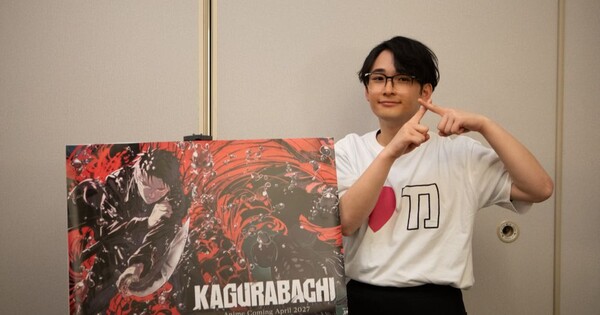

Prior to an incredibly enthusiastic, full-room world premiere of the Kagurabachi anime series, Taihi Kimura sat down with Anime News Network to talk about his role as Chihiro Rokuhira. Before Kimura landed his role as the black-cloaked main character, he took home the Best New Actor Award at the 20th Seiyū Awards. He also happened to voice another red, black, and white colored swordsman in a separate role-playing game.
During our conversation, Kimura spoke about how he landed the role of Chihiro as well as his experience working with Tomokazu Seki, the voice actor for Kunishige Rokuhira. At the panel, the award-winning voice actor shared how the veteran voice actor “led the way” for him, making it easy to “get started.”
How did you land the role of Chihiro Rokuhira? Was it through an audition, or were you specifically asked to be in this role?
Taihi Kimura: I landed the role through an audition. After a tape audition, those who were selected from that initial process would be called to do an audition at the studio with the production staff there.
What was your first impression of Kagurabachi and Chihiro?
KIMURA: I thought the manga was absolutely beautiful, and its composition was very movie-like. As for Chihiro, a young man driven by revenge, I was drawn to his journey as a character.

©Takeru Hokazono/SHUEISHA,Project Kagurabachi
Congratulations on winning the Best New Actor Award at the 20th Seiyū Awards this year. How has voicing Chihiro helped you grow as a voice actor?
KIMURA: Thank you. Kagurabachi‘s anime is in the process of being recorded. I’m hoping people know more about me through watching the anime.
Which aspect of Chihiro was most challenging for you to act out?
KIMURA: I would describe myself as a talkative person, but in terms of Chihiro, he’s more reserved and not so talkative. He has something he’s concealed inside him, and he doesn’t show much through his expressions. That’s one of the most challenging points I had to face while acting as him.
In the trailer, we hear a little bit of Chihiro using a powerful, menacing, yet subtle voice. How did you channel that?
KIMURA: The message within that trailer is that Chihiro has an unwavering, strong resolve inside him, and I had to push that feeling to the surface. But it was very challenging for me because I couldn’t push it out too much. I still have to maintain Chihiro’s calm character, but showing that strong feeling within him was a challenge for me.

©Takeru Hokazono/SHUEISHA,Project Kagurabachi
What were the easiest aspects of Chihiro to act?
KIMURA: I would say the happy days when Chihiro was a 15-year-old with his father, Kunishige. His life wasn’t as complicated compared to when he grew up. In other words, not exactly complicated, where he’s both mature and not very childish. He’s much more complex after that.
Regarding the sword-fighting sequences, did you do anything special to practice for when you vocalize the fighting or slashing?
KIMURA: Actually, I haven’t recorded many of those scenes yet. However, I try not to make much noise because many strong sword masters don’t do that. If a great effort went into the vocalization, it would sound like he is trying too hard.
Can you talk about a memorable moment you had with Tomokazu Seki, who voices Chihiro’s father?
KIMURA: Hearing the very first line spoken by Tomokazu Seki-san(as Kunishige), I felt that I was being led by him. This was our first time working together, so I hope we get to spend more time together.
Do you have a message for the global Kagurabachi fans?
KIMURA: The anime is going to be superb, and as a fan myself, I’m excited to see more episodes. I hope the audience feels just as pumped as I do.
The Kagurabachi anime series will premiere in April 2027 and stream in North America on Crunchyroll. You can follow the anime’s official X account @kb_anime_en for more updates.
>
Even in Titans' fantasy wasteland, Carnell Tate emerges as a must-have player

Politics Home | Labour Believe They Can Win Back Green Voters After Holborn And St Pancras By-Election

All of Us Are Dead Creator Dong-geun Joo Talks Zombies, Adaptations, and His Global Fans
-

 movies5 months ago
Search For Canadian TV Actor Stewart McLean Now Homicide Investigation
-

 Fashion9 years ago
These ’90s fashion trends are making a comeback in 2017
-
Fashion9 years ago
According to Dior Couture, this taboo fashion accessory is back
-
Fashion9 years ago
Model Jocelyn Chew’s Instagram is the best vacation you’ve ever had
-
Fashion9 years ago
Emily Ratajkowski channels back-to-school style
-
Fashion9 years ago
9 Celebrities who have spoken out about being photoshopped
-

 Anime4 months ago
Rurouni Kenshin: Hokkaido Arc Manga Takes 1-Issue Break – News
-

 Anime3 months ago
HIDIVE to Stream English Dubs for The World Is Dancing, The Forsaken Saintess and Her Foodie Roadtrip in Another World, The Dangers in My Heart: The Movie Anime – News