
Oasis fans
Disney+


For decades people have flocked to Abbey Road Studios, home to one of the most famous instruments in the world: Mrs. Mills’ 1905 Steinway Vertegrand. A holdover from the music-hall era, Mills had instrumental hits with this piano in the UK until the ’70s, almost until her death in 1978, aged 59. For some reason, though, music fans are less enthralled by the fact that Mills used it on such ragtime classics as 1969’s “Battle of Britain Medley” as they are by the fact that a band from Liverpool, known as The Beatles, borrowed it for songs such as “Penny Lane”, “With a Little Help from My Friends” and “The Fool on the Hill”.
Abbey Road — long seen as the spiritual home of The Beatles, who practically lived there during their comparatively short-lived recording career — was the scene of a fan event held by Disney+ earlier this week to launch the home-ent debut of a new documentary starring The Beatles’ most famous protégés. Titled Oasis: Don’t Look Back in Anger, the film hits streaming with added extras pulled from hours of footage, from Cardiff to South Korea and beyond, including the songs “Half the World Away” and “Do You Know What I Mean?”
Though brothers Noel and Liam Gallagher were absent, the film’s two directors —Dylan Southern and Will Lovelace — were present with writer Steven Knight, more on whom later. Like the band’s 2025 reunion tour, which this 2hr-plus film documents, Oasis: Don’t Look Back in Anger debuted to high demand, taking taken £2.66 million at the UK and Irish box office during its opening weekend, making over £4 million gross since its premiere less than a month ago, comfortably taking the number one spot for a doc.
Inevitably, the film begins late 2024 with the media’s incredulity that a band that had famously — and famously acrimoniously — imploded moments before going onstage at a French rock festival in 2009 were announcing a reunion tour for the following year. It soon transpires, however, that whatever had fueled the Gallagher brothers’ feud is now water under the bridge, and instead of looking for drama onstage, Southern and Lovelace train their eyes and ears on the millions of people all over the world who battled dynamic pricing to see a band that many thought had hit its peak in the ’90s.
Said Knight, “The whole point of doing the thing was to explore why this music, these words, and the poetry of these words have this effect on so many different people around the world, to the point where it makes them emotional, where they feel as if the songs are about their lives. You see that unfailingly happen every single time, no matter what you do, no matter how you put it together — somehow those songs have that effect on people. So, [the film] is about the power of the music, but also about the fact that they are bulletproof, somehow, as a band.”
The financial success of the doc suggests that it came as solace to the many who failed to score tickets or simply couldn’t afford them. “It’s been so amazing to see the reaction to it,” said Southern. “We lived it for 18 months from the rehearsals, through the tour, through a year of editing it. And then you get a bit snow-blind. You watch this thing over and over again, and you get too concerned with details. But then to be in a cinema, and see people walk out crying, it’s so validating. We knew that it was in there, but the way that this film has been received has been beyond what we could have imagined, but then always so obvious — because people love Oasis, and this whole tour meant so much to them — that all we had to do was point a camera at it and show it back to people.”
Knight, who wrote the film’s framing structure and interviewed the band at length, explained that part of the appeal of the project was that the results were far from expected. “Noel said that when they announced the tour, they didn’t realize what the response would be. They were completely overwhelmed by the demand for tickets. And so, it became quite obvious that it wasn’t just the original fans, it was a whole new generation, probably two generations of people who wanted them. So, the question was to find out why people had developed such a relationship with this music, which had not been advertised or marketed for 16 years. That’s why we wanted to find people around the world who had personal connections with it. But it’s Dylan and Will who crafted this, who put the cameras on the people in the audience and did the whole architecture of it, saying, ‘Look at this. This is the real story. Look what’s happening out there.’”
Oasis fans
Disney+
Lovelace duly shared the credit with the many sound recordists and cinematographers, including Oscar winner Lol Crawley, who captured the images seen in the film. “We had a team of brilliant camera people and sound people all over the world,” he recalled, “and as Steven said, we knew we wanted the film to be as much about the fans as the band, but we didn’t quite know what that really meant until we got to [the first show at] Cardiff and realized what this music actually meant to people. And so, our team of camera people, we threw them into the crowd. We wanted them to be as close to the fans as you could get, search out people who might have been seeing the band for the first ever time and find the kind of stories that were unfolding in the audience.”
Southern summarized the attitude succinctly. “I think our ethos was, in a way, that the most important member of Oasis is the crowd. The band, as charismatic as they are, stand still; the emotion is happening out there amongst the crowd. So, the question was, how do we convey what this band means to people? And we did it by training the camera on those people in the crowd and seeing the immense emotional effect that they were having. I mean, it sounds crazy, but making this film brought me back to some core human values that living in London and grinding at work every day makes you forget. Like, being kind is a good thing. Forgiveness is a good thing. Remembering how short life is is a good thing. I cried during the edit of this film, I cried during the filming of this film, and I cried watching it with an audience. It was really special.”
At this point, we may note that throughout the gestation of the Oasis project, Knight has been busy with the small matter of Bond 26, the first in the franchise to be made since Daniel Craig quit and without any input from the Broccoli family. So, what can Oasis: Don’t Look Back in Anger tell us about how that might be going? Well, quite a lot, actually. Like many of Knight’s fiction projects — notably Peaky Blinders — the film is a working-class underdog story with strong undertones of allegiance and duty. Knight also wrote and directed the single-set drama Locke, in which Tom Hardy plays a construction foreman forced to confess an infidelity to his wife and sons, suggesting that his Bond is likely to be a man of his word, and perhaps more blue-collar that previously shown.
The intriguing part, however, is the Oasis film’s use of international footage, taking in more countries than the average Bond movie. Knight said that he and the directors wanted the film to have a particular message “at a time of division and all the bollocks that’s going on”; that message being that “in every different place in the world with loads of different sorts of people and different backgrounds, the reaction and the effect of the songs is the same. It’s always the same with everybody. All these people are the same.” Quite how that credo jives with the now-controversial Cold War conspiracies, exoticism and colonial mindset of Ian Fleming’s original novels will be interesting to see…
Oasis: Don’t Look Back in Anger streams exclusively on Disney+ from Friday 9 October with previously unseen footage
>
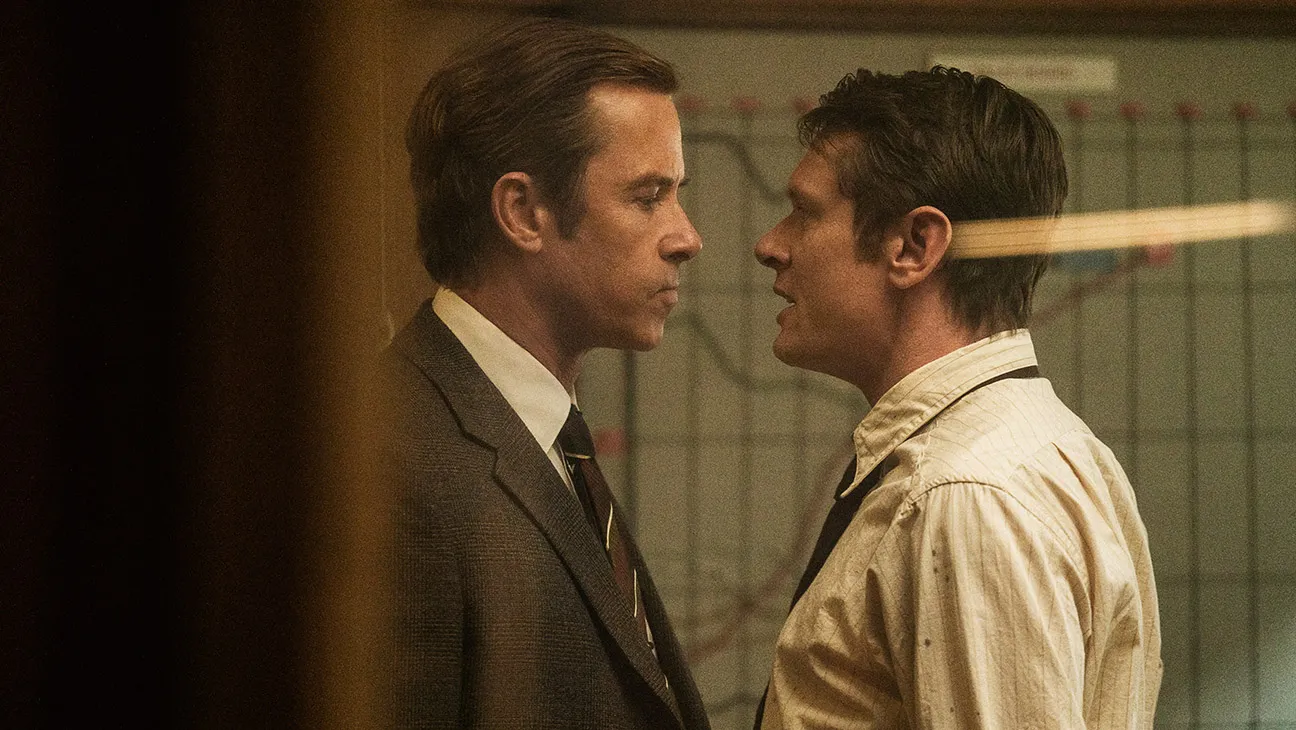
Director and producer Danny Boyle discussed his latest film, Ink, which traces Rupert Murdoch‘s rise on Fleet Street and takeover of the tabloid The Sun, and his film career at an event during the 70th edition of the BFI London Film Festival on Friday. And he shared some thoughts that surprised audience members.
The filmmaker talked to Puck‘s Matt Belloni in a wide-ranging discussion that was partially recorded for his The Town podcast.
Boyle recalled an encounter with Murdoch. “I met him, not for this project, but because Slumdog Millionaire … made him a lot of money,” he said. “[Fox Searchlight] were the studio that picked it up and made a huge amount of money,” so Boyle was invited to “a lunch party in a garden somewhere.” But he acknowledged: “I can’t remember [details], and it was an extremely uneventful meeting.”
Discussing the rise of AI, Boyle had some thoughts to share when asked if he sees the technology as an opportunity, a threat or something else. “It’s a part of the toolbox that the visual effects companies use now,” the creative offered. “It just is, and we used it very sparingly [in Ink], and we were very careful to make sure it didn’t replace anyone.”
The Ink team did, however, use AI to recreate late U.K. Prime Minister Margaret “Maggie” Thatcher’s face. “I didn’t want a Thatcher imitator because the points at which she appears in the film, it’s documented that she used to visit [The Sun editor] Larry Lamb’s office late at night after the edition had gone out, and they’d drink whiskey together,” Boyle said. “I didn’t want an impersonator. I wanted her to be it. Of course, we got an impersonator in to play the whole scene” and then used AI to put Thatcher’s face on her.”
In case you wonder if the filmmaker asked for any rights or flagged this, Boyle shared: “I got to be honest, I declined to ask the estate for permission to do that. I don’t think the estate of people like Margaret Thatcher should have control over our ability to insist on ideas in art about what her influence was on our lives. So that was very important to me.”
Boyle also discussed the issue of power in connection with technology giants. “The danger is when the newspapers are gone and the portals are just our screens,” the filmmaker argued. “Will those journalists be allowed to hold truth to power, because the power then will be [with] the tech giants who control these platforms. And obviously the rise of AI and replacing journalists with AI is another compounding factor of that.”
Asked about movies that really impressed him this year, Boyle shared: ”I loved Obsession and Backrooms, and we obviously really enjoyed The Odyssey. I’m really looking forward to Dune 3.”
in
>
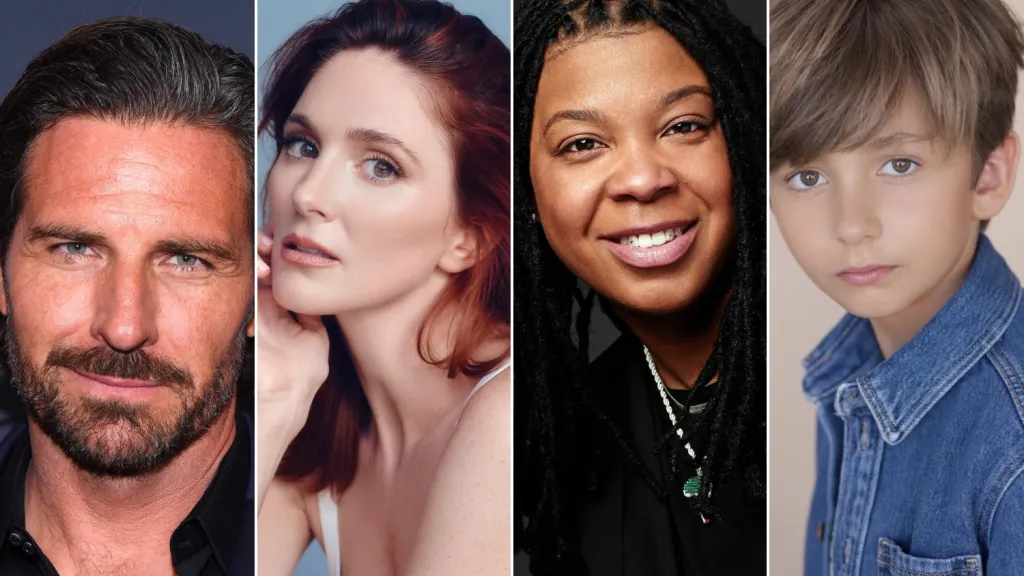
EXCLUSIVE: ABC’s Scrubs has added four new cast members for Season 2: Ed Quinn (The Oval), Stephanie Koenig (Lessons in Chemistry), Punkie Johnson (The Chi) and Kellan Tetlow (This Is Us).
In Season 2 of the 30-minute revival, J.D. (Zach Braff), Turk (Donald Faison) and Elliot (Sarah Chalke) have leveled up from interns to icons at Sacred Heart. Now, the respected doctors inspire the next generation while balancing the ups and downs of working in a hospital. Together with characters new and old, they are navigating this next chapter with laughter, heart, and some surprises along the way.
In a recurring role, Quinn will play Dr. Jax, overly confident and charming; he’s the classic adrenaline junkie, bro-y head of the ER.
In a recurring role, Koenig will play Cassie, the new hospital administrator.
In a guest-starring role, Johnson will play Dee, a patient who is a tough prisoner with an even tougher dilemma.
In a guest-starring role, Tetlow will play Ollie, J.D. and Elliot’s son.
Bill Lawrence of Doozer Productions created the original series and serves as executive producer alongside Jeff Ingold and Liza Katzer, also of Doozer Productions. Braff, Faison and Chalke also executive produce, as well as Mike Royce, Mathew Harawitz, Randall Keenan Winston, and Michael Spiller. Aseem Batra serves as EP and showrunner. Scrubs is produced by 20th Television, a part of Disney Television Studios.
Quinn is repped by Realm Talent, Luber Roklin, Goodman Genow Schenkman. Koenig is repped by Paradigm and Green Management. Johnson is repped by Underscore Talent, WME, and Ziffren Law. Tetlow is repped by The Osbrink Agency.
>

EXCLUSIVE: WIA, the global nonprofit championing women, non-binary, and underrepresented talent across animation, VFX, and gaming, has named Oscar-nominated producer Jinko Gotoh as its new President.
Gotoh succeeds Marge Dean, Head of Skybound Animation Studio, who concludes a 13-year run as President this month. Previously, she’d served alongside Dean as the organization’s Vice President for over a decade.
With Gotoh’s elevation, Julie Ann Crommett, Founder & CEO of Collective Moxie and current WIA Secretary, will take on the role of Vice President. Tracy Campbell, Director – Production Training & Development at Walt Disney Animation Studios, will take on the role of Secretary, with animation exec Sharon Taylor stepping in as Treasurer.
Moving forward, Dean will remain an involved and valued advisor to WIA, taking on the honorary title of President Emerita, in recognition of her contributions. WIA credits her with spurring unprecedented organizational growth, international expansion, and sector-wide initiatives that have helped advance industry standards for equity and representation.
Dean will formally confirm her decision to step down from WIA’s board during a special presentation today at L.A. festival Animation Is Film.
In a statement on the transition, Dean told Deadline, “Leading WIA for the past thirteen years has been one of the greatest privileges of my career. When I stepped into the role, we were a small group with a big idea about what this industry could be. Today, WIA is a global community with almost 18,000 members, and representation of women and nonbinary people in the industry has grown from 20% to 33%.”
Dean emphasized, “We’re not at parity yet, but we’re closer than we’ve ever been. What we’ve achieved never came down to one person. It happened because thousands of underrepresented creatives and the allies who stood with us believed change was possible and made it happen.”
Still, she said, there is work to be done, which is why the moment for new leadership is now.
“I’m so happy to pass the baton to Jinko, who has been beside me for the past decade. I can’t think of anyone better to lead the organization into its next chapter. I’m proud of what we’ve built together and excited to see what comes next.”
Gotoh steps into the WIA presidency as one of the most respected figures in animation. A BAFTA winner and Oscar-nominated producer, her career spans major studios and acclaimed independent features, with credits including Klaus, The Lego Movie 2, The Little Prince, The Illusionist, and 9. She began her feature career as CGI producer on Space Jam before taking on senior digital production leadership roles at Walt Disney Animation Studios and later contributing to Pixar’s Oscar winner Finding Nemo. Currently producing Sony Pictures Animation’s Spider-Man: Beyond the Spider-Verse, her industry advocacy work also includes serving on AMPAS’ Board of Governors, as well as the PGA board.
Gotoh told us, “Marge’s leadership has shaped WIA into the global organisation it is today, and I am deeply grateful for her partnership and vision over so many years. Stepping into the role of President is an honour, and I look forward to working alongside our Board to continue expanding WIA’s reach – from North America to Europe, Asia, Latin America, Africa, and beyond. As our industry navigates profound change, WIA’s commitment remains clear: to advance gender equity in animation, VFX, and gaming, and to provide meaningful programming, mentorship, and resources to every creative who needs it. I’m also deeply appreciative of the Global Fund Sponsors who have supported this work since 2019 and helped us extend our impact worldwide. I’m excited for what we will build together in this next chapter.”
Founded three decades ago as Women In Animation, WIA’s mission is to continue building a more equitable, innovative, and inclusive future for animation worldwide. Over the last year, the organization has continued to expand its membership, with 800 new members taking their total tally to 18,000. WIA Communities grew to 58 chapters and collectives spanning Vancouver to New York City, the UK to Nepal, and Colombia, hosting 761 events — nearly a 50% year-on-year increase. The organization also welcomed Hayley Porter as Executive Director, celebrated the sixth year of its Mentorship Circles program, and returned to Annecy with a 650-attendee 10th edition of its WIA World Summit.
Directors on WIA’s Board now include:
● Amy Smith – Global Director, Recruitment & Outreach at Framestore – UK
● Barbara Stephen – President/CEO, Flying Bark Productions – Australia
● Brendan Burch – President, Six Point Harness; COO, Mondo Media – NYC, USA
● Christine Chang – Head of Global Operations, Airbnb – LA, USA
● Craig Hunter – Chief Operating Officer, Minno – LA, USA
● Deepa Joshi – Co-CEO, Incessant Rain Studios; Founder, WIA Nepal – LA, USA
● Hsiang Chin Moe – Chair, BFA Animation, School of Visual Arts – NYC, USA
● Jinko Gotoh – Oscar nominated Producer – LA, USA
● Julie Ann Crommet – Founder & CEO of Collective Moxie, Colorado, USA
● Maya Penn – Artist, animator, founder of Upenndo! Productions and Maya’s Ideas; Goodwill Ambassador (FAO); global speaker and mentor – Georgia, USA
● Rozanna Tesler Fried – Principal Counsel, Business & Legal Affairs, Film at Netflix – LA, USA
● Sharon Taylor, Animation Executive – Australia
● Tracy Campbell, Director – Production Training & Development at Walt Disney Animation Studios – LA, USA
>


Search For Canadian TV Actor Stewart McLean Now Homicide Investigation


These ’90s fashion trends are making a comeback in 2017
According to Dior Couture, this taboo fashion accessory is back
Model Jocelyn Chew’s Instagram is the best vacation you’ve ever had
Emily Ratajkowski channels back-to-school style
9 Celebrities who have spoken out about being photoshopped


Rurouni Kenshin: Hokkaido Arc Manga Takes 1-Issue Break – News


HIDIVE to Stream English Dubs for The World Is Dancing, The Forsaken Saintess and Her Foodie Roadtrip in Another World, The Dangers in My Heart: The Movie Anime – News
