
The Hollywood Reporter‘s original review of The French Connection.


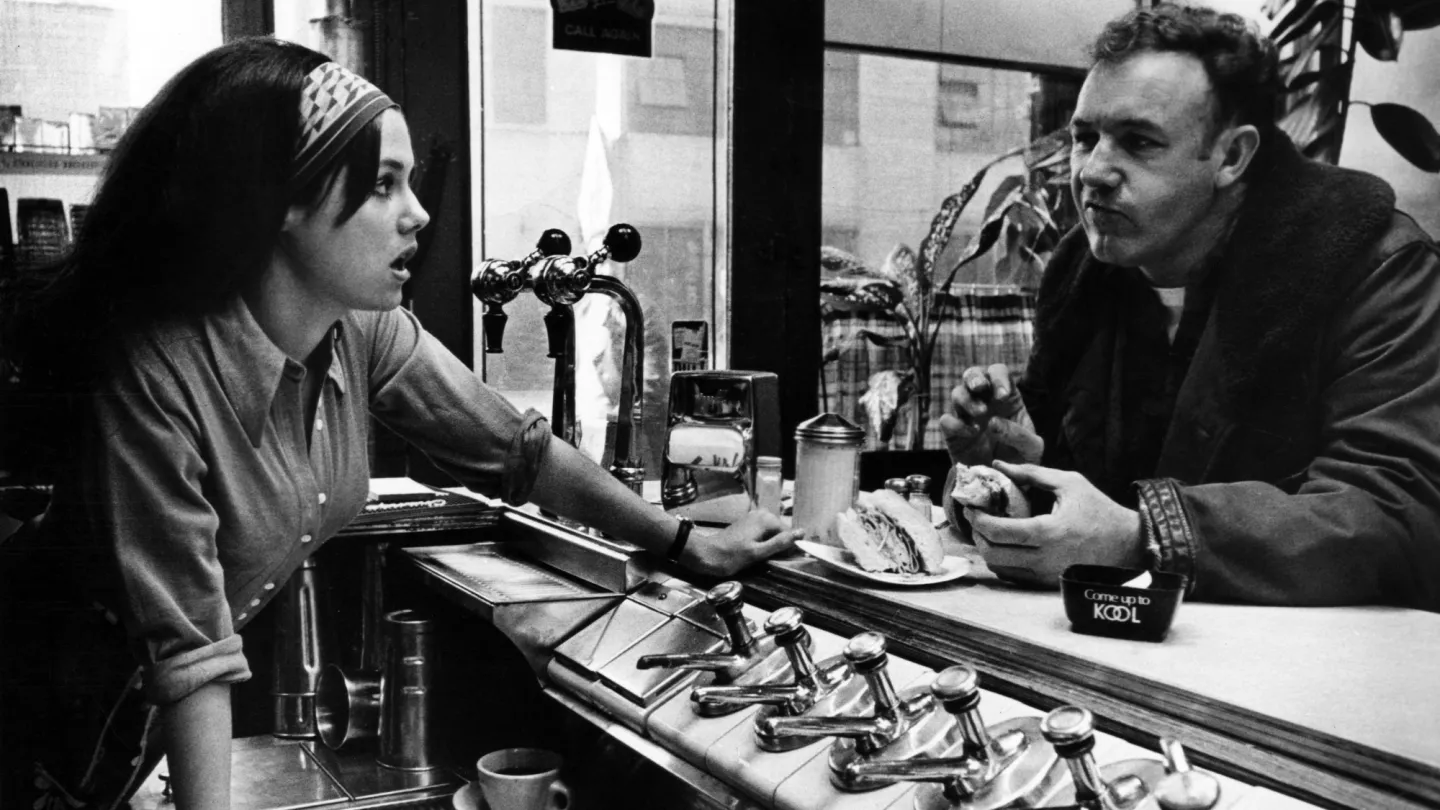
On Oct. 9, 1971, 20th-Fox unveiled WIlliam Friedkin’s The French Connection in theaters. The Gene Hackman thriller went on to land 8 nominations at the 44th Academy Awards, claiming five wins including for best actor, director, writing, editing and picture. The Hollywood Reporter’s original review, headlined “Fox’s ‘French Connection is a first-rate thriller,” is below:
The French Connection has already been open for three weeks in New York, where it is reported to be doing land-office business. It’s easy to see why. The picture is a first-rate thriller about the investigation and crackdown of a heroin-smuggling operation, set mostly in New York, and scripted by Ernest Tidyman from the Robin Moore book. And the director, William Friedkin, knew what he was about. Almost from the beginning, you can feel your stomach muscles tightening because you’re afraid of missing something, and as the movie goes along, you can sense the audience sliding forward in their seats, straining to catch every detail.
It’s an astonishingly well-edited film, with a spectacular chase sequence in which Marcel Bozzuffi, the screen’s newest man-you-love-to-hate (he was the homosexual murderer in Z), is in an elevated train with his pistol at the conductor’s head while Gene Hackman, as a police detective, chases him by car from below, careening at top speed around pedestrians and track supports and other cars. (Philip D’Antoni, the producer, also produced Bullitt.) And it’s filled with sharp, funny bits of business in the action and dialogue: Bozzuffi tearing a piece of bread from a loaf clutched by a man he’s just shot in the face; Fernando Rey, the mastermind behind the connection, fishing in the bay behind his home in Marseilles; the inflection that Hackman gives to the word “cute.”
The film is most impressive, however, for the fact that Friedkin, after The Birthday Party and The Boys in the Band and the predominately backstage The Night They Raided Minsky‘s, has finally gotten outdoors not simply for surface dazzle, as in Minsky’s, but to give depth and texture to his story. In recent years, New York has become such a familiar location in American movies that I think it’s safe to say that, even for non-New Yorkers, the New York back grounds lately have hardly been notice able. But Friedkin and his cinematographer, Owen Roizman, have suc ceeded in integrating the action and the backgrounds, often wittily, as in a sequence when Bozzuffi and Rey dine in high style while outside the restaurant, staking them out, Hackman gnaws on a limp slab of pizza.
The score by Don Ellis is shrewdly and sparely used, and the movie is uniformly well-acted, by a cast that also includes Roy Scheider, Tony LoBianco, and Harold Gary. The character of Det. “Popeye” Doyle is less The French Connection‘s protagonist than its chief participant, and so Gene Hackman is still denied a true star role; but Hackman is rousingly good in it. Hackman, who was so fine as Clyde’s brother in Bonnie and Clyde and as the ski coach in Downhill Racer and as the son in I Never Sang for My Father, has quietly be come one of the most memorable actors in our movies. Now if they could only find a leading lady for him. — Craig Fisher, originally published on Oct. 29, 1971.
The Hollywood Reporter‘s original review of The French Connection.
Promo art for The French Connection in 1971.
>
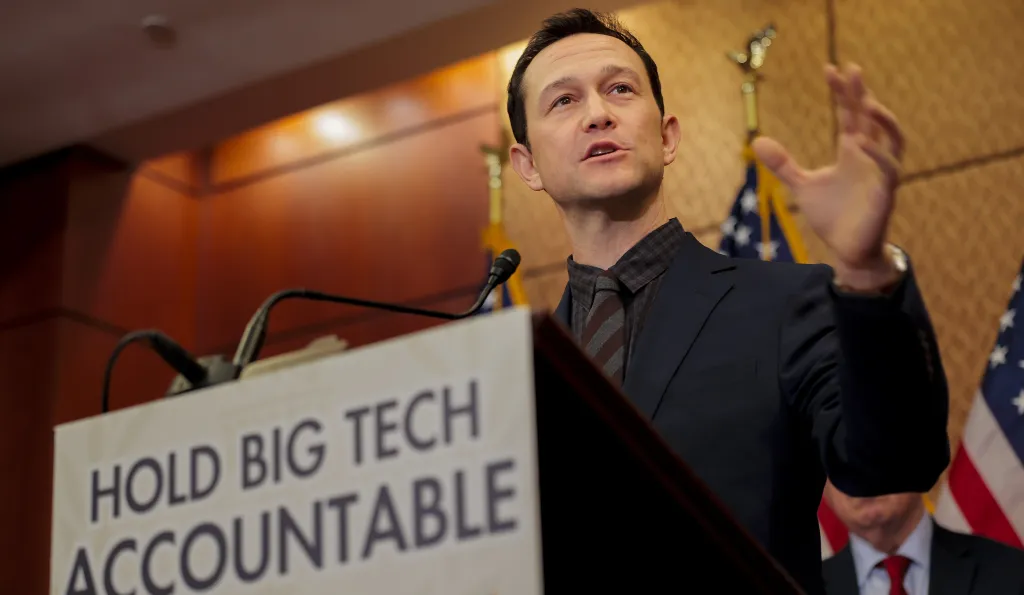
In a new video interview for The New York Times, actor Joseph Gordon-Levitt, serving as the United Nations’ global advocate of human-centric digital governance, has some concerning words about the impact of artificial intelligence. Things like the “decline of democracy, the decline of human empathy” and the hijacking “of your intimacy.”
The video interview takes place as Gordon-Levitt is in en route to address world leaders and officials gathered at the U.N. on the impact of A.I.
Watch the full video below.
First question: Why should the public listen to an actor on A.I. safety?
“Very fair question,” Gordon-Levitt responds. “Why listen to an actor? Don’t listen to an actor. You should read Human Compatible by Stuart Russell. Go look up Yoshua Bengio. Read posts by people who work in alignment and safety and policy. You don’t want to read all those things? Well, I did! So, you know, if you want to listen to me, that’s a shortcut.”
Gordon-Levitt continues, “What we don’t want is a bunch of people confused or apathetic while these very fast-moving businesses design the future by themselves, just in the interests of their own profits. A lot of what needs to happen, I think, has to do with communication, which is ultimately kind of what acting or filmmaking is.”
At one point in the direct-to-cell phone-camera interview, Gordon-Levitt is asked what he fears most about A.I.
“At the risk of annoying The New York Times,” he responds, “I would object to that question just because reducing these concerns into one sound bite of fear — that’s one of the problems. To me, saying: Oh, I’m scared that A.I. could exterminate all of humanity — that doesn’t really get at the substance of the concern. There’s real validity to that concern. But that’s not the thing that really worries me.
“The thing that worries me is a lot more complicated and a lot more boring to talk about, because it’s a lot more dense. The decline of democracy, the decline of human empathy. These companies are betting on the notion that they’re going to take over the entire economy. That would be totalitarianism, and that would be really bad.”
He continues, “Simultaneously, these models are being trained to hijack your intimacy, to make friends with you, to get you to fall in love with it. We shouldn’t be scared of an A.I. We should be concerned about the people building A.I.”
When Gordon-Levitt, a co-founder of Creators Coalition on A.I. and recently named one of Time magazine’s 100 most influential “innovators, leaders, and thinkers” on the topic, is asked to explain the “human-centric digital governance” phrase in his U.N. title, the actor concedes “it’s sort of a mouthful.”
“It just means that digital technology should be governed by people and for people,” he says. “’A.I.’ is nothing but algorithmically recombined, human-produced data. It’s humans. Calling it artificial intelligence sort of decenters humans. It offers this kind of magical fictitious character, this A.I. that we’ve seen in various sci-fi movies, but really — really all it is is us. It’s us.”
On whether the “slow-moving” U.N. can force a “fast-moving” Silicon Valley to play by certain rules, Gordon-Levitt responds, “To be honest, this is one of the things that I have found sort of daunting or troubling. I don’t know the answer. I think if it does take, say, seven years for the U.N. to put together an internationally agreed upon regulatory framework for A.I., then seven years from now we’ll be glad that we started now.”
>
Korean writer-director Han Jun-hee talked strategies for getting audiences to respond to risky or unfamiliar material in a masterclass at Netflix’s Creative Asia day at Busan International Film Festival.
“There has to be risk for something to be interesting. Only if you take risks can you tell an interesting story. Trying to play it safe all the time, especially in Korea, is a risk in itself,” said Han, who is involved in two series premiering in Busan’s On Screen section – The Blue Road, which he wrote and directed, and Dead-End Job, which he created.
In a talk moderated by Netflix Korea content manager Kim Kijae, Han explained how he approached his breakout hit series D.P. (2021), about Korean military police on a mission to catch deserters, and Weak Hero Class (2022), about bullying and high school violence. Han wrote and directed D.P. while he served as creative director on Weak Hero Class.
“When it comes to army stories, some people think only guys can relate; but for female audience, they all have fathers or brothers who might have been in the army. If you think outside of the box, it could be an interesting story,” Han said.
In the case of Weak Hero Class, which revolved around a group of male friends and features a lot of fighting, Han said: “In Korea, the perception is that this genre can only be made into a film with a small budget. And again, the story looks like it might only appeal to guys. But we all went through high school; met friends there, got jealous of someone, wanted to be someone; these are universal feelings. But then we also added action to the story.”
Half joking, Han also said that casting a trio of hot, young actors – Park Ji-hoon, Choi Hyun-wook and Hong Kyung – was a conscious decision to draw in female audiences. But he also noted that all three have gone on to prove themselves as talented actors and big stars. Park starred in The King’s Warden, released earlier this year, which has become the highest-grossing Korean film of all time.
Han also talked about the importance of working with new directors as he stepped back from the directing role for Weak Hero Class: “We have so many new talents emerging, so we can help them make something great, and by bringing in an emerging director, I knew Weak Hero Class would really shine.”
Moving on to 2024 feature Pilot, Han described how he used genre, in this case comedy, to convey a message to the audience. Directed by Kim Han-gyul, the film is an adaptation of 2012 Swedish film Cockpit about a pilot who pretends to be his own younger sister after being fired from his job.
“When we gave the script to the main actor [Jo Jung-suk], he responded in just three days. He said he wanted to try different things in comedy and felt this part could go deeper than being a superficial comedy role,” Han recalled.
“With all the writers and directors I work with, if we take on something we’re not familiar with, we have to show that we understand it,” he added. “We can’t be prejudiced or biased. Whatever the story, I don’t think there’s a topic we can’t cover in a series or film. I don’t think you can say, ‘This isn’t commercial enough.’ If you have a message you want to convey to the audience, what is it you want to say? That is the most important part of filmmaking.”
He took a similar approach when creating Dead-End Job, directed by Kim Da-min, which deals with a serious subject, the vagaries of the labor market, but also uses genre to convey a message: “When the scriptwriters first brought this to me, Netflix said it’s either going to be a short film or not work out at all. The story needed to be told in a familiar way to resonate with people, so that’s why we thought a fantasy element would be interesting.”
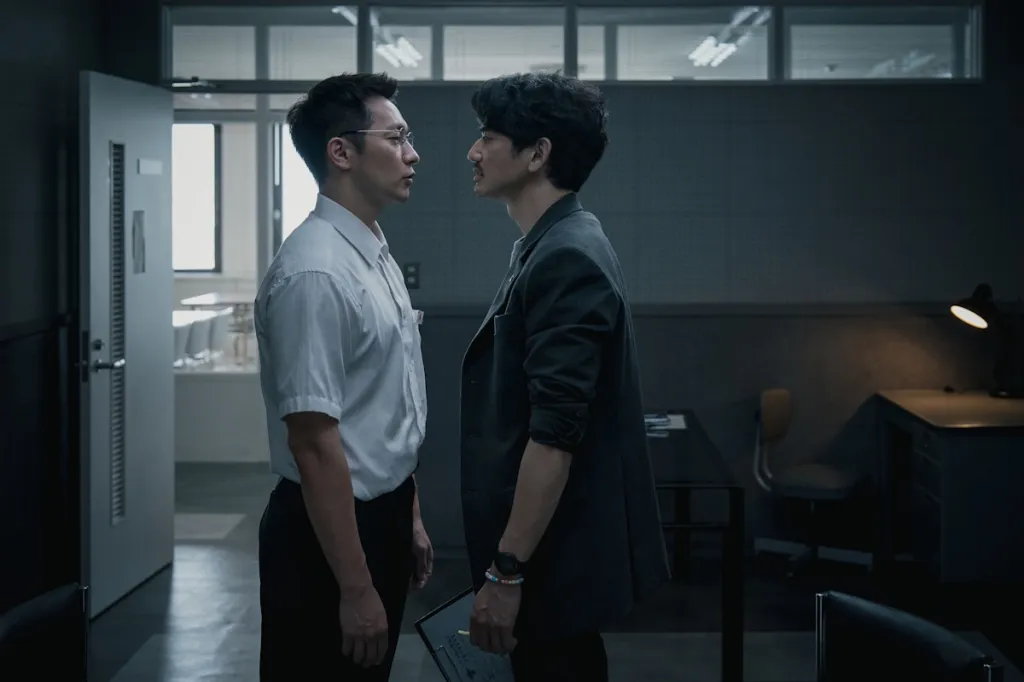
Han also talked about The Blue Road, his return to directing, based on a manhwa about two detectives from Korea and Japan who form an alliance to track down a serial killer staging high-profile murders in both countries. While the two detectives have to navigate different working styles and jurisdictional hurdles, Han said the crews in the two countries also found they had to overcome cultural differences.
“Korean crews are very fast and flexible, while Japanese teams are meticulous and prepare everything very carefully. Neither way is better or worse; just different,” Han said.
“Japanese crew members all have unique roles to play and focus on getting everything perfect, while in Korean teams, we all help out on everything and do it quickly. If it doesn’t work out, we just try it again. At first, there were lots of misunderstandings, but we found we had a lot to learn from each other and eventually found a way to make it all work.”
The Blue Road is streaming on Netflix from November 20, while Dead-End Job is scheduled for October 30. The third series premiering in Busan’s On Screen section, Disney+’s The Remarried Empress, is streaming from November 4.
>

The UK has selected Pegah Ahangarani’s Rehearsals For A Revolution as its entry to the Best International Feature Film category of the 99th Academy Awards.
The film explores Iranian filmmaker Ahangarani’s experience of exile as she rebuilds her life and creative practice in London, through five portraits of relatives and mentors, which are also expressions of resistance. The UK played an integral role in the film’s journey, serving as the base where it was written.
Drawing from personal archives, home videos, street protests footage, newspapers, and recorded voices, Ahangaran retraces more than 40 years of Iran’s history. From the early days of 1979, until the war that began in 2026, she pieces together intimate and collective memories, forming the portrait of a country shaped by political repression and in constant hope for a revolution.
Sony Pictures Classics announced the selection of the film as the UK’s entry and also detailed release plans.
The distributor said it will give the film qualifying runs in New York and L.A. in December. It will then open it exclusively at Landmark’s Nuart Theatre in L.A. and the Film Forum in New York on January 8, 2027, and before rolling it out across the country over the following weeks.
The deeply personal debut feature premiered as a Special Screening at the Cannes Film Festival where it won the L’Oeil d’Or, and played last month at the Telluride Film Festival and Toronto International Film Festival.
It was recently honored with an Albie Award from the Maysles Documentary Center, an award honoring those who inspire, not only through their work, but also through their roles as mentors, role models, and champions of social justice.
“How extraordinary to see Pegah’s remarkable film recognized in this category. From winning the L’Oeil d’Or at Cannes to the standing ovations at TIFF and now this recognition, Rehearsals For A Revolution is building incredible momentum and marking a significant moment for a formidable female filmmaker creating in exile from her home country,” said SPC in a statement.
“This selection in the Best International Feature category has the potential to be truly transformative for the film, opening doors to audiences around the world while shining a spotlight on Pegah’s extraordinary talent and her vital voice. It’s a recognition that will have a lasting impact not only on the life of this film, but on Pegah’s future career as a filmmaker.
>


Search For Canadian TV Actor Stewart McLean Now Homicide Investigation


These ’90s fashion trends are making a comeback in 2017
According to Dior Couture, this taboo fashion accessory is back
Model Jocelyn Chew’s Instagram is the best vacation you’ve ever had
Emily Ratajkowski channels back-to-school style
9 Celebrities who have spoken out about being photoshopped


Rurouni Kenshin: Hokkaido Arc Manga Takes 1-Issue Break – News


HIDIVE to Stream English Dubs for The World Is Dancing, The Forsaken Saintess and Her Foodie Roadtrip in Another World, The Dangers in My Heart: The Movie Anime – News