
Merritt Wever and Robert Pattinson in Primetime.
A24


Florian Zeller and Penélope Cruz stepped into Deadline’s Contenders event in London where the duo discussed their upcoming psychological thriller, Bunker. The film, which Zeller wrote, produced and directed, sees Cruz star as the wife of her real-life husband Javier Bardem as their characters face emotional and moral challenges in an increasingly uncertain world.
Bardem plays Miguel, a successful London architect, who considers a prestigious offer to build a survivalist bunker for a tech billionaire. The project causes his wife Sofia (Cruz) to question their relationship of 17 years as they are drawn deeper into a life of extreme wealth, paranoia and fear. The intrusion of an unsettling neighbor becomes another source of anxiety.
Zeller says that it was “a dream” of his to work with Bardem and Cruz. “I was interested in working with them together because I thought it would be an opportunity to explore something unique as a couple in life and also, to question what it is to be together and to explore love, to explore forgiveness in a long-term relationship through these extraordinary talents.”
Cruz admitted that making the step to play a fictional couple in a feature film was a big one for her and Bardem, as the pair had made the decision “not to work together very often.”
“We thought about it a little bit because, of course, the temptation was huge because we both love Florian,” said Cruz. “We love his work so much, but we always said we were not going to work together very often because it is a way to protect the relationship. I think it would be too risky to work together to often. But when we read it, and when we spoke to him, we looked at each other and really didn’t see any reason to say no. We both wanted to do it, and we knew that Florian was never going to manipulate anything or try to force anything from our real relationship into the movie.”
Cruz added that a week before their “big fight” scene in the film, which was shot across three days, “things started to happen and I started to feel weird.”
“Of course, it was because that scene was coming,” she said. “But I always said to myself, ‘that’s not possible, it cannot be because that scene is coming.’ We are old enough to not let that affect us, but it did affect us.”
Cruz added: “But it’s just a natural process to find some truth.”
Zeller noted that the fight scene, which is an almost 11-minute scene, is somewhat “the core of the film.”
“It encapsulates thematically and emotionally everything the film is about. For a long period of time during the film, Penelope’s character is going through a crisis, but you don’t really know exactly what it is. Something is missing but she cannot exactly know what it is until that moment comes when she starts to become very vocal about it. So that’s a moment that is very key emotionally in the film.”
Additional cast in Bunker include Stephen Graham, Paul Dano and Patrick Schwarzenegger. The French-Spanish co-production is produced by Federica Sainte-Rose and Zeller for Blue Morning Pictures, Fernando Bovaria and Simon de Santiago of MOD Producciones and Alice Dawson. Pathé’s Ardavan Safaee and Mediawan’s Pierre-Antoine Capton serve as co-producers.
Check back on Monday for the panel video.
>
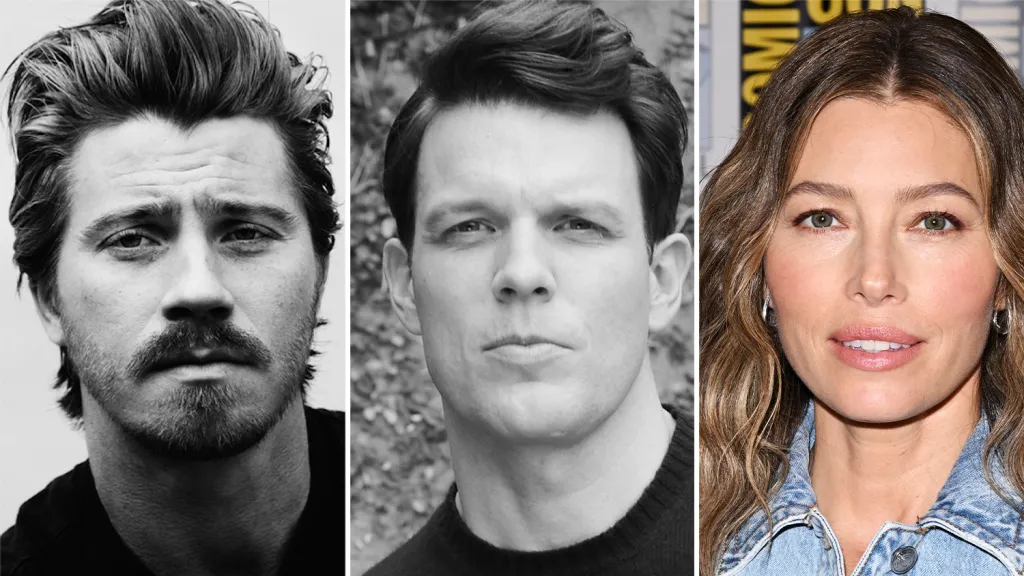
EXCLUSIVE: Garrett Hedlund (Tulsa King), Jake Lacy (Furious), and Jessica Biel (Matchbox) have inked to star in Downriver, a new dramedy from Artists Equity Independent Pictures and Hungry Bull Productions.
In Downriver, a recently divorced writer and his surgeon best friend head to Montana for a week of fly-fishing and martinis. Their friendship is put to the test when they meet a beguiling fishing guide, and their relaxing getaway begins to unravel in ways neither of them saw coming.
Pic marks the scripted feature debut of DGA Award nominee Sam Jones, who directs from a script written with bestselling author and three-time Pulitzer Prize nominee Carl Hiaasen. Following Julia Cox’s A Woman in the Sun, it’s the second to emerge from AEIP, the recently announced indie label of Ben Affleck, Matt Damon and Gerry Cardinale’s Artists Equity, with the intention of supporting up-and-coming talent.
AEIP and Hungry Bull Productions are producing alongside Seth Caplan, Dori Rath, Hungry Bull’s Joseph Restaino, and Groundswell Productions’ Michael London. Executive producing are William P Foley II, Douglas K Ammerman, Castille Landon, William Crawford Shippey and Tony Stopperan for Hungry Bull Productions.
An indie film production and financing company founded by Joe Restaino and Tony Stoppera, Hungry Bull comes to this new project with credits like Michael Sarnoski’s Pig (Neon) and Rebecca Hall’s Passing (Netflix).
Most recently seen starring in Paramount+’s crime drama Tulsa King, which returns for its fourth season later this week, Hedlund’s upcoming slate of projects includes Shana Feste’s Netflix mystery thriller Heartland, out November 13; Netflix series The Murder of JonBenét Ramsey; and Prime Video’s crime drama Criminal, which has not yet been dated. He is represented by WME, Brillstein Entertainment Partners, and Sloane, Offer, Weber & Dern.
Lacy can currently be seen starring opposite Emmy Rossum in Hulu’s lauded crime drama Furious, which has been renewed for a second season. He’s part of the cast of the Alexandra Pechman drama Magazine, coming off its TIFF premiere, and will also be seen coming up in Stephen Merchant’s Amazon MGM rom-com with Cameron Diaz and comedic thriller The Very Best People. He is repped by UTA and Beth Rosner Management.
Biel just recently signed to star in Playmates, the Searchlight flick inspired by filmmaker Lorraine Nicholson’s experiences growing up at the Playboy Mansion. Currently, she can be seen starring opposite John Cena in Matchbox: The Movie, which debuted on Apple TV on October 9. She is repped by UTA, LBI Entertainment, and Yorn, Levine, Barnes.
>
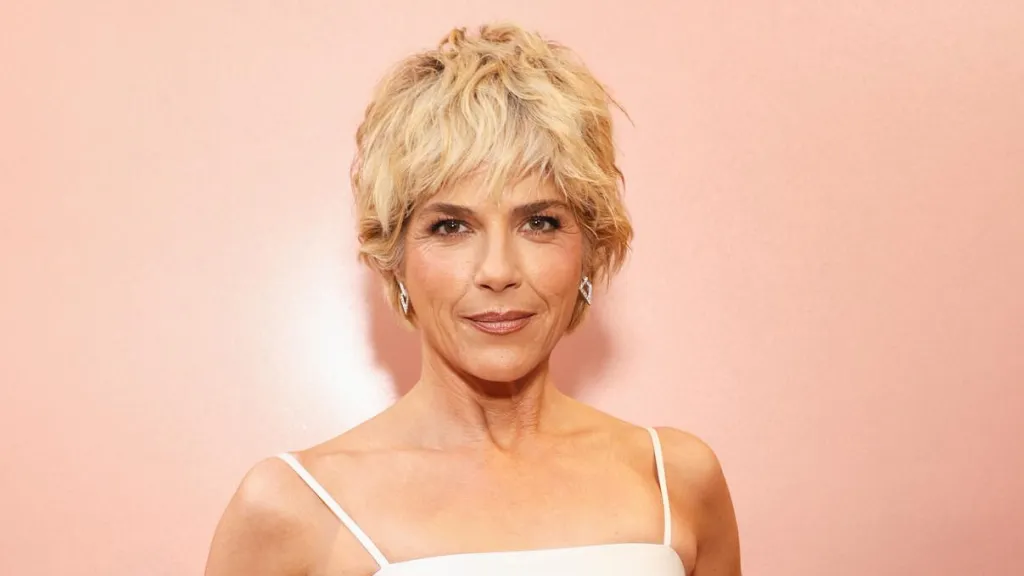
Selma Blair has had another incident aboard an airplane.
TMZ reported the actress tried to open an airplane door mid-flight and subsequently punched one airline employee and bit another.
The alleged incident took place on Sunday night aboard a Delta flight headed for JFK. New York Port Authority police responded to a call about a physically abusive passenger aboard the flight, which was inbound from LAX. Blair was identified as the passenger in question. Two flight attendants reported injuries, and one was transported to the hospital. The actress was taken into custody and transported to the hospital for evaluation. The FBI is now investigating the incident.
Blair was in the news in 2016 after another incident aboard a flight. She later apologized and said her outburst was the result of mixing medication with alcohol.
A rep for the actress gave the following statement to Deadline: “Selma experienced a medical emergency that led to the alleged conduct. Upon landing, she received immediate medical attention and is currently in stable condition.”
In 2018, the actress revealed she had multiple sclerosis. Last year, she indicated that she had been relapse-free from MS and said she was becoming “much more career-oriented” again and “would love” to return to acting, with a few movies in the works.
The Cruel Intentions actress opened up about her health journey in the 2021 Discovery+ documentary Introducing, Selma Blair.
Earlier this month, Blair announced that she’s making a documentary entitled Hineni (Here I Am) about the fallout over her 2024 Islamophobic comments. The actress said the film is meant to express what she “couldn’t say two years ago” when she first apologized.
>
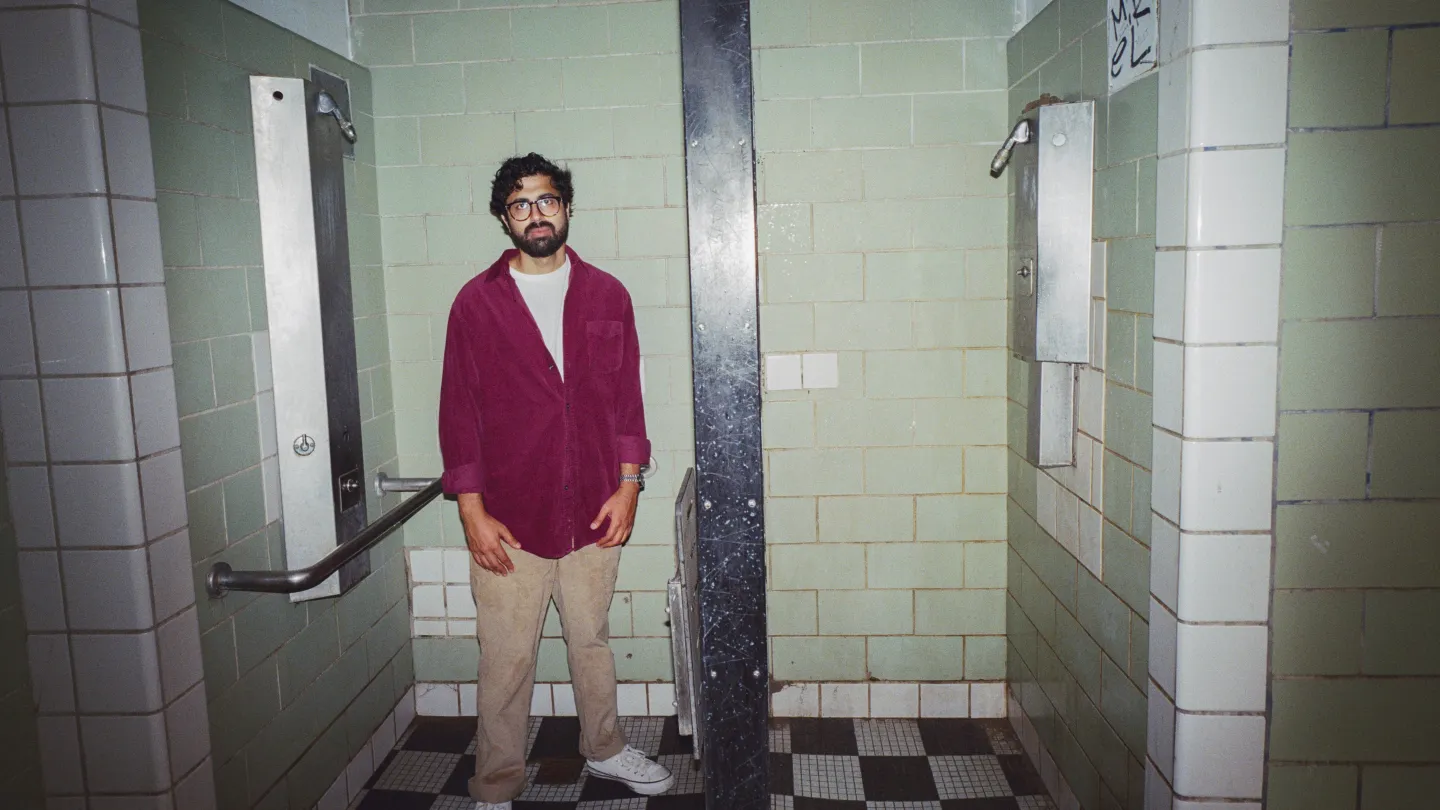
A few years ago, Ajon Singh found himself in Robert Pattinson’s bathroom, furiously typing notes into his iPhone.
The screenwriter was enjoying a wine-infused night at Pattinson’s Los Angeles home to discuss Primetime, a spec script that everyone in town had declined to read, but had somehow landed in the hands of the A-list actor.
Pattinson was already on board to produce, but had declined to star as Chris Hansen, the former Dateline NBC journalist who birthed the 2000s sensation To Catch a Predator.
But that night, as the drinks flowed, Pattinson couldn’t help but riff on what an actor might do with the character. A gonzo portrait of Hansen emerged, a more mystical take on the character than Singh’s original draft, which was more of a political thriller.
Every so often, Singh would excuse himself to the bathroom and jot down Pattinson’s ideas.
“I eventually started to put together a picture of how he envisioned this character — and I loved it, because it was not philosophically at odds with what I had already written,” Singh tells The Hollywood Reporter.
As Singh and Primetime director Lance Oppenheim left Pattinson’s house, it seemed there was an opening. Maybe they could convince him to play the part. “We felt him leaning in,” says Singh.
Singh and Oppenheim spent the next few days working on the script in a Mid-City office, then Singh spent five days alone rewriting the character of Hansen, infusing a mystical, avenging-angel undertone to his character.
They sent it off to Pattinson, who took a weekend to give his answer: Yes, he would star in the movie.
Merritt Wever and Robert Pattinson in Primetime.
A24
A24 released the $15 million film on Sept. 24, and it has grossed $42 million domestically to date, with Gen Z flocking to to theaters. (69 percent of the opening weekend audience was under age 30.) The film has been praised as a dreamy exploration of the lines between justice and exploitation, even as its real-life subject Hansen has threatened action against the studio.
Being at the center of a zeitgeisty movie is all part of a stunning turn of events for Singh, 31, who spent years hitting roadblocks as he supported himself driving Uber and working assistant jobs.
“I was really struggling with this label ‘left of center.’ I thought that was a really cool label. Like, ‘Your niche,’ or, ‘You have taste,” says Singh. “But it means, ‘Not commercial. Not bankable. Unmarketable.’”
Still, he always felt there was an audience for his scripts, if someone would give them a shot.
Singh grew up in southern California, and majored in economics at USC. He always loved movies, and rather than keep on a path towards an econ PhD, instead started writing screenplays after graduation. He drove the graveyard shift at Uber, 11 p.m. to 4 a.m. and spent his days in a tiny, roach-infested Hollywood apartment writing.
“It was really scary. You would have people in the back just kind of staring at you like this,” he says with a dead-eyed stare, of his time with Uber. “I was like, ‘Oh, I’m just going to die tonight.’”
Uber didn’t last long. Neither did a stint in the CAA mail room, where he worked with hopes of meeting industry folks who would read his stuff.
Eventually, he found mentors in TV scribes Micah Fitzerman-Blue and Noah Harpster, who hired him as a writer’s assistant for the Netflix limited series Painkiller. More writer’s assistant jobs followed, including work with a showrunner who was so cruel that Singh thought about moving to San Luis Obispo to become a docent for its famous elephant seal congregation. (He never did that.)
Years into his screenwriting odyssey, he finally wrote something that got traction: a TV pilot called Belly.
The script was about a last draft-pick NFL player who gets injured on his very first play and returns home to Alaska to become a fisherman. At first, it seems like a show about a Deadliest Catch-style character. But in the final moments of the pilot, its high concept is revealed: the protagonist falls off a fishing boat and is swallowed by a whale. The rest of the series takes place inside the belly of the beast. (Unlike the realistic upcoming movie Whalefall, starring Singh’s friend Austin Abrams, this was a fantastical take, ala Pinocchio — complete with chandeliers providing lighting inside the whale.)
The show never happened, but it was Singh’s first script to get passed around Hollywood. “I started getting calls incoming rather than me sort of groveling,” Singh says. One of those calls was Erick Mendoza, now his manager at Untitled.
In 2023, Singh met up with Aj Bourscheid, an old friend from CAA and now at Range Media Partners. In walked producer William Iannaccone, who knew Bourscheid. Iannaccone mentioned he’d optioned a 2007 Esquire article about the most famous operation in To Catch a Predator history, which ended in the suicide of a Texas district attorney.
Singh was instantly intrigued. He grew up watching To Catch a Predator, memorizing the ridiculous screennames of the perpetrators, like Jeremy’s Talented Tongue. He was confident he could do something special with this concept.
He did months of research, watching every Hansen video and listening to every Hansen podcast he could find. It was hundreds of hours in all. He rigorously outlined the story, so that when it came time to write, the script flowed out in two weeks.
His producer and his manager both liked it enough to start taking it out. But nobody in Hollywood would read it.
“It was really devastating,” says Singh. “Read it — and then pass. If you don’t read it, that hurts my feelings.”
Months went by, and he was losing hope that Primetime would gain traction.
Then, a miracle: Robert Patinson somehow got ahold of the script and wanted to Zoom with Singh. (He is still unsure how Pattinson got the script, but heard that Almost Friday filmmaker Tyler Falbo passed it along to Pattinson or his producing partner Brighton McCloskey at a party.)
Pattinson and Skyler Gisondo in Primetime.
A24
“They got the script,” says Singh of the Zoom with Pattinson and McCloskey. “It was the most validating thing, maybe in my whole career. They were just responding to it specifically and thematically.”
By the end of the Zoom, Singh was so moved by their reaction that he took his shot: “I was like, ‘Rob, if you had some free time in your life, I think you and I could do something really special with this movie, with you as Chris Hansen.”
Pattinson went silent. Finally, he admitted he’d been pondering that too, but no, the role wasn’t for him.
Still, he agreed to produce, which was a major win for Singh and the team, who now had a viable path to get the movie going.
Not long after, Singh got an email from someone named Oppenheim. It was an effusive review of the Primetime script, which Oppenheim had read at Pattinson’s birthday party the night before.
Singh recalls thinking: “Wow, this is the nicest thing. Who is Lance Oppenheim?’”
Oppenheim, it turned out, was the hot young filmmaker behind documentaries like Some Kind of Heaven and Spermworld. He sent Singh a not-yet released cut of his HBO docuseries Ren Faire, and Singh binged it in a day. He was hooked on Oppenheimer, and the two formed a close bond. They felt like creative soulmates.
Even though more bankable directors were in the mix for Primetime, Singh was convinced Oppenheim was the person for the job. The team agreed, and Oppenheim joined as director. Suddenly the project became red hot, with A24 agreeing to finance the movie and giving it a production start date — even without a lead in place.
“This is like truly a psychedelic experience, because I went from having no traction on the script — nobody’s reading it — to having a financing deal in what feels like a two-week period,” recalls Singh.
Pattinson eventually boarded to star, and Singh, his girlfriend and his dog packed into his car and drove to New York in late 2024. There, he spent long nights in an office with Oppenheim and Pattinson hashing out the script, sometimes not emerging into the brutally cold winter until until 2 a.m.
“There’s sort of this feedback loop when you work with Lance and Rob. Things are constantly alive and changing,” says Singh. “The only way to survive that process is to be fluid.”
Ajon Singh attends the Primetime Photocall during the 83rd Venice International Film Festival.
Elisabetta A. Villa/Getty Images
For most screenwriters, the job ends long before production starts. But Singh had the rare opportunity stay with the project through production and serve as an executive producer.
He lived in a house in New Orleans with Oppenheim, cinematographer David Bolen, editor Daniel Garber, and producer Christian Vazquez during the shoot. They’d have movie nights after work, while during the day, part of his job was recalling old versions of the script, as Oppenheim might bring back something they’d scrapped months earlier.
Among the moments resurrected for the movie was a monologue in which Hansen explained his pitch for the show to a fan on an airplane. (Without spoiling it, it involves talk of a front porch, a man and his penis.)
As Singh recalls, Oppenheim asked Pattinson to do the monologue, but the actor hadn’t read that draft of the scene in months. Oppenheim persisted, and somehow Pattinson came through.
“He just let it come out of him,” says Singh. “So many things about this process are just so alive.”
The film had a splashy premiere at Venice and arrived amid the biggest year of Pattinson’s career, coming after The Drama and The Odyssey, and before December’s Dune: Part 3.
It also sparked the ire of its subject, Hansen, who ahead of its release threatened legal action and told THR it was “an insult to the thousands of men and women who work hard every day to protect children from predators.” After seeing the film, he said it was “detached from reality or anything I’ve ever experienced then or now … I’m not sure what the point of it was.” He also took issue with the production not reaching out to him for his input. Still, he has also encouraged people to see the movie for themselves and make up their minds.
“We have no interest in villainizing him,” says Singh, who read essentially every piece of journalism Hansen produced to prepare for the movie. “Who am I to be like, ‘This show is wrong,’ or ‘this show is right’? I don’t think that’s my job as a writer. It’s not my job as an artist.” He also points out that the film shines a light on the fact that powerful people and community leaders get away with abuse, and that Hansen used his platform to expose some of them.
Years after that fateful night in Pattinson’s bathroom, Singh’s Primetime story isn’t quite over. He was in London this weekend for the U.K. premiere, and lined up plenty of work based on the strength of the movie.
Primetime
Courtesy of A24
Long before the film opened, he learned that Oscar winner Daniel Kaluuya wanted to call him. Kaluuya had read the Primetime script, and Singh (slipping into a solid British accent) recalls the Osar winner saying, “I can tell you like to misbehave.” Singh got a kick out of that assessment.
Then, Kaluuya hit him with a surprise. Sony was developing a movie centering on his Spider-Man: Across the Spider-Verse character Spider-Punk, and he wanted Singh to write it. It was an instant yes, as like many in Hollywood, Spider-Verse is perhaps the one superhero property the scribe deeply likes.
“I’ve basically gone from being not viable in the marketplace to being viable in the marketplace. And I haven’t really changed all that much,” notes Singh. “Even with Primetime, everyone was like, ‘This is not a commercial product.’ And I always believed that it was.”
>


Search For Canadian TV Actor Stewart McLean Now Homicide Investigation


These ’90s fashion trends are making a comeback in 2017
According to Dior Couture, this taboo fashion accessory is back
Model Jocelyn Chew’s Instagram is the best vacation you’ve ever had
Emily Ratajkowski channels back-to-school style
9 Celebrities who have spoken out about being photoshopped


Rurouni Kenshin: Hokkaido Arc Manga Takes 1-Issue Break – News


HIDIVE to Stream English Dubs for The World Is Dancing, The Forsaken Saintess and Her Foodie Roadtrip in Another World, The Dangers in My Heart: The Movie Anime – News