
Anime
$60 Billion Question – Answerman



Haruki M. in Melbourne asks:
Dear Answerman, I keep reading that the anime industry is headed for a global value of $60 billion by 2030, that Crunchyroll just hit 21 million subscribers, and now they’re launching some kind of B2B summit at New York Comic Con. As someone who’s been watching anime for twenty years, part of me is thrilled, and part of me is worried. Thrilled because the shows I love are finally getting the recognition they deserve. Worried because every time something niche gets that big, the thing that made it good gets hollowed out. Answerman! I want a straight answer: can the industry actually get to $60 billion, and if it does, what does that mean for the people making it and the people watching it?
I always do my best to provide a straight answer, and just like you, I have some of the same reservations about this industry and culture that I love. Anime has been good to me, and I would be lying if I told you I’m not worried about our fandom changing, and worse, its impending enshittification, once the Masters of the Universe (I don’t mean He-Man and friends) start paying real attention to the number of zeroes at the end of a valuation. Actually, how many zeroes are in sixty billion?
I think it’s ten zeroes, but let’s not get bogged down in that. The honest answer is that the $60 billion is credible, the industry’s structural problems are real and urgent, and fans like us – the ones who’ve spent decades outside Japan wishing we could access what Japanese otaku take for granted – are closer to our best anime life than we have ever been. Allow me to explain.
In October 2024, the US-based investment bank Jefferies published a research note forecasting that the global anime market would double from approximately $31 billion in 2023 to $60.1 billion by 2030. That headline has been circulating ever since, and was most recently cited in articles in The Wall Street Journal and The Hollywood Reporter, both tied to Sony‘s annual earnings report from May 8th. In short, when it comes to Sony‘s global anime vertical, otherwise known as Crunchyroll, LLC, things are going gangbusters.
The Association of Japanese Animations, the most authoritative primary source for industry data. They have compiled 22 years of figures from Japanese studios, broadcasters, and licensing bodies, and they have confirmed the total anime market (That’s the world including Japan) reached $25 billion in 2024, a 14.8% year-on-year record. Jefferies, working from a broader methodology that captures global retail, theme parks, and secondary market activity, puts the 2023 baseline higher at $31.2 billion. Both numbers are correct. They are just counting different things.
This matters when you do the math. Getting from Jefferies’ $31.2 billion 2023 baseline to $60 billion by 2030 requires approximately 10% compound annual growth (Have you ever heard of “CAGR”? This is what it means) sustained over seven years. That is, by recent standards, a conservative ask. The AJA confirmed 14.8% growth in 2024. The year before that, 14.3%. On current form, the industry is actually running ahead of the pace that the Jeffries prediction requires. It is an astonishing growth rate that indicates that this $60 billion prediction is not a moonshot. If anything, it is a conservative read of a market that has been delivering above the maximum annual growth estimates for two years in a row.
Last week, Sony‘s fiscal year earnings confirmed that Crunchyroll has crossed 21 million paid subscribers. That’s up from 17 million in May 2025. That’s nearly 25% growth in under twelve months, at a time when virtually every other streaming service is reporting plateau or decline.
Crunchyroll president Rahul Purini told the Wall Street Journal that Japan produces approximately 300 anime series per year, and Crunchyroll acquires rights to roughly 80% of them across approximately 200 markets globally. In India, the service is priced at 98 rupees, around $1 USD per month. In Brazil, 9.99 real, approximately $3.72. These are not throwaway markets. India and Brazil are now identified as Crunchyroll‘s primary growth engines for 2025-2026, and the data bears this out: 60% of Gen Z and Gen Alpha consumers in Brazil reportedly watch anime multiple times a week.
This is not a story about a corporation squeezing emerging markets for cheap subscribers. This is a story about the legitimization of anime fandom in parts of the world where, until very recently, a dedicated, premium, anime-first streaming service simply did not exist. Vietnam, Indonesia, India, Brazil, Mexico; these are countries with enormous, passionate, deeply engaged anime audiences who have historically had two options: pay for a service unavailable in their territory, or pirate.
The piracy lobby has always argued that its existence is justified by the absence of legal alternatives. Crunchyroll‘s investment in Latin America and South and Southeast Asia is the most effective counter-argument to that position the industry has ever deployed. When you put a legal, affordable, premium-quality service in front of a fan who previously had no legitimate choice, they take it. They become a subscriber. They become a paying member of the anime economy. And crucially, over time, as disposable income rises and fandom deepens, they become the kind of fan who buys merchandise, attends events, and goes to the cinema for the theatrical release. Perhaps we, OG fans, need to start regarding the $1/month for what it really is. Not the end destination in Crunchyroll‘s relationship with Indian fans, but more of a handshake. “Welcome to the club. Are you ready to go on a journey?” The $60 billion thesis requires those subscribers to gradually migrate up the pricing curve as markets mature. That is a reasonable assumption over five to six years. It is the central financial bet of Crunchyroll‘s emerging market strategy, and it is a bet worth making.
The same week the subscriber numbers landed, Crunchyroll announced the inaugural Crunchyroll Anime Future Forum: an invite-only B2B industry summit to be held October 7 at the Javits Center in New York, timed to coincide with New York Comic Con. The Hollywood Reporter broke the story. The forum’s theme is “Designing for Anime’s Future,” with sessions structured around fandom, technology, storytelling, and IP protection. Purini’s framing was pointed: “This is the first and only type of industry event outside of Japan where anime is front and center for discussion.” Whether you find that inspiring or slightly alarming probably depends on where you sit in the food chain.
The industry cannot reach $60 billion through streaming alone. Merchandising represents 31-44% of total domestic industry revenue and remains dramatically under-monetized internationally. Theatrical generates the headlines: Demon Slayer: Infinity Castle grossed approximately $741 million worldwide after its September 2025 release, becoming the highest-grossing Japanese film of all time, with Chainsaw Man – The Movie: Reze Arc following with $94 million internationally in its opening weeks. For the theatrical business to contribute meaningfully to a $60 billion total, the industry needs three to four franchise-level events per year – consistently. Live events, experiences, merchandise, and gaming are all contributors that the broadest market projections are only beginning to count seriously.
But none of this matters if the production ecosystem that generates the content collapses under its own contradictions. And that is a genuine risk.
The industry is generating record revenue. The people who actually make it are not sharing in that revenue meaningfully. A Japan Research Institute report found that Japanese production studios earn only 6% of overseas sales revenue. The remaining 94% flows to production committee members – publishers, broadcasters, toy companies, music labels – who hold IP rights in exchange for co-financing productions, but who currently have minimal structural incentive to invest in improving production conditions or animator pay. The consequence: 60% of anime production companies saw profitability decline in 2024 despite the record market. Eight studios ceased operations in the first nine months of 2025.
Here is where the broader Japanese economic context becomes inescapable. Japan has been experiencing its most sustained inflationary period in three decades – CPI ran at 3.27% in 2023 and 2.7% in 2024, with food prices rising far faster. Tokyo studio rents hit a record ¥101,000 per month average in June 2025, up 8.9% year-on-year. Entry-level animators in Japan – those on permanent contracts – earn a floor salary of approximately ¥200,000 per month gross. After mandatory deductions for income tax, health insurance, and pension, that becomes roughly ¥150,000–¥160,000 take-home. In a city where rent alone is likely to consume 44–47% of their net income, these workers are getting poorer in real terms, year on year. The freelance in-between animators, still nearly half the workforce, have it worse still. Paid by the drawing at piece rates (“per cut”) that have barely moved while everything around them has become more expensive.
Twenty-five percent of animators leave the industry within four years. Sixty-eight percent are gone within eight. Japan cannot build a $60 billion industry on a workforce that is burning out and voting with its feet.
There are signs for cautious optimism, however. Japan’s government now understands that this is an industrial emergency, and not just a labour dispute. Anime and gaming exports have surpassed the value of Japan’s semiconductor sector. The Keidanren, Japan’s most powerful business federation, representing Toyota and Mitsubishi, issued an urgent appeal in October 2025 for immediate government support of the creative industries. METI’s New Cool Japan Strategy includes explicit policy language about performance-based pay reform and animator compensation. The Nippon Anime and Film Culture Association (NAFCA) is conducting ongoing workforce surveys and lobbying for legislative protections for freelance creators. Japan’s Freelance Act, enacted in 2024, extended some protections, though significant gaps remain regarding fair compensation.
The question is whether policy intent translates to studio economics quickly enough. When an industry becomes a genuine pillar of national export strategy, as anime now indisputably has, the case for legislative intervention to protect its production workforce becomes not merely ethical, but strategically rational. Private stakeholders who fail to bring their own house in order should expect the government to do it for them. That is not a threat; it is just how industrial policy works when the stakes are this high.
Is The Great Enshittification coming for anime? It’s a fair concern. Scale brings resources, reach, and theatrical ambition, but it also brings formulaic IP extension, franchise-first commissioning, and upstream control by platform giants with global mandates.
I have been sitting with my own feelings on this topic. It feels so personal to me. I was part of anime’s second big wave of expansion into the West, and I inadvertently surrendered my place in it to the corporate behemoth. Those of us who have loved anime from outside Japan, whether in Melbourne, London, São Paulo, or Chennai, have spent our entire fandom lives looking at the Japanese otaku experience and knowing we could never really access it. The depth of the merchandise, the super-cool exhibitions and events, and the theatrical releases on the opening weekend. The pop-up shops and limited edition collabs, and those gorgeous sukajan jackets. The general, glorious, overwhelming, beautiful availability of anime in every corner of daily life. That has always been a specifically Japanese privilege.
The $60 billion thesis is, at its core, the thesis that the rest of the world gets to start living that life. The global merchandise market is barely scratching the surface of what it could be. International theatrical is in its infancy. Anime conventions now exist in 51 countries. Crunchyroll is running its Ani-May promotion across 35 countries. Nike is doing Yu-Gi-Oh! Air Max collaborations. The world is slowly, commercially, becoming more like Japan for those of us who want to live our best otaku lives. We are also becoming “more Japanese” in other ways too, but I will save that for another column.
That doesn’t mean nothing will get worse. Some of it will. But the direction of travel – more availability, more reach, more economic incentive to serve global fans properly is, for us, unambiguously positive.
The Anime Future Forum’s theme, “Designing for Anime’s Future,” is exactly the right question. The test of whether it is a genuine inflection point or an elaborate networking event for people who are already doing fine is a question I would prefer to ask Japanese animators and the audience that they serve. Most of whom, will not be in the room on October 7th at the Javitz Center.
I’ll be watching. And so should you.
Do YOU have a question for the Answerman?
We’d love to answer your questions and especially encourage questions inspired by recent news and headlines.
However, READ THIS FIRST:
● CHECK THE ARCHIVES. Over the years, we’ve answered THOUSANDS of questions and might have already answered yours!
● We cannot tell you if or when a show will get another season, nor can we help you get in touch with any producers, artists, creators, actors, or licensors.
● Only submit your question once.
● We take questions by email only. (Tweeted questions get ignored!)
● Please keep your questions within a paragraph length.
●The email address is [email protected].
Thank you!
>
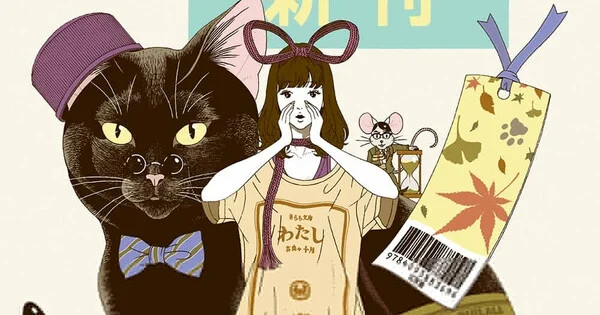
August 8 marks International Cat Day around the world. The International Fund for Animal Welfare created the day in 2002 to raise awareness for cats. Today, the unofficial holiday is run by International Cat Care, which strives to improve the health and welfare of domestic cats. The anime and manga worlds are doing their part to celebrate the holiday with greetings and more:
ANGYAMAN (Red Cat Ramen)
世界猫の日#ラーメン赤猫 #ジャンププラス #世界猫の日
201杯目 https://t.co/QQsBSUrLPp pic.twitter.com/r30ReWOmno— アンギャマン (@ANGYAMAN) August 8, 2026
International Cat Day
Kamen Rider
#世界猫の日 pic.twitter.com/WAQVpDQx9N
— 仮面ライダー公式 (@HKR20_official) August 8, 2026
International Cat Day
Medalist
🐈⛸️✨#世界猫の日#メダリスト pic.twitter.com/wuFRD7rRXl
— 『メダリスト』アニメ公式⛸🏅 (@medalist_PR) August 8, 2026
🐈⛸️✨
International Cat Day
Yūsuke Nakamura
吾輩は #世界猫の日 である。 pic.twitter.com/ozRMot5aDq
— 中村佑介 Yusuke Nakamura (@kazekissa) August 8, 2026
I am International Cat Day.
ぼくも #世界猫の日。 pic.twitter.com/I2q1DvYYIv
— 中村佑介 Yusuke Nakamura (@kazekissa) August 8, 2026
I’m also International Cat Day
Manabu Nii
たきな「…耳、ありますけど?」 pic.twitter.com/cyNm0FZtEd
— 仁井学🍑C108(土)【南2-a28b】 (@aleos696) August 7, 2026
International Cat Day 🐾
Takina: “Thanks for… the ears?”
Nontan
よんだ?#世界猫の日#ノンタンとあそぼ #ノンタン50周年 pic.twitter.com/m3sibHM1it
— 偕成社【公式】 (@kaiseisha_PR) August 7, 2026
Have you read it?
Masami Ōbari
僕のOPアニメーションの特徴的カット
『左上の眩しい何か』を体現する猫ちゃん🐱✨ pic.twitter.com/AnPhVoC13Y
— 大張正己 /Masami Obari (@G1_BARI) August 8, 2026
International Cat Day
A distinctive shot from my opening animation sequences
A kitty that embodies “that dazzling thing from the upper left”🐱✨
Ocha-ken
⠀
猫になりきっての〜んびり🐈#世界猫の日 pic.twitter.com/LzGAJgphPo— お茶犬【公式】 (@ochakenofficial) August 8, 2026
Let’s pretend to be cats and relax~🐈
Oyoneko Boonyan
今日は #世界猫の日
オヨヨを通じて猫のために何か活動できたらいいなと思ってます😺#オヨネコぶーにゃん pic.twitter.com/UMfKUKYHub— オヨネコぶーにゃん【公式】 (@oyoneko0701) August 7, 2026
Today is International Cat Day
We’d love to do something for cats through Oyoyo😺
Red Cat Ramen
\\ \ / //
本日8月8日は
🐈世界猫の日🐈⬛
// / \ \\世界中の猫たちが
幸せでありますように✨皆さんのお気に入りの1枚📸🐾も
ぜひシェアしてください!!TVアニメ『#ラーメン赤猫 其の二』
2027年1月より放送開始🍜#世界猫の日#WorldCatDay#InternationalCatDay pic.twitter.com/VVL60kNEHl— TVアニメ『ラーメン赤猫』公式 (@ramenakaneko) August 8, 2026
\\ \ / //
Today, August 8 is
🐈International Cat Day🐈⬛
// / \ \\
May all the cats around the world be happy✨
Please share your favorite photo 📸🐾 too!!
“Red Cat Ramen Season 2”
Premieres in January 2027🍜
Rui (Usagi no Tsumori no Katatsumuri)
##世界猫の日 pic.twitter.com/A9OYejjZYv
— 類 (@ruuiruiruirui) August 8, 2026
International Cat Day
Umi Sakurai (A Man and His Cat)
本日8月8日は世界猫の日にゃーー🐱🐱🐱❗️❗️
もふもふで世界のみんにゃを幸せにするにゃー✨#世界猫の日 pic.twitter.com/ophysqEERp
— 桜井海@おじ猫17巻発売中! (@sakurai_umi_) August 7, 2026
Toady, August 8, is International Cat Day meow🐱🐱🐱❗️❗️
I’ll make everyone in the world happy with my fluffiness, meow✨
Sega
SEGA & ねこ#世界猫の日 #Internationalcatday pic.twitter.com/98QjUpYFNS
— セガ公式アカウント🦔 (@SEGA_OFFICIAL) August 8, 2026
SEGA & cat
Happy #InternationalCatDay! 😺 https://t.co/28r9MItNBY pic.twitter.com/j5sWElO0kj
— SEGA (@SEGA) August 8, 2026
Shikaruneko
今日は「世界猫の日」だよ!
世界中の猫ちゃんたちが幸せに暮らせますようにっ!!#世界猫の日 #WorldCatDay猫飼いのみなさん、リプ欄で愛猫自慢してってね🐾 pic.twitter.com/KQUOY07YWa
— しかるねこ (@shikaruneko) August 7, 2026
Today is International Cat Day!
Today is “World Cat Day”!
May all the cats around the world live in happiness!!
To all you cat owners out there, show off your beloved cats in the comments section!🐾
Comic: Panel 1: Apparently today is International Cat Day
Panel 2: So, please spend the day playing with cats❤️
Panel 3: Hey! Not all day long! People have busy lives, after all…
Panel 4: Look, look❤️
SNK
今日は #世界猫の日 🐈 pic.twitter.com/JWGsFqz8Q8
— SNK JAPAN (@SNKPofficial_jp) August 8, 2026
Today is International Cat Day 🐈
Did we miss any International Cat Day 2026 greetings? Feel free to let us know in our forums or by email!
>
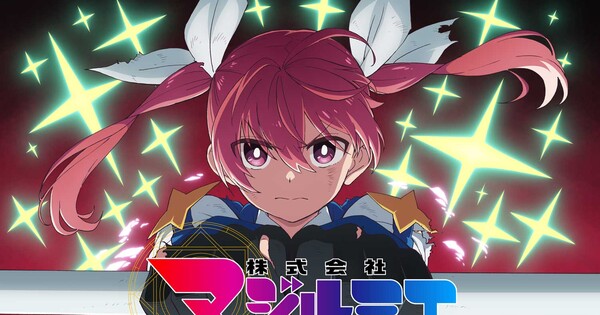
The official website of Magilumiere Magical Girls Inc., the television anime based on Sekka Iwata and Yū Aoki‘s Magilumiere Co. Ltd. (Kabushikigaisha Magilumière) manga, announced on Sunday a new cast member for the second season.
Yusuke Shirai plays Shō Manao, a mysterious, but gentle man without a past or history.


©岩田雪花・青木裕/集英社・マジルミエ製作委員会
Viz Media and MANGA Plus release the manga in English, and Viz Media describes the magical girl workplace story:
Kana Sakuragi is an excellent candidate for the job. Any job! She’s motivated and organized, and has a fantastic memory. So why has she interviewed at over 15 companies without receiving a single offer? She’s trying to keep a positive attitude, but it seems like her bad luck is only getting worse when a monster crashes her latest interview. As havoc ensues, she finds herself helping the magical girl who comes to their rescue and ends up with more than just her life in return. Meet the newest magical girl at Magilumiere Magical Girls Inc.!
The previously announced cast members for the new season are:
Riki Fukushima (Beyblade the Movie: Fierce Battle, Skate-Leading Stars) is the new director of the anime at J.C.STAFF. Michiko Yokote (Prison School, RIN-NE) is the new script supervisor, Masahiro Fujii is returning as the character designer, and Makoto Miyazaki is returning to compose the music.
New staff members for the new season include assistant director Hiroyasu Oda (Delico’s Nursery, Honey Lemon Soda episode director), sound director Yoshikazu Iwanami (Ajin, Ghost in the Shell Arise), art director Shun Yoshii (background art for 2.5 Dimensional Seduction, One-Punch Man season 3), CG director Shunsuke Kasuga (Honey Lemon Soda 3D director), and editor Yūji Kondō (Fate/strange Fake, Sword Art Online: Alicization). First season’s episode color coordinator Asuka Hino is now the new season’s color key artist, and Yūsuke Noguchi, who worked on compositing and cinematography (also known as “photography”) on episodes of the first season, has been promoted to the new season’s compositing director of photography.
VTuber Marine Houshou performs the new ending theme song “BooooM!!!”
syudou×Yūsei Yagi (FANTASTICS) perform the opening theme song “Latte Magic.”
The new season premiered on NTV on July 4 at 24:55 JST (effectively July 5 at 12:55 a.m.).
The first season of the anime aired in Japan from October to December 2024. Amazon Prime Video streamed the anime globally.
Writer Iwata and artist Aoki launched the manga on Shueisha‘s Shonen Jump+ service in October 2021, and ended the manga in its 160th chapter in July 2025. The 18th and final volume shipped on September 4.
Sources: Magilumiere Magical Girls Inc. anime’s website, Comic Natalie
>


© HAIKYO.
Rika Kinugawa, the voice actress behind Zombie Land Saga‘s Yūgiri and other roles, announced on Saturday that she had gotten married. Kinugawa stated she married a non-celebrity and thanked her fans and supporters. “My husband is a non-celebrity who wholeheartedly supports my free-spiritedness with both firmness and great kindness.”
As of press time, Kinugawa’s announcement has received 21,000 likes and over 640 replies, most of which are congratulations from her fans and colleagues. Fellow Zombie Land Saga cast member Minami Tanaka (Lily Hoshikawa) replied to the announcement saying, “Kinu-chan!!! Seriously, congratulations…!! Every single word in your letter made me cry…! I hope you’ll be happy together for a long, long time!!!”
Kinugawa has appeared in Ascendance of a Bookworm as Corinna, The Great Cleric as Lummina, Orange as Takako Chino, and Sakuna: Of Rice And Ruin as Kokorowa Hime, among others. Her agency lists her full résumé.
Sources: Rika Kinugawa‘s X/Twitter account, Minami Tanaka‘s X/Twitter account, Tokyo Actor’s Consumer’s Cooperative Society via Comic Natalie
>

Washington Commanders LT Laremy Tunsil has torn triceps: Source

One Night Only Writer, Producer Talk Movie’s No Premarital Sex Rules

Aaron Nola joins 2,000-strikeout club, solidifying his status in Phillies’ pitching lore
-

 movies3 months ago
Search For Canadian TV Actor Stewart McLean Now Homicide Investigation
-

 Fashion9 years ago
These ’90s fashion trends are making a comeback in 2017
-
Fashion9 years ago
According to Dior Couture, this taboo fashion accessory is back
-
Fashion9 years ago
Model Jocelyn Chew’s Instagram is the best vacation you’ve ever had
-
Fashion9 years ago
Your comprehensive guide to this fall’s biggest trends
-
Fashion9 years ago
9 Celebrities who have spoken out about being photoshopped
-
Fashion9 years ago
Emily Ratajkowski channels back-to-school style
-
Fashion9 years ago
A photo diary of the nightlife scene from LA To Ibiza