
Tech
ClickHouse triples annualized revenue to $250M, charting a path toward an IPO

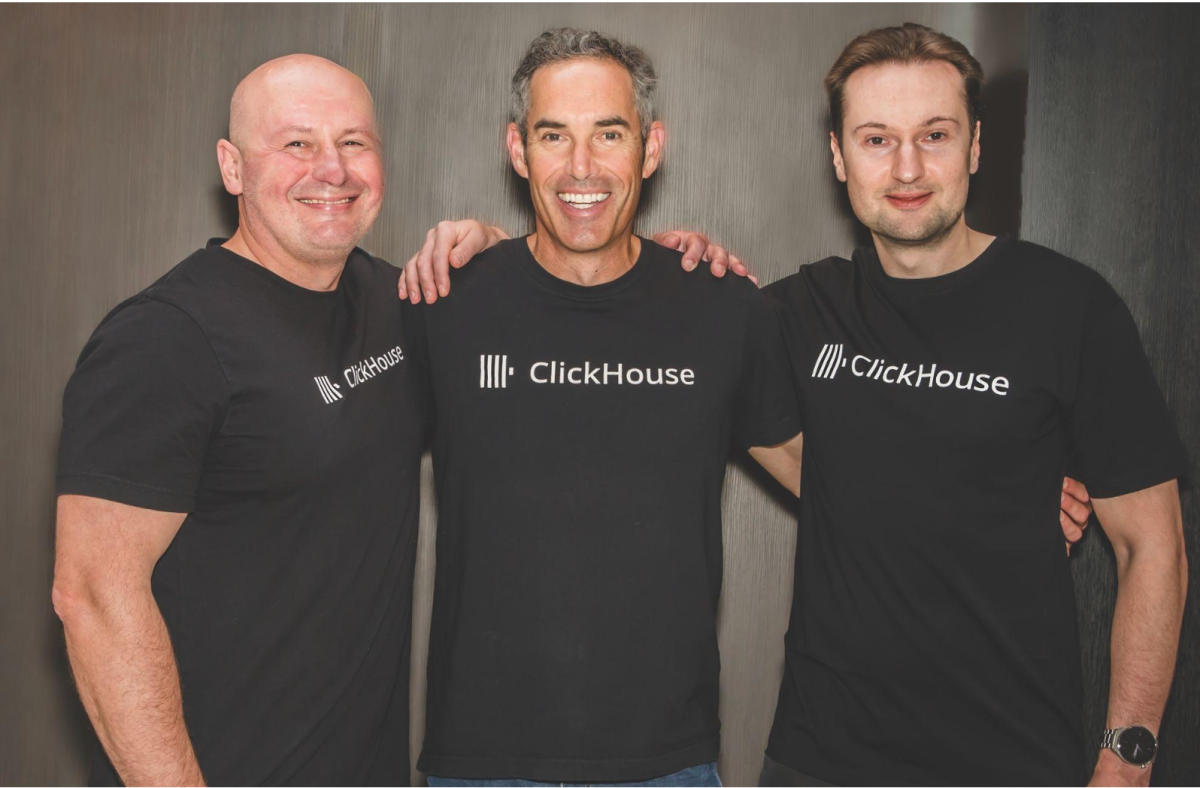
Database provider ClickHouse has crossed $250 million in annualized revenue run rate, tripling its business from last year, Yury Izrailevsky, co-founder and president of product and technology, told TechCrunch. Izrailevsky expects the revenue figure to reach the high-nine digits by the end of the year.
ClickHouse was valued at $15 billion in January following a $400 million Series D funding round led by Dragoneer Investment Group. The latest valuation implies a steep multiple of over 60 times annualized revenue.
The fast revenue growth and premium valuation position the less-than-five-year-old company for an IPO within the next few years, according to Izrailevsky (pictured left). ClickHouse joins a small, but growing list of tech startups signaling plans to go public as the IPO window is expected to be flung wide open by SpaceX’s historic June debut, followed by highly anticipated listings from OpenAI and Anthropic later this year.
Last fall, the startup hired Jimmy Sexton, who previously ran investor relations at Snowflake, one of ClickHouse’s main competitors, as chief financial officer. Bringing on a CFO is often viewed as a signal that a company is preparing for public markets.
The company has already acquired six startups, including Langfuse, which helps developers track and evaluate AI agent performance. Izrailevsky indicated that ClickHouse plans to remain acquisitive, looking to scoop up “relatively young, but showing very promising technology” startups, typically open-source, that complement its core product suite.
The technology behind ClickHouse was originally developed inside Russian search giant Yandex 17 years ago, but spun out as an independent startup in 2021.
ClickHouse has over 4,000 customers, including Anthropic, Meta, Capital One, and Decagon.
The startup’s open-source database is designed to process the massive datasets required by AI agents. ClickHouse generates revenue by selling managed cloud services. Izrailevsky claimed that this commercial offering ultimately costs clients less than self-managing the open-source version. It “is something that’s a little counterintuitive, but it also has been a big tailwind for us,” he said.
When you purchase through links in our articles, we may earn a small commission. This doesn’t affect our editorial independence.
>

Elon Musk has questioned the influence of Indian billionaire Mukesh Ambani as SpaceX struggles to launch its Starlink satellite internet service in the country. Musk’s comments, which were posted on X, escalate a dispute over regulatory delays after the Indian government rejected his claims that powerful business interests were blocking its entry.
Musk accused on Wednesday unnamed “oligarchs” of blocking Starlink’s launch in India to maintain what he called their “monopolistic chokehold” on the country, without identifying them or providing evidence for his claim. He called the alleged blocking a “crime against the people of India” and argued that Starlink could bring affordable, high-speed internet to people who lack internet access.
Hours later, India’s Ministry of Communications pushed back, saying its regulatory framework for satellite communications is “fair and non-discriminatory.” The ministry said in a statement that Starlink and two other licensed satellite operators are all at “broadly the same regulatory stage.” It added that all three companies are undergoing security assessments that must be completed before they can seek spectrum, the radio frequencies that satellites use to send signals.
Musk went further on Thursday, questioning the influence of Reliance Industries chairperson Mukesh Ambani.
”Is Ambani the real boss of India?” he wrote on X, after claiming that Starlink had spent years complying with Indian regulations and questioning why it still lacked a license.
Starlink has spent more than five years trying to enter India, a market with more than a billion internet subscribers. But it has yet to begin commercial services despite securing key regulatory approvals and partnering with telecom giants Reliance Jio and Bharti Airtel last year. SpaceX has also set up a local team as it prepares for a launch, appointing former Payoneer executive Prabhakar Jayakumar to lead its India operations in December.
Musk’s comments came hours after Lauren Dreyer, Starlink’s vice president of business operations, appeared at India Mobile Congress, a telecom industry conference in New Delhi and reiterated the company’s commitment to the market.
“We stand ready to serve India,” Dreyer said, adding that Starlink wants to help realize Prime Minister Narendra Modi’s goal of achieving universal connectivity across the country.
Starlink said it already has more than 20 gateway sites (the ground stations that link its satellites to the internet) and hundreds of antennas on the ground in India, and has adapted its operations to meet the country’s regulatory, security, and data-sovereignty requirements. Moreover, SpaceX has positioned its satellite network as a complement to — rather than a replacement for — India’s terrestrial telecom networks.
SpaceX first attempted to launch Starlink in India in 2021. The company, however, had to refund preorders for its equipment in early 2022 after the Indian government called it out for “booking/rendering the satellite internet service” before getting the necessary licenses.
Starlink has also previously clashed with India’s largest telecom operators over how satellite spectrum should be allocated. Starlink pushed for spectrum to be assigned administratively, while Reliance Jio argued that it should be auctioned — a position that could have made Starlink’s entry more expensive. India ultimately sided with Starlink’s preferred approach, deciding to allocate satellite spectrum administratively rather than through an auction.
Jio and Airtel, India’s two biggest telcom operators, are also pursuing their own satellite internet services, even as they have agreed to distribute Starlink in India. Jio is working with satellite operator SES on satellite broadband, while Airtel is a major backer of Eutelsat OneWeb, another licensed satellite operator in India.
While the timing of Starlink’s India launch remains unclear, the company this week launched Starlink Mobile, which connects ordinary phones to satellites, in neighboring Bangladesh.
Starlink, India’s Ministry of Communications, Reliance Jio, and Bharti Airtel did not immediately respond to requests for comment.
Update: This article was originally published October 7 at 11:14 p.m. PDT and has since been updated to include Musk’s comments questioning Reliance Industries chairperson Mukesh Ambani’s influence in India.
When you purchase through links in our articles, we may earn a small commission. This doesn’t affect our editorial independence.
>
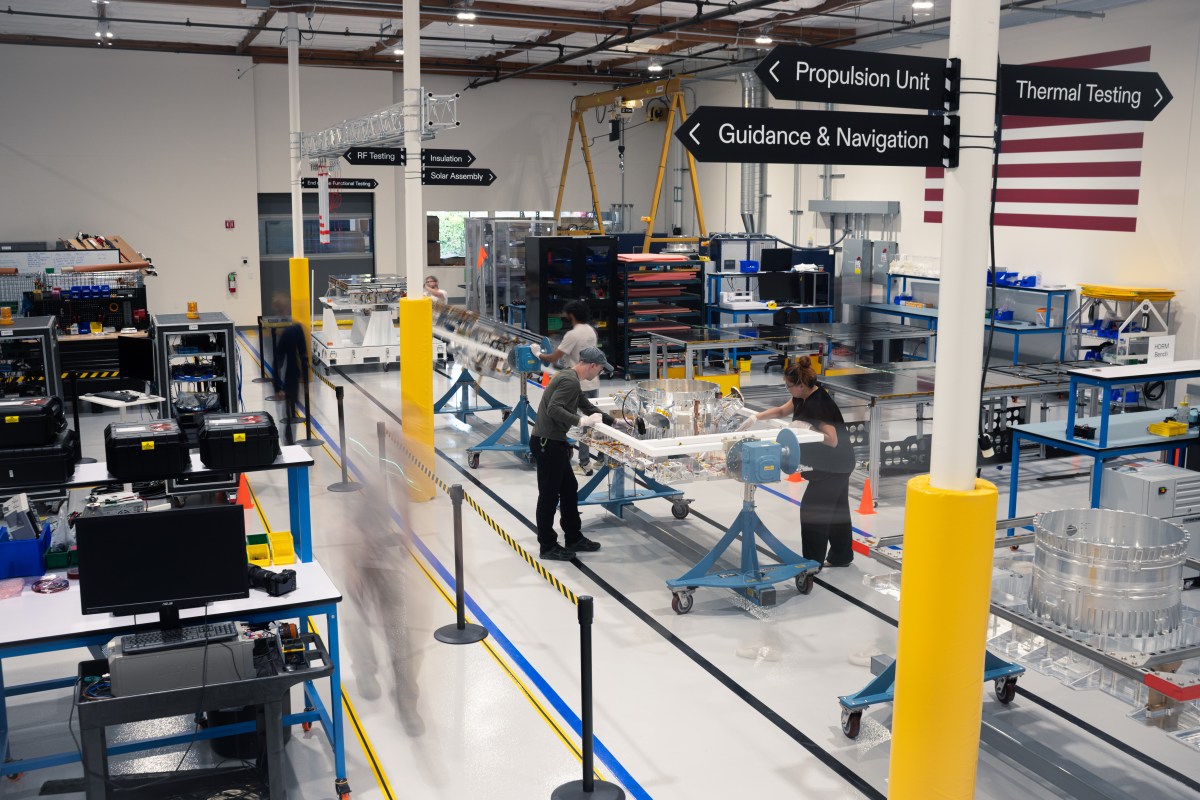
The first precision commercial alternative to GPS is preparing to go live when six satellites designed by the startup Xona Space Systems launch into orbit this month.
A service that competes with free signals provided by governments around the world may seem foolhardy, but Xona is hoping to add navigation and timing to the list of de facto government space monopolies disrupted by venture-backed startups.
Xona was founded in 2019 by a team of five engineers who originally met at Stanford University’s aerospace engineering graduate program. One, Tyler Reid, went on to earn a PhD, writing his thesis on the possibilities of using satellites in low-earth orbit to improve navigation.
GPS and analog satellite networks built by Europe, China and Russia provide huge value, but are also easy to jam and aren’t precise enough to be used alone for applications like farming robots or self-driving cars. Over “pizza and beer chats,” the friends mulled whether fixing those problems could be a business.
“My knee jerk was like, this is dumb,” Xona CEO Brian Manning told TechCrunch during a recent visit to the company’s headquarters. “Why would anybody replace GPS? It’s free, right? And I started digging into it. People think of GPS as a free service, but the market isn’t the service. The market’s the hardware, and you have billions of devices being sold every year; those things aren’t being given away for free. There’s an immense market that is desperately looking for better performance.”
That didn’t mean the road to delivering such a service was simple. Improving GPS with a stronger signal that offers more precise timing and location data remained a technical challenge. The company needed to develop a unique architecture that would allow its satellites to keep time without expensive atomic clocks onboard, taking advantage of the spacecraft’s proximity to Earth and close communication with ground-based sources of truth.
The other technical challenge the company solved was making sure its signals could be received by existing GPS receivers with a relatively simple software modification. That gives Xona immediate access to the market and smoothes the way through the regulations for broadcasting navigation signals.
Later this month, a SpaceX rocket is scheduled to launch six satellites for Xona. Four are similar to a prototype the company launched last year that proved its technology; those satellites are built around a satellite platform from Aerospace Labs. The other two satellites were built entirely by Xona at its Burlingame, California headquarters, and are intended to be the foundation of the company’s 258-satellite operational constellation, called Pulsar.

Pulsar will offer centimeter-level precision for geolocation, instead of the meter-level precision provided by GPS, and its signal is strong enough to be detected inside buildings and in urban environments. Manning also believes its signal is powerful enough to deter would-be jammers and spoofers, too.
Xona can begin beta-testing Pulsar with real customers once its satellites are in orbit and passing overhead the mid-latitudes about eight times a day.
Ian Gough, the CEO of TimeBeat, a company that specializes in electronic timing, says the initial pilot will allow his engineers to check and correct the timing provided by its devices around the world. By 2028, Xona hopes to offer full coverage in the U.S., Europe, Japan, and South Korea.
Xona has raised just over $300 million from venture investors since its founding, including $20 million from the U.S. Space Force. While the company is focused on offering a commercial service, the U.S. government is clearly interested in the technology, as jamming and spoofing of satellite navigation services become increasingly common in conflicts.
While there are literally billions of potential users for a new precision timing signal, Xona is also looking ahead to a world of growing autonomy. Reid, whose thesis inspired the company and who now serves as its CTO, worked on self-driving cars at Ford and saw that a service like Pulsar would be needed to realize the potential of autonomous vehicles of all stripes.
Xona’s headquarters boasts an incredible view of planes landing at San Francisco International Airport. Watching the jets come in, Manning points out that among “all the forms of mass transportation, the gold standard for safety is civil aviation. We see Xona and what we’re building being able to play a big part in that … to provide the service to a car, so you can feel as safe taking your hands off the wheel as you are laying back in an airliner.”
When you purchase through links in our articles, we may earn a small commission. This doesn’t affect our editorial independence.
>
Google launches Playground, an AI game-building platform that turns text prompts into playable games without coding. Here’s how it works and who can use it.
The post No Coding Needed: Google’s New AI Tool Builds Games From Your Ideas appeared first on TechRepublic.
>

‘Animals’ Review: Ben Affleck’s Netflix Thriller Has Zero Highs, Many Lows

Venice Winner ‘A Day In The Life Of Jo: Chapter Phaedra’ Gets US Deal
Manchester United without Benjamin Sesko, Patrick Dorgu vs. Tottenham
-

 movies5 months ago
Search For Canadian TV Actor Stewart McLean Now Homicide Investigation
-

 Fashion9 years ago
These ’90s fashion trends are making a comeback in 2017
-
Fashion9 years ago
According to Dior Couture, this taboo fashion accessory is back
-
Fashion9 years ago
Model Jocelyn Chew’s Instagram is the best vacation you’ve ever had
-
Fashion9 years ago
Emily Ratajkowski channels back-to-school style
-
Fashion9 years ago
9 Celebrities who have spoken out about being photoshopped
-

 Anime4 months ago
Rurouni Kenshin: Hokkaido Arc Manga Takes 1-Issue Break – News
-

 Anime3 months ago
HIDIVE to Stream English Dubs for The World Is Dancing, The Forsaken Saintess and Her Foodie Roadtrip in Another World, The Dangers in My Heart: The Movie Anime – News