
Anime
Manga ‘Kagurabachi’ Gets TV Anime in Spring 2027

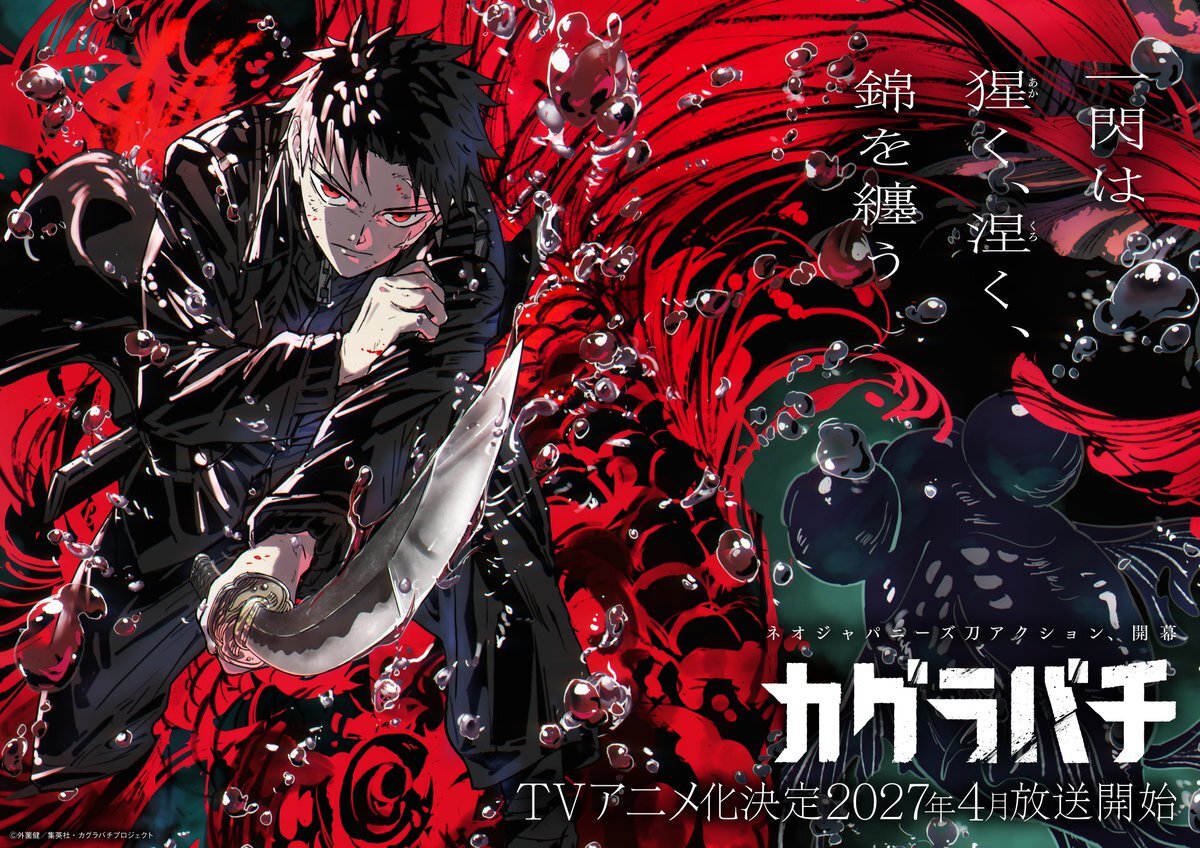
The fifth Jump Press livestream event announced a television anime adaptation of Takeru Hokazono‘s Kagurabachi manga on Monday, revealing the main cast, staff, teaser promo, and a teaser visual (pictured). The anime series is scheduled to premiere in April 2027.
Voice actor Taihi Kimura (Onmyou Kaiten Re:Birth) is starring as Chihiro Rokuhira.
Staff
Director: Tetsuya Takeuchi (Akuyaku Reijou Tensei Ojisan)
Character Design: Keigo Sasaki (Nanatsu no Taizai)
Production Committee: Shochiku, CyberAgent
Studio: CyPic (formerly CygamesPictures)
Hokazono began serializing the action fantasy manga in Weekly Shounen Jump in September 2023. Shueisha published the tenth volume on January 5, with the 11th volume planned for a May 1 release. Kagurabachi has a cumulative 4 million copies of its volumes in circulation, including digital editions.
VIZ Media licensed the manga in English in March 2024 and published the sixth volume on February 3, with the seventh volume scheduled for a May 5 release.
The manga ranked sixth in the 2025 Kono Manga ga Sugoi! rankings in the Male Readers division.
Synopsis
Eighteen years ago, during the Seitei War, Kunishige Rokuhira was the most renowned man in Japan. As a master swordsmith, he forged six enchanted blades, each imbued with a special power that secured the nation’s victory. After the war, Kunishige retired to the mountains with his son, Chihiro, who began diligently learning the craft. Nearing his 15th birthday, the level-headed Chihiro resolved to one day succeed his father. However, his plans were derailed when he witnessed a group of powerful sorcerers kill his father and steal the sacred blades.
Three years after the incident, Chihiro lives on with hatred in his heart and an intense desire for revenge. Wielding the Enten, the seventh and final enchanted blade Kunishige created in secret, Chihiro cuts down evildoers associated with the Hishaku—the organization he believes to be responsible for his father’s death. Chihiro has yet to unlock the Enten’s full potential or perfect his swordsmanship, but he will stop at nothing to retrieve the stolen katanas, avenge his father, and honor the legacy he left behind. [Written by MAL Rewrite]
Teaser PV
Official site: https://anime.kagurabachi.jp/
Official X: @kb_anime_jp
Source: Press Release
Kagurabachi on MAL
>
Manga debuts with new setting/era in 2027
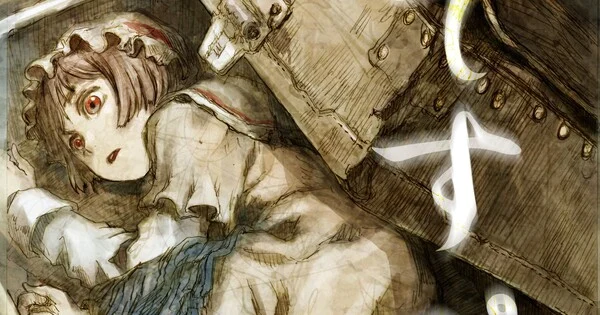
Chiaki J. Konaka (series script supervisor of Serial Experiments Lain, Texhnolyze, and Hellsing) announced at the Japan Weekend Madrid event in Spain last weekend that Yoshitoshi ABe‘s (creator and character designer for Serial Experiments Lain and Haibane Renmei) Despera anime project is getting a manga in 2027. He posted a visual on X/Twitter on Monday:

Konaka added that the manga’s setting and era will differ from those of the original project announcement. He clarified that this project is not related to Serial Experiments Lain.

Konaka last provided an update for the project in 2021. According to him, due to the COVID-19 pandemic, the project was suspended for a year and a few months. Konaka added that the production funding scheme was 80% completed at the time, and that the core staff had done a lot of work up until 2020. He confirmed that staff was still working hard on the project, and asked fans to be patient.
The Despera anime project was put on hold after director Ryūtarō Nakamura passed away in 2013. ABe mentioned in October 2014 that the project was continuing with a new director.
ABe unveiled the project at Seattle’s Sakura-Con in 2009. ABe was heading the project and designing the characters and Chiaki J. Konaka, the series script supervisor of Serial Experiments Lain, Texhnolyze, and Hellsing, was writing the script.
The title is derived from a poem from the Dadaist poet Jun Tsuji (1884-1944). It is also derived from the shortened version of the term “desperado.” The story centers around Ain, a 14-year-old girl who builds devices despite the lack of the scientific background required for them. The science-fiction story was originally set in Japan’s Taishō era in 1922 — one year before the 1923 Great Kantō earthquake in the Tokyo area.
Sources: Chiaki J. Konaka‘s Twitter account
>

1st season ended with 26th episode on Monday
The official website for the television anime of Shinobu Kaitani‘s Liar Game manga announced on Tuesday that the anime is getting a second season. The website unveiled a commemorative illustration by character designer Kei Tsuchiya:

© Kaitani Shinobu Products/Shueisha, LIAR GAME Committee
The 26th and final episode of the first season aired on Monday (effectively, Tuesday).

© Kaitani Shinobu Products/Shueisha, LIAR GAME Committee
The anime premiered in Japan on TV Tokyo and its affiliates on April 6. The anime ran for six months without breaks. The second part of the anime began on July 7. Crunchyroll is streaming the anime worldwide (excluding Japan and China) and hosted the world premiere screening of the anime’s first two episodes at this year’s Sakura-Con event in Seattle on April 5. PDT. AMEDIATEKA is distributing the anime in the Russian Federation.
REMOW introduces the series’ story:
A Mysterious Invitation. One Hundred Million Yen. The Game Begins.
College student Nao Kanzaki suddenly receives a strange letter and a suitcase containing 100 million yen. She’s been chosen to participate in the LIAR GAME—a high-stakes psychological battle where lies, deception, and betrayal reign supreme. Naïve and painfully honest, Nao quickly finds herself cornered. To survive, she turns to Shinichi Akiyama, a brilliant former con artist with unmatched intellect. As they dive deeper into the twisted game, the two must outwit opponents in a world where trusting others could be fatal. In a game built on lies, can honesty prevail?
Yūzō Satō (Kaiji -Ultimate Survivor-, Akagi, Trillion Game, The Gene of AI) was the chief director of the anime at Madhouse, and Asami Kawano (assistant director for The Vampire Dies in No Time both seasons, episode director for Orb: On the Movements of the Earth) directed the anime. Tatsuhiko Urahata (Baki, Baki Hanma, Monster, Muv-Luv Alternative) wrote and oversaw the series scripts, Kei Tsuchiya (Laidbackers, Trillion Game, The Gene of AI) was the character designer, and Kisuke Koizumi (The Gene of AI, My Happy Marriage, Ghost in the Shell Arise) was the sound director.
The manga ran from 2005 to January 2015 in Shueisha‘s Weekly Young Jump magazine. Shueisha published the manga’s 19th and final compiled book volume in May 2015. Kaitani launched a new short serialization for the manga titled Liar Game: The Last Game in Shueisha‘s Grand Jump Mucha magazine on February 25.
The manga previously inspired two live-action films, two live-action television series, and two live-action online series. The manga also inspired a stage play in 2023.
Kaitani’s ONE OUTS manga inspired a television anime in 2008.
Sources: Liar Game anime’s website, Comic Natalie
>

© Hiro Yuki, Kyoto Animation/Sparks of Tomorrow Production Committee
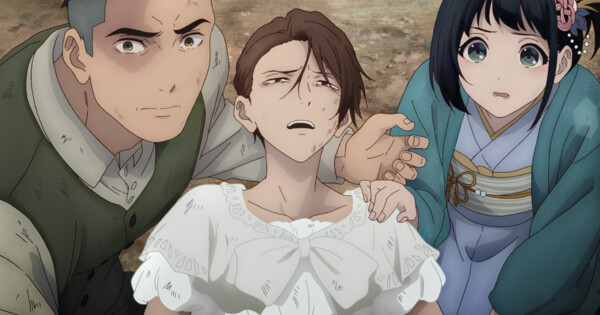
It’s done; my time with one of the most frustrating, anachronistic, ill-conceived pieces of media I’ve ever experienced in its entirety is over. Earning the number four spot in ANN’s Worst of the Summer 2026 season list, this finale further reaffirms that Sparks of Tomorrow deserves this albatross. It brings me no joy to say this is likely going down as the worst anime ever produced by Kyoto Animation, and I hope this otherwise illustrious studio never sinks this low again.
This episode begins with Yosuke trying to sacrifice Kihachi (who’s drugged and in a wedding gown because Yosuke can’t be framed as a predacious gay more than a single goddamn second) to improve his Robo-Seiroku. When Inako arrives on the scene, she manages to stop Yosuke and his plan by…just kind of stopping Yosuke and his plan. She pulls on some wires and drags Kihachi out of what would have been his glass coffin before the walking plot device that is Kengo shows up and effortlessly drags them out of that situation. In this scene, it really feels like Yosuke never had a plan for what to do if anyone ever tried to stop him from doing crimes in order to revive Seiroku, and that makes him feel even weaker as a villain.
The failing of the electric nishiki creates a massive sinkhole in the middle of the city, though, and Kihachi and Inako use the electric plane invented a few episodes before to save Yosuke. Why they do this is anyone’s guess, as he literally tried to kill Kihachi twenty minutes ago, but whatever. The animation during this flight scene is pretty impressive, as is a sequence where a massive updraft essentially creates a zero-gravity sequence. The episode ends with much of the main cast having a meal together and Saki pointing out that Inako’s first brew is amazing, as Yosuke (who should be in jail) travels, and Kihachi and Inako tentatively express their romantic feelings to each other. In this finale there is not follow up on Kate and Suzu’s babyqueer romance, if Inako’s family’s business is saved from insolvency, or an indication that electrical technology is being more broadly adopted.
While I could profess endlessly about the sophomoric writing in Sparks of Tomorrow and how it misunderstands the era and innovative spirit at the heart of this work, this episode actually contains a perfect crystallization of these problems! While on their way to Inako’s home, in both the sub and the dub, Kihachi remarks that he found it odd that the lush Saki told him about the first batch of Inako’s brew being made into an offering for Inako’s late mother, as he is “not able to drink yet.” The problem with this statement, though, is that there was no legally enforced drinking age in Japan until 1922, and that this story explicitly takes place after the Russo-Japanese War and before the end of the Meiji era, so between 1905 and 1912. This is to say that Kihachi CAN drink and that Sparks of Tomorrow would so casually elevate an anachronism that I could disprove with five minutes of research demonstrates how little it cares about the culture and history at the center of its premise.
Sparks of Tomorrow routinely failed to spark any kind of joy or inspiration within me, and I am so glad to be done with this lazy, ahistorical piece of animation.
Rating:
Lucas DeRuyter finds sparks of inspiration in all parts of his life, which would explain why his portfolio features such a broad array of interests and writing formats! To read what he’s ruminating on more regularly, you can keep up with his regular contributions to ANN’s This Week in Anime column.
Sparks of Tomorrow is currently streaming on
Netflix.
The views and opinions expressed in this article are solely those of the author(s) and do not necessarily represent the views of Anime News Network, its employees, owners, or sponsors.
>
Panthers CB Jaycee Horn suffers significant quad injury, out indefinitely: Source

Kill Jackie Review: Catherine Zeta-Jones Charms in AMC+ Series

The Crying Boy Movie: Resident Evil’s Carter Swan Developing Adaptation
-

 movies4 months ago
Search For Canadian TV Actor Stewart McLean Now Homicide Investigation
-

 Fashion9 years ago
These ’90s fashion trends are making a comeback in 2017
-
Fashion9 years ago
According to Dior Couture, this taboo fashion accessory is back
-
Fashion9 years ago
Model Jocelyn Chew’s Instagram is the best vacation you’ve ever had
-
Fashion9 years ago
Emily Ratajkowski channels back-to-school style
-
Fashion9 years ago
9 Celebrities who have spoken out about being photoshopped
-

 Anime4 months ago
Rurouni Kenshin: Hokkaido Arc Manga Takes 1-Issue Break – News
-

 Anime3 months ago
HIDIVE to Stream English Dubs for The World Is Dancing, The Forsaken Saintess and Her Foodie Roadtrip in Another World, The Dangers in My Heart: The Movie Anime – News